REVIEW · SEOUL
Seoul: Temple Vegan Cooking Class & Oriental Medicine Tour
Book on Viator →Operated by TRIPPER KOREA · Bookable on Viator
One smell of sesame oil and you’re already in another world. This Seoul Temple Vegan Cooking Class & Oriental Medicine Tour mixes hands-on temple food with real Korean medicine culture, then adds market tastings and quirky old-meets-new stops. I love that you get both the calm ritual side and the practical ingredient side of wellness, and I also like that the pace moves from cooking to markets without feeling rushed. One thing to consider: the route is very public-transit friendly, but it does involve walking and transferring, so plan for stairs and crowds around market areas.
The best part is how the day connects ideas you might hear separately at home—food, healing, and daily life—into one easy path you can follow in a few hours. I especially appreciated the mix of museum-style context plus hands-on experiences like massage and tea, not just photos and souvenirs. If you’re hoping for a nonstop commentary-heavy lecture the entire time, keep expectations flexible, because the experience includes hands-on moments where you’ll be doing rather than listening.
In This Review
- Key Highlights You’ll Actually Feel in Your Day
- Temple Food Cooking at the Korean Temple Food Center
- Seoul Yangnyeongsi Herbal Market: Ingredients Behind Korean Healing
- K-Medi Center: Museum, Massage Practice, and a Proper Cup of Tea
- Gyeongdong 1960 and Gold Star Radio LG: Old Seoul With a Tech Brain
- Gyeongdong Market Underground City and Street-Food Tasting
- Cheongnyangni Fruit and Vegetable Market: Seasonal Tasting in Plain Sight
- Price and Value for a 4-Hour Temple + Medicine Experience
- Logistics That Matter: Meeting Points, Time, and How You’ll Get Updates
- Who Should Book This Tour (and Who Might Find It Less Fun)
- Should You Book This Temple Vegan Cooking and Oriental Medicine Tour?
- FAQ
- How long is the Seoul Temple Vegan Cooking Class & Oriental Medicine Tour?
- What does the tour cost?
- Is transportation included?
- What’s included with the experience?
- Where do I meet and where does the tour end?
- Is the tour led in English and how do I get day-before details?
Key Highlights You’ll Actually Feel in Your Day
- Monk-guided temple vegan cooking that turns Buddhist food principles into something you can taste and make sense of
- Seoul Yangnyeongsi medicinal herb market where you see the ingredients behind Korean traditional medicine
- K-Medi Center experiences including a Korean medicine museum visit, massage practice, and a tea or drink at the cafe
- Seoul old-and-new stops: Starbucks Gyeongdong 1960 in an old theater and Gold Star Radio LG with vintage appliances
- Market food + healthy drink sampling like omija, plus a quick look at the Gyeongdong Market Underground City
- Cheongnyangni fruit and vegetable market tastings focused on seasonal produce you won’t get anywhere else
Temple Food Cooking at the Korean Temple Food Center
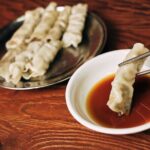
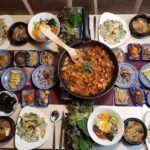
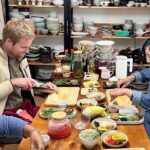
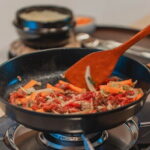
Your day starts at the Korean Temple Food Center, where you learn how Buddhist temple cuisine thinks about food. If you choose the cooking class option, you’ll do the actual work with a monk and an English interpreter guiding you. You should expect a practical, hands-on session: you’ll be preparing plant-based dishes shaped by long-standing ideas about balance and simplicity in temple meals.
What I like about this stop is that it doesn’t treat wellness like a marketing slogan. Temple food has a point of view: it’s meant to feel grounding, light, and intentional. Even if you’re not a strict health-food person, cooking in that atmosphere makes it easier to understand why Korean temple cuisine has stayed relevant for centuries.
Practical note: temple-style cooking can move a bit quickly because multiple dishes may be prepared and shared. If you’re a slower cook, just ask your guide for a pace check during prep. This tour is designed around you participating, not watching from the sidelines.
A few more Seoul tours and experiences worth a look
Seoul Yangnyeongsi Herbal Market: Ingredients Behind Korean Healing
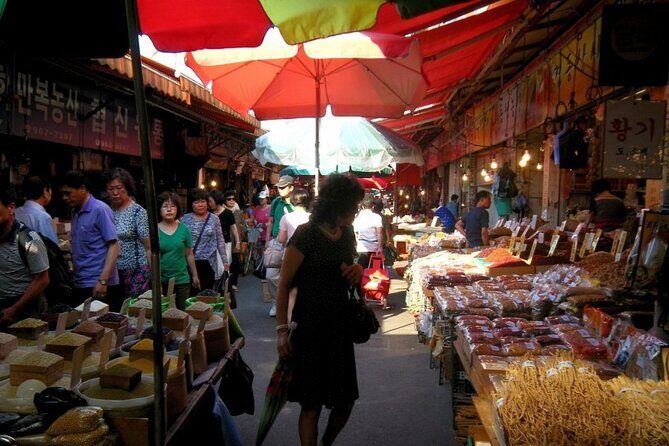
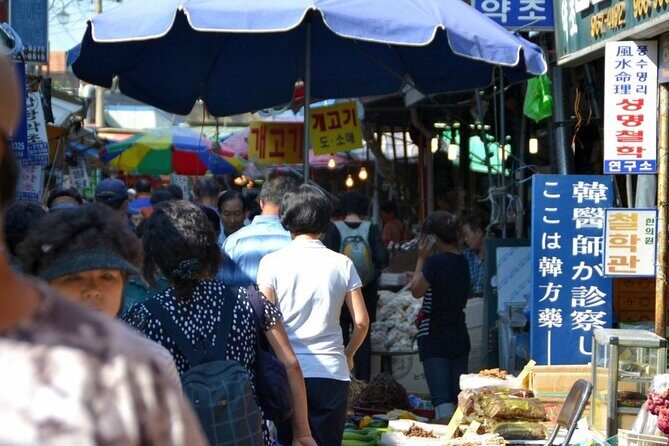
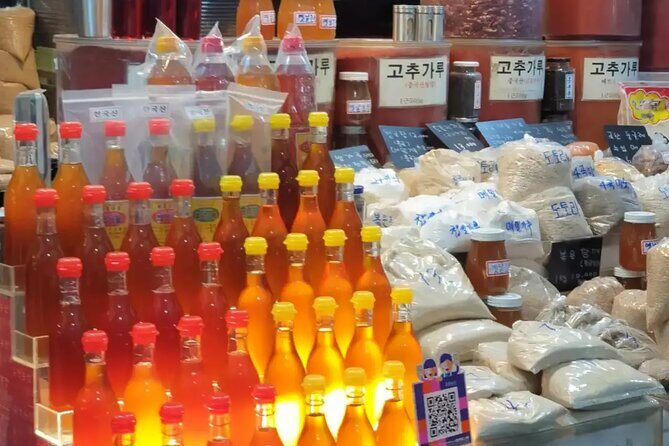
Next you head to Seoul Yangnyeongsi, one of the best-known medicinal herb markets in the city. This is not a museum stop. It’s a real market environment where the “what” of traditional medicine is visible: roots, dried botanicals, and herbal ingredients tied to Korean health practices.
You’ll spend a short window here, about 15 minutes, but it’s exactly the right kind of stop if you enjoy seeing everyday culture up close. You’ll also get the context for why Korean medicine is so ingredient-based. Instead of hearing abstract terms, you can connect those ideas to what’s physically for sale.
Tip for this kind of market: take a moment to slow down and look at how items are grouped and displayed. Your brain does better with categories than with a flood of random textures and smells.
K-Medi Center: Museum, Massage Practice, and a Proper Cup of Tea
The K-Medi Center is where the tour shifts from food and markets into your body. You’ll visit a Korean medicine history museum, try a traditional Korean massage session, and then enjoy a tea or drink at the Korean Medicine Cafe.
The massage component targets common fatigue areas—hands, feet, eyes, and waist—through a structured experience meant to relieve stress and tiredness. One review called the massage great, while another pointed out that the massage felt mechanical and not very effective. Your experience will depend on how much you’re expecting a therapeutic hands-on massage versus a guided technique session. Either way, it’s a rare chance to try the method in a short tour window.
Then you get a drink at the cafe. That part matters more than it sounds, because it gives you a calm moment after the sensory intensity of markets. If you’re the type who needs a pause to process what you learned, this timing helps.
Gyeongdong 1960 and Gold Star Radio LG: Old Seoul With a Tech Brain
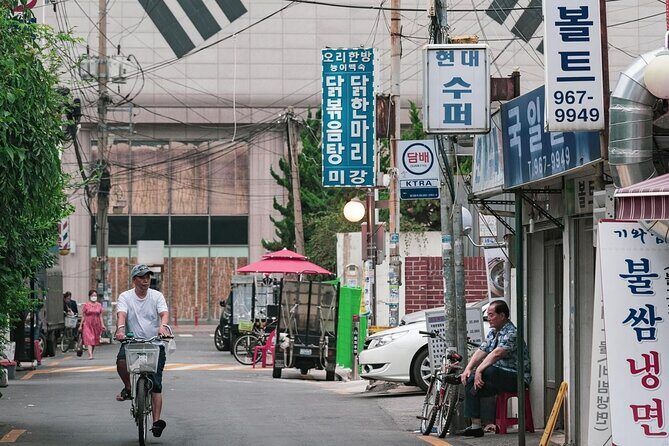
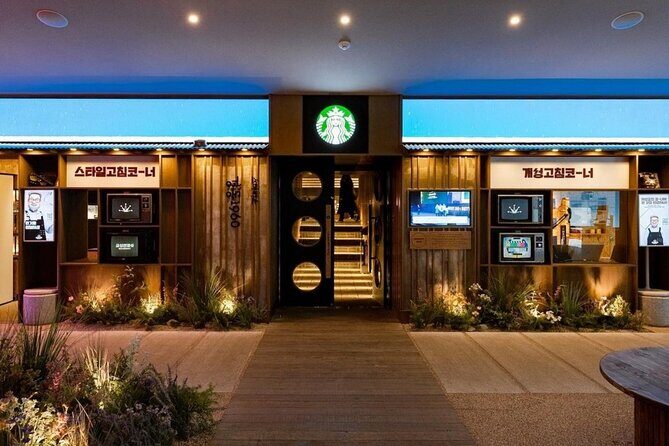
After the medicine and body-work, you swing into “look at what Seoul did with history” mode. You’ll visit Starbucks Gyeongdong 1960, a cafe reconstructed from an old theater. It’s a simple stop, but the payoff is cultural: you see how Seoul keeps older spaces alive while giving them modern roles.
Right after that is Gold Star Radio LG, featuring vintage LG home appliances. This isn’t just nostalgia. It’s a quick lesson in Korea’s development in everyday technology, shown through objects people once used every day.
I like this pair because it balances the wellness theme with something less spiritual but equally Korean: progress, preservation, and design that’s practical. If you’re tired of hearing the same tour-script about palaces and shopping, these short stops add texture.
Gyeongdong Market Underground City and Street-Food Tasting
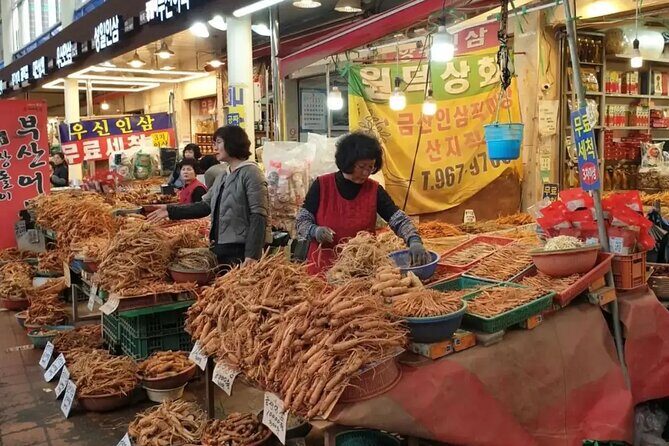
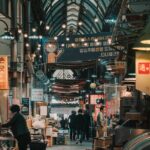
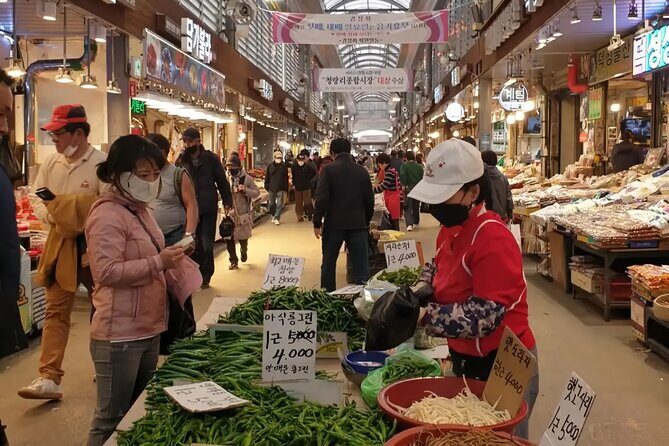
Then you head into Gyeongdong Market Underground City, a subterranean shopping complex that preserves an older market atmosphere—specifically described as an 1980s ambiance. Underground markets can feel like time travel in the best way. The important part here is the contrast: you’re in a fast-moving city, but you get a pocket that feels different from today’s neon-and-taxi rhythm.
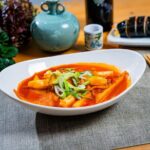
Next comes the fun part: trying local market food. The tour includes simple food and drinks, with examples such as fruits, vegetables, and healthy beverages like omija. Omija is an easy win for first-timers because it’s easy to recognize as Korean and it fits the wellness vibe of the day.
Keep expectations simple here. This isn’t a sit-down meal review. It’s tasting and sampling—enough to help you understand everyday Korean flavors without turning your tour into a food marathon.
If you have a sensitive stomach, stick to one small item at a time and drink water between tastings. Market food is delicious, but it can be unpredictable when you eat it quickly.
You can also read our reviews of more cooking classes in Seoul

Cheongnyangni Fruit and Vegetable Market: Seasonal Tasting in Plain Sight
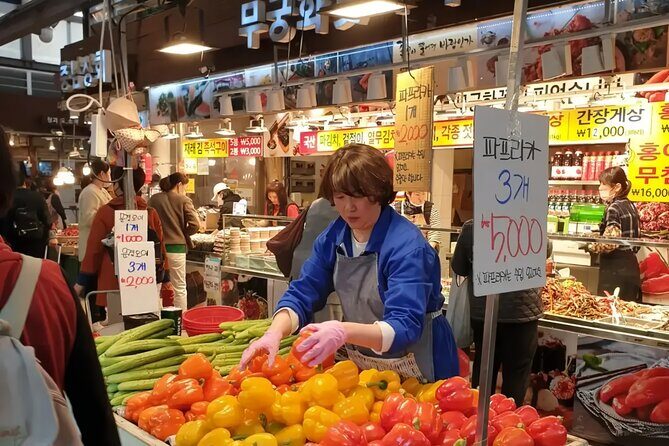
The final market stop is Cheongnyangni Fruit and Vegetable Market. This is where the tour brings everything back to ingredients. You’ll see seasonal fruits and vegetables and taste some produce that’s described as unique to Korea.
What I like about this stop is that it feels grounded. So many “wellness” tours talk about health like it happens in a bottle. Here, you get a clearer sense of what wellness looks like when it starts with what’s in season.
This is also a great stop if you like taking home flavors. Even if you don’t cook everything you buy, you’ll have a better instinct for what Korean produce to look for in local shops later.
Price and Value for a 4-Hour Temple + Medicine Experience
At $77 per person for about 4 hours, this tour sits in the middle range for Seoul group experiences—but you’re paying for more than a guide walking you around.
Here’s what’s included that affects value:
- Temple food cooking experience (and you’re guided by a monk with English interpretation)
- Admission fee for the oriental medicine museum
- One drink at the Korean Medicine Cafe
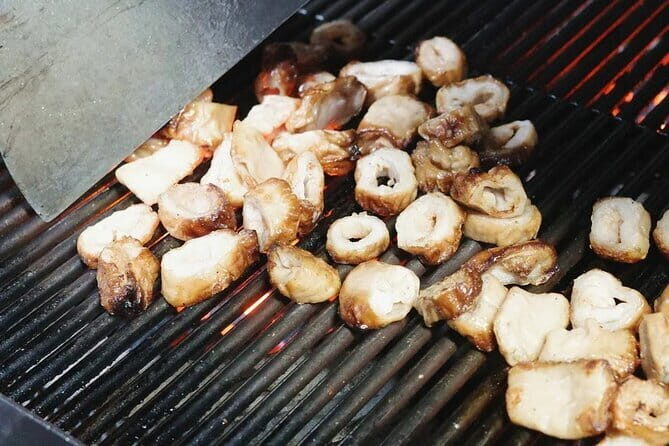
- Snacks, fruits, and healthy beverages, plus simple market foods and tastings
- Transportation fee (but no hotel pickup/drop-off)
- Professional licensed English guide
- A small group capped at 20 travelers
So you’re not just seeing places. You’re doing a structured set of activities—cooking, museum time, massage practice, and multiple tasting moments. If you’re the kind of traveler who likes value-per-hour, this is one of those tours that justifies itself by packing in several “real experiences” rather than extra photo stops.
Logistics That Matter: Meeting Points, Time, and How You’ll Get Updates
This tour uses specific start and end points. You meet at Artist Bakery, 167 Anguk-dong, Jongno District, and you finish in Jegi-dong, Dongdaemun District. There’s no hotel pickup or drop-off, so arrive with a plan for getting to Anguk-dong and getting home from Dongdaemun.
One day before your tour, you’ll receive detailed information via WhatsApp (if you use WhatsApp), including the guide’s contact. If you don’t use WhatsApp, it’s sent by email—so check that inbox. This matters because market days can get busy, and last-mile directions are what prevent stress.
Also, the experience requires good weather. If conditions are poor, the tour may be canceled and you’ll be offered a different date or a refund. So don’t schedule it as your only outdoor plan that day.
Who Should Book This Tour (and Who Might Find It Less Fun)
This tour is ideal if you want a mix of:
- Korean food culture with a wellness lens
- Hands-on experiences (cooking, massage practice, tea/drinks)
- Short-but-specific culture stops that go beyond typical first-time Seoul sightseeing
You might not love it if:
- You want long guided commentary for every step. Some parts are hands-on, so the day has a working rhythm.
- You expect a high-touch, fully therapeutic massage. The experience is described as a guided practice, and outcomes can vary.
It also helps if you enjoy markets. Markets are the engine of this route, from herbal ingredients to fruit tastings to simple snack sampling.
Should You Book This Temple Vegan Cooking and Oriental Medicine Tour?
Yes—if you like structured experiences where you cook, learn, taste, and try something physical within a few hours. The strongest reason to book is the balance: temple cuisine and Korean medicine aren’t treated like abstract wellness topics. You see ingredients, try a technique, and eat in the same day.
If you’re on the fence, ask yourself one question: do you enjoy markets and small activities more than you enjoy one big landmark? If the answer is yes, this is an easy win for a meaningful, low-commitment day in Seoul.
FAQ
How long is the Seoul Temple Vegan Cooking Class & Oriental Medicine Tour?
It runs for about 4 hours.
What does the tour cost?
The price is $77.00 per person.
Is transportation included?
Transportation fee is included, but hotel pickup and drop-off are not.
What’s included with the experience?
You get a licensed English guide, temple food cooking experience, snacks/fruits/healthy beverages and simple market foods, admission to the Oriental Medicine museum, one drink at an Oriental Medicine cafe, and the transportation fee.
Where do I meet and where does the tour end?
You start at Artist Bakery in Anguk-dong (Jongno District) and end in Jegi-dong (Dongdaemun District).
Is the tour led in English and how do I get day-before details?
A professional licensed English guide is included. One day before your tour, you receive detailed information (including the guide’s contact) via WhatsApp or email, based on what you provide.