REVIEW · SEOUL
Seoul: Palace, Temple and Market Guided Foodie Tour at Night
Book on GetYourGuide →Operated by TRIPPER · Bookable on GetYourGuide
Seoul looks better after dark. I like how this tour strings together Changgyeonggung Palace and Gwangjang Market into one smooth night plan, with the palace lit up under the stars and the food focused on real Korean comfort classics. You also get a guided stop at Jogyesa Temple, where the mood shifts fast from city lights to quiet lantern glow, then you’ll taste Makgeolli and multiple Jeon styles.
One heads-up: it’s a 4-hour walk with a moderate amount of moving around, so you’ll want to dress for night weather and be okay with some time on your feet.
In This Review
- Key highlights you’ll feel right away
- Changgyeonggung Palace lit up: why night viewing changes everything
- Gwangjang Market at night: Makgeolli, Jeon, and real street choices
- The live octopus moment: optional, but culturally useful
- Jogyesa Temple lantern time: a quiet reset in the middle of the night
- Jongno 3-ga Pocha Street and Ikseon-dong: the short stops that keep momentum
- Jongno 3-ga Pocha Street (about 15 minutes)
- Ikseon-dong Hanok Village (about 15 minutes)
- What the 4-hour route feels like on your feet
- Guides matter here: why Mia and Kim are mentioned so often
- Price and value: why $60 can work (if you eat your way through it)
- Meeting point quick check: where to start and how the night ends
- Who this tour suits best
- Should you book this Seoul night palace, temple, and market tour?
- FAQ
- How long is the tour?
- How much does it cost?
- Where do I meet the guide?
- Is the tour wheelchair accessible?
- What food and drinks are included?
- Is the live octopus tasting required?
- Are there vegetarian or halal options?
- Is hotel pickup provided?
Key highlights you’ll feel right away
- Changgyeonggung Palace after dark: photo time plus a guided visit so the lights mean something
- Jogyesa Temple lantern atmosphere: a calm, Buddhist-toned break from the street scene
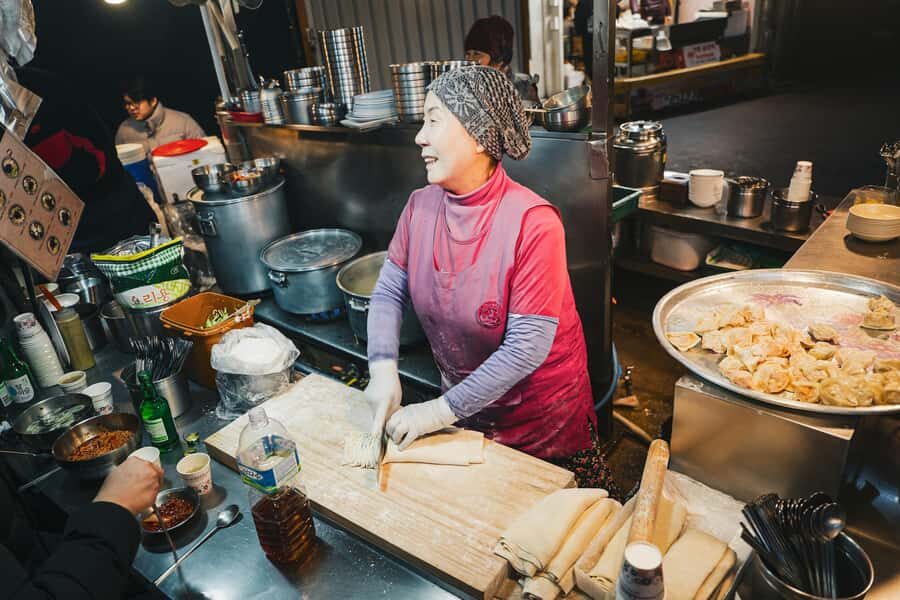
- Gwangjang Market tastings: Makgeolli and assorted Jeon fritters included
- Optional live octopus tasting: you can try it or skip it without guilt
- Short stops for major neighborhoods: Jongno 3-ga and Ikseon-dong Hanok Village via photo stops and passes
- Guides who manage the whole night: names like Mia and Kim come up again and again for clear storytelling
Changgyeonggung Palace lit up: why night viewing changes everything
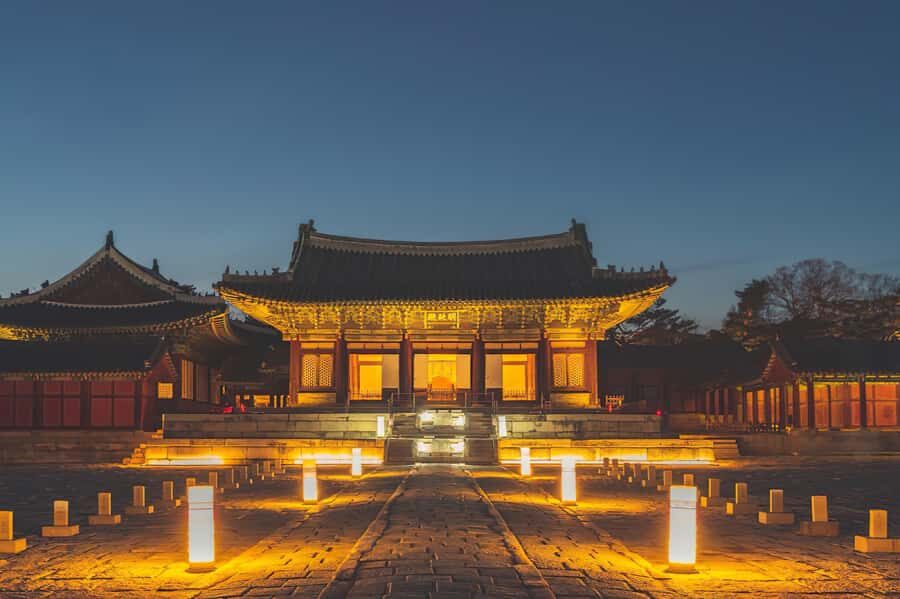
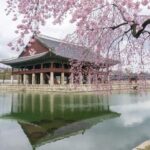
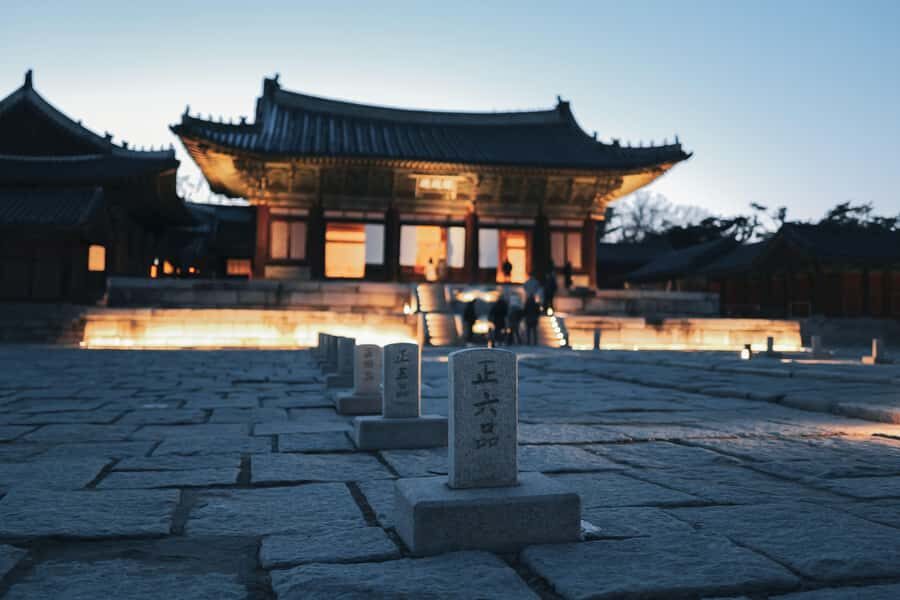
Changgyeonggung Palace is the kind of place that makes more sense when someone explains what you’re looking at. At night, the architecture and grounds don’t feel like a daytime checklist. They feel cinematic, with lighting that turns hallways, courtyards, and garden space into a calmer, slower scene.
This tour gives you both a photo stop and a guided visit (about an hour). That matters, because the palace isn’t just “pretty buildings.” It’s tied to the Joseon Dynasty story, and the guide’s job is to connect what you see—gate rhythms, scale, and layout—to why it was built that way. One thing I especially like about this setup is how it sets the tone for the rest of the night: you start with order and history, then you move toward food and temple calm.
Practical note: night tours often mean you’ll move from bright lit areas into darker corners. Wear shoes you trust. You’ll be walking at multiple points, including short transfers on foot.
A few more Seoul tours and experiences worth a look
Gwangjang Market at night: Makgeolli, Jeon, and real street choices
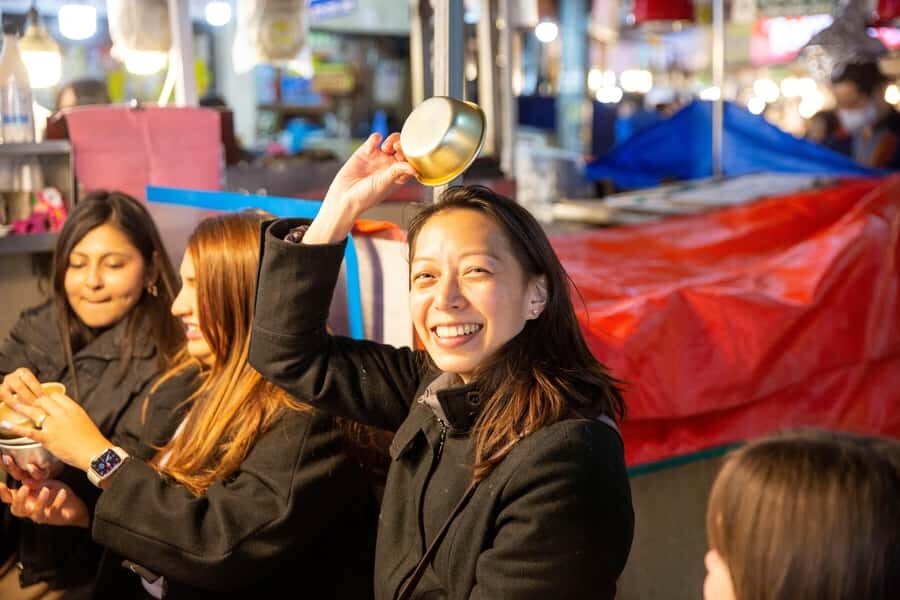
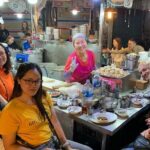
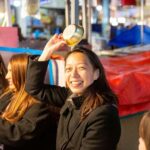
The biggest “why bother” part of this tour is the food timing. You’re not just eating randomly around Seoul. You’re scheduled for Gwangjang Market when the night energy is strong, and you’re guided right inside the area where the food is meant to be sampled.
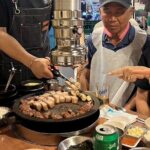
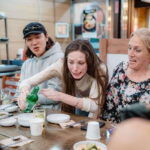
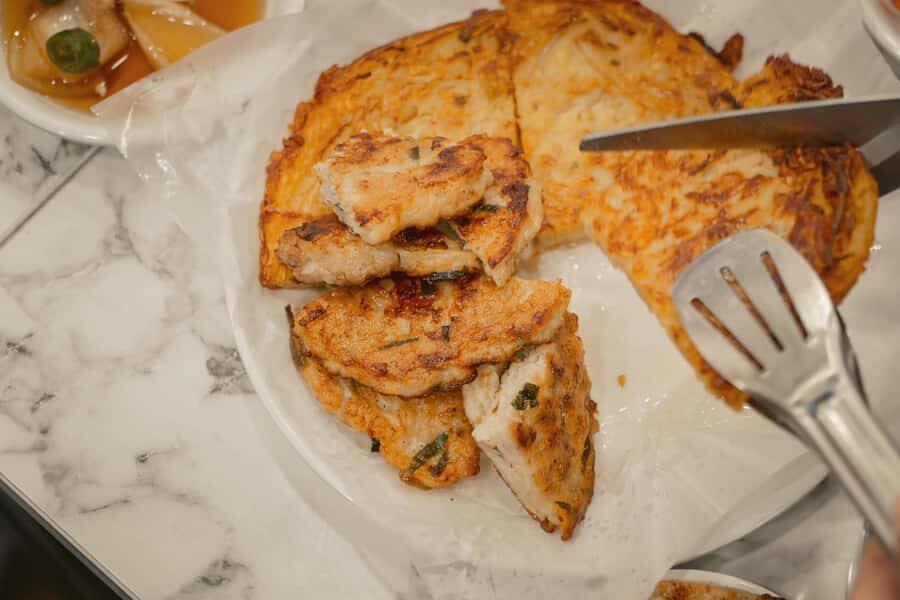
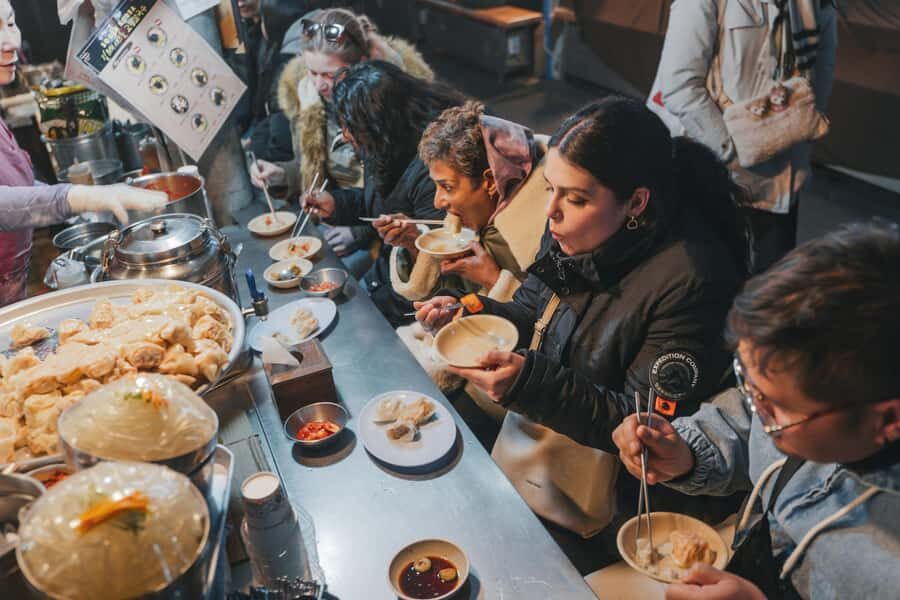
At Gwangjang Market, the tour centers on included tastings: Makgeolli (Korean rice wine) and assorted Jeon fritters like kimchi jeon, tofu jeon, and meat jeon. That selection is a smart mix. Jeon is familiar enough that most people can jump in, but each version gives you a different texture and flavor direction—spicy, savory, or more filling.
You’ll also get a chance to try Korean market classics that show up often in night food culture. One sweet item called out is kkwabaegi, a twisted Korean donut style that’s popular in this area. Since it’s not listed as one of the included items, treat it as a “buy if you want” moment, not a guaranteed piece of the tasting lineup.
The live octopus moment: optional, but culturally useful
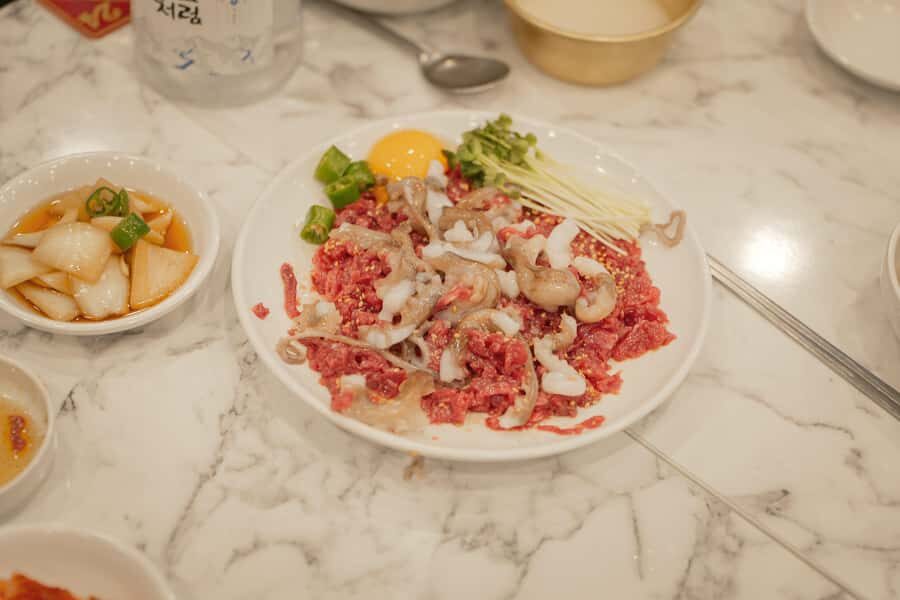
The tour includes chopped live octopus as part of the market experience. Here’s the key: it’s a personal choice. If you want to try it, you’ll be with your guide at the right point in the market flow. If you’d rather skip it, you can still enjoy the rest of the tastings and keep your night moving.
That option makes the tour feel less like a dare and more like a guided sampling experience. It also helps you understand why Koreans treat this type of food as part of the night market texture, not just shock value.
Jogyesa Temple lantern time: a quiet reset in the middle of the night
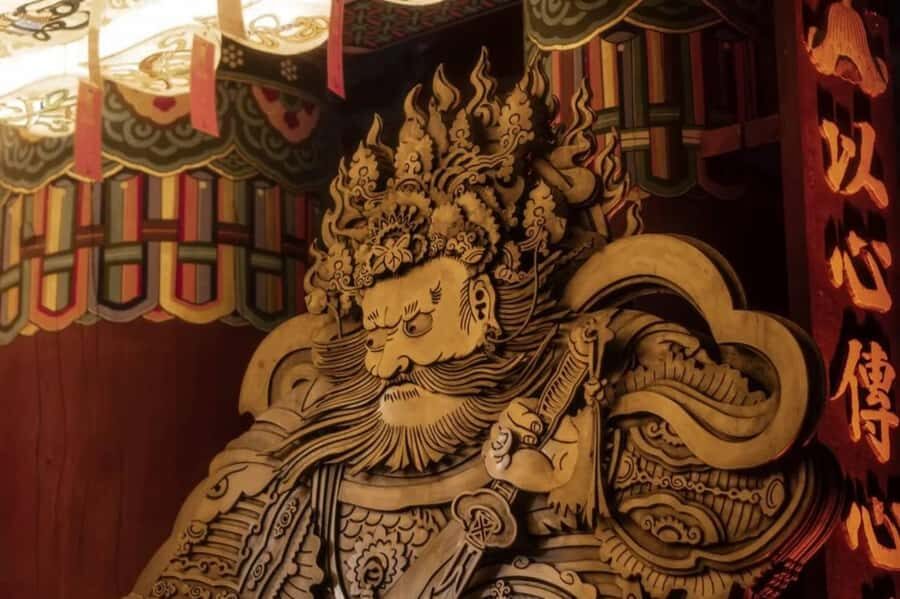
After the palace and the market, you get one of the best mood switches in Seoul night sightseeing: Jogyesa Temple. Instead of neon-and-traffic energy, you get a calmer setting shaped by temple space and lantern light.
This stop is about 30 minutes with photo time and a guided visit. The guide’s explanation is what turns it from “pretty lights” into something you can actually read. Buddhism here isn’t presented as a textbook lesson. It’s framed as atmosphere, symbols, and the lived rhythm of the space.
If you enjoy travel where the guide helps you notice details, this is a strong spot. The reviews and guide feedback around this tour consistently mention thoughtful explanations and extra time for Buddhism context, including guides like Mia who are praised for being patient and thorough.
Practical tip: temples can feel cooler than the street. Bring a light layer and expect your pace to slow down once you’re inside.
Jongno 3-ga Pocha Street and Ikseon-dong: the short stops that keep momentum
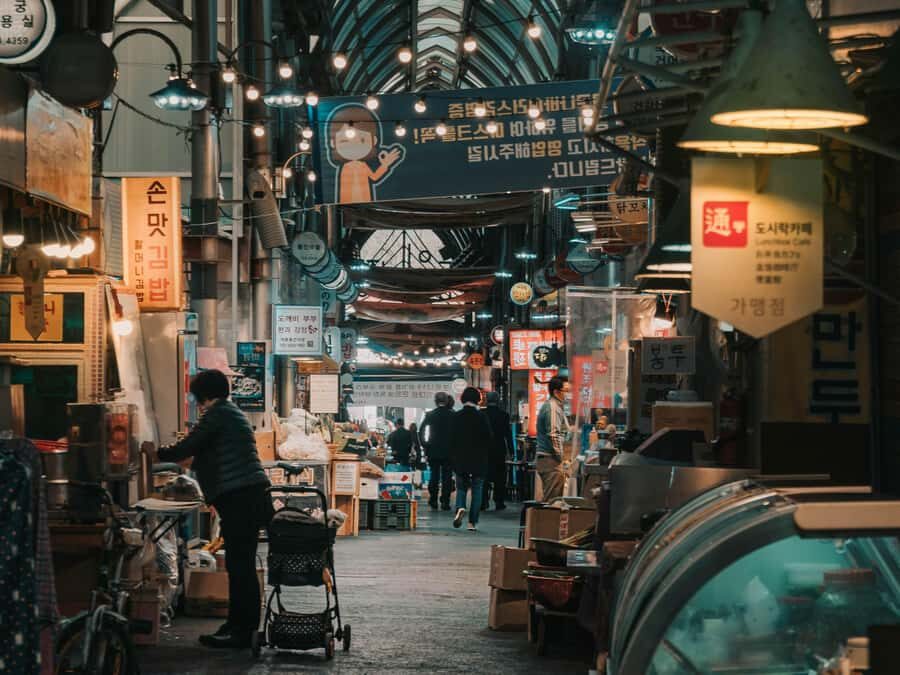
This tour covers more than just palace and food. You also get quick stops that help you feel where you are in Seoul’s nighttime map.
You can also read our reviews of more guided tours in Seoul
Jongno 3-ga Pocha Street (about 15 minutes)
You’ll have a guided walk-and-look moment here. It’s a short slice, but it’s useful if you want the vibe of a Korean night drinking and snack street without turning the tour into an hours-long hangout. If you like people-watching and casual street energy, this is where you’ll feel it.
Ikseon-dong Hanok Village (about 15 minutes)
Then you get a photo stop and guided pass-by at Ikseon-dong Hanok Village. The purpose isn’t a deep architectural walking circuit. It’s more like a “get your bearings fast” introduction—enough to see the hanok style and know it when you pass it again later.
Because these stops are short, they work best if you’re traveling with a mindset of “see many things, don’t over-plan.” If you’re the type who wants to linger for 90 minutes in one place, you might find these parts brisk.
What the 4-hour route feels like on your feet
This is built as a single-night circuit with a moderate amount of walking. That’s part of the value. You’re stacking palace, temple, and major food area into one plan so you don’t waste your night trying to stitch together separate tickets and transit.
Timing-wise, the tour includes:
- A palace visit of about 1 hour
- A market food stop of about 1 hour
- Jongno 3-ga and Ikseon-dong as short guided/photo stops
- Jogyesa Temple for about 30 minutes
Transfers are by foot too, including short walking segments (like around 10–15 minutes between parts). The guide also keeps the group cohesive, which matters at night when streets get busy and everyone wants the perfect photo.
If you’re sensitive to cold, plan for it. One reason people recommend this tour is that it still feels well-organized even when the weather turns. Still, dress for temperature drops and keep your jacket ready.
Guides matter here: why Mia and Kim are mentioned so often
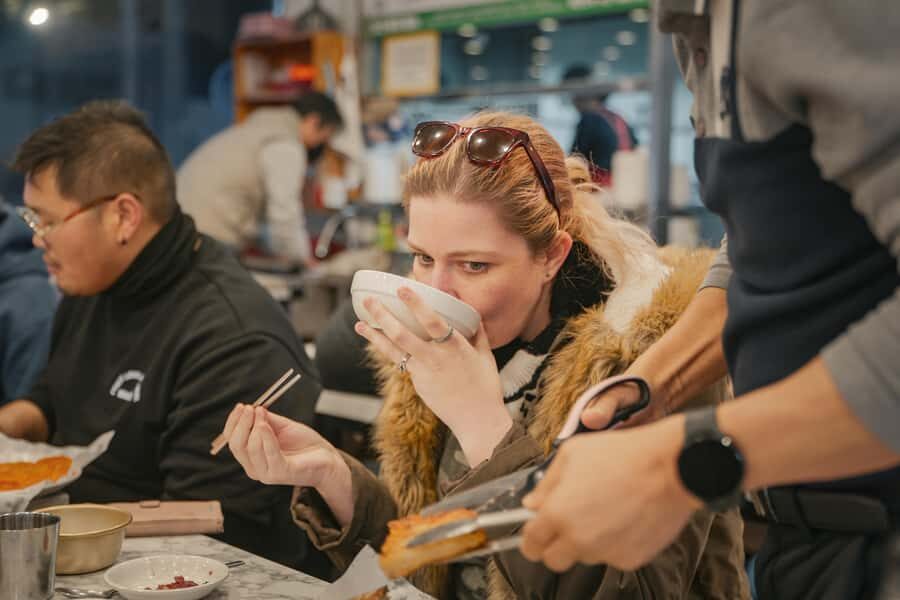
With tours like this, the guide can make or break the night. The palace and temple sections need context, and the market section needs pacing so you don’t spend your hour hunting for the “included” items.
Guides like Mia and Kim show up repeatedly in feedback for being patient, organized, and strong at storytelling. Mia in particular gets praise for thorough explanations and for giving extra time when the group is interested in Buddhism context.
What I like about this approach is that you’re not just collecting photos. You’re learning how to interpret what you’re seeing while you’re still in the place. That helps the night food part too, because you understand the cultural frame around the market instead of treating it as a random lineup.
Language-wise, you’ll be traveling with a guide in English and Korean, so you’re not locked out if you want to ask questions.
Price and value: why $60 can work (if you eat your way through it)
At about $60 per person for a 4-hour night tour, you’re paying for more than a guide. You’re also getting:
- Entrance fees included
- Guided history/temple context
- Gwangjang Market street food tastings
- Makgeolli
- Assorted Jeon fritters
- Chopped live octopus
When I look at value like this, the deal is clear: this is a guided “taste package” plus major sights. If you were doing it on your own, you’d still pay entrance fees and you’d likely spend extra money and time figuring out where to eat and what to order.
The only caution is that this price makes sense if you’re genuinely interested in both sides: the palace/temple storytelling and the market food sampling. If you only want one of those (say, just the palace photos), you might feel like the rest is extra.
Also, there’s no hotel pickup or drop-off, so you’ll need to get yourself to the meeting point. That’s common for walking tours, but it’s worth planning around.
Meeting point quick check: where to start and how the night ends
You meet at Hyehwa Station Exit 4 (outside), with a guide holding a sign that reads Tripper. The tour ends back at the meeting point, which is convenient because it keeps the night from turning into a complicated route back across Seoul.
If you’re arriving by subway, map your station entrance ahead of time. Exit confusion is a common travel headache, and night tours leave less time to sort it out.
Who this tour suits best
This is a great fit if you:
- Want Seoul at night with major stops handled for you
- Like guided history that connects to what you see in real time
- Eat street food and don’t mind sampling multiple items in a short period
- Would like the option to try live octopus without pressure
It may be less ideal if you:
- Want minimal walking or lots of quiet downtime
- Are only interested in daytime palace viewing
- Prefer fully vegetarian nights with no “choice moments” at all (vegetarian options are available, but the live octopus tasting is still part of the market segment, even though you can skip it)
Wheelchair accessibility is noted, so if mobility is a concern, this can be a workable format. Still, walking is part of the design, so it’s smart to assess your own stamina.
Should you book this Seoul night palace, temple, and market tour?
I’d book it if you want one organized night that blends Changgyeonggung Palace, Jogyesa Temple lantern calm, and a guided Gwangjang Market food hit with Makgeolli and Jeon. The guides (including Mia, Kim, Jay, Thomas, and others) are repeatedly praised for making the route feel understandable, not chaotic.
Skip it if you’re not into walking circuits or you only care about one category—sights or food. For most people who want a well-paced night with tastings included, this is a strong way to spend four hours without guesswork.
FAQ
How long is the tour?
It runs for about 4 hours.
How much does it cost?
The price is listed as $60 per person.
Where do I meet the guide?
Meet at Hyehwa Station Exit 4 (outside). Look for the guide holding a sign that reads Tripper.
Is the tour wheelchair accessible?
Yes, it’s listed as wheelchair accessible.
What food and drinks are included?
Makgeolli (Korean rice wine) and assorted Jeon fritters are included, along with street food tastings at Gwangjang Market. The tour also includes chopped live octopus.
Is the live octopus tasting required?
No. The octopus tasting is a personal choice, and you’re welcome to eat or not eat.
Are there vegetarian or halal options?
Vegetarian and halal options are available if you specify when booking.
Is hotel pickup provided?
No hotel pickup and drop-off are included. The tour starts at the meeting point and returns there at the end.

![[DMZ Private Full day Tour] & The War Memorial include Lunch - Imjingak Pyeonghoa-Nuri Park: start with monuments and the rust train](https://8.koreaadventures.com/wp-content/uploads/dmz-private-full-day-tour-the-war-memorial-include-lunch.jpg)