REVIEW · SEOUL
Best DMZ Tour Korea from Seoul (Red Suspension Bridge Optional)
Book on Viator →Operated by VIP TRAVEL Co.Ltd · Bookable on Viator
This tour turns the DMZ into a real story you can follow. I like the tight, timed stops that cover the big landmarks without wasting time, and I especially like the lack of forced shopping. My only caution: the Third Tunnel can feel physically demanding, and timing can shift when military schedules change.
You’ll ride comfortably with round-trip transportation and a guide who gives context stop by stop. Guides such as Ray, Emily, Crystal, Lina, Kelly, Jenny, Gabby, Alex, and Diane are repeatedly praised for clear English and for making the history feel human, not just academic.
In This Review
- Key points to know before you go
- DMZ Theater and Exhibition Hall: South Korea’s story first
- Imjingak Pyeonghwa-Nuri Park and the Iron Horse symbolism
- Bridge of Freedom: the 1953 crossing you can walk on
- The Third Tunnel: a tight hour with a real purpose
- Dora Observatory: binocular views and a message from far away
- Optional Red Suspension Bridge: a wobbly reset after history
- Optional Majang Lake suspension bridge and scenic stretch time
- Optional Tongilchon-gil and the JSA Museum add-on
- Price and value: why $29.75 can make sense
- Timing, tickets, and what you need to bring
- Who this DMZ tour is best for
- Should you book this DMZ tour from Seoul?
- FAQ
- How long is the DMZ tour from Seoul?
- What’s included in the price?
- Do I need a passport?
- Are pickup and transportation included?
- Is lunch provided?
- Does the tour include the Red Suspension Bridge?
- Can I add the Majang Lake bridge and the JSA Museum?
- What if the DMZ schedule changes?
Key points to know before you go
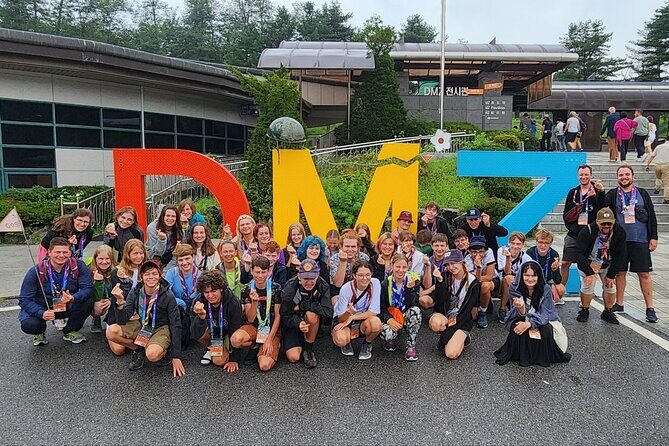
- No-pressure shopping focus: the day is built around sites, not sales stops.
- Museum and major-site admissions included: you won’t be guessing what costs extra.
- DMZ Theater + Exhibition Hall first: you get the South Korean framing before you look through fences.
- Third Tunnel is a workout: short, but it’s tight and physically more than a simple stop.
- Binocular viewing at Dora Observatory: you can spot areas tied to North Korea from a designated viewpoint.
- Optional Red Suspension Bridge and Majang Lake: swap history-heavy time for a fun bridge finish if you want it.
DMZ Theater and Exhibition Hall: South Korea’s story first
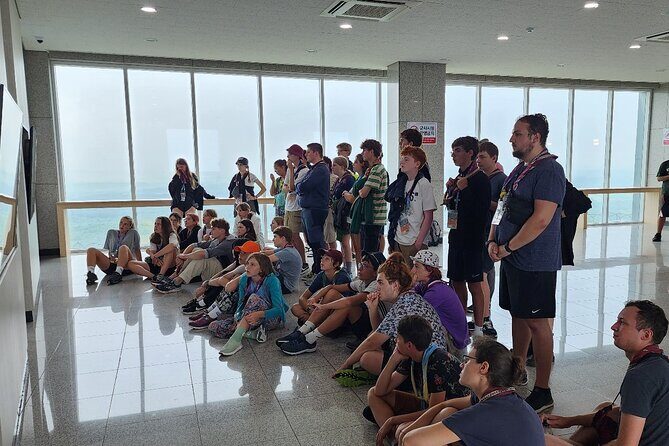
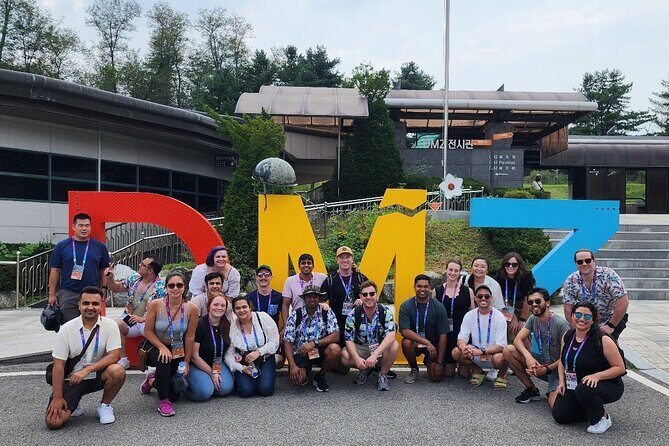
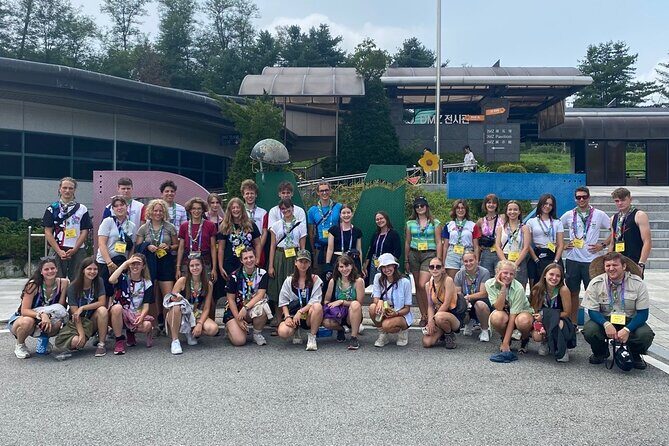
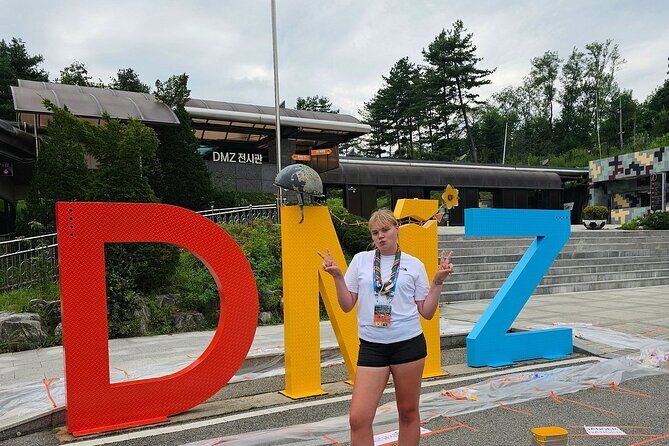
The day typically starts at the DMZ complex area, where you’ll begin with the DMZ Theater and the DMZ Exhibition Hall. This matters more than it sounds. If you only visit lookout points and tunnels, you can end up with a photo-only experience. Start here and you get the background the guide is working from: how the Korean War shaped today’s border reality, and why the DMZ exists as a stopped-time zone.
At this stage, you’re also getting your bearings. The exhibitions are set up to help you connect what you’ll see later: the infiltration tunnel, the observation view from Dora, and the surrounding landmarks built around war memory. If you like your history with a timeline and clear takeaways, this order helps a lot.
Admission is included for these parts, so you’re not paying extra once you’re already there. And since you’re with a group, you’ll usually be able to move in a smooth rhythm rather than trying to coordinate everything yourself near sensitive areas.
You can also read our reviews of more tours and experiences in Seoul.
Imjingak Pyeonghwa-Nuri Park and the Iron Horse symbolism
Next comes Imjingak Pyeonghwa-Nuri Park, a reflective stop that sets an emotional tone. This is where the tour slows down just enough to remind you this is not only geopolitics. It’s also families, loss, and the human cost of a divided country.
You’ll find the Iron Horse, a symbol of the severed railway link between North and South Korea. It’s the kind of object you can take a photo of in 30 seconds, then keep thinking about for hours afterward. The park is also designed to console Korean War refugees, which gives the stop weight beyond scenery.
Imjingak Pyeonghwa-Nuri Park is free for admission on this tour, which is a small but nice value detail. It also helps balance the day. After heavier DMZ elements, this is where you can catch your breath, stand in a quieter space, and let the guide’s commentary land.
If you’re traveling in colder months, this is a good place to feel the weather challenge early, then plan layers for the tunnel and observatory later.
Bridge of Freedom: the 1953 crossing you can walk on
Then you’ll head to the Bridge of Freedom. You walk over the Imjin River on the route associated with prisoner-of-war returns in 1953. The number tied to the crossing is specific: 12,773 prisoners of war. That detail is the kind of thing you remember because it puts scale behind the story.
This is also one of the easiest stops to misunderstand if you treat it like a sightseeing bridge only. The power here is in the context—why this bridge exists, what it represented at the time, and why it still matters now. The guide’s job is to make you aware of what you’re standing on, not just what you’re looking at.
Admission is free here too. The stop tends to last long enough to walk, pause, and take photos without dragging. If your group is chatty, you may also find it easier to ask questions during this segment because it’s accessible and not physically tiring.
The Third Tunnel: a tight hour with a real purpose
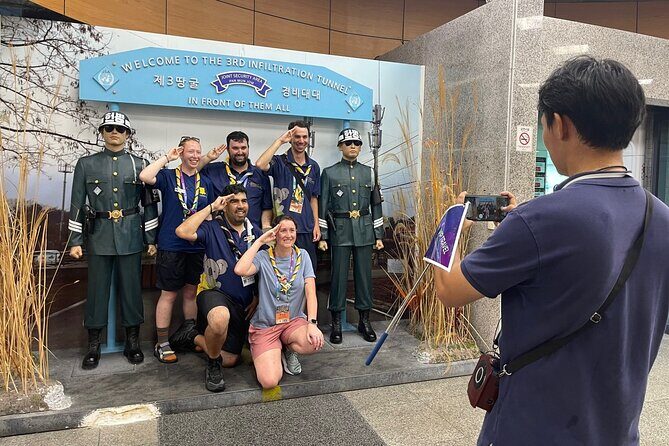
The 3rd Infiltration Tunnel is often the most talked-about part of the trip. It was discovered in 1978, and the stated purpose was to support infiltration plans toward the South. You’ll walk through the tunnel area, which is why this stop gets labeled as memorable, not because it’s pretty, but because it’s physical.
Two practical notes before you go:
1) Expect it to feel demanding. The tunnel portion can be tougher than the rest of the day. If you don’t love confined spaces, pace yourself and listen to the guide’s guidance.
2) Wear practical footwear. You’re moving indoors and around uneven surfaces in some areas, so skip anything that’s hard to walk in quickly.
The value of the tunnel stop is that it turns abstract strategy into something you can experience with your own body. You’re not just hearing about an invasion route; you’re walking part of the route itself, which changes how the story lands.
On the day, guides like Ray and Alex are often praised for explaining the tunnel clearly, and Lina is frequently highlighted for her strong storytelling that makes the Korean War feel personal rather than distant. If your guide is good at Q and A, this is also where asking questions tends to pay off.
Dora Observatory: binocular views and a message from far away
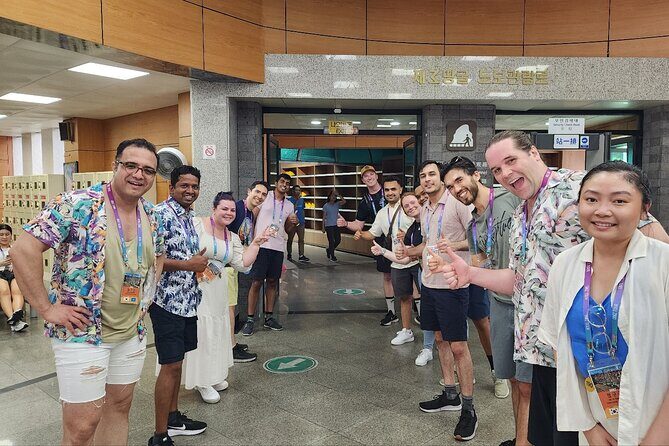
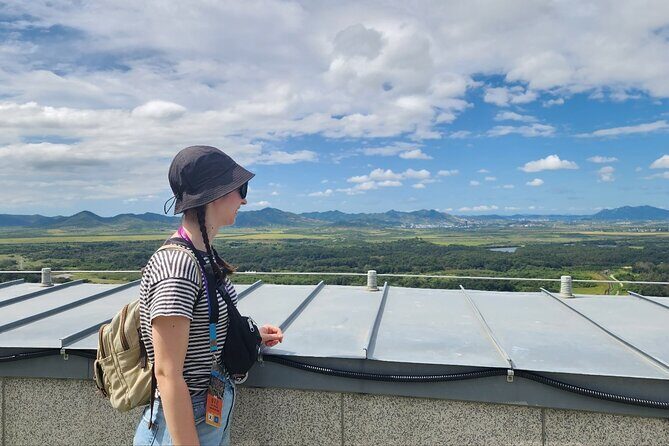
Dora Observatory is the payoff stop for people who want to look across the border and feel the tension of distance. The view comes with high-powered binoculars, and you’re positioned to see areas associated with North Korea, including the propaganda village of Kijong-dong and the distant city of Gaesong.
Even if you’ve seen photos of the observatory before, this part works because you’re doing it with the route in mind from earlier stops. After the tunnel and the exhibitions, the view stops being random scenery. It becomes part of the same narrative: a boundary enforced at a human scale.
The rebuilding in 2018 is part of why the observatory experience feels modern enough to manage smoothly while still serving its purpose: a controlled viewpoint for visitors.
Admission is included here on the tour, so again, you’re paying for the day once and then using the stops rather than juggling ticket add-ons. The observatory stop also gives you a chance to slow down. Look, then ask the guide to connect what you’re seeing to what you learned earlier.

Optional Red Suspension Bridge: a wobbly reset after history
If you select the Gamaksan Chulleong Bridge option, you add a very different kind of experience at the end of the history-heavy day. This bridge is described as the wobbliest towerless suspension bridge in South Korea, also known as the Gloucester Heroes Bridge. The appeal is simple: it’s a fun, physical walk that feels like a reset after tunnels and observatories.
Because it’s optional, you control your energy level. If you know you want more adrenaline and photos, pick it. If you’d rather keep the day strictly focused on the DMZ story, skip it and stay with the core sites.
The one thing to keep in mind is timing. The DMZ schedule can change due to military issues, so the optional stops depend on the day’s flow. If you’re the type who gets stressed by changes, it’s smart to treat optional bridges as a bonus, not a guarantee.
Optional Majang Lake suspension bridge and scenic stretch time
Another optional add-on is the Majang Lake Suspension Bridge in Paju. This one is more about crossing a long span over water, and it’s got a clear, crowd-friendly fact attached: it spans 220 meters across Majang Reservoir.
This can be a great choice if your group has mixed interests. History fans get the DMZ core. Then everyone gets a bright, open-air bridge walk that feels lighter. It’s also a nice way to see a different slice of the region beyond the border area.
Like the red bridge option, whether you get this depends on selecting it during checkout and on how the day runs. It’s still worth considering if you want your DMZ day to end with a sense of movement rather than a return to your hotel immediately.
Optional Tongilchon-gil and the JSA Museum add-on
Some departures also offer an optional stop connected with Tongilchon-gil, including the JSA Museum at the DMZ. This is included only if you choose it during checkout, and admission is listed as free for this add-on.
This can be a good fit if you’re especially curious about how the DMZ works as a place for inter-Korean interaction and documentation. It’s also a useful add-on if you feel the core DMZ stops are just giving you the framework, and you want a bit more museum time before you head back toward Seoul.
Just don’t treat it as guaranteed unless you select it. The tour has a clear rule: the DMZ-only option does not include optional bridges, strawberry picking, or the museum add-ons.
Price and value: why $29.75 can make sense
At around $29.75 per person, this DMZ tour can feel like a steal compared with the emotional impact and the amount of major-site time you get. The real value isn’t the sticker price. It’s what’s included.
You get round-trip transportation, a professional English or Chinese guide, and complimentary admission to all museums and major included DMZ stops. The itinerary covers multiple sites that individually would take planning, time, and ticket handling if you tried to piece them together.
Add to that:
- Pickup is available at the main subway station area or downtown hotels, which reduces friction when you’re trying to start early.
- You receive a mobile ticket, so you’re not stuck hunting for paper.
- The tour size is capped at 200 travelers, which usually keeps the experience organized enough to function.
One more value point: avoiding forced shopping. If you’ve done tours in other countries where the bus stops feel like a sales funnel, you’ll appreciate that this day is built for the border sites first.
Timing, tickets, and what you need to bring
This is a half-day style outing at about 7 hours 30 minutes. That’s a realistic length for a DMZ visit because the day isn’t just driving. It’s multiple secure areas, museum time, and walking between viewpoints.
Two practical musts:
- Bring your passport. If you don’t have it, a Military ID Card or an ARC card can be used instead.
- Expect timing changes because DMZ access can be affected by military issues.
That means you should keep your evening flexible. The tour returns you to Seoul with enough time to enjoy later plans, but if you’re trying to catch a tight dinner reservation or a late show, it’s safer to leave some buffer.
Weather also matters. Winter DMZ days can feel brutally cold. I’d plan on cold wind exposure around observatory areas and open memorial spaces. Layers win. Gloves and a hat are the kind of boring gear that saves your day.
Finally, bring patience for security-style processes. This is a sensitive area with real constraints, so the best approach is calm pacing and letting the guide manage the flow.
Who this DMZ tour is best for
This is a strong choice if you:
- Want the main DMZ landmarks in one day without turning it into logistics homework.
- Like history with an explanation, not just a checklist of stops.
- Prefer a group day that handles admissions and movement for you.
- Travel with kids or mixed-age groups and want guided pacing. The Third Tunnel can still be a physical hurdle, so use judgment based on your group’s comfort level.
It’s also a solid pick if you’re short on time in Seoul. You don’t need to spend days researching how to get to the border area and understand what you’re seeing.
If you’re the type who hates group tours, you still might like this one because the stops are purpose-driven and the guide commentary is the point. The best guides, based on past experiences with guides like Emily, Gabby, and Crystal, are the ones who keep the pacing steady and answer questions in a way that doesn’t turn into a lecture.
Should you book this DMZ tour from Seoul?
Book it if you want an organized, high-impact DMZ day with admissions handled and a guide who brings context to each stop. The value is strongest when you care about understanding the Korean War story and border reality, not just collecting photos.
Skip or simplify if:
- You’re sensitive to confined spaces or expect the tunnel to be uncomfortable.
- You prefer a fully DIY approach and dislike any schedule constraints, since DMZ timing can change due to military issues.
- You don’t want optional add-ons. In that case, pick the DMZ-only route and keep the day focused.
If you do book, plan smart: bring your passport, dress for cold, and treat optional bridges as bonuses. With that mindset, this tour can give you a clear, moving view of a divided Korea without turning your Seoul trip into chaos.
FAQ
How long is the DMZ tour from Seoul?
It’s about 7 hours 30 minutes (approx.).
What’s included in the price?
The tour includes a professional guide, hotel or main subway pickup, and complimentary admission to the museums and included DMZ stops. Lunch is not included.
Do I need a passport?
Yes. A passport is needed on the tour day. A Military ID Card or an ARC Card can be used instead of a passport.
Are pickup and transportation included?
Yes. Pickup is offered at the main subway station near the hotel or in the downtown area, with round-trip transportation.
Is lunch provided?
No. Lunch is not included.
Does the tour include the Red Suspension Bridge?
The Red Suspension Bridge at Gamaksan is optional. If you select it during checkout, it’s added to the day.
Can I add the Majang Lake bridge and the JSA Museum?
Yes, both are optional add-ons if selected during checkout: the Majang Lake Suspension Bridge and the JSA Museum at Tongilchon-gil.
What if the DMZ schedule changes?
The tour time can change due to military issues in the DMZ, so your day plan should stay flexible.