REVIEW · SEOUL
Seoul: Korean Cooking at Seoul Cooking Club!
Book on GetYourGuide →Operated by Seoul Cooking Club · Bookable on GetYourGuide
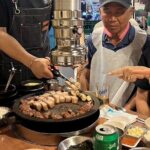
Spatulas in hand, Seoul comes alive fast. I like that you cook a stack of dishes in one sitting and then eat a full meal right there, not just nibble samples. I also love the English-led coaching—chefs like Sally, Olivia, Elly, and Grace walk you through the why, not just the how. One thing to consider: it’s not a sit-and-watch class, so come with time for hands-on cooking and expect to get a little busy.
You’ll be in the heart of central Seoul, steps from Jonggak Station, and after class you’re close to Insadong, Ikseondong, Gwangjang Market, Myeongdong, and major palace sights. The price looks steep until you add up what you get: starters, mains, side-dish tastings, dessert, drinks, and take-home recipes. If you’re a picky eater, plan to be flexible with the banchan lineup (kimchi and spicy sides show up often).
In This Review
- Key Reasons to Book Seoul Cooking Club
- Seoul Cooking Club: What You Actually Learn in 150 Minutes
- Getting There From Jonggak Station and Finding the 7th-Floor Kitchen
- Starters: Jeon (Korean Small Pancakes) With Real Pan Confidence
- Main Courses: Japchae, Bulgogi, and Jeonju Bibimbap the Way You’ll Cook Again
- Japchae: Stir-Fry Timing You Can Replicate
- Bulgogi: Soy-Sauce Seasoning That Isn’t Just Salt
- Jeonju Bibimbap: Assembly Skills That Travel Home
- Banchan Tastings: Learning Why Side Dishes Matter in Korea
- Dessert and Drinks: Sikhye, Tea, and Bing-su When It’s Available
- What’s Included, What’s Not, and What to Bring
- Price and Value: Is $109 Fair for This Much Food and Skill?
- Pacing, Group Energy, and Why the Staff Names Come Up
- Who Should Book This Cooking Class in Seoul
- Should You Book Seoul Cooking Club?
- FAQ
- How long is the Seoul Cooking Club class?
- How much does it cost?
- Where is the meeting point?
- What dishes will I cook?
- Will I get to eat what I cook?
- What dessert is included?
- What drinks are included?
- Is hotel pickup included?
- Is the class taught in English?
- Is this class suitable for children?
Key Reasons to Book Seoul Cooking Club
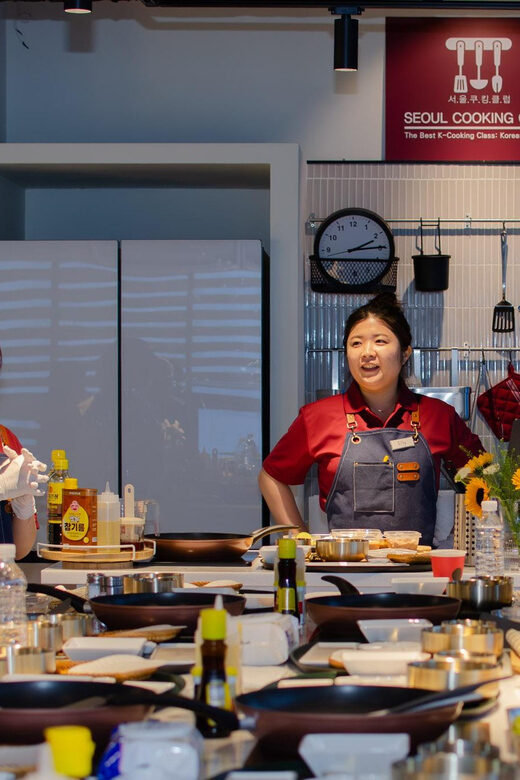
- Jonggak location that’s easy to reach: exit 12, then a short walk up to the 7th floor.
- Hands-on Korean small pancakes (jeon): you make several flavors, not one token dish.
- Chef-led English instruction: clear steps with real cooking explanations from staff like Sally and Olivia.
- Three-course style meal plus tasting: you cook, then you eat with about ten side-dish tastings.
- Take-home goodies: recipe book and a takeaway setup show up often in the experience.
- Dietary requests can be supported: gluten-free and coeliac needs were handled for some guests.
Seoul Cooking Club: What You Actually Learn in 150 Minutes
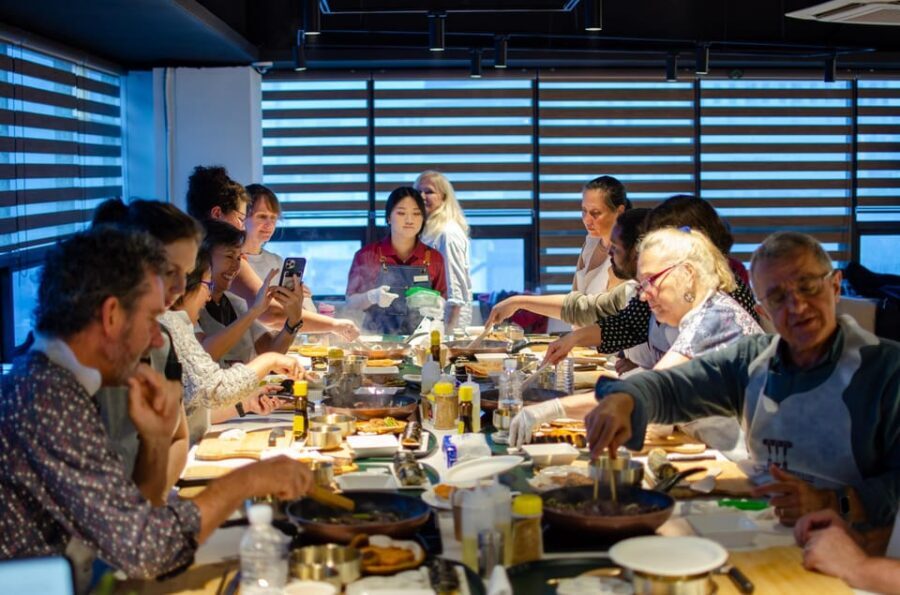
This is a “do it yourself” cooking class designed to teach you Korean food logic, not just Korean food names. You work through starters, move into the mains, then finish with dessert and drinks, all within 150 minutes. The goal is simple: you leave able to re-create the dishes at home, with the right seasoning habits and sauce cues.
I like the way the class is structured around dishes you’ll see again and again in Korea. Jeon teaches you batter consistency and pan technique. Japchae and bulgogi show the sauce side of cooking—sweet, savory, and balanced. Bibimbap teaches assembly: toppings, egg, and the mixing moment that makes everything click.
The other win is preparation. Many guests point out that a lot of the prep is handled ahead of time, and cleanup is taken care of during the flow. That means your energy goes into cooking, not scrambling for tools or washing as you go.
You can also read our reviews of more tours and experiences in Seoul.

Getting There From Jonggak Station and Finding the 7th-Floor Kitchen
You’ll find the class in central Jongno, about a minute’s walk from Jonggak Station. The most practical route is using Jonggak Station (Line 1), Exit 12. The venue is close—about 15 meters from the station—so you’re not spending your class time playing Seoul navigation roulette.
Once you exit, walk straight ahead, then make an immediate first right around the corner of Pascucci. Your entrance is in the same building on the 7th floor, next to the Good Game Zone with the orange facade.
It’s also worth knowing you’ll have plenty of nearby “after class” options. Insadong and Ikseondong are about a minute away, and Gwangjang Market, Myeongdong, and Gyeongbokgung Palace are within roughly a 10-minute walk for shopping, live music, and nightlife.
Starters: Jeon (Korean Small Pancakes) With Real Pan Confidence
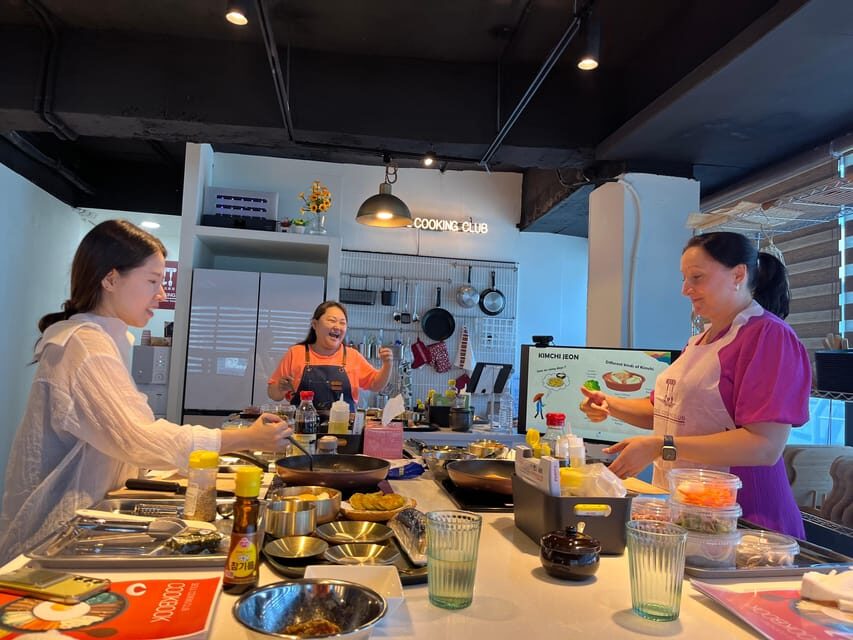
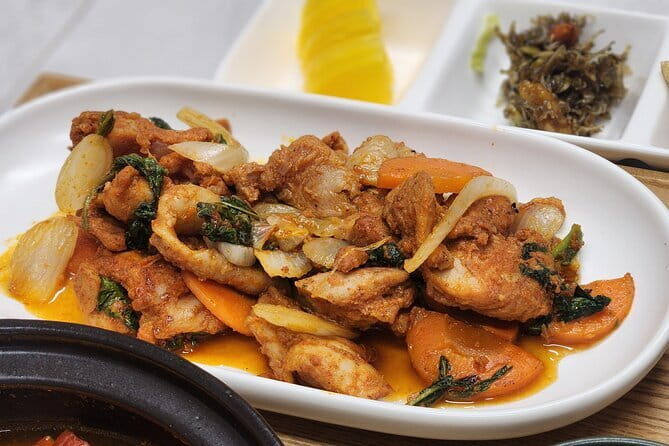
Jeon is where the class starts turning you from eater into maker. You’ll prepare three to four jeon flavors, choosing from options like Donggrangttaeng (pan-fried battered meatballs), pollack pancake, pajeon (seafood pancake), beef pancake, tofu pancake, and sesame leaf pancakes.
The benefit here is variety. You’re not repeating one batter for an entire session. Instead, you learn how Korean pancakes behave with different fillings—seafood brings moisture and salt, beef and meatballs bring richness, tofu leans into gentle texture. That variety helps you understand what changes when the ingredients change.
The cooking style is very step-by-step. Guests repeatedly describe the instructors as patient and detailed, and you’ll work in a station setup with ingredients and utensils laid out for you. In a good class, you don’t spend time guessing. Here, you’re guided through technique and timing so you can actually succeed.
One practical tip: bring closed-toe shoes. You’re moving between stations and heat sources, and this is not the time for slip-on sandals.
Main Courses: Japchae, Bulgogi, and Jeonju Bibimbap the Way You’ll Cook Again
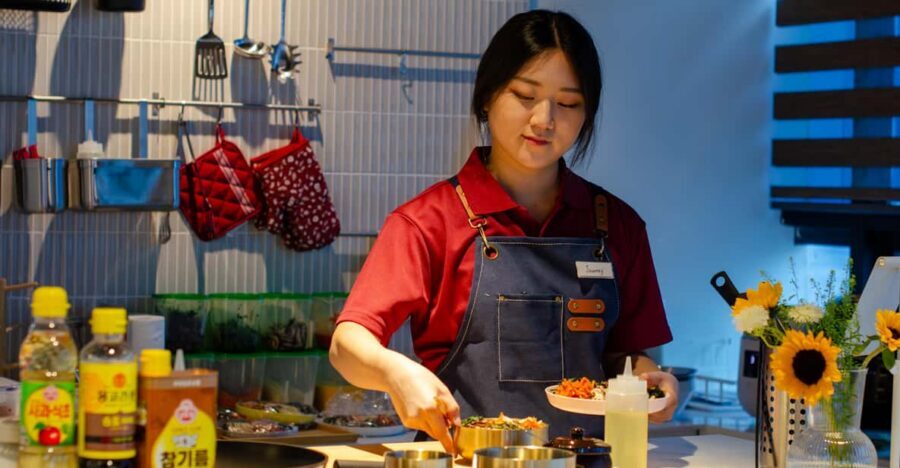
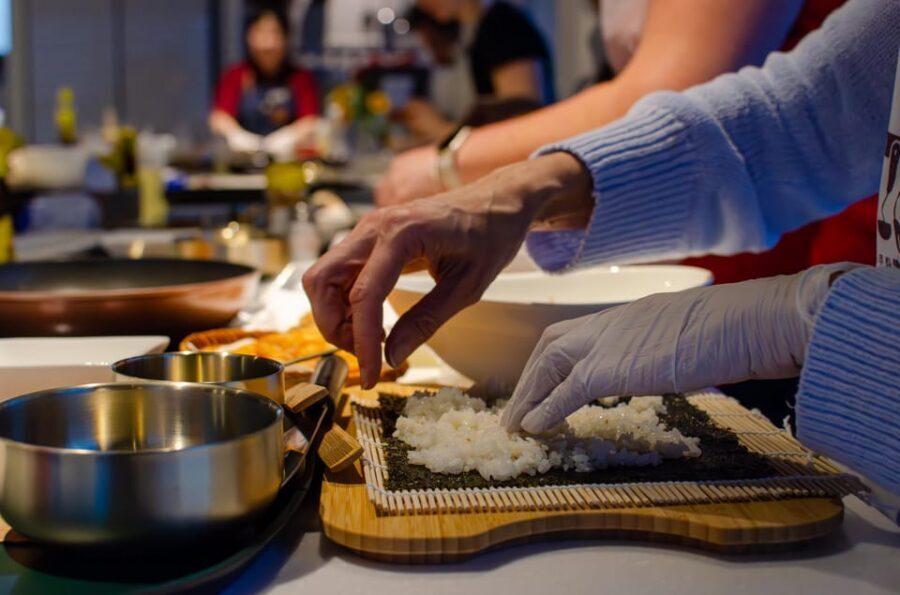
After the pancake work, you shift into the three main dishes: Japchae, Bulgogi, and Jeonju Bibimbap. This is the part that makes the experience feel like a real Korean meal, not just a “starter and dessert” sampler.
Japchae: Stir-Fry Timing You Can Replicate
Japchae is stir-fried vegetables and glass noodles. This dish can go wrong if noodles get overcooked or vegetables sit too long. What you’re learning is control—how to keep textures separate while still getting flavors to mingle.
Expect a hands-on rhythm: prep basics are handled, but you still actively cook. You’ll likely get guidance on seasoning balance and when to combine components so the noodles stay springy.



Bulgogi: Soy-Sauce Seasoning That Isn’t Just Salt
Bulgogi is sliced beef seasoned with soy sauce. The key is that bulgogi is more than “salty beef.” It’s a sweet-savory style that tastes layered even when ingredients are straightforward.
You’ll be working with the sauce concept: how it coats, how it clings, and how heat helps the flavors settle into the meat. Once you’ve made it in class, you’ll understand why bulgogi is such a dependable Korean staple.
Jeonju Bibimbap: Assembly Skills That Travel Home
Jeonju bibimbap is where the class becomes very practical. You’re not only cooking components; you’re assembling. Bibimbap is built to be mixed at the table, and the dish makes sense once you see the topping structure and balance.
Jeonju-style bibimbap is also a great lesson in “toppings first, sauce second.” You learn how each garnish contributes something different—crunch, freshness, color, and spice.
If you remember one thing from this part, make it this: bibimbap is easier than it looks once you understand the assembly logic. You’re given the structure so you can recreate it without guesswork.
Banchan Tastings: Learning Why Side Dishes Matter in Korea
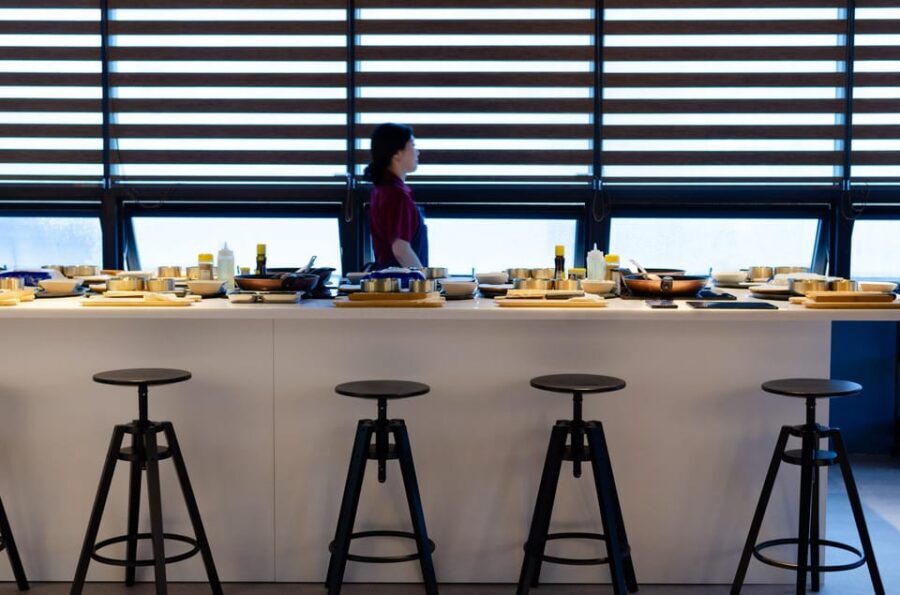
Here’s where the class turns into a food-education session. Alongside the dishes you cook, you get about ten tastings of Korean sides. The lineup can include kimchi, Korean egg-roll, stir-fried anchovy, radish kimchi, seasoned soybean sprouts, seasoned spinach, and spicy cucumber.
In many Korean meals, banchan isn’t an afterthought. It’s a system: it balances the main dishes, keeps flavors changing in your mouth, and adds variety without needing a separate course for every flavor.
This is one of the most praised parts of the experience. People like the range of tastes and the chance to sample while still learning how the flavors get built. You’ll leave with a better sense of what to pair at home—especially if you tend to cook only one main and stop there.
Dessert and Drinks: Sikhye, Tea, and Bing-su When It’s Available
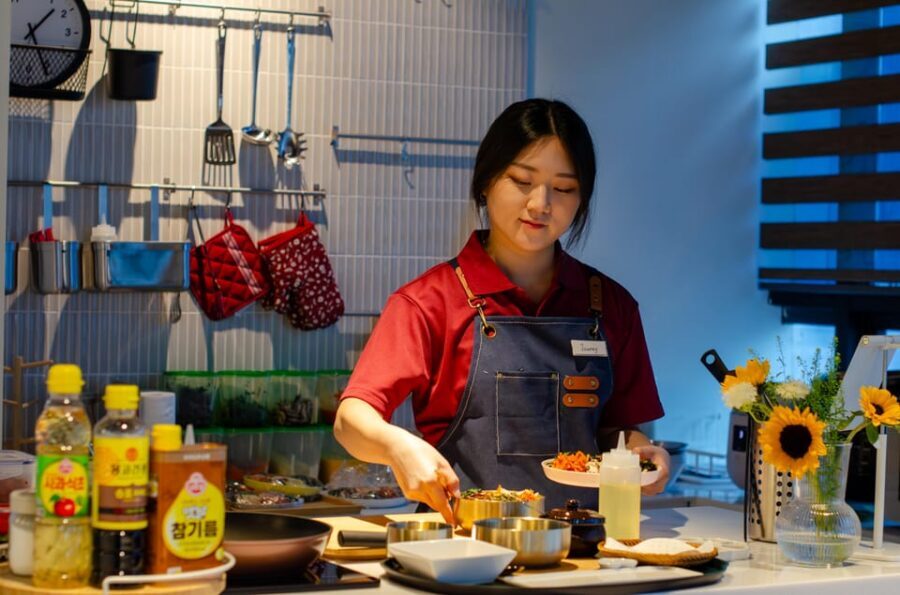
A meal ends better with something sweet, and you do get a dessert finish. Dessert options change daily, but bing-su is mentioned as a popular Korean choice you can indulge in when it’s on the menu.
Bing-su is the kind of dessert that feels like a cooling reset after savory food. It also helps you enjoy the meal as a complete experience rather than just a cooking workshop.
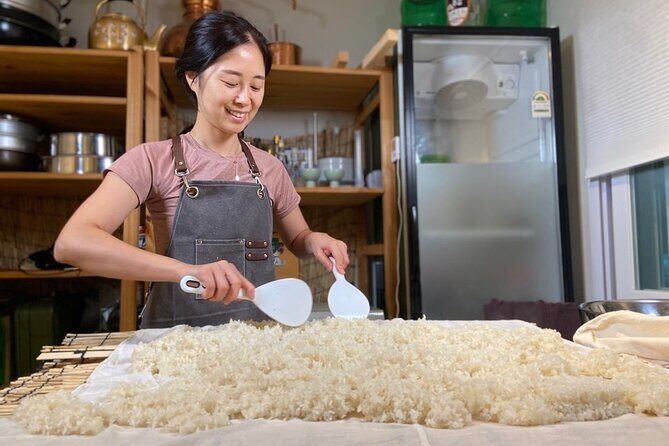
You’ll also have drinks during the class, including water, Sikhye, and Korean tea. Sikhye is a sweet rice drink, and it’s a nice shift from heavy flavors. Korean tea works as a cleaner finish between bites.
One small mindset shift helps here: pace yourself. Multiple guests say come hungry, but also pace your bites because you’re cooking and tasting at the same time.
What’s Included, What’s Not, and What to Bring
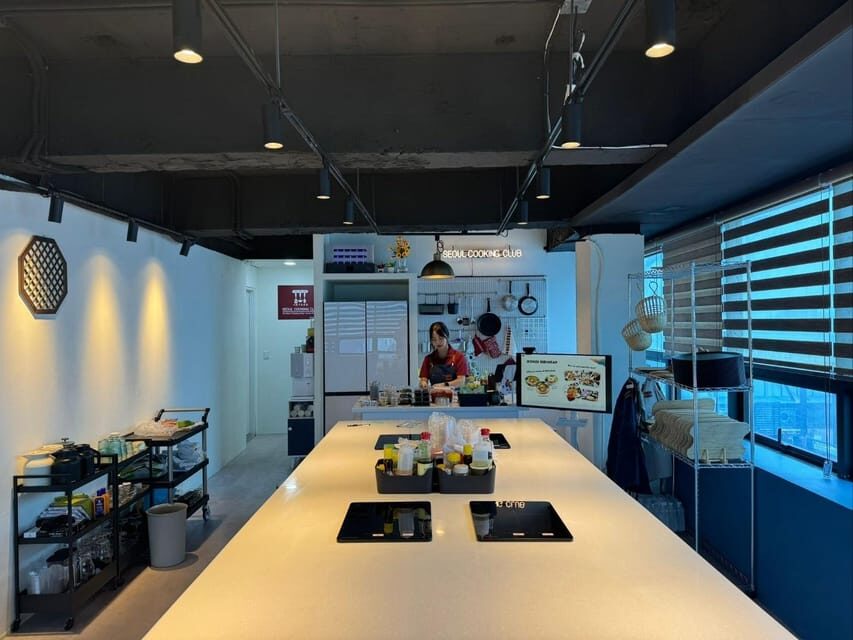
You’re covered for the essentials of a full class meal. Included items are: a welcome drink, 3 to 4 starters, 3 main dishes, jeonju bibimbap, Korean side-dish tastings, Korean dessert, and traditional Korean drinks.
What’s not included is hotel pickup and drop-off. You’ll use public transit and walk the last bit. That’s normal for central Seoul experiences, and the good news is the location is easy to find from Jonggak.
What to bring:
- Closed-toe shoes
Other useful expectations based on real guest experiences: many people highlight how stations are set up neatly and how cleanup is handled so you can focus on cooking. Several guests also mention take-home items like a recipe book, takeaway containers, and a gift bag. Those are big value add-ons because you actually use what you learn later.
For dietary needs: the data shows gluten-free support was possible for at least one guest, and coeliac needs were accommodated for another. If you have restrictions, tell the provider ahead of time and double-check what can be swapped.
Price and Value: Is $109 Fair for This Much Food and Skill?
$109 per person is not a bargain. It’s also not random pricing. Here’s what you’re paying for, in plain terms:
- Time and instruction: 150 minutes with an English-speaking chef coaching you through multiple dishes.
- Hands-on cooking + eating: you’re not only learning. You’re also getting a full meal experience, including dessert.
- Breadth of dishes: you cook several jeon flavors, then three major dishes, plus banchan tastings.
- Taste training: the about ten side tastings help you understand Korean seasoning patterns.
- Take-home learning: guests commonly mention a recipe book and takeaway setup, which boosts long-term value.
If you just want one Korean meal, you’ll find cheaper options. But if you want skills and you want to eat what you make, the value starts looking much more solid. The price becomes easier to justify if you’re the type who cooks at home and enjoys recreating food you can’t easily copy from a restaurant.
The best way to think about it: you’re paying for a guided cooking day where food comes with instruction and a finish that doesn’t leave you hungry.
Pacing, Group Energy, and Why the Staff Names Come Up
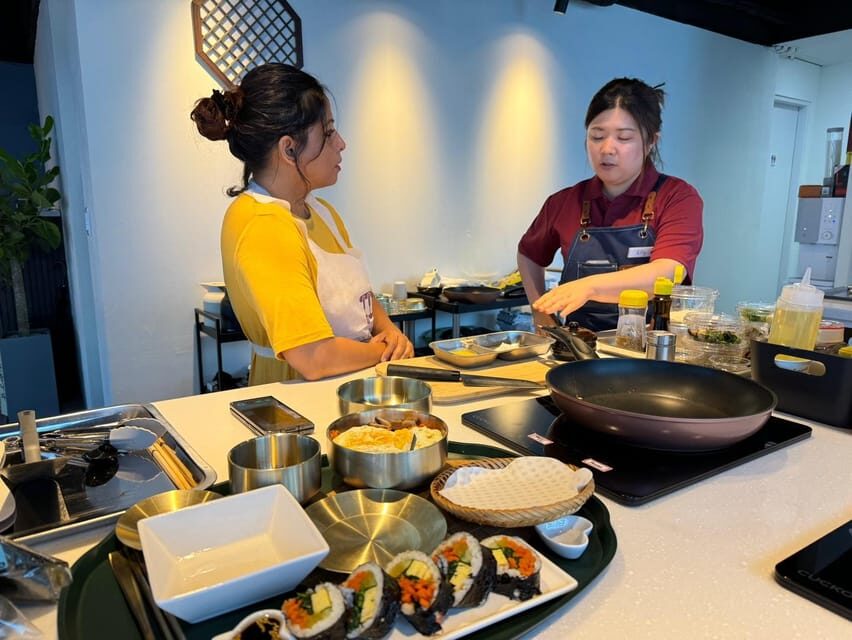
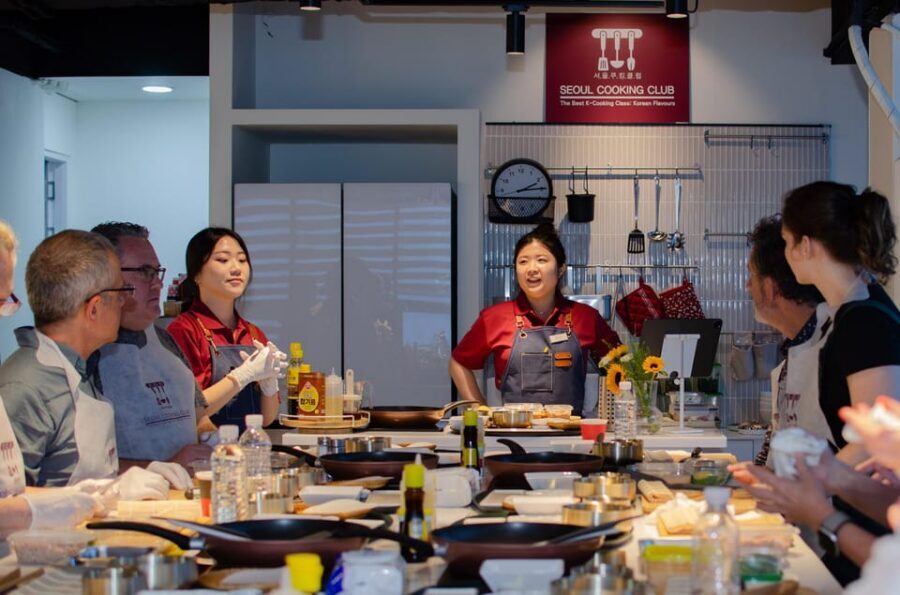
The experience has a reputation for friendly, patient teaching. In the reviews, chef names like Sally, Olivia, Elly, and Grace show up again and again, and the pattern is consistent: clear steps, lots of comfort for first-timers, and a teaching style that answers questions without making you feel rushed.
Group size can matter, and some guests note smaller groups on certain days. That’s a real plus because you get more chances to ask about sauce, batter, heat, and texture.
Also note the class flow. Some guests say the prep is done ahead of time and cleanup is handled, with an assistant helping keep stations organized. That reduces stress and keeps the focus on cooking and tasting.
One practical drawback to keep in mind: the class isn’t for kids under 16. So if you’re traveling with younger kids, you’ll need a different plan.
Who Should Book This Cooking Class in Seoul
This is a strong match if you:
- Love Korean food and want to learn how it’s made, not just where to eat it.
- Want an activity that works solo. Several guests mention solo travel highlights.
- Prefer an English-led experience with step-by-step explanations.
- Like food as culture. Cooking gives you the context behind ingredients and seasoning.
You might not love it if you:
- Hate hands-on tasks and prefer watching.
- Are extremely strict about dietary needs and want guaranteed substitutions without notice (the class has shown flexibility, but you should confirm your specific requirement).
- Need a totally quiet, slow-paced afternoon.
The session timing is also useful. The class runs three sessions from Monday to Sunday, and you can choose brunch, lunch, or an early dinner. That helps you plug it into your day without forcing one rigid schedule.
Should You Book Seoul Cooking Club?
Book it if you want a Seoul food experience you can recreate later. The class hits a rare combo: you cook multiple dish types, you eat a proper meal with banchan tastings, and you leave with recipes and leftovers. For the $109 price, you’re paying for real teaching and real food, not just a tasting flight.
Skip it if you mainly want a quick, low-effort meal. This is a cooking class first, restaurant second. Bring closed-toe shoes, come hungry, and expect to be busy—then you’ll get exactly what the format promises.
If you book, do one smart thing: plan the rest of your day with walking in mind. You’ll likely finish full, and you’ll be positioned to explore nearby neighborhoods and markets without complicated transport.
FAQ
How long is the Seoul Cooking Club class?
The class lasts 150 minutes.
How much does it cost?
The price is listed as $109 per person.
Where is the meeting point?
You’ll go to Seoul Cooking Club near Jonggak Station (Line 1), Exit 12.
What dishes will I cook?
You will prepare jeon starters (3 to 4 flavors), plus Japchae, Bulgogi, and Jeonju Bibimbap.
Will I get to eat what I cook?
Yes. The class includes a three-course style meal and also tastings of Korean side dishes.
What dessert is included?
A Korean dessert is included, and options change daily. Bing-su is mentioned as a favorite option.
What drinks are included?
Included drinks include water, Sikhye, and Korean tea, plus a welcome drink.
Is hotel pickup included?
No, hotel pickup and drop-off are not included.
Is the class taught in English?
Yes, the instructor teaches in English.
Is this class suitable for children?
No. It is not suitable for children under 16.