REVIEW · SEOUL
Learn and Make Your Very Own Craft Makgeolli
Book on Viator →Operated by Baekusaeng Makgeolli · Bookable on Viator
Rice wine you can brew, not just sip. This class at Baekusaeng Makgeolli in Mapo-gu turns Korean makgeolli into a hands-on lesson, taught by Joe. You’re not only tasting; you’re learning how the process works so you can keep going after Seoul.
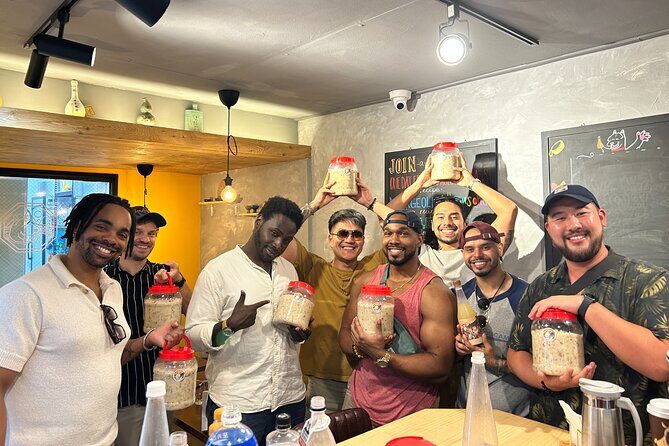
I especially like the tasting flight approach, where you compare aroma, sweetness, acidity, and texture. I also like the intimate feel: a maximum of 15 people makes it easier to ask questions and actually interact in the room.
One consideration: it’s about fermentation skills, not a quick drink you can finish right away. You’ll leave with a batch to ferment at home, so you’ll need a little patience and fridge-or-counter planning while it works.
In This Review
- Key Takeaways at a Glance
- Baekusaeng Makgeolli in Ahyeon-dong: small room, big focus
- Your first lesson is in your glass: the makgeolli tasting flight
- What you learn about ingredients and tools (and why it matters)
- Hands-on brewing: making your batch the craft way
- Leaving with makgeolli: your 1.2-liter take-home ferment
- Joe’s teaching style: clear steps, room for questions
- Price and value for a 2-hour craft workshop
- Who should book (and who might want to think twice)
- Final call: should you book Baekusaeng Makgeolli?
- FAQ
- How long is the makgeolli class in Seoul?
- What do I get to take home?
- Where does the experience start?
- How many people are in the group?
- Is a mobile ticket used?
- Can I cancel and get a full refund?
Key Takeaways at a Glance
- Hands-on brewing led by Joe, with practical steps you can repeat
- Makgeolli tasting flight to train your palate (sweetness, acidity, texture)
- Real fermentation focus, including yeast/nuruk activity plus filtering and conditioning
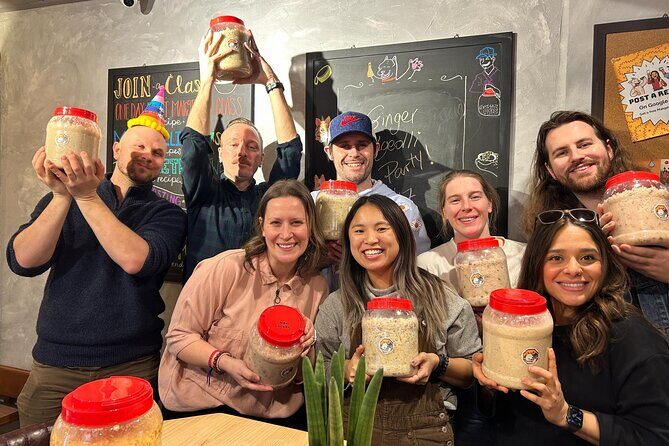
- Take-home makgeolli batch to ferment (about 1.2 liters)
- Small class size (max 15) that helps questions land fast
Baekusaeng Makgeolli in Ahyeon-dong: small room, big focus
This experience happens in Seoul’s Mapo-gu area, starting at 346-35 Ahyeon-dong. The meeting point is near public transportation, so you’re not scrambling across the city just to find a door with a sign.
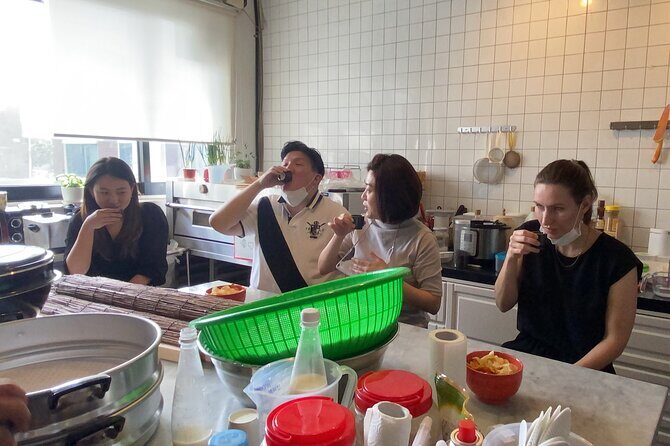
The vibe is part brewery, part workshop. The setting is described as cozy and shop-like, which matters because it keeps the class grounded in hands-on work rather than turning it into a lecture hall. And when you’re learning fermentation, a relaxed, focused room helps you pay attention to steps and timing.
The class is also intentionally small (up to 15). That’s a big deal for a workshop where you’ll be tasting, handling ingredients, and asking about outcomes like texture or sourness.
You can also read our reviews of more tours and experiences in Seoul.

Your first lesson is in your glass: the makgeolli tasting flight
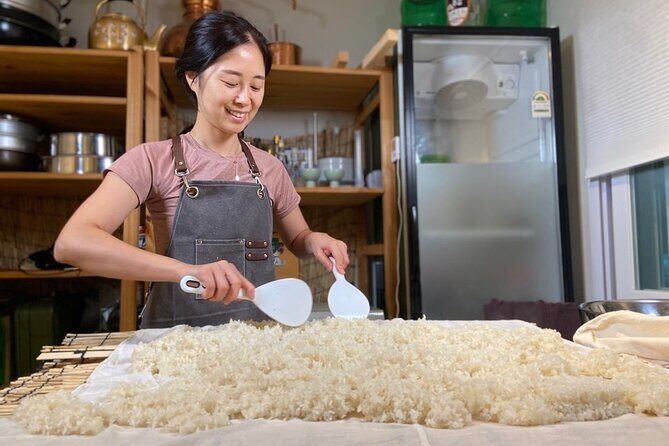
Before you get hands-on, you start with tasting thoughtfully selected makgeolli. This isn’t just about saying “this one is good.” The goal is to learn how different makgeolli styles feel and taste, and why.
You’ll pay attention to aroma, sweetness, acidity, and texture. That sensory breakdown is useful because makgeolli isn’t one flavor. It’s a changing balance between rice, yeast activity, and how it’s processed and conditioned.
If you’re used to ordering makgeolli at restaurants, this is the moment that recalibrates your expectations. Instead of guessing, you start mapping the flavors to fermentation and technique. You also get a more realistic sense of what you’re aiming for when you take your own batch home.
And yes, you can expect plenty of samples during class. The tone stays social and fun, but it’s still instruction-first.
What you learn about ingredients and tools (and why it matters)
Makgeolli has a reputation for being simple—rice, water, something to ferment, done. But craft brewing isn’t that shortcut-friendly. In this class, you learn the essential ingredients and tools used in traditional and modern brewing.
The big concept is fermentation control. You’ll talk about yeast and nuruk activity, which is where a lot of the “magic” actually comes from. Nuruk isn’t a generic ingredient you toss in and hope for the best. It’s part of the living system that drives flavor development.
You’ll also learn how ingredients and process choices influence the final glass. That includes what happens after fermentation, when brewers decide how to filter and how to condition the makgeolli so it tastes consistent and balanced rather than rough or one-note.
This is where the class earns its value. It doesn’t just teach you what to do. It gives you enough “why” to troubleshoot when your batch behaves differently at home.
Hands-on brewing: making your batch the craft way
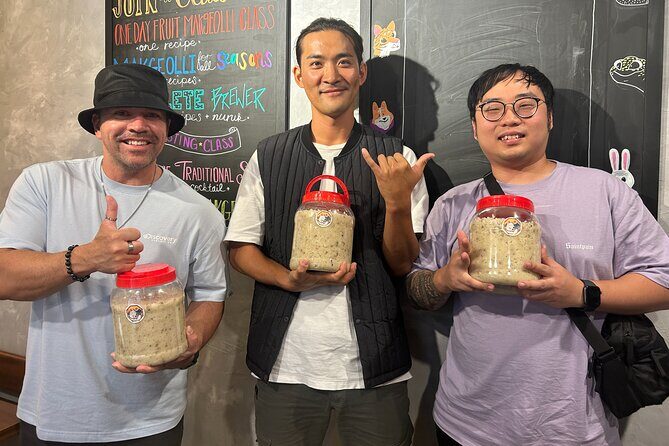
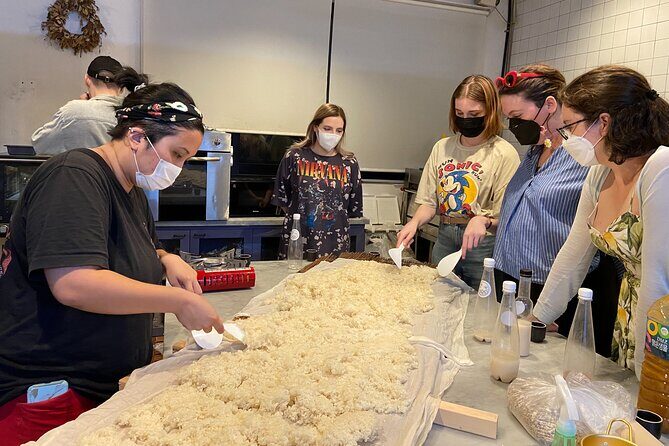
The core of the class is the practical work—learning by doing. You’ll follow steps that reflect real makgeolli brewing, not a simplified demo that turns into a one-time photo op.
The class includes fermentation-related techniques, such as:
- Understanding the activity of yeast and nuruk
- Learning how brewers handle filtering
- Covering conditioning so the drink develops properly
You may also see examples of how brewers adjust ingredients for texture and taste. One described approach includes working with a seasonal mash such as pumpkin, which gives you a concrete example of how flavor profiles can shift with what’s in the mash.
Expect an interactive format where you’re actively participating. Reviews highlight how Joe guides people step-by-step and keeps it organized. You’re not left guessing while everyone else already knows the process.
If you’re someone who likes science but also likes hands-on crafts, this is a rare overlap. You get enough fermentation literacy to feel in control, while still doing real physical tasks.
Leaving with makgeolli: your 1.2-liter take-home ferment
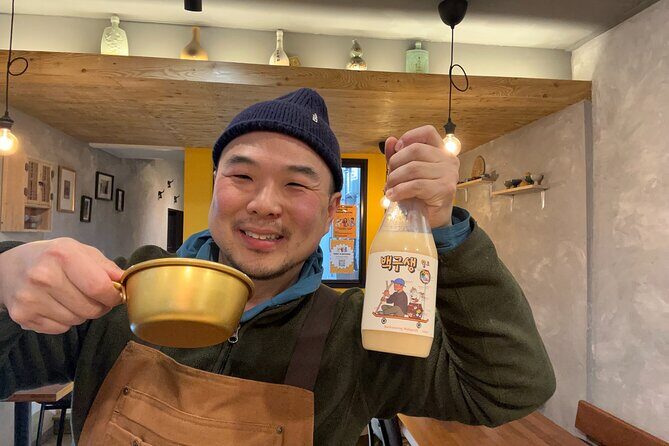
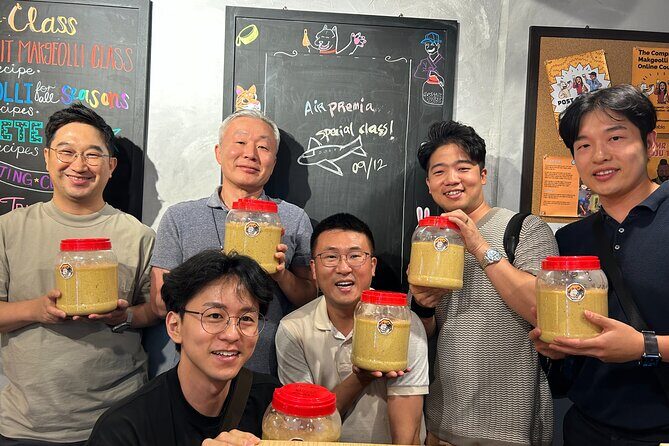
The most practical part is what you take home: your own makgeolli to ferment, about 1.2 liters. That’s a meaningful amount. It’s not a token taste, and it’s not a tiny sample bottle you can’t really learn from.
This is also where the “craft” part becomes real. During class, you’ll understand what happens during fermentation and what comes after. At home, your job is to continue that process so your batch reaches the stage you learned to recognize—aroma, sweetness, acidity, texture, and overall balance.
What I like about this setup is that it turns the class into ongoing learning. You don’t just carry a souvenir. You carry a working project.
To make it easier on yourself, plan ahead for where fermentation will happen. You’ll want stable conditions and a spot where you’re comfortable checking progress. Even if you’re new, you’ll leave with a foundation that helps you interpret changes instead of guessing.





Joe’s teaching style: clear steps, room for questions
A big reason this class gets such strong feedback is the instructor, Joe. The teaching style is described as hands-on, organized, and genuinely responsive—if something confuses you, you get real help figuring it out.
There’s also mention of Joe writing Korean terms on a whiteboard. That matters because it connects what you’re doing to what you’ll hear later in Korea—menus, brewery labels, and conversations. It’s a small detail, but it makes your experience more transferable.
Communication is another strong point. Even if your Korean is limited, the class is structured around participation, demonstrations, and step-by-step guidance. If you’re relying on translation tools, the environment still feels workable rather than chaotic.
In a workshop, the instructor’s clarity is everything. Here, the format supports that clarity: tasting first, then concepts, then doing, then taking your batch home.
Price and value for a 2-hour craft workshop
At $70.70 per person for about 2 hours, this isn’t a “grab a snack and watch” experience. The value comes from the combination of instruction + materials + take-home output.
You’re getting:
- A structured tasting flight to train your palate
- Ingredient and fermentation education tied to traditional practice
- Hands-on brewing time
- A take-home batch to ferment (about 1.2 liters)
- A small-group format that keeps you from getting lost in the crowd
So even though it’s only 2 hours, you’re not leaving empty-handed—or empty-headed. The goal is that you can continue brewing in your home country. That’s why the price feels more like a workshop investment than an activity fee.
Booking seems to be in demand (on average, about 23 days ahead). If you have fixed plans in Seoul, I’d treat it like a must-schedule item, especially if you want the date that fits your first week in the city.
Who should book (and who might want to think twice)
This class is a strong fit if you want more than Korean food and photos. If you like learning by doing, and you enjoy the idea of fermentation as a craft you can repeat, you’ll probably have a great time.
It’s also a good fit if you’re specifically curious about makgeolli as more than one flavor. The tasting portion teaches you the spectrum: sweetness versus acidity, and how texture changes with brewing and processing.
If you want a nightlife-type drinking experience, this is not that. It’s a craft workshop, and the focus stays on brewing steps. Also, if you hate waiting on fermentation results, you might find the take-home portion more responsibility than reward.
Final call: should you book Baekusaeng Makgeolli?
If you want an authentic Seoul experience that connects Korean culture to an actual skill, I’d book this. The biggest win is the pairing of tasting + hands-on brewing + a real take-home ferment (about 1.2 liters). You don’t just learn what makgeolli tastes like—you learn how it gets there.
I’d especially recommend it if you like practical workshops and you’re willing to continue the process at home. You’ll leave with a foundation you can actually use, not just a memory.
If you’re short on time in Seoul, 2 hours is still enough to get started—provided you’re ready to treat fermentation like a project, not an instant beverage.
FAQ
How long is the makgeolli class in Seoul?
The class runs for approximately 2 hours.
What do I get to take home?
You take home your own makgeolli to ferment, approximately 1.2 liters.
Where does the experience start?
The meeting point is at 346-35 Ahyeon-dong, Mapo-gu, Seoul, South Korea, and the activity ends back at the meeting point.
How many people are in the group?
The class has a maximum of 15 travelers.
Is a mobile ticket used?
Yes, the experience uses a mobile ticket.
Can I cancel and get a full refund?
Yes. You can cancel up to 24 hours in advance of the experience for a full refund. If you cancel less than 24 hours before the start time, the amount paid is not refunded.