REVIEW · SEOUL
Seoul: Taste of Korea, Authentic home style Cooking class
Book on GetYourGuide →Operated by Hansik Korean Cooking Class · Bookable on GetYourGuide
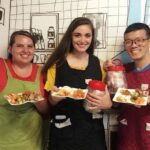
Korean cooking classes can be fun. This one is also practical, because you make real dishes at dedicated cooking stations and then eat everything you cook. The class is led by chef Jennifer and runs in a small group, so you get clear guidance while you work your way through Korean home-style food.
I especially like the mix of dishes: haemul pajeon and budae jjigae aren’t just crowd-pleasers, they teach you key Korean flavor moves—seasoning balance, texture, and how a stew comes together. The second big win for me is the teaching style: step-by-step directions in English, plus cultural notes about how these dishes fit everyday Korean life.
One possible drawback: because the session is packed and you’re eating a full-course meal, you’ll want to manage your time and appetite. Also, one past participant wished for sturdier takeaway containers (they had takeaway bags, but soup bowls are messy).
In This Review
- Key things to know before you cook
- Hansik at home: what you cook (and why it matters)
- Meeting at Gyeongbokgung: easy to find, quick to start
- The class flow: prep, cook, eat (and you really do eat)
- Gimbap and tteokbokki: learn Korean comfort food basics
- Haemul pajeon: the pancake technique you’ll remember
- Budae jjigae: the stew lesson behind the flavor
- Korean drinks, snacks, and banchan: how the meal is designed
- What you learn beyond recipes: dish stories and small culture cues
- Dietary needs: vegetarian substitutions are possible
- Small group dynamics: why 10 people is the sweet spot
- Price and value: does $94 make sense?
- Where this fits in your Seoul plan
- Final check: should you book this Seoul home-style cooking class?
- FAQ
- How long is the Seoul Taste of Korea cooking class?
- Where do I meet the cooking class?
- What dishes will I learn to make?
- Is the class taught in English?
- What’s the group size?
- What’s included for food and drinks?
- Can vegetarians join?
Key things to know before you cook
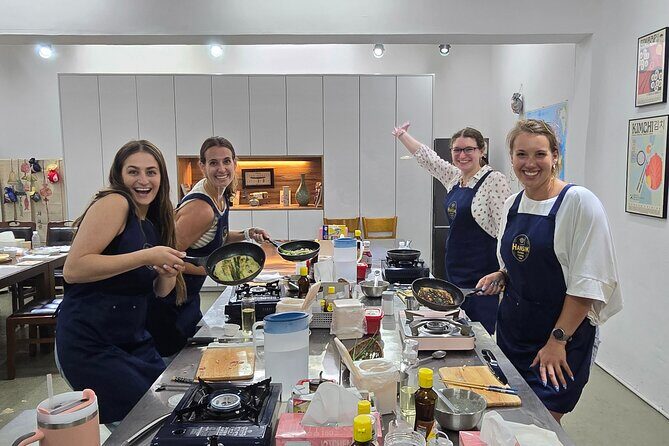
- Small group (up to 10): more hands-on time, less waiting around
- Chef Jennifer teaches step-by-step in English: simple, repeatable technique
- You cook 4 dishes in about 3 hours: practical for a day of sightseeing
- Hands-on classics: gimbap, tteokbokki, haemul pajeon, budae jjigae
- Drink and dessert included: sikhye, makgeolli, tea/coffee, plus Korean sweets
- Takeaway is possible: you can bring some food home (bags provided)
Hansik at home: what you cook (and why it matters)
This experience is built around Hansik, the everyday term for Korean food. The goal isn’t just to watch someone else cook. It’s to learn how flavors get built—from prepping ingredients to cooking and plating the dishes you’ll eat together.
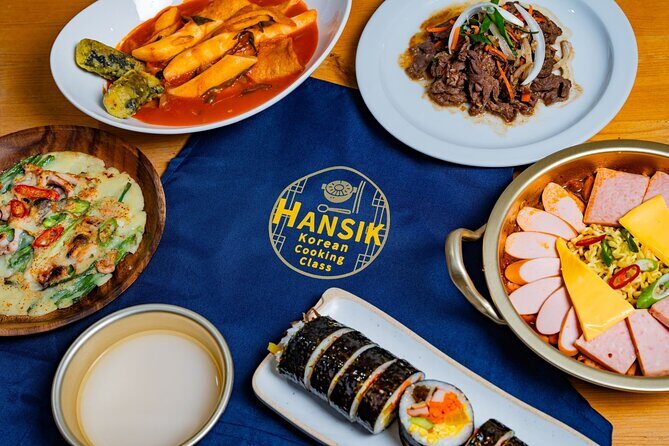
You’ll typically work on a set of home-style Korean recipes, including:
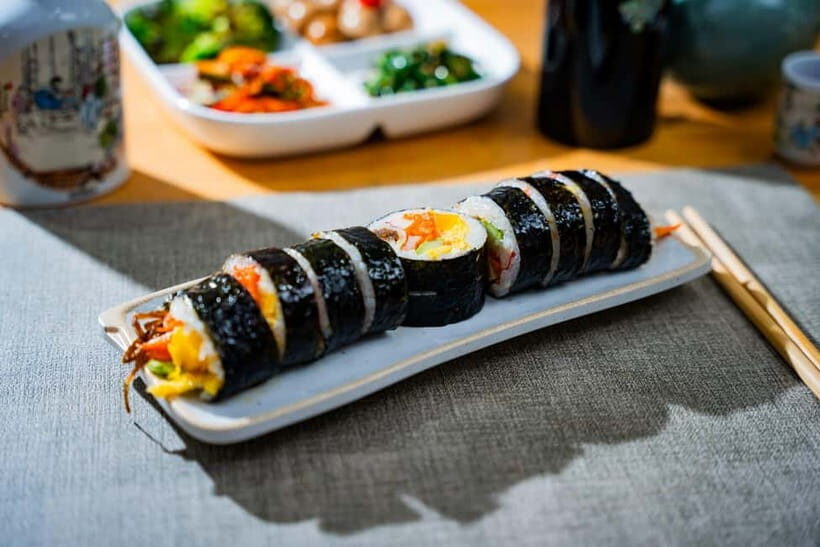
- Gimbap: the rice roll that shows Korean comfort food logic—seasoned rice, fillings, and tidy rolling
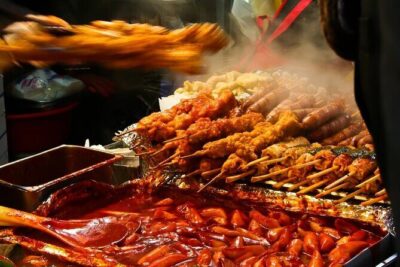
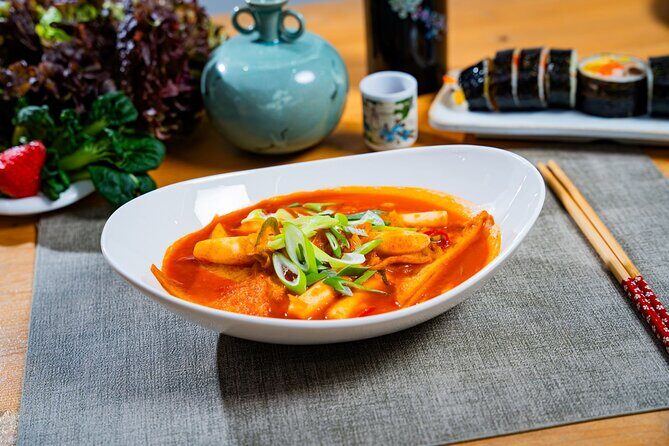
- Tteokbokki: chewy rice cakes coated in gochujang-based heat
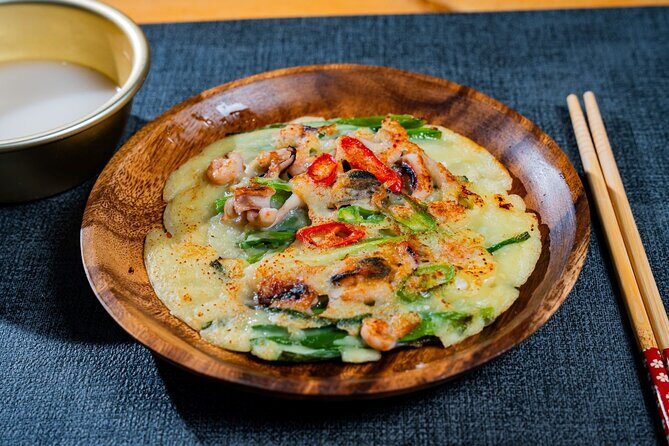
- Haemul pajeon: a savory seafood green onion pancake where technique matters
- Budae jjigae: the military stew—hearty, salty, and deeply satisfying
Even if you already know some Korean dishes, this format helps you understand the “how,” not just the “what.” You’ll learn the rhythm of cooking: what to do first, what cooks while you prep the next item, and how to adjust for taste. That’s what makes these lessons useful back home, not just a one-off meal.
You can also read our reviews of more cooking classes in Seoul

Meeting at Gyeongbokgung: easy to find, quick to start
You meet at Gyeongbokgung Subway Station—Orange Line, exit 2. From there, it’s about a five-minute walk up to Woori Bank, in a small alley. The location sits between the bank and just before a K-pop store, which makes it easier to recognize once you’re in the right stretch.
Why that matters: Gyeongbokgung is a busy area, and small meeting-point mistakes can waste time. So aim to arrive a little early, get your bearings, and settle in before the class begins. The session ends back at the meeting point too, which keeps the whole experience tidy.
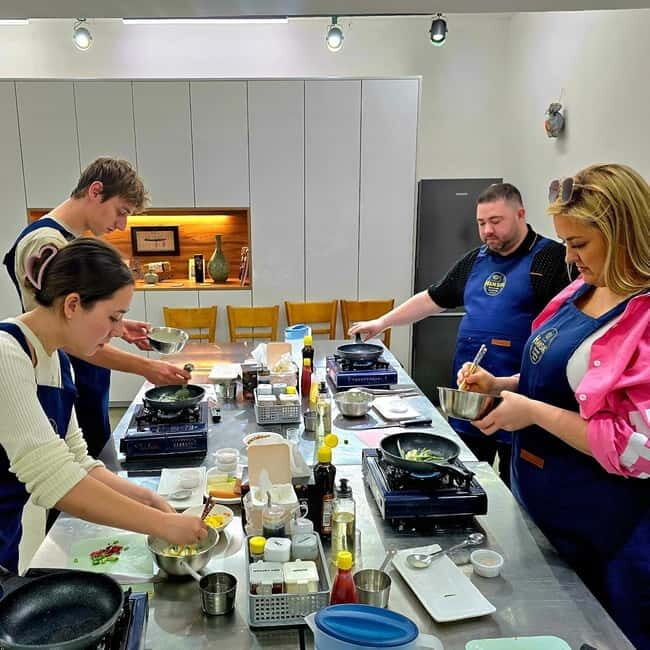
The kitchen setup is described as fresh and hygienic, with dedicated cooking stations. That’s a big deal for hands-on classes. You want space, tools at arm’s length, and enough room to chop, mix, and cook without feeling crowded.
The class flow: prep, cook, eat (and you really do eat)
The class runs about 3 hours, and the pace stays focused. You’ll start with welcome drinks and Korean snacks. Tea and coffee are also included, so you can settle in before you hit the cutting board.
Then the cooking begins. You’re not doing everything alone. The chef walks you through the process step by step, and the group size (limited to 10) helps keep that support realistic. In past sessions, participants have made around four dishes in that time, which is an ideal number: enough variety to learn different techniques, without the schedule feeling impossible.
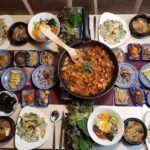
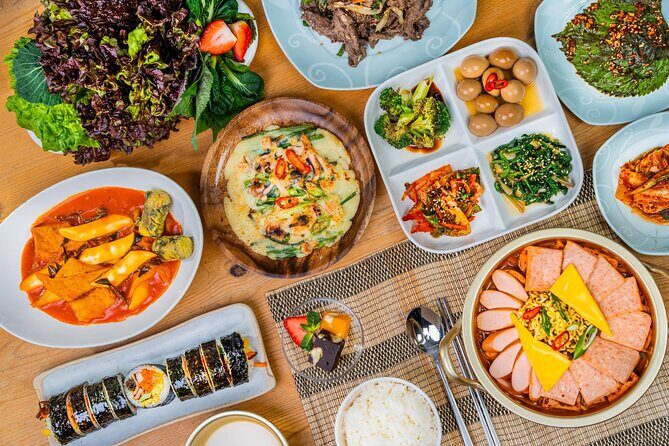
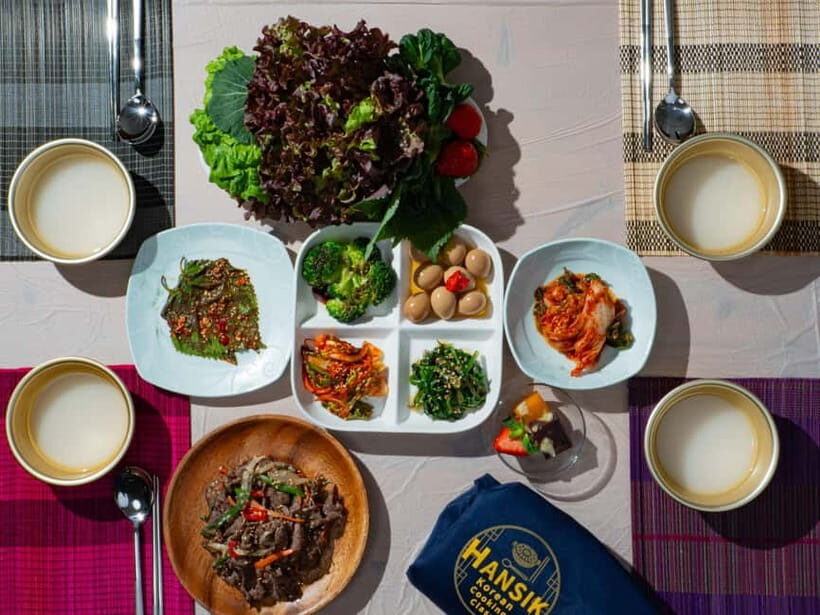
Once your food is ready, you sit down and eat a full-course meal with Korean seasonal banchan (side dishes), plus Korean desserts. One practical tip I’d give you: come hungry. The class includes a lot of food, and it’s easy to underestimate how filling Korean comfort food can be.
Gimbap and tteokbokki: learn Korean comfort food basics
If you’ve never made gimbap, this is where you gain confidence fast. Gimbap is all about structure—seasoned rice, fillings, rolling technique, and clean slices. In a class setting, you get the advantage of watching how your instructor handles the rice and builds the roll so it stays cohesive.
Tteokbokki is a different kind of learning. It teaches you seasoning and texture. You’ll work with rice cakes and a gochujang-based sauce, and you’ll see how the sauce clings, thickens, and coats. Even if you’ve eaten it many times, making it is where you notice details you’d otherwise miss, like how the sauce balance changes as it warms.
Together, gimbap and tteokbokki are a smart pairing. They cover both handheld comfort food and saucy warmth—two flavors you’ll want to recreate later.
Haemul pajeon: the pancake technique you’ll remember
Haemul pajeon (seafood green onion pancake) is one of the dishes most tied to technique. This is not a “mix and hope” recipe. Pancakes depend on batter thickness, how you distribute ingredients, and how you manage heat so you get browning without a soggy center.
In the class, you’ll get step-by-step guidance while you build the pancake and cook it. That support matters, especially if you’ve only cooked Western-style pancakes before. Korean pancakes are savory and ingredient-forward, so you’ll learn how the dish behaves with toppings like green onions and seafood.
This dish also becomes a great learning tool: once you understand what makes pajeon work, it’s easier to approach other Korean savory pancakes later.
A few more Seoul tours and experiences worth a look


Budae jjigae: the stew lesson behind the flavor
Budae jjigae (military stew) is the hearty finale for many people—and it’s also a valuable recipe to learn. Stew cooking is where you feel Korean home-style comfort food at its strongest: salty, warming, and satisfying even if you’re not in the mood for something light.
In the class, you’ll make the stew with guidance as you go. You’ll see the order of operations and the basic method behind building a flavorful bowl. The point isn’t that you memorize every ingredient instantly. It’s that you understand how the stew comes together and how the taste develops.
One note from past participants: the class can produce a lot of food, and takeaway is usually handled with bags. If you want to bring home soup, it might be worth bringing a sturdy container yourself.
Korean drinks, snacks, and banchan: how the meal is designed
A big part of the value here is that you don’t just cook—you drink and eat in a way that feels like a real meal. You’ll get a welcome bottle of water, plus Korean snacks, and then tea and coffee.
Two included Korean traditional drinks show up during the experience:
- Sikhye: a sweet Korean punch
- Makgeolli: a milky rice wine
This pairing is a practical way to experience flavor contrast. Sweet, fermented, and slightly tangy notes show up alongside the savory dishes. It’s also a nice cultural touchpoint without turning the class into a lecture.
You’ll also get Korean desserts at the end. Dessert is often what people skip in cooking classes, but here it’s part of the full-course arc. You finish the meal the way a Korean household might: savory first, then something sweet.
What you learn beyond recipes: dish stories and small culture cues
Cooking classes can stop at recipes. This one adds context—how each dish fits Korean cooking traditions. In plain terms: you’ll hear the story behind what you’re making, not just the steps.
That cultural info matters for two reasons. First, it helps you remember the recipe. Second, it turns cooking into a cultural experience you can actually use when you cook later.
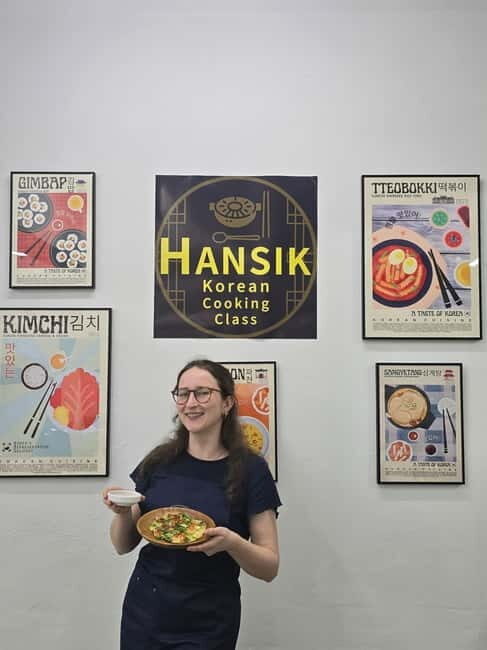
Also, one nice detail from the reviews: the instruction style is very supportive. People describe chef Jennifer as welcoming and clear, and the class includes enough time to take pictures of what you make. That’s not just for fun; photographing your finished dishes helps you recreate them later.
Dietary needs: vegetarian substitutions are possible
If you’re not eating meat, this class might still work for you. One participant specifically mentioned they were provided vegetarian substitutes for everything. That’s a strong sign that the chef can adapt rather than forcing you into a “same recipe, no flavor” workaround.
I’d still recommend telling the organizer ahead of time about your dietary needs. That way you’ll get the best chance of a full, satisfying menu that matches the same cooking steps and taste goals.
Small group dynamics: why 10 people is the sweet spot
With a cap of 10 participants, you’re not lost in a crowd. Hands-on cooking needs attention—someone has to show you how thick the batter is, or how to portion ingredients, or what to look for as something cooks.
In past sessions, some groups were very small, even down to just a couple of students. When the group is tiny, the class naturally becomes more personal. If you like asking questions, this size makes it easier for the chef to respond instead of moving on quickly.
Price and value: does $94 make sense?
At $94 per person, this isn’t a budget “snack and watch” activity. But it can be a solid value if you price it like a meal plus instruction.
Here’s what you’re paying for:
- A true hands-on cooking workshop with a professional English-speaking chef
- Multiple dishes (often four) made in one sitting
- All ingredients and equipment included
- A full-course meal with banchan, drinks (including sikhye and makgeolli), and desserts
- Recipes sent by email afterward
If you’ve ever tried to recreate Korean cooking at home without knowing the technique, the secret ingredient isn’t only ingredients—it’s method. That’s the part you can’t easily buy at a restaurant.
For me, the best value signal is that you leave with both food knowledge and actual dishes in your stomach during the class. You’re not just paying for a performance.
Where this fits in your Seoul plan
This class fits well into almost any Seoul itinerary because the start point is near a major transit hub. You can pair it with time at Gyeongbokgung or neighborhood wandering afterward.
It also works great for:
- solo travelers who want conversation without a big tour group
- couples who like shared activities and food
- families with teens (one review noted two boys ages 11 and 13 could participate and have fun)
- anyone who wants a practical lesson to bring home
It might be less ideal if you:
- hate structured schedules (the class is guided and timed)
- expect a light bite experience (this is more like a full meal plus extra)
- have a strong preference for only one dish (you’ll cook several)
Final check: should you book this Seoul home-style cooking class?
I’d book it if you want more than a tasting. You’ll get a real kitchen experience, clear English instruction, and the satisfaction of making Korean comfort food—including haemul pajeon and budae jjigae—then eating it as a full course.
I’d think twice only if you’re someone who gets stressed by cooking steps under time pressure, or if you’re hoping for a super-minimal snack event. This class is hands-on, food-heavy, and meant to leave you full with new techniques.
If you go with the mindset that you’re here to cook and learn, not just watch, you’re going to enjoy it.
FAQ
How long is the Seoul Taste of Korea cooking class?
The class lasts about 3 hours.
Where do I meet the cooking class?
Meet at Gyeongbokgung Subway Station, Orange Line 3rd line exit 2. Walk about 5 minutes to Woori Bank in the small alley between the bank and just before the K-pop store.
What dishes will I learn to make?
The class includes recipes such as gimbap, tteokbokki, haemul pajeon, and budae jjigae.
Is the class taught in English?
Yes. The instructor provides instruction in English.
What’s the group size?
It’s a small group limited to 10 participants.
What’s included for food and drinks?
You’ll receive welcome drinks and Korean traditional drinks like sikhye and makgeolli, along with tea and coffee, Korean snacks, desserts, water, and a full-course meal with seasonal banchan. All ingredients and equipment are included too.
Can vegetarians join?
One participant shared that the chef provided vegetarian substitutes for everything. If you’re vegetarian, it’s smart to mention your needs so substitutions can be prepared.