REVIEW · SEOUL
Seoul: Gyeongbok Palace, Bukchon Village, and Gwangjang Tour
Book on Viator →Operated by I Love Seoul Tour · Bookable on Viator
Four hours in Seoul, packed but not sloppy. I liked having an own guide to keep things moving, and I liked the stop mix from Gyeongbokgung Palace to Gwangjang Market. The trade-off: the schedule is tight, and some parts (especially the ginseng stop) can feel rushed.
This is a good intro day if you want history, photos, and food all in one run. Guides like Chloe, Shin, Grace, Sophie, Sunny, Stella, and Henry show up often in the kind of feedback I’d pay attention to, mainly for clear explanations and picture help—useful when you’re figuring out Seoul for the first time.
Before you book, know that you’ll walk. You should have moderate physical fitness, wear comfortable shoes, and plan for weather since it runs rain or shine. Also, hanbok rental time is not offered, so come as you are.
In This Review
- Key things I’d watch before you go
- Seoul in Four Hours: what this tour is really for
- Meeting at Myeongdong and the day’s practical flow
- Gyeongbokgung Palace and the Royal Guard Changing Ceremony
- Bukchon Hanok Village: short photo time, big traditional streets
- Bugak Skyway and the Bugak Pavilion viewpoint you’ll remember
- Cheongha Korea Ginseng Museum: history lesson with a sales-room edge
- Gwangjang Market: the satisfying food finale
- Price and value: what $32 gets you in Seoul
- Who should book this tour (and who should skip it)
- Should you book this Seoul: Gyeongbokgung, Bukchon, Bugak, Ginseng, and Gwangjang tour?
- FAQ
- How long is the Seoul Gyeongbok Palace, Bukchon Village, and Gwangjang Tour?
- What does the tour cost?
- What’s included in the price?
- Are the admission tickets included for all stops?
- Is hotel pick-up and drop-off included?
- Is the tour private?
- Does the tour run in bad weather?
- Is hanbok rental available during the tour?
- Can I join after the tour has started?
- What kind of walking should I plan for?
- Should you book this Seoul half-day tour?
Key things I’d watch before you go
- A real guide, not just a headset: you get an active presence and local direction at each stop
- Admissions are mostly handled: Gyeongbokgung Palace and Bugak Pavilion/Skyway have tickets included
- A photo-heavy route: Bukchon and the palace timing are built for seeing and shooting
- A viewpoint break at Bugak: expect panoramic Seoul views from Bugaksan Mountain
- Ginseng museum = culture plus a sales room: plan your expectations and move on if shopping isn’t your thing
- The day ends at Gwangjang Market: you’re placed right where you can eat after the tour
Seoul in Four Hours: what this tour is really for
This half-day tour is built for the “I only have a few hours in Seoul” problem. You get a guided path through the places that newcomers usually pick separately: a royal palace, a traditional neighborhood, a high viewpoint, and a famous market-food zone.
I like the pacing idea even if it’s packed: each stop has a clear purpose. You start with a major landmark (Gyeongbokgung), shift to traditional streets (Bukchon Hanok Village), then climb to a view (Bugak Skyway area). After that, you pivot to a specific local product story (ginseng at Cheongha) and finish with street-level eating power at Gwangjang Market.
If you prefer slow travel—one neighborhood, one museum, one long coffee—this may feel like you’re always moving. If you want orientation plus highlights, it’s a strong match.
You can also read our reviews of more tours and experiences in Seoul.
Meeting at Myeongdong and the day’s practical flow
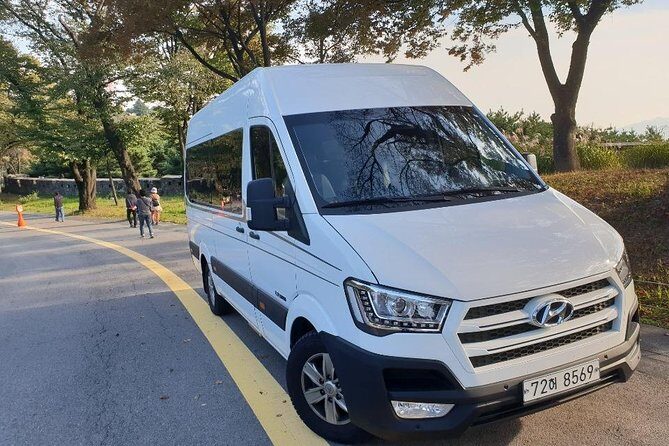
You meet at Myeongdong Station Exit 1061-7 in Chungmuro 2(i)-ga, Jung District. The tour uses air-conditioned transport (a minivan or coach), and you do end at a different location: Gwangjang Market.
Two details matter for your sanity:
1) You can’t join after the tour starts at Gyeongbokgung Palace, and you can’t contact the guide once the day is in progress. So arrive early enough to be sure you’re on the right group.
2) You’re on the clock. The on-site time is short at every stop, so you’ll get the highlights rather than deep study.
Also, the day runs rain or shine. Seoul weather can switch fast, so bring a light layer that works even if the forecast looks friendly.
Gyeongbokgung Palace and the Royal Guard Changing Ceremony
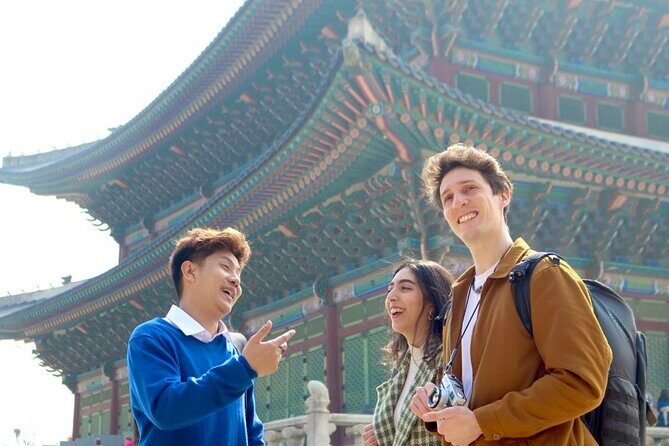
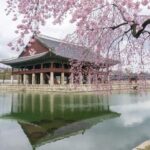
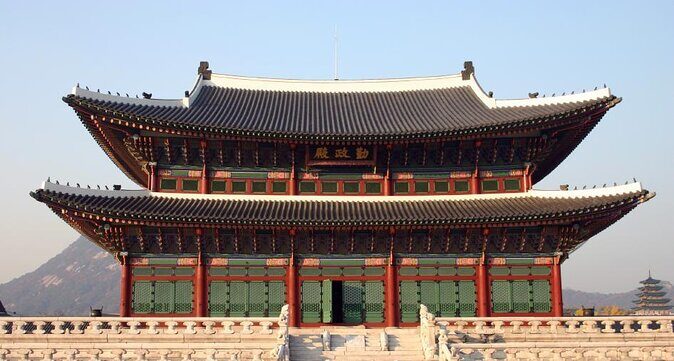
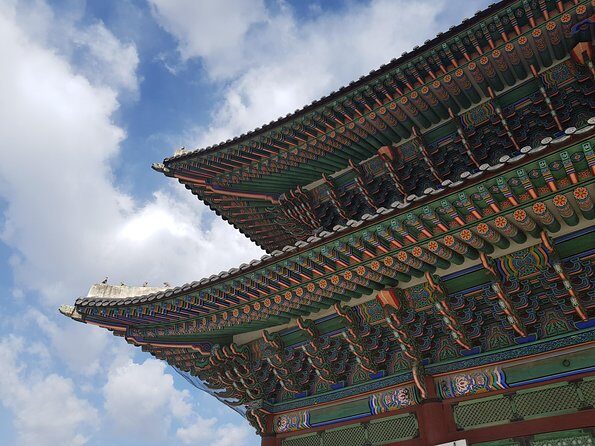
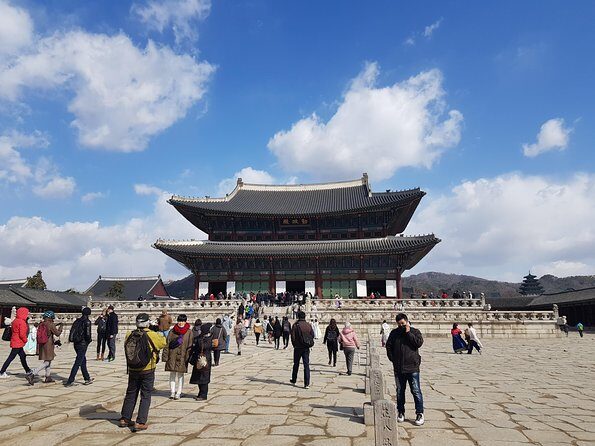
Gyeongbokgung Palace is the star at the start, and the tour gives it real priority: about 30 minutes, with the admission ticket included. This is where you see the grand scale of a royal palace complex and where the route adds one of the biggest visual moments: the Royal Guard Changing Ceremony.
Here’s how to make the most of your palace time:
- Arrive ready to look up and look around. In a short window, focus on major buildings and the ceremony moment, not trying to cover every corner.
- Use the guide’s positioning help. Guides often help you know where to stand and when to step aside for a clean view.
- Don’t over-plan outfit photos. You can take pictures, but treat the ceremony and the main courtyards as the priority.
A quick note on weather: a common travel reality in winter is that palace mornings can feel cold. If you’re going in December or other chilly months, dress warm and be ready for lingering outdoor moments.
A possible drawback: when the ceremony timing hits crowds, you’ll still be sharing space. The tour’s value is that you go in the right order and get help with what to watch.
Bukchon Hanok Village: short photo time, big traditional streets
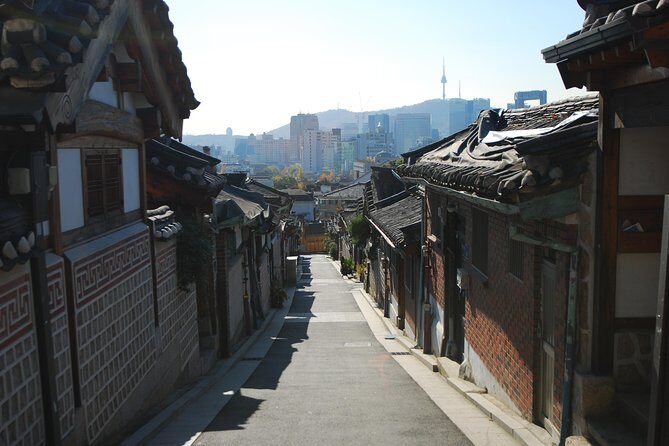
Next up is Bukchon Hanok Village, about 20 minutes. The admission here is listed as free, and the point is simple: see the hanok (traditional Korean houses) and walk enough to get your bearings and your photos.
Bukchon can be photogenic in any season. The streets help you understand what “traditional Seoul” looks like in real life—not as a postcard, but as a lived-in neighborhood vibe.
How to handle the short time limit:
- Pick your camera priorities before you step in. If you wander without a plan, 20 minutes can vanish fast.
- Use the guide to connect details. The best guides explain what you’re seeing—how hanok design relates to lifestyle and history—so your photos aren’t just pretty, they’re informed.
- Expect walking on uneven ground. Comfortable shoes matter more here than at most stops.
This stop is light on “museum” time and heavy on “street scene” time. If you love slow roaming, you’ll probably want to return on your own later. If you’re trying to cover Seoul efficiently, it’s a good bite.
Bugak Skyway and the Bugak Pavilion viewpoint you’ll remember
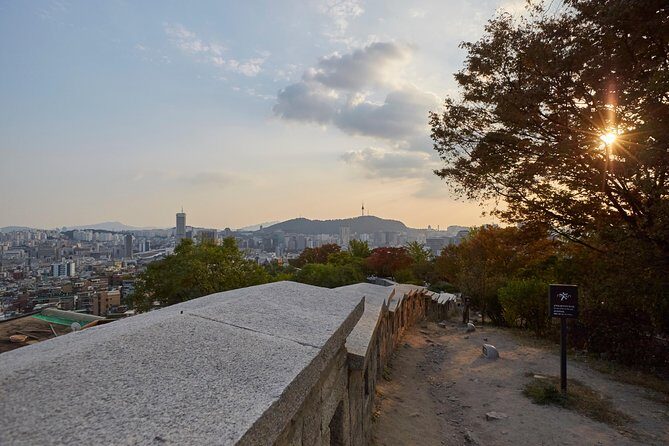
Then the tour heads to the Bugak area, sometimes described as Bugak Skyway and specifically tied to Bugak Palgakjeong (the Bugak Pavilion). You get about 40 minutes, and admission is listed as included.
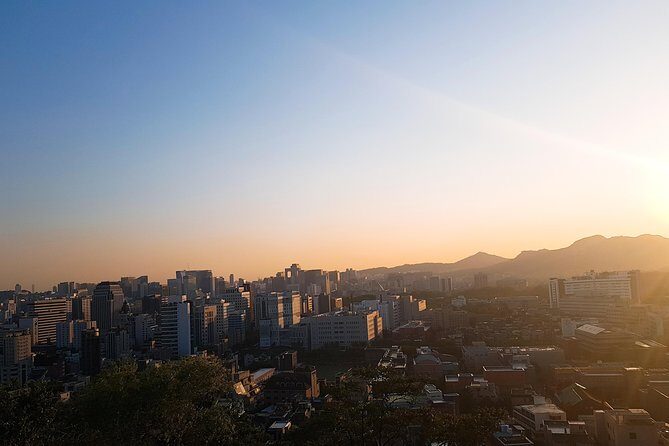
Why this stop works on a packed itinerary: it’s one of the few moments in the day where you can shift gears from crowds and courtyards to open-air views. The description emphasizes panoramic scenery of Seoul, with the pavilion on the slopes of Bugaksan Mountain. Translation: you get the “wow, Seoul is huge” effect without needing a long hike plan.
How to enjoy these 40 minutes:
- Stay present for the view. This is not the moment to multitask. Take in the city angles and try to spot neighborhoods and major directions when the guide mentions them.
- Plan for wind and cold. Elevated viewpoints can feel colder than street level, especially if it’s breezy.
- Treat it as your break. After palace crowds and Bukchon photo time, this is a good chance to reset.
There’s little “shopping” pressure here—so even if the rest of the tour feels fast, this stop usually feels like payoff.

Cheongha Korea Ginseng Museum: history lesson with a sales-room edge
The Cheongha Korea Ginseng Museum is about 30 minutes, and admission is listed as free. The subject is ginseng, and you’ll get historical context—for example, ginseng is described as being mentioned in an ancient Chinese text (Ji Jiu Zhang) as a herb used across the orient for many ailments.
This stop is where you should manage expectations. Some guides and shops elsewhere in Korea can turn a cultural visit into a buying pitch. The feedback I’ve seen around this specific stop points to a similar pattern: part of your time can feel spent in a sales-focused room, not just learning.
My practical advice:
- Go in curious, but decide your budget early. If you’re not planning to buy anything, you can still enjoy the history and move on.
- Don’t let it steal your energy. If you feel you’ve gotten what you need, focus on the explanation you came for and keep your pace.
- If you do buy, buy smart. The tour itself doesn’t describe what’s available for purchase, so rely on your own comfort level and compare what you’re paying.
Even with that caveat, I think this stop has value because it ties Korea’s everyday wellness culture to a real, specific product story. Just don’t expect a quiet, independent museum experience where you linger as long as you want.
Gwangjang Market: the satisfying food finale
The tour ends at Gwangjang Market, with about 15 minutes on the clock and no admission ticket needed.
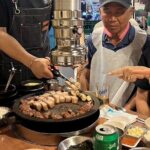
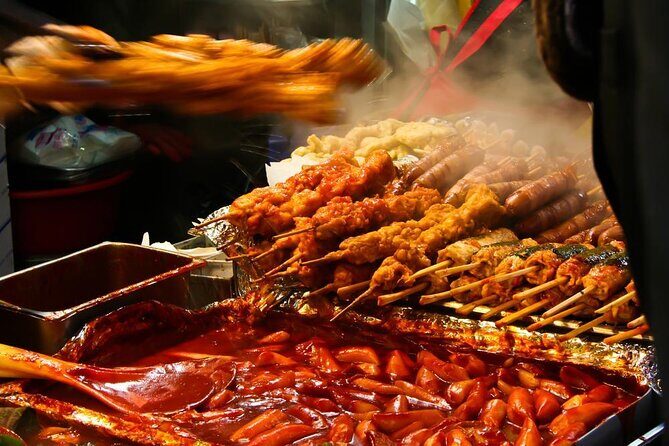
Even that short window can help if you arrive hungry. This is one of the places where Korean street food isn’t just a concept—it’s right in front of you, hot and loud and easy to snack your way through. The tour’s purpose here is simple: drop you at the market so you can keep going after the guide time ends.
How to make the most of a short market finish:
- Have a plan for one or two items, not ten. In 15 minutes, choosing is power.
- Look at what’s cooking and moving fast. You’ll usually get the best hot-and-fresh payoff.
- Ask your guide for quick next steps before you split. A good guide can point you toward what to prioritize based on your tastes.
One more thing: wear shoes that handle a market floor. Your legs do most of the work on this tour, and the last stop is where you may naturally keep walking on your own.
Price and value: what $32 gets you in Seoul
At $32 per person for about 4 hours, this tour is positioned for value-through-efficiency. You’re paying for a guide, transport by air-conditioned minivan/coach, and admission fees are included for key stops like Gyeongbokgung Palace and the Bugak Skyway/Bugak Pavilion area.
The best value comes from how the stops stack:
- Gyeongbokgung gives you a major landmark plus the ceremony moment
- Bukchon gives you traditional architecture and street visuals fast
- Bugak gives you a viewpoint reset
- Gwangjang gives you an easy transition into eating
Where the value can feel uneven is the ginseng museum’s “free but sales-heavy” vibe. If you’re the kind of traveler who hates shop pressure, that portion can feel like the least satisfying part of the day.
Still, for first-time visitors who want history plus city flavor without spending your entire day charting metro lines and timing ceremonies, $32 can be a smart shortcut.
Who should book this tour (and who should skip it)
This tour is a great fit if:
- you want a high-impact Seoul introduction in one morning/half-day block
- you like guided context, especially for palace history and Korean traditions
- you want help with logistics like when and where to stand for key moments
- you prefer ending at a food hotspot where you can continue on your own
You might skip it if:
- you hate feeling rushed between multiple stops
- you don’t want any museum-style shopping pressure (the ginseng stop can lean that way)
- you need long time blocks for slow wandering
Also, since it requires a minimum number of travelers to run and the tour isn’t managed as a private tour, check that the day you choose has enough people. The tour runs up to 100 travelers, so it’s not a tiny secret-group situation.
Should you book this Seoul: Gyeongbokgung, Bukchon, Bugak, Ginseng, and Gwangjang tour?
Yes, if you want a guided sampler that hits Seoul’s most recognizable cultural and food beats in about four hours, and you’re okay with short stop times. I’d book it for the mix: palace ceremony, traditional streets, a viewpoint breather, and a market finish.
Be cautious if you hate sales-room pressure or you crave slow, unstructured time. If you go with the mindset of getting the highlights and then enjoying the rest of your day on your own at Gwangjang, you’ll get strong value for your time.
FAQ
How long is the Seoul Gyeongbok Palace, Bukchon Village, and Gwangjang Tour?
It’s approximately 4 hours.
What does the tour cost?
It’s $32.00 per person.
What’s included in the price?
You get a professional guide, transport by air-conditioned minivan or coach, and admission fees.
Are the admission tickets included for all stops?
Not all stops have paid admissions. Gyeongbokgung Palace and Bugak Skyway/Bugak Pavilion include admission tickets. Bukchon Hanok Village, Cheongha Korea Ginseng Museum, and Gwangjang Market list admission as free.
Is hotel pick-up and drop-off included?
No. The meeting is at Myeongdong Station Exit 1061-7, and the tour ends at Gwangjang Market.
Is the tour private?
Private tour management is not available for now.
Does the tour run in bad weather?
Yes. It runs rain or shine.
Is hanbok rental available during the tour?
No, hanbok rental time is not offered.
Can I join after the tour has started?
No. Meeting at Gyeongbokgung Palace after the tour started, or contacting the guide once the tour is in progress, is not permitted.
What kind of walking should I plan for?
You should have moderate physical fitness, and comfortable walking shoes are recommended.
Should you book this Seoul half-day tour?
If you want the quickest way to see palace history, traditional hanok streets, a top viewpoint, and end at a major food market, this is worth booking. If you need lots of time at each stop or you’re strongly turned off by sales-oriented environments, you may want to plan a different day structure.