REVIEW · SEOUL
Seoul Food: Banchan, Bibimbap, and Beyond
Book on Viator →Operated by Culinary Backstreets Walks · Bookable on Viator
Seoul food tastes better when it has a story. This 5-hour walk links classic sights in Dongdaemun and Jongno with the way Korean cooks turn outside ideas into local comfort—so you get to taste banchan and bibimbap while you’re seeing the city that shaped it. It’s a “food first” kind of tour, but the setting keeps giving you context.
I especially like the way the guide, Eunice, connects dishes to history and daily life, not just ingredients. The pacing also works: you’re not sprinting from bite to bite, and you’ll have time to reset before the next tasting.
One thing to plan for: you’ll be on foot for about five hours, and private transportation isn’t included—so you’ll want comfortable shoes and to stay flexible with public-transit timing. You start at 1:00 pm and end back at the meeting point.
In This Review
- Key points you’ll care about
- Dongdaemun-to-Jongno walking route that makes food feel local
- Heunginjimun gate: the city’s old defense spirit behind everyday meals
- Dongdaemun Design Plaza (DDP): where reinvention shows up in architecture
- Cheonggyecheon Stream: snacks feel better when the pace slows down
- Gyeongbokgung Palace: the Joseon link that helps bibimbap make sense
- Bukchon Hanok Village lanes: banchan and sharing fit the setting
- What you actually eat: banchan, bibimbap, dinner, snacks, and alcohol
- Price and value: $195 for a guide plus a full meal flow
- Timing, walking, and who this tour suits best
- Should you book Seoul Food: Banchan, Bibimbap, and Beyond?
- FAQ
- How long is the Seoul Food: Banchan, Bibimbap, and Beyond tour?
- What time does the tour start?
- Where is the meeting point, and where does the tour end?
- Is this a private tour?
- What’s included in the price?
- What is not included?
- Do I need to pay for admissions at the stops?
- Do I get a mobile ticket?
- What’s the cancellation policy?
- Is the tour near public transportation, and is it suitable for most people?
Key points you’ll care about
- Eunice’s food-history storytelling makes banchan and bibimbap feel purposeful, not random.
- Dinner + snacks are included, plus alcoholic beverages if you want them.
- Free admission at the main landmarks means you’re paying mostly for the guide and the food stops.
- Old gates, a Hadid-designed landmark, palace grounds, and hanok lanes give your meal a real Seoul backdrop.
- A mobile ticket makes it easy to show up and start.
Dongdaemun-to-Jongno walking route that makes food feel local
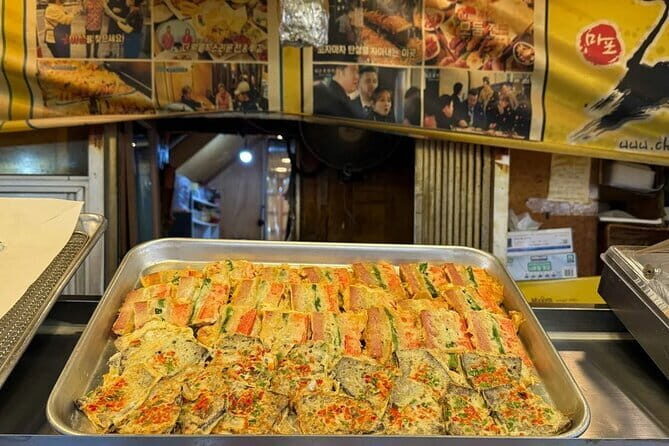
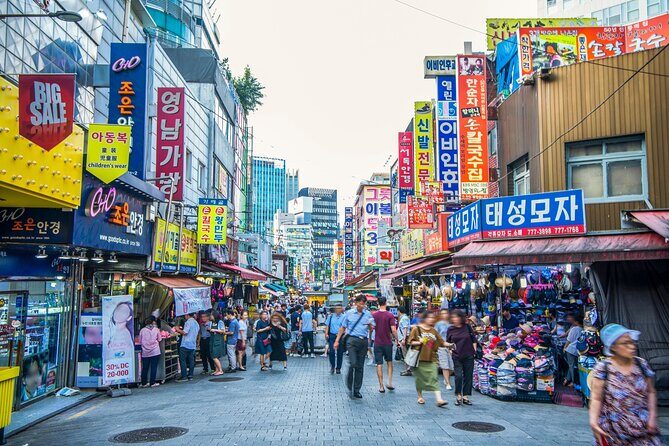
This tour works because it treats food like part of Seoul’s everyday geography. You begin at the Dongdaemun area near JW Marriott Dongdaemun Square, then your route threads through landmarks that feel like chapters in the same story: defense and city life at the gate, reinvention in the modern design district, and cultural identity at palace grounds and hanok lanes.
I like this style of pacing. It’s not a checklist where you only look at things; it’s a steady walk where you keep seeing how Koreans have layered new influences on top of older foundations. The tour theme is clear: Korea takes inspiration from places like Chinese, Japanese, and Western traditions, reshapes it into something Korean, and then shares that version with the world.
The biggest advantage for you is that you can taste and “place” what you’re eating. Korean food isn’t just flavors; it’s how people think about balance, portioning, and timing—especially with banchan.
You can also read our reviews of more food & drink experiences in Seoul
Heunginjimun gate: the city’s old defense spirit behind everyday meals
You kick things off at Heunginjimun (Dongdaemun Gate), one of Seoul’s Eight Gates. Built in the late 14th century, it was the main entrance to the city and served as a reminder of how Seoul once protected itself. That may sound far from food, but it sets up the day’s mental frame: Korea’s resilience.
In practice, this stop is also useful for getting your bearings. You’re starting in a historic zone, with plenty of visual anchors, so when the tour later shifts into modern Seoul, it feels like a real contrast—not whiplash.
Expect about an hour here. Since it’s free admission, you’re not wasting your budget on ticket lines. You’re using that time to understand the shape of the area you’re about to walk through and how it connects to later cultural stops.
Dongdaemun Design Plaza (DDP): where reinvention shows up in architecture
Next comes Dongdaemun Design Plaza (DDP), the striking, futuristic complex designed by Zaha Hadid. Even if design isn’t your main interest, DDP is a fast way to see Seoul’s “new face,” with lots of open space that makes it easy to wander and take photos.
This stop matters because the tour’s food idea is also about reinvention. Korean cuisine is famous for being adaptive—taking an outside influence, then translating it into local habits and tastes. DDP turns that concept into something visual: sharp shapes, big angles, and a sense that Seoul keeps redesigning itself.
You’ll have around 30 minutes here, and the admission is free. That’s a good match for a food tour day: enough time to enjoy it without eating up your appetite.
If you’re the type who likes to capture details, DDP is handy. The architecture gives you instant backgrounds, and you can refocus your brain on texture and form—things that often show up in how Korean side dishes are served and mixed.
Cheonggyecheon Stream: snacks feel better when the pace slows down
Then you switch to the Cheonggyecheon Stream. It’s an especially pleasant walking segment, and the key detail is its atmosphere: it’s peaceful at night when lights reflect off the water. Since your tour runs about five hours starting at 1:00 pm, you may catch part of that late-day mood depending on timing.
This stop works because it slows you down for a moment. Food tours can become chaos if you’re always accelerating. A scenic walking break helps you reset your appetite and digestion before the next tastings and cultural stops.
You’ll spend about an hour here, with free admission. Think of it as your calm corridor between big-picture sights. It also helps that the stream sits across the Dongdaemun/Jongno flow—so the tour stays efficient.
Gyeongbokgung Palace: the Joseon link that helps bibimbap make sense
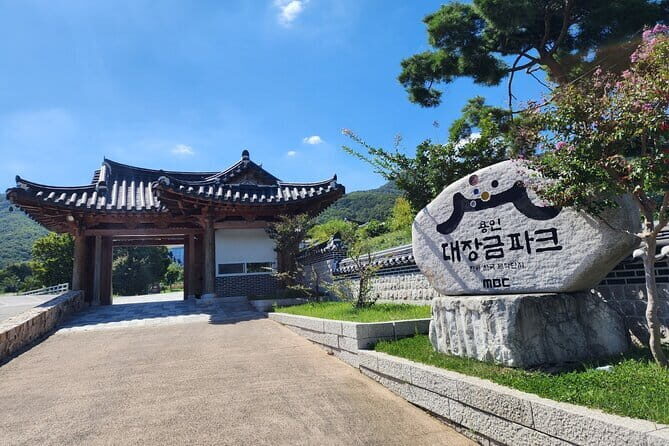
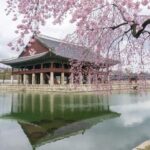
One of the day’s most meaningful stops is Gyeongbokgung Palace. It’s one of Korea’s grand palaces, known for its impressive architecture and garden spaces. It was the main royal palace of the Joseon Dynasty, so it carries weight when you’re talking about cultural pride and identity.
Even if you don’t go deep into every structure, the palace context helps you understand why Korean meals can feel so intentional. Joseon-era culture emphasized order and social roles, and you can still see echoes of that mindset today—especially in how meals are arranged and shared.
This is also where you’re likely to connect the dots to bibimbap. The dish itself is built around combining components—rice, vegetables, and other toppings—into one cohesive bowl. That “put it together” logic fits naturally after you’ve just been surrounded by a palace built to project structure and harmony.
You’ll get about an hour at Gyeongbokgung and it’s free. The time is short enough that you won’t feel stuck, but long enough to feel like you actually stepped inside an important Seoul landmark rather than just passing it.
A few more Seoul tours and experiences worth a look
Bukchon Hanok Village lanes: banchan and sharing fit the setting
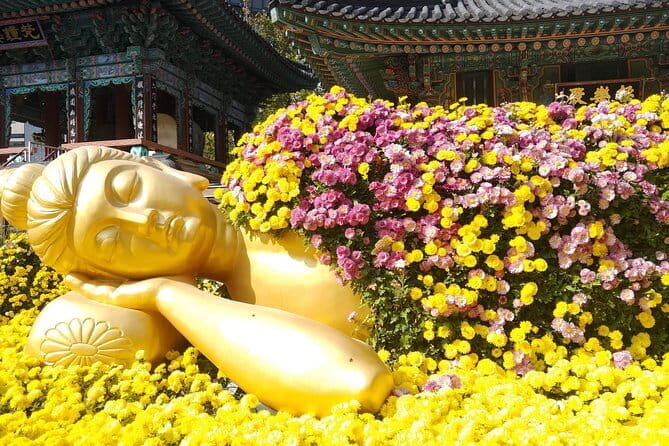
Finally, you reach Bukchon Hanok Village, a traditional Korean area made up of preserved hanoks. Expect narrow alleys, classic house shapes, and good views—exactly the kind of place where it feels natural to talk about how daily life used to work.
This stop is only about 30 minutes, but it’s a strong closer because it turns the tour from “big landmarks” into “small human scale.” Banchan is built for that idea: side dishes that support the main dish, eaten together at the table, changing the meal’s mood bite by bite.
You’ll see the contrast between historical housing and modern Seoul. That’s useful for the tour’s main idea about reinvention. Korea didn’t erase the old; it kept the old frame and updated the fillings.
Also, you’re back near central areas afterward. The tour ends back at the meeting point, so you’re not stuck figuring out where your day ends.
What you actually eat: banchan, bibimbap, dinner, snacks, and alcohol
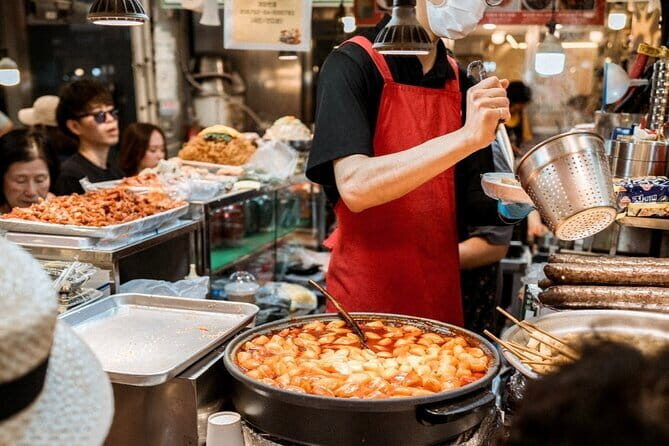
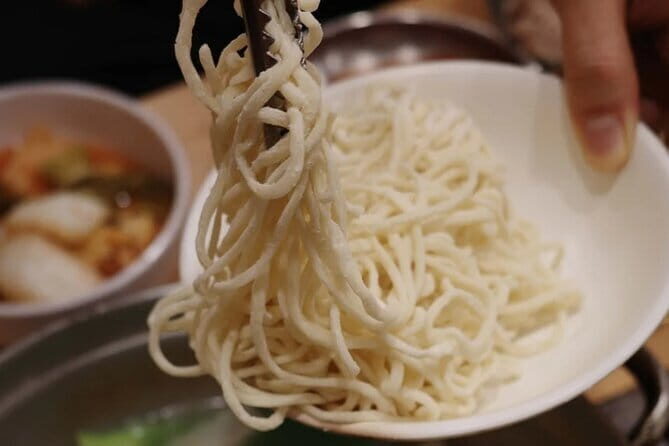
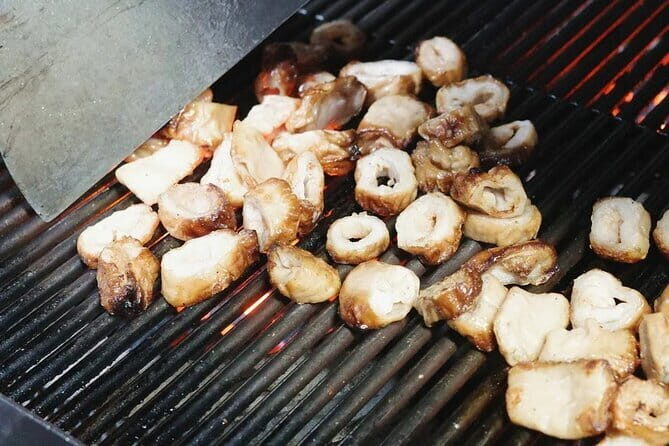
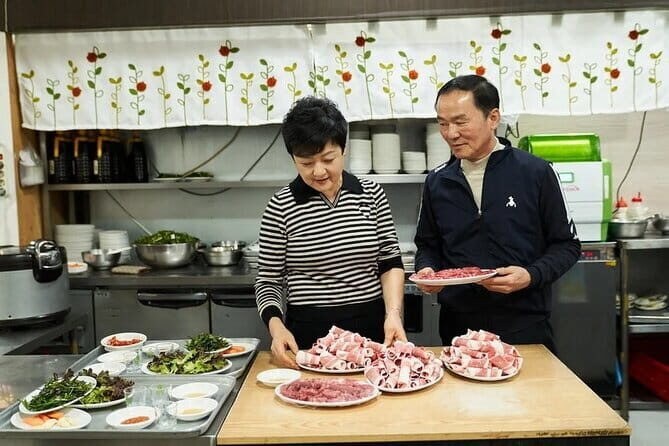
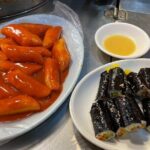
The tour title says banchan, bibimbap, and beyond, and the included food items support that it’s not a light snack crawl. You get dinner plus snacks, with bottled water. Alcoholic beverages are also included, so the day can feel like a relaxed meal sequence, not a rushed tasting.
In terms of what shows up on the plate, the food theme is Korean classics with some variety. Bibimbap is the headline, but the tour also leans into the “multiple dishes at once” culture behind banchan. One review highlights a dish like steak tartare with a magic sauce, which tells you the tour isn’t afraid to mix classic Korean comfort with surprises.
A smart approach for you: pace your alcohol. Since you’ll be walking and using public transit, go slow. If you want to sample, treat it like a pairing to the meal flow, not something to power through.
Another practical plus: the guide doesn’t just drop food names. Eunice explains how history shaped Korean culture and how that connects to cuisine. That’s the kind of context that makes banchan taste different the second time you understand what it’s doing.
Some days may also include small extras that make the outing feel more like local life. One past group mentioned a stop at a record store and ending at a tent bar. Those kinds of detours are exactly what you hope for in a food tour that tries to feel like Seoul, not like a script.
Price and value: $195 for a guide plus a full meal flow
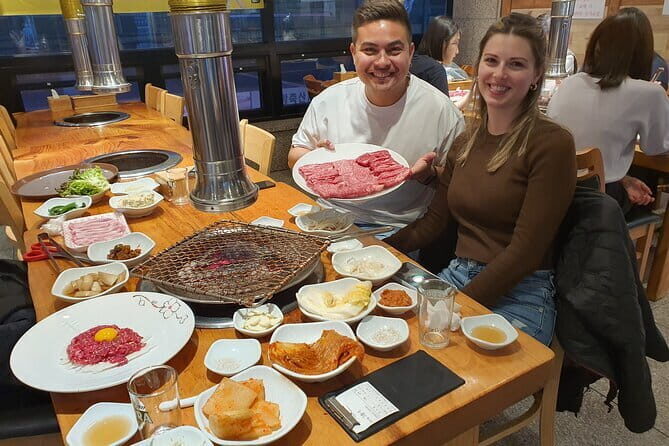
At $195 per person, you’re paying for more than food. You’re getting a licensed guide, dinner, snacks, bottled water, and alcoholic beverages. Plus, the main sights on the route have free admission, so you’re not paying extra entry fees to “earn” your value.
Here’s how I’d judge it if you’re deciding today:
- If you only wanted a couple street bites, this would be pricey.
- If you want a structured day that combines cultural landmarks with a real meal sequence, it starts to make sense fast.
- The guide’s role matters here. Eunice’s history-and-culture explanations add value because they turn tastings into understanding.
You also avoid the cost of private transport because it isn’t included. That can lower your overhead, but it’s also why comfortable shoes and good transit sense matter.
My rule of thumb: if you enjoy connecting food to place, and you’re happy doing a walking-style day, this price lands in the “fair” zone.
Timing, walking, and who this tour suits best
This runs about five hours and starts at 1:00 pm. Expect a day that mixes landmark time with breaks that help you digest between tastings. The stop durations are fairly short at the front half (gate and DDP) and then settle into scenic walking and cultural landmarks.
That short-stop format is great if you don’t want to sit around waiting for buses or long lines. It’s less ideal if you want full museum-style pacing or deep guided interior tours. You’ll likely get the essentials and the context, not an all-day deep dive into any single site.
Since most of the day is on foot, this tour fits you best if:
- you like walking and you’re comfortable moving for five hours
- you enjoy food that’s shared and layered, like banchan
- you want culture explained in plain terms tied to what you’re eating
- you like a guide who makes the day feel warm and human (Eunice comes through strongly in that role)
If you’re traveling with kids, couples, or solo, the private setup can feel comfortable because it keeps the day focused on your group. One review specifically mentioned a family experience with a husband and an 11-year-old, and the pacing was described as a good fit—so families can work if everyone is fine with steady walking.
Should you book Seoul Food: Banchan, Bibimbap, and Beyond?
Book it if you want a Seoul day that treats food like culture. This is strongest when you care about why Korean dishes are built the way they are—especially the banchan rhythm and the bowl-together logic of bibimbap. The free-admission sights help you feel like your money goes to the meal and the guide, not to tickets.
Skip it if you hate walking, you need private transportation, or you want long museum or palace interior time. The day is designed for a moving, tasting-forward experience.
If you do book, do one thing to get more from it: go in ready to learn. Eunice’s explanations are part of the payoff, and they make the food taste smarter, not just better. You’ll leave with dishes in your memory and a cleaner picture of how Seoul’s mix of old and new shapes what’s on the table.
FAQ
How long is the Seoul Food: Banchan, Bibimbap, and Beyond tour?
It lasts about 5 hours.
What time does the tour start?
The start time is 1:00 pm.
Where is the meeting point, and where does the tour end?
You meet at JW Marriott Dongdaemun Square at 279 Cheonggyecheon-ro, Jongno District, Seoul, South Korea, and the tour ends back at the meeting point.
Is this a private tour?
Yes. It’s a private tour/activity, and only your group participates.
What’s included in the price?
The tour includes a licensed guide, dinner, snacks, bottled water, and alcoholic beverages.
What is not included?
Private transportation is not included.
Do I need to pay for admissions at the stops?
The listed stops (Dongdaemun Gate, DDP, Cheonggyecheon Stream, Gyeongbokgung Palace, and Bukchon Hanok Village) show free admission tickets.
Do I get a mobile ticket?
Yes. The tour provides a mobile ticket.
What’s the cancellation policy?
You can cancel for a full refund up to 24 hours in advance of the experience start time.
Is the tour near public transportation, and is it suitable for most people?
It’s near public transportation, and most people can participate.
![[Private] DMZ & Imjingak Peace Gondola Experience Inter-Korean War - Imjingak Pavilion and the unification zone: bridges and the meaning behind them](https://8.koreaadventures.com/wp-content/uploads/private-dmz-imjingak-peace-gondola-experience-inter-korean-war.jpg)