REVIEW · SEOUL
Private DMZ the 3rd Tunnel Tour from Seoul (optional Red Bridge)
Book on Viator →Operated by VIP TRAVEL Co.Ltd · Bookable on Viator
DMZ days hit hard in the best way. I love having a private guide to translate the political meaning behind each stop, and I love that you actually reach the Third Tunnel and Dora Observatory for real North Korea views. The main thing to plan around is that military rules can shift timing, and refunds aren’t available if the schedule changes.
This tour is built for small groups (up to 6), so the day feels less like a bus ride and more like a focused history lesson with stops that matter. Hotel pickup in downtown Seoul helps you start clean, and the mobile ticket system keeps you from hunting for paperwork.
With about 8 hours total, it’s long but not rushed. You’ll mix timed DMZ access with lots of free sightseeing moments around the Imjin River and Imjingak, then end with the big hitters: the tunnel and the observatory.
In This Review
- Key highlights if you want the good stuff fast
- Private DMZ timing: why timing rules shape the whole day
- Meeting your guide in Seoul and getting to the DMZ without drama
- Imjingak Pyeonghwa Nuri Park: the peace stops that set the tone
- The Imjin River sites: monuments that explain the war’s edges
- Peace Bell to Unification Bridge: the symbolic walk toward the DMZ
- Inside the Third Tunnel of Aggression: what the numbers mean
- Dora Observatory: the closest look and the binocular part that counts
- Tongilchon-gil: the calmer village road beyond the edge
- Gamaksan Chulleong Bridge (optional Red Bridge): the fun add-on
- Price and value: $500 per group and what you really get
- Who should book this private DMZ tour?
- Should you book it?
- FAQ
- Do I need a passport for the DMZ tour?
- How many people are included in this private DMZ tour?
- Is hotel pickup and drop-off included in Seoul?
- Which parts include admission tickets?
- Is there a dress code for the DMZ?
- Can the tour start time or schedule change?
Key highlights if you want the good stuff fast
- Up to 6 people, private pacing: less crowd pressure at checkpoints and better photo time for your group.
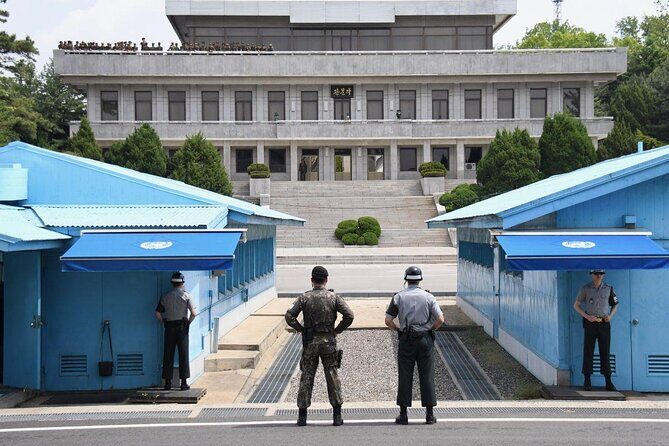
- Admissions included for major DMZ stops: DMZ entry, the Unification Bridge, the Third Tunnel, and Dora Observatory are listed as included.
- Careful handoff inside the DMZ area: if your group is under 30, you transfer to a group shuttle bus once inside.
- North Korea spotting from Dora Observatory: binocular viewing is part of the plan.
- Imjingak Park stops are free and meaningful: peace bell, locomotives, bridges, and memorials add context.
- Optional Red Bridge at Gamaksan Chulleong: a 150-meter red suspension bridge can add extra time and fun.
Private DMZ timing: why timing rules shape the whole day
This is one of those tours where the most important detail isn’t on the brochure. It’s timing—because the DMZ is run under military guidelines. Your start time can change, and your schedule can shift due to military issues or even weather. The operator is clear that refunds aren’t available if changes happen.
In practice, that means you should keep your day plan flexible. Don’t stack another tour right after this one. Build in buffer time for getting back to Seoul, too, since the day length is listed as about 8 hours and can move around.
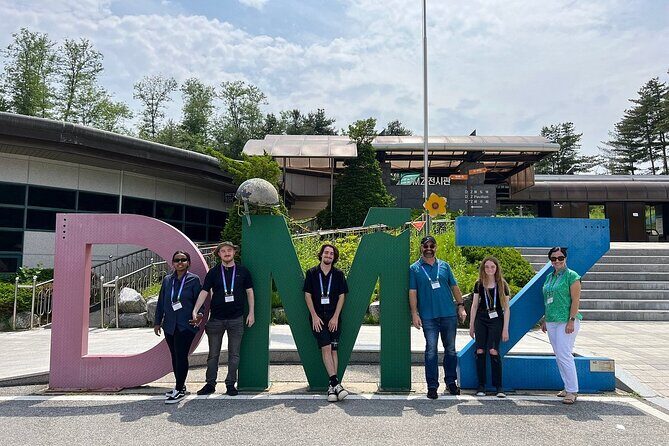
Good news: the tour runs with a professional English or Chinese-speaking guide and a skilled driver, and it includes hotel pickup in downtown Seoul (or a meet-up at a nearby subway station if that’s easier). That reduces a lot of stress, especially the first time you deal with DMZ checkpoints.
Also note: you need your passport on tour day. If you forget it, the whole plan can fall apart. Bring it in an easy-to-access place and keep it with you.
You can also read our reviews of more private tours in Seoul
Meeting your guide in Seoul and getting to the DMZ without drama
From the start, the format is simple. You’ll have hotel pickup and drop-off in Seoul, and you’ll be in a private group. The listing also says the guide and driver can meet you at a nearby subway station if you prefer that option.
Once you’re on the move, the day becomes a rhythm:
- sightseeing stops with short, timed windows,
- transit between sites,
- and one moment where you shift from your private transport to a DMZ shuttle.
Here’s that key logistics detail: if your group is less than 30 people, you need to transfer to a group shuttle bus once inside the DMZ. It sounds like an odd wrinkle, but it’s normal for this kind of tightly controlled area. In a small private group, it also helps to know what’s coming so you don’t worry when the vehicle changes.
What I like about this setup is that it keeps your guide with you for context. You’re not left to figure things out alone in a confusing place. And when you want to ask questions—why certain things were built, what certain monuments mean, what you’re looking at from the observatory—your guide is there.
Imjingak Pyeonghwa Nuri Park: the peace stops that set the tone
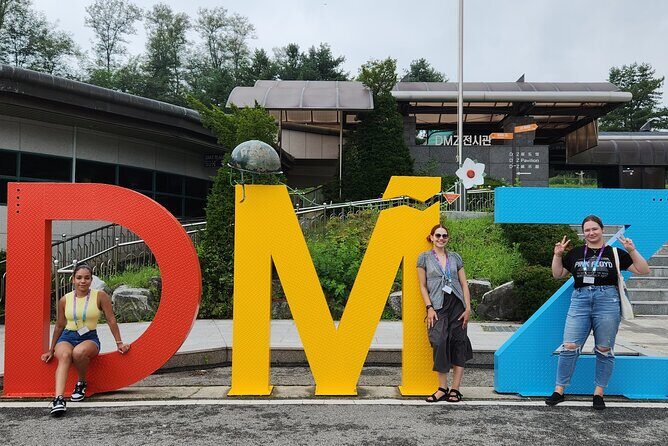
Most DMZ tours try to rush straight into the heavy stuff. This one starts with a softer landing at Imjingak Pyeonghwa Nuri Park. It’s described as a sanctuary opened in 2005 to symbolize peace near the DMZ, and you get about 30 minutes here.
This matters because the DMZ can feel like pure military scenery if you go in cold. Imjingak is designed to frame what you’re seeing as more than a set of fences. It’s a place of remembrance—especially for families affected by division.
From there, you move to the Bridge of Freedom, a temporary wooden span built in 1953 to carry 12,773 prisoners of war back to South Korea across the Imjin River. You get a short stop (around 30 minutes). Even if you don’t read every detail at the site, the scale of that number and the fact that it was temporary adds punch. It’s a reminder that the armistice was not a clean ending—just a pause.
One practical tip: wear comfortable shoes. These are short walks, but they’re on outdoor paths where you’ll want good footing, especially in hot weather.
The Imjin River sites: monuments that explain the war’s edges
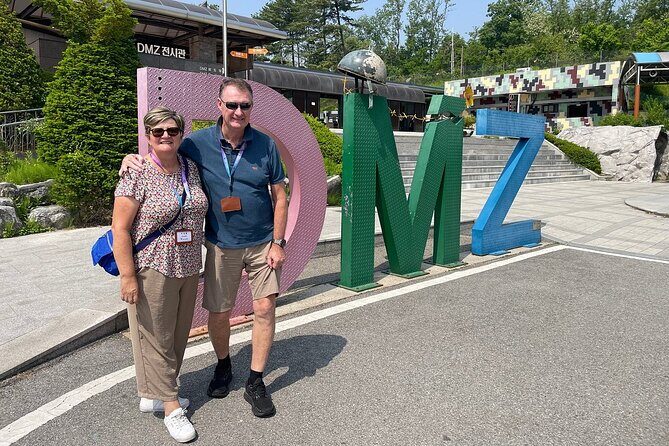
After the peace-focused start, the tour shifts into the “where the conflict touched daily life” zone along the Imjin River.
You’ll visit:
- Mangbaedan Memorial Altar (about 10 minutes), erected in 1986 near the DMZ. Families gather on holidays like Chuseok to honor relatives left in North Korea. Incense is part of the experience, which makes it feel less like an outdoor museum and more like a living memorial.
- Imjin River Dokgae Bridge (about 15 minutes), a historic steel structure rebuilt after the Korean War’s destruction. The piers are described as scarred from battles in the 1950s, and you’ll view the bridge from a good vantage point.
- Steam Locomotive at Jangdan Station of the Gyeongui Line (about 10 minutes). It’s called a rusted iron horse, derailed by bombings in 1950 and preserved since 1953. The listing emphasizes its bullet-scarred frame and the fact it’s been left as evidence.
These stops are short, but they do a clever job: they show war as something that hits infrastructure, travel routes, and family stories. You’ll also notice that many of the sites here are free admission. So even if you’re watching your spending, you’re still getting meaningful stops.
If you like photography, this is a good stretch of the day to shoot. Bridges and river views are easier to photograph than the tunnel interior, and the light at different angles can make the monuments feel more real.
Peace Bell to Unification Bridge: the symbolic walk toward the DMZ

Next comes a set of iconic peace symbols inside the Imjingak area and right toward the border zone feeling.
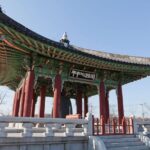
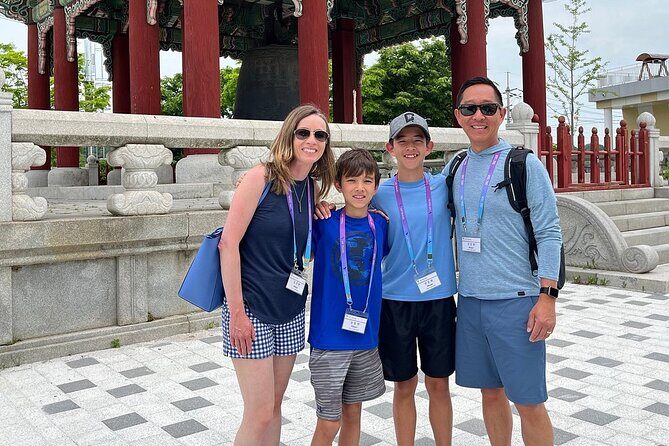
You’ll stand at Pyeonghwauijong Peace Bell in Imjingak Park. It’s described as a 21-ton bronze bell cast in 2000, meant to herald hope for reunification. The listing notes its resonant toll echoes across the DMZ area. You get about 10 minutes, which is just enough time to take in the scale and let the meaning land.
Then comes Unification Bridge (about 10 minutes). This bridge opened in 1998 and is described as a vital link to the DMZ, crossing the Imjin River with military checkpoints around. Admission for this stop is listed as included.
To me, this is a good moment to slow down your phone. The bridge isn’t just a bridge. It’s a visual argument about what the country wants and what it can’t yet do.
You also spend time seeing the river from the tour bus between stops. The listing says you’ll marvel at the Imjin River from the comfort of your bus while it glides alongside the DMZ. That brief “moving viewpoint” can help if walking feels like too much. And it gives you a chance to reset before the tunnel.


Inside the Third Tunnel of Aggression: what the numbers mean
Then you hit the main event: The Third Tunnel of Aggression, also called the 3rd Infiltration Tunnel.
Here are the specifics the listing provides:
- discovered in 1978,
- about 52 km from Seoul,
- length of 1,635 meters,
- built by North Korea,
- passage measures about 2 meters high and 2 meters wide,
- and you get about 30 minutes at the site, with admission included.
What this does for your understanding is simple: the tunnel gives the Cold War a physical size you can grasp. It’s not just a story. It’s a narrow underground route that forces you to imagine how limited movement would be inside it.
Because it’s tight and the day is otherwise outdoors, I’d treat this as the part where you plan for discomfort. Even if there’s no special dress code, wear clothing that you don’t mind getting a bit close-to-the-ground or warm. Take water when you can, and pace yourself afterward so you don’t feel rushed.
Also, this site is one of the best arguments for why a guide matters. You’re not just staring at a hole in the ground—you’re connecting the tunnel to the broader meaning of division, espionage fears, and military planning. Your guide is there to help you translate that into plain talk.
Dora Observatory: the closest look and the binocular part that counts
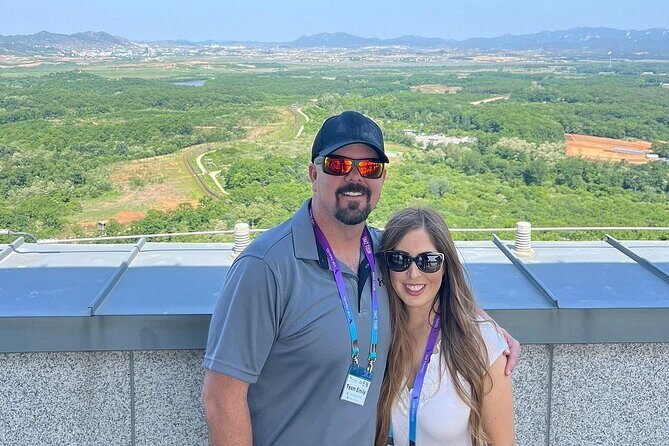
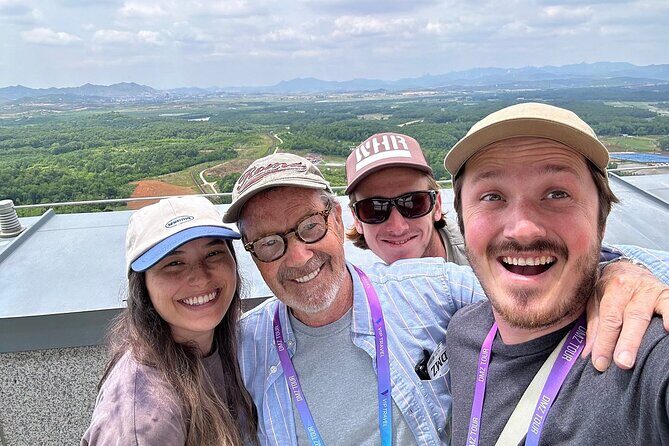
After the tunnel, you’ll go to Dora Observatory on Dorasan. The listing says it was established in 1986 and renovated in 2018. It’s described as South Korea’s closest glimpse of North Korea.
This is another timed stop: about 30 minutes with admission included.
The key practical detail: you’ll use binoculars to spot:
- Kijong-dong, described as a propaganda village,
- and Kaesong City.
Two things to expect here:
1) Your view is going to feel limited by distance. That’s normal.
2) Binoculars are part of the point. Don’t skip them thinking you’ll just see it with your naked eyes.
If you’re the kind of person who wants to know what you’re looking at, this is where your guide can really shine. The listing doesn’t promise a magical view, but it does promise a structured way to look.
And because this stop is timed at about 30 minutes, you’ll want to be ready to move from “looking” to “asking questions” quickly. The observatory part goes fast, even when you want it to last.
Tongilchon-gil: the calmer village road beyond the edge
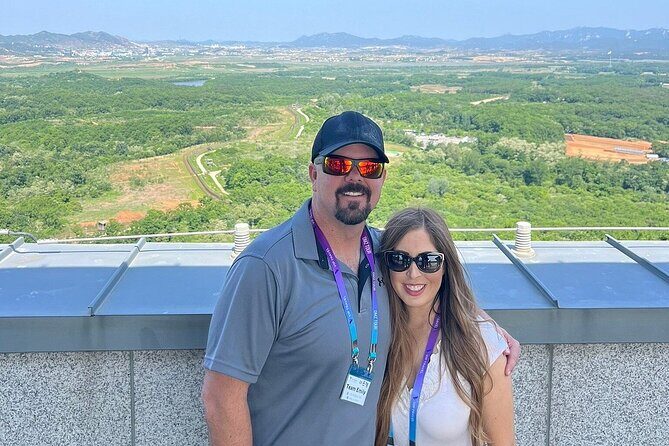
After the heavy sights, the tour gives you a calmer walk: Tongilchon-gil.
You’ll meander along a road through Tongil village, described as just beyond the DMZ Civilian Control Line. The listing mentions fertile fields and specifically notes Jangdan soybeans. It’s about 30 minutes.
This is where the day stops feeling only like war. You get a sense of farming and ordinary life at the edge of something controlled. Even if you don’t see village scenes that look like modern Seoul, the change in tone is valuable. It also makes the tour easier to process mentally.
If you’re traveling with kids or teens, this is often a good “breather” stop: they can walk, breathe, take photos, and shift from intense attention to curiosity.
Gamaksan Chulleong Bridge (optional Red Bridge): the fun add-on
If you choose the optional extra, you’ll add Gamaksan Chulleong Bridge, often called the red suspension bridge.
What the listing gives you:
- 150-meter-long red suspension bridge,
- built in 2018,
- designed to honor Korean War heroes,
- with a listed sway element of 30 meters,
- and about 1 hour of time.
This is a great choice if you want a change of pace after the tunnel and observatory. Also, because it’s outside and bridges always look good in photos, it gives you something visual and energetic at the end of a heavy day.
The tradeoff is simple: it uses time. If your group is tired, you may prefer to skip it and keep the day more focused on DMZ sights.
Price and value: $500 per group and what you really get
The price is $500 per group for up to 6 people, lasting about 8 hours. That works out differently depending on how many of you book.
- If you fill the group (6 people): it’s about $83 per person.
- If you’re a smaller group (like 2–3 people): it’s more like $167–$250 per person.
What helps value here is that the tour includes:
- free hotel pickup and drop-off in Seoul,
- a professional guide (English or Chinese speaking),
- transport with a driver,
- mobile ticket,
- plus admission tickets listed as included for key DMZ moments (DMZ entry, Unification Bridge, Third Tunnel, Dora Observatory).
Lunch isn’t included. Optional parking, toll fees, and other admissions (where applicable) also aren’t included.
Here’s my balanced take: if you’re a couple, you’ll still likely feel this is pricey compared to group DMZ tours. But if you’re the kind of travelers who want your questions answered, a private pace, and guided meaning at each stop, this price starts to look more reasonable. You’re buying time and clarity, not just transport.
It’s also worth noting the rating is very high: 4.9 with 429 reviews, and 100% recommendation. The best praise in the feedback keeps circling back to two things:
1) guides who answer lots of questions, and
2) a smooth private experience that feels personal.
Guide names showing up in feedback include Ray, Alice (with driver Andy), Lina, Sua, and Diane (with Tom). Since guides can vary by day, that’s not a guarantee—but it tells you the operator’s strength is guide quality and attention.
Who should book this private DMZ tour?
This tour fits you best if you:
- want a small-group private experience (up to 6) instead of a crowded bus day,
- care about understanding what you’re seeing, not just taking photos,
- like having a guide who can handle questions in English or Chinese,
- are okay with timing uncertainty because DMZ access follows military rules.
It may feel like a lot if you:
- dislike long outdoor days,
- hate schedule changes,
- or don’t want to deal with passport requirements and checkpoint-style pacing.
If you’re coming to Seoul for a first trip and you only have room for one major border experience, this is a strong way to do it without sacrificing explanation time.
Should you book it?
If you want the DMZ and 3rd Tunnel day, this is a smart booking when you value guidance and a private group feel. The biggest reason to choose it is that the tour isn’t just transportation. It stacks the meaningful sites—Imjingak peace memorials, Unification Bridge, the Third Tunnel with its specific dimensions, and Dora Observatory with binocular spotting—into one guided flow.
I’d book it if your schedule can handle possible start-time shifts and you’re traveling with a passport ready in your hand. Skip the optional red bridge only if you’d rather keep the day focused or your group is tired.
FAQ
Do I need a passport for the DMZ tour?
Yes. The tour instructions say you need a passport on the tour day, so bring it with you.
How many people are included in this private DMZ tour?
It’s a private tour for up to 6 people per group.
Is hotel pickup and drop-off included in Seoul?
Yes. Free hotel pickup and drop-off are included in downtown Seoul, and you can also meet the guide and driver at a nearby subway station.
Which parts include admission tickets?
Admission is listed as included for the DMZ area, the Unification Bridge, the Third Tunnel, and Dora Observatory. Other stops like Imjingak Park sites are listed as free.
Is there a dress code for the DMZ?
No special dress code is mentioned.
Can the tour start time or schedule change?
Yes. The start time may change due to military guidelines, and the schedule can change due to military issues or weather. The instructions state refunds are not available for these changes.
![Private Seoul Wall Trekking [Inwangsan, Bugaksan, Naksan Park, N-Seoul Tower] - Private pickup and a mountain-focused guide team](https://8.koreaadventures.com/wp-content/uploads/private-seoul-wall-trekking-inwangsan-bugaksan-naksan-park-n-seoul-tower.jpg)