REVIEW · SEOUL
Private Airport Transfer : Incheon to/from Seoul (up to 7 pax)
Book on Viator →Operated by Tourmaker · Bookable on Viator
Finding your driver at Incheon feels like cheating chaos. I love the meet-and-greet with a name plate or clear pickup spot and the 90-minute waiting window with free changes for flight delays. One possible drawback: English can be limited with some drivers, so having your hotel address pulled up helps.
This is a no-stress, one-way setup that works well for first-timers and groups. In the notes and staff experiences I’m using as benchmarks, drivers like Moon, Li, and Kris are praised for fast communication and friendly service, including sharing helpful directions for where to stand and how to find the vehicle.
In This Review
- Key Points at a Glance
- Why This ICN Transfer Makes Seoul Feel Easier Fast
- Incheon Arrival: How You Actually Find the Driver
- Small-but-Important Tip
- The Waiting Plan: 90 Minutes That Covers Reality
- The Ride: Comfort, Clean Cars, and Group-Friendly Setup
- Speed and Safety Matter
- Luggage Rules: What Fits, What Might Not
- The Best Practical Move
- Seoul Drop-Off: The Timing Rule You Should Not Ignore
- One More Note
- Language Support: Basic English or Chinese, and How to Work With It
- Value Check: What You’re Really Paying For
- Who This Transfer Is Best For
- Things to Watch Before You Book
- Should You Book This Private Incheon Transfer?
- FAQ
- How do I find my driver at Incheon Airport?
- How long will the driver wait after I land?
- What if my flight is delayed?
- Where does the service end in Seoul?
- Is this a round-trip transfer?
- What about luggage and booster seats?
Key Points at a Glance
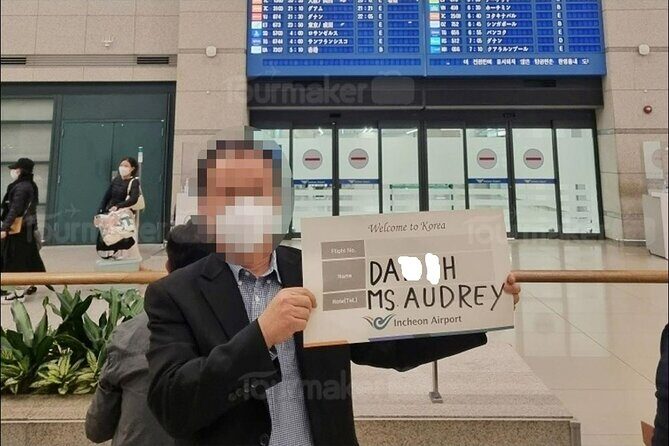
- Meet-and-greet help at ICN: name plate at the indoor meeting area, or pickup at the exit for convenience.
- 90 minutes waiting time: built in for immigration/customs work after landing.
- Flight delays stay flexible: you can request free changes if your timing shifts.
- One price for your group: pay once and ride together instead of splitting into taxis.
- Luggage rules are clear: plan for one 24-inch suitcase per person (extras may need a second van).
- Clean A/C private vehicle: repeatedly mentioned as comfortable and well maintained.
Why This ICN Transfer Makes Seoul Feel Easier Fast

Seoul can be a bit of a shock after a long flight. The big win here is that you skip the mental overhead of figuring out trains, lines, and airport signage when you’re tired. You get a driver who’s supposed to find you, not the other way around.
This transfer is also built for groups. When you can pay one price for up to five or seven passengers (depending on your option), the value starts to make sense quickly—especially if you’d otherwise be doing multiple taxis or squeezing into transit with luggage.
I also like the “everything included” approach. When all fees and taxes are included, you can budget without playing add-on guessing games mid-trip.
You can also read our reviews of more private tours in Seoul



Incheon Arrival: How You Actually Find the Driver
Incheon is busy, and getting turned around right after landing is easy. The service has two practical pickup styles, and both aim to reduce walking and confusion.
First, your driver contacts you after you land. That matters because it nudges you from passive waiting into an organized plan: you know who you’re looking for and where they’ll be.
Second, you’ll be picked up in one of two ways:
- A driver standing in front of the indoor meeting hall holding a name plate.
- Waiting near the exit, where the driver comes to you right away so you don’t have to walk to a parking area.
A detail that shows up repeatedly in real-world accounts: drivers sending a photo via messaging so you can match their exact spot. That turns “where are you” into a quick check, even if your Korean is limited.
Small-but-Important Tip
Have your hotel name and exact address (or a saved pin) ready. One feedback thread noted that with minimal English, you may need to guide the drop-off point. A quick reference saves time and stress.
The Waiting Plan: 90 Minutes That Covers Reality
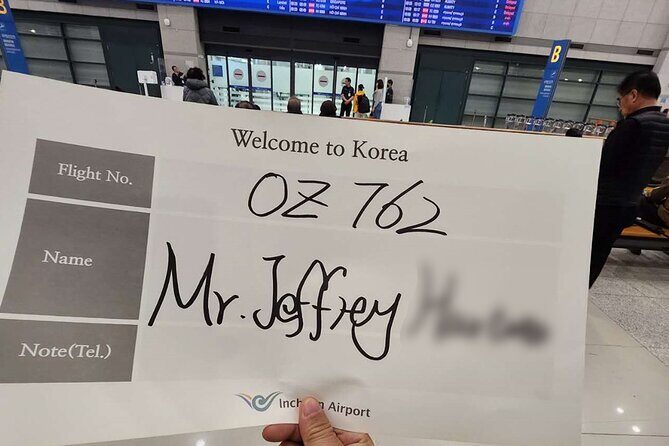
This transfer includes waiting time after you land—up to about 1.5 hours. The stated intent is to cover the time it takes to handle immigration and customs, which is often the part that stretches unpredictably.
What makes this valuable is the “human” reality behind it. Airports run on line speed, not airline schedules. If your plane is early but immigration is slow, the transfer still has built-in slack.
There’s also a clear process for timing changes. If your flight is delayed or postponed, you’re told to let the team know quickly. The service includes free changes for flight delays as long as they can keep contact with you.
In one example, a driver handled a delay update smoothly and kept things on track. That’s what you want: fewer back-and-forth messages, fewer panic calls.
The Ride: Comfort, Clean Cars, and Group-Friendly Setup
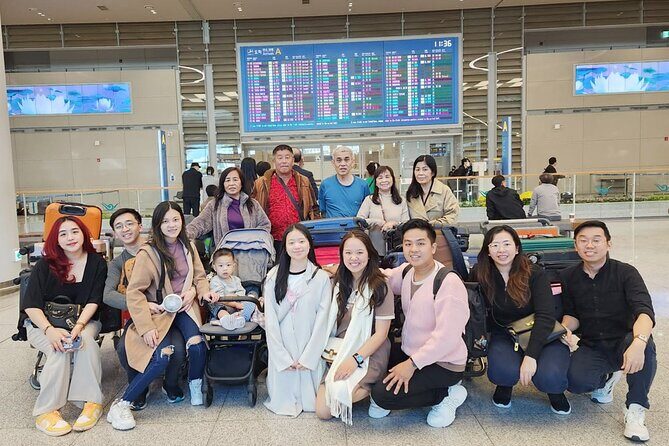
This is a private transfer, so you’re riding with your group rather than sharing shuttles with strangers. That usually means fewer stops, less waiting, and a calmer ride after customs.
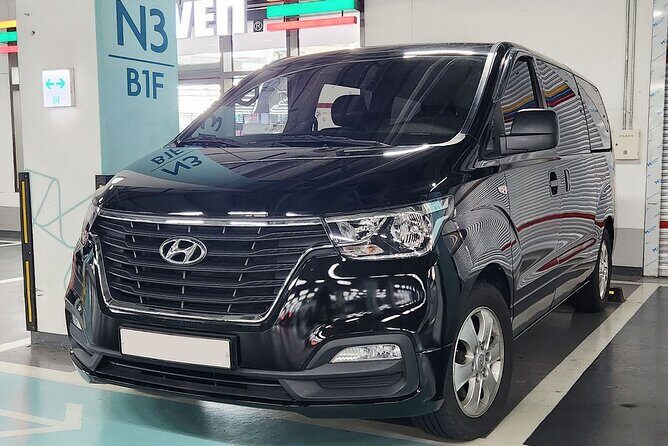
The vehicle is described as air-conditioned and “fancy private,” and the repeated theme is clean, well maintained transport. People also highlight spacious minivans for carrying groups with a lot of bags.
A few more Seoul tours and experiences worth a look






Speed and Safety Matter
One set of notes mentions drivers sticking to the speed limit and driving smoothly. That might sound basic, but after landing you want “boring and safe,” not “fast and stressful.”
Luggage Rules: What Fits, What Might Not
Luggage is where good transfers separate from average ones. Here, there’s a clear allowance: one 24-inch suitcase per person.
The important nuance: they may carry more than one item per person if space allows, but they’re not responsible if everything can’t be loaded. That means your planning should be conservative.
If you have extra bags, they say they’ll do their best to accommodate. If it’s not possible, you can request an additional van or take a taxi. Booster seats are also handled, but at an extra cost: $20 per person.
The Best Practical Move
When you book, communicate your number of passengers and suitcase count clearly. One comment specifically warned that assuming everyone only has carry-ons can create problems. If you’re traveling with big luggage, be blunt and exact.
Seoul Drop-Off: The Timing Rule You Should Not Ignore
This service ends when you arrive in front of the hotel or Airbnb. That’s straightforward, and it’s a big upgrade from transfers that drop you at a distant station and expect you to schlep.
For a pickup from Seoul to Incheon, there’s a scheduling rule: your meeting time should be at least 3.5 hours before boarding time. For example, if you board at 15:00, meeting time should be 11:30.
That rule is about buffering for the airport flow. You don’t want to be the group sprinting through Incheon with a rolling suitcase that refuses to roll.
If your pickup is from Seoul, your driver stands by 10 minutes earlier than your meeting time.
One More Note
If you’re trying to drop off at multiple locations, there may be extra charges (prices can vary and you need to inform staff). Keep it simple unless you really need to split stops.
Language Support: Basic English or Chinese, and How to Work With It
Drivers are listed as basic English or Chinese speaking. In practice, that can mean “enough to coordinate” rather than a full conversation.
Some feedback suggests communication can be limited. The fix is easy: use your phone. Bring up the hotel address, keep the booking details accessible, and use a translation app if needed.
If you want to reduce friction, send your driver a message with:
- your flight number and timing
- your hotel name and address
- luggage count and whether you have bulky items
Even small details help drivers prepare the vehicle layout.
Value Check: What You’re Really Paying For
The price is shown as $98 per group (for up to five), with a model that scales to larger groups (up to seven). On paper, it’s “just a ride.” In reality, you’re paying for four things:
- Private door-to-door convenience
- Waiting time so you’re not rushing immigration
- Flight-delay flexibility via free changes
- No surprise fees, since taxes and fees are included
That combination matters most on arrival day. Once you’re settled, you can handle subway and walking. But right after landing—especially with kids, large luggage, or a tight schedule—you’re buying peace of mind.
Also, group pricing can be the deciding factor. If you’re traveling with three or more people, private transport often becomes a smarter deal than stacking multiple single-person solutions.
Who This Transfer Is Best For
This is the kind of service I’d target if you want Seoul to start smoothly, not with a puzzle.
It’s a strong fit for:
- First-time visitors who don’t want to figure out airport transit while tired
- Families, including those traveling with toddlers (one account highlighted how stress-free it felt)
- Groups who benefit from riding together and keeping luggage organized
- Solo travelers who want the comfort of a confirmed meet-and-greet and direct pickup (one note specifically praised how safe it felt for a solo female traveler)
If you’re traveling ultra-light, you might be able to save money with public transit. But you’d be trading convenience and waiting coverage for a cheaper ride.
Things to Watch Before You Book
A few practical considerations can save you headaches:
- English may be limited: keep your destination details ready on your phone.
- Luggage capacity is capped by suitcase size: plan for one 24-inch suitcase per person.
- It’s one-way only: you choose airport-to-Seoul or Seoul-to-airport, not a full round-trip bundle automatically.
- Drop-off accuracy depends on clear instructions: if your hotel is hard to pinpoint, be ready to guide the driver to the exact entrance.
Also, remember the transfer ends when you’re dropped directly at your hotel/airbnb front door. That’s great—but it means you need to confirm the exact address you want.
Should You Book This Private Incheon Transfer?
Book it if your top priority is a clean, direct, private ride that handles the messy parts of travel day—crowds, immigration time, and flight delays. The built-in 90-minute waiting and the meet-and-greet approach are exactly what make arrival and departure smoother.
I’d skip it (or at least rethink it) if you’re traveling with very unusual luggage amounts or you can’t be bothered to communicate your luggage count and hotel address. With limited English sometimes, simple preparation pays off.
If you want your first minutes in Seoul to feel calm, this kind of transfer is an easy yes. You’ll spend your energy on Korea—not on finding your driver.
FAQ
How do I find my driver at Incheon Airport?
Your driver will contact you after you land. Pickup can happen either at an indoor meeting hall area with a name plate or at the exit so you do not have to walk to the parking lot.
How long will the driver wait after I land?
The transfer includes about 1.5 hours of waiting time to cover immigration and customs. If you need more time, you should contact them.
What if my flight is delayed?
You can request free changes for flight delays. The key is to inform the service right away and keep communication so they can adjust pickup timing.
Where does the service end in Seoul?
For the Seoul side, the service ends when you arrive in front of your hotel or Airbnb.
Is this a round-trip transfer?
No. This is a one-way transfer service, either from Incheon Airport to Seoul or from Seoul to Incheon Airport.
What about luggage and booster seats?
You’re allowed one 24-inch suitcase per person. Booster seats are available for an additional $20 per person. Extra luggage may require an additional van or a taxi if it can’t all be loaded.