REVIEW · SEOUL
Private DMZ Spy Commando Invasion Route & 2nd tunnel tour
Book on Viator →Operated by Dmgspy Tour · Bookable on Viator
The DMZ feels close, not postcard distant. This private route focuses on the 1968 spy commando infiltration and brings you to the most specific, concrete sites tied to the Korean Peninsula’s hardest border. You’ll move through places like Odusan Unification Tower and the 2nd Tunnel, then circle back to Seoul with a military-history finish at Yongsan-dong.
I love how the day is guided like a story, not a checklist. In particular, guides such as Shrek Lee and BJ are repeatedly praised for pacing and for translating military details into something you can actually picture.
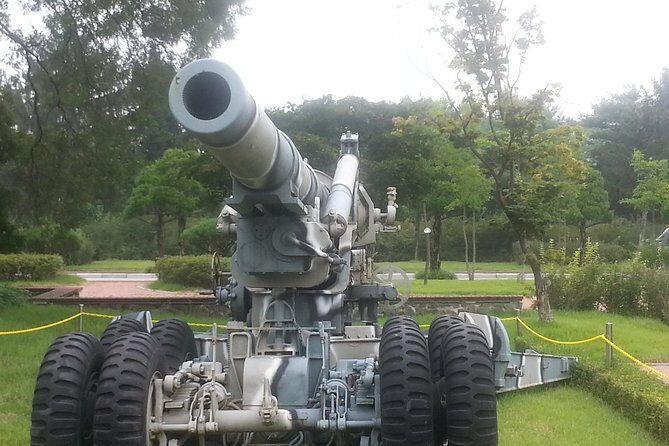
I also like the hands-on stops that give you real scale: an artillery base with an M109 Howitzer, plus a tunnel visit where you can take pictures inside. One drawback: this is security-area sightseeing, and what you see can differ from your wish-list, especially if you were hoping for the JSA. It also involves a moderate amount of walking, so comfortable shoes really matter.
In This Review
- Key highlights at a glance
- Why this DMZ day tour feels grounded, not generic
- Price and logistics: what $220 buys you (and what to watch)
- Odusan Unification Tower: border geography you can actually see
- Gorangpo-ri: South Korean base views and the 1968 infiltration point
- The 2nd Tunnel visit: scale, photos, and why tunnels matter here
- Imjingak Peace Park, M109 Howitzer, and the civilian observation post
- War Memorial of Korea at Yongsan-dong: how the day ends in tanks and planes
- Should you book Dmgspy Tour’s Private DMZ Spy Commando route?
- FAQ
- FAQ
- How long is the private DMZ spy commando route tour?
- How much does the tour cost?
- Is pickup included from Seoul?
- Do I need a passport?
- Is this a private tour?
- What stops are included in the DMZ part of the day?
- What is included for admission/tickets?
- What lunch is served?
- How much walking is involved?
- What if weather is bad?
Key highlights at a glance
- Spy commando infiltration route route-focused DMZ stops built around the 1968 raid
- Imjingak Peace Park artifacts and an artillery base featuring an M109 Howitzer
- Odusan Unification Tower for border geography and the view of the farming village
- Gorangpo-ri for a South Korean base inside the DMZ and the 1968 infiltration point
- The 2nd Tunnel with time inside and photo access
Why this DMZ day tour feels grounded, not generic
If you’ve ever seen the DMZ from a distance, you might expect big views and quick photo stops. This tour does the opposite. It keeps returning to the same question: how did North Korean commandos try to get past the most guarded border on earth? That theme shapes every stop.
You start in Seoul with pickup and then ride by private vehicle to the DMZ. Along the way, your guide connects geography to events, so places like Odusan and Gorangpo-ri stop being just names. And once you’re on site, the day leans on tangible details—like seeing artillery and stepping into a tunnel—so the story lands in your body, not just your brain.
That’s the value here: you’re not just doing DMZ sightseeing. You’re following a specific route tied to a specific operation, then tying it back to what South Korea and the United States Forces Korea experienced.
You can also read our reviews of more private tours in Seoul
Price and logistics: what $220 buys you (and what to watch)
At $220 per person for a 9 to 11 hour day, you’re paying for more than transport. You’re buying a private guide, round-trip hotel transport from Seoul in a private vehicle, and lunch included. And admissions are built into key stops, including the 1st and 3rd major DMZ visits.
Two practical notes matter for your planning. First, this is a private tour—only your group goes—so you don’t get “big bus” pacing. Guides often have room to slow down for questions, and several reviews praised that un-rushed feel with guides like Paul, Alfonso, and BJ.
Second, you need the basics in place: a current passport is required, and the day depends on good weather. If conditions are poor, the experience may be moved or refunded. And because you’ll do a moderate amount of walking, you’ll want clothes and shoes that can handle cold air and uneven ground.
Odusan Unification Tower: border geography you can actually see
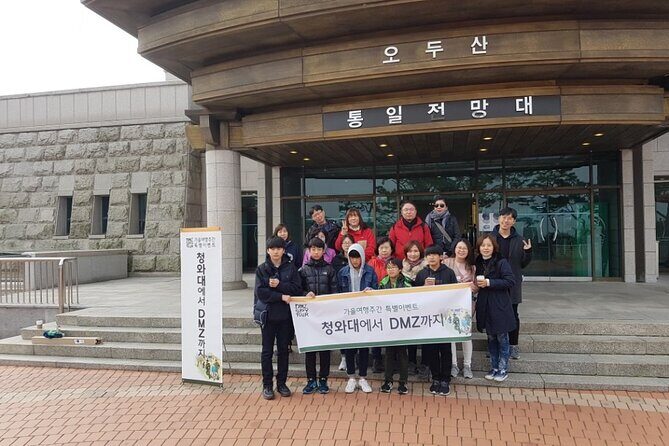
The day starts with a stop at Odusan Unification Tower, where you’ll get a view connected to the border. This isn’t just “stand here for a photo.” Your guide uses the location to explain geography—how North and South Korea face each other here, and how the farming village fits into the line that divides the peninsula.
Expect one hour at this first stop. That timing is useful: it gives you orientation without turning the early part of the day into a long waiting game. The tower area is also one of those places where you can start noticing the way terrain and fortifications shape what’s visible from the South.
If you’re the type who likes context before you move into stricter zones, this opening stop is a good move. And if you’re traveling with kids or family, it helps too: the border looks different once you understand the land.
Gorangpo-ri: South Korean base views and the 1968 infiltration point
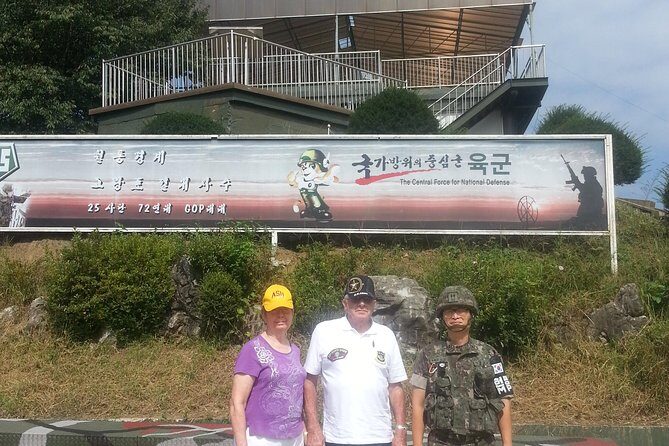
Next comes Gorangpo-ri, where the tour shifts from “viewing the border” to “standing near the border’s military logic.” You’ll visit a South Korean army base inside the DMZ. You’ll also be shown the North Korean spy commando invasion point tied to the 1968 infiltration.
This is where your guide’s role becomes more than narration. You’ll hear how the three-day battle with South Korean and US army forces played out and what it meant for the border’s defenses. The tour also includes a short climb to a military observation post, which gives you a better angle on how surveillance and observation work in practice.
One thing to keep in mind: this part of the day can feel stricter than typical sightseeing. Reviews mention military barracks and a minder being present. That’s not a flaw so much as the reality of visiting operating defense areas. If you want a relaxed, casual tour vibe, you’ll still get information—but it won’t feel like a normal museum day.
The 2nd Tunnel visit: scale, photos, and why tunnels matter here
Then you get to the stop most people picture when they hear DMZ tunnel. The 2nd Tunnel is described as the largest infiltrated tunnel, and the visit is long enough to feel the scale instead of rushing through.
The big practical perk: tourists are able to take pictures inside the tunnel. That matters because tunnels are dark and spatial—photos help you remember the dimensions once you’re back out in daylight.
Inside, expect to focus less on “wow, architecture” and more on how a tunnel changes the entire idea of crossing a fortified boundary. A tunnel isn’t about a quick sprint across open ground. It’s planning, labor, concealment, and timing. Your guide’s job is to connect what you see underground to why the 1968 operation was such a shock.
If you’re someone who struggles in tight spaces, consider how tunnels affect you. The tour includes a few hours here, so your comfort matters more than it might on a quick stop.


Imjingak Peace Park, M109 Howitzer, and the civilian observation post
After the earlier DMZ stops, the tour returns to the human-facing side of the DMZ story at Imjingak Peace Park. This is where you’ll see war artifacts and an artillery base featuring an authentic M109 Howitzer.
This artillery stop helps you understand something key: the DMZ isn’t just a line on a map. It’s a staffed, armed buffer zone with real firepower sitting close enough to matter. Seeing the howitzer makes the rest of the day feel more serious, because you can connect “stories” to “hardware.”
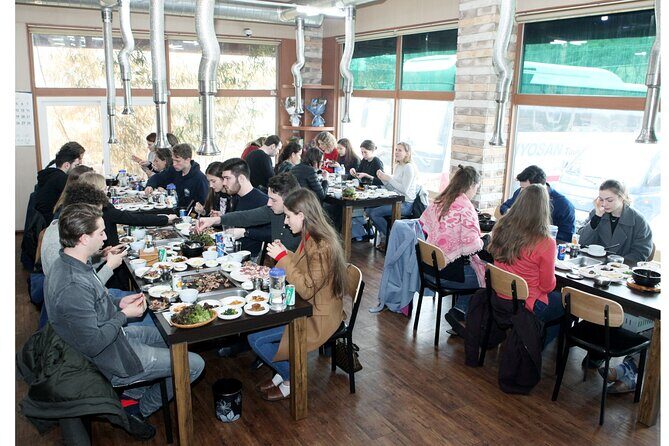
Lunch is next: barbecued duck in North Korean style. Vegetarian meals are arranged upon request, so if you avoid meat you can still fit this part in without missing the experience. It’s a smart inclusion because it slows the day down. You’ll have a break, but it’s not a bland food stop—it’s part of the theme of crossing into the border’s cultural and historical spillover.
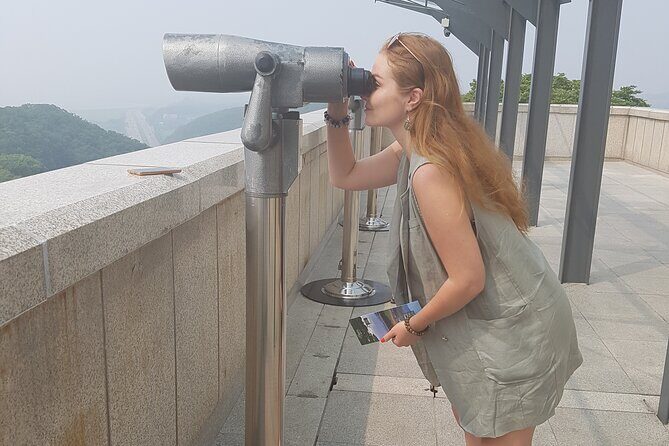
After lunch, the tour includes a walk to a nearby civilian observation point. From there, you can peek through a telephoto lens to observe a model North Korean village. Your guide uses that view to explain what daily life might look like on the other side of the border, and the contrast usually hits harder in person than it does from video.
On the drive back toward Seoul, you may also stop to search for traces of bullet marks etched in surrounding rocks and trees. That adds a quiet, sobering layer: this wasn’t just a chessboard. People fought there, and the evidence lingers.
War Memorial of Korea at Yongsan-dong: how the day ends in tanks and planes
To wrap up, you’ll visit the War Memorial of Korea back in Seoul, located at Yongsan-dong. This is a strong way to end a DMZ-focused day because it gives you the larger frame: vehicles, weapons, aircraft, and exhibits built to show how conflicts shaped Korea’s military evolution.
If you’ve been thinking about 1968 underground infiltration all day, the War Memorial is a chance to zoom out. You’ll see tanks, artillery, and fighter planes, and your guide can connect those displays to the broader Korean War context and the post-war border reality.
For me, this finish is the difference between a DMZ visit that feels one-dimensional and one that makes the whole peninsula feel connected. You leave with a clearer mental map: the DMZ isn’t isolated—it’s part of a bigger military story.
Should you book Dmgspy Tour’s Private DMZ Spy Commando route?
Book this if:
- You want a private DMZ day with a guide who explains the story behind the stops, not just where to stand.
- You care about the 1968 spy commando route and want to see specific locations tied to that event.
- You’re okay with moderate walking and security-area pacing.
Think twice (or ask questions before booking) if:
- Your must-see goal is the JSA. This tour is clearly built around DMZ invasion points and tunnel access, and reviews hint that access to certain headline areas can change.
- You dislike structured military environments and the presence of additional staff near bases.
If you’re craving a DMZ visit that feels practical and anchored in what happened—not just dramatic photos—this one fits well.
FAQ
FAQ
How long is the private DMZ spy commando route tour?
The tour runs about 9 to 11 hours.
How much does the tour cost?
The price is $220.00 per person.
Is pickup included from Seoul?
Yes. Round-trip hotel transport from Seoul by private vehicle is included.
Do I need a passport?
Yes. A current valid passport is required for the day of travel.
Is this a private tour?
Yes. It’s private, meaning only your group participates.
What stops are included in the DMZ part of the day?
You’ll visit places including Odusan Unification Tower, Gorangpo-ri, and the 2nd Tunnel, plus Imjingak Peace Park and other observation points described in the experience.
What is included for admission/tickets?
Admissions are included for key stops, including the first stop (Odusan Unification Tower) and the 2nd Tunnel. The DMZ base/invasion point stop is described as admission free.
What lunch is served?
Lunch is barbecued duck with a North Korean style. Vegetarian meals are arranged upon request.
How much walking is involved?
There is a moderate amount of walking. Comfortable clothes and shoes are recommended, and a moderate physical fitness level helps.
What if weather is bad?
The experience requires good weather. If it’s canceled due to poor weather, you’ll be offered a different date or a full refund.
![Temple Tour : Byeongpungam Seokbulsa Temple [Hiking+Cable car] - Geumjeongsanseong Fortress Gate Walk: Where the View Turns Into History](https://8.koreaadventures.com/wp-content/uploads/temple-tour-byeongpungam-seokbulsa-temple-hikingcable-car.jpg)