REVIEW · SEOUL
Korean Cooking Class in Seoul with a Professional Chef
Book on Viator →Operated by Traveling Spoon · Bookable on Viator
Cooking in a Seoul home beats guessing in restaurants. You get a private Korean cooking class in central Seoul, led by your host (like Na Young), where you learn hands-on and then eat what you made. I like that you practice real technique with fresh ingredients, and I also like the payoff: you sit down together with soup, kimchi, and soju after cooking.
One thing to keep in mind: you’ll need to follow home rules, including taking off shoes at the door. The market option also adds walking and snack time, so plan for a class that is more local and less rigidly scripted.
In This Review
- Key highlights to care about
- Entering a Seoul Home Kitchen (Shoes Off, Then You Cook)
- What You Actually Make: Bulgogi, Bibimbap, and the Side Dish Rhythm
- How the Market Option Changes the Day (Mangwon Market in 30 Minutes)
- Eating Together: Soup, Kimchi, and a Glass of Soju
- Price and Value: Is $122 for 3 Hours a Fair Deal?
- Dietary Needs and Seasonal Menu Changes (Plan Ahead, Ask Questions)
- Getting There and What to Bring (So You Don’t Waste Time)
- Who This Seoul Cooking Class Fits Best
- Should You Book This Cooking Class in Seoul?
- FAQ
- FAQ
- How long is the Korean cooking class in Seoul?
- Is this experience private or shared with other people?
- Where does the class meet?
- What dishes will I cook?
- Is kimchi and soup included in the meal?
- Do you include soju?
- Does the class include a visit to Mangwon Market?
- How far is Mangwon Market from the home?
- Are dietary restrictions accommodated?
- Can children join the class?
- What is the cancellation policy?
Key highlights to care about
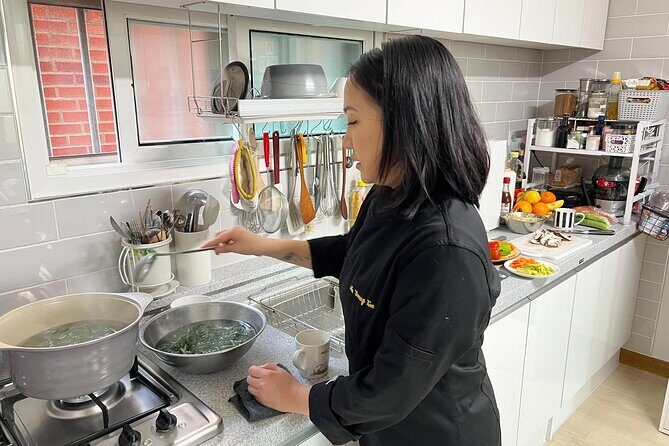
- Home-based instruction: you cook in a real kitchen, not a studio
- Classic dishes like bulgogi and bibimbap, usually plus a side dish depending on the day
- Mangwon Market add-on: about 30 minutes with seasonal produce and spicy snack sampling
- You eat your own meal right after cooking, with soup, kimchi, and a glass of soju
- Dietary flexibility: gluten free, vegetarian, and vegan options are available if you request
Entering a Seoul Home Kitchen (Shoes Off, Then You Cook)
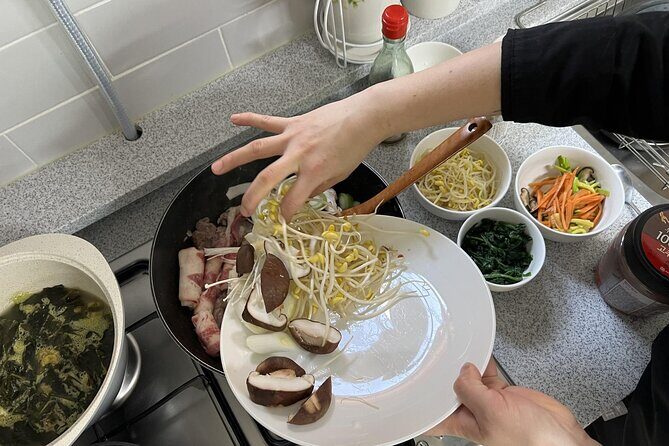
This experience is built around a simple idea: if you want to understand Korean food, you learn it where people actually cook it. The class takes place in a host’s home in central Seoul, with you starting in the kitchen for a hands-on session.
The first practical moment is also a cultural one. In the home, you take off your shoes when you enter. Your host provides indoor sandals, so you’re not stuck walking in socks if that’s not your thing. This is the kind of detail that makes the whole meal feel more real, because it signals you’re a guest, not just a visitor passing through.
I also like the private setup. It’s only your group, so you can ask questions and get feedback without watching someone else’s chaos from across a table. And since there’s no hotel pickup, you start fresh at the meeting point, which means you can keep your timing simple and under your control.
You can also read our reviews of more cooking classes in Seoul

What You Actually Make: Bulgogi, Bibimbap, and the Side Dish Rhythm
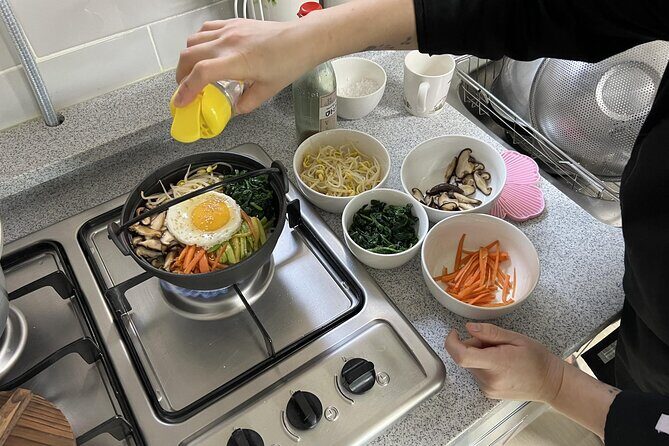
The heart of the class is learning to cook two traditional dishes from scratch. The exact menu can vary by season, but the cooking generally centers on classics you’ve probably seen on menus back home.
Common choices include:
- Bulgogi: the sweet-savory, soy-forward approach to marinating and cooking meat (often a crowd favorite because it’s forgiving and aromatic)
- Bibimbap: the big-bowl idea of mixing rice with seasoned components, then assembling for that mix-everything bite
Depending on the day, you may also make a side dish alongside your main dishes. That matters more than it sounds. In Korean meals, the sides and extras are not filler. They’re part of the flavor system—balances of spice, salt, acidity, and crunch that keep the meal from feeling one-note.
A key value here is technique. You’re not just watching someone plate; you’re chopping, mixing, stirring, and putting ingredients together in the way a home cook would. And because the host is working right there with you, you get feedback on how things should look and smell as you go. That kind of guidance is what makes you confident repeating the dishes later.
If you’re thinking about what to eat after, plan for a full meal. After cooking, you sit down to enjoy what you made, accompanied by soup and kimchi. That means you get both the hands-on cooking lesson and the real-world tasting of how it all works when it’s served as one meal.
How the Market Option Changes the Day (Mangwon Market in 30 Minutes)
Some people book cooking classes and skip the ingredient story. This one doesn’t have to be that way. You can add a visit to Mangwon Market, a large indoor market known for fresh local produce, spicy snacks, and prepared foods.
When the market tour is selected, you’ll explore stalls with your host for about 30 minutes. The goal isn’t shopping for a week’s worth of groceries. It’s about seeing what looks seasonal and how ingredients show up in everyday Korean meals. You also sample a traditional snack, which helps you connect the classroom flavors to what you’d run into on the street or at a local counter.
Practical detail: the market is a 10–12 minute walk from the home. That’s close enough that it doesn’t turn into a whole separate trip, but long enough that you’ll get a taste of neighborhood life on foot. It’s also one of the best times to ask ingredient questions, because you’ll be standing in front of the actual items you’ll cook with.
If you’re short on time and want the cleanest focus, you can skip the market add-on and keep the day purely kitchen-based. But if you like understanding what ingredients mean in real life, the market piece is a strong bonus.
Eating Together: Soup, Kimchi, and a Glass of Soju
The payoff comes right after cooking. You sit down with your host and enjoy your meal together. In the meal you’ll have:
- soup
- kimchi
- and a glass of soju
That last detail matters more than it sounds. Soju is part of the social rhythm of eating in Korea, and having it with the meal makes the experience feel like lunch or dinner with friends rather than a ticketed activity where you eat fast and move on.
Also, because kimchi is included, you’re not relying on a store-bought shortcut to complete the flavor picture. The class may vary by day, but kimchi is clearly part of what you’ll serve on the table with your dishes.
This is one of the most praised parts of the experience in the sense that it ties the lesson together. Cooking builds understanding. Eating together confirms it. You get to see whether the balance of salt, sweetness, spice, and texture actually lands the way Korean home meals are meant to taste.
Price and Value: Is $122 for 3 Hours a Fair Deal?
At about $122 per person for roughly 3 hours, this isn’t a bargain-basement activity. But it can be good value if you’re comparing apples to apples.
Here’s why:
- It’s private, so you’re not splitting the experience across a big mixed group.
- You get a home-based, hands-on cooking session with a professional host cooking alongside you.
- The class includes food you eat, not just ingredients and a snack.
- You may add Mangwon Market (guided, plus sampling), which increases both context and total value.
One more “value” angle is what you take home mentally. After a class like this, you don’t just know that bulgogi is tasty. You understand what makes it taste that way, and you learn how ingredients are handled in a Korean kitchen. That’s hard to get from a quick tasting or a restaurant meal, and it’s what turns cooking into something you can repeat.
If you’re the type who likes learning rather than just sampling, this price starts to feel reasonable. If you’re only after a quick taste and you’d rather do food by restaurant, you might feel $122 is too high. But if you want technique plus lunch (plus an optional market walk), it’s priced in a way that fits the content.
A few more Seoul tours and experiences worth a look


Dietary Needs and Seasonal Menu Changes (Plan Ahead, Ask Questions)
The menu can vary depending on the season, so don’t expect a single fixed set of dishes every single day. The good news: you can request dietary accommodations.
You can arrange gluten free, vegetarian, and vegan diets if you tell the provider at booking. That’s important because Korean cooking can involve hidden sources of flavor in sauces and pastes. Having the chance to request changes in advance gives you a better shot at a meal that actually fits your needs, not just a side plate.
The class is also designed to be flexible in what dishes you make. Your day’s pairing may include a main dish and a side dish, depending on what the host cooks that week.
If you have strong dietary requirements, I suggest you message early with clear details. Don’t just say vegetarian; say if you avoid eggs or dairy too. The more specific you are, the more likely the class can match your needs without last-minute surprises.
Getting There and What to Bring (So You Don’t Waste Time)
This is a no-hotel-pickup experience. You’ll meet at 247-111 Seogyo-dong, Mapo-gu, Seoul, and the activity ends back at the meeting point.
Two practical tips:
- Bring a phone with your mobile ticket handy.
- Have directions ready. If you’re running late or confused, you can contact your host by WhatsApp or call for help with directions.
Also, think about shoes. Since you’ll remove them on arrival, wear something easy to slip off and back on. That saves you from the awkward “where do I put these” moment.
Weather also matters in a small way if you choose Mangwon Market. You’ll do that short walk to and from the market area, so choose comfortable footwear and be ready for typical Seoul street conditions.
Who This Seoul Cooking Class Fits Best
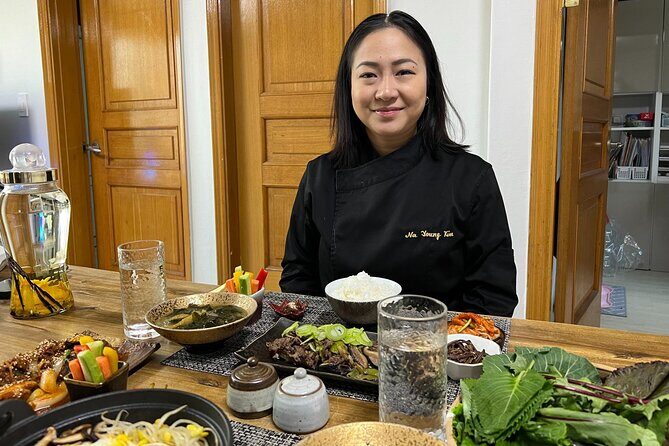
This class is a strong match if you want:
- Korean cooking technique, not just a meal
- a private, home-based experience with real food culture context
- the chance to learn from a host in a way that’s practical and repeatable
- optional market time if you like ingredient shopping
It’s also a good choice for couples and small groups who want to eat something real without the noise and unpredictability of a busy restaurant.
One clear consideration: the host can host only 1 child per experience. If you’re traveling with kids, that matters for planning.
And if you dislike eating alcohol, remember you’re served a glass of soju as part of the meal. You can usually choose how much you drink, but it’s not a “dry lunch” option by default.
Should You Book This Cooking Class in Seoul?
I’d book it if your goal is to learn Korean food in a way you can bring home. The home setting, the hands-on cooking, and the shared meal are the trifecta here: you practice the work, you understand the flavors, and you taste the results right after.
Skip it only if your priorities are strictly sight-focused or you want zero rules and zero cultural moments. Taking off shoes is part of the deal, and the experience is intentionally local—less like a museum and more like being invited into someone’s kitchen.
If you want a memorable Seoul food day that goes beyond eating, this one is a solid pick.
FAQ
FAQ
How long is the Korean cooking class in Seoul?
The class lasts about 3 hours.
Is this experience private or shared with other people?
It’s private. Only your group participates.
Where does the class meet?
You meet at 247-111 Seogyo-dong, Mapo-gu, Seoul, South Korea.
What dishes will I cook?
You’ll prepare two traditional Korean dishes from scratch, and dishes can include options like bulgogi or bibimbap. A main dish and a side dish may be included depending on the day.
Is kimchi and soup included in the meal?
Yes. After cooking, your meal includes soup and kimchi.
Do you include soju?
Yes. You’ll receive a glass of soju with your meal.
Does the class include a visit to Mangwon Market?
You can opt to include it. If selected, you’ll take a guided visit to Mangwon Market for about 30 minutes.
How far is Mangwon Market from the home?
It’s about a 10–12 minute walk from the home.
Are dietary restrictions accommodated?
Gluten free, vegetarian, and vegan diets are available if you advise at the time of booking. The menu may vary by season, so requests are important.
Can children join the class?
Na Young can host only 1 child per experience.
What is the cancellation policy?
The policy states it is non-refundable and cannot be changed, but the additional info also notes they may offer a 48-hour cancellation option for added flexibility. Check the terms when you book.