REVIEW · GYEONGJU
From Daegu: Gyeongju UNESCO Tour 7 Highlights with Bulguksa
Book on GetYourGuide →Operated by Lecirt · Bookable on GetYourGuide
Gyeongju in one day feels unreal. This full-day UNESCO-focused tour from Daegu shines with Bulguksa Temple and the Daereungwon Royal Tombs, plus the calm Donggung Palace and Wolji Pond area. The main thing to keep in mind: the guide experience can vary, and the Hwangnidan-gil dinner stop can get a bit hectic depending on the group flow.
I like that the day is planned like a route, not a random list—so you see the big UNESCO items and the classic photo spots without guessing what comes next. You’ll also get real time with the sights, because the tour runs about 10 hours with a guided visit at each major stop. One practical bonus: you can end with a drop-off in Busan, so you don’t have to backtrack if your trip continues south.
For me, the best part is how Gyeongju compresses “Korea’s old capital” into a single day. You’ll go from temple art to royal burial grounds to scenic bridges, and the pace feels manageable if you’re comfortable with some walking and stairs. Wear shoes you can move in, because temple and tomb paths don’t do you any favors.
In This Review
- Key highlights to know before you go
- How the Daegu to Gyeongju day works (pickup, timing, drop-offs)
- Bulguksa Temple (80 minutes): UNESCO art in a tight, guided window
- Gyeongju Gyochon Traditional Village (1 hour): where the day slows down
- Woljeonggyo Bridge (1 hour): the scenic break you’ll actually enjoy
- Daereungwon Royal Tomb Complex (1 hour): royal burials under grassy mounds
- Hwangnidan-gil dinner time (1.5 hours): eat well, stay flexible
- Donggung Palace & Wolji Pond (40 minutes): a quieter finish with big atmosphere
- Price and value: is $80 for a 10-hour UNESCO day fair?
- Who should book this tour—and who should skip it
- Should you book this Gyeongju UNESCO Tour with Bulguksa?
- FAQ
- What time does pickup usually happen?
- Where can I be picked up in Daegu?
- Can I get dropped off in Busan?
- How long is the tour?
- Which major sites are included?
- Are meals included?
- What languages are the live guides available in?
- Is the tour private or shared?
- How long is the Bulguksa Temple stop?
- Can I cancel for a full refund?
Key highlights to know before you go
- UNESCO anchor stops: Bulguksa Temple and Daereungwon Royal Tombs, both guided
- Classic Gyeongju scenery: Donggung Palace & Wolji Pond plus the photogenic Woljeonggyo Bridge
- A traditional village break: Gyeongju Gyochon Traditional Village as a breather between big sites
- Hwangnidan-gil dinner time: a focused block to eat in one of the city’s most popular streets
- Flexible ending: optional drop-offs including Busan and Busan station
How the Daegu to Gyeongju day works (pickup, timing, drop-offs)
This tour is built around an easy start from Daegu. Pickup is scheduled between 10:30 AM and 11:00 AM, with three pickup options during booking: Banwol-dang Station (반월당역), Dongdaegu first parking, or Daegu.
You’re looking at about 10 hours total, which usually means a full, connected itinerary rather than slow wandering. In practical terms: you’ll be moving between sites for most of the day, so plan your energy like a day trip, not a casual stroll. You’ll also want to keep your phone handy, because the guide contacts you the day before and you should check your messenger app (KakaoTalk, Wechat, WhatsApp, Viber) for updates.
If you’re continuing your trip, the ending is one of the smarter perks. You can choose a drop-off among Banwol-dang Station, Daegu, Dongdaegu first parking, Busan, or Busan Station. That flexibility is especially valuable if you’re pairing Gyeongju with a Busan coastline plan.
You can also read our reviews of more tours and experiences in Gyeongju.
Bulguksa Temple (80 minutes): UNESCO art in a tight, guided window
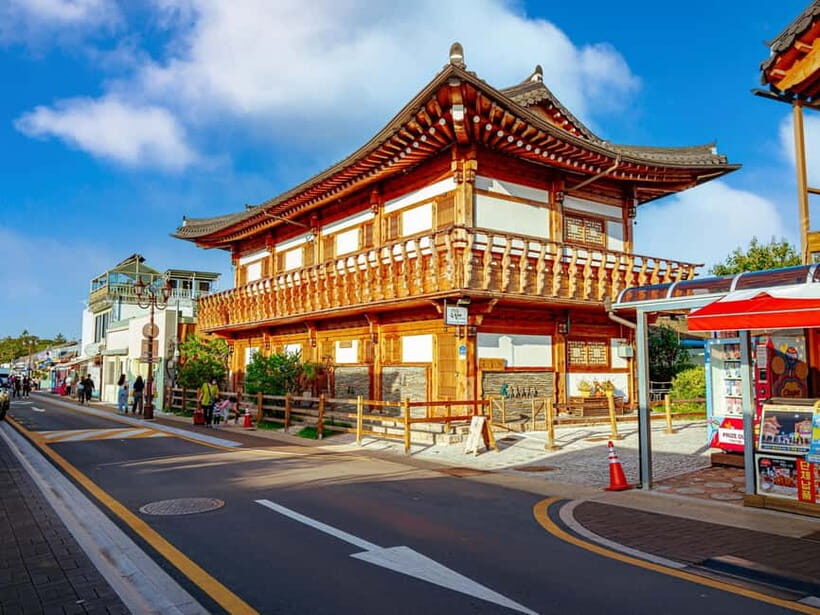
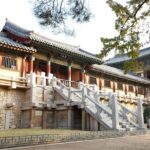
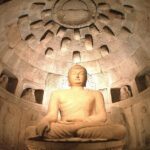
Bulguksa is the tour’s main cultural anchor, and it’s the one stop you’ll feel instantly. Expect a guided visit for about 80 minutes, focused on Buddhist art and architecture tied to UNESCO recognition. Even if you only have a short window, Bulguksa is the kind of place where details reward your attention—stonework, temple layout, and the overall look of the grounds.
The biggest “make it work” tip here is timing and posture. Since your visit is guided and time-boxed, you’ll get more out of it if you can stand, walk, and look up/down without rushing. If you tend to read every sign slowly, you might want to prioritize the features your guide is pointing out.
One more thing: you’ll likely get more from Bulguksa if you ask simple questions through the guide—like what to look for in the architecture or which elements matter most. The tour is designed so you’re not left alone at the site, but your experience can depend on how clearly your guide explains things.
Gyeongju Gyochon Traditional Village (1 hour): where the day slows down
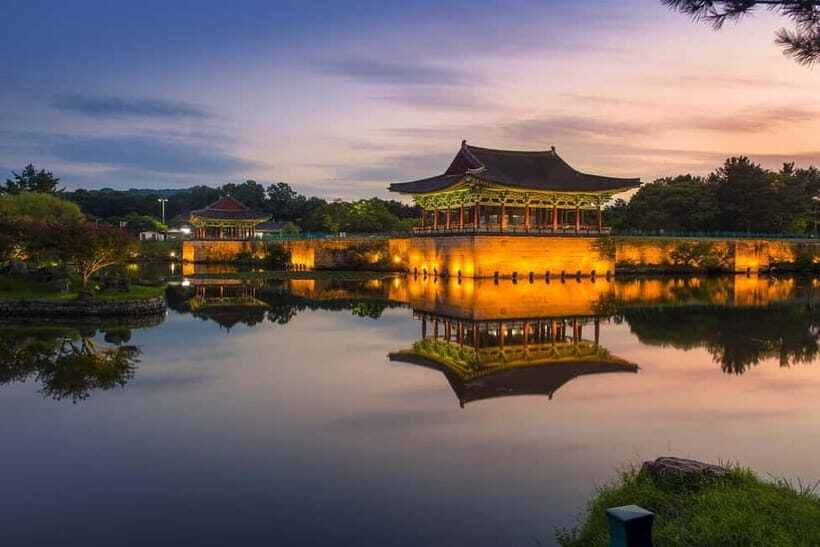
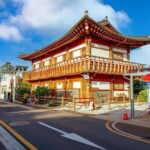
After Bulguksa, the tour shifts gears to Gyeongju Gyochon Traditional Village, with a guided sightseeing block of about 1 hour. This stop matters because it breaks up the intensity of UNESCO temple viewing with something lighter and more human-scaled.
Think of this as your “set the scene” moment. You’ll get a sense of everyday traditional life in the region, which helps you connect the palace and tomb sites later. It’s also a practical pause—time to rehydrate, reset your feet, and adjust your pace before you head into more structured sightseeing.
If you’re the type who likes photo stops but also wants context, this is the kind of village stop that can feel worth your time—especially when your day is packed. If you’re only chasing the most famous landmarks, you might wish it were shorter, but one hour is a reasonable compromise in a 10-hour itinerary.
Woljeonggyo Bridge (1 hour): the scenic break you’ll actually enjoy
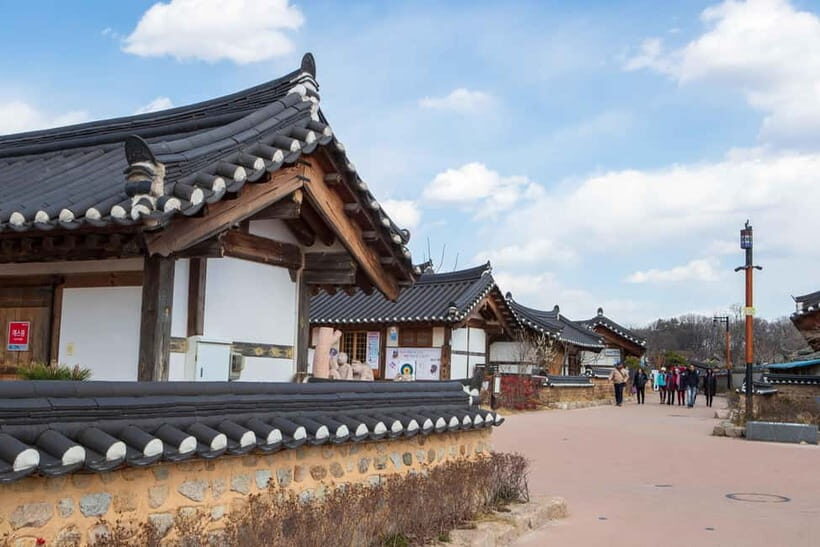
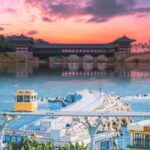
Next comes the Woljeonggyo Bridge (listed as a “Woljeong Bridge” stop) with about 1 hour for guided sightseeing. This is the tour’s photogenic centerpiece, and it’s there for a reason: it looks great and it gives you classic Korean-architecture views without demanding you memorize a textbook.
A good way to use this stop is to treat it like a “slow down and compose” moment. Don’t just take one shot and move on. Spend a few minutes checking different angles and distances so you get that bridge-and-surroundings framing. If you’re traveling with someone who likes photography, this is also a low-stress spot to coordinate.
On a tour like this, you’ll appreciate stops like Woljeonggyo that feel visually satisfying even if your guide’s explanations are lighter. It’s one of those times where you can enjoy the place directly.
Daereungwon Royal Tomb Complex (1 hour): royal burials under grassy mounds
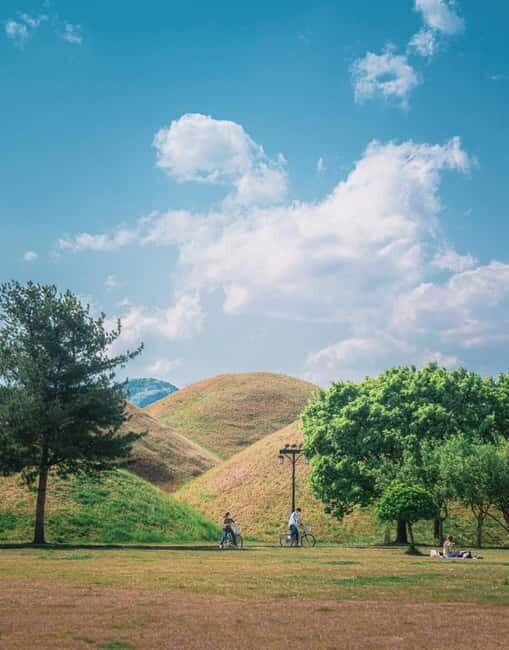
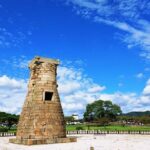
Then you’ll head to the Daereungwon Tomb Complex, with a guided sightseeing block of about 1 hour. This stop is one of the tour’s biggest “aha” moments because the scale and layout of the royal tomb area feels different from typical museum-style history. You’ll see ancient kings and queens resting beneath grassy mounds, and the visual calm makes the meaning land.
What I like about this portion is that it’s still guided—so it’s not just walking around, guessing what you’re looking at. That said, keep expectations realistic: time is limited. If you want deeper reading, you’ll still enjoy it most by listening closely to what your guide focuses on.
One practical consideration: tomb and temple areas can involve uneven ground and walking paths. If you’re sensitive to longer standing time, plan to take small pauses when needed. This stop benefits from your patience more than your speed.
Hwangnidan-gil dinner time (1.5 hours): eat well, stay flexible
The tour ends up at Hwangnidan-gil for dinner, with about 1.5 hours of guided sightseeing and dinner time. Here’s the key detail: meals are listed as not included, so you’ll be paying for your own food.
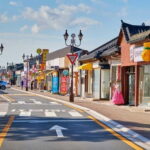
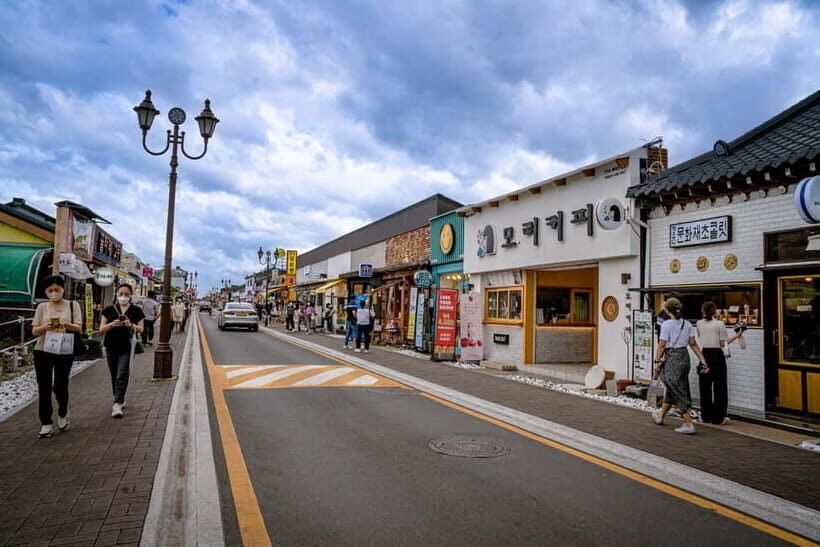
This stop is still valuable because Hwangnidan-gil is one of the most popular areas for dining and street-food-style choices. The tour gives you structured time in the area, so you’re not trying to figure out where to eat after a long day.
A practical note based on real experience: dinner can be a bit messy if your schedule overlaps with other groups, and you may not get much practical help about ordering or what to choose. If you’re picky, decide what you want before you get there, or ask your guide directly what’s easiest to order. If you want a cultural food experience, it’s also smart to be ready to ask for suggestions—like how to eat a dish properly once it arrives.
Donggung Palace & Wolji Pond (40 minutes): a quieter finish with big atmosphere
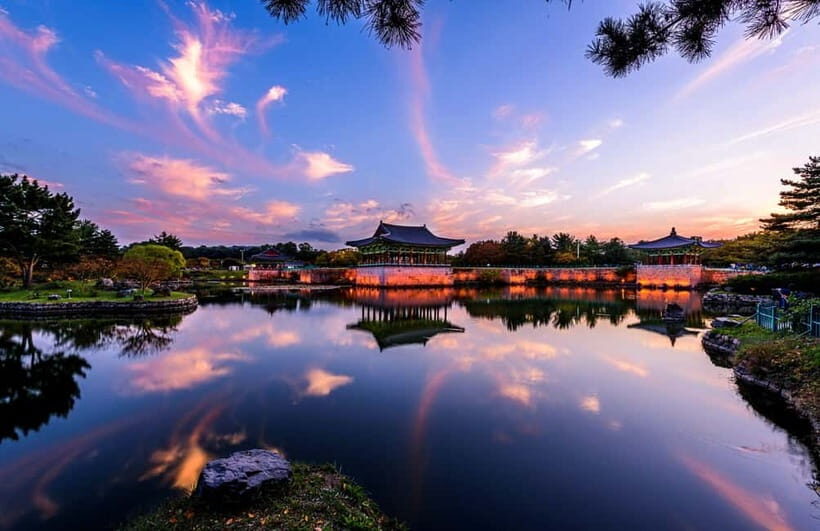
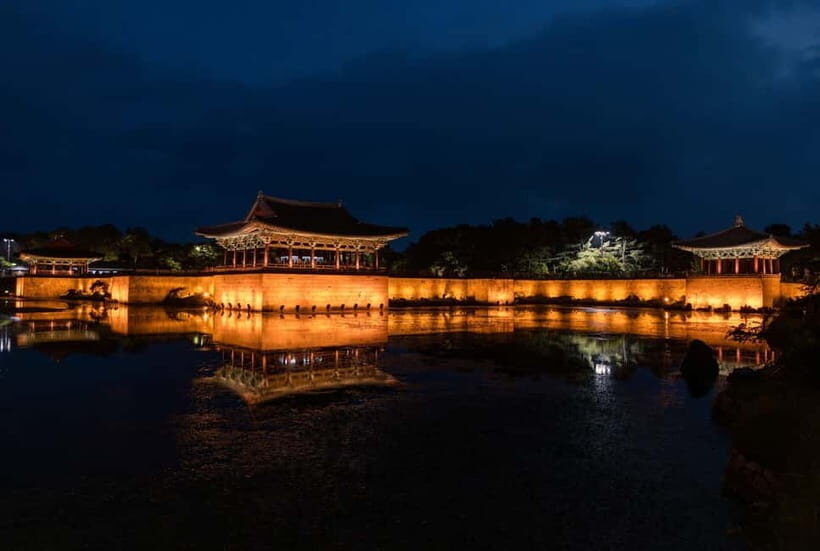
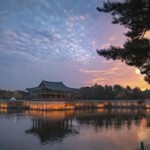
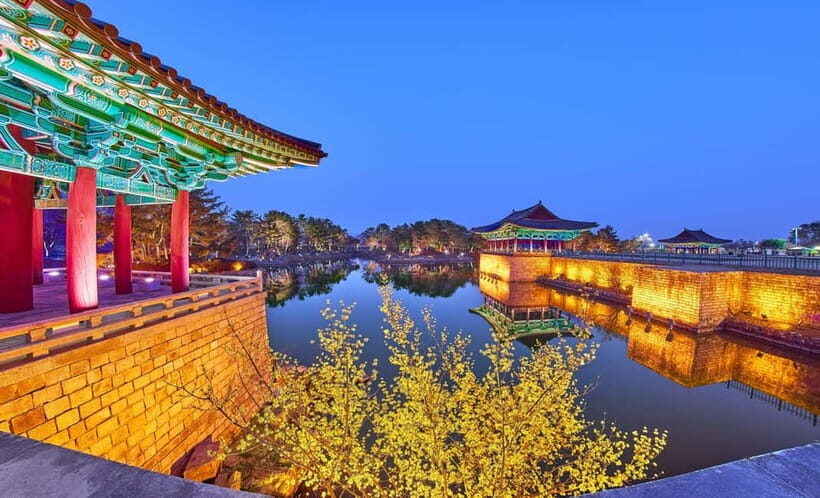
The last major sight is Donggung Palace & Wolji Pond, with a guided visit of about 40 minutes. This is a shorter block, but it’s also a good way to end the day because the setting is calmer than the tomb and bridge areas. Wolji Pond is part of what once served as a royal villa setting, so the vibe is reflective rather than hectic.
In a 10-hour schedule, this stop can feel like a breather—enough time to appreciate the setting and get good photos, but not so long that you’re exhausted beyond reason. If you’re someone who needs time to wander, this may feel brief, but the tour is designed to fit everything in from Daegu to these UNESCO and scenic hits.
If you’re sensitive to getting tired at the end of long day trips, this is actually a smart placement. You can enjoy the atmosphere without being forced into another lengthy explanation.
Price and value: is $80 for a 10-hour UNESCO day fair?
At $80 per person for about 10 hours, this tour isn’t cheap-cheap, but it can be solid value if you care about hitting multiple major landmarks in one go. You’re paying for round-trip transportation from Daegu, guided visits at UNESCO-linked sites, and entrance fees for the included stops.
Here’s how I judge value for a day like this:
- If you’d otherwise need separate tickets and taxis, the packaged transport can save real time and stress.
- If you want Bulguksa and Daereungwon in the same day, the itinerary design is worth money on its own.
- The optional drop-off in Busan can make it even better, because you’re solving your logistics problem while sightseeing.
Where the value can dip is if the guide’s explanations don’t match your expectations. One downside I’ve seen is that the guide experience may feel light on detail for English speakers, and lunch/dinner organization can be uneven. If that happens, you’ll still get the sites—but you may do a bit more self-guided reading on your phone to fill gaps.
Who should book this tour—and who should skip it
This is a great fit if you want a structured, efficient Gyeongju day with UNESCO highlights and scenic photo stops. It also works well if you’re already based in Daegu and don’t want to mess with planning a multi-stop route yourself.
Choose this tour if you:
- want Bulguksa + Daereungwon in one day
- like guided sightseeing but can adapt if your guide’s depth varies
- want an optional Busan drop-off to keep your trip flowing
You might reconsider if you:
- prefer fully independent travel where you control pacing at each stop
- need very detailed English interpretation throughout every site
- hate group logistics and prefer meals with guaranteed organization
Should you book this Gyeongju UNESCO Tour with Bulguksa?
If you want a one-day hit of Gyeongju’s biggest UNESCO-linked sights plus classic scenery, this tour makes sense at the $80 level—especially with transport included and a Busan ending option. I’d book it if you like efficient routes and you can accept that guide quality can vary. If you’re coming for deep, constant interpretation, go in ready to ask questions and use your own context tools when needed.
FAQ
What time does pickup usually happen?
Pickup is scheduled between 10:30 AM and 11:00 AM. You’ll select your preferred pickup location during booking.
Where can I be picked up in Daegu?
There are three pickup options: Banwol-dang Station (반월당역), Dongdaegu first parking, or Daegu.
Can I get dropped off in Busan?
Yes. Drop-off options include Banwol-dang Station, Busan, Daegu, Busan Station, and Dongdaegu first parking.
How long is the tour?
The tour duration is 10 hours.
Which major sites are included?
Entrance fees are included, along with Bulguksa Temple, Daereungwon Royal Tombs, Donggung Palace & Wolji Pond, and Woljeonggyo Bridge.
Are meals included?
Meals are not included. The itinerary includes a dinner time block at Hwangnidan-gil, but you’ll pay for food yourself.
What languages are the live guides available in?
The live tour guide offers Chinese and English.
Is the tour private or shared?
You can choose private or small groups available. Shared tour options are also offered during checkout.
How long is the Bulguksa Temple stop?
Bulguksa Temple includes a guided visit of about 80 minutes.
Can I cancel for a full refund?
Yes. Free cancellation is available up to 24 hours in advance for a full refund.