REVIEW · GYEONGJU
Gyeongju UNESCO sites Private tour with licensed tour guide
Book on Viator →Operated by KOREA DISCOVERY TOUR · Bookable on Viator
UNESCO sites, without the stress. This private Gyeongju UNESCO tour strings together the big Silla-era sights with a licensed guide and a comfortable car, usually picking you up from Busan or Gyeongju so you spend less time figuring things out. You’ll see multiple UNESCO stops in one day at a pace that’s meant to feel human, not rushed.
I especially love how this is built around a licensed English or Chinese-speaking guide who can explain what you’re looking at, while still letting you set your own tempo. I also like that you’re riding in a private air-conditioned vehicle with parking and tolls handled, so the day feels smooth even if you’re doing a lot of stops.
The only real caution is physical. There’s a fair amount of walking at temples and tomb areas, and the tour notes a moderate fitness level. If you have mobility limits, plan to move slower and ask for timing tweaks early.
In This Review
- Key highlights to know before you go
- Why a private Gyeongju UNESCO day works better than solo travel
- Choosing your day: 4 to 9 hours of UNESCO time
- Bulguksa Temple: where Silla-era stone and wood still impress
- Seokguram Grotto: 40 minutes in a mountain-world
- Daereungwon Tomb Complex: royal burials and what you’ll actually see
- Gyeongju National Museum: best use of your time if you like objects
- Cheomseongdae Observatory: science from Queen Seondeok’s reign
- Gyeongju Gyochon Traditional Village and Woljeonggyo Bridge
- Licensed guide energy: why the names you see matter
- Comfort, pickup, and getting around without wasting daylight
- What’s included, what isn’t, and how to plan your spending
- Price and value: is $186.50 per person worth it?
- Who this tour fits best (and who should adjust expectations)
- Should you book this Gyeongju UNESCO private tour?
- FAQ
- How long is the Gyeongju UNESCO private tour?
- Where does pickup happen?
- Is the tour private?
- What languages are the licensed guides?
- Are entrance fees included?
- Is the transportation air-conditioned?
- What about meals?
- Is cancellation free?
- FAQ
- Is there a group discount?
- Is there a mobile ticket?
- Are service animals allowed?
- Do I need high mobility?
Key highlights to know before you go
- Licensed bilingual guide: English or Chinese, with clear narration that helps the sites make sense fast
- Private, air-conditioned vehicle: pickup and drop-off from Busan or Gyeongju, with parking and tolls included
- UNESCO clustering in one day: Bulguksa, Seokguram, royal tombs, and key city landmarks without constant backtracking
- Time-flexible options: choose a shorter 4-hour plan or a longer 9-hour day depending on your schedule
- Comfort + smart pacing: tailored stops are a theme in guide feedback, including family-friendly adjustments
Why a private Gyeongju UNESCO day works better than solo travel

Gyeongju is one of those places where the “main sights” aren’t just attractions. They’re evidence of how the Silla kingdom organized power, worship, science, and memory. When you arrive without context, a temple can look beautiful but still feel like a photo-op. With a guide, you start noticing patterns: the style of Buddhist architecture, how the tombs were planned, and why observatories like Cheomseongdae mattered.
This private format also changes the vibe. Instead of syncing with a group and herding yourself from one line to another, you can pause for what catches your eye. And because you’re in a car with pickup, you lose less time to transport logistics—especially if you’re basing yourself in Busan and doing the day trip.
You can also read our reviews of more guided tours in Gyeongju
Choosing your day: 4 to 9 hours of UNESCO time
The tour comes in a range (about 4 to 9 hours), and that matters. A shorter day is great if you want the big temples and a couple of city highlights. A longer day lets you slow down at the museum and spend a bit more time around the traditional village area and the bridges.
A simple way to decide:
- If you’re doing Gyeongju as a side trip from another city, pick the shorter window so you still have energy later.
- If Gyeongju is a main stop on your trip, go longer and plan to enjoy the day rather than just check boxes.
Bulguksa Temple: where Silla-era stone and wood still impress
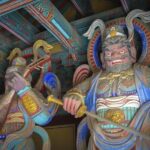
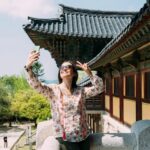
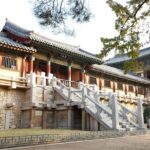
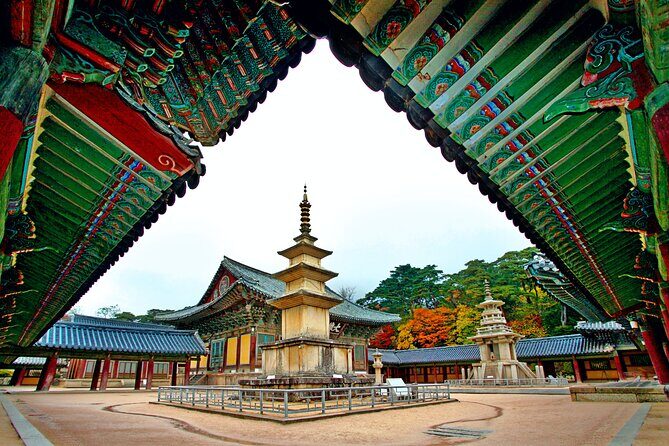
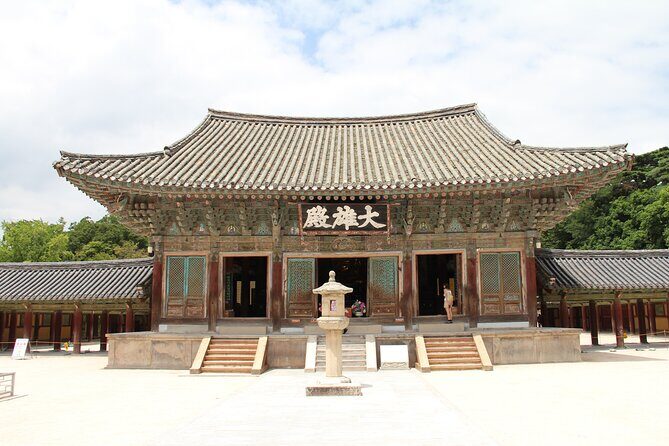
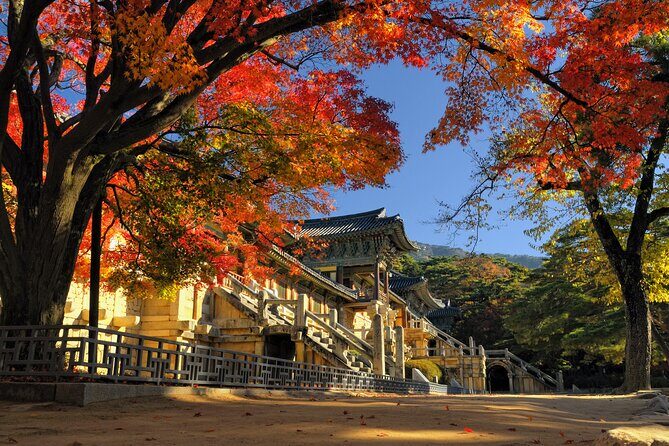
You start with Bulguksa Temple, a UNESCO World Heritage site tied to 8th-century Buddhist architecture. You’ll get about 1 hour here, which is long enough to see the key areas without feeling like you’re rushing through details you can’t even pronounce yet.
What makes Bulguksa so rewarding is how the design uses both stone and timber to create calm structure. Even if you’re not a “temple person,” this is one of those sites where you can feel the care in the layout. The guide narration helps you connect names and eras to what you see, so the place turns from pretty to meaningful.
Practical tip: wear shoes you trust. Temples are usually fine on pavement, but you’ll still cover ground and switch between surfaces.
Seokguram Grotto: 40 minutes in a mountain-world
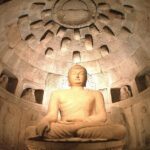
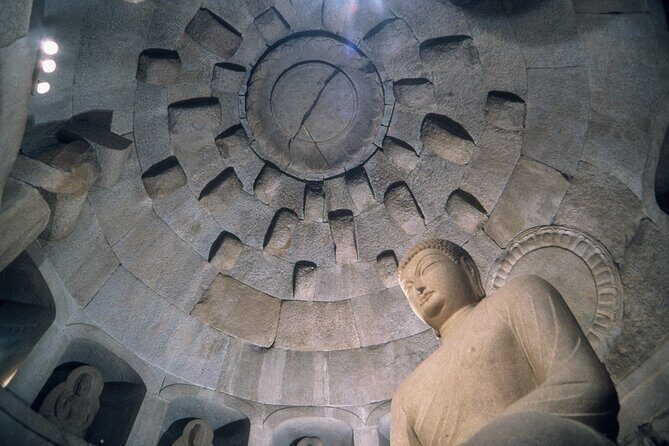
Next is Seokguram Grotto, also a UNESCO site near Bulguksa. You’ll have about 40 minutes, and that’s plenty for appreciating the scale and atmosphere without turning it into a speed run.
Seokguram is a Buddhist art treasure from the 8th century, tucked into the mountain setting. It’s the kind of stop where the setting and the artwork work together. A guide helps here, too, by explaining what you’re looking at and why it’s important, instead of letting you stare at details without a map in your head.
This is also a good moment to slow your pace. Seokguram rewards a calmer visit.
Daereungwon Tomb Complex: royal burials and what you’ll actually see
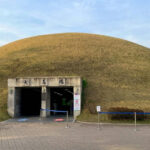
Then you head to the Daereungwon Tomb Complex, a royal tomb area from the Silla dynasty. Your time is about 40 minutes. Unlike the earlier stops, admission is not included for this one based on the tour info you’re given.
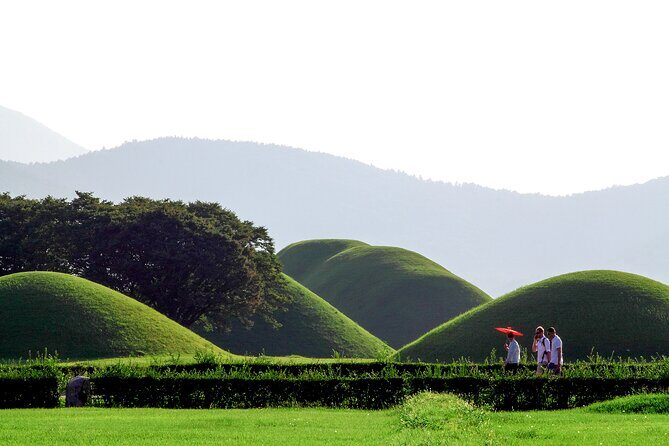
In Daereungwon, the tomb mounds are the star. One named example is Cheonmachong—the Heavenly Horse Tomb—linked to famous excavated artifacts. The key value of this stop isn’t just the scenery. It’s understanding how the Silla kingdom used burial sites as statements of status and power.
What to watch for: don’t try to memorize everything. Instead, pick a couple tomb areas to focus on and let your guide connect them to the broader Silla story.
You can also read our reviews of more private tours in Gyeongju

Gyeongju National Museum: best use of your time if you like objects
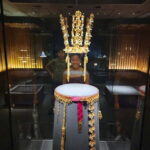
The Gyeongju National Museum is your next major stop, with about 40 minutes. This one is big for the “see it, then understand it” crowd. You’re looking at over 100,000 artifacts from the Silla kingdom era (57 BC–935 AD). The tour info also calls out highlights like the famed 20th Bell and golden crowns from royal tombs.
Museum time is where a good guide really shines, because you’re not just walking through rooms. You’re learning the context behind what the objects represent. And if you like history but hate getting lost in it, this stop can be a lifesaver.
Note on pace: 40 minutes can feel tight if a gallery grabs you. If that happens, ask your guide if you can spend a few extra minutes on the objects that matter most to you.
Cheomseongdae Observatory: science from Queen Seondeok’s reign
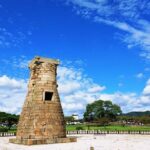
One of the stops you should plan for is Cheomseongdae Observatory, built during Queen Seondeok’s reign (632–647 CE). The info provided notes it’s the oldest surviving astronomical observatory in Asia, and it’s a cylindrical stone tower about 9.17 meters tall with 36 levels.
Cheomseongdae is short on time compared to temples, but it’s big on meaning. It shows that Silla society didn’t separate spirituality and astronomy the way modern life tends to. With a guide, you’ll understand what the observatory’s existence implies—how rulers tracked time, seasons, and cosmic order.
This is also a good place for photos, because the structure reads clearly even from a distance.
Gyeongju Gyochon Traditional Village and Woljeonggyo Bridge
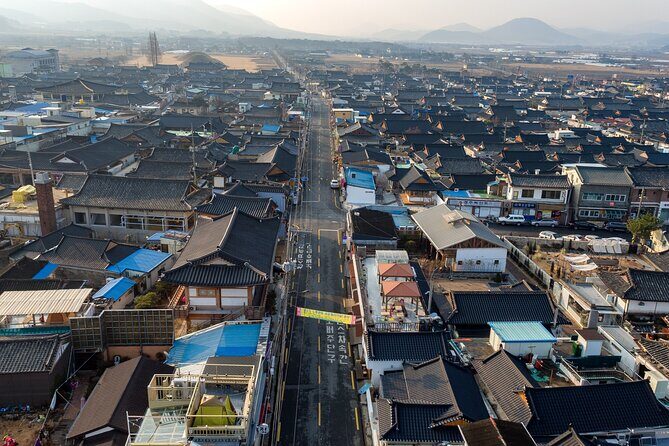
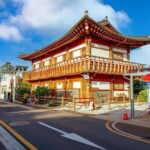
After the big UNESCO hits and museum artifacts, you get a more everyday cultural view at Gyeongju Gyochon Traditional Village (about 40 minutes). The village connects to the Gyeongju Choi Clan, including historic houses tied to their long lineage. The tour info highlights that there’s a 12-generation legacy, which gives the village more weight than just “old houses.”
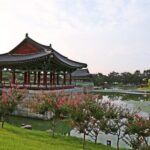
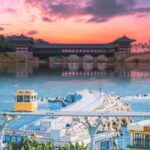
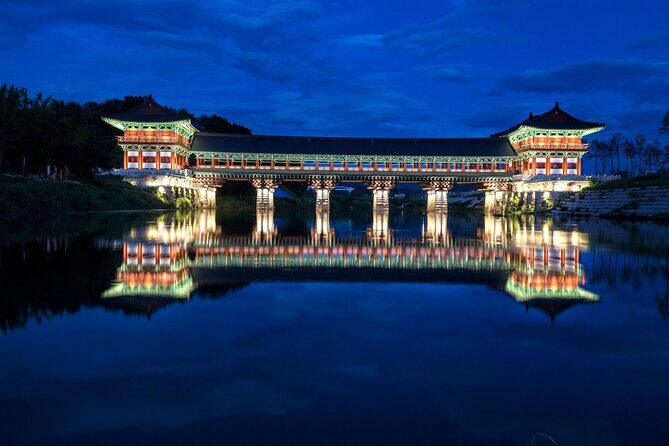
Then comes Woljeonggyo Bridge, a reconstructed wooden bridge originally built in 760 AD during the Unified Silla period. It was destroyed during the Joseon dynasty and rebuilt between 2008 and 2018, and the tour info describes it as the largest reconstructed wooden bridge in the region. You’ll spend about 20 minutes here—enough to take in the structure and the feel of the restored historic setting.
If you’re someone who enjoys seeing what “heritage” looks like in real space—rather than only in monuments—this part of the day helps balance the schedule.
Licensed guide energy: why the names you see matter
The big difference in this tour is the guide’s job isn’t just logistics. They explain why each place exists and what to notice when you’re in front of it. That shows up clearly across guide examples like Jino, Joy, Cynthia, Lily, Sang, CK, Jake, and William. Different personalities, same core pattern: friendly, on-time service, and strong history-and-context narration.
A few practical ways that kind of guiding helps you:
- It prevents “temple confusion.” You know what parts you’re looking at and why they matter.
- It turns tomb areas into more than earth mounds. You connect symbolism to artifacts and era.
- It helps you manage the day as you go. Several guide notes mention adjusting pacing for group needs.
If you care about learning but hate info dumps, you’ll likely appreciate the way guides keep things clear without treating you like a lecture audience.
Comfort, pickup, and getting around without wasting daylight
You’ll ride in a private air-conditioned vehicle, and pickup is offered from Busan or Gyeongju. That matters because the drive time is real, especially if you’re starting in Busan and heading out to UNESCO sites around Gyeongju.
You can also choose a round-trip or one-way style based on what you need. That flexibility is useful if you’re trying to preserve your schedule on either end of your trip.
Parking fees and tolls are included, which means you’re not playing “spot the hidden cost” during the day. The car being clean and comfortable is a repeated theme in guide feedback too, including mentions of spotless vehicles and smooth driving.
What’s included, what isn’t, and how to plan your spending
Included:
- Air-conditioned vehicle and private transportation
- English or Chinese speaking licensed tour guide
- Parking fees and Tolls
Not included:
- Meal
- Entrance fees if applicable (with a note that entrance can be free for ages 65+ where relevant)
How this plays out in your day:
- Some UNESCO sites listed here come with free admission tickets in the tour info, including stops like Bulguksa Temple, Seokguram, Gyeongju National Museum, Gyochon Village, and Woljeonggyo Bridge.
- Daereungwon Tomb Complex is specifically marked as not included, so budget for that entrance when you plan.
Meal planning tip: since meals aren’t included, decide if you want a simple lunch break near a stop or a longer sit-down meal. A good guide can usually help you choose where to eat based on what’s around you that day.
Price and value: is $186.50 per person worth it?
At $186.50 per person, you’re paying for a bundle: private transport, a licensed bilingual guide, and a day built around multiple UNESCO stops without the effort of coordinating them yourself. When the schedule is long, that guide time becomes the real value—because it’s what turns a list of monuments into a coherent story you can carry home.
It’s also not just “a car.” The included parking and tolls remove friction. And because this is private, you avoid the tradeoffs of joining a group tour where you can’t slow down at a museum or spend extra minutes on a temple detail.
Where the price feels best:
- You want learning, not just sightseeing.
- You’re traveling with family and prefer a flexible pace.
- You’re coming from Busan and want to avoid stitching together multiple transport pieces.
Where you might question the cost:
- If you’re happy doing a very self-guided day and don’t want to pay for narration.
- If you’re only interested in one or two sites and could reach them easily on your own.
Who this tour fits best (and who should adjust expectations)
This tour suits you if you like history tied to real places and objects, and if you want a plan that reduces stress. It also works well for families, because guides in the feedback talk about accommodating group needs, including slower pacing and extra breaks.
The physical note matters. You should have moderate fitness, and you should expect walking. That doesn’t mean it’s impossible for everyone—just that you should plan for some stairs and uneven steps, especially around temples and tomb complexes. If you’re traveling with elderly adults, mobility needs, or kids who move slower, private guiding becomes extra valuable because you can ask to adjust.
Should you book this Gyeongju UNESCO private tour?
I’d book it if you want a full-day pass into Silla-era culture with an expert guiding you through the “why,” not just the “what.” The combination of Bulguksa + Seokguram + royal tomb areas + museum objects + Cheomseongdae is a smart spread for limited vacation time.
Book it if you value comfort and simplicity: pickup, a private air-conditioned car, and included parking/tolls mean less hassle and fewer moving parts.
Skip it or consider a shorter version if walking is hard for you, because the day includes temple and tomb areas where movement is unavoidable. Also, plan for the meal cost and be ready that Daereungwon may add an entrance fee.
If your goal is to leave Gyeongju understanding more than you arrived with, this is a strong way to do it.
FAQ
How long is the Gyeongju UNESCO private tour?
The duration is approximately 4 to 9 hours, depending on the option you choose.
Where does pickup happen?
Pickup is offered from Busan or Gyeongju.
Is the tour private?
Yes. It’s a private tour, meaning only your group participates.
What languages are the licensed guides?
The licensed tour guide speaks English or Chinese.
Are entrance fees included?
Entrance fees are not included if applicable. Some stops are listed as free in the tour information, while Daereungwon Tomb Complex is marked as not included. Entrance may be free for people 65+ where applicable.
Is the transportation air-conditioned?
Yes. You’ll travel in a private air-conditioned vehicle.
What about meals?
Meals are not included.
Is cancellation free?
Yes. You can cancel up to 24 hours in advance for a full refund.
FAQ
Is there a group discount?
Yes. The tour lists group discounts.
Is there a mobile ticket?
Yes. Mobile tickets are part of the experience.
Are service animals allowed?
Yes. Service animals are allowed.
Do I need high mobility?
The tour notes you should have a moderate physical fitness level. There is walking involved at multiple stops.