REVIEW · GYEONGJU
Busan: 7 Highlights Gyeongju City One Day Tour
Book on GetYourGuide →Operated by Korea Time Tour · Bookable on GetYourGuide
Gyeongju in a single day sounds intense. This Busan-to-Gyeongju trip strings together seven “can’t-miss” stops with real photo time and quick history context, so the city feels like The Roofless Museum instead of a blur.
I especially like how the tour starts in Busan and returns to Busan, so you avoid the hassle of juggling trains and schedules for a day trip. I also like the mix of famous heritage sites and very Korean street-level culture, including 십원빵 at Hwangnidan-gil.
The main thing to plan for is that it’s a full, packed day with plenty of walking. If you have mobility limits, heart concerns, or you need wheelchair access, this format may be a struggle.
In This Review
- Key highlights worth planning for
- Busan pick-up, seven sites, and why this beats DIY
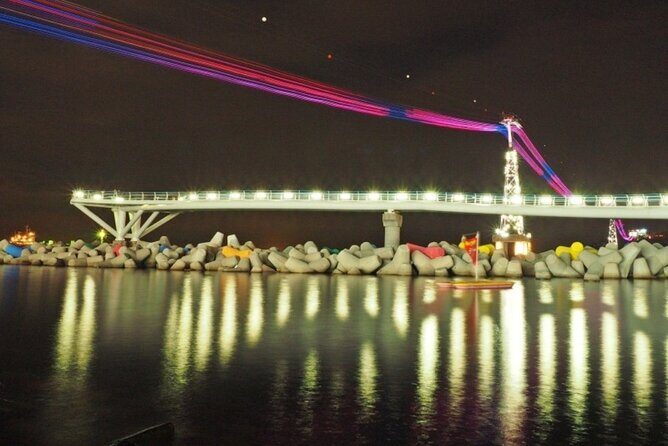
- Ulsan Daewangam Suspension Bridge: a sea-and-rock warm-up
- Bulguksa Temple and the Dabotap/Seokgatap pagodas
- Hwangnidan-gil pedestrian street and the 10 won bread stop
- Daereungwon tumuli: Silla royal burials built to resist plunder
- Cheomseongdae, Gyochon hanok village, and Beopju from the Choi clan
- Woljeonggyo bridge (2018 rebuild): calm views and photo angles
- Price and what’s included in the $47 day
- Who this tour fits best (and who should skip it)
- Should you book this one-day Gyeongju tour from Busan?
- FAQ
- Where do we meet, and where does the tour end?
- How many stops are included in the tour?
- Is an English-speaking guide included?
- Are meals included?
- Is admission to Daereungwon Tomb Complex included?
- Are pets allowed, and are infants free?
- Is the tour suitable for wheelchair users or people with heart problems?
- What changes after Sep 15, 2025?
Key highlights worth planning for
- Busan round-trip transfers: you get picked up and dropped back without figuring out transport.
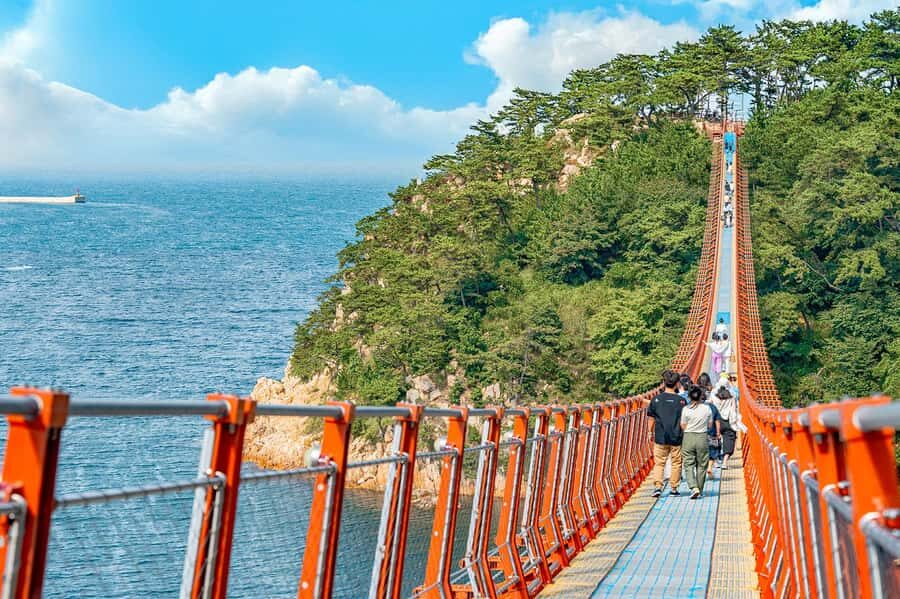
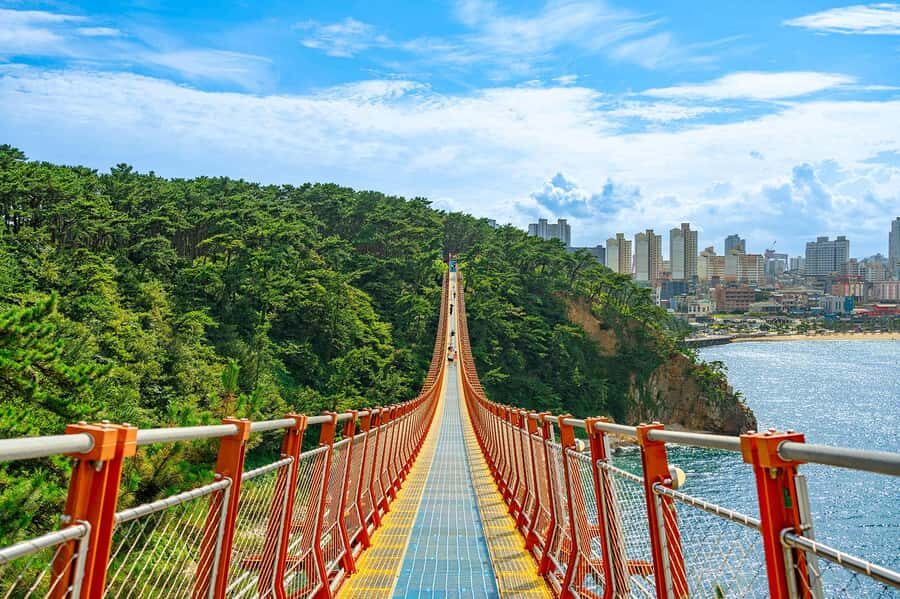
- A short stop at Ulsan Daewangam Suspension Bridge (sea and rock views to start the day).
- Bulguksa’s stone pagodas: Dabotap and Seokgatap are major photo targets, and Dabotap appears on the 10 won coin.
- Hwangnidan-gil’s pedestrian streets: built for strolling and snack breaks, not rushing.
- Daereungwon Silla tumuli: 23 royal burials in one area, with relics preserved by design.
- Gyochon hanok village + Woljeonggyo bridge: a Joseon-era neighborhood feel paired with calm, scenic bridge photos.
Busan pick-up, seven sites, and why this beats DIY
If you only have a day and you want the big Gyeongju hits, this type of group tour saves you brainpower. The format is simple: morning departures from Busan meeting points (they can vary by option), a day of organized sightseeing, then a return back to Busan—often around Haeundae Station and Seomyeon Station. That matters because Gyeongju’s sights are spread out, and DIY can turn into time lost between stops.
At about $47 per person, the real value isn’t just the low sticker price. It’s that you’re paying for an English-speaking guide/driver, round transfers, and admission to the attractions that are included. You’re free to spend your energy looking at pagodas, tomb mounds, and old village alleys, instead of negotiating transit times.
Just know the day is efficient. You’ll see a lot of places, but it’s still a one-day schedule—so you’ll want comfortable shoes and a “take it all in” mindset rather than expecting long, slow museum-style pacing.
You can also read our reviews of more tours and experiences in Gyeongju.
Ulsan Daewangam Suspension Bridge: a sea-and-rock warm-up
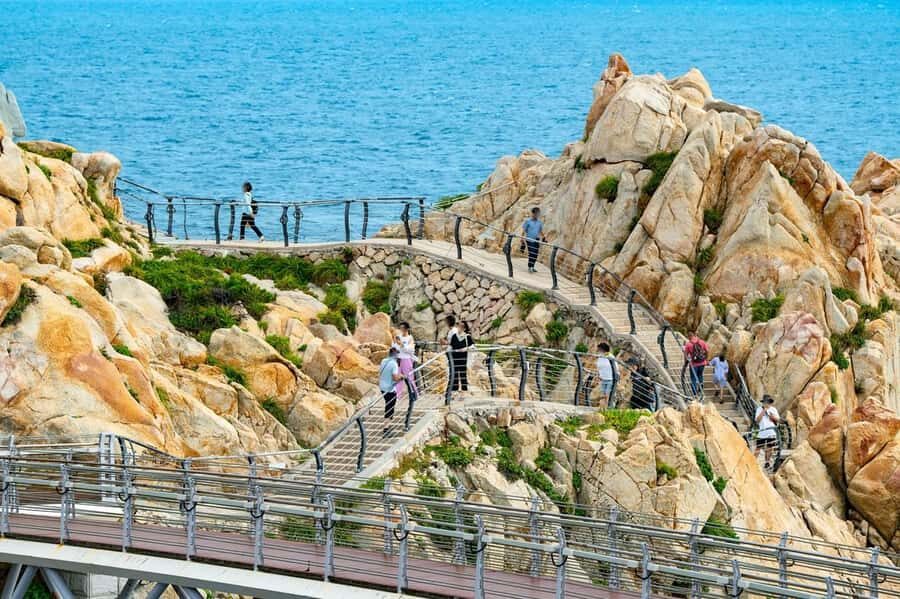
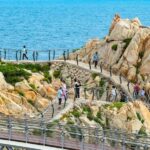
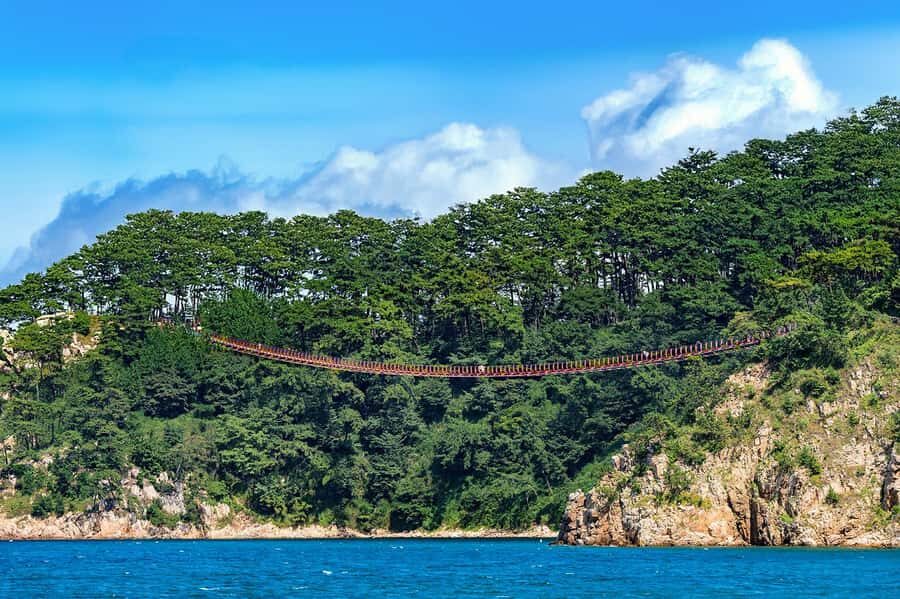
This tour starts with a dramatic warm-up: Ulsan Daewangam Suspension Bridge. It’s one of those places that instantly tells your brain you’re going somewhere special—wide sea views, a cliffy rocky feel around the bridge, and the kind of air that makes photos look better even when you’re not trying.
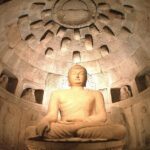
One planning detail is important. From Sep 15, 2025, the tour visits the Ulsan suspension bridge instead of Seokguram Grotto. If you’re comparing options or looking at older schedules, double-check this date so you’re not expecting Seokguram.
This stop also helps break up the day. By the time you hit the more solemn heritage sites, you’ve already gotten the “wow” factor out of the way. Think of it as your quick reset: fresh views, quick photos, and you’re ready to switch gears from coast to kingdom.
Bulguksa Temple and the Dabotap/Seokgatap pagodas
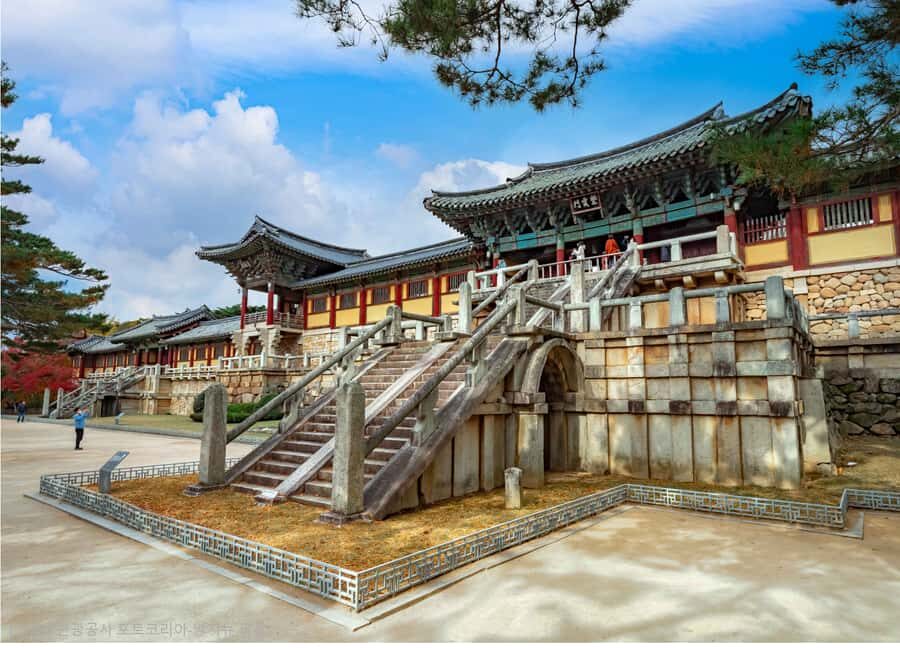
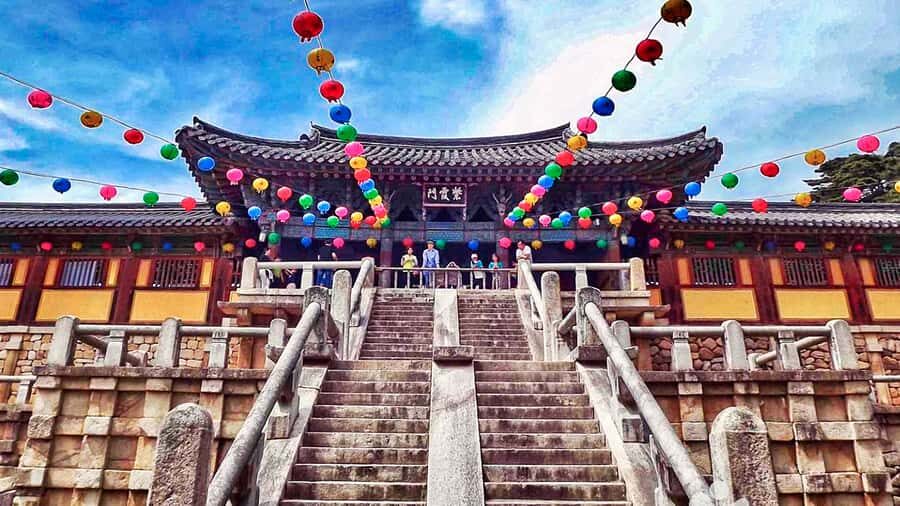
Bulguksa is one of Gyeongju’s heavyweight heritage sites, and the tour route hits it in a way that makes sense. You’re visiting a Buddhist temple on Tohamsan, and the highlight here is how concentrated the importance is—this temple includes six National Treasures, including the famous stone pagodas.
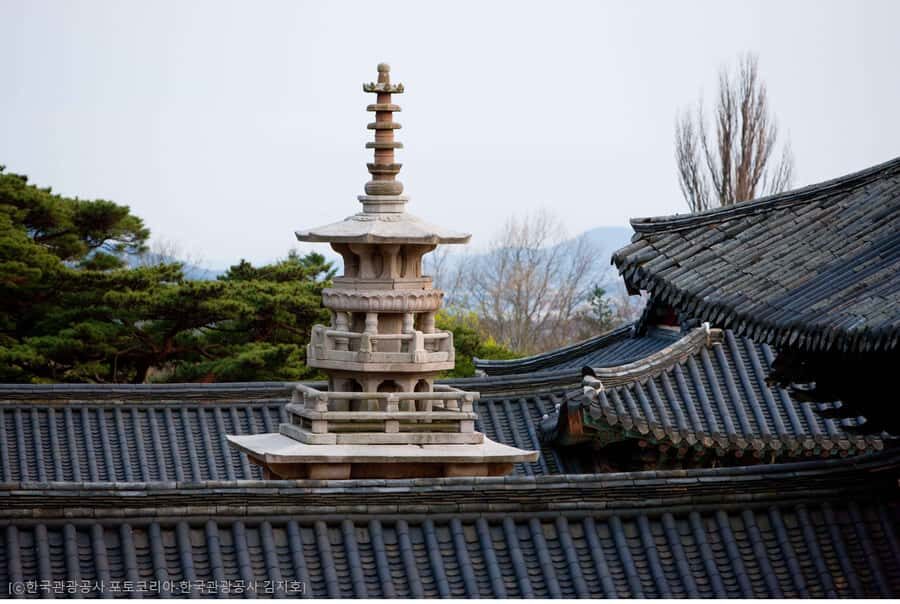
The two pagodas you’ll hear about again and again are Dabotap and Seokgatap. Dabotap is especially memorable for a fun reason: it’s also shown on the 10 Korean won coin. That little detail is more than trivia—it helps you recognize the shapes and symbolism when you see them in person.
Practical tip: bring your best patience for details. You’ll be photographing, but also take a moment to look beyond the “pretty stones.” The pagodas are designed to signal status and spiritual meaning, and Bulguksa’s layout helps you understand why this temple was treated as a core monument rather than just a stop on a map.
A possible tradeoff of a day tour is time pressure. Bulguksa is big, and even with an organized visit, you’ll likely move at a group pace. Wear layers and keep your camera strap secure—temple grounds can be breezy, and you’ll be walking between viewpoints.
Hwangnidan-gil pedestrian street and the 10 won bread stop
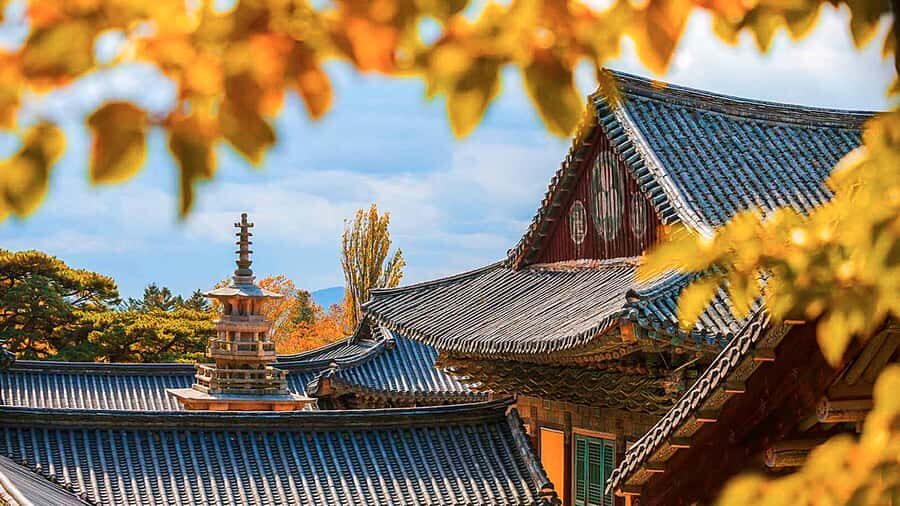
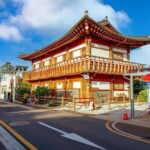
After the temple, you shift into street energy at Hwangnidan-gil. This is a pedestrian-only shopping and dining street, and it feels more like “living city” than “historic site.” That change of pace is part of what makes the day tour satisfying—you’re not stuck in one mood for hours.
This is also where snacks become a strategy, not an afterthought. A standout is 십원빵, nicknamed 10 won bread. It’s exactly the kind of small, iconic food stop that turns sightseeing into an experience you can taste and remember.
What I like about this segment for you: it’s flexible. Even if you’re not a big shopper, you can still enjoy window browsing, people-watching, and grabbing a snack without needing a long sit-down meal. And because the street is pedestrian-focused, you won’t be constantly negotiating traffic or hunting for a place to stand.
If you’re serious about photos, aim for angles where the street funnels toward you. The buildings and signage create natural frames, and the crowd density (while it can be busy) also makes for more “Korea in motion” shots.
Daereungwon tumuli: Silla royal burials built to resist plunder
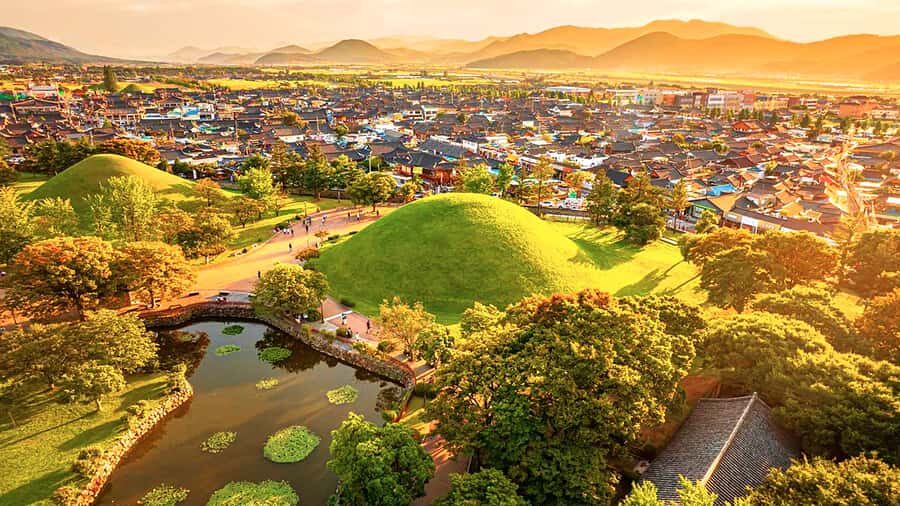
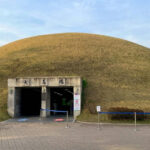
Right next to Hwangnidan-gil is Daereungwon, a Silla-era tumuli complex. Here, the day shifts from street culture into scale and engineering. The complex contains 23 tombs of kings, queens, and nobles from the Silla period, and the design played a key role in preservation.
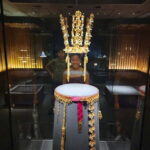
The mounds were built with sturdy construction that made it harder for plunderers to access. That’s why so many relics have survived to this day—and several relics are designated as National Treasures. Standing near the tumuli, it’s easier to understand how power was expressed across centuries. This isn’t just a “graveyard view.” It’s a statement in earth and stone.
One important practical note: admission to Daereungwon Tomb Complex is not included. So you’ll want a little cash or card ready for this add-on. It doesn’t ruin the value of the tour, but it’s a cost you should expect if you’re budgeting tightly.
Also, expect walking on outdoor grounds. If you’re sensitive to heat or wind, bring water and plan a slow pace for photos. This is one of those stops where you’ll want to take your time, even if the schedule moves on.
A few more Gyeongju tours and experiences worth a look
Cheomseongdae, Gyochon hanok village, and Beopju from the Choi clan
Next comes a classic “time travel” pairing: Cheomseongdae and Gyochon Traditional Village.
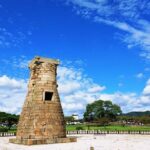
Cheomseongdae is the oldest astronomical observatory in Asia, which means the vibe here is different from tombs and pagodas. You’re looking at a monument tied to observation and measurement—an older kind of science that still feels real because the structure is so specific. Even if astronomy isn’t your main interest, you’ll likely find it memorable because it’s such a concrete artifact of how people once organized knowledge.
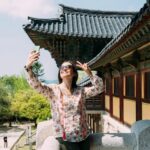
Then you head to Gyochon Traditional Village, a Joseon Dynasty-style hanok area in Gyeongju. The tour gives weight to the Choi clan—a wealthy aristocratic family known as the Rich Choi Family. Over twelve generations (about 400 years), they were among the richest landowners in the region, and that family story helps explain why the neighborhood feels “lived-in” rather than staged.
One more reason this stop is worth it: you can hear about traditional food and drink culture here, too. Gyeongju Gyo-dong Beopju is brewed and sold in this village. If you’re into flavors that tie to place and people, this is a great moment to connect the dots between architecture, status, and daily life.
Practical tip: hanok streets look great, but they can be slippery or uneven depending on the day. Watch your footing, especially while you’re multitasking—checking your phone camera and walking at the same time is how people end up doing the slow-motion stumble dance.
Woljeonggyo bridge (2018 rebuild): calm views and photo angles
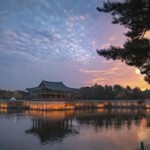
To close the core sightseeing, you’ll reach Woljeonggyo, a bridge with deep roots and a modern comeback. It was built during the Unified Silla period (AD 676–935), later burned down during the Joseon Dynasty, and was rebuilt in 2018. Today it’s known as the largest wooden bridge in Korea.
This stop is a breather. After temples, tombs, and village alleys, a bridge gives you open sightlines and an easier way to frame photos without craning your neck around corners. It’s also a good place to slow down, breathe, and let the day settle in.
If your timing lines up, the bridge can look stunning with lights on. One favorite described this part as breathtaking with the lighting, so keep your camera ready if the late-day atmosphere turns photogenic for your group.
This is also where you can do a quick memory check: which site made the biggest impression? For me, bridges are good like that—they give you a moment to connect what you saw to what you feel, instead of treating everything as another checklist item.
Price and what’s included in the $47 day
Let’s talk value honestly. At $47 per person, you’re paying for a structured day that includes:
- An English-speaking tour guide/driver
- Round-transfers between destinations
- Admission to included attractions
The big “watch-out” on cost: meals and beverages are not included. So plan to buy snacks or a meal during breaks, especially at Hwangnidan-gil where food is part of the experience.
Another cost detail: Daereungwon Tomb Complex admission is not included. Since it’s one of the 7 key sites, I treat this as an expected add-on rather than a surprise.
On the plus side, you’re not paying for your time to get from place to place. That’s where day-trip DIY plans often leak money and energy. Here, transfers are handled and the guide keeps the flow moving.
If you like to travel light on logistics and heavy on experiences, this price makes sense. If you’re the type who wants long free time at each monument and zero guided structure, you might feel the schedule tightness more than the average person.
Who this tour fits best (and who should skip it)
This tour is a strong fit if you want a clean, organized way to hit major Gyeongju sights from Busan in one day. You’ll also enjoy it if you like photography and want help finding good angles—several descriptions emphasize that the guide helps the group with photo spots and makes sure people feel included.
It may not be the best fit if:
- You have heart problems
- You need wheelchair access (the tour isn’t suitable for wheelchair users)
- You rely on a stroller or baby seats (there are no baby seats)
Pets aren’t allowed, either—so plan accordingly if you’re traveling with animals.
On the family front, infants (0–2) are free of charge as long as they sit on laps in the vehicle. That’s good to know if you’re traveling with a small child, but it does mean you’ll need a lap arrangement for vehicle time.
If weather turns uncomfortable, the itinerary may shift slightly, and drop-off time can change due to traffic and conditions. That’s normal for a road-based day tour. The best mindset: stay flexible and focus on the sites you came for.
Should you book this one-day Gyeongju tour from Busan?
Yes, if you’re short on time and you want your Gyeongju day to feel intentional. This tour is built for visitors who want structure, good guidance, and a mix of Silla-era monuments, Joseon-era village atmosphere, and real street-life snacks in the middle.
I’d skip it only if you strongly prefer slow, self-guided wandering with tons of free time at each place, or if health/mobility needs make a packed day risky or uncomfortable. For most people in Busan, though, it’s a smart way to see the city without turning your day into transportation math.
If you book, pack for walking, keep money ready for the Daereungwon admission, and arrive early at your meeting point. Then let the guide do the hard work—so you can do the fun work: photographing stone pagodas, reading the story in old village streets, and sampling 십원빵 without turning it into a scavenger hunt.
FAQ
Where do we meet, and where does the tour end?
Meeting points in Busan can vary depending on the option you book. The tour ends back at the meeting point, and return drop-off is described around Haeundae Station and Seomyeon Station in Busan.
How many stops are included in the tour?
The tour visits 7 popular sites in Gyeongju (plus the bridge stop connected to the route).
Is an English-speaking guide included?
Yes. The tour includes an English-speaking tour guide/driver.
Are meals included?
No. Meals and beverages are not included.
Is admission to Daereungwon Tomb Complex included?
Admission to Daereungwon Tomb Complex is not included.
Are pets allowed, and are infants free?
Pets are not allowed. Infants aged 0–2 are free of charge if they sit on laps in the vehicle, and baby seats are not available.
Is the tour suitable for wheelchair users or people with heart problems?
No. The tour is not suitable for wheelchair users, and it is not suitable for people with heart problems.
What changes after Sep 15, 2025?
From Sep 15, 2025, the tour visits Ulsan Daewangam Suspension Bridge instead of Seokguram Grotto.