REVIEW · BUSAN
Busan Local Food Cooking Class with Market Tour
Book on Viator →Operated by 부산쿠킹클래스 · Bookable on Viator
Busan tastes better when you cook it yourself. This Busan local food cooking class turns a morning in Seogu into real skills: an English-speaking chef guides you through Korean techniques, you eat what you make, and you finish with a Korean tea ceremony.
I especially like the pace and clarity. The host, Heeyoung, focuses on making sure instructions make sense, with plenty of time to follow along and ask questions, not a frantic rush-through.
One thing to consider: it’s a tight 4-hour block starting at 10:00 am, so if you prefer a super slow morning, you’ll feel the schedule moving fast.
In This Review
- Key highlights you’ll actually care about
- From studio cook to market shopper: what this experience is really like
- The 10:00 am meeting point and the small-group advantage
- What you cook and eat: Korean techniques, seafood focus, and rice wine
- Korean tea ceremony: why it’s paired with the meal
- Bupyeong Kkangtong Market: the ingredient walk that makes the recipes click
- Recipes to take home (and the value behind them)
- Price and value: is $109.58 fair for what you get?
- Who should book this Busan cooking class (and who might not)
- Practical details to plan around
- Should you book it or skip it?
- FAQ
- How long is the Busan local food cooking class and market tour?
- What time does the tour start?
- Where is the meeting point?
- Is the class taught in English?
- How many people are in the group?
- What dishes do we make?
- Is the tea ceremony included?
- What’s included in the price?
- What if the weather is bad?
- Is travel insurance included?
Key highlights you’ll actually care about
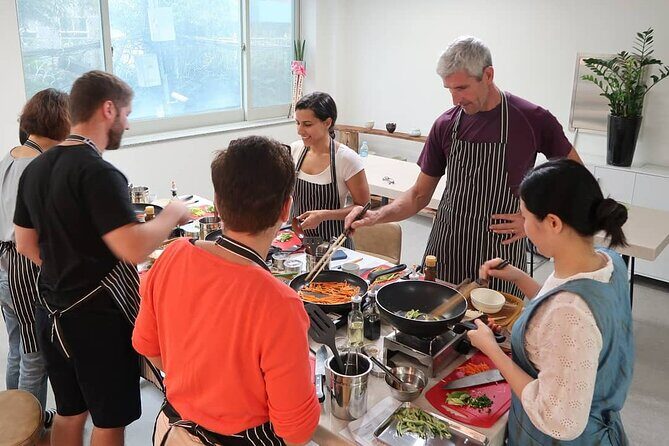
- Heeyoung’s English + step-by-step guidance keeps cooking approachable, even if your Korean is zero.
- Hands-on seafood cooking in a studio setting, then you eat right after.
- Korean tea ceremony at the end, so food culture isn’t just about meals.
- Bupyeong Kkangtong Market (over 100 years old) with a guided walk and ingredient talk.
- Small group (max 10) means more interaction than big, noisy classes.
- Take-home recipes + a Busan food list so you can recreate dishes later.
From studio cook to market shopper: what this experience is really like
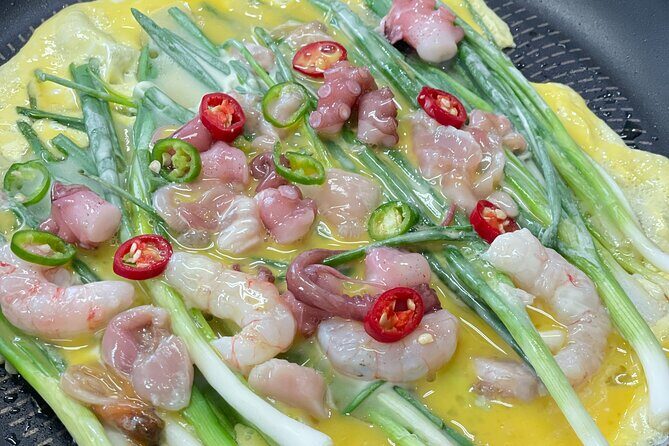
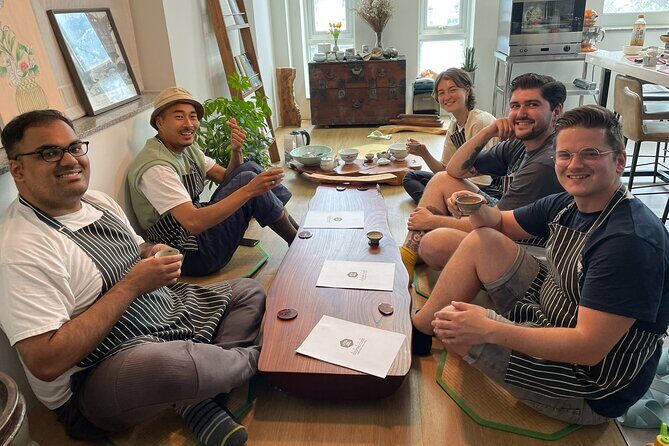
This isn’t a sit-and-watch show. You’ll cook in a studio environment, guided by a professional Korean food chef who graduated from a top Korean cuisine culinary school and speaks English fluently. The result is practical: you learn techniques, you handle ingredients, and then you eat what you’ve made.
The class is designed to connect the dots. First you learn how Korean dishes come together. Then you shift gears to the market, where you see the raw ingredients and learn how locals think about food. That combination matters, because Busan food doesn’t live only in restaurants. It lives in everyday shopping decisions—what’s fresh, what goes together, and how people use season and seafood well.
You’ll also get an added cultural layer. After the meal, you’ll take part in a Korean tea ceremony. It’s not just a photo moment. It’s a real intro to customs around hospitality and food, presented as part of the day’s flow.
You can also read our reviews of more food & drink experiences in Busan
The 10:00 am meeting point and the small-group advantage
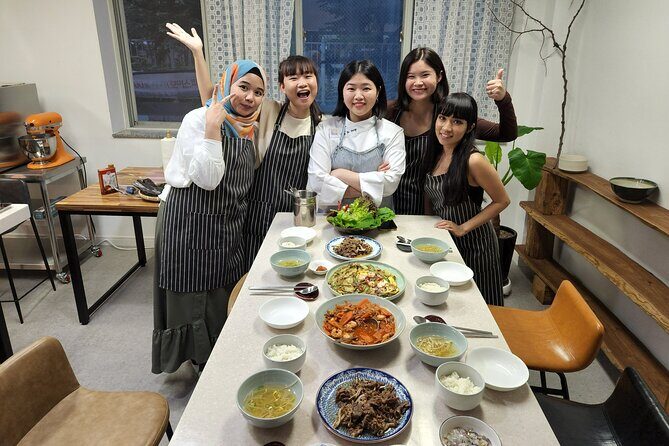
The experience starts at 10:00 am and meets at Busan Cooking Class 2f, 15 Gudeok-ro 186beon-gil, Seo-gu, Busan. You end back at the meeting point. It’s conveniently placed near public transportation, which makes it easier to build into your day without a complicated commute.
The day runs about 4 hours. That timing is a sweet spot for a cooking class plus a market walk. You get enough time to actually participate in cooking, but you still leave before your energy collapses and your appetite turns into snack-only mode.
A max group size of 10 travelers is a big quality factor here. Smaller groups usually mean the chef can check in on more people, and that shows up in how instruction is delivered. If you’re the kind of person who learns better by doing, this format helps.
Also, you’ll get a mobile ticket, which is one less thing to manage on your phone.
What you cook and eat: Korean techniques, seafood focus, and rice wine
The core of the day is a hands-on Korean cooking lesson. You’ll learn Korean cooking techniques and prepare several typical Korean dishes, with a special emphasis on Busan local food and fresh seafood. Busan has a seafood identity, and this class aims to teach you how that shows up in real Korean home-cooking style.
What I like about this setup is that you’re not only learning recipes. You’re learning the logic behind them—how Korean cooking builds flavor using the ingredients you’re most likely to find at a Korean market. That makes your take-home recipes more than just a list. They become something you can actually use.
After cooking, you’ll eat your creations. You’ll also enjoy your meal with local rice wine, which adds a cultural touch that feels connected to the food rather than tacked on as a separate activity. If you’d rather skip alcohol, the data doesn’t say how that’s handled, so you might want to confirm that directly when you book.
Included in the class are the cooking apron, tableware, and all ingredients. So you’re not paying extra for materials that should already be part of a cooking lesson. That matters when you’re comparing similar experiences in Busan.
Korean tea ceremony: why it’s paired with the meal
Tea ceremony time comes after your cooking and eating. In a lot of food tours, the culture part is a lecture and then you’re out the door. Here, the tea ceremony is built into the day’s rhythm.
That pairing is useful for your understanding. You’re already in food mindset—hands smell like garlic and seafood, your tastebuds are awake, and you’ve learned how flavors behave. Then the tea ceremony shifts the focus to slower customs: hospitality, attention, and the idea that a meal includes more than just the main dishes.
Practically, it also gives you a change of pace. You go from active cooking, to eating, and then into a more calm, guided ritual. If you like cultural practices that feel connected to everyday life, you’ll likely enjoy this part.
Bupyeong Kkangtong Market: the ingredient walk that makes the recipes click
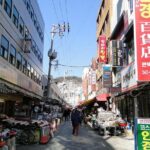
After you eat, you head into Bupyeong Kkangtong Market, described as a traditional market that’s more than 100 years old. This is the part that turns your new cooking knowledge into real-world shopping.
Your instructor guides you around and helps explain local food customs. The focus is on ingredients and how people pick what they need. That’s where you start thinking like a shopper instead of a tourist.
For example, when you learn in a kitchen what certain seafood or seasoning does for a dish, the market walk helps you recognize those ingredients in their raw form. You’re not just seeing stalls. You’re connecting items you handled earlier with what the market sells daily.
This also changes how you browse food in Busan afterward. After a guided run like this, you’ll know what to look for, and you’ll feel more confident asking questions—even if your Korean is limited—because you’ll already understand the ingredient logic.
A few more Busan tours and experiences worth a look


Recipes to take home (and the value behind them)
You’ll receive the recipe at the end, plus a Busan food rec list. That’s important value. Many cooking classes give you vague instructions or just a few notes, but here the structure includes both recipes and a broader food guide.
From a practical standpoint, take-home recipes let you keep the experience alive. If you cook again at home, you reinforce what you learned and you stop the common problem where your memory fades after the trip.
Also, the market portion helps future-proof the recipes. If you don’t cook often, a recipe can still be useful as a reference. And if you do cook, the food rec list can help you plan what to try next, not only what you made during the class.
Price and value: is $109.58 fair for what you get?
At $109.58 per person, this isn’t the cheapest food experience in Busan. But it also isn’t a bare-minimum demo.
Here’s what’s bundled in:
- English cooking class and culture lecture
- Cooking apron, tableware, and all ingredients
- Korean tea ceremony
- Meal with local rice wine
- Recipes and a Busan food rec list
You’re paying for an experienced chef, English instruction, ingredients, and guided market time. The small group size (max 10) also helps justify the price because it increases instructor attention. If you compare this to cheaper options that don’t include ingredients or recipes, the value can look better fast.
The biggest question for you is whether you want a hands-on food skill-building experience plus a guided market walk. If yes, the pricing is easier to live with. If you only want to eat and snack, you might feel the time is heavier than you expected.
Who should book this Busan cooking class (and who might not)
This experience fits best if you:
- Want to learn Korean cooking techniques, not just taste food
- Like guided market walks where someone explains what you’re seeing
- Enjoy cultural add-ons like a tea ceremony
- Appreciate small-group instruction and clear English
It might not be the best fit if you:
- Prefer a full day of wandering rather than a scheduled block
- Want purely self-guided market shopping without a classroom format
- Have a very tight morning schedule since it starts at 10:00 am and runs about 4 hours
One smart tip: plan it earlier in your trip if you can. The market makes more sense when your eyes are still fresh from the studio cooking. You’ll be able to shop with more confidence after you’ve learned what ingredients do in the dishes.
Practical details to plan around
The tour ends back at the meeting point, so you don’t need to scramble for a last-transport plan. It’s also near public transportation, which reduces the friction of getting there on time.
The experience is said to require good weather. If it’s canceled due to poor weather, you’ll be offered a different date or a full refund. That’s relevant because market time is the heart of the experience.
Finally, keep in mind that this class uses fresh seafood as a theme. If you have dietary restrictions, the data doesn’t spell out substitutions. It’s worth confirming any needs directly when booking.
Should you book it or skip it?
If you want a Busan food experience that goes beyond eating and gives you something usable—techniques, recipes, and ingredient knowledge—this is an excellent choice. The cooking is hands-on, the English guidance matters, and the market pairing makes the learning stick. The tea ceremony adds cultural depth without turning the day into a lecture marathon.
I’d book this if your goal is to understand Korean food through action: cook, eat, then see the ingredients and customs in a real market like Bupyeong Kkangtong. If that sounds like your kind of trip, go for it while dates are available.
FAQ
How long is the Busan local food cooking class and market tour?
It runs for about 4 hours.
What time does the tour start?
The start time is 10:00 am.
Where is the meeting point?
The meeting point is Busan Cooking Class 2f, 15 Gudeok-ro 186beon-gil, Seo-gu, Busan, South Korea.
Is the class taught in English?
Yes. It includes an English cooking class, and the chef speaks fluent English.
How many people are in the group?
The class has a maximum of 10 travelers.
What dishes do we make?
You’ll make and eat several typical Korean dishes, with a focus on Busan local food using fresh seafood.
Is the tea ceremony included?
Yes. A Korean traditional tea ceremony is included.
What’s included in the price?
Included are the apron, tableware, ingredients, the English cooking class, a Korean food culture lecture, the Korean tea ceremony, a Busan food rec list, and the recipe.
What if the weather is bad?
The experience requires good weather. If it’s canceled due to poor weather, you’ll be offered a different date or a full refund.
Is travel insurance included?
No. Travel insurance is not included.