REVIEW · BUSAN
From Busan: Gyeongju UNESCO World Heritage Guided Day Tour
Book on GetYourGuide →Operated by KTOURSTORY · Bookable on GetYourGuide
Gyeongju feels like a time machine. This Busan-to-Gyeongju day tour strings together major Silla Kingdom landmarks with smooth coach logistics and live guide storytelling that makes the stone and wood make sense.
What I like most is how you get both big-ticket sights and small breaks to reset your brain. I also like that the group format keeps things organized without turning it into a frantic sightseeing race. One note: it’s a long day (about 8–12 hours) with a fair bit of walking, so comfy shoes matter.
You have three route choices, which is a big deal if you care about pace and priorities. If you want the famous evening mood, the A and B options include the Woljeong Bridge and Donggung Palace & Wolji Pond night views. If you want more museum time and fewer evening sights, option C shifts the focus toward Gyeongju National Museum. The only real drawback is that meals aren’t included, so you’ll want a plan for lunch snacks between stops.
In This Review
- Key highlights that actually matter
- Busan to Gyeongju: a one-day plan that doesn’t feel random
- Three package routes: pick your flavor of Silla and don’t overthink it
- Bulguksa’s wooden beauty on stone terraces (start strong)
- Royal tombs and Hwangnidan-gil: where the Silla story turns human
- Yangdong Village or Gyochon Village: hanok living, not museum props
- Woljeong Bridge photo stop: why this one gets its own moment
- Donggung Palace & Wolji Pond: the evening payoff
- Gyeongju National Museum (Package C): when you want artifacts, not just views
- Price and what you’re really paying for at around $52
- Tips that will make your day smoother
- Who should book this Gyeongju day tour from Busan
- Quick should-you-book guidance
- FAQ
- What is the duration of the Busan to Gyeongju day tour?
- How many route options are there, and what’s the main difference?
- What sites are included in all packages?
- Do I get guided time at each stop?
- Are meals included in the tour price?
- What languages are the guides and staff?
- How long is the coach ride from Busan?
- Which package includes Donggung Palace and Wolji Pond?
- Do I need tickets for traditional villages or tomb areas?
- What should I bring?
- FAQ
- Can I cancel for a full refund?
- Is there free cancellation for infants?
- Is a stroller allowed?
- Does the schedule ever change?
- What are the pickup/drop-off areas in Busan?
Key highlights that actually matter
- Three route options so you’re not locked into the same stops every time
- Professional bilingual guiding (English and Chinese-speaking staff, plus Korean) that explains what you’re seeing
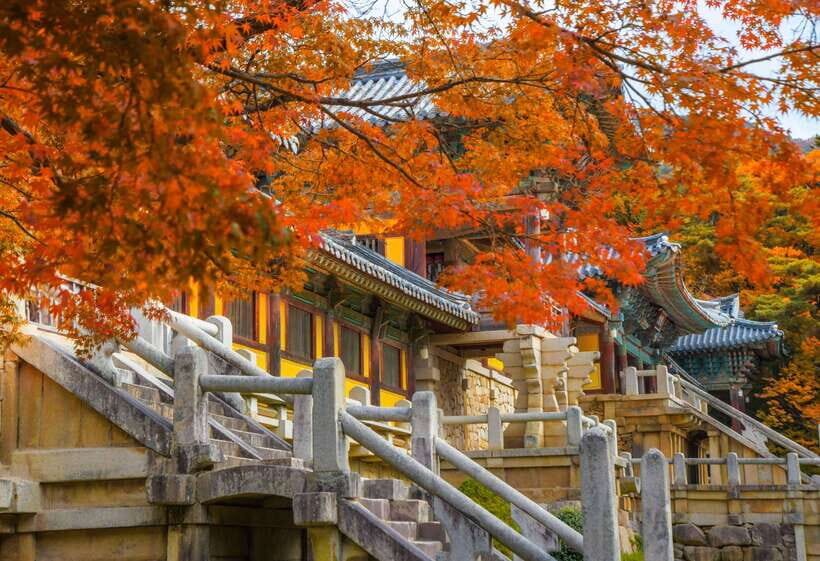
- Bulguksa first for the best start: temple architecture on raised stone terraces
- Night atmosphere by Wolji Pond with moonlight-style reflections (season and weather will affect the look)
- Plenty of photo help from guides who manage the group and still time stops well
Busan to Gyeongju: a one-day plan that doesn’t feel random
This is a classic practical day trip: you leave Busan by coach, spend the morning through late afternoon in Gyeongju, and then return to Busan after another coach ride. Expect roughly 100 minutes each way by bus, so you’re using the day efficiently but you’re also committing to a full schedule.
The payoff is that you’re not figuring out transit between multiple UNESCO-level sites. That matters in South Korea, where trains and buses are great, but hopping between far-apart stops on your own can turn into time lost. On this tour, the logistics are handled: you get clear pickup/drop-off points around Busan (including Haeundae, Seomyeon, and KTX Busan Station options), and the day’s flow is managed by the guide team.
One more practical detail: the group size can run up to 43 people, so it’s not always “tiny.” But the reviews lean strongly toward smooth timing and guides who keep the group moving without being rude about it. If you’ve ever had a tour where you stand around waiting, this one tries not to be that.
You can also read our reviews of more guided tours in Busan
Three package routes: pick your flavor of Silla and don’t overthink it
The biggest “value lever” here is the package choice. They’re not minor tweaks; they change the day’s balance.
Package A mixes Bulguksa with Yangdong Village (a Joseon-era hanok village), then heads into Silla royal tomb areas, and finishes with the evening sights at Donggung Palace & Wolji Pond. If you’re the type who wants architecture across eras, A is a good fit.
Package B follows a similar skeleton but swaps in Gyeongju Gyochon Traditional Village instead of Yangdong Village. Then you still get the Silla tomb complex and end with Woljeong Bridge and the Donggung/Wolji evening views.
Package C is the museum-forward option. You’ll do Bulguksa and then focus more on the Hwangnidan-gil area and history sites connected to Silla culture, and you end at Gyeongju National Museum. This is the best choice if you want your day to end with indoor context (and fewer evening outdoor moves).
Here’s my simple rule for choosing:
- Want the famous night mood? Choose A or B.
- Want fewer late-day outdoor photos and more explanation via artifacts? Choose C.
Bulguksa’s wooden beauty on stone terraces (start strong)
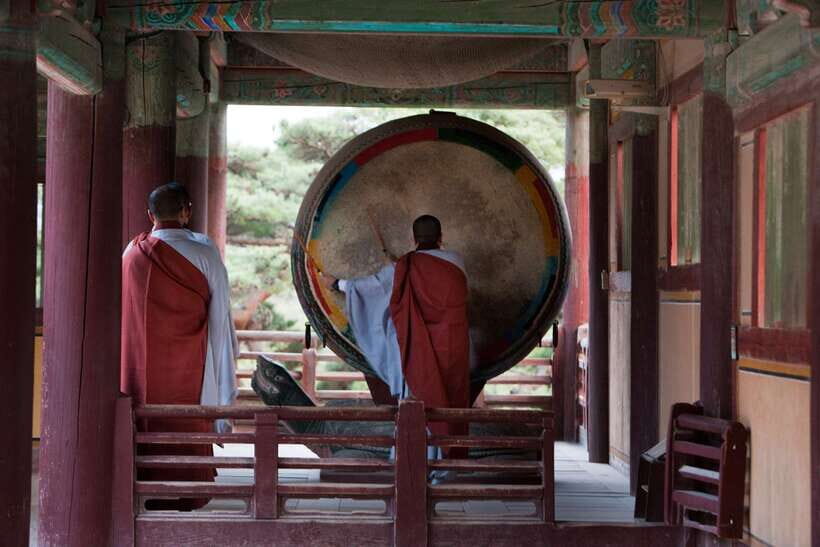
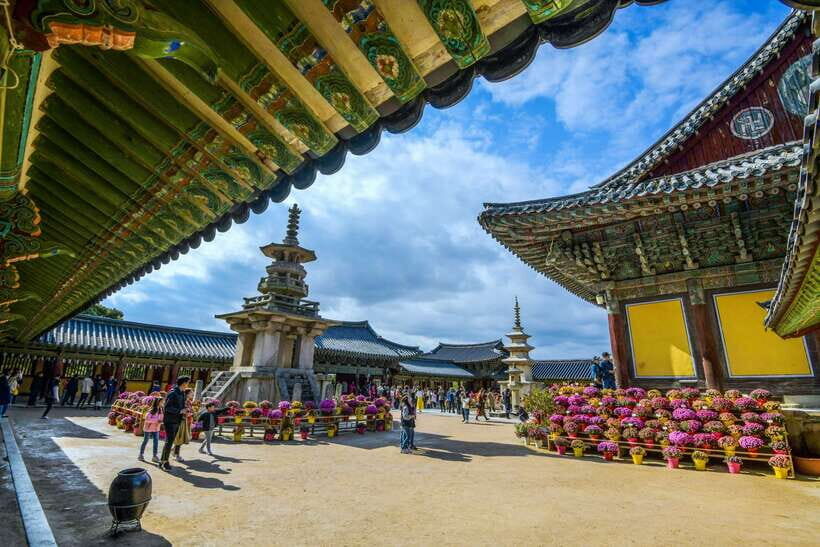
Bulguksa is where many people realize why Gyeongju mattered. This temple complex is known for its refined craftsmanship and its way of sitting on raised stone platforms. On the tour, you get a guided visit of about 70 minutes, which is long enough to see the main architecture without feeling like you’re rushing.
What you’ll appreciate here is that the guide doesn’t just point. They explain why details matter, so the buildings stop being random scenery. Bulguksa is also a smart morning choice: you’re fresh, the light is often easier for photos, and you’re not yet tired enough to miss the finer points.
One practical tip: wear shoes you can stand in for a while. Bulguksa is not the type of place where you can do everything from one flat viewing spot. Even with guided timing, you’ll walk and climb a bit.
Royal tombs and Hwangnidan-gil: where the Silla story turns human
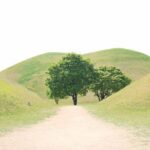
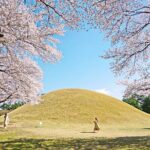
After Bulguksa, the tour leans into the political side of Silla. The Daereungwon Royal Tomb complex is a major stop, guided for about 75 minutes. The point isn’t just that tombs exist. It’s that you’re standing in a landscape designed to communicate power and status.
Package A can include extra entry related to Daereungwon Cheonmachong Tomb, and the tour also includes Woljeong Bridge plus Donggung/Wolji entry fees for A and B. That ticket structure matters if you’re trying to compare value between options, because not every stop has the same included access.
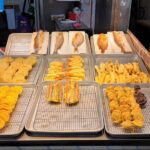
Then you hit Hwangnidan-gil (also written as Hwangridan Street in some descriptions). This is your reset. You get about 30 minutes free time, which I like because you can grab snacks, browse small shops, or just walk and absorb the rhythm of modern Gyeongju layered onto the old story. You’ll find trendy cafes, boutiques, and street food vendors along the way, so it’s not just sightseeing. It’s an actual neighborhood vibe.
If you’re short on time or energy, prioritize one simple goal here: pick one snack and one photo spot. Don’t try to do everything in 30 minutes unless you’re speed-walking by instinct.
Yangdong Village or Gyochon Village: hanok living, not museum props
This is the “people part” of the tour. Both package A and package B include a traditional village, but they use different settings.
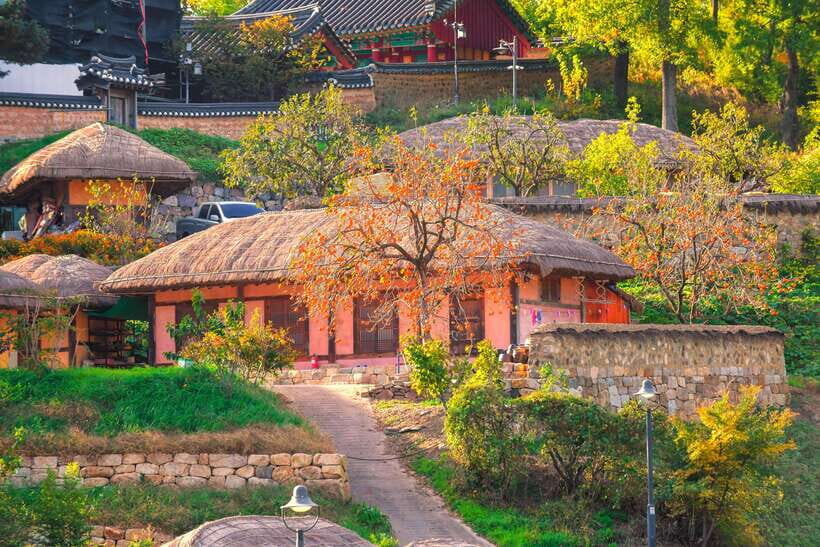
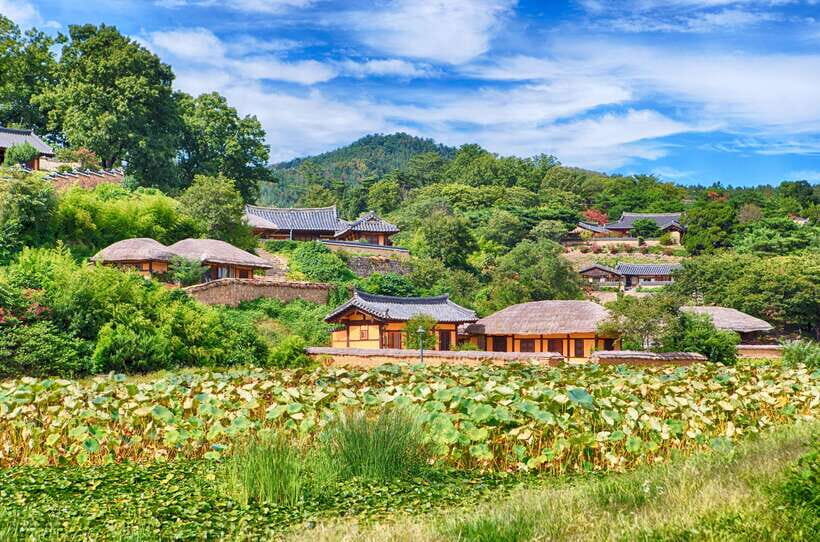
In Yangdong Village (Package A), you’ll visit a UNESCO World Heritage site known for traditional hanok houses. The guide helps you connect the architecture to how Joseon-era rural life worked. You’ll get about 1.5 hours here, which is enough time to wander at a relaxed pace and actually notice the small layout differences across homes.
In Gyeongju Gyochon Traditional Village (Package B), you’re looking at ancestral homes tied to the Gyeongju Choi clan. It’s still about traditional living spaces, but the story tone leans more toward lineage and local heritage.
Either way, the value is that you’re not staring at “historic buildings” like they’re behind glass. You’re walking through a living style of architecture that still feels grounded. That’s what turns a photo stop into a memory.
You can also read our reviews of more historical tours in Busan

Woljeong Bridge photo stop: why this one gets its own moment
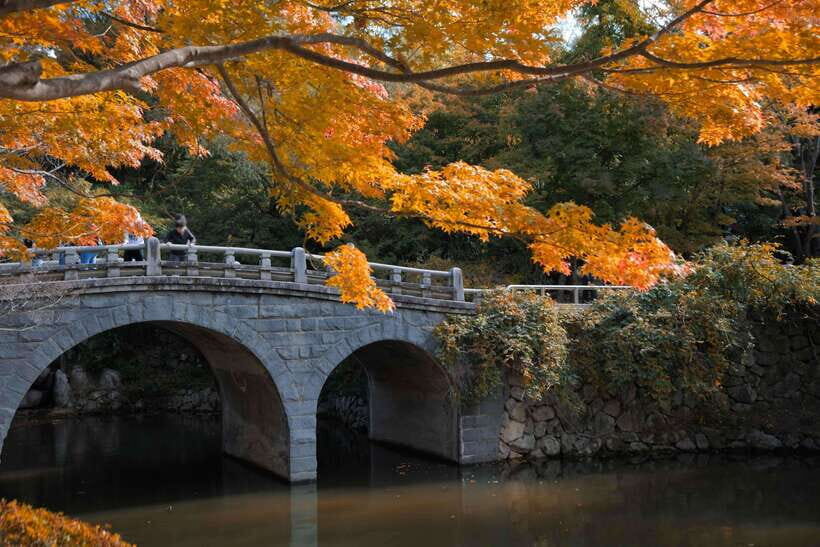
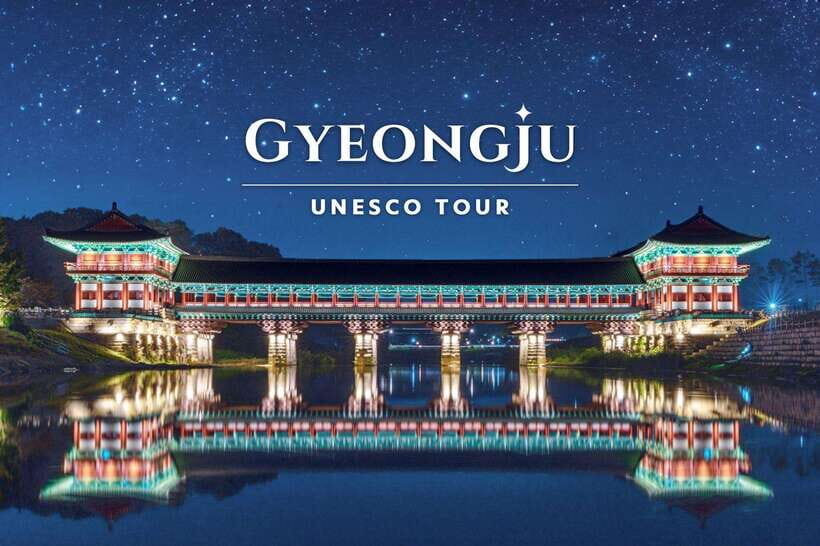
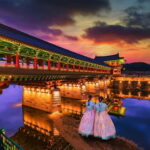
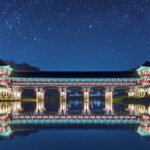
Even if you don’t care about night views, Woljeong Bridge deserves attention. The tour includes a photo stop with a short guided segment of about 20 minutes. The bridge is a reconstructed wooden bridge spanning the Nam River, and the timing is designed so you’re there when the mood starts shifting toward evening.
This is where guides can quietly save you. In multiple past departures, guides such as Bobby Kim, Song, and Jun-a were praised for recommending photo spots and taking clear group photos without making the stop chaotic. If you’re traveling with a partner or as a solo visitor who wants a solid couple shot, this matters.
Also, night lighting can change quickly with weather and clouds. If it looks like clear skies might hold, be ready to move fast from the first photo spot to the next. Your guide will usually manage that pacing for you.
Donggung Palace & Wolji Pond: the evening payoff
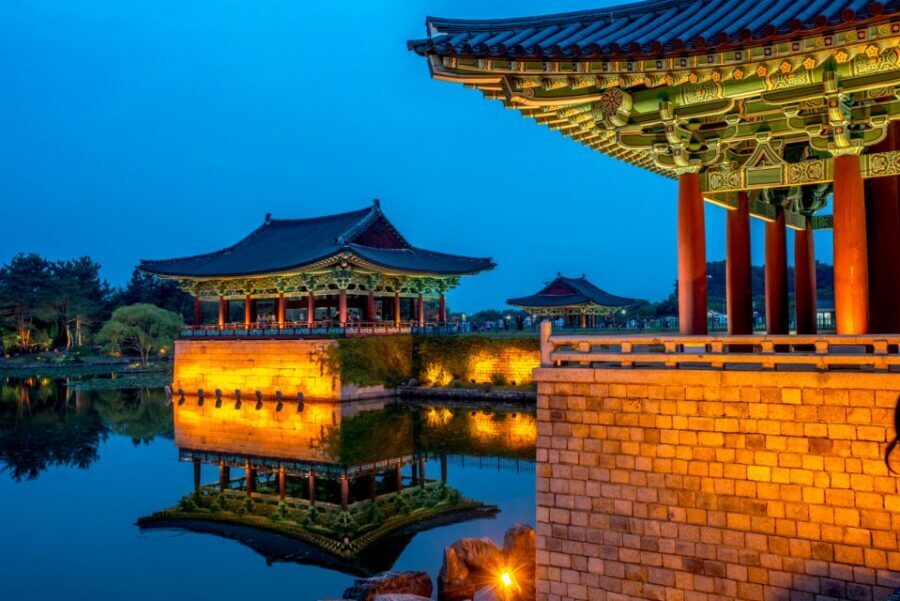
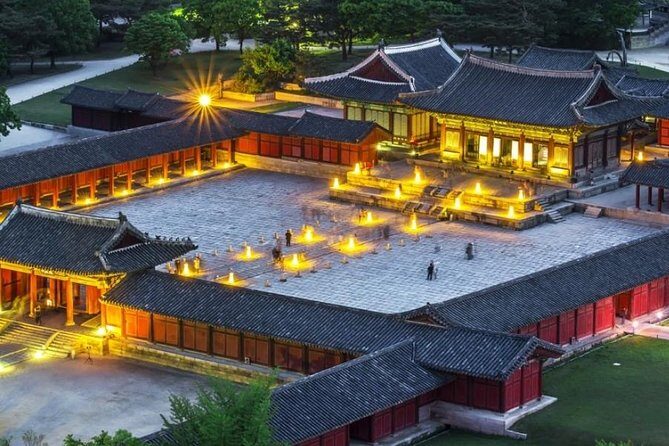
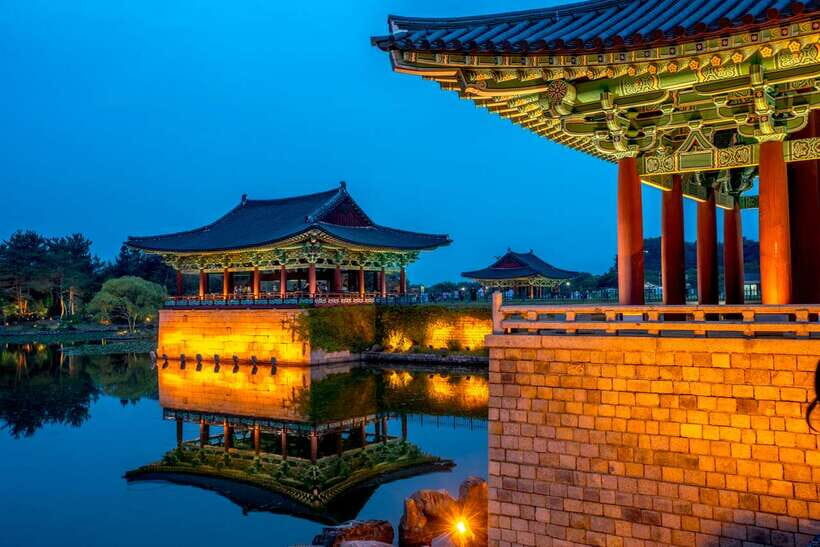
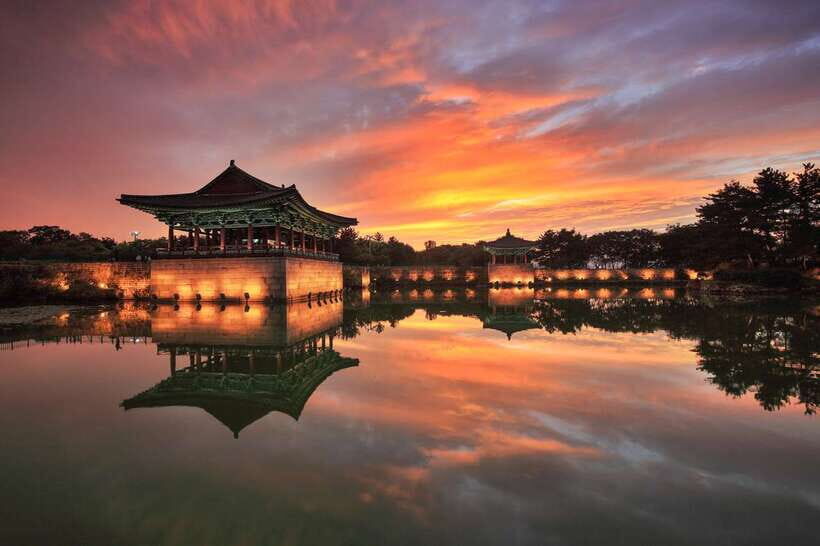
This is the signature emotional moment of the A and B routes. You’ll visit Donggung Palace & Wolji Pond with a guided stop and time to see the setting, roughly 1 hour. The attraction is that it once belonged to the ancient Silla palace complex, and now you get a scene designed for reflection—literally.
The moon-on-the-pond effect is the big idea, but don’t treat it like a guaranteed postcard. It depends on timing, season, and how the sky behaves. Even when the moon isn’t perfectly visible, the lighting and water reflection are still part of the experience.
What makes this stop worth paying attention to is how the guide ties the water, palace layout, and Silla culture together. You stop thinking only about visuals and start understanding why this location was chosen in the first place.
Gyeongju National Museum (Package C): when you want artifacts, not just views
Package C shifts the ending toward Gyeongju National Museum, with about 1 hour of free time there. If you’ve ever left a temple thinking, I saw the pretty stuff, but what did it mean… this is where that gets answered.
The museum is known for priceless Silla artifacts, including golden crowns and Buddhist relics. That kind of object-based context changes how you interpret everything you saw outside. Instead of only learning at street level, you get to connect the architecture and tomb culture to actual items made in that era.
This route is also a good call if you want less outdoor evening pressure. Night scenes are great, but they can also mean cooler temperatures or rain risk. Museum time is simpler: you can take your time and read.
Price and what you’re really paying for at around $52
At about $52 per person, you’re not just paying for entrance tickets. You’re paying for a guided day that bundles multiple major sites plus transportation from Busan.
Here’s the value logic I’d use:
- You get round-trip coach and a full day schedule, which would otherwise cost you time and effort arranging transit.
- You get live guidance in English and Chinese, plus Korean-speaking staff, which turns “walk-and-point” stops into “this is why it matters” stops.
- Your selected package also controls what included fees you get (for example, Yangdong entry fee for Package A, and Donggung/Wolji entry fees for A and B).
If you’re the type who enjoys learning while you walk, a guided day in this price range is often a smart move in Korea. If you’d rather travel alone with zero structure, then you might find you can do it cheaper by taking your own buses and trains. But for most people, paying for the guide and the schedule is what makes the day feel easy.
Tips that will make your day smoother
Comfortable shoes are a must. The walking adds up, and there’s no point pretending it’s minimal.
Bring a little flexibility for weather and traffic. The tour notes that the route can adjust based on conditions, and that’s exactly what you want to hear on a day-trip itinerary.
For photo results, don’t rely on luck. Several guides were specifically praised for taking pictures for guests and pointing out where to stand. Names that came up include Olivia, Song, Charles Lee, Victoria, and Rico. You may not get those exact guides, but the pattern is clear: photo timing is part of how they run the day.
One more realistic note: it’s a long day. Even when it runs smoothly, you’ll want to pace yourself. Use the free time at Hwangnidan-gil and at the museum (depending on package) to sit down and reset.
Who should book this Gyeongju day tour from Busan
This tour is a strong fit if you:
- Want an easy way to see major Silla-related landmarks in one day
- Like guided explanations that connect sites together
- Want built-in photo stops, including evening views on A/B routes
- Are staying in Busan and don’t want to plan transport across multiple Gyeongju areas
It may not be the best fit if you:
- Hate long days with packed schedules
- Prefer fully independent travel with no set timing
- Need meals included in the price (meals are not included)
Quick should-you-book guidance
I’d book this if you want a guided, well-paced way to understand Gyeongju beyond the highlights. The combination of Bulguksa, royal tomb areas, a traditional village stop, and (for A/B) the Wolji Pond evening mood is hard to replicate efficiently on your own as a one-day visitor.
Pick the route based on your energy level: A/B for night views, C for museum depth. If that sounds like your style, this is the kind of day trip that actually sticks with you.
FAQ
What is the duration of the Busan to Gyeongju day tour?
It runs about 8–12 hours, depending on the departure time and conditions.
How many route options are there, and what’s the main difference?
There are three package options:
- Package A includes Yangdong Village and Donggung & Wolji Pond
- Package B includes Gyochon Traditional Village and Donggung & Wolji Pond
- Package C focuses more on Bulguksa, Hwangnidan-gil, and ends at Gyeongju National Museum
What sites are included in all packages?
All packages include Bulguksa, a stop in the tomb area at Daereungwon Royal Tomb, and time at Hwangnidan-gil. The later stops vary by package.
Do I get guided time at each stop?
Yes. The tour includes a live guide and guided segments at major attractions, plus some free time at certain stops.
Are meals included in the tour price?
No. Meals are not included.
What languages are the guides and staff?
English and Chinese-speaking staff are provided, and live tour guides may also include Korean.
How long is the coach ride from Busan?
The bus/coach ride is about 100 minutes each way.
Which package includes Donggung Palace and Wolji Pond?
Donggung Palace and Wolji Pond are included for Packages A and B.
Do I need tickets for traditional villages or tomb areas?
Some entry fees are included depending on your package: Yangdong Village entry is included for Package A, and the Daereungwon Cheonmachong Tomb entry fee is included for Package A. Donggung and Wolji entry fees are included for Packages A and B.
What should I bring?
Comfortable shoes. The day involves walking.
FAQ
Can I cancel for a full refund?
Yes. You can cancel up to 24 hours in advance for a full refund.
Is there free cancellation for infants?
Infants aged 0–2 are free of charge if they do not occupy a seat.
Is a stroller allowed?
You should inform the provider 48 hours in advance if you’re bringing a stroller.
Does the schedule ever change?
Yes. The itinerary is subject to weather and traffic conditions.
What are the pickup/drop-off areas in Busan?
Starting locations may vary and can include Haeundae Station (Exit 5), Seomyeon Station (Exit 12), and KTX Busan Station (Exit 1), with matching drop-off options.