REVIEW · BUSAN
Busan Dialect Class with local snack
Book on Viator →Operated by Dorawayo experience activity · Bookable on Viator
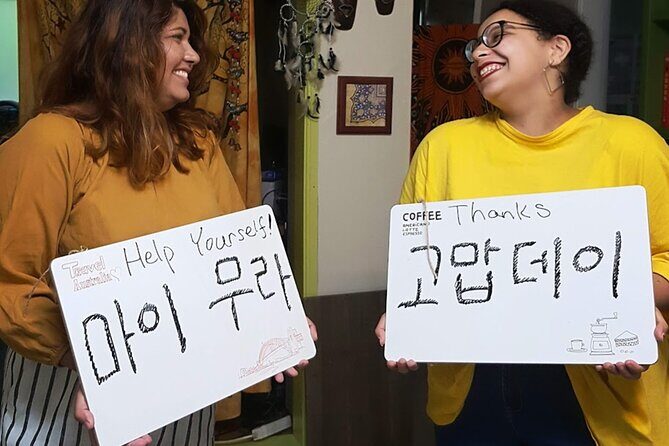
Busan dialect class beats boring language drills. Small-group teaching (up to 15) plus Hangul fundamentals makes this feel practical from the first minute, not like a classroom slog. I love that the tour builds in immediate use—after learning phrases, you get to try them for real with simple food in the market.
For you, the payoff is simple: you walk away able to recognize sounds, read key parts of Hangul, and order or ask for things without freezing. The one drawback to consider is pacing: the language part is about 1.5 hours, and then you split your time between Bujeon Market and Samgwangsa Temple depending on which route you choose.
In This Review
- Key Points You’ll Actually Care About
- Busan Dialect Makes Your Trip Feel Personal
- The Hangul Crash Course: Consonants, Vowels, and Useful Sounds
- Bujeon Market Food Practice: Learning by Ordering Something Simple
- Samgwangsa Temple: Cheontae Order Beauty with a Snack Break
- Two Route Options: Pick Your Order Based on Your Energy
- Price and Logistics: Is $100 Worth It?
- Who This Tour Suits Best (and Who Might Skip It)
- Meeting Point and Time Feel
- Should You Book This Busan Dialect Class?
- FAQ
- How long is the Busan Dialect Class with local snack?
- What is the group size limit?
- Do I need prior Korean knowledge?
- How does the Hangul lesson work?
- What stops are included in the experience?
- What can I expect to do at Bujeon Market?
- Is coffee, tea, or snacks included?
- Where does the tour start and end?
- When will I get confirmation after booking, and can I cancel?
Key Points You’ll Actually Care About
- Up to 15 people means more personal help and less waiting around.
- 1.5-hour Hangul basics focuses on consonants and vowels, not random memorization.
- Busan dialect phrases are meant to be used right away at the market.
- Bujeon Market is a local-style stop that many first-timers miss.
- Samgwangsa Temple is tied to the Cheontae Order and is known for attractive temple buildings.
- Coffee/tea and snacks are included, so you can practice without hunting for cash-only options.
Busan Dialect Makes Your Trip Feel Personal
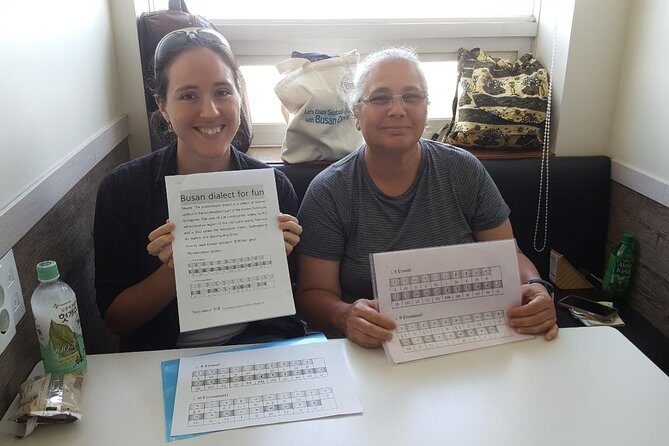
Busan has a voice all its own. This class takes that idea and turns it into something you can use immediately—short, efficient phrases, plus the alphabet basics so you’re not totally guessing.
What I like most is the tour’s mindset: language is treated as a travel tool, not an academic goal. You’re not aiming for fluent conversation. You’re aiming for confidence—so you can point, ask, understand simple replies, and keep moving.
The group size matters too. With a max of 15, you’re more likely to get individual nudges when pronunciation gets tricky. And pronunciation is the whole game with dialect—small changes can make you easier to understand fast.
A few more Busan tours and experiences worth a look
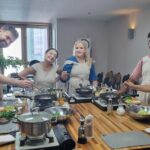
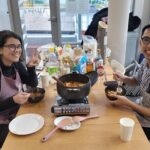
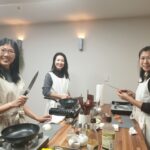
The Hangul Crash Course: Consonants, Vowels, and Useful Sounds
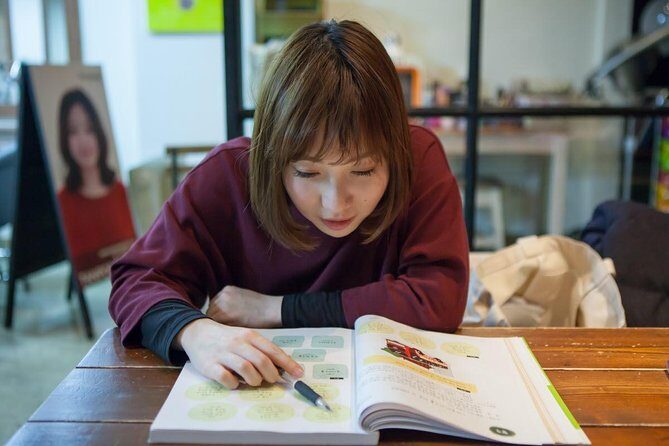
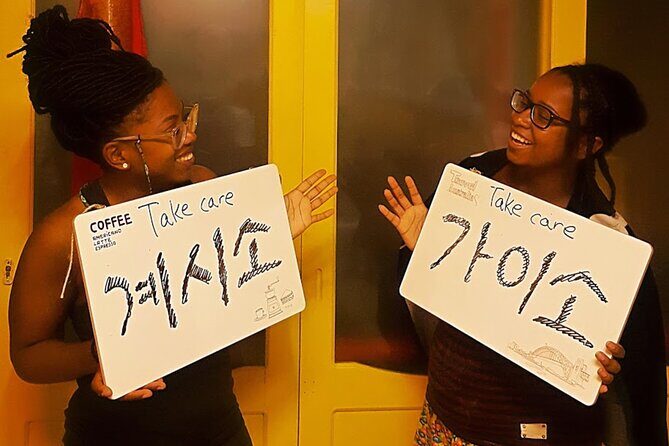
You’ll spend about 1.5 hours on the building blocks of Hangul. The focus is specifically on how to understand and read the consonants and vowels. That’s a smart way to start because Hangul is structured, and once you get the pattern, reading gets less painful.
You’ll also learn useful expressions tied to the Busan dialect. The key detail here is that they’re designed for beginners. Even if you know zero Korean, you can still participate because you’re not expected to do long conversations. Instead, you learn short chunks that work for shopping and basic interaction.
If you’ve ever felt intimidated by Korean class materials, this approach helps you get your bearings fast. You’re basically training your eyes and ears for what’s commonly repeated in everyday situations—especially the kind of language you’ll see and hear in markets.
One practical tip: go into the class willing to repeat. A lot of the value is in the rhythm—hearing, repeating, then recognizing it later when you see the text or hear the response.
Bujeon Market Food Practice: Learning by Ordering Something Simple
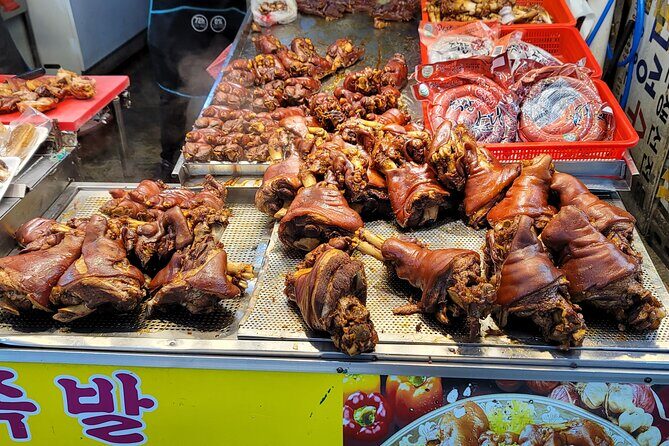
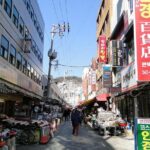
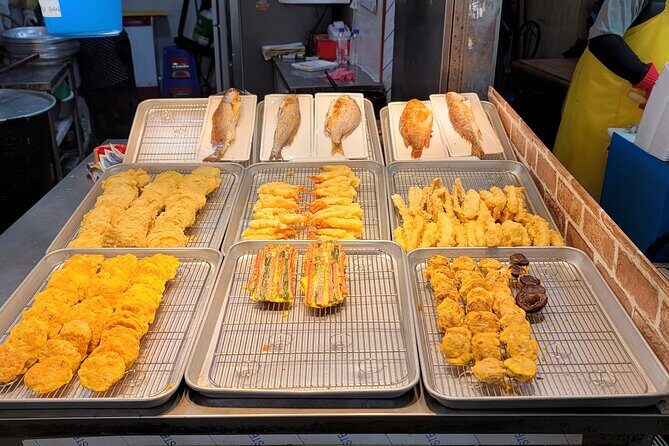
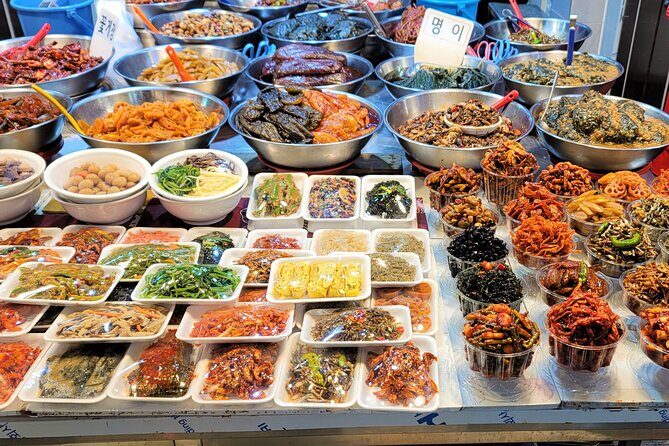
After the lesson, the tour shifts into hands-on mode. You move to Bujeon Market, where you get a chance to review the expressions you learned by purchasing simple food.
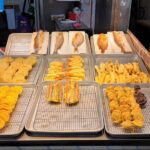
This is where the tour earns its keep. Language classes fail when they stop at worksheets. Here, you get to test yourself in a real setting with low-stakes food orders—often the kind of items you can buy without needing a deep vocabulary. Expect to practice with things like rice cakes and other straightforward market snacks.
This also explains why the tour includes snacks. You’re not just “seeing” the market. You’re using it as your classroom. Even a short exchange—pointing, repeating your phrase, getting confirmation—builds confidence in a way that no app-based study ever quite matches.
A helpful angle for you: don’t aim for perfection. Aim for clarity. If you can be understood and keep the exchange moving, you’ve basically won.
And yes, this stop is specifically positioned as one many tourists skip. That’s great news if you want Busan beyond photos of the major sights.
Samgwangsa Temple: Cheontae Order Beauty with a Snack Break
Your tour can also include Samgwangsa Temple, famous for its beautiful temple buildings. Samgwangsa belongs to the Cheontae Order, one of the representative Buddhist sects in Korea (the others often referenced are the Jogye Order and Cheontae Order).
The best part of a temple stop on a short tour is that it gives you a visual reset. You trade screens and street noise for architecture, space, and calm pacing. And because it’s paired with language learning and market food, you get a balanced day: everyday local life, then a cultural breath.
In the program flow where Samgwangsa is included, you’ll visit after Bujeon Market. At the temple, you’ll also enjoy a snack in the park inside the temple. That small detail matters because it turns the stop into more than a photo walk. You get a quiet pause after you’ve been practicing phrases and navigating a market.
If you’re sensitive to crowds, temples often feel like the right kind of quiet. Just remember you’re still on a schedule—so plan for a relaxed but structured visit, not an all-day wandering session.
Two Route Options: Pick Your Order Based on Your Energy
One of the simplest ways to think about this tour is: you choose where the day “lands” first.
You can go one way:
- Busan dialect class first, then Bujeon Market
Or the other way:
- Bujeon Market first, then Samgwangsa Temple
If you’re the type who likes momentum, do the class first. You’ll have phrases fresh in your mind when you hit the market. That makes the food-order practice feel smoother.
If you’re more hungry right away, do the market first. You’ll still get language exposure, and then the temple visit becomes a calmer cultural counterpart—food first, then atmosphere.
Either way, the tour is built around the same concept: learn a few things, use them quickly, and then see how the local environment makes those skills feel real.





Price and Logistics: Is $100 Worth It?
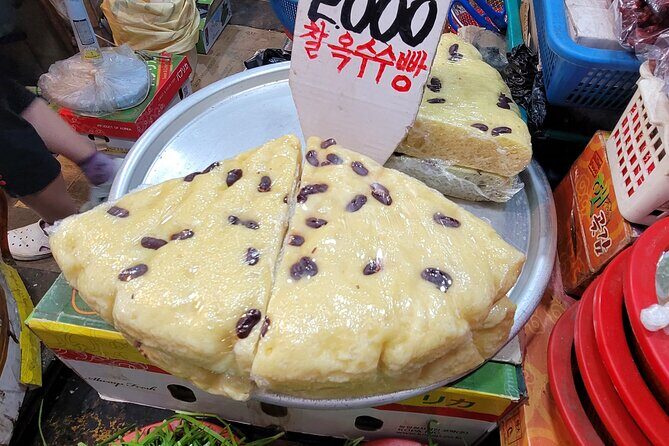
For $100 per person, you’re paying for more than a walking route. You’re buying three tangible components: instruction, food practice, and structured cultural time.
Here’s what’s included:
- Coffee and/or tea
- Snacks (plus chances to purchase simple food in the market for practice)
- Classroom rental charge and printout for the lesson
- A small-group experience with a max of 15 people
- Mobile ticket and group discounts (as mentioned in the tour summary)
What’s not included:
- Alcoholic beverages
That makes the value equation pretty straightforward. If you were doing this on your own, you’d still need a guide to teach Busan dialect and Hangul basics in a way that clicks quickly. You’d also be paying for food stops and likely spending time figuring out what’s appropriate to eat and how to order without getting stuck.
The only “soft cost” you should consider is time. The tour is about 3 hours, so it won’t replace a full-day market crawl or a long temple exploration. But for a half-day experience that teaches you to communicate a bit and use it right away, $100 doesn’t feel out of place.
My take: this is best value when you want structure and you’re willing to practice. If you just want sightseeing with no language component, you might feel you’re paying for teaching time.
Who This Tour Suits Best (and Who Might Skip It)
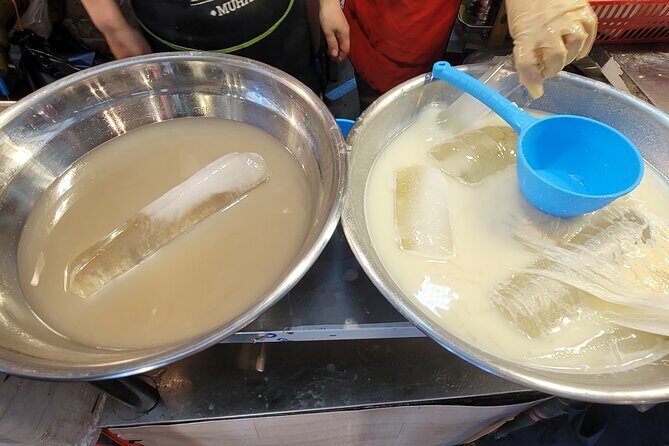
This experience is ideal if:
- you want beginner-friendly Korean basics without feeling tested
- you like learning through food and real situations
- you want a local-style market stop that’s not just a generic tourist circuit
- you prefer small groups (max 15) so the guide can keep things understandable
It may be less ideal if:
- you’re hoping for a long, detailed temple visit
- you want a heavy focus on grammar or full conversation skills
- you don’t enjoy classroom-style time at all (even though it’s only about 1.5 hours)
Also, if you’re picky about what you eat, note the food practice is described as simple snacks. The program doesn’t promise specific menu items beyond examples like rice cakes, so flexibility helps.
Meeting Point and Time Feel
The tour starts and ends at the same spot: 웰컴저축은행 서면지점 (Welcome Savings Bank, Seomyeon Branch) at 721 Jungang-daero, Busanjin District, Busan. It’s described as near public transportation, so getting there shouldn’t be a hassle.
A good strategy for enjoying the day: arrive a few minutes early, keep your phone charged for the mobile ticket, and come ready to repeat phrases out loud. The class is easier when you’re comfortable practicing, even if you’re not confident yet.
Should You Book This Busan Dialect Class?
If you’re looking for a short, high-payoff experience in Busan, I’d lean yes. The strongest reason to book is the combo: Hangul basics + Busan dialect phrases + immediate market practice. That’s how you turn learning into something you can actually feel while you travel.
Book this if you want:
- a beginner path with clear steps (consonants, vowels, simple expressions)
- a market snack experience with built-in language use
- a temple stop that adds cultural contrast in a compact schedule
Skip it only if your main goal is pure sightseeing time, with minimal instruction. For most people who want to feel more connected to Busan fast, this is a smart use of a few hours.
FAQ
How long is the Busan Dialect Class with local snack?
It runs for about 3 hours (approximately).
What is the group size limit?
The tour has a maximum of 15 travelers.
Do I need prior Korean knowledge?
No. The class is designed so you can participate even if you know no Korean.
How does the Hangul lesson work?
For about 1.5 hours, you learn how to understand and read the consonants and vowels of Hangul, plus useful Busan dialect expressions.
What stops are included in the experience?
You’ll go to Bujeon Market and you may also visit Samgwangsa Temple depending on which route option you choose.
What can I expect to do at Bujeon Market?
You’ll practice the expressions you learned by purchasing simple food and snacks in the market.
Is coffee, tea, or snacks included?
Yes. Coffee and/or tea are included, and snacks are included as part of the tour.
Where does the tour start and end?
It starts at 웰컴저축은행 서면지점, 721 Jungang-daero, Busanjin District, Busan, and ends back at the meeting point.
When will I get confirmation after booking, and can I cancel?
You should receive confirmation within 48 hours of booking (subject to availability). Free cancellation is allowed up to 24 hours before the experience starts for a full refund.
![[Perfect Private Tour] Nami island, Petite France and Organic Strawberry Farm - Price and value: what you’re paying for at $198 per person](https://8.koreaadventures.com/wp-content/uploads/perfect-private-tour-nami-island-petite-france-and-organic-strawberry-farm.jpg)