REVIEW · BUSAN
Busan: Gyeongju Guided Day Trip to Three Kingdoms Capital
Book on GetYourGuide →Operated by Lecirt · Bookable on GetYourGuide
Silla capital sights in one long day. This guided trip strings together the big hitters of Gyeongju’s Three Kingdoms era, with English storytelling that brings places like Donggung Palace & Wolji Pond to life. I like the way the day is paced so you get guided context and then time to wander for photos, and I especially like the human touch from guides such as Kayla Kim and Bada, who manage group energy and even help with picture timing. The main drawback is simple: it’s a long day (about 11–12 hours), with walking plus stairs and hills, so it can feel like a workout.
From Busan, you trade transit stress for a smooth coach ride and a clear start at subway stations. You also get built-in admissions for the big pond/palace stop, so you’re not hunting ticket lines mid-day. One more thing to consider: the itinerary includes several UNESCO sites and some optional-feeling village/bridge moments, so if you hate guided groups, you’ll want to mentally plan for short guided segments and then self-exploring.
In This Review
- Key things I’d circle before you go
- Busan Pickup to Gyeongju: 11–12 Hours of Silla Sites
- First Stop: Seokguram Grotto for Quiet UNESCO Wonder
- Bulguksa Temple: Stone, Faith, and a Nature-Friendly Layout
- Lunch Break and the Real-Life Timing Question
- Hanok Villages and Heritage Streets: Gyochon vs Yangdong
- Gyochon Traditional Village (common in some packages)
- Yangdong Folk Village (included in the UNESCO Tour 2025 APEC package)
- Hwangnidan-gil: the 1960s-Style Street Break
- Cheomseongdae Observatory: Ancient Astronomy That Still Feels Smart
- Daereungwon Tomb Complex: What Power Looked Like in Silla Times
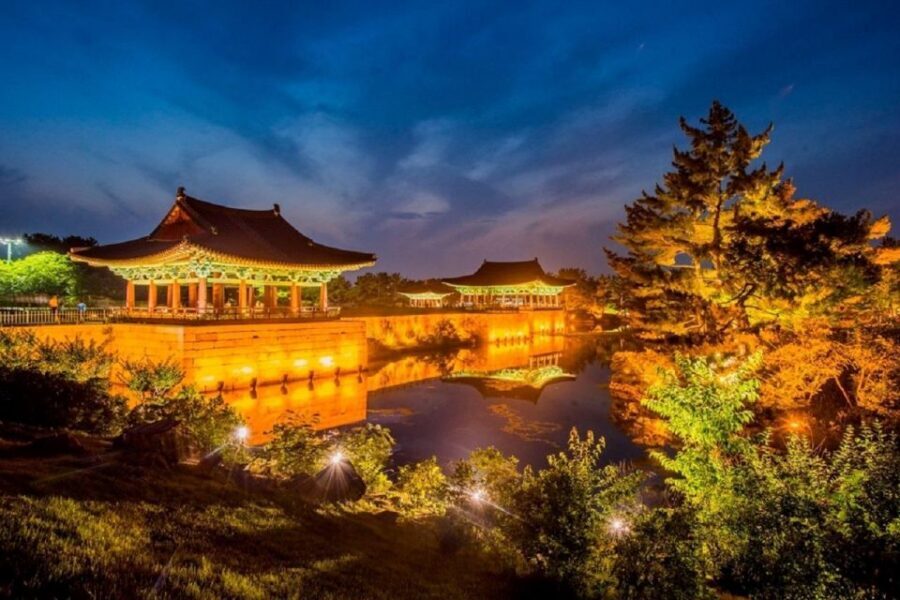
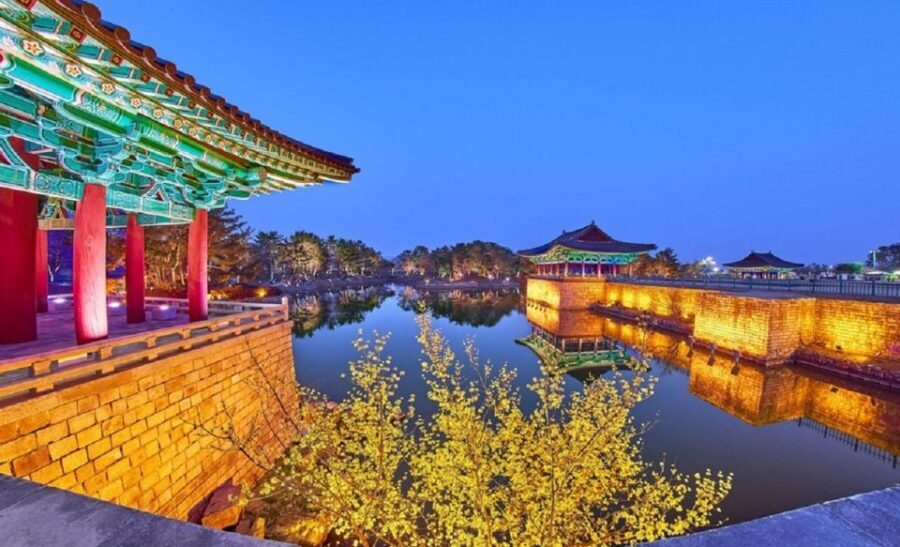
- Donggung Palace & Wolji Pond (Anapji): The Day’s Most Photogenic Moment
- Woljeonggyo Bridge: When the Three Kingdoms Story Gets a Night-View Finish
- Price and Value: Why $52 Can Make Sense for One-Day Gyeongju
- Who This Tour Suits Best (and Who Should Skip It)
- Should You Book This Gyeongju Day Trip?
- FAQ
- What is the duration of the Busan to Gyeongju guided day trip?
- How much does the tour cost?
- Where do I meet for the tour in Busan?
- Is pickup available from other places besides Haeundae?
- What is included in the ticket price?
- Is lunch included?
- Will the tour run in bad weather?
- Does the tour include an English guide?
- Is there free cancellation?
- Is the tour wheelchair accessible?
Key things I’d circle before you go
- Pickup is simple: meet near Haeundae Station Exit 7, or choose Busan Subway Station Exit 2 / Seomyeon Exit 12 for pickup.
- UNESCO heavy day: you’ll hit multiple Silla-era highlights plus palace-and-pond scenery that really rewards sunset timing.
- Story-driven guiding: guides like Kayla Kim, Bada, and Katrina are known for clear explanations and keeping it fun, not lecturing.
- Photography gets built in: you’ll have structured stops where your guide helps point you toward good photo angles.
- Village options depend on package: choose between Gyochon-style hanok strolling or Yangdong’s Joseon-era scale (and other swaps).
Busan Pickup to Gyeongju: 11–12 Hours of Silla Sites
This is one of those “get the overview fast” tours. You leave Busan on a comfortable coach/van, and you spend the day moving through Gyeongju’s headline World Heritage stops: temples, royal tombs, old astronomy, and palace scenery by water.
The logistics are the value here. Instead of figuring out transport between distant sites, you meet at a fixed time and location. The standard meeting point is outside Haeundae Subway Station Exit 7 from 09:50 to 10:00. You can also pick one of three subway-station pickup points in Busan: Haeundae Exit 7, Seomyeon Exit 12, or Busan Station Exit 2. (These are subway exits, not KTX/shopping-mall exits.)
Expect a day that’s structured but not rigid. The tour includes guided parts plus free time at most stops. That balance matters because Gyeongju is visual: you’ll want a minute or two to soak in the view, not just listen. Guides like Kayla Kim and Bada also seem to understand timing—people in the group come back smiling, not frazzled.
One practical note: the tour runs rain or shine. If you’re booking for a season with frequent showers, bring a compact rain layer. And since this is built around walking and stairs, it’s not a good match for wheelchair users or people with mobility impairments (that limitation is clearly stated).
You can also read our reviews of more guided tours in Busan
First Stop: Seokguram Grotto for Quiet UNESCO Wonder
If your package includes it, Seokguram Grotto is the early wow. It’s UNESCO-listed and known for a calm, spiritual atmosphere where art and stone work together. In the tour flow, it’s a guided visit plus time to walk around, with about an hour on site.
What I like about this stop is the contrast. You’re not just looking at ruins; you’re walking through a space designed for contemplation. The guided portion helps you notice details that you might otherwise miss—things like what the site represents and why it was built where it was.
A possible drawback: grotto sites usually involve uneven paths and steps. Even when time is “only” an hour, you’ll feel it if you’re sensitive to stair-heavy travel. If you prefer flatter, easier walking, keep that in mind when choosing your package.
Bulguksa Temple: Stone, Faith, and a Nature-Friendly Layout
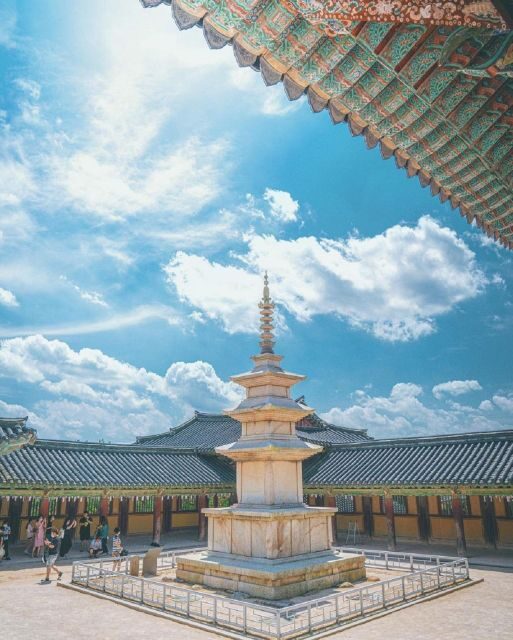
Next comes Bulguksa Temple, another UNESCO centerpiece. The guide-led part focuses on the meaning behind what you’re seeing, and the temple’s reputation for fitting with the surrounding landscape is not just marketing—this place feels designed to be part of the environment.
In the schedule you’ll get about 80 minutes here, including guided context plus free time. That free time is important. Bulguksa works best when you slow down. You’ll want a moment to step away from the group, look back toward the main views, and take photos without rushing.
If you’re a first-time visitor, Bulguksa also sets your mental timeline for the day. The Three Kingdoms era can feel abstract until you see how religion and politics show up in architecture. A good guide—Bada is repeatedly praised for this—turns those connections into stories you can actually remember later.
Lunch Break and the Real-Life Timing Question
You’ll stop for lunch at a local restaurant with about an hour break. Food and drinks aren’t included, so you’ll pay your own way.
This part of the day is where you can adjust your energy. If you’re a “walk a lot then eat” person, you’re fine. If you crash after long sitting, try to eat something not too heavy. And don’t forget water if it’s warm or if you’re walking in light rain.
Also: the tour is long, so this is not the moment to choose a big detour meal. Keep it simple so you’re ready for the next UNESCO stop.
Hanok Villages and Heritage Streets: Gyochon vs Yangdong
Gyeongju’s villages are where the day starts feeling more human. You stop to see how people lived in traditional housing styles, and you get a sense of how culture kept showing up long after the dynasties faded.
A few more Busan tours and experiences worth a look

Gyochon Traditional Village (common in some packages)
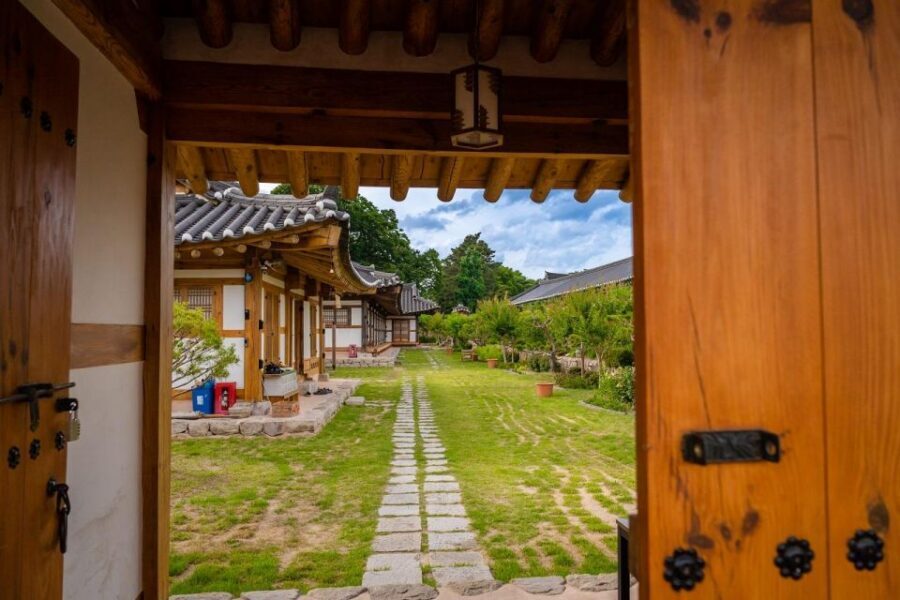
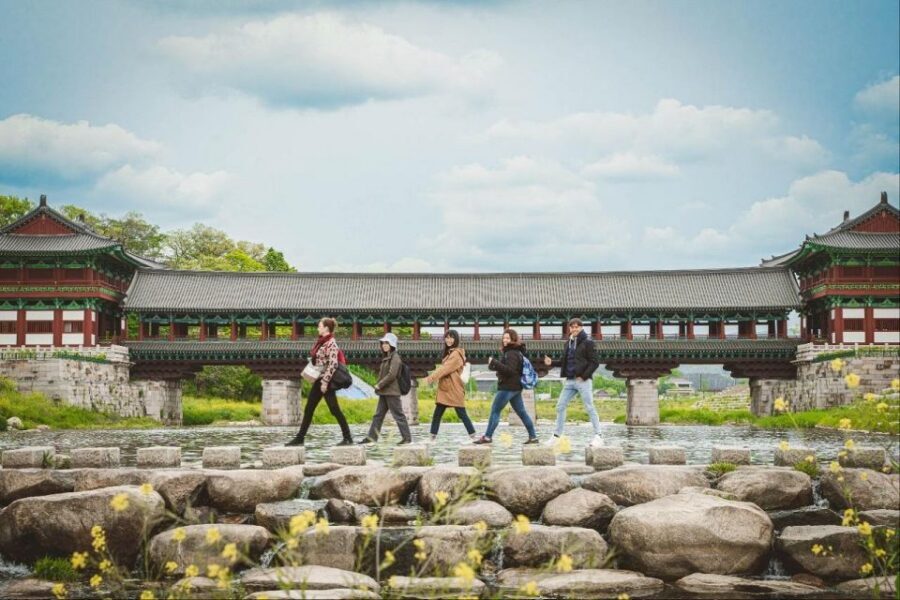
Gyochon Traditional Village is built around hanok houses and classic cultural landmarks. In the tour flow, you’ll have a photo stop plus guided visit and about an hour of time on site. It also connects to other highlights like Gyeongju Hyanggyo and the nearby charm of the old bridge area.
If you like charming neighborhoods and walking for atmosphere, Gyochon is a strong choice. The watch-out is that “an hour” can vanish quickly because you’ll stop for photos again and again.
Yangdong Folk Village (included in the UNESCO Tour 2025 APEC package)
Yangdong Folk Village is the other big village stop. It’s described as Korea’s largest UNESCO-listed traditional village, tied to Joseon-era life and Confucian heritage. You’ll get guided time plus free time.
This one tends to feel more expansive. The upside is you can really feel the scale of how tradition was preserved. The potential drawback is that in a full-day tour, you may want to decide ahead of time what you want most: structure and storytelling, or slower roaming.
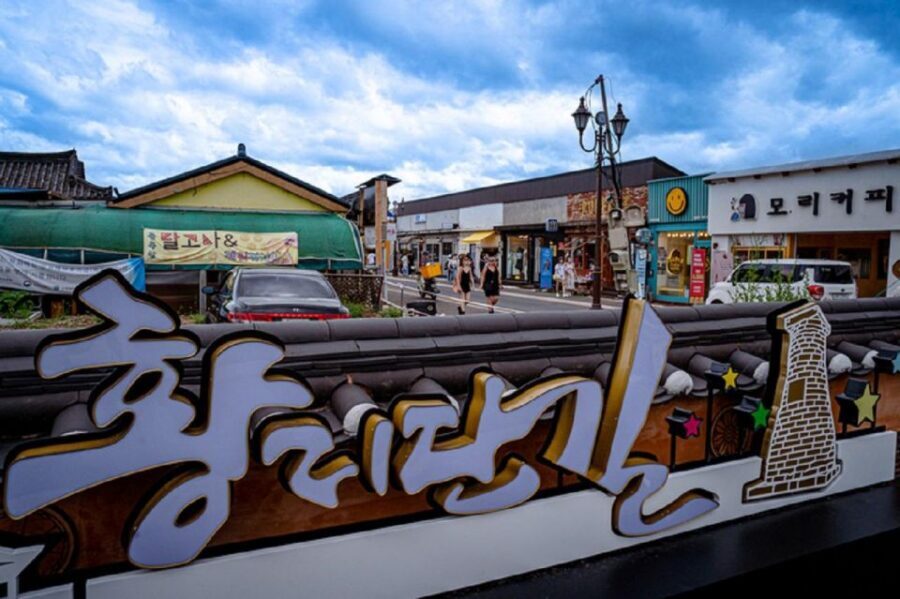
Hwangnidan-gil: the 1960s-Style Street Break
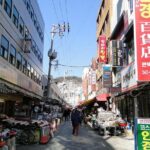
Between major heritage sites, you also get Hwangridan-gil time (listed as Hwangnidan-gil in the schedule). Expect about 30 minutes for browsing and shopping along a street known for well-preserved 1960s architecture.
I like this stop because it gives you a break from temples and tombs. You can also pick up small souvenirs without making the day longer. Just don’t let this turn into “I’ll wander for two hours.” The rest of the day is the payoff.
Cheomseongdae Observatory: Ancient Astronomy That Still Feels Smart
Cheomseongdae Observatory is one of those places where the scale is small but the idea is huge. It’s known as Korea’s oldest astronomical observatory, a standout example of ancient engineering.
In the tour schedule it’s about an hour total, including guided visit and free time. The guide helps you connect the structure to the broader scientific story of the time, so it doesn’t feel like a random old tower.
This stop also works well if you’re tired of only religious architecture. You get a different side of the Three Kingdoms story: the push to understand the sky, not just build the ground.
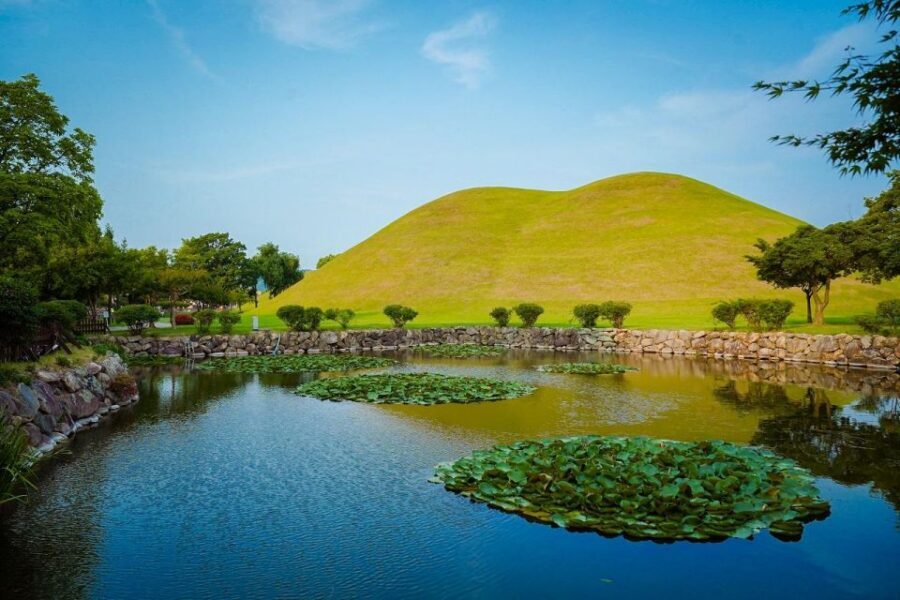
Daereungwon Tomb Complex: What Power Looked Like in Silla Times
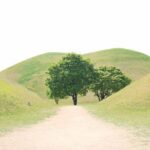
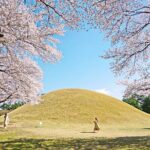
Then you head to Daereungwon Tomb Complex, described as a cluster of royal and aristocratic tombs from the Silla Kingdom. You’ll get guided tour and free time for about an hour.
The best part here is the way it teaches you to read the land. Tomb complexes aren’t just “go look at rocks.” You learn how Silla society translated status into monuments, and the guide’s explanations make the layout and construction feel meaningful rather than random.
This is also a good moment to take a breath. After temples, villages, and observatories, the tombs are more open-air and often a bit less crowded than palace points. You’ll still do some walking, but the payoff is a sense of place and time depth.
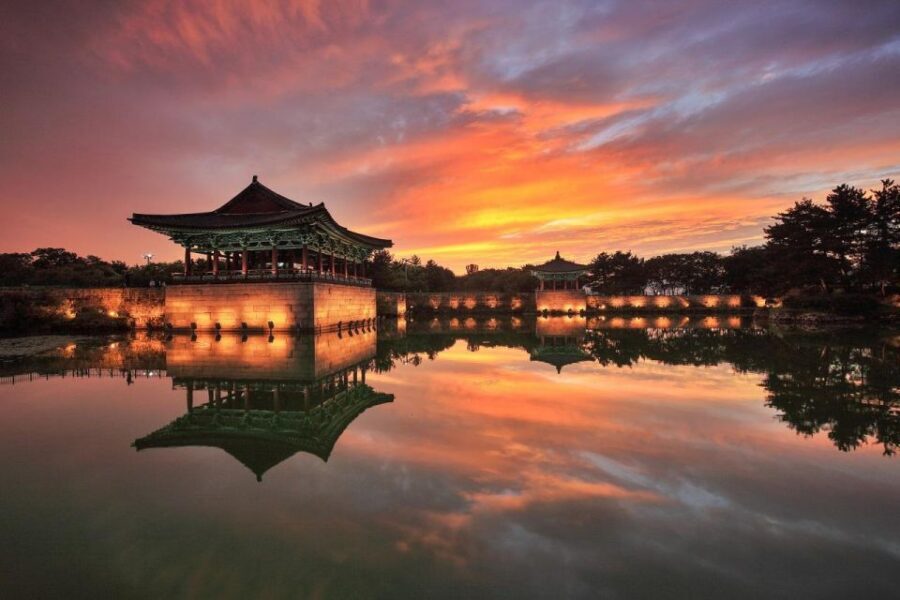
Donggung Palace & Wolji Pond (Anapji): The Day’s Most Photogenic Moment
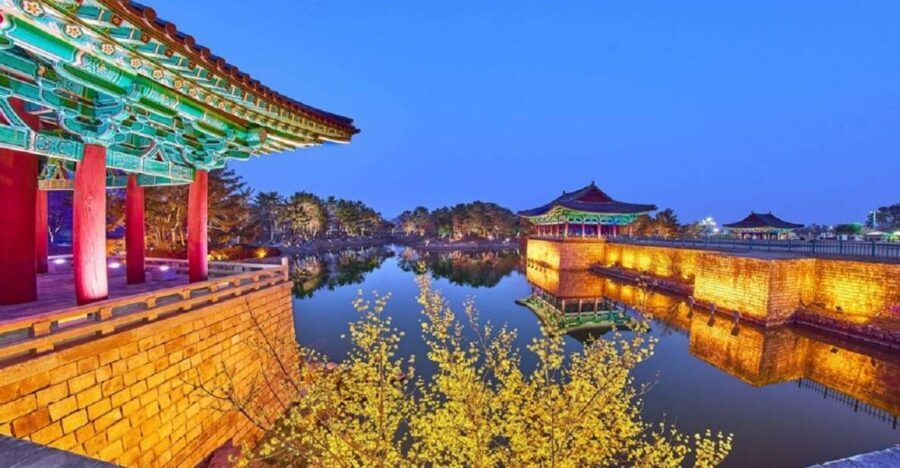
If one stop earns its fame, it’s Donggung Palace & Wolji Pond (Anapji). The tour includes admission here for all packages, which is a nice perk because you’re paying less for the ticketed part of the day.
This is where you see Unified Silla palace artistry reflected in quiet water. In the schedule, you get about an hour with guided explanation plus free time. Even if you’re not a big “palace person,” the pond reflection does the work for you. It’s the kind of scenery that makes you slow down without trying.
Guides like Kayla Kim and Katrina are repeatedly praised for pointing out the best photo angles. The trick isn’t fancy camera gear. It’s timing and where you stand. The guided portion helps you find your spots faster, so you spend more time enjoying and less time guessing.
Woljeonggyo Bridge: When the Three Kingdoms Story Gets a Night-View Finish
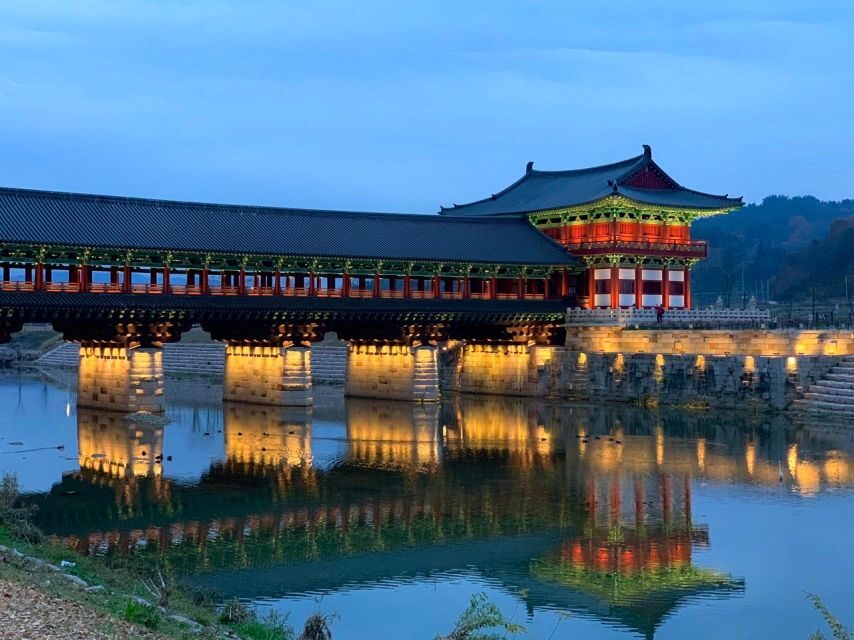
The tour often ends with Woljeong Bridge time. You’ll get a guided visit plus free time (about 30 minutes in the schedule), and the big feature is the night view—historic charm paired with reflections.
This stop is strongly associated with the “Three Kingdoms” package option, where the day’s village-to-bridge connection makes sense. If you’re choosing your package based on scenery, this is the one that tends to feel cinematic.
Practical reality: night photography spots can get crowded. If you care about photos, go right at the start of free time so you’re not stuck behind other groups.
Price and Value: Why $52 Can Make Sense for One-Day Gyeongju
At $52 per person, the value is less about “cheap” and more about what’s bundled. You get:
- Coach/van transport for the full day,
- an English guide,
- pickup and drop-off at central Busan subway stations,
- and admission to Donggung Palace & Wolji Pond in all packages (plus admission to Yangdong Folk Village in the UNESCO Tour 2025 APEC package).
What’s not included is also clear: food and drinks, personal expenses, travel insurance. Lunch is a scheduled break, not an included meal.
So the math works best if you’d otherwise spend time and money coordinating transit and separate tickets. If you’re short on days in Busan and want a high-density introduction to Gyeongju, this price is fair. If you’re the type who hates group schedules, you might decide you’d rather go independently and move at your own tempo.
Transport quality is also a real factor here, since this is a long day. The tour’s transport score is high, which usually means fewer delays and smoother timing—exactly what you want for a packed itinerary.
Who This Tour Suits Best (and Who Should Skip It)
This tour fits you if:
- you want a fast, guided overview of key Silla/Three Kingdoms sites,
- you appreciate explanations that connect monuments to the bigger story,
- and you don’t mind a long day with walking and stairs.
It may frustrate you if you want lots of solitude, slow wandering, or step-by-step pacing that accommodates mobility limits. The tour is explicitly not suitable for wheelchair users or people with mobility impairments.
It also helps if you like group travel personalities. Guides such as Bada and Katrina are repeatedly praised for energy, humor, and patient answering of questions. That matters because Gyeongju can be complex, and a good guide makes the connections click fast.
If you’re visiting in a group of friends, this is a strong “everyone learns something” day. If you’re traveling solo and want built-in photo help and navigation, it can be a relief.
Should You Book This Gyeongju Day Trip?
Book it if you’re in Busan and you want the highlights of Gyeongju without the planning stress. The Donggung Palace & Wolji Pond stop plus tomb and temple coverage make it a strong one-day primer, and the English guiding style seems to keep the long hours enjoyable.
Skip or reconsider if your schedule allows a multi-day Gyeongju stay. Two full days let you revisit the pond views, take longer village walks, and slow down in temples without feeling like you’re sprinting through history.
If you do book, choose your package based on what you want most:
- Three Kingdoms Trip vibe: Gyochon-style hanok strolling and the Woljeonggyo Bridge night-view payoff.
- Seokguram Grotto Tour vibe: add Seokguram and Cheomseongdae.
- UNESCO Tour 2025 APEC vibe: add Yangdong Folk Village and Cheomseongdae.
Either way, set your expectations for a full day. Then pack your daypack like it’s a mini hike: water, comfortable shoes, and a rain layer.
FAQ
What is the duration of the Busan to Gyeongju guided day trip?
The duration is about 11 to 12 hours.
How much does the tour cost?
The price is listed as $52 per person.
Where do I meet for the tour in Busan?
The meeting point is outside Haeundae Subway Station Exit 7, between 09:50 and 10:00 AM.
Is pickup available from other places besides Haeundae?
Yes. Pickup is also offered from Busan Subway Station Exit 2 and Seomyeon Subway Station Exit 12. You choose your pickup point before the tour.
What is included in the ticket price?
The tour includes pickup and drop-off at selected Busan subway stations, a live English guide, and admission to Donggung Palace and Wolji Pond in all packages. Yangdong Folk Village admission is included in the UNESCO Tour 2025 APEC packages.
Is lunch included?
No. Food and drinks are not included. Lunch is scheduled as a break at a local restaurant.
Will the tour run in bad weather?
Yes, it runs rain or shine.
Does the tour include an English guide?
Yes, the live tour guide provides services in English.
Is there free cancellation?
Yes. You can cancel up to 24 hours in advance for a full refund.
Is the tour wheelchair accessible?
No. It is not suitable for people with mobility impairments or wheelchair users.