REVIEW · BUSAN
Korean cooking class in Haeundae, Busan
Book on Viator →Operated by Bapsang, Korean Cooking Class in Busan · Bookable on Viator
Your hands learn Korean faster than your phone. This small-group class in Haeundae turns you into a calm, confident cook with a tiny-group format and a Joseon-era palace apron touch. The menu can vary by date, so don’t expect an identical exact lineup every time.
I like how the experience mixes practical cooking with quick culture lessons you can actually use when you eat Korean food later. You’ll cook at your own station, taste key sauces, and then enjoy the meal you made on a traditional bapsang dining table setup (chairs are available if sitting on the floor is tough). One watch-out: it needs good weather, and the whole morning plan can shift if conditions are bad.
In This Review
- Key Points You’ll Care About
- Why This Haeundae Korean Cooking Class Feels Like a Palace Kitchen
- What You Cook in the Class: Bibimbap Set, Seaweed Soup, and Korean Pancake
- The Tiny-Group Setup: Up to 8, Personal Stations, Real Help
- The Morning Plan Around Haeundae: Dongbaekseom, Beach Views, and Bay 101
- Cooking Traditions You Can Taste: Joseon Notes and Sauce Skills
- Bapsang Dining: Eat What You Cook, Floor Table or Chairs
- The Little Extras: Tea, Simple Dessert, and Local Help Near the Area
- Price and Value: Why $100 Can Be a Smart Use of Time in Busan
- Who Should Book This Cooking Class (and Who Might Skip It)
- Should You Book This Korean Cooking Class in Haeundae?
- FAQ
- What dishes will I cook?
- Do I need any cooking experience?
- How many people are in the class?
- How long is the class?
- Where is the meeting point?
- What time does it start?
- Is there anything besides cooking included?
- Do I have to eat on the floor?
- Are there options for dietary restrictions?
- Is the class affected by weather?
- Are there special cooking dates in 2025?
Key Points You’ll Care About

- Small group size (max 8) means real hands-on help, not watching from the sidelines
- Palace-style apron + Joseon cooking traditions make the class feel more personal than a basic demo
- You’ll cook a full set (bibimbap, seaweed soup, and Korean pancake) and sit down to eat it right after
- Sauce tasting + clear instruction helps you understand flavor, not just steps
- Participation certificate at the end gives the experience a real sense of completion
- Tea and a simple Korean dessert round things out without turning it into a long sit-down meal
Why This Haeundae Korean Cooking Class Feels Like a Palace Kitchen
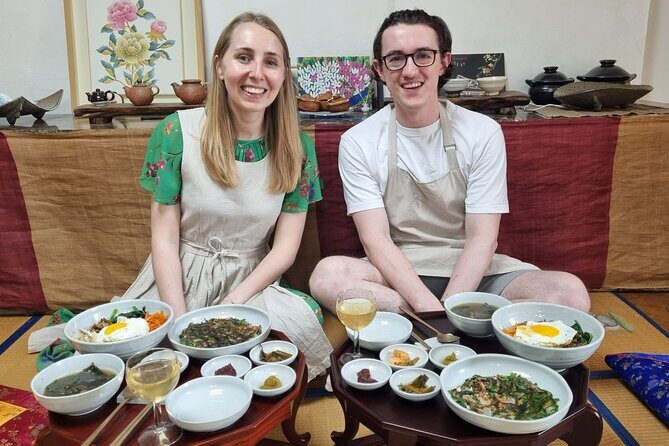
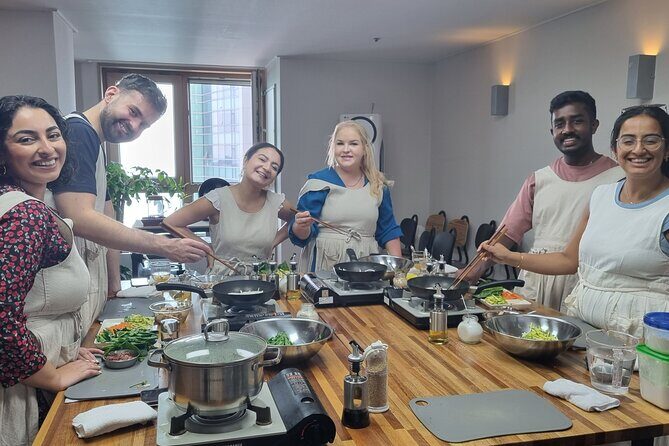
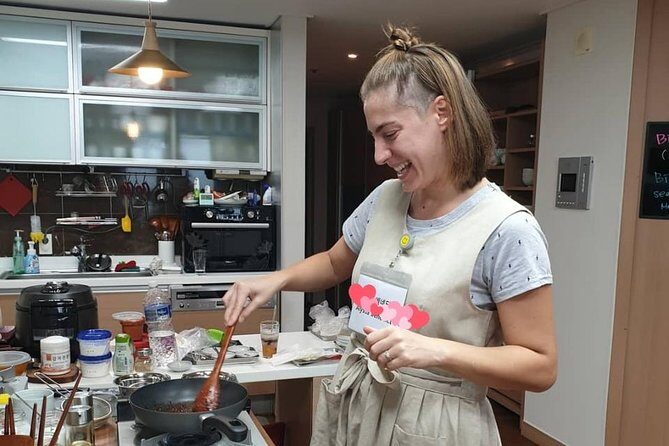
This isn’t a big, loud cooking show. It’s a focused class built around you having a personal station and enough time to ask questions. The most memorable visual detail is the traditional apron you wear, described as the kind the palace cook wore in history. It may sound like a costume at first, but it works. It signals you’re learning an approach to cooking tied to Joseon-era food traditions, not just making random dishes for Instagram.
The instructor is the heart of it. Reviews repeatedly highlight Min as engaging, thoughtful, and attentive, and you can feel the design of the class in that approach: she teaches you what matters, then guides you while you do the work. If you’re nervous about cooking, that matters. You’re not expected to be a natural chef on day one.
One more reason it works well for visitors: the class ends in a way that matches how Koreans actually eat. You don’t just leave with recipes and a plan to figure out the rest at home. You cook, taste, then dine in a traditional setting.
You can also read our reviews of more cooking classes in Busan
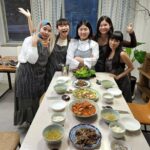
What You Cook in the Class: Bibimbap Set, Seaweed Soup, and Korean Pancake
The core menu is built around three hits of Korean comfort food:
- Bibimbap set: a full bowl build, not just one component
- Seaweed soup: served as part of your cooked meal
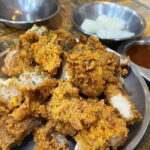
- Korean pancake: reviews specifically mention chive pancakes as a favorite in some sessions
You also get a step that many cooking classes skip: tasting the main sauces. That’s a big deal. It helps you understand what you’re trying to balance before you start mixing or spreading flavors into your dish. Instead of memorizing steps, you learn flavor logic.
A practical note: the menu may vary by date. So if you’re booking specifically for one exact dish style, keep your expectations flexible. The class description centers on bibimbap, seaweed soup, and Korean pancake, but the details can change.
Also, no previous culinary experience is needed. That doesn’t mean the class is dumbed down. It means the instruction is set up so you can succeed even if your chopping skills are still in training mode.
The Tiny-Group Setup: Up to 8, Personal Stations, Real Help
This class is capped at a maximum of 8 travelers. That small number is the reason you’ll get more than a script. In a room of this size, the instructor can walk over, watch what you’re doing, and correct small things early. That’s especially helpful for people who are comfortable eating Korean food but haven’t cooked much themselves.
You’ll wear the apron, get a welcome drink, then move through tastings and cooking steps in a paced way. The class runs about 3 hours, starting at 10:00 am. That length is long enough to actually cook multiple dishes and still short enough that you won’t feel like you’ve signed up for a half-day production.
If you’re traveling with kids or teens, this setup is also easier to manage. One review mentions doing it with a 12- and 16-year-old, with the instructor adjusting well to the group. For families, that’s gold. You want a class where everyone can participate, not just an adult who does the heavy lifting.
The Morning Plan Around Haeundae: Dongbaekseom, Beach Views, and Bay 101
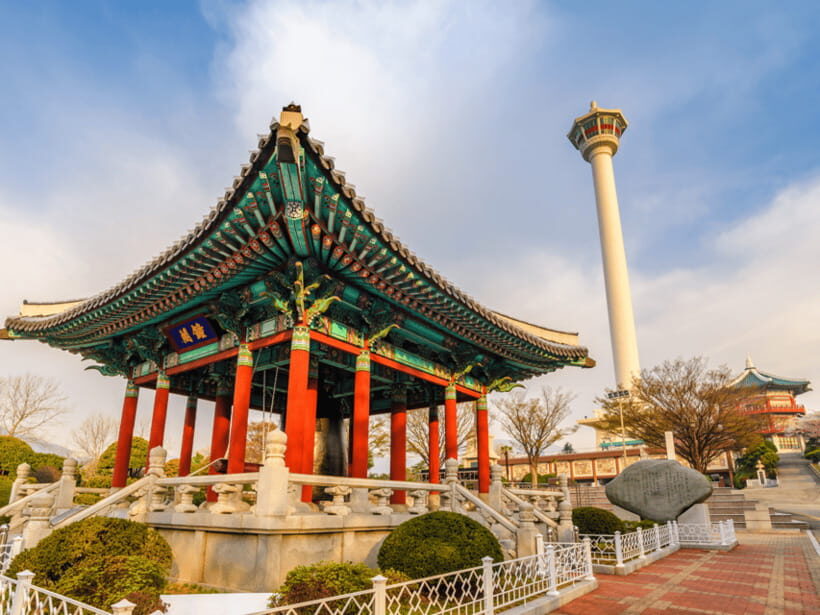
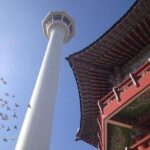
This experience includes more than a kitchen. The day’s flow includes stops around Haeundae and the coast, which gives you context for where you are. Even if you’ve only got a morning, you’re still seeing the seaside side of Busan, not just heading straight to a classroom.
Here’s how the route feels in real-life terms:
- Dongbaekseom: a coastal area stop that sets the scene before your cooking starts
- Haeundae Beach: the iconic beach moment you’d expect in this neighborhood
- The Bay 101 Yacht Club: a waterfront stop that shifts the vibe from beach casual to coastal-views-and-buildings
- Nurimaru APAC House: a notable seaside landmark stop that adds variety to the walk-and-view portion
A drawback worth considering: this is a plan that can depend on weather. The experience requires good weather, so if conditions are poor, the activity can be canceled and you’ll be offered another date or a full refund. If you hate outdoor walking in drizzle, it’s smart to pack a light rain layer and expect a little flexibility.
Cooking Traditions You Can Taste: Joseon Notes and Sauce Skills
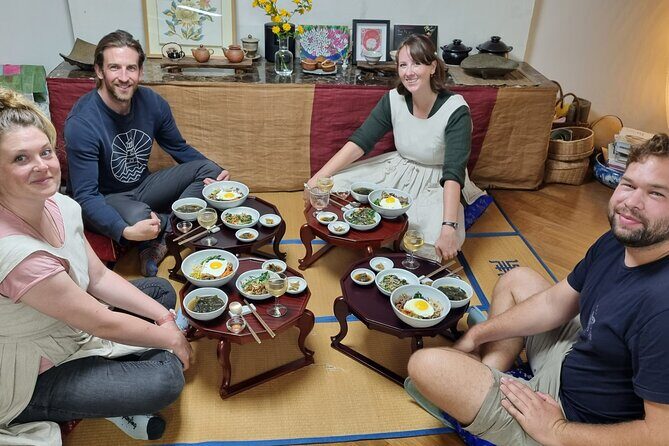
The strongest part of the class is how it connects steps to reasons. One theme you’ll hear tied to Korean cooking traditions is Joseon-era influence. You might not leave reciting historical facts, but you’ll walk away with something more useful: a better sense of how Korean flavors are built.
That shows up most clearly in the sauce tasting. When you taste the main sauces before cooking, you start to understand why your bibimbap bowl works, why seaweed soup feels balanced, and why the pancake style lands the way it should. You’re not just adding ingredients. You’re learning how to aim for taste.
You’ll also be learning how Korean food can be made in a palace-chef style approach. Again, that doesn’t mean you’ll need palace-level equipment. It means you’ll cook with attention to balance, timing, and consistency.
A few more Busan tours and experiences worth a look

Bapsang Dining: Eat What You Cook, Floor Table or Chairs
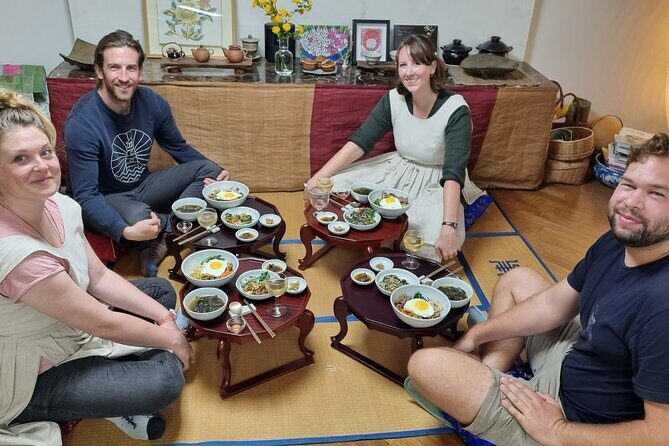
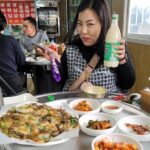
After you cook, the meal comes together on bapsang, the traditional Korean dining table style placed on the floor. That’s a cultural detail you don’t get from a standard restaurant dinner, and it turns the class into a complete experience rather than a quick workshop.
If sitting on the floor is hard for you, you won’t be stuck. The experience provides a dining table with chairs when needed. That makes it more comfortable for anyone with mobility limitations, sore knees, or just normal vacation fatigue.
Sitting down to eat what you cooked is also the easiest way to learn. You’ll remember what it smelled like while simmering and what it tasted like once plated. Then, when you get home and recreate it, you can use that memory as your quality check.
The Little Extras: Tea, Simple Dessert, and Local Help Near the Area
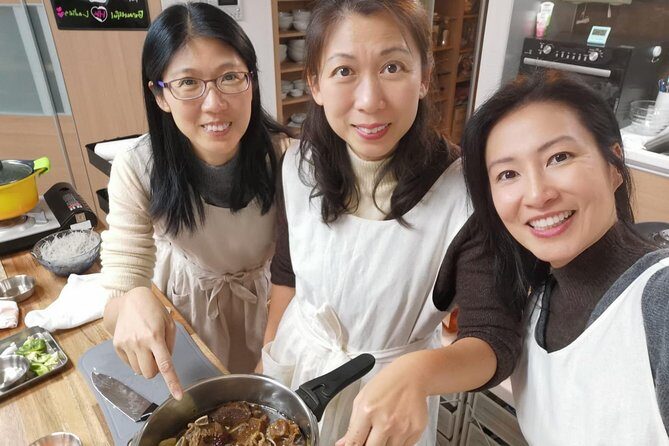
Good cooking classes don’t just end with a meal. They also pace the day so you can recover from heat and chopping. Here, you’ll get tea with a simple Korean dessert, which feels like a gentle reset after the active part.
Another underrated element: you’ll get counseling near the area. In plain terms, expect local guidance connected to where you are in Busan. That can help you decide what to do next—especially if it’s your first time in Haeundae and you want to avoid aimless wandering.
Some people also mention small take-home touches at the end, like a surprise pouch of sorts. Even if you don’t treat it as a souvenir, it adds warmth to the wrap-up and makes the class feel ceremonially complete. Then you also get a participation certificate, which is nice if you like proof you actually did something fun and different.
Price and Value: Why $100 Can Be a Smart Use of Time in Busan
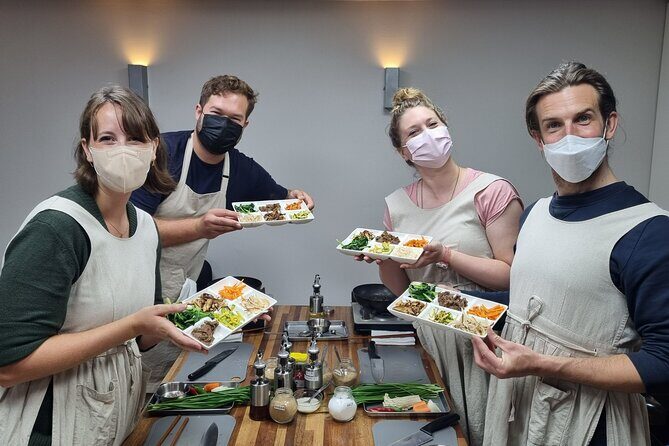
At $100 per person, this class isn’t the cheapest food activity in Busan. But the value comes from a mix of things that usually cost more when bundled separately.
You’re paying for:
- Multiple dishes (bibimbap set, seaweed soup, and Korean pancake) cooked with hands-on guidance
- Small-group instruction with plenty of time for questions
- Tasting sauces so you learn flavor, not just recipes
- A full sit-down meal you cooked, served in a traditional format
- A participation certificate and small extras that make it feel like an experience, not just a meal
If you only want to eat Korean food, a restaurant will be cheaper. But if you want to bring skills home, this is the kind of activity that saves you time later. You’ll know how the dish is assembled and what each component is meant to taste like.
It’s also strong value for groups. When you split the experience into “instruction time + multiple dishes + meal,” the cost stops looking outrageous, especially compared to private lessons that would be far more expensive.
Who Should Book This Cooking Class (and Who Might Skip It)
Book it if you:
- want a hands-on Korean cooking experience in Busan
- like small group activities where the instructor can correct you
- enjoy food culture and want a Joseon-era connection you can taste and remember
- are traveling with family or teens who will actually cook, not just watch
Skip it (or at least reconsider the timing) if you:
- hate being outdoors when the plan includes coastal stops, since good weather is required
- prefer to learn by watching only, because this is a do-it-yourself cooking class
- are the kind of traveler who wants purely free-form exploration all morning without structure
Also consider your own cooking appetite. This is not a casual snack class. You’ll cook, taste sauces, and then eat what you made. If you’re hungry and like to be active on trips, it fits well.
Should You Book This Korean Cooking Class in Haeundae?
Yes, if you want a meaningful food activity that teaches you more than just what to order at a restaurant. The small-group size, the palace-style apron detail, and the full meal on bapsang turn it into a real cultural and practical experience. The standout factor is the teaching approach associated with Min: clear guidance, engagement, and a focus on helping you succeed.
If you’re traveling on a tight schedule, the 3-hour runtime starting at 10:00 am is manageable. If the weather looks iffy, watch forecasts and plan for the possibility of rescheduling.
FAQ
What dishes will I cook?
You’ll cook a set based on bibimbap, seaweed soup, and Korean pancake. The exact menu can vary by date.
Do I need any cooking experience?
No. The class is designed for beginners, and you’ll get plenty of one-on-one attention.
How many people are in the class?
The experience is a maximum of 8 travelers, with the format described as a small group.
How long is the class?
It runs for about 3 hours.
Where is the meeting point?
You meet at 37 Marine city 3-ro, Haeundae, Busan, South Korea. The activity ends back at the meeting point.
What time does it start?
The start time listed is 10:00 am.
Is there anything besides cooking included?
Yes. You’ll get a welcome drink, taste Korean main sauces, and enjoy tea with a simple Korean dessert. You also eat the meal you cooked.
Do I have to eat on the floor?
You’ll eat on bapsang if seating on the floor works for you. If it is hard to sit down on the floor, there will be a dining table with chairs.
Are there options for dietary restrictions?
Dietary needs have been accommodated, including gluten free options and vegetarian options mentioned for specific guests.
Is the class affected by weather?
Yes. The experience requires good weather. If it’s canceled due to poor weather, you’ll be offered a different date or a full refund.
Are there special cooking dates in 2025?
No special Korean dish dates are listed for 2025, and no temple-food vegan dates are listed for 2025.