REVIEW · BUSAN
Echoes of Silla Gyeongju Historical Guided Day Tour from Busan
Book on Viator →Operated by TOURSTORY · Bookable on Viator
Silla history in one long guided day. This Busan-to-Gyeongju tour strings together UNESCO Bulguksa Temple, royal Silla tombs, and evening Wolji Pond views with English/Chinese support.
I love two things most. First, the pacing gives you real time at each stop, not a rushed parade. Second, the guiding is story-driven and fun, with memorable energy from guides like Lucy and Kelvin, Bobby Kim, Amy, and Sophie (with Cindy supporting during the English portion).
One heads-up: it’s a long day, around 10 to 11 hours, and meals aren’t included—so plan your own food breaks instead of expecting lunch to be handled.
In This Review
- Key highlights you’ll feel during the day
- Silla history all in one place (Gyeongju’s the reason)
- Bulguksa Temple: UNESCO calm, Silla-era stone, and free entry
- Gyochon Traditional Village: hanok life and crafts, without the rush
- Daereungwon Tomb Complex: 23 royal tombs, and a scale you can feel
- Hwangnidan-gil Street: old meets trendy coffee and street bites
- Donggung Palace and Wolji Pond: Silla calm with nighttime mood
- Woljeonggyo Bridge: a final walk with illuminated atmosphere
- Getting from Busan: smooth transport, long day reality
- Price and value: what $64 covers, and the part you’ll pay for yourself
- Who this tour suits best (and who might prefer something else)
- Should you book Echoes of Silla Gyeongju from Busan?
- FAQ
- How long is the Echoes of Silla day tour from Busan?
- What’s the price per person?
- What’s included in the tour price?
- Are meals included?
- Which entrance fees are free during the tour?
- Will I need a paper ticket?
- How large is the group?
- What is the cancellation window?
Key highlights you’ll feel during the day
- UNESCO Bulguksa Temple with free entry and enough time to slow down and look closely
- Gyeongju Gyochon Traditional Village for hanok life and crafts at an easy, no-pressure pace
- Daereungwon Tomb Complex featuring 23 Silla-era tombs, with a calm walking loop
- Hwangnidan-gil Street for modern snacks and coffee right beside historic grounds
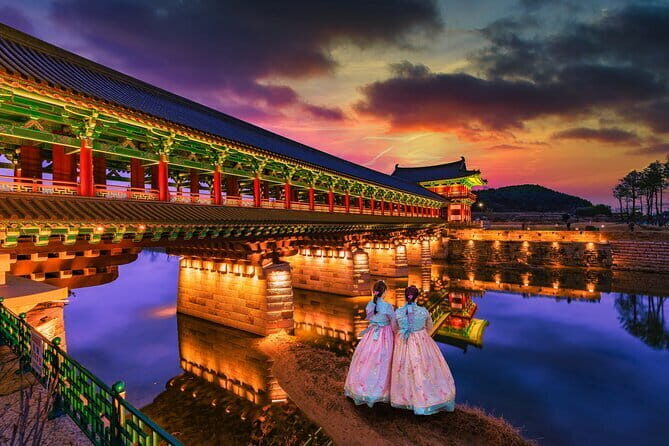
- Donggung Palace and Wolji Pond plus Woljeonggyo Bridge to close the day with evening atmosphere
- English/Chinese speaking staff and a group that maxes at 43 people, helped along by air-conditioned transport
Silla history all in one place (Gyeongju’s the reason)
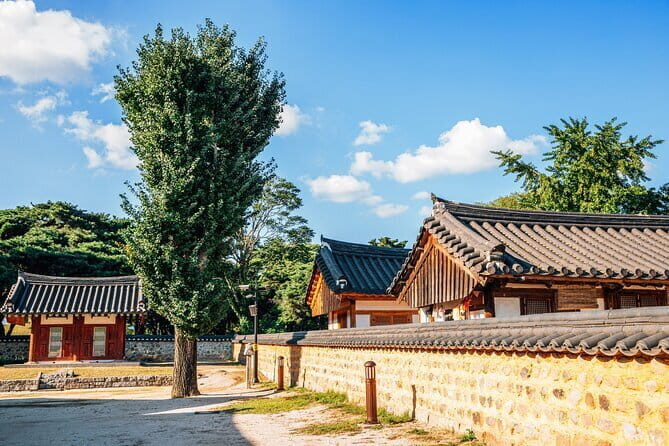
If you want Korean history that feels tangible, Gyeongju is hard to beat. This is where the Silla kingdom shaped everyday landscapes for centuries, and you can still see it in temples, tombs, and the way the city spreads around old sites.
What makes this tour a good fit is the way it covers the full arc of Silla storytelling: sacred architecture in the morning, royal power in the middle, and poetic palace-pond scenes at the end of the day.
And you’re not doing it alone. The guides come with solid context, and the reviews you’ll hear again and again point to guides who explain the why behind what you’re looking at—so the stops connect instead of feeling like random sightseeing pins.
You can also read our reviews of more guided tours in Busan
Bulguksa Temple: UNESCO calm, Silla-era stone, and free entry
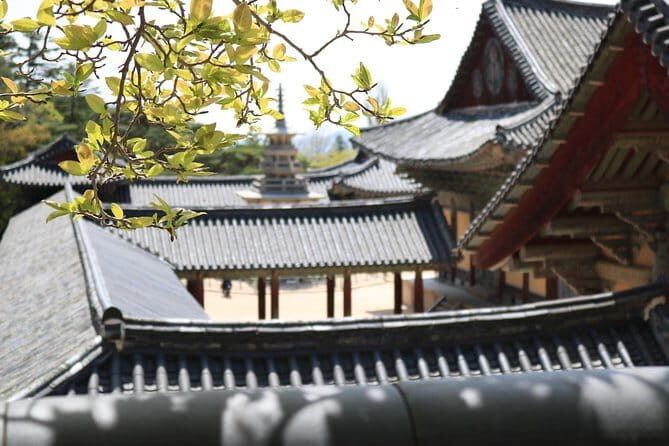
Bulguksa Temple is the day’s first big anchor, and it’s famous for a reason. You’ll be there for about 2 hours 20 minutes, with the admission ticket listed as free. The complex traces back to the 8th century, so even when you’re standing in the present, you’re surrounded by Silla-era architectural ideas.
Here’s how I’d use your time. Don’t just take the wide shots. Pause near the major halls and stone details long enough to spot repeating patterns and craftsmanship. This is the kind of place where a little attention pays off fast—especially if you’re learning what makes Buddhist architecture feel distinct in Korea.
A strong guide matters here, too. People often credit guides like Lucy, Kelvin, and Bobby Kim for making the temple feel understandable instead of overwhelming. When someone explains what you’re seeing at each step, you get more than photos—you get meaning.
Gyochon Traditional Village: hanok life and crafts, without the rush
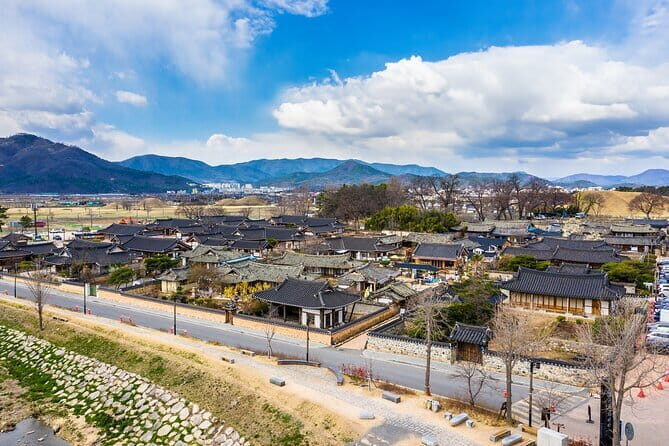
After Bulguksa, you shift gears to daily life in the past. Gyeongju Gyochon Traditional Village centers around the Choi clan, a family known for carrying influence across 12 generations and producing major figures over time. The tour time here is about 1 hour 40 minutes, and admission is free.
This stop is great if you like atmosphere. You’ll get the feel of hanok houses—traditional Korean homes—and you can look for crafts and small touches that show how people lived rather than just how kings ruled.
Practical tip: if you like browsing and photos, this is one of your best bets for slowing down. The time window is long enough to move at your pace, and the admission is free, so you can spend more energy on observing than deciding what to pay for.
Daereungwon Tomb Complex: 23 royal tombs, and a scale you can feel
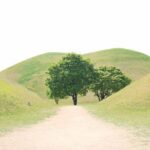
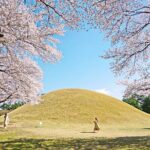
Daereungwon—also called the Park of Royal Tombs—is where the day really leans into Silla power. You’ll have about 50 minutes, and admission is free. The complex contains 23 royal tombs built during the Silla dynasty.
This kind of site can be tricky if you only see it through headlines. The tombs are spread out enough that your brain wants a simple story. A good guide helps you connect what you’re seeing to what Silla royalty represented—status, belief, and long-term legacy. That’s why the guide mentions in the reviews matter: many people highlight how guides kept the day interesting and explained the places clearly, including at Daereungwon.
What I recommend as a visitor: keep your pace steady. Take a moment at each major tomb before moving on. The value here is in noticing how the grounds are organized and how the site design supports walking and looking rather than sprinting.
Hwangnidan-gil Street: old meets trendy coffee and street bites
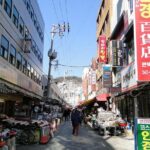
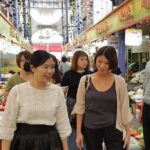
Right by Daereungwon, you’ll find Hwangnidan-gil Street. This is the modern side of Gyeongju—trending hotspots, hanok-style cafés, and street food options. Your time here is about 1 hour, and admission is free.
This is also where the tour becomes more flexible for you. The official program moves on schedule, but Hwangnidan-gil gives you space to choose. You can graze on street snacks, sip coffee in a traditional setting, and break up the heavy history with something easier on your feet and stomach.
Because meals aren’t included on the tour, this is a realistic place to handle your own food needs. Plan on using this stop for lunch or at least a proper snack run, depending on your hunger and the day’s timing.
You can also read our reviews of more historical tours in Busan

Donggung Palace and Wolji Pond: Silla calm with nighttime mood
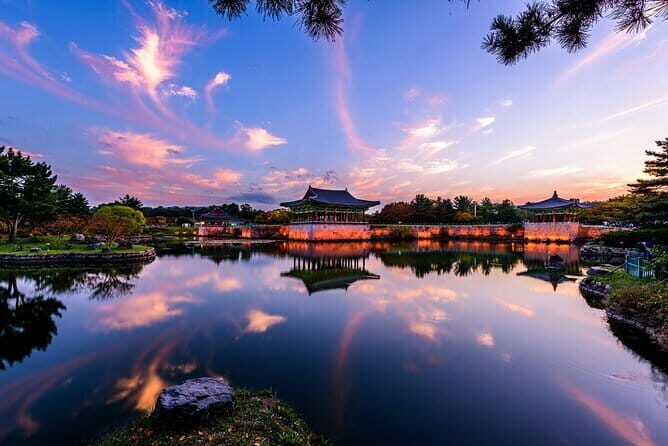
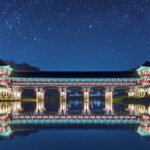
As the day turns toward evening, you’ll reach one of Gyeongju’s most atmospheric scenes: Donggung Palace and Wolji Pond. The tour time here is about 40 minutes, and admission is included.
Wolji Pond is an artificial pond in Gyeongju National Park, first constructed in 674. In the 1970s, the pond was temporarily drained, which revealed thousands of Silla artifacts that had fallen into the lake area over time. Even if you don’t memorize every date, it helps you see why the pond matters: it’s not just scenic. It carries a history of what got preserved—accidentally, through time.
This is the part of the day that feels easiest to enjoy even if you’re not a hardcore history buff. The guide’s job is to connect you back to the bigger Silla picture while you’re standing in a place that naturally invites quiet looking.
Woljeonggyo Bridge: a final walk with illuminated atmosphere

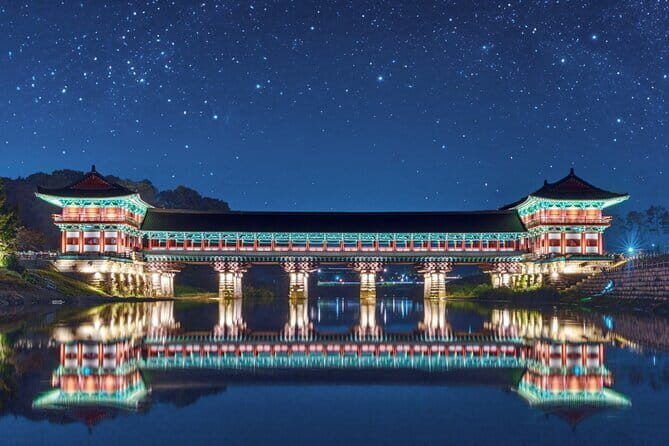
To close, you’ll do a scenic walk across Woljeonggyo Bridge. The time here is about 20 minutes, and admission is free.
This bridge has a long history and features stone arches, spanning the Woljeongcheon Stream. It’s a classic way to finish a Gyeongju day because it gives you a view that combines engineering, setting, and evening light. In other words, you get an emotional landing after the tombs and temple stones.
If you’re someone who likes “last photos that actually feel like a memory,” this is where you’ll want your camera ready. Don’t rush it. Give yourself a minute to look before moving on, even if the group keeps walking.
Getting from Busan: smooth transport, long day reality
The tour includes transport by an air-conditioned van/coach, and travel time between stops is built into the full 10 to 11 hours duration. The itinerary is described as subject to traffic and weather, which is normal for a route that depends on city timing and daylight.
A few things to keep in mind:
- Expect a full day where you’ll be on the move most of the time.
- Wear shoes you’re happy to walk in. Even “short” stops add up over hours.
- If you’re sensitive to long bus rides, plan a simple routine: water, a light snack (if you want), and a bit of flexibility for breaks.
The group size cap at 43 travelers is also worth noting. It’s not a tiny private tour, so you’ll follow the guide’s pacing. But it’s large enough to feel lively, while still manageable if the guide is good at keeping everyone together.
Price and value: what $64 covers, and the part you’ll pay for yourself
At $64 per person, this tour is priced in a way that makes sense if you want a guided day without individually organizing transport and admissions. Here’s the value math in plain terms:
Included:
- English/Chinese speaking staff
- Transport by air-conditioned van/coach
- Donggung & Wolji admission fees
Not included:
- Meals
- Personal expenses
- Travel insurance
What’s especially good for value is that multiple stops list free admission—including Bulguksa, Gyochon Traditional Village, Daereungwon Tomb Complex, Hwangnidan-gil Street, and Woljeonggyo Bridge. So you’re not paying extra on-site all day.
The only meaningful admission cost you’re handed is Donggung and Wolji, and that’s already included. That’s a helpful setup if you want to budget calmly and keep the day simple.
Who this tour suits best (and who might prefer something else)
This is a strong choice if you want:
- A single, guided day focused on Silla-era sites
- A schedule that covers the big visual hits without you planning each stop
- Guides who clearly explain what you’re seeing, not just point and move
You’ll likely be happiest if you enjoy history but also like the balance of temple, tombs, and evening scenery. The mix works because it alternates between places that demand attention (architecture and tombs) and places that feel easier to enjoy (street food, cafés, and pond-and-bridge mood).
This might be less ideal if you:
- Want a fully independent pace with zero group constraints
- Don’t handle long travel days well
- Prefer meals to be included rather than planned by yourself
Should you book Echoes of Silla Gyeongju from Busan?
I’d book it if you’re the type who wants your guide doing the connecting. The biggest selling point isn’t just the famous sites—it’s that the day stays coherent. Guides like Lucy, Bobby Kim, Amy, Sophie, and Juna are repeatedly described as informative and engaging, and that matters most at historical sites where it’s easy to miss the point.
Also, the mix of free-entry stops plus included Donggung & Wolji keeps your costs predictable. And the ending—Woljeonggyo Bridge at night—gives you a satisfying wrap-up that feels made for photos and slow walking.
If you’re okay with a long day and you’re willing to manage your own meals, this tour is a practical, good-value way to experience what makes Gyeongju feel like a living museum of Silla Korea.
FAQ
How long is the Echoes of Silla day tour from Busan?
The tour runs about 10 to 11 hours, with travel time between stops included.
What’s the price per person?
The price is $64.00 per person.
What’s included in the tour price?
You get English/Chinese speaking staff, transport by air-conditioned van/coach, and admission fees for Donggung & Wolji.
Are meals included?
No. Meals are not included, so you’ll want to plan your own lunch or snacks during the day.
Which entrance fees are free during the tour?
Bulguksa Temple, Gyochon Traditional Village, Daereungwon Tomb Complex, Hwangnidan-gil Street, and Woljeonggyo Bridge are listed as free.
Will I need a paper ticket?
No. The tour uses a mobile ticket.
How large is the group?
The tour has a maximum group size of 43 travelers.
What is the cancellation window?
You can cancel for a full refund up to 24 hours in advance of the experience’s start time. If you cancel less than 24 hours before, the amount paid isn’t refunded.
If you tell me your travel month and whether you prefer more food time or more temple/tomb time, I can suggest where to budget your meals during the day.