REVIEW · SEOUL
Gwangjang market Netflix Food Walking Tour with Insadong
Book on Viator →Operated by S.A. Tour · Bookable on Viator
Seoul tastes better on foot, and this walk connects old neighborhoods to market-day cravings. You’ll trace Insa-dong’s arts lane, walk the Ikseon-dong alley zone, then finish with classic street food at Gwangjang Market.
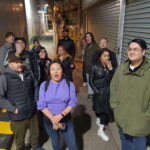
What I especially like: you get an English-speaking guide who brings the places to life with neighborhood history, not just directions. You also leave with multiple included food tastings (think honey dessert, fish-cake, mung-bean pancake, and Korean rice wine), so you can sample without the constant decision-making.
One consideration: it’s weather-dependent. If it’s canceled because conditions are poor, you’ll need to pick another date or go for a full refund.
In This Review
- Key highlights worth your time
- Why this Insadong + Gwangjang walking combo works
- Meeting at Anguk Station and keeping your first steps easy
- Insa-dong Culture Avenue: where crafts and tea shops set the tone
- What to look for (without overthinking it)
- Potential drawback in this part
- Ikseon-dong Alley: the old hanok vibe meets today’s cafés
- Practical tip for this section
- Gwangjang Market: eating your way through a market that started in 1905
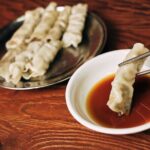
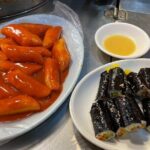
- Street food you can expect from the included tastings
- A realistic way to think about “included food”
- Weather note that matters at the market
- The guide factor: what Alan Han adds to the experience
- Timing and pacing: about 3 hours, split into two strong blocks
- Price and value: is $48.60 a good deal?
- What kind of traveler should book this?
- Should you book the Gwangjang Market + Insa-dong food walk?
- FAQ
- Where does the tour start and where does it end?
- How long is the tour?
- What food is included in the tour?
- Is there any extra spending required?
- How big is the group?
- What if the weather is bad?
Key highlights worth your time
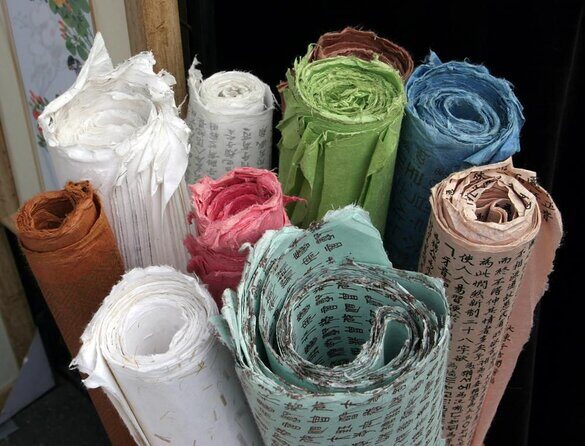
- Insa-dong Culture Avenue: traditional shops, tea houses, and art galleries in the heart of Seoul
- Ikseon-dong Alley stories: how the old hanok setting fits today’s café culture
- Gwangjang Market since 1905: a century-plus market where you eat what locals eat
- 3–5 street food tastings included: plus fish-cake, mung-bean pancake, and honey dessert
- Small group (max 10): easier questions and more guide attention
- Start at Anguk Station: simple meet-up point for public-transport riders
Why this Insadong + Gwangjang walking combo works
This tour is built around two parts of Seoul that feel different the moment you step into them. Insa-dong gives you the cultural front door: arts, crafts, traditional tea stops, and shop windows full of handmade details. Then Gwangjang Market flips the mood toward everyday life—food stalls, textiles, and the kind of eating that’s more habit than attraction.
What makes the format smart is the pacing. It’s about 3 hours, with time set aside for both neighborhoods. That means you’re not rushing through a highlight reel. You’re walking, reading the street signs and shop styles as you go, and you’re getting served food along the way instead of waiting until the end.
The small group size (up to 10) is also a big deal. On a busy market day, you can move as a group without feeling like you’re stuck behind a crowd. It also makes it easier to ask practical questions—like what something is, when it’s popular, or why it shows up at a market like this.
You can also read our reviews of more walking tours in Seoul
Meeting at Anguk Station and keeping your first steps easy
You start at Anguk Station in Seoul and finish at Gwangjang Market (88 Changgyeonggung-ro, Jongno District). Starting at a station helps because you don’t need a complicated taxi plan. The tour is also described as near public transportation, which matters in Seoul, where transit can be the fastest option.
The start time is 3:00 pm. That’s a nice sweet spot for a walking tour. You’re usually past the midday heat peak, but you’re still likely to catch the markets and shops in full swing. If you’re the type who likes to photograph storefronts, paper goods, and alley angles, late afternoon light tends to treat you well.
You’ll also get a mobile ticket, which reduces the fuss of paper vouchers and last-minute searching. Just keep the ticket ready on your phone at the meet-up.
Insa-dong Culture Avenue: where crafts and tea shops set the tone
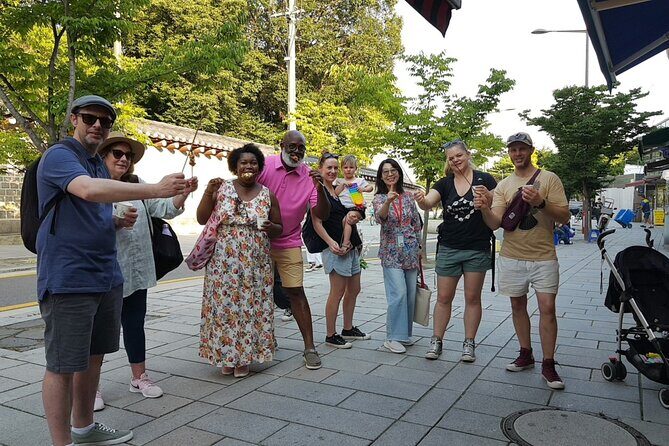
Insa-dong is one of those neighborhoods where the details do a lot of the talking. This area is known for traditional Korean architecture, plus art galleries, handicraft shops, tea houses, and traditional Korean restaurants. Even if you don’t buy anything, it’s the kind of place where you can slow down and read the craftsmanship—because many shop displays are built around the idea of handmade work.
Here’s what I think you’ll get out of the first stop: context. It’s not just wandering. The guide explains why Insa-dong matters as a center for Korean culture, and you’ll see that reflected in the types of stores that cluster along the streets. You’ll likely notice how the neighborhood blends traditional and contemporary touches—old-style spaces next to newer art galleries and boutiques.
What to look for (without overthinking it)
Focus on the everyday craft items: paper goods, pottery, calligraphy-related tools, and small handmade objects. That’s where Insa-dong’s identity shows up fast. Also, tea houses are part of the landscape here—so even if you don’t stop for a drink, you’ll understand how tea culture fits into the broader cultural feel of the area.
Potential drawback in this part
If you’re hoping for a single “must-see” building, this stop is more of a slow neighborhood experience than a single landmark visit. The value is in the streets, shops, and stories, not in ticking off one big attraction.
You can also read our reviews of more food & drink experiences in Seoul
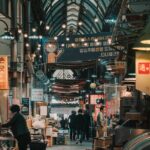
Ikseon-dong Alley: the old hanok vibe meets today’s cafés
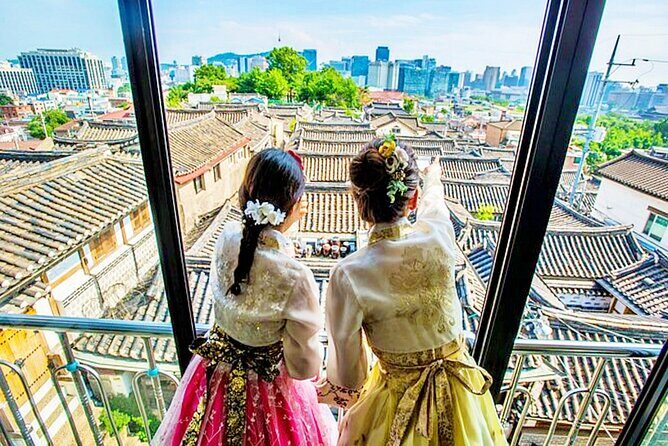
Between Insa-dong and the market zone, you’ll explore Ikseon-dong Alley. This is described as a place where past and present coexist in narrow alleys, with traditional hanok houses alongside trendy cafés.
Why this matters: Ikseon-dong is a good example of how Seoul reuses space. You get to see how a traditional housing style can live next to modern food and coffee culture. It’s not a museum feeling. It’s more like “this is what daily life looks like when the past is still present.”
The guide’s stories add fuel here, too. You’ll hear history and why the area resurged as a hip cultural destination. That turns what could be just a photo walk into something you can actually place in time.
Practical tip for this section
Wear comfortable shoes. Alley streets in this part of Seoul tend to be tight, and you’ll want to keep moving without feeling like your feet are paying the price for good photos.
Gwangjang Market: eating your way through a market that started in 1905
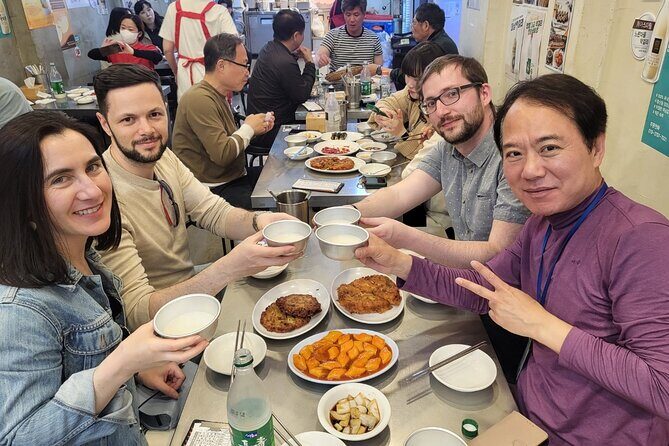
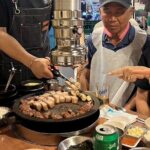
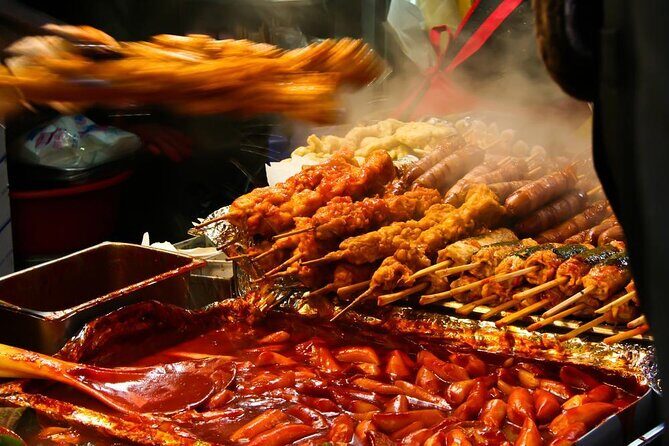
Then you hit Gwangjang Market, and the energy shifts. This market is in Jongno-gu and has been in operation since 1905—so you’re walking through a place with serious staying power.
What I like about building the tour around Gwangjang is that the “market” isn’t just treated as a food stop. It’s also tied to other parts of Korean daily life, including textiles and handmade goods. Even if food is the main event for you, the market stalls make the neighborhood feel like a real system, not a stage set.
Street food you can expect from the included tastings
The tour includes multiple tastings—described as 3–5 kinds of street food tasting—plus specific items:
- Fish-cake
- Mung-bean pancake (bindaetteok)
- Honey dessert
- Korean rice wine
That mix is clever. Fish-cake and bindaetteok give you savory hits that many people associate with Korean market food, while honey dessert and rice wine round out the experience with sweetness and a traditional drink pairing.
You’ll also hear how this stop connects to 1990s Korean local life and history, which is a helpful lens. It gives meaning to what you’re seeing, and it explains why some flavors and shopping habits feel familiar even when you’re in a different country.
A realistic way to think about “included food”
Because these items are included, you can treat this like a guided sampling menu. But keep in mind that other personal consumption isn’t included. If you’re a big eater, it can be worth setting a rough budget in your head for any extra snacks, drinks, or shopping you decide to do after the included tastings.
Weather note that matters at the market
Gwangjang is still a walk. So if rain hits, you’ll still be moving. The experience is described as weather-dependent, and the tour notes it requires good weather. Still, the experience has a track record of carrying on when conditions change—so having a rain plan in your daypack can make the difference between annoyed and fine.
The guide factor: what Alan Han adds to the experience
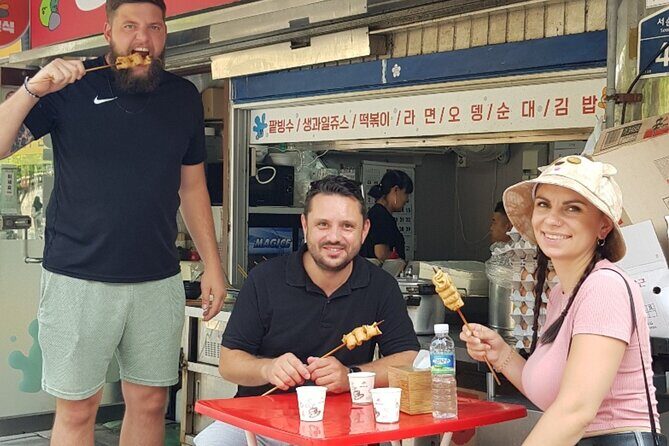
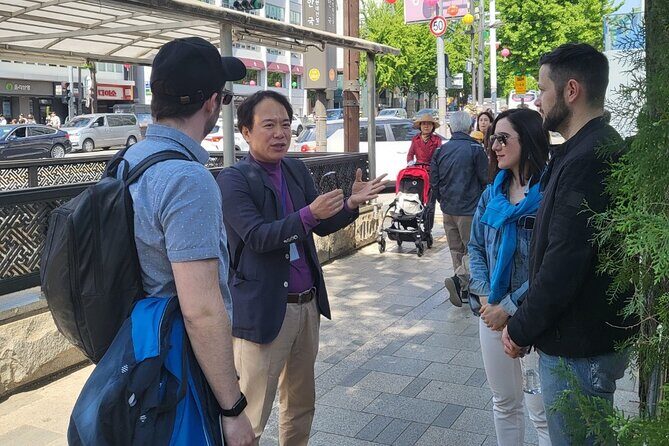
A big reason this tour scores well is the guide’s communication style. In particular, Alan Han is mentioned as personable and knowledgeable, and the tour emphasizes a professional English-speaking guide.
In practical terms, a good guide helps you answer three problems that walking tours often create:
- What am I looking at?
- Why does this matter?
- What should I do next so I don’t miss something?
This tour is designed to handle all three. You’ll get history and neighborhood stories for Insa-dong and Ikseon-dong, then you’ll get market context right where you’re tasting food at Gwangjang. That sequencing keeps your attention locked in instead of scattering it across unrelated stops.
Also, the group size (max 10) helps the guide give more personal attention. That’s where your questions get answered without feeling like you’re holding up a train of people.
Timing and pacing: about 3 hours, split into two strong blocks
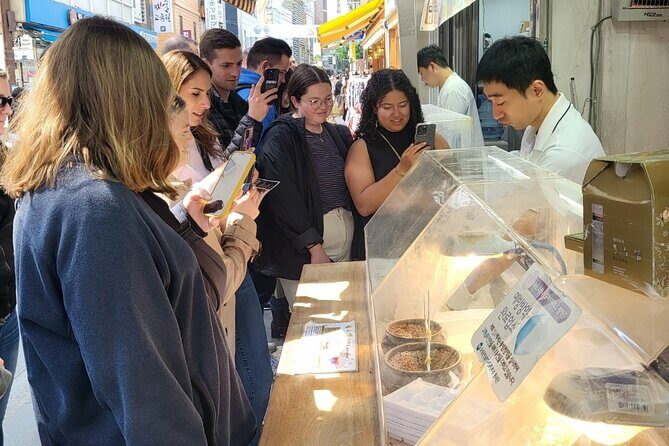
The tour is about 3 hours total, with about 1 hour 30 minutes for Insa-dong and about 1 hour 30 minutes for Gwangjang Market. That split works because both sections have different “jobs.”
Insa-dong is about culture cues—architecture, crafts, art galleries, tea houses, and why it became a cultural center. Ikseon-dong adds an in-between texture with narrow alleys and hanok-meets-cafés storytelling. Then Gwangjang Market is where you cash in on the day with street food tastings and market life dating back to the early 1900s.
This isn’t a full-day food crawl. It’s a focused, guided “taste plus context” format. If you like structure but still want to wander a little, it’s a good middle ground.
Price and value: is $48.60 a good deal?
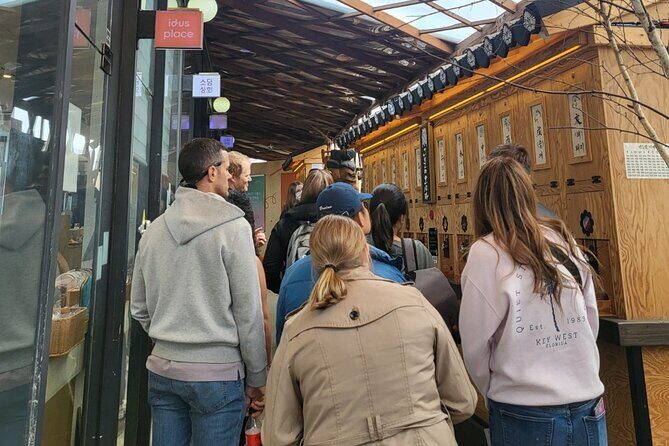
At $48.60 per person, you’re paying for four things that add up quickly on your own:
- A professional English-speaking guide
- Time in two neighborhoods with historical storytelling
- 3–5 street food tastings
- Named included items: fish-cake, mung-bean pancake, honey dessert, and Korean rice wine
If you’ve ever tried to piece together a market food day alone, you know the hidden costs: multiple snack stops, time lost asking staff for English explanations, and the risk of buying the wrong thing because you’re guessing. This tour reduces that guesswork by making the tastings part of the plan.
You’ll still likely spend money for anything beyond the included items, since other personal consumption isn’t included. But compared to paying for everything à la carte, this is a tidy way to sample key flavors without turning your afternoon into a finance spreadsheet.
What kind of traveler should book this?
This tour is a great fit if you want Seoul that feels lived-in, not just photographed. It suits you if:
- You enjoy street food but also care about what it means in local life
- You want a guided explanation so you can navigate the neighborhoods with confidence
- You prefer smaller groups (max 10) for questions and slower pacing
- You’re starting your Seoul trip and want an efficient way to understand the neighborhoods around central areas
It might be less ideal if you’re only interested in one “big headline” attraction. This is about culture streets and market eating, not a single landmark photo stop.
Should you book the Gwangjang Market + Insa-dong food walk?
Yes, I’d book it if your goal is a guided neighborhood experience with real food built in. The biggest win is the combo: Insa-dong for cultural framing, Ikseon-dong for the old-and-new contrast, and Gwangjang for the long-running market experience with multiple included tastings.
Also, you get real value from the guide. The tour’s success is tied to a personable, patient approach—especially helpful on hot days or when rain changes your plans. If you like learning while you eat, this one fits your style.
FAQ
Where does the tour start and where does it end?
It starts at Anguk Station in Seoul and ends at Gwangjang Market at 88 Changgyeonggung-ro, Jongno District, Seoul.
How long is the tour?
The tour lasts about 3 hours total, with around 1 hour 30 minutes for Insa-dong and around 1 hour 30 minutes for Gwangjang Market.
What food is included in the tour?
The tour includes 3–5 kinds of street food tasting, plus honey dessert, fish-cake, mung-bean pancake, and Korean rice wine.
Is there any extra spending required?
Other personal consumption is not included, so any food or drinks you buy beyond the included tastings would be on your own.
How big is the group?
The tour has a maximum group size of 10 travelers.
What if the weather is bad?
The experience requires good weather. If it’s canceled due to poor weather, you’ll be offered a different date or a full refund.
If you’d like, tell me your travel month and whether you prefer spicy food or milder options, and I’ll suggest how to plan your evening around this 3:00 pm start.