REVIEW · SEOUL
Seoul: Gyeongbok Palace and Bukchon Hanok Walking Tour
Book on GetYourGuide →Operated by Korea Linx · Bookable on GetYourGuide
Palace guards and hanok alleys in three hours. I love the way the guide turns palace sights into real stories, and I love catching the changing ceremony vibe at Gyeongbokgung before the crowds move in. The one catch is you will do a fair amount of walking and standing, including some uphill in Bukchon.
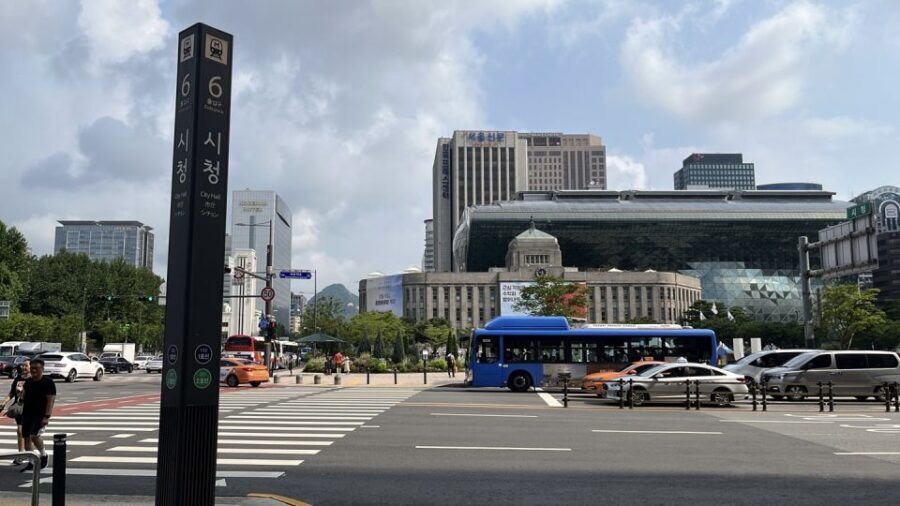
You’ll start at City Hall Station (Exit 6), right by The Plaza, then head toward Gyeongbokgung on foot with a small group capped at 8 people. That size matters in Seoul: you can actually hear your guide, ask questions, and keep up without feeling like you’re in a human conga line.
This is also a practical tour. You’ll learn how public transport works in Korea, plus local etiquette that makes hopping on trains and buses easier on the rest of your trip, and the morning ends near Insadong where you can shop and snack while it’s still early.
In This Review
- Key things I’d watch for on this Seoul morning tour
- City Hall start to Gyeongbokgung palace: how this tour gets you oriented fast
- Gyeongbokgung Palace and the royal guards ceremony: the moment it clicks
- National Folk Museum of Korea inside the palace: what 98,000 artifacts teach you
- Bukchon Hanok Village and Samcheongdong Alley: the old-and-new Seoul mix
- The Insadong finish: a smart place to keep exploring on your own
- Price and value: why $88 for a 3-hour morning can make sense
- Guides and group size: what the best mornings have in common
- What to bring (and what will make this tour easier)
- Who should book this Seoul palace and hanok walk
- Should you book it? My quick decision guide
- FAQ
- Where is the meeting point for the tour?
- How long is the tour?
- Is Gyeongbokgung entrance included in the price?
- Do I need hotel pickup or drop-off?
- Is the tour offered in English?
- How large is the group?
- What should I bring for the walk?
- What should I expect if weather is bad?
- Are there free cancellation options?
Key things I’d watch for on this Seoul morning tour
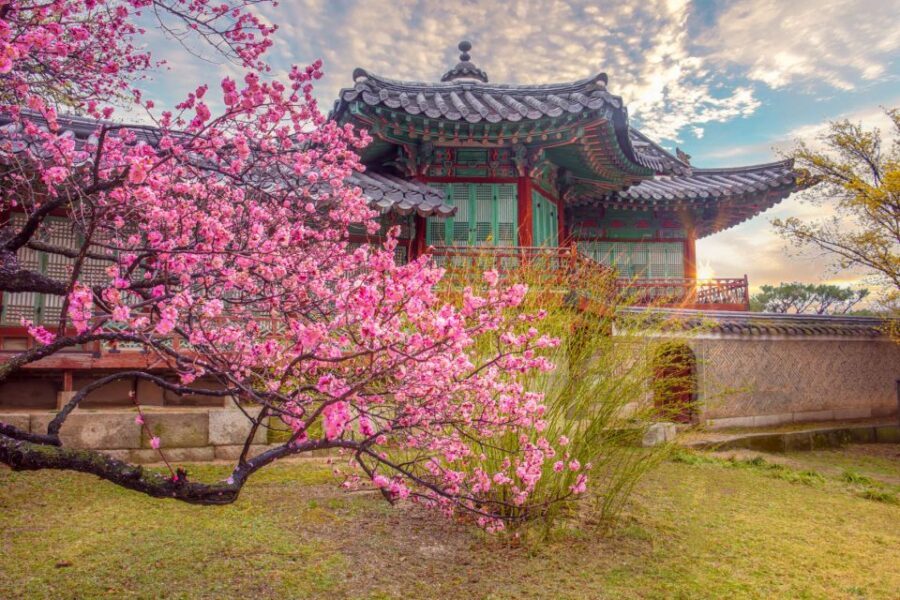
- The guard ceremony at Gyeongbokgung sets the tone fast, with the palace looking its best early.
- National Folk Museum of Korea inside the palace gives context, not just photos.
- Bukchon’s Samcheongdong Alley walk shows the mix of old houses and modern Seoul.
- Small-group pace (8 people max) helps you actually process what you’re seeing.
- Public-transport tips from your guide can save you time later in the city.
- Insadong finish point makes it easy to continue on your own for souvenirs and tea.
City Hall start to Gyeongbokgung palace: how this tour gets you oriented fast
This tour is built for mornings, when Seoul still feels manageable and your legs don’t hate you yet. You meet at City Hall Station Exit 6, outside, next to The Plaza hotel. It’s a great starting point because the area is well connected, so even if you decide to branch off later, you’re not stuck.
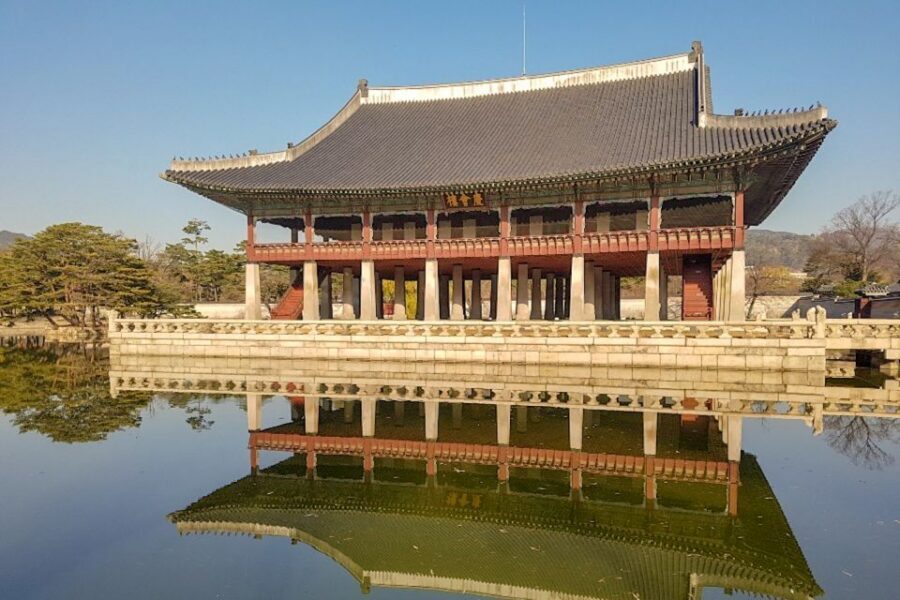
From there, you walk to Gyeongbokgung Palace. The value here isn’t just the route. It’s the way the guide frames the geography of Seoul—where power sat centuries ago, how streets and neighborhoods grew, and why certain places still feel special even surrounded by big-city life. If you’re arriving with only a rough mental map, this tour helps you build one quickly.
Another practical win: the tour regularly covers transit basics. The point isn’t to turn you into a transit expert in 3 hours. It’s to help you avoid the awkward first-day mistakes like getting on the wrong train direction or feeling unsure about basic etiquette.
You can also read our reviews of more walking tours in Seoul
Gyeongbokgung Palace and the royal guards ceremony: the moment it clicks
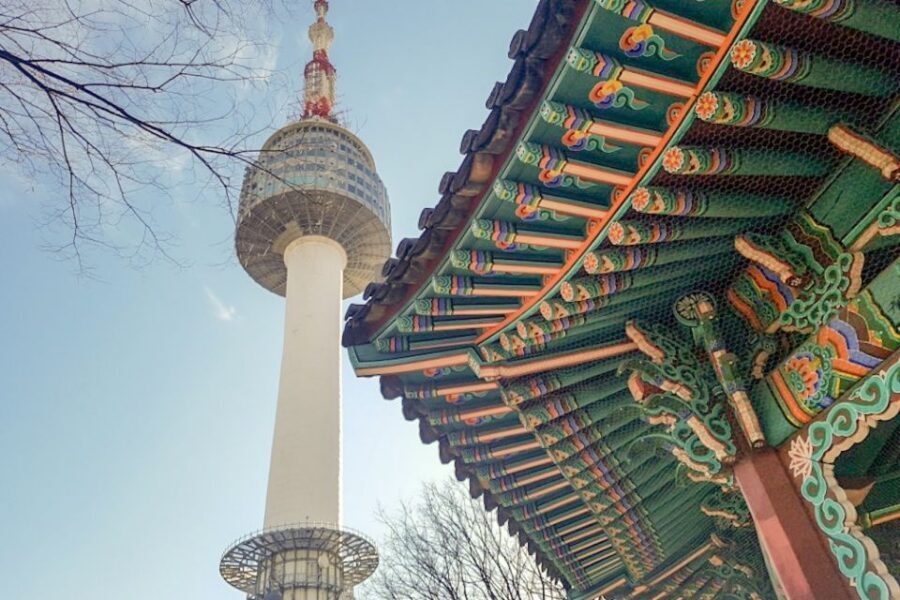
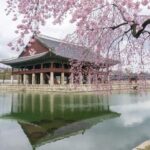
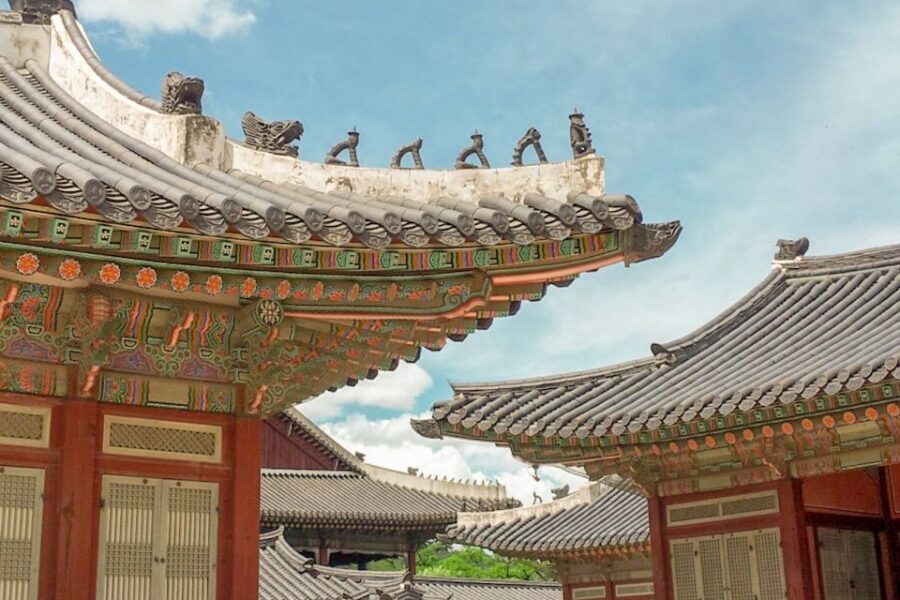
Gyeongbokgung is one of those places where your brain needs context. Left on your own, you’ll enjoy the architecture, sure. With a guide, you start noticing how the palace was designed for ceremony and rule—not just sightseeing.
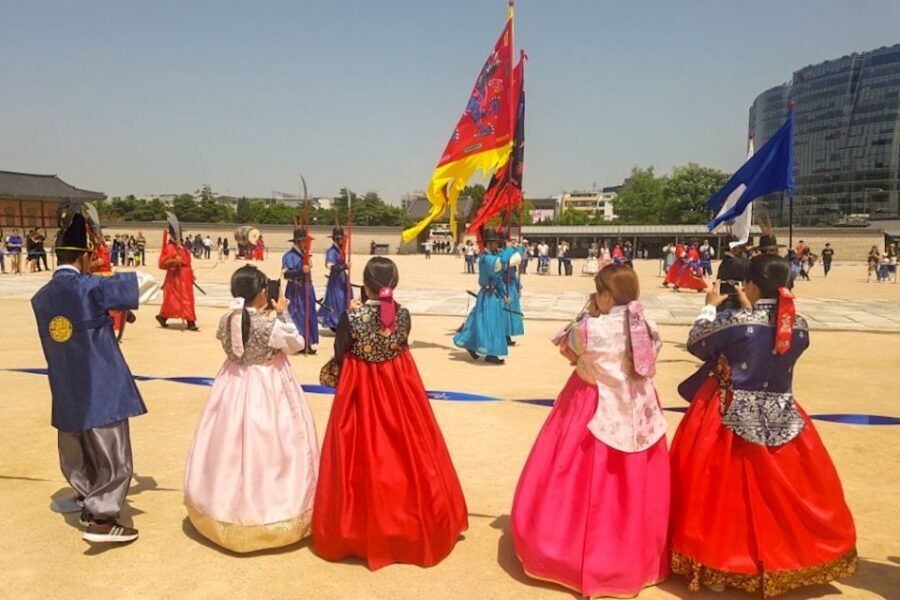
A major highlight is the changing ceremony of the royal guards. It’s a theatrical moment, but it’s also a history lesson with uniforms, timing, and ritual. Watching it with an explanation makes it feel less like a performance and more like a snapshot of how Joseon-era court life functioned day-to-day.
What I like about this part of the morning is pacing. You’re arriving early enough to see the palace atmosphere before it becomes a blur of camera shutters. Also, your guide usually points out what to pay attention to—doors, courtyards, layout choices—so you leave with a mental picture, not just a collection of pretty angles.
National Folk Museum of Korea inside the palace: what 98,000 artifacts teach you
Right in the palace grounds, you stop at the National Folk Museum of Korea. The headline is big—over 98,000 artifacts—but the real value is how the guide helps you understand what those objects mean for everyday life during the Joseon dynasty.
Instead of treating history like trivia, this stop helps connect the dots: what people wore, how they lived, what mattered, and how culture showed up in practical choices. Even if you only remember a few key points, you’ll notice them later when you see hanok houses, court-style design, and neighborhood layouts.
The museum also gives you a useful rhythm break. Walking-heavy tours can fatigue you fast. A museum stop gives you a chance to slow down, look more carefully, and reset your brain before the hanok portion of the morning.
Bukchon Hanok Village and Samcheongdong Alley: the old-and-new Seoul mix
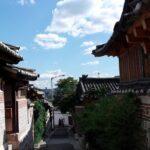
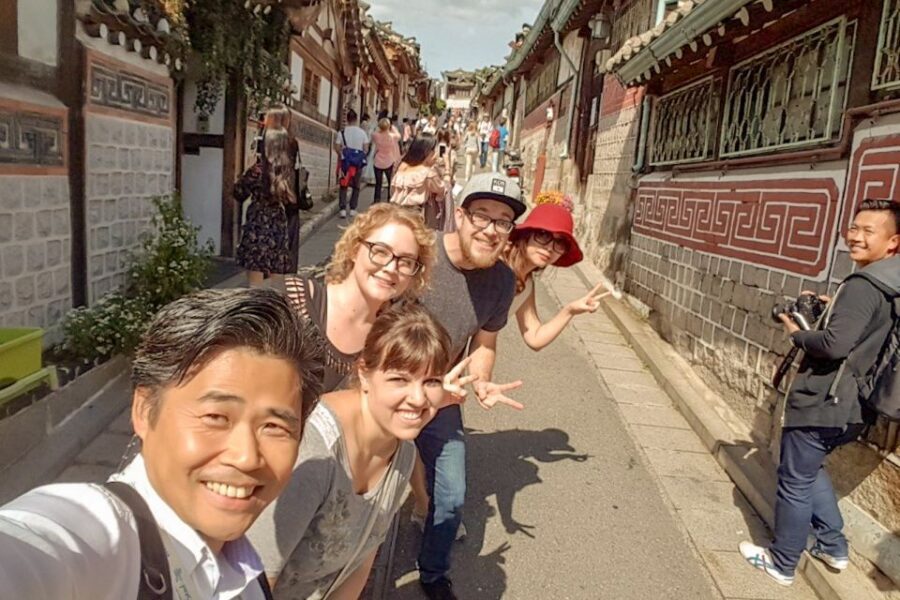
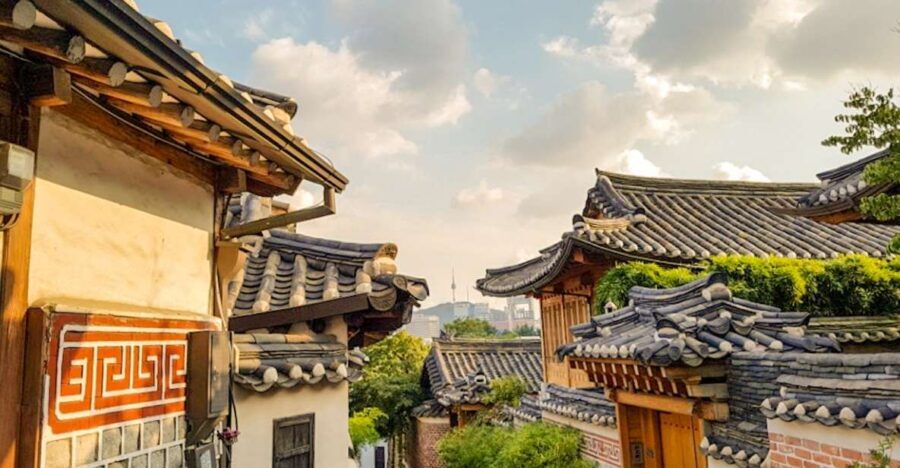
After the palace, you head to Bukchon Hanok Village. This is where Seoul stops feeling like a modern city and starts feeling like a layered one—old residences, narrow lanes, and a neighborhood that still has a living feel.
Your walking route includes Samcheongdong Alley, known for its traditional lane layout and classic views. The “wow” isn’t only the buildings. It’s the scale of the streets. They’re tight, they curve, and they make you slow down naturally. That’s when you start noticing details you’d skip on your own, like how buildings face the lane and how everyday movement shaped the neighborhood.
One thing to plan for: this part involves more effort. Some routes include stairs or uphill patches, and you’ll be standing to photograph at spots. Comfortable shoes aren’t optional here—they’re the difference between enjoying the views and turning the trip into a foot-race.
Still, this is exactly why the tour works. The palace gives you Joseon-era “big picture.” Bukchon shows the “human scale”—how people actually lived in traditional spaces and how that legacy fits into a city that keeps growing.
The Insadong finish: a smart place to keep exploring on your own
The tour ends in the Insadong area, which is a practical finishing move. You’re not left stranded in a random corner. You’re dropped into a neighborhood that’s set up for continuing your day—souvenirs, shops, and places to grab a drink or snack.
Insadong is also helpful because it lets you turn your new context into better choices. When you understand what you saw at the palace and in Bukchon, you shop with your eyes open. You’ll be more likely to look for meaningful crafts rather than generic tourist items.
If you want photos, this is a good moment to ask your guide for targets before you split. A good guide usually knows which streets look best at that time of day and which lanes give you cleaner compositions without fighting crowds.



Price and value: why $88 for a 3-hour morning can make sense
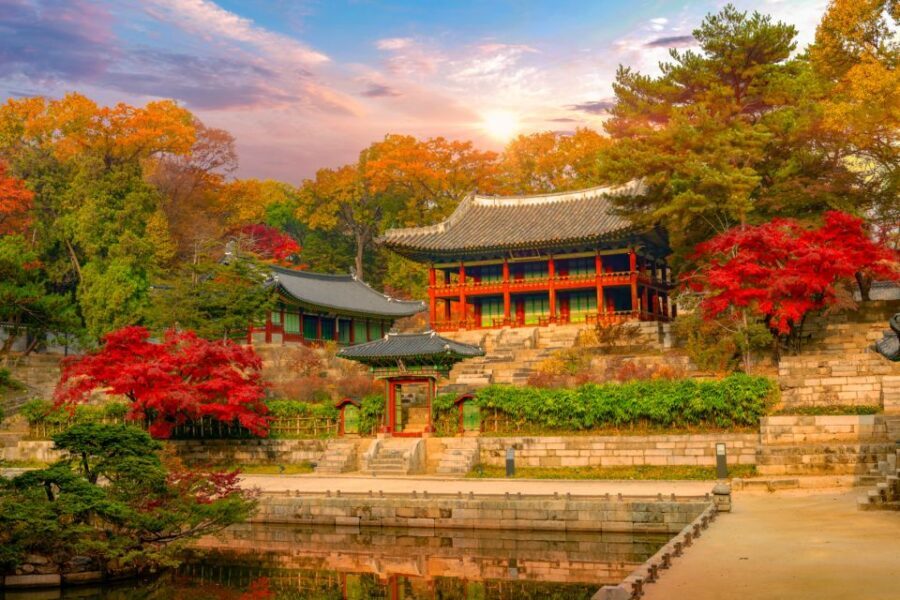
At $88 per person for about 3 hours, this isn’t the cheapest way to see Seoul’s top old-city highlights. But it often makes financial sense if you value time and clarity.
Here’s the value math that matters:
- Your ticket for Gyeongbokgung Palace entrance is included.
- You get a live English-speaking guide (small group, up to 8).
- You’re covering multiple major zones in one morning—palace grounds, museum time, then Bukchon lanes—without having to plan transit and timing on your own.
Where tours like this pay off is understanding. You’re paying to avoid the “I saw it, but I don’t know what I’m looking at” feeling. Guides can also help with the rhythm of the day—where to stand, when to move, and what to focus on—so you don’t waste the best light and the most interesting moments.
If you already love independent travel and you’re comfortable using Seoul transit solo, you could do parts on your own. If you want your first Seoul day to feel smoother and make better sense, this price can feel fair.
Guides and group size: what the best mornings have in common
This is a small group tour (8 participants max), and that changes the experience. With fewer people, your guide can adjust pace, answer questions, and explain details without shouting.
The names vary by day, but the pattern is consistent. Guides like Stella and Joe are often praised for clear explanations and keeping things fun, even when conditions are rough. You might meet Jay Kim, known for connecting history to present-day life. Other guides mentioned include Kay and Jae, with a style that mixes storytelling and practical tips—like photo spots and how to move through areas efficiently.
A quick reality check: since the tour includes public transport guidance, a small group also means you’ll likely get more direct help. That can matter if you’re new to Seoul and want to feel confident beyond this morning.
What to bring (and what will make this tour easier)
The tour is short, but it’s active. Plan like you’re doing a morning workout with cultural homework.
Bring:
- Comfortable shoes (Bukchon can involve uphill walking)
- Comfortable clothes (weather can shift fast)
Also, I’d pack a basic travel kit: water, a light layer, and your phone with offline maps. The itinerary can shift based on weather and traffic, so having flexible navigation habits helps you stay calm if the route adjusts.
Who should book this Seoul palace and hanok walk
This tour is a strong fit if:
- You’re in Seoul for a limited time and want a high-impact morning.
- You like learning how history connects to what you see today.
- You prefer walking with a guide rather than hopping between stops alone.
- You want practical help using Korea’s public transport early in your trip.
It’s also a good choice for solo travelers. Several guides have created one-on-one or close-to-one-on-one experiences on quieter days, which can feel extra personal for first-timers.
If you hate walking, or if you expect a fully seated museum-and-transport day, this likely won’t fit your style. This is built around moving through places and standing for key moments.
Should you book it? My quick decision guide
Book it if you want a focused morning that connects Gyeongbokgung to Bukchon instead of treating them as two unrelated photo stops. The combination of ceremony viewing, museum context, and neighborhood walking makes it easier to understand Seoul’s layers without spending a whole day planning.
Skip it if you’re already confident navigating independently and you don’t care much about historical context. In that case, you might be able to build a self-guided route at a lower cost.
FAQ
Where is the meeting point for the tour?
You meet at City Hall Station, Exit 6 (outside of the exit), right next to The Plaza hotel.
How long is the tour?
The tour lasts 3 hours.
Is Gyeongbokgung entrance included in the price?
Yes. The tour includes a Gyeongbokgung entrance ticket.
Do I need hotel pickup or drop-off?
No. Hotel pickup and drop-off are not included.
Is the tour offered in English?
Yes. The tour has a live guide in English.
How large is the group?
This is a small group limited to 8 participants.
What should I bring for the walk?
Wear comfortable shoes and comfortable clothes, since it’s a walking tour with time in and around palace areas and Bukchon lanes.
What should I expect if weather is bad?
The itinerary is subject to weather and traffic conditions, so some timing or routing may shift.
Are there free cancellation options?
Yes. You can cancel up to 24 hours in advance for a full refund.