REVIEW · SEOUL
Best Walking Tour to Gyeongbok Palace Bukchon Hanok Village
Book on Viator →Operated by Korealinx Corporation · Bookable on Viator
Palaces and hanok in one smart walk. This tour strings together the big sights—Gyeongbokgung Palace, the National Folk Museum, and Bukchon Hanok Village—so you’re not just looking, you’re learning how Seoul’s past fits its present. I really liked the friendly, professional guide style (people like Jay Kim and Stella are known for clear English and sharp detail), and I also love that entrance fees are included, so you can focus on the day instead of ticket math.
One possible drawback: it’s a solid walking route. You’ll hit steps and uphill sections in Bukchon, and the pace can feel tough if you have walking limitations.
In This Review
- Key things to love about this Gyeongbokgung to Bukchon walk
- How this 3-hour route helps you read Seoul fast
- Price and value: what $88 really buys you
- Where you start, where you finish, and why that matters
- Stop-by-stop: what to expect and what to watch for
- Starting theme: The past and the present (and the right mindset)
- King Sejong Statue: a quick landmark that sets the tone
- Gyeongbokgung Palace: royal ceremony and palace architecture you can actually read
- National Folk Museum of Korea: your shortcut through 98,000 artifacts
- Bukchon Hanok Village: hidden looks and the uphill reality
- Small group energy: less chaos, more questions
- What to wear and bring so the walk feels easy
- Who this tour is best for (and who should pick something else)
- Weather and timing: make the day work for you
- Final verdict: should you book this Gyeongbokgung and Bukchon tour?
- FAQ
- How long is the Gyeongbok Palace and Bukchon Hanok Village walking tour?
- What does the tour cost?
- Is the changing of the guard included?
- Are entrance fees included?
- Where does the tour start and end?
- How big is the group?
- Is it suitable if I have trouble walking on steps or uphill areas?
Key things to love about this Gyeongbokgung to Bukchon walk
- Royal guard changing ceremony at Gyeongbokgung for an iconic start to your history tour
- Entrance fees included so the price covers the hard parts of planning
- National Folk Museum of Korea with over 98,000 artifacts and a quick, guided way to make sense of them
- Bukchon Hanok Village stops inside the neighborhood, not just the main viewpoint spots
- Small group size (max 8) which usually means more questions and less getting lost
- Ends in Insadong, so you can roll right into cafés, shops, and street life
How this 3-hour route helps you read Seoul fast
If it’s your first time in Seoul, this is the kind of tour that gets your bearings fast without flattening everything into “just take photos.” You start at the Gyeongbokgung area, move through palace history and museum context, then walk up into Bukchon’s traditional neighborhood. By the time you reach Insadong at the end, you’ll have a clearer sense of where the city’s old center sits—and why people still care about these buildings.
The best part for me is the structure: it’s short enough to stay lively, but long enough to explain what you’re seeing. Guides do more than point. They connect palace architecture, Joseon Dynasty life, and the way Bukchon houses were built for everyday living. I also like that you’re not stuck in a classroom. You’re outside, walking, stopping, and looking closely as the stories land.
The tradeoff is that you’re on your feet. This tour is built around sight-to-sight movement, plus some uphill walking. Comfortable shoes aren’t optional here.
You can also read our reviews of more walking tours in Seoul


Price and value: what $88 really buys you
At $88 per person for about 3 hours, the big value is the bundle: you’re paying for a guided experience and the included admissions. Entrance fees are listed as included, which matters at palaces and museums where tickets can quickly add up—especially if you’re on a tight schedule and want everything lined up.
Also, the small group size (maximum 8 travelers) is part of the value equation. In a big crowd, guides can’t slow down. Here, you’re more likely to get answers on the spot, plus extra time for picture-taking at key moments. Reviews also highlight guides like Joe and Jack giving detailed explanations and answering questions without brushing people off.
One more practical note: this tour is booked about 30 days in advance on average, so if you know your dates, you’ll want to lock it in early. You’ll likely have fewer seat options on short notice.
Where you start, where you finish, and why that matters
The tour starts at 24-1 Taepyeongno 2(i)-ga, Jung District and ends in Insadong at 75-5 Insa-dong, Jongno District. That end point is smart. Insadong is one of the easiest areas to transition into casual wandering after a guided walk—so you can grab food, browse, or simply decompress without dealing with complicated transport planning.
You’ll also be dealing with central Seoul foot traffic, so starting near transit helps. The tour notes it’s near public transportation, which is exactly what you want for a meeting point that’s in the heart of the city.
Stop-by-stop: what to expect and what to watch for
Starting theme: The past and the present (and the right mindset)
Before you hit the heavy-hitter sights, the guide frames the day with a simple idea: these places aren’t museum props. They connect to how Seoul was organized and how people lived in the past, right up to the city you’re standing in today. It’s a good warm-up because it makes later stops click faster.
If you like asking questions, this is a perfect moment to do it. Early context helps you notice details later—like how certain gates and building layouts were designed around power, ritual, and daily movement.




King Sejong Statue: a quick landmark that sets the tone
You also stop at a King Sejong Statue. Even if you already know the basics about Sejong and Korean cultural history, this pause is useful because it acts like a beat in the story. The guide can tie leadership and scholarship to what you’re about to see in the palace complex.
This part won’t feel long, but it can matter. You’ll be more likely to connect the palace buildings to real people and decisions, not just dates.
Gyeongbokgung Palace: royal ceremony and palace architecture you can actually read
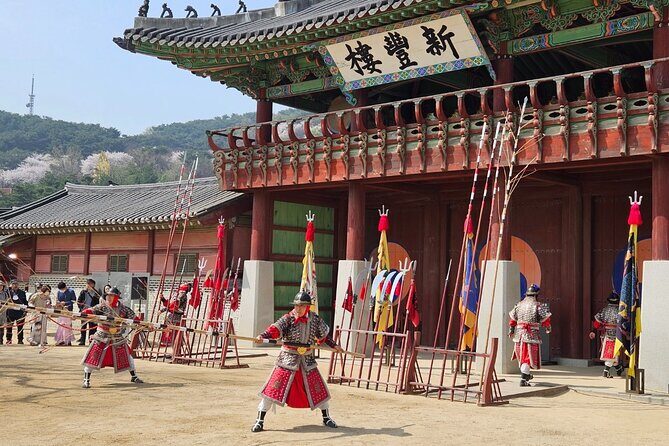
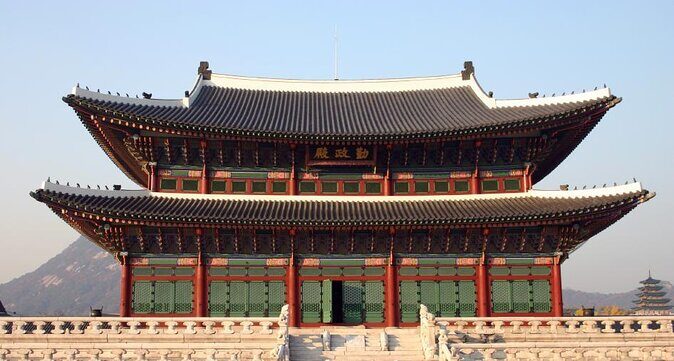
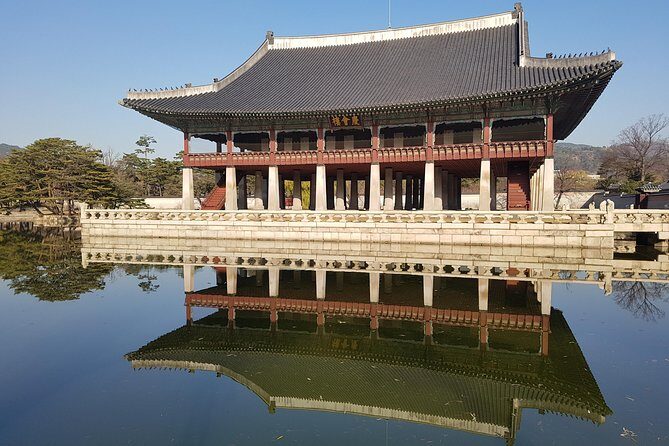
Gyeongbokgung Palace takes about 1 hour in this plan, and a highlight is the royal guard changing ceremony. That’s the moment when the entire palace setting snaps into focus. You’re not just walking past structures—you’re watching a tradition that echoes how the Joseon court organized authority and security.
Here’s what I’d pay attention to during this stop:
- How the guard ceremony interacts with the palace space (the location makes it feel ceremonial, not random).
- The scale and layout. Palaces can look “pretty” in photos, but you’ll understand the space better when you’re walking inside the flow the guide describes.
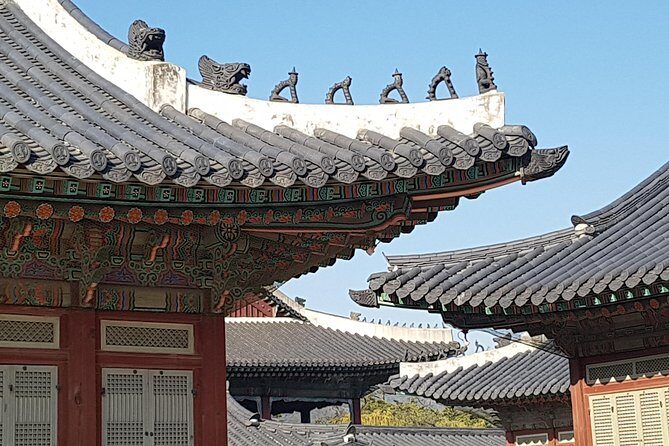
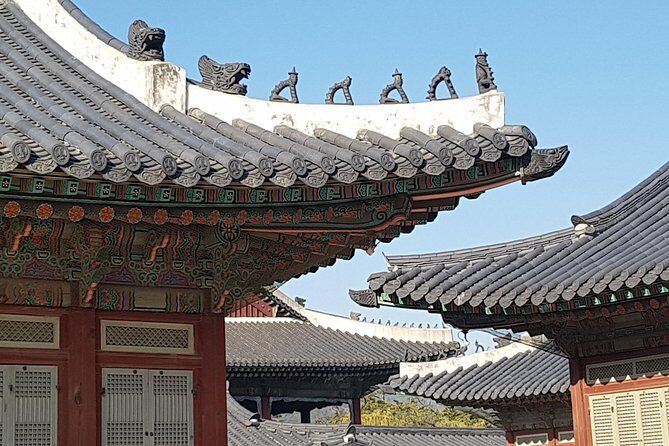
- The construction logic. The tour notes traditional building techniques, and good guides point out features you’d otherwise miss—roof forms, symmetry, and how the complex is designed for movement and visibility.
Reviews repeatedly praise guide quality here, with people mentioning strong English and clear palace explanations. If you’re on your first Seoul trip, this is where you’ll feel the most “okay, now I get it” payoff.
National Folk Museum of Korea: your shortcut through 98,000 artifacts
After the palace, you head toward the National Folk Museum of Korea. The tour description calls out over 98,000 artifacts, which sounds huge for a short stop—so the smart move is guided selection.
In practice, you’re getting help turning the museum into a story. You’re not trying to read everything on your own. Instead, you’re watching the guide connect objects and themes to what you saw outside. That’s why the museum works inside this walking tour format: it’s not a full museum marathon. It’s context that makes the rest of the day easier.
I also like this approach if you’re the type who gets museum fatigue. A guided time window gives you a few anchors to remember, without forcing you to “do it all.”
Bukchon Hanok Village: hidden looks and the uphill reality
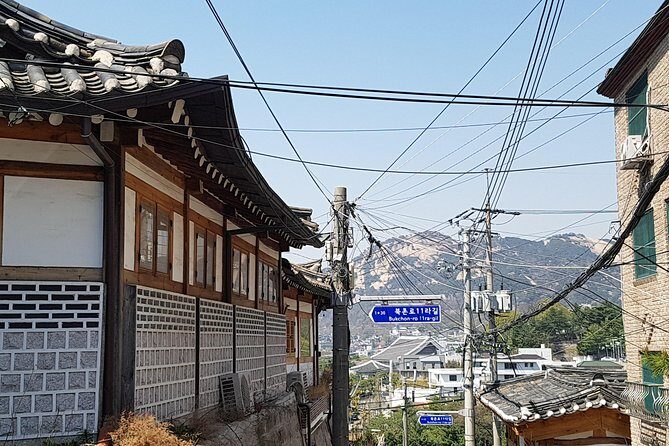
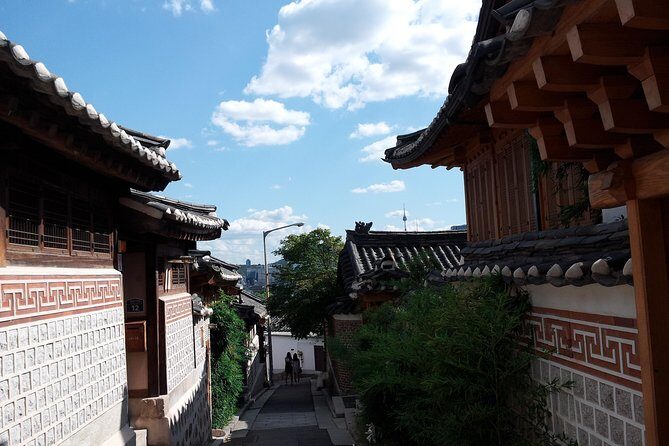
Then you move into Bukchon Hanok Village for about 30 minutes, with time for peeks into traditional homes and learning about past daily life. The tour describes looking for hidden looks, which is exactly how Bukchon works best. The area isn’t just one scenic street. It’s a maze of alleys, doorways, and small vantage points—so a guide helps you find the interesting angles without wasting time.
What to expect:
- You’ll see traditional hanok style structures up close.
- You’ll get a sense of how everyday life shaped home design.
- You’ll be walking uphill at points, because Bukchon sits on uneven terrain.
That uphill part is the main consideration. One review specifically warns about the amount of walking and that Bukchon has uphill sections. I’d echo that. If steps and slopes are a problem for you, this may not be the best fit.
Small group energy: less chaos, more questions
With a maximum of 8 travelers, this doesn’t feel like a cattle-car tour. In a small group, guides can slow down when someone asks something thoughtful. You’ll also have more flexibility to take photos without the classic “move along, move along” pressure.
This also explains why so many reviews emphasize guides like Stella, Jay Kim, Joe, Jack, and Paul as standout factors. Even when personalities differ, the pattern is consistent: the guides don’t just recite facts. They explain why the palace details matter, and they answer questions in a way that turns sight-seeing into understanding.
One bonus detail from reviews: some guides have gone beyond the core plan when weather is involved. So if it’s raining, you might see a bit of adaptive planning. Still, you should plan for typical Seoul weather swings and bring layers.
What to wear and bring so the walk feels easy
This is where you can make or break your experience. The tour is moderate in physical demand, and it’s not recommended for travelers with walking difficulty on steps and uphills.
My practical checklist:
- Wear comfortable walking shoes with grip.
- Bring light layers. Seoul weather can change fast.
- Use sunscreen or a hat if it’s bright. Palace areas have exposed sections.
- Keep water handy. Even a 3-hour walk adds up.
If you’re with kids, the short 3-hour length helps a lot. Reviews mention children staying engaged, largely because the guide mixes history with stories and keeps things moving at a good pace.
Who this tour is best for (and who should pick something else)
I’d book this if:
- You’re a first-time visitor who wants a high-quality overview without spending the whole day stuck in long lines.
- You care about history, but you want it explained in plain language while you’re standing in front of the buildings.
- You like a small-group pace and want to ask questions.
I’d consider another option if:
- Walking uphill and stepping around crowds is hard for you.
- You want lots of free time sitting down. This tour is mostly active and story-driven on the move.
- You’re the kind of traveler who prefers a totally self-guided museum experience. This plan is a guided selection, not a “see every artifact” mission.
Weather and timing: make the day work for you
The tour notes it requires good weather. That doesn’t mean it turns into a disaster if clouds show up. It means the experience depends on outdoor walking and sight viewing. If weather is truly poor, you may be offered a different date or a full refund.
Timing-wise, 3 hours is convenient when your Seoul schedule is tight. It’s also long enough that you’ll see the changing of the guard and still reach Bukchon the same day without feeling rushed across the city.
If you want to maximize your day, plan for a relaxed follow-up in Insadong. The tour ends there, and it’s a natural place to keep the momentum.
Final verdict: should you book this Gyeongbokgung and Bukchon tour?
Yes, if you want an efficient Seoul orientation with real palace moments and a guided way to understand what you’re seeing. The value is strong because entrance fees are included, you get a small group experience, and the stops are curated to move from ceremony to museum context to the lived-in feel of Bukchon.
Skip it if you struggle with steps and uphill walking. In that case, you’ll likely spend the whole day fighting the terrain instead of enjoying the stories.
If you’re comfortable walking and you want a first-day-friendly history plan, this tour is an easy choice. Just bring good shoes, show up ready to look closely, and let the guide do the heavy lifting—because these streets and palace walls reward attention.
FAQ
How long is the Gyeongbok Palace and Bukchon Hanok Village walking tour?
The tour is approximately 3 hours.
What does the tour cost?
It costs $88.00 per person.
Is the changing of the guard included?
Yes. The tour includes the royal guard changing ceremony at Gyeongbokgung Palace.
Are entrance fees included?
Yes. Entrance fees are included for the stops that require admission.
Where does the tour start and end?
It starts at 24-1 Taepyeongno 2(i)-ga, Jung District, Seoul, and ends at 75-5 Insa-dong, Jongno District (the Insadong area).
How big is the group?
The tour has a maximum of 8 travelers.
Is it suitable if I have trouble walking on steps or uphill areas?
The tour notes it is not recommended for travelers with walking difficulty on steps and uphills, and it requires a moderate physical fitness level.