REVIEW · SEOUL
Seoul Self-Guided Audio Tour
Book on Viator →Operated by Uvamai Niche Tourism · Bookable on Viator
A Seoul audio walk beats staring at a map all day. This self-guided route stitches together palaces, temples, design landmarks, and river views with a mobile-friendly audio playlist you can use at your pace. You get a plan that works even if you want to linger, snack, or hop off to take photos.
I like that the stops are real places you’ll recognize, from Gyeongbokgung Palace to N Seoul Tower, plus more modern hits like Dongdaemun Design Plaza and Starfield Library. I also like the format: short audio tracks and an interactive map so you can click from stop to stop instead of guessing.
One consideration: it is not a guided tour with step-by-step street directions, and some audio may feel like a fast overview rather than deep study. Also, a few key sights have admission fees not included, and opening hours still control what you can enter.
In This Review
- Quick hits: what makes this Seoul self-guided audio tour work
- Why this Seoul self-guided audio route is such a good match
- Getting access: SoundCloud playlist and the My Maps points
- How to pace the tour so you do not feel rushed
- Stop-by-stop guide: royal palaces to river walks
- Gyeongbokgung Palace: Joseon power, built in stone and ritual
- Bukchon Hanok Village: a living neighborhood of hanok rules
- Changdeokgung Palace: nature-friendly royal design and the Secret Garden
- Jogyesa Temple: Korean Buddhism in the city’s center
- Cheonggyecheon Stream: how Seoul turned an eyesore into a public space
- Dongdaemun Design Plaza (DDP): Zaha Hadid’s futuristic Seoul
- Myeong-dong Cathedral: Gothic revival meets Korea’s modern struggles
- N Seoul Tower: skyline views and love-lock folklore
- Namsan Park: feng shui on a mountain break
- Leeum Art Museum: traditional meets contemporary in architect-designed buildings
- The War Memorial of Korea: remembering a modern turning point
- National Museum of Korea: 5,000 years in one place
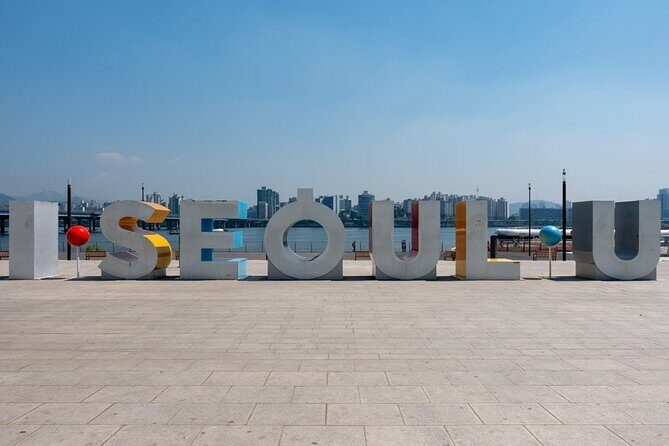
- Hangang Park: where Seoul relaxes along the river
- Bongeunsa Temple: a calm pocket in a modern district
- Starfield Library: literature mixed with commerce
- Seoul Sky: the tallest-building payoff
- Price and value: $9 for the audio toolkit
- Small snags to plan for (so you do not lose time or money)
- Who should book this Seoul self-guided audio tour
- Final verdict: should you book this Seoul self-guided audio tour?
- FAQ
- FAQ
- How long is the Seoul self-guided audio tour?
- How much does it cost?
- What do I get after booking?
- When will I receive the access links?
- Is the audio guide available for individual attractions or the whole tour?
- Are entry tickets included for the attractions?
- Do I need transportation included in the tour?
- Can I start and end wherever I want in Seoul?
- Is this tour refundable if my plans change?
Quick hits: what makes this Seoul self-guided audio tour work
- 16 stops in ~3 hours with short tracks so you can keep moving
- SoundCloud audio access + Google My Maps points for each attraction
- Private access links (valid up to 6 days) so you can use your trip window flexibly
- A mix of Joseon-era palaces and modern Seoul in one route
- Most paid entries are optional extras, while several temples and public areas are free
Why this Seoul self-guided audio route is such a good match
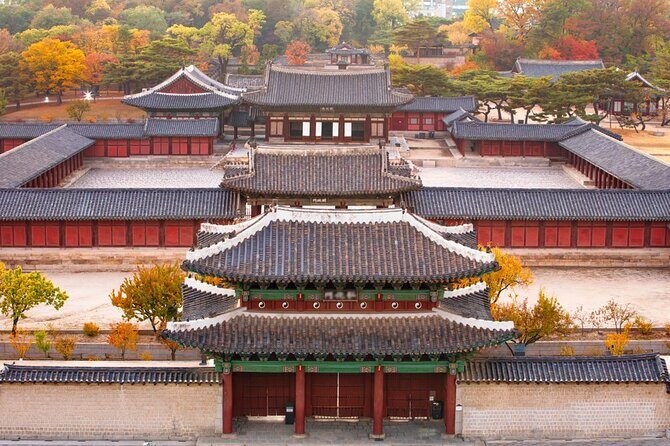
Seoul has two faces that both matter: the official, ceremonial side from the Joseon Dynasty era, and the fast-evolving tech and design side that shows up in newer architecture. This tour does a good job pairing those worlds so you do not feel like you are only chasing one vibe.
The big practical win is that you control timing. The audio is organized for individual attractions, and the map lets you jump around without getting lost in your own plan. That is a relief when you are tired, running late, or trying to squeeze in one more stop.
If you want a guided experience where someone shepherds you from place to place, this is probably not your best fit. Think of this as your personal audio companion plus a map, not a tour escort.
You can also read our reviews of more guided tours in Seoul

Getting access: SoundCloud playlist and the My Maps points
After booking, you receive confirmation, and then on your selected travel date you get two links by email before your starting time. One link opens the audio on a secure SoundCloud web page, where you can listen to guides individually or run the whole playlist.
The second link is a secure Google My Maps map with all 16 points. Each map point connects to its matching audio guide, so you can tap/click while you are standing at the attraction and get the context right away.
Plan to check your inbox the day of your trip. Access is time-tied to your selected start time, and if you wait until you are already at the first stop, you can waste daylight.
How to pace the tour so you do not feel rushed
The tour is listed as about 3 hours, but the audio tracks are roughly 10 minutes each. That setup is great for a walking pace with frequent stops for photos, but it also means you will probably want to shorten some listening and spend longer at the places you love.
Here’s the approach I’d use:
- Start with at least the first 3 palaces/major landmarks so the story arc clicks.
- At museums and towers, decide ahead if you want the full audio or just the highlights.
- Leave time for lines and ticketing because entry fees are not included for some stops.
Also, since the access links are valid for up to 6 days, you can split the tour across one or two days if the schedule gets tight. That flexibility can save you if Seoul weather turns or you want a slower day.
Stop-by-stop guide: royal palaces to river walks
Below is what each stop is good for, what you might want to watch for, and how the audio context helps you understand what you are seeing.
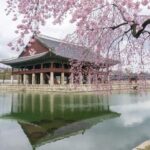
Gyeongbokgung Palace: Joseon power, built in stone and ritual
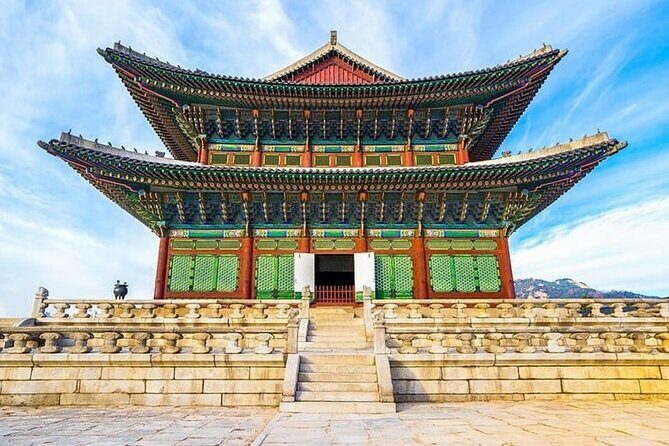
This is the Joseon Dynasty palace that sets the tone for the whole tour. Expect narration around the palace’s architecture and its role as the seat of royal power, plus the more tragic parts of its story.
Important practical note: the admission ticket is not included, so budget time for entry. If you’re doing this in peak hours, arriving early is the difference between enjoying details and feeling swept along.




Bukchon Hanok Village: a living neighborhood of hanok rules
Bukchon is where you see traditional Korean houses in a real residential area. The audio focuses on the principles of hanok architecture and how the area has changed into a trendy cultural district.
Tip: because it is a neighborhood, it is not about one big ticketed attraction. You can wander slowly, listen in short bursts, and still end up with good photos.
Changdeokgung Palace: nature-friendly royal design and the Secret Garden
Changdeokgung is a UNESCO site, and the audio highlights why it feels like it was designed with nature in mind. The standout topic is the Secret Garden and its place in royal history.
Again, admission is not included. If the Secret Garden is a priority for you, check timing and plan so you do not arrive right when you need to choose between listening and entering.
Jogyesa Temple: Korean Buddhism in the city’s center
Jogyesa serves as the center of Korean Buddhism in Seoul. You’ll get practical symbolism and context for modern Korean history, plus a sense of how Buddhist practices show up in everyday temple life.
This is one of the “free and worth slowing down” stops. If you want one quiet pause in the middle of all the palaces and design, this is a strong candidate.
Cheonggyecheon Stream: how Seoul turned an eyesore into a public space
Cheonggyecheon is the kind of urban renewal story you can literally walk through. The audio explains the change from a covered highway to a public stream space, including the ecological impact Seoul hoped for.
This is a great stop after a palace day because you get air, walking space, and a different kind of storytelling—built environment instead of royal buildings.
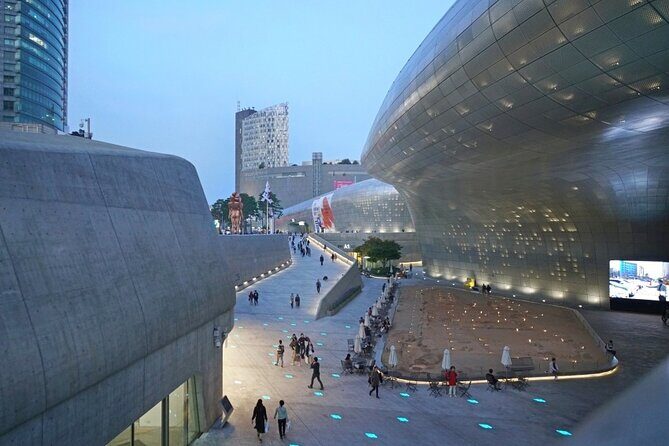
Dongdaemun Design Plaza (DDP): Zaha Hadid’s futuristic Seoul
DDP is designed by Zaha Hadid, and the audio leans into how it became a hub for design and fashion. The building itself is the main attraction here, and the narration helps you read the curves and shapes as more than just a photo backdrop.
This stop is free, so you can afford to linger. I’d use it as a break between older sites and the skyline viewpoints later.
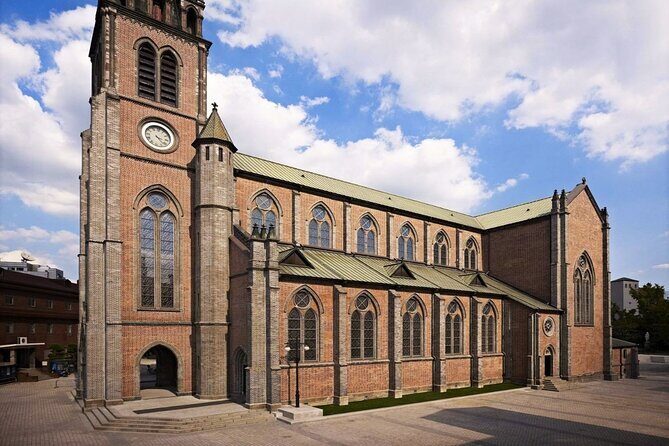
Myeong-dong Cathedral: Gothic revival meets Korea’s modern struggles
The cathedral’s Gothic revival architecture is only half the story. The audio connects it to its role in Korea’s democracy movement, which gives the building more meaning than style alone.
This is another free stop where context matters. Listening to the history while you’re standing there makes the architecture feel purposeful rather than decorative.
N Seoul Tower: skyline views and love-lock folklore
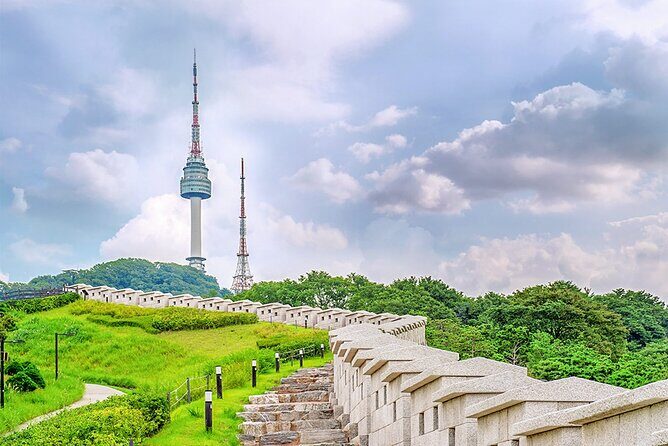
N Seoul Tower is the classic “see the city spread out” moment. The audio includes the tower’s history and the love lock tradition that turned the area into a romantic hotspot.
The narration here is useful even if you do not spend long at the top because it helps you understand why the tower became such a Seoul landmark. Note: the admission ticket is not included, so plan for the cost and any lines.
Namsan Park: feng shui on a mountain break
Namsan Park is a green reset in the middle of Seoul. The audio touches on its importance in feng shui principles and why it functions as a kind of breathing space when the city feels nonstop.
Since the park area is free, it’s a smart option if you want movement without paying an extra ticket. Wear comfortable shoes; this is more “walk and look” than “sit and listen.”
Leeum Art Museum: traditional meets contemporary in architect-designed buildings
Leeum is a world-class art museum where the collection mix includes traditional Korean art and contemporary works. The audio points out the museum’s architecture too, which matters because the buildings are part of the experience.
This one has admission not included, so it is best if you genuinely want museum time. If you’re more into quick landmark viewing, you might shorten the museum listening and save energy for the later skyline stops.
The War Memorial of Korea: remembering a modern turning point
This stop is about modern history and the impact of the division of the Korean peninsula. The audio helps you connect exhibits to the Korean War and why the memory still shapes how Koreans understand their present.
It is free, which makes it easy to add without budget stress. Because the subject matter is heavy, I’d treat this as a focused stop—listen once carefully, then decide if you want to read more on-site.
National Museum of Korea: 5,000 years in one place
The National Museum is the big timeline builder. The audio frames what you might see across 5,000 years of Korean history and culture, from early eras up to the modern age.
This is free, which is a big deal given how much it can help your trip feel coherent. If you only have time for one “deep” indoor stop, this is the one to anchor on.
Hangang Park: where Seoul relaxes along the river
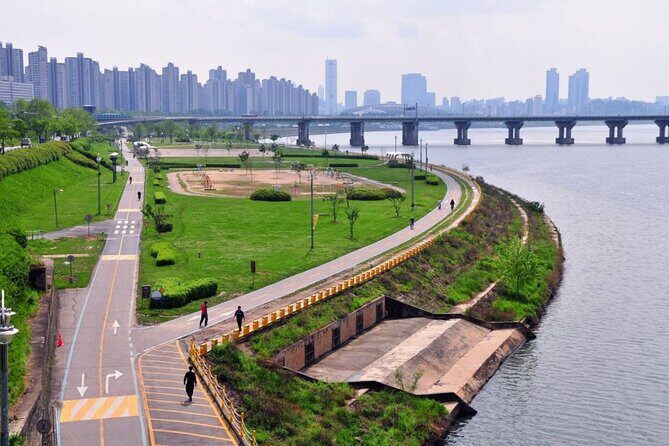
Hangang Park is your downshift. The audio explains the Han River’s role in Seoul’s development and why the river still matters to Korean culture.
This stop is free, and it is also a flexible one—you can treat it as a rest break between neighborhoods or a photo-and-walk session after museums. If you’re using the tour on multiple days, this is an easy place to pause.
Bongeunsa Temple: a calm pocket in a modern district
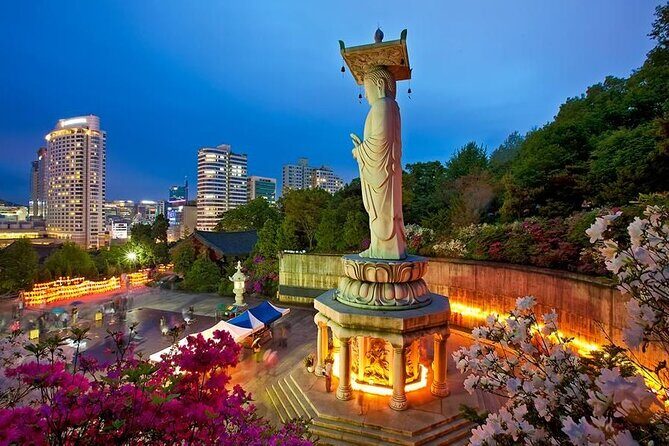
Bongeunsa Temple offers quiet contrast to the surrounding modern area. The audio mentions its 1,200-year history and its role in spreading Korean Buddhism.
This is free, and it’s a good emotional palate cleanser after heavier history stops. If you want to hear your audio and still feel like you’re stepping away from noise, schedule it when you need that reset.
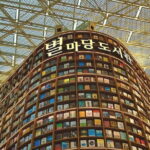
Starfield Library: literature mixed with commerce
Starfield Library is known for being Instagram-famous, and the audio explains the unique blend of literature and commerce. It is the kind of stop where design, mood, and function mix in a single location.
This is free, and it’s also a nice one for families and rainy-day pacing. If your listening feels optional here, just use the audio to understand what you are looking at—then enjoy the space at your own speed.
Seoul Sky: the tallest-building payoff
Seoul Sky is the top-of-the-city moment. The audio focuses on engineering behind this super-tall skyscraper and ties it to Seoul’s rapid urban development.
Like other skyline moments, admission is not included. If you choose to go up, treat it as your major “finale” stop, because the views are the payoff for all the stories you heard earlier.
Price and value: $9 for the audio toolkit
At $9 per person, this tour is priced like an audio service, not like a bundle of museum tickets. That makes it a good value if you already plan to visit some of these sites anyway—or if you’re building a route and want explanations without paying for a guided tour.
What you should budget separately:
- Admission not included at Gyeongbokgung Palace, Changdeokgung Palace, N Seoul Tower, Leeum Art Museum, and Seoul Sky.
- Several other stops are free, including Bukchon Hanok Village, Jogyesa Temple, Cheonggyecheon Stream, DDP, Myeong-dong Cathedral, Namsan Park, War Memorial of Korea, National Museum of Korea, Hangang Park, Bongeunsa Temple, and Starfield Library.
The value equation here is simple: if you use the map and listen to multiple stops, $9 feels very reasonable. If you end up missing a few paid entries or you forget to use the links at the right time, the value drops fast.
Small snags to plan for (so you do not lose time or money)
A few issues show up often with self-guided audio products, and they’re worth taking seriously:
- Links depend on your selected start time. Access is emailed before your starting time. If you wait too long and start late, you might end up without the audio ready when you need it.
- It does not guide you step-by-step. You navigate using the interactive map, but it is not a turn-by-turn system. You still have to walk and use Seoul’s transit like any independent traveler.
- Opening hours still apply. The audio does not replace timed entry rules, and paid admissions are not included. If a place closes before you arrive, you will not be able to fix that with an audio guide.
Finally, one more expectation check: some people find the audio is more of an essential overview than a deep research report. If you love super-detailed history, plan to add your own reading at the big sites.
Who should book this Seoul self-guided audio tour
This is a strong fit for you if:
- you like discovering a city through short audio chunks
- you want a mix of palaces, temples, and modern design in one route
- you prefer flexibility over a schedule led by a guide
- you’re comfortable using your phone and transit to move between locations
It may not be the best fit if you want:
- a host to manage timing, tickets, and walking directions
- a slow museum-style tour with long, deep commentary at every stop
- a guarantee that you can enter paid attractions without planning for opening hours and lines
Final verdict: should you book this Seoul self-guided audio tour?
If you want a low-cost way to understand Seoul’s “old meets new” story while you walk, this tour is an easy yes. The biggest strength is the structure: 16 recognizable stops, an interactive map, and audio you can tap at each location.
But do not treat it like a timed ticket bundle. You still need to handle entry fees, opening hours, and your own navigation. If you check your email before you leave and you enjoy fast-to-medium listening, you should get real value out of the $9 playlist.
FAQ
FAQ
How long is the Seoul self-guided audio tour?
It’s listed as about 3 hours (approx.). The experience is made up of 16 attraction guides, each set for roughly a 10-minute listen.
How much does it cost?
The price is $9.00 per person.
What do I get after booking?
You receive two private access links: one for the audio guide playlist on SoundCloud and another for an interactive Google My Maps itinerary map with 16 attraction points.
When will I receive the access links?
On your selected travel date, you receive an email containing the two links before your starting time.
Is the audio guide available for individual attractions or the whole tour?
Yes. The audio link lets you listen to attraction guides individually or to the entire tour to help you plan.
Are entry tickets included for the attractions?
No. Entry fees are not included, and several stops specifically list admission tickets as not included (such as Gyeongbokgung Palace, Changdeokgung Palace, N Seoul Tower, Leeum Art Museum, and Seoul Sky).
Do I need transportation included in the tour?
Transportation is not included. The tour notes it is near public transportation, and you decide how you move between stops.
Can I start and end wherever I want in Seoul?
Yes. Since it’s self-guided, the start and end are flexible, and you can choose your starting point and ending point.
Is this tour refundable if my plans change?
Cancellation is non-refundable and cannot be changed for any reason, based on the provided policy.
—
If you tell me what day/time you plan to start (morning vs late afternoon) and which 3 stops you care about most, I can suggest the tightest way to sequence them for minimal ticket hassle.