REVIEW · SEOUL
Seoul City Half Day Tour-Gyeongbok Palace Guard Changing Ceremony
Book on Viator →Operated by VIP TRAVEL Co.Ltd · Bookable on Viator
Two palaces, one perfect morning circuit.
I love how this tour packs big sights into a short window with hotel pickup and a smooth air-conditioned coach. I also like the payoff moment: Gyeongbokgung’s changing of the guard at Gwanghwamun Gate, plus a calm start at Jogyesa Temple. One thing to consider: the final stops at a ginseng center (or sometimes an amethyst factory) can feel sales-heavy, so go in with a clear head about what you want to buy—or skip.
You’ll start your morning in central Seoul, then hop from temple serenity to royal history and presidential-themed exhibits, all with a guide who keeps things moving and explains what you’re looking at. Guides such as Kelly, Ray, Crystal, Emily, and Sunny come up again and again for clear explanations and for helping the group get good viewing angles for the ceremony.
If you want a light, well-paced introduction to Seoul’s major “first-timer hits” without planning a thing, this tour fits nicely. If you hate shopping stops or you’re traveling purely for museums and quiet time, you may want to treat the ginseng/amethyst stop as optional mentally and plan your spending accordingly.
In This Review
- Key Things That Make This Tour Worth Your Time
- The Coach-and-Pickup Start: Why It Helps on Day One
- Jogyesa Temple: Calm First, Then History
- Cheongwadae Sarangchae: The Presidential-Sized Learning Moment
- Gyeongbokgung Palace and the Guard Changing at Gwanghwamun
- National Folk Museum Stop: Why 30 Minutes Works
- The Ginseng Center or Amethyst Factory: Worth Reading the Fine Print
- Price and Value: What You’re Really Paying For
- Tour Logistics That Affect Your Experience
- Should You Book This Half-Day Gyeongbokgung Guard Tour?
- FAQ
- Is lunch included on this tour?
- How long is the Seoul City Half Day Tour?
- What’s included in the price?
- Does the tour include the changing of the guard ceremony?
- Where do you meet and where do you get dropped off?
- What happens if I book for a Tuesday?
- Are admission tickets included?
- Is there a shopping stop?
- What’s the group size and guide language?
- What’s the cancellation policy?
Key Things That Make This Tour Worth Your Time
- A tight morning route: Jogyesa Temple, Cheongwadae Sarangchae exhibits, Gyeongbokgung Palace, and a museum stop in about 3 hours.
- Real ceremony value: You’re set up to watch the changing of the guard at Gwanghwamun Gate.
- A guided “how to look” experience: Your guide helps you understand what you’re seeing, not just where to stand.
- Good short intro to presidential Korea: Cheongwadae Sarangchae uses exhibits tied to presidents and cultural themes, including UNESCO topics.
- Tour ends in a useful area: You’re dropped around City Hall or Itaewon, so your afternoon is easy to plan.
- Expect a sales stop at the end: Ginseng center/amethyst factory visits are part of the package.
The Coach-and-Pickup Start: Why It Helps on Day One
This is built for people who want Seoul orientation fast. Hotel pickup gets you out of the friction zone—no figuring out meeting points, no juggling subway transfers, no losing the group because you took one wrong turn.
The tour runs about 3 hours and uses an air-conditioned coach, which matters in Seoul’s weather swings. In past experiences on this kind of route, people have noted how cold it can feel during winter snow and how intense it gets during high summer heat, so you’ll be happier if you come dressed for outdoor walking and short exposure time.
Group size is capped at 40, which is big enough to keep logistics smooth but small enough that a guide can still manage the rhythm at stops. If you’ve got jet lag or you just want the day to feel organized, this is the kind of tour that reduces decision fatigue.
You can also read our reviews of more city tours in Seoul
Jogyesa Temple: Calm First, Then History
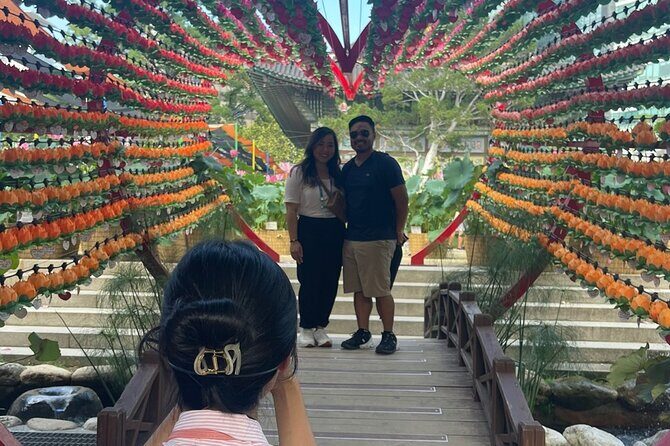
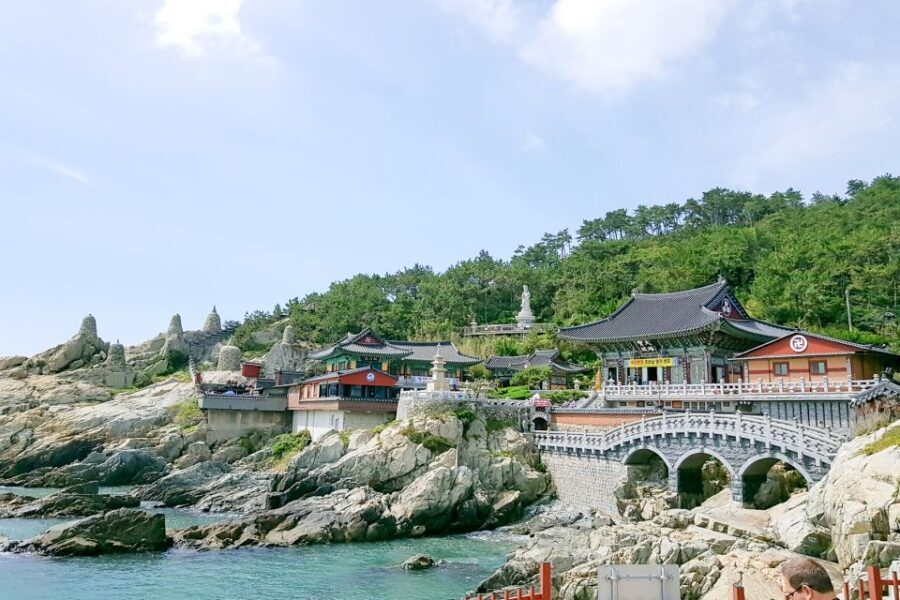
Your morning begins at Jogyesa Temple, a major Buddhist site in downtown Seoul. The visit is about 40 minutes, and admission is listed as free.
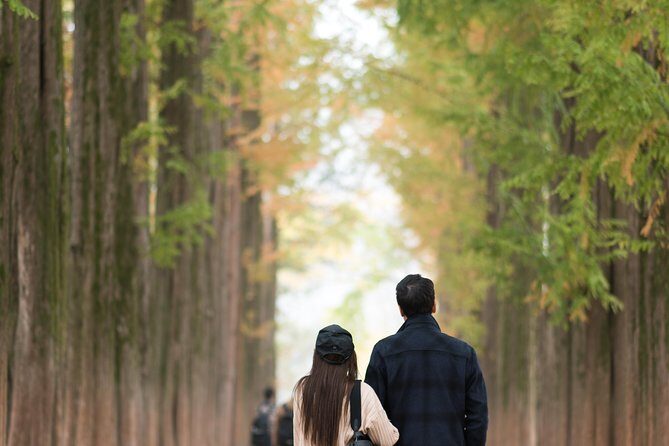
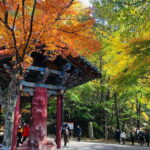
The first thing you’ll notice is the entry: a tree-lined path that shifts you out of city noise. Then you’ll see the temple’s seven-story pagoda, which is one of the visual anchors people remember, especially in photos because it gives you something tall and traditional to frame.
Inside, the guide leads you to view an important Buddha statue. Even if you’re not a “temple person,” I like starting with Jogyesa because it gives you a sense of Korea beyond palaces and government buildings. It’s quieter, slower, and it resets your brain before the rest of the day turns ceremonial and formal.
Practical tip: wear shoes you can walk in comfortably. This stop is not an all-day hike, but it is still active walking on uneven temple-ground surfaces.
Cheongwadae Sarangchae: The Presidential-Sized Learning Moment
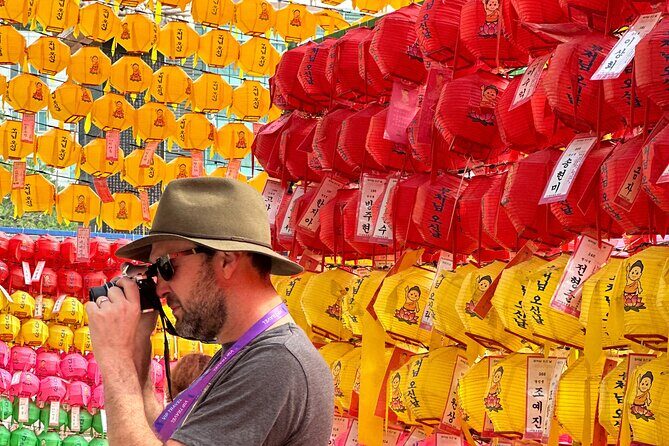
After Jogyesa, the tour heads to Cheongwadae Sarangchae, an exhibition hall tied to the Blue House area (Cheongwadae). This is one of the smartest “time-efficient” parts of the route because it adds context without stretching your schedule.
The exhibits cover a mix of topics: displays about Korea’s presidents, Korean cultural traditions, and UNESCO World Heritage Sites in Korea. If you’re the type who likes to understand why people talk about certain eras and values, this stop gives you a quick framework you can carry into the palace and museum later.
It also helps that you’re not stuck reading alone. A guide gives meaning to the visuals—why the Blue House matters, how modern Korea connects to heritage themes, and what to look for when you’re out in the palace grounds.
If you’re hoping for a strict “outside-only” sightseeing day, this is the one part that’s more exhibit-style. It’s not long enough to feel like homework, but it’s enough that you’ll want to take the audio/interpretation offered.
Gyeongbokgung Palace and the Guard Changing at Gwanghwamun
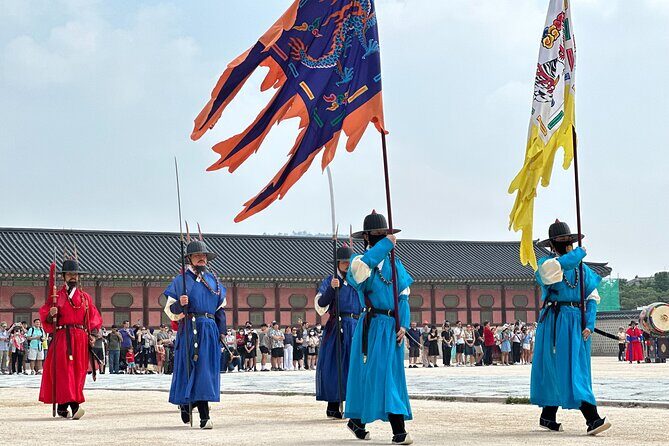
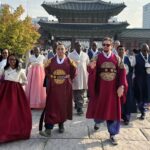
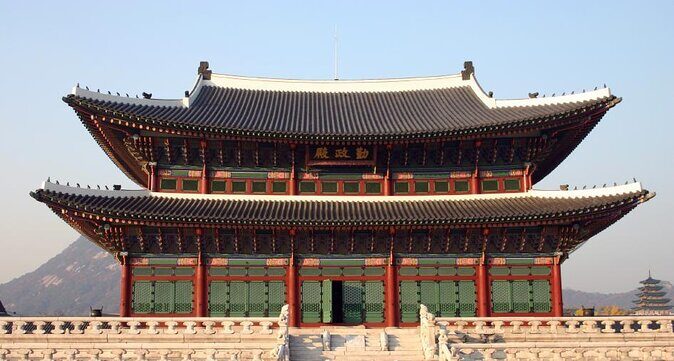
This is the core reason most people book. Gyeongbokgung Palace is the main royal residence tied to the Joseon Dynasty, and it’s considered the largest of the Five Grand Palaces. The palace itself is a major Seoul signature, and the timing is set so you’re there for the changing ceremony.
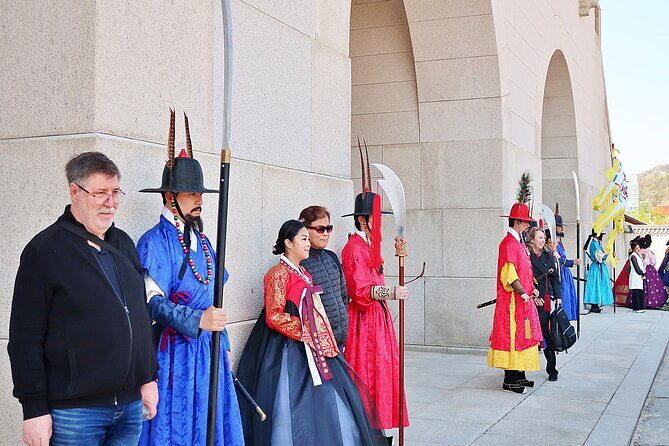
You’ll go to Gwanghwamun Gate for the changing of the guard ceremony. The ceremony viewing is listed as 1 hour, and admission is included.
What makes it special is the choreography and the sense of formality. You’re not just watching people in uniforms—you’re watching a ritual that’s been made into a public spectacle, and the palace setting makes it feel more powerful than it would on a random street corner.
One practical detail I’d underline: the quality of your view depends on where the group stands. In feedback connected with this tour, guides have been praised for getting people into strong viewing positions—sometimes even front-row level. So when your guide tells you where to go, don’t treat it like optional advice. Follow the positioning instructions and you’ll usually get a much better sightline.
What about Tuesdays? Gyeongbokgung Palace and the National Folk Museum are closed on Tuesdays, so the tour routes shift. Instead, you visit Deoksugung Palace, and the Seoul Museum of Art is located on the grounds (so you can likely see it as part of that replacement plan). The tour also indicates a swap involving Changdeok Palace and Bukchon Hanok Village on Tuesdays, keeping you in palace-and-heritage mode even when the main gate timing changes.
Practical tip: bring a hat and sunscreen in summer. In colder months, pack layers. Seoul mornings can swing hard, and a short wait for the ceremony can feel longer if you’re underdressed.
National Folk Museum Stop: Why 30 Minutes Works
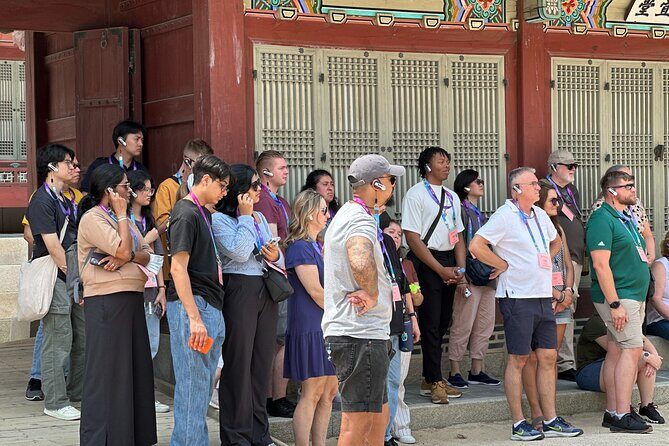
After the palace segment, the tour includes a museum stop: the National Folk Museum of Korea, with about 30 minutes allocated and admission included.
The museum’s background is tied to an earlier institution. It was initially established as the Korean Imperial Museum in 1908, and then it was renamed and relocated multiple times. That kind of history adds a layer: you’re not only seeing exhibits—you’re also seeing how museum culture evolved with Korea.
In a half-day tour, 30 minutes isn’t for deep research. It’s for perspective. You get enough time to scan key themes and leave with a more grounded sense of how daily life and cultural traditions connect to the bigger palace narrative you just saw.
If museums aren’t your thing, this stop may feel like a quick scan. But it’s still useful because it gives you something to talk about after you’ve posted photos of the ceremony.

The Ginseng Center or Amethyst Factory: Worth Reading the Fine Print
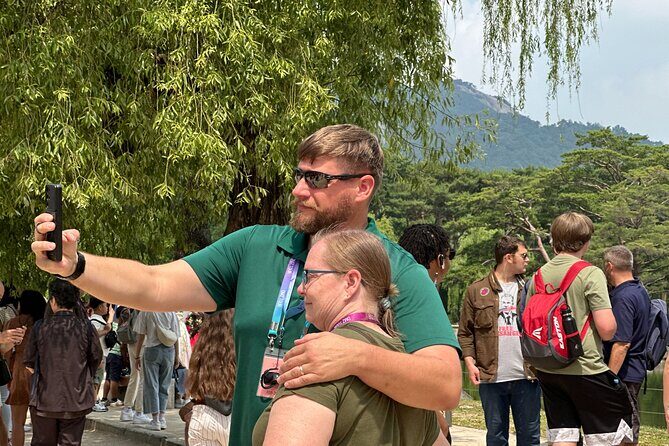
The end of the tour includes a stop at a ginseng center (and the description also mentions an amethyst factory option). This segment is listed as 30 minutes and admission is free.
Here’s the balance: this stop can be interesting if you’re curious about traditional Korean products. A guide will typically explain the basics, and you get a chance to browse items before the tour ends.
But it’s also the most common friction point on this type of itinerary. Several accounts describe it as a shop experience more than a museum-like visit, with a sales push that can feel unnecessary or too long. You may even feel pushed to buy.
So my advice is simple:
- Treat it like a quick browsing window, not a neutral educational museum stop.
- Decide in advance what you’re willing to purchase, or decide you’re not buying anything.
- If you don’t want the pitch, don’t hover at the sales desk. Look around, ask one question if you want, then move on.
This is the one part of the tour where your expectations matter most. The rest of the day tends to be about sights; this part is about shopping.
Price and Value: What You’re Really Paying For
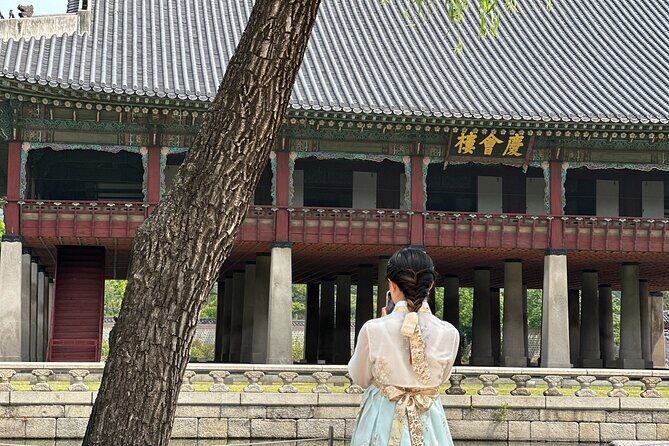
At $38 per person, you’re paying for more than a bus ride. The tour includes:
- a professional guide (English or Chinese),
- hotel pickup,
- and included admissions for major stops (notably the Gyeongbokgung ceremony segment and the museum portion).
This matters because Seoul’s “first timer” problem is not only seeing places—it’s timing, transport, and not missing the big moments. In a half-day format, you’re effectively buying a ready-made route that gets you to the guard ceremony without having to coordinate the timing yourself.
Lunch is not included, so budget for a meal afterward. The good news is you’re dropped near City Hall or Itaewon, where lunch options are plentiful and you can keep going at your own pace.
The value equation gets stronger if you:
- want one morning that gives you a strong first impression,
- enjoy guided context (not just wandering),
- and like the idea of a guided view spot for ceremonies.
It’s weaker if you:
- only want outdoor sights and hate shopping-style stops,
- or you’re already confident navigating Seoul’s palaces on your own.
Tour Logistics That Affect Your Experience
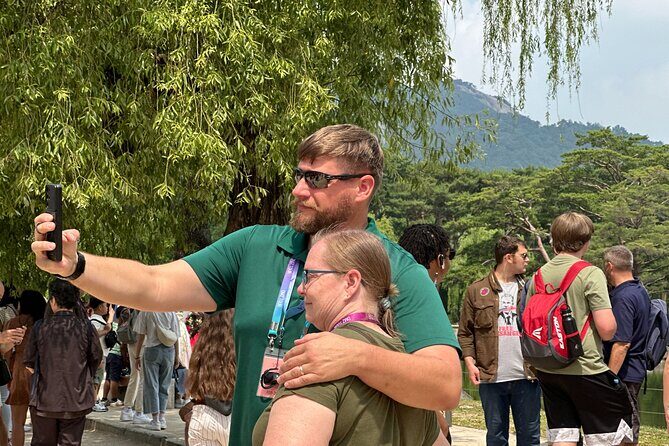
The tour uses mobile tickets and includes hotel pickup from Seoul. The meeting point is listed near City Hall Station, and the day ends with drop-off around City Hall or Itaewon.
Max group size is 40, which helps with maneuvering, especially at the changing ceremony where you need clear movement and a good viewing setup.
Duration is about 3 hours, so it’s not designed for slow sightseeing. That doesn’t mean it feels rushed—more that the pacing is intentional. If you want to linger at every photo spot, you may need a separate self-guided follow-up later in your trip.
Should You Book This Half-Day Gyeongbokgung Guard Tour?
I’d book this tour if you’re in Seoul for a short time and you want a structured morning that hits the major “must-sees” with less planning stress. The combination of Jogyesa Temple, the Cheongwadae Sarangchae exhibits, and the Gyeongbokgung guard changing at Gwanghwamun is a smart way to get your bearings.
I’d skip or rethink it if you’re sensitive to shopping-heavy stops. The ginseng/amethyst segment can be the difference between a smooth experience and a frustrating one, even when the guide is excellent.
If you do book, go in prepared: comfortable shoes, weather-appropriate layers, and a clear stance on whether you want to browse or buy at the product center. With that mindset, you’ll get most of the payoff—especially the ceremony moment—without letting one sales stop spoil the morning.
FAQ
Is lunch included on this tour?
No. Lunch is not included, and the tour ends with drop-off near City Hall or Itaewon so you can find food on your own.
How long is the Seoul City Half Day Tour?
The duration is listed as about 3 hours (approx.).
What’s included in the price?
The price includes a professional guide (English or Chinese), hotel pickup, and all taxes, fees, and handling charges. Admission is included for the Gyeongbok Palace (and changing of the guard ceremony) and the National Folk Museum.
Does the tour include the changing of the guard ceremony?
Yes. You’ll visit Gyeongbokgung Palace and watch the changing of the guard ceremony at Gwanghwamun Gate.
Where do you meet and where do you get dropped off?
The meeting point is City Hall Station. The tour ends with drop-off at City Hall or Itaewon.
What happens if I book for a Tuesday?
On Tuesdays, Gyeongbokgung Palace and the National Folk Museum are closed. The tour substitutes Deoksugung Palace (with the Seoul Museum of Art on the grounds) and changes to other palace areas such as Changdeok Palace and Bukchon Hanok Village.
Are admission tickets included?
Yes where listed: Jogyesa Temple admission is free, and the Gyeongbok Palace (changing of the guard ceremony) and National Folk Museum admissions are included.
Is there a shopping stop?
Yes. The itinerary includes a stop at a ginseng center (and the description also mentions an amethyst factory) for about 30 minutes.
What’s the group size and guide language?
The tour has a maximum group size of 40. The guide is listed as English or Chinese.
What’s the cancellation policy?
Free cancellation is available up to 24 hours in advance for a full refund. If you cancel less than 24 hours before the start time, the amount paid is not refunded. The experience may also be canceled due to poor weather, with an alternative date offered or a full refund.