REVIEW · SEOUL
Cook 3 Authentic Korean Dishes with Local Market Tour
Book on Viator →Operated by cookorean · Bookable on Viator
Korean food starts at the market. This Seoul class leads you through Mangwon Market first, then back to host Jomin’s studio to cook a three-course Korean meal at your own station. You get the culture and the technique, not just a plate to copy.
What I like most is the small group setup (max four people) that actually lets you cook, ask questions, and get direct help. I also love that the experience begins with a real market walk, where you’ll spot the ingredients and taste street food while Jomin explains what you’ll use.
One thing to plan around: the class can be rescheduled or canceled if it doesn’t meet the minimum number of guests (minimum four), so choose your date with a little flexibility.
In This Review
- Key points to know before you go
- Mangwon Market: the best warm-up for Korean cooking
- Meeting at Mangwon Station and how the 3.5 hours play out
- The hands-on studio setup: your station, your burners, your momentum
- Your three dishes: how the menu teaches Korean home-style technique
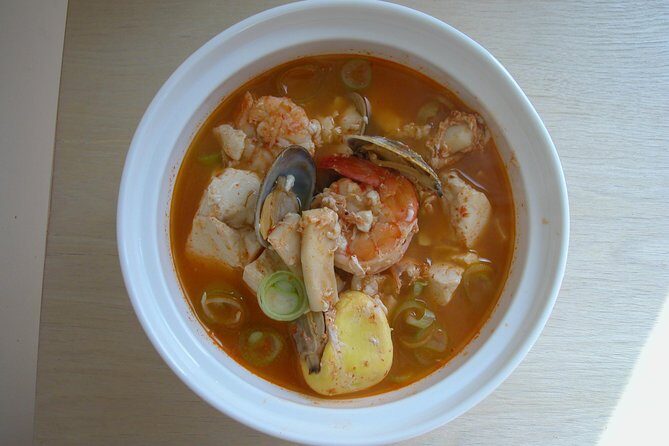
- Soft tofu stew (often sundubu jjigae style)
- Bibimbap: the assembly lesson
- Bulgogi: marinade flavor you can repeat
- Japchae or kimchi stew: sauce and comfort, two ways
- Stir-fried pork (when it shows up)
- Culture lessons you can use, not just facts to remember
- The cookbook and take-home leftovers: value you can taste twice
- Price and value: is $79 a fair deal in Seoul?
- Who should book this class (and who might prefer something else)
- Should you book this Seoul Korean market cooking class?
- FAQ
- What is the duration of the class?
- Where do I meet the instructor?
- How many people are in the cooking class?
- What will I cook during the session?
- Is there a vegetarian or vegan option?
- Do I choose lunch or dinner?
- Do I get a cookbook or only the meal?
- Is there free cancellation?
Key points to know before you go
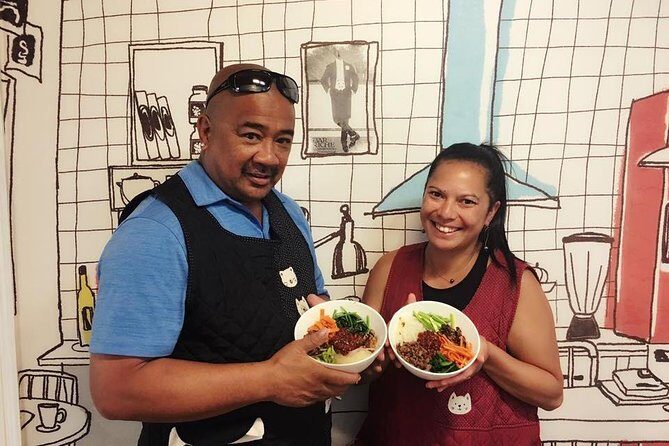
- Market-first start at Mangwon so you understand ingredients before you cook them
- Max four people with a private cooking table and personal burners
- Hands-on, not a demo with step-by-step guidance from Jomin
- Three-course menu choices that can include classics like bibimbap, bulgogi, and soft tofu stew
- Take-home cookbook plus leftovers so you can cook again later
- Lunch or dinner option depending on what fits your Seoul schedule
Mangwon Market: the best warm-up for Korean cooking
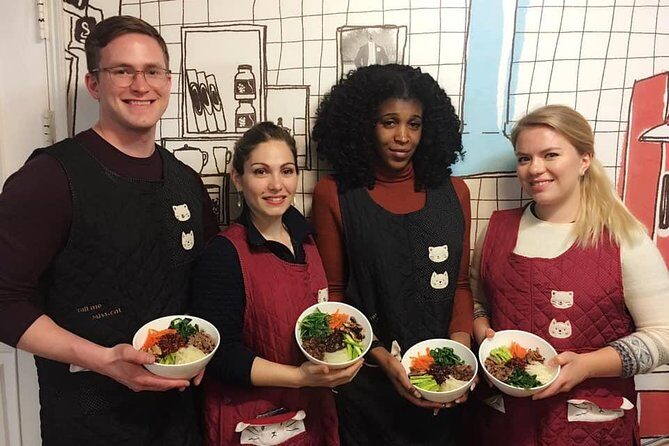
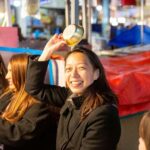
Start at Mangwon Station (Line 6), meeting at entrance 2. From there, Jomin leads you toward Mangwon Market, and that market walk is more than sightseeing. It’s how you learn to shop like a local for Korean flavors.
You’ll get a guided look at ingredients that show up in the dishes you’ll cook later. That matters because Korean cooking often relies on building blocks: fermented elements like kimchi, savory foundations like stock, and sauces/marinades that taste strong on their own but balance out in the final dish. Seeing the items in context at the market makes the cooking steps easier to follow once you’re at your station.
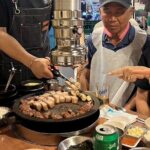
You’ll also have time to snack. The tour includes street-food tasting, and those bites help you connect the dots between what you’re tasting on the street and what you’re making in the studio. If you’ve ever cooked something from a recipe and thought, I get it on paper, but not on flavor, this market start helps close that gap.
You can also read our reviews of more shopping tours in Seoul
Meeting at Mangwon Station and how the 3.5 hours play out
The timing is about 3 hours 30 minutes total, and it’s paced so you don’t feel rushed in either place. In practice, you’re splitting your time between two main phases:
1) Market walk + ingredient spotlight
This part is where you learn what’s worth looking for. Even if some stalls are closed on certain dates, the point stays the same: you’ll get a sense of how people shop for Korean meals.
2) Studio cooking + eating your own food
Then you go to the cooking studio with your ingredients already planned for your menu. You’ll cook at your own table with your own setup, and once everything is done, you eat what you made.
Because this is a small class size (max four people), the pace feels human. You’re not waiting for the instructor to finish coaching the person next to you. You’re also less likely to get lost, since the guidance is step-by-step.
One practical tip: wear shoes you can stand in during the market portion. You’ll be on your feet, and Seoul markets are not exactly built for slow, comfortable strolling.
The hands-on studio setup: your station, your burners, your momentum
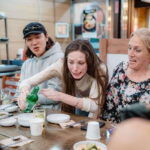
The experience is hands-on, meaning you cook. You’re not sitting back watching while someone else demonstrates. At the studio, you’ll get set up at a personal cooking table with the needed ingredients. Each person has their own cooking setup and burners, which is a big deal for Korean food because technique and timing matter.
From one course to the next, you’ll be doing real tasks—cutting, stirring, cooking, and assembling—while Jomin guides you. That setup also keeps things friendly even if you’re a total beginner. There’s structure. You’ll know what step comes next and why.
Also, the studio experience includes eating right there. You’ll cook, then enjoy your creations during the session. And yes, you can take home leftovers, since there’s packaging for what you don’t finish.
The atmosphere is relaxed, but Jomin keeps the process clear. Think calm chef energy: polite, direct, and focused on getting you cooking correctly.
Your three dishes: how the menu teaches Korean home-style technique
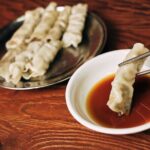
The class is built around a three-course menu. Exact dishes can vary, but common options include soft tofu stew, bibimbap, bulgogi, kimchi stew, japchae, or stir-fried pork. Rather than just learning recipes, you learn the cooking logic behind each dish.
Here’s how to think about the dishes you might cook and what they teach:
Soft tofu stew (often sundubu jjigae style)
If your class includes soft tofu stew, expect a dish that’s all about texture and balance. Soft tofu cooks quickly, and the broth gets its body from aromatics and savory elements. You’ll learn how to handle tofu gently and how the stew changes as it simmers.
A practical win here is learning how to judge doneness by smell and look, not just time. Korean stews can go from perfect to overcooked fast, especially with tofu.
A few more Seoul tours and experiences worth a look



Bibimbap: the assembly lesson
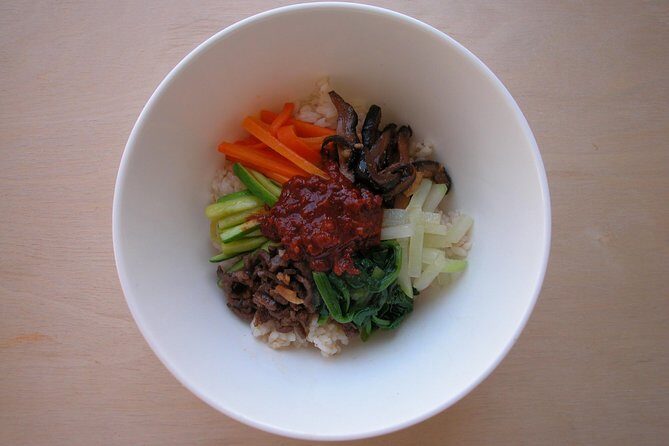
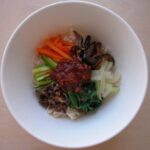
Bibimbap is famous for a reason. It teaches you the art of organized cooking: separate components, then assemble with sauce. You’ll likely do prep for vegetables and learn how to cook at your burner. Then you put it together so everything stays distinct but works as one bowl.
The real skill isn’t just cooking the ingredients. It’s learning when to stop cooking each component so the final bowl has fresh contrast—crunch against warmth.
Bulgogi: marinade flavor you can repeat
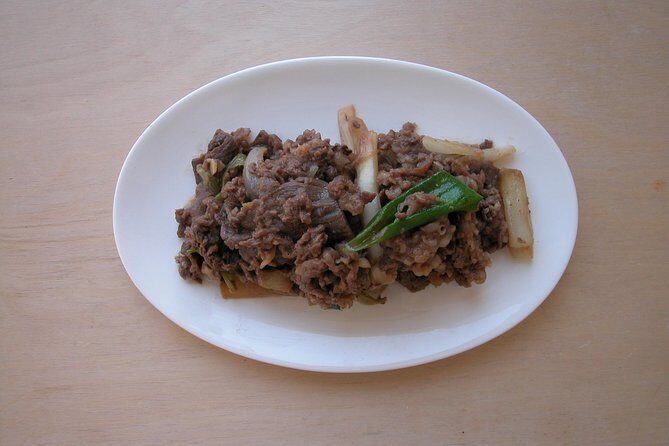
If bulgogi is on your menu, you’ll work with the marinade side of Korean cooking. That’s the payoff for home cooks: once you understand how the marinade behaves, you can adjust it later for your pantry.
Bulgogi also helps you learn heat control. Too hot and it scorches. Too low and it won’t caramelize. Your class time gives you enough practice to feel the difference.
Japchae or kimchi stew: sauce and comfort, two ways
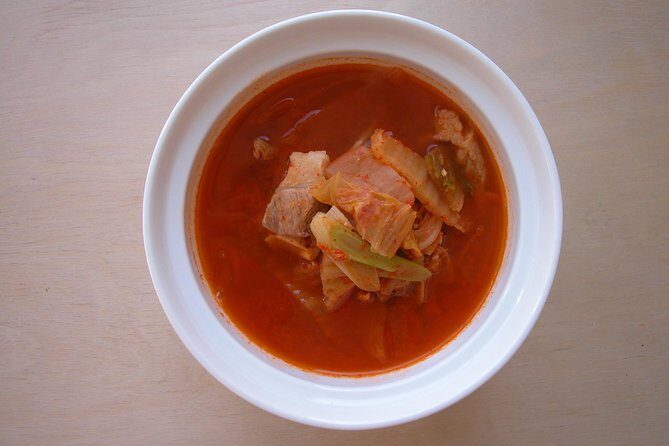
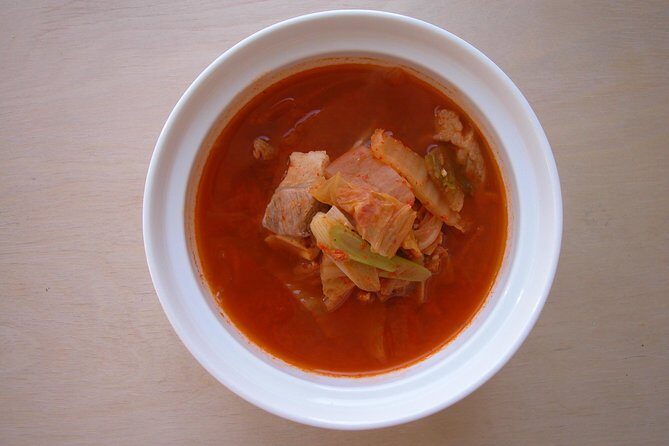
Japchae teaches stir-fry technique with chewy noodles, and it’s a great dish for learning sauce integration without making things soggy. Kimchi stew teaches fermented flavor and how it mellows and deepens through cooking. Either way, you learn how Korean flavor changes from raw to cooked.
Stir-fried pork (when it shows up)
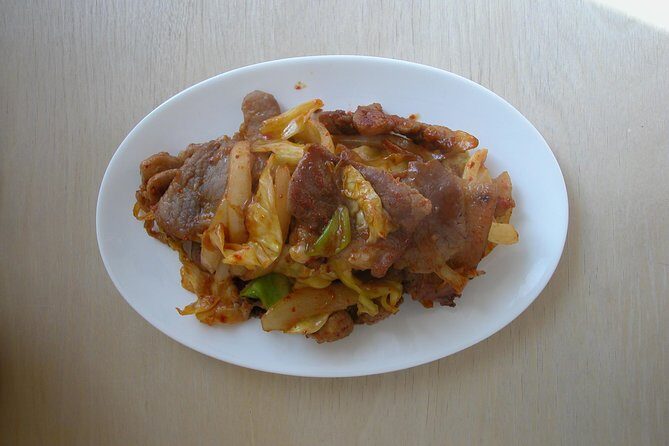
Stir-fried pork gives you another route to savory comfort. You’ll likely work on chopping and quick cooking steps, which are the kind of skills you’ll use again if you try Korean recipes at home.
If you want to optimize your enjoyment: decide what you want most—soups/stews, noodle/pad-things, or meat flavor—and pick your class time (lunch vs dinner) based on when you’ll have the energy to cook.
Culture lessons you can use, not just facts to remember
This class isn’t only technique. Jomin includes food culture and history, and the market walk feeds those lessons.
You’ll hear practical explanations around Korean food concepts like banchan (the side dishes style), kimchi, and how ingredients work together. The goal is to help you understand why Korean meals are built the way they are: multiple flavors, different textures, and sauces that bring it all together.
What makes this valuable is that you’re learning while you cook, not afterward in a lecture. When you get an explanation about an ingredient, you use it within hours. That’s when the knowledge sticks.
There’s also a clear emphasis on making the experience friendly for different cooking levels. If you’ve cooked at home for years, you’ll still get new technique cues. If you’re new, you’ll feel guided enough to keep up without stress.
The cookbook and take-home leftovers: value you can taste twice
At the end, you take home a professionally designed cookbook, plus your class recipes. In addition, you can pack up leftovers so you don’t leave hungry.
For me, the cookbook is the difference between a fun meal and something you can repeat. After a market tour and cooking session, you’ll remember the flavors. The cookbook helps you replicate them when your memory is less reliable and your ingredients aren’t in front of you.
One small-but-smart thing: because each dish is cooked at a station with your ingredients set up, the recipes you take home are more grounded. They match what you actually did.
Price and value: is $79 a fair deal in Seoul?
At $79 per person for about 3 hours 30 minutes, this class is priced for hands-on learning with a small group limit and market time. That price isn’t just paying for food. You’re paying for:
- time in the market with ingredient explanations and street-food tasting
- studio coaching (max four people) with personal cooking stations
- instruction for a three-course meal, plus time to eat it
- a take-home cookbook
- leftovers packaging
If you’re comparing it to tours that mostly feed you, this is more work. That’s the point. You come home with skills and a repeatable reference, not just photos.
Also, because there’s a vegetarian/vegan option, you can bring dietary needs without turning the experience into a separate plan. That flexibility improves value if you’d otherwise avoid cooking classes that assume everyone eats the same way.
Who should book this class (and who might prefer something else)
This is a strong match if you:
- want a real cooking lesson in Seoul, not a passive show
- like learning flavors by shopping first
- enjoy hands-on food prep, even if you’re new
- want a small-group experience with a helpful host, Jomin
- want something you can repeat later using the cookbook
It’s less ideal if you:
- don’t want to cook at all (this is fully hands-on)
- need a completely rigid schedule with zero date risk, since it can be rescheduled or canceled if the minimum guest count isn’t met
- hate being on your feet during the market portion
If you’re deciding between a cooking class and another food tour, this one leans more practical. You’ll still taste plenty, but the real win is what you learn to cook.
Should you book this Seoul Korean market cooking class?
Yes—if you want to learn Korean cooking the way locals build meals: ingredient-first, sauce-aware, and hands-on. The combination of Mangwon Market with Jomin’s studio teaching makes the flavors make sense fast. You also leave with a cookbook and leftovers, so the experience pays off more than once.
Book it sooner rather than later if you like the idea of max four people and personalized instruction. And pick lunch or dinner based on when you cook best. This class is short enough that energy matters, and you’ll enjoy it more if you go in ready to cook.
If you’re visiting during a holiday week or a slower travel window, consider booking a date that gives you backup flexibility in case the class needs rescheduling due to the minimum guest requirement.
FAQ
What is the duration of the class?
It runs about 3 hours 30 minutes.
Where do I meet the instructor?
You meet at Mangwon Station in Seoul at entrance 2.
How many people are in the cooking class?
The class size is maximum four people.
What will I cook during the session?
You’ll cook three authentic Korean dishes. Options may include soft tofu stew, bibimbap, bulgogi, kimchi stew, japchae, or stir-fried pork.
Is there a vegetarian or vegan option?
Yes. Vegetarian and vegan options are available.
Do I choose lunch or dinner?
Yes, you can choose between a lunch class or a dinner class.
Do I get a cookbook or only the meal?
You take home a professionally designed cookbook, and you can also take home leftovers.
Is there free cancellation?
Yes. You can cancel for a full refund up to 24 hours before the experience’s start time.