REVIEW · SEOUL
Korean Palace and Market Tour in Seoul Including Insadong and Gyeongbokgung Palace
Book on Viator →Operated by KOREA TOUR (DMZ TOUR) · Bookable on Viator
Palaces, temples, and markets in one day. I like how this tour strings together the big Seoul highlights in a clear route: UNESCO Changdeokgung and Gyeongbokgung, plus Jogyesa Temple, with a coach ride that even gives you a glimpse of Blue House. And when guides like Lizzy are on the day, the story behind the sites is easy to follow and stays practical.
I also like the way you get built-in context before you shop. The National Folklore Museum at Gyeongbokgung helps you understand everyday Joseon life and beyond, and the day then opens up for walking in Insadong and Namdaemun with a guide keeping you on track. Lunch is included too, and guides such as BK have been praised for keeping the pace smooth without rushing the key moments.
One consideration: this is not a pure sight-seeing day. You’ll stop at a ginseng center and there’s a duty-free shopping stop as well, so if you dislike sales pressure, you may want to treat these stops as “browse only.” Plus, it’s a full day with moderate walking, and the palaces swap on specific weekdays—Gyeongbokgung is closed Tuesdays, and Changdeokgung is closed Mondays.
In This Review
- Key things to notice before you go
- How the day flows: 8.5 hours, hotel pickup, and a tight-but-doable route
- Jogyesa Temple and the quick Blue House drive-by
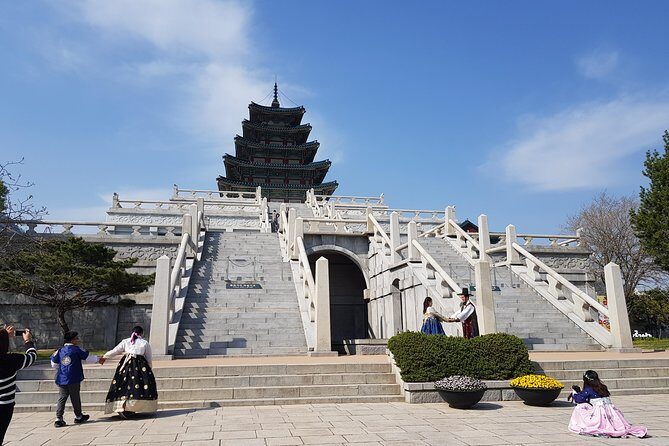
- Gyeongbokgung Palace: Joseon scale, restoration context, and the National Folklore Museum
- Midday lunch and the ginseng center stop: where your time really goes
- Changdeokgung Palace on UNESCO time: pavilions, ponds, and the Huwon Rear Garden
- Insadong Antique Alley: where souvenirs meet Korean crafts
- Namdaemun Market: Seoul’s big-traditional-market energy for souvenirs
- Price and value: is $89 a fair deal for a full Seoul cultural day?
- Who this tour fits best (and who might feel rushed)
- Should you book this Korean palaces and markets tour?
- FAQ
- How long is the tour?
- What does the price include?
- Is the tour wheelchair-accessible or limited to walking?
- What time does the tour start and when does it end?
- Are tickets electronic or paper?
- Does the tour include any shopping stops?
- What happens if Gyeongbokgung Palace is closed?
- What happens if Changdeokgung Palace is closed?
- Can I cancel for a full refund?
- Is Jogyesa Temple admission included?
Key things to notice before you go
- Hotel pickup and air-conditioned coach: The day starts at 8:30 am and keeps transit simple between sites.
- Gyeongbokgung + National Folklore Museum: You don’t just see gates and halls; you also get context.
- Jogyesa Temple as a spiritual warm-up: A free stop with a main hall dating back centuries and a Buddha statue.
- Changdeokgung and the Huwon Rear Garden: Time is set aside for pavilions, ponds, trees, and Geumcheongyo Bridge.
- Insadong Antique Alley and Namdaemun Market: You get real time on foot for crafts, teahouses, and souvenir hunting.
- A shopping center is part of the route: Plan to browse with a budget if you’re not into retail stops.
How the day flows: 8.5 hours, hotel pickup, and a tight-but-doable route
This is a full-day circuit built around Seoul’s top cultural anchors, starting with pickup and then moving by coach between major sites. The total time runs about 8 hours 30 minutes, with a typical start at 8:30 am, so you’ll want breakfast on the earlier side and keep water handy during walking stretches.
The group size is capped at 30, which usually keeps things from turning into a cattle-car experience. You still get “moderate walking,” though, so comfortable shoes matter, especially if the weather is warm or rainy. The tour also uses a mobile ticket, which helps reduce stress when you’re bouncing between palace grounds and museum entrances.
One more timing reality: palaces and temples have their own schedules. The tour runs with weekday backups, so you won’t completely lose a palace day if one site is closed, but your exact palace focus may shift (more on that below).
You can also read our reviews of more shopping tours in Seoul
Jogyesa Temple and the quick Blue House drive-by
You start at Jogyesa Buddhist Temple, the chief temple of the Jogye Order of Korean Buddhism. The main hall dates back about five centuries, and that age shows in the calm, old-world feel when you step inside. There’s also a pair of prominent trees—locust and baeksong—along the entrance, which makes the approach feel ceremonial instead of rushed.
The stop is short, about 20 minutes, and it’s free admission, so it works well as a morning reset before the palace crowds start to build. If you like religious sites for the atmosphere rather than for museum-style facts, this one is a strong opener.
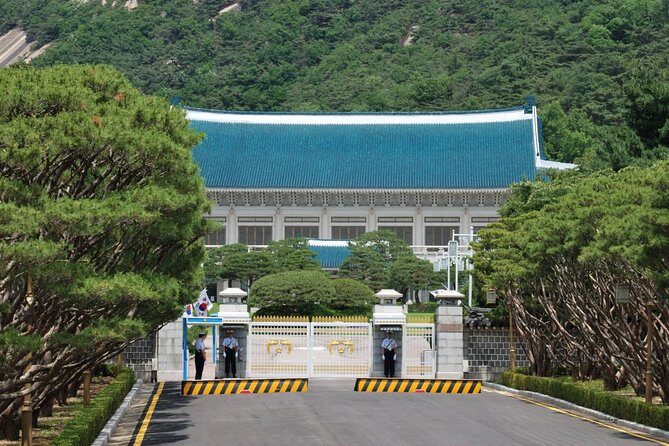
Between stops, the coach route includes a pass by Blue House, the executive office and official residence of South Korea’s head of state. Even if you can’t linger or walk around, the drive-by gives you a quick sense of where the country’s modern power sits next to its historical sites.
Gyeongbokgung Palace: Joseon scale, restoration context, and the National Folklore Museum
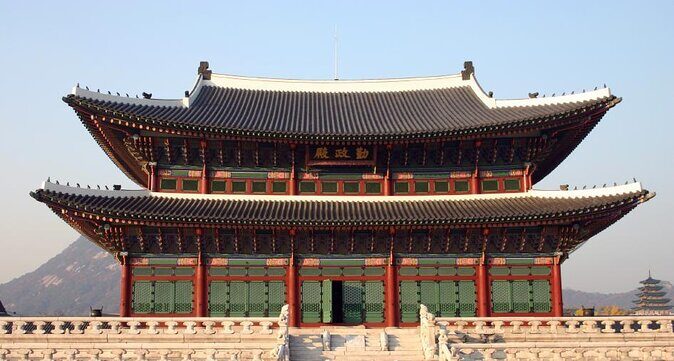
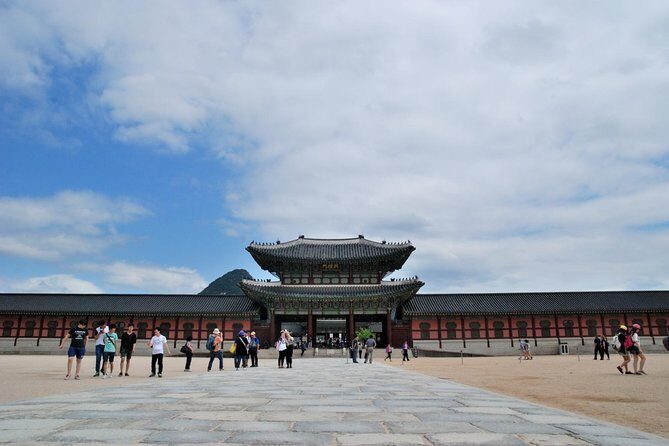
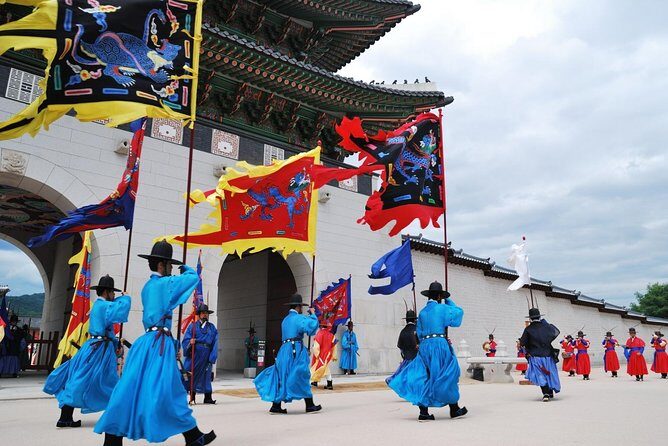
Gyeongbokgung Palace is the big one to anchor your day. It’s the largest of the Five Grand Palaces and the first royal palace built in 1395 by the Joseon Dynasty. Much of it was destroyed during the Japanese occupation, and the site is still shaped by restoration projects, so part of what you’re seeing is both original or restored architecture and the story of rebuilding.
You’ll have about an hour here with your guide, and that time is important. In a short visit, it’s easy to just take photos and move on, but the guided route helps you notice gates, pavilions, and royal hall layouts—how the palace is designed to control sightlines, movement, and ceremony.
Right on site you also visit the National Folklore Museum, with entry included. This museum uses artifacts and historical replicas to show Korean life from ancient times through the 20th century. I like pairing a museum like this with the palace itself because it makes the visit feel less like sightseeing and more like understanding.
If you want to get the most out of this part, wear shoes with good grip and plan to look up as well as around. Palace courtyards reward a little extra attention, and the restoration details become more interesting once you understand what each area was meant to do.
Midday lunch and the ginseng center stop: where your time really goes
After Gyeongbokgung and Jogyesa, the tour route adds a ginseng center stop around midday. This is scheduled at about 30 minutes, and it’s listed as the tour’s one shopping center. Some people enjoy learning about traditional products; others prefer to keep it strictly observational.
Then you sit down for lunch at a local restaurant, and lunch is included. The exact menu isn’t specified in the tour details, but the important point is that you’re not left hunting for food between palaces. Guides have been praised for keeping the day organized around lunch timing, which matters because you’ll otherwise lose momentum during a long walking day.
Here’s the practical way to think about these stops: your day already has a lot packed in, so any extra retail or sales-style moments are going to feel “more noticeable” than they would on a lighter tour. If you’re sensitive to that vibe, treat the ginseng center and later duty-free as time blocks to stay polite, browse briefly, and move on.
Changdeokgung Palace on UNESCO time: pavilions, ponds, and the Huwon Rear Garden
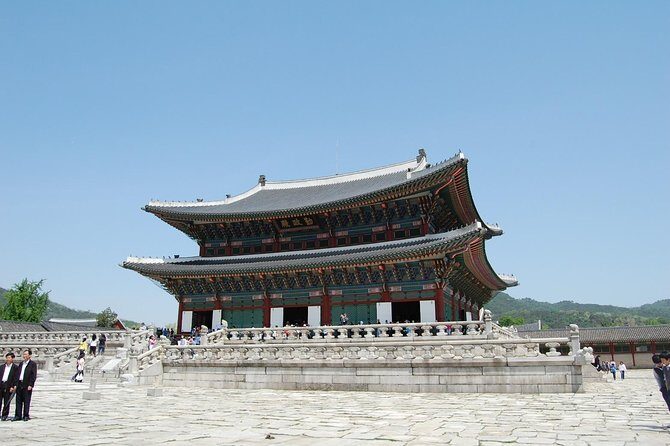
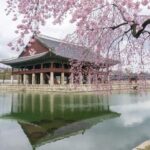
After lunch, you head to another major palace: Changdeokgung Palace, a UNESCO World Heritage site. The tour includes admission here, and you get about 40 minutes to explore the preserved Joseon palace grounds with your guide.
This is the palace that often feels more human-scale than the larger, more ceremonial spaces elsewhere. You’ll see major gates and several halls, but the highlight for many first-timers is the garden: the Huwon (Rear Garden). You walk among landscaped grounds that include Geumcheongyo Bridge, plus lotus ponds, lawns, and seasonal-feeling plantings like trees and flowers (even if you’re visiting outside peak bloom, the layout is still worth seeing).
Changdeokgung is closed on Mondays. If you’re traveling on a Monday, the tour notes that you’ll visit an alternative Joseon palace: Changgyeonggung Palace instead. That means the UNESCO garden experience may not be the exact version you planned for, but you still get another major palace site.
If you love architecture and symmetry, try to slow down during the garden walk. Even when you’re on a schedule, this portion rewards pausing—details in bridges, pond edges, and pavilion placement become more meaningful once you stop rushing photos.
A few more Seoul tours and experiences worth a look


Insadong Antique Alley: where souvenirs meet Korean crafts
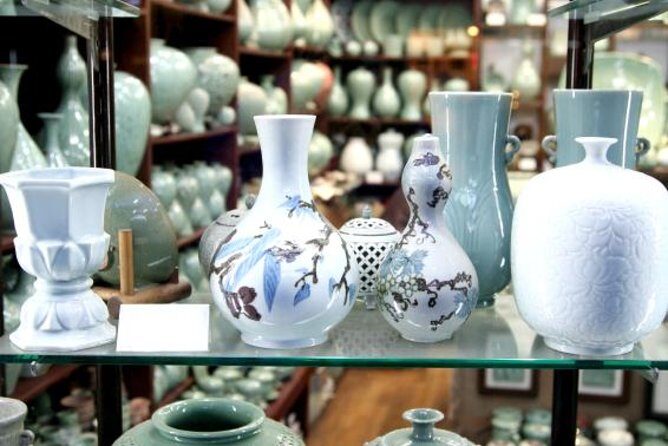
Next comes Insadong, centered on the Insadong Antique Alley experience. You’ll spend about 30 minutes wandering craft galleries, quaint teahouses, and alleys with traditional Korean items. This is one of Seoul’s best-known areas for browsing, and the guide-led pacing helps you spot the kinds of things worth buying—traditional artwork, antiques, and smaller craft goods—without getting lost in the cross-streets.
The tour also includes a stop at duty-free shops in this stretch. That’s not the same thing as Insadong antiques, so if you’re trying to keep your shopping focused, decide what you want before you enter the sales environment. If your goal is gift shopping, Insadong is where you can actually match souvenirs to the vibe of the day.
Guides have been noted for keeping people organized here while still giving enough freedom to explore. That balance is key because Insadong is busy, and if you’re trying to shop while following a group, it helps to know where you’re headed next before you wander too far.
If you’re on a budget, treat this stop as “inventory time.” You can window-shop here and then decide later what fits your luggage space and your real needs.
Namdaemun Market: Seoul’s big-traditional-market energy for souvenirs
You finish with Namdaemun Market, described as the largest traditional market in Korea, opened in 1964. You’ll have about 30 minutes here, which sounds short until you remember what markets do: once you’re in, you’ll see more in 30 minutes than you can imagine from photos.
This is where bargains and everyday goods tend to show up most clearly. You can search for souvenirs across lots of stalls—street-level shopping that feels more like local life than a curated shopping street. It’s a great contrast to the more formal palace settings earlier in the day.
Because the schedule is tight, it helps to enter with a plan. For example: decide whether you’re hunting for snacks, small household items, or specific gifts. If you wait until the last minutes and hope to figure everything out on the fly, you’ll spend your time deciding instead of shopping.
Price and value: is $89 a fair deal for a full Seoul cultural day?
At $89 per person, the value mainly comes from four things you wouldn’t want to coordinate yourself: guided routing, hotel pickup and drop-off, air-conditioned coach transport, and included meals plus several admission fees.
Admission is included for major components like Gyeongbokgung Palace and its National Folklore Museum, and it’s also included for Changdeokgung Palace. Jogyesa is free, but it adds a strong spiritual stop without an extra ticket headache. Add in the included lunch and the fact that your guide helps you make sense of what you’re seeing, and the price becomes easier to justify—especially if you’re visiting for the first time and want fewer logistics decisions.
Where value can feel weaker is if you personally don’t care about the shopping center or duty-free stop. Those blocks take time that could have been used for extra walking or another viewpoint. Still, you can manage that by keeping your shopping goals simple and treating those stops as optional browsing rather than required purchases.
Overall, for a first-day, culture-heavy Seoul overview, this pricing structure is pretty reasonable.
Who this tour fits best (and who might feel rushed)
This tour works especially well if you want a single day that covers Korea’s story through different lenses: royal architecture, religious tradition, museum context, and market life. It’s also a strong option for solo travelers, because the group format makes it easy to ask questions and still get free time to browse on foot.
Your experience will hinge on the guide. Multiple guides have been praised for being friendly and organized, with people noting things like clear English and efficient pacing. Names that came up in the guide feedback include Lizzy, AJ, Felicity, BK, Miel, Sadie, Grace, and Charles. The pattern is consistent: when the guide is strong, the whole day feels smoother and more meaningful.
Who might not love it: if you have limited mobility or you hate feeling on a schedule with palace-to-market transitions, the moderate walking and fixed time blocks can feel like too much. The shopping center and duty-free stops can also be a deal-breaker if you want zero retail moments.
Rain and weather matter too. There’s not much you can do about that, but the tour is built around indoor options (museum time, palace halls) and coach transport between points.
Should you book this Korean palaces and markets tour?
Book it if you want a classic Seoul day that connects the dots between palace power, Korean cultural life, Buddhist tradition, and real market shopping. This is a good choice when you want to get your bearings fast and still leave with more than just photos.
Skip it or consider a different option if your main goal is deep, slow museum time, or if you absolutely dislike shopping stops. Also factor in weekday closures: if you’re traveling on a Tuesday, Gyeongbokgung is closed and you’ll switch to Deoksugung Palace and the Seoul Museum of History; if you’re traveling on a Monday, Changdeokgung is closed and you’ll switch to Changgyeonggung Palace.
If you can accept a full-day pace and you’re okay browsing through one or two retail blocks, this tour is a solid way to experience Seoul’s historical core and its shopping street reality in the same day.
FAQ
How long is the tour?
The tour runs about 8 hours 30 minutes.
What does the price include?
It includes hotel pickup and drop-off, a professional guide, an air-conditioned vehicle, and lunch. Admission is also included for Gyeongbokgung Palace and the National Folklore Museum, and for Changdeokgung Palace.
Is the tour wheelchair-accessible or limited to walking?
The tour involves a moderate amount of walking, so comfortable walking shoes are recommended.
What time does the tour start and when does it end?
It starts at 8:30 am and ends back at the meeting point (with drop-off at your hotel in Seoul).
Are tickets electronic or paper?
You receive a mobile ticket.
Does the tour include any shopping stops?
Yes. The tour includes one shopping center for ginseng and also includes duty-free shops during the day.
What happens if Gyeongbokgung Palace is closed?
Gyeongbokgung Palace is closed on Tuesdays. On those days, the tour visits Deoksugung Palace and includes the Seoul Museum of History.
What happens if Changdeokgung Palace is closed?
Changdeokgung Palace is closed on Mondays. On those days, the tour visits Changgyeonggung Palace.
Can I cancel for a full refund?
Yes. You can cancel up to 24 hours in advance for a full refund. If you cancel less than 24 hours before the start time, the amount paid is not refunded.
Is Jogyesa Temple admission included?
Jogyesa Temple admission is free as listed for the stop.