REVIEW · SEOUL
Getting a good feel of local Seoul through food (itseoulgood)
Book on Viator →Operated by itseoulgood · Bookable on Viator
Food is the fastest Seoul translator. This 3-hour, small-group walk turns Insadong and Kwangjang Market into a clear, tasty route through old-and-new Seoul, with everything eaten included. I love how guide Mike guides you to the right bites and explains what you’re tasting, and I also like that you get a lot of food for one set price, not the usual trickle of samples.
You’ll start with classic tastes in Insadong, then move into the bigger, more confusing energy of Kwangjang, where choosing what to try can feel like a test. I’ll also warn you about one practical catch: markets mean walking and crowds, so wear comfy shoes and be ready to move even if you’re not on a fitness kick.
The tour is priced at $94 per person for about 3 hours, and it caps at 6 people—ideal if you want answers, not just a stamp-and-go meal plan. The finish lands near Anguk Station, in the general area of Toto’s Nostalgia Museum, with a calm teahouse moment to round out the day.
In This Review
- Key things I’d highlight before you book
- Where this tour fits in your Seoul trip (and why it works)
- Starting in Insadong: dumplings and real tea
- Kwangjang Market: turning overwhelm into smart orders
- The middle stretch: old alleys meet modern Seoul
- The teahouse finish near Anguk: why the ending feels right
- Price and value: what $94 gets you (and what it doesn’t)
- Who this tour is perfect for (and who should think twice)
- A quick guide to how to enjoy it most
- Should you book this tour?
- FAQ
- What’s included in the tour price?
- How long is the tour?
- Where does the tour start and where does it end?
- What’s the meeting time?
- Is there walking during the tour?
- How big is the group?
- Does the guide speak English?
- Can I cancel for a full refund?
- Is this tour good for first-time visitors to Seoul food markets?
Key things I’d highlight before you book
- A tiny group (max 6) means you can ask questions and adjust on the fly
- Food is included in the tour fee, so you’re not constantly reaching for your wallet
- Insadong tea that is not the powder kind makes the start feel real, not touristy
- Kwangjang Market help with ordering saves you from the overwhelm
- A chef-turned guide, Mike, adds stories plus practical food judgment
- A traditional teahouse finish near Anguk Station gives the tour a satisfying rhythm
Where this tour fits in your Seoul trip (and why it works)
Seoul can feel like a lot at once: huge markets, fast-moving neighborhoods, and menus that look like puzzles when you don’t read Korean. This tour works because it’s built around food you can understand quickly. You don’t need to master Korean menus or know which stall is best. You just follow along, taste, and learn the logic behind the choices.
The route also gives you a useful contrast. Insadong leans historical and artsy, with old streets and traditional shops. Then Kwangjang Market is more intense and food-focused, where locals actually come to eat. That mix is perfect if you want a good sense of Seoul in a short time without doing a full-day food marathon.
With a 3-hour duration and about 1 hour of walking called out, it’s a smart option for a travel day that also includes sightseeing plans. And because the group is limited to 6, you’re less likely to get lost in the shuffle.
You can also read our reviews of more food & drink experiences in Seoul
Starting in Insadong: dumplings and real tea
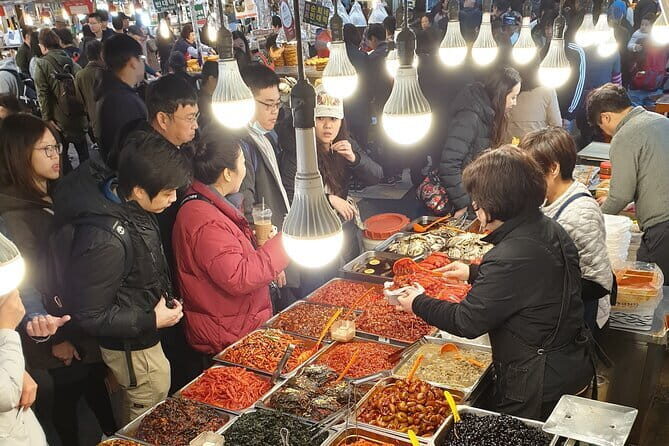
You begin in Jongno District, meeting at 407 Dongho-ro, and you start your tastings right in Insadong. This is one of those places that looks like Seoul’s past is still working—narrow streets, shop windows with traditional goods, and lots of small places to stop even when you don’t have a plan.
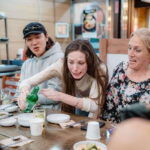
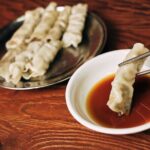
The first tasting is built around dumplings and real tea. The tour specifically calls out tea that isn’t the common powder-based kind you’ll see at some tourist spots. That matters because it changes the whole feel of the start. Instead of just eating something warm, you’re learning how Korean tea can taste when it’s made as tea, not as a shortcut.
Insadong is also a good warm-up because it’s easier to settle into than a giant market. You’ll be able to get your bearings, and the guide sets you up for the next stage by explaining what to look for and how to think about flavor, texture, and regional style. If you’re nervous about eating in markets, starting here helps you build confidence.
One more practical note: Insadong is great for browsing after the tasting too. If you have extra cash and want to buy a snack or a small souvenir, this is an easy place to do it while everything is still fresh in your head.
Kwangjang Market: turning overwhelm into smart orders
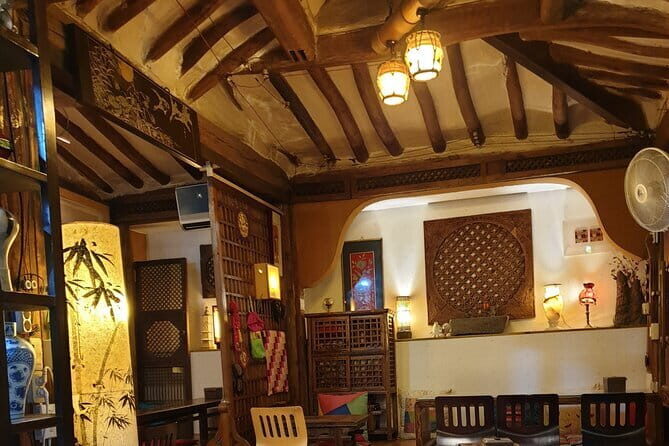
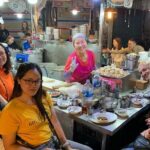
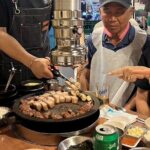
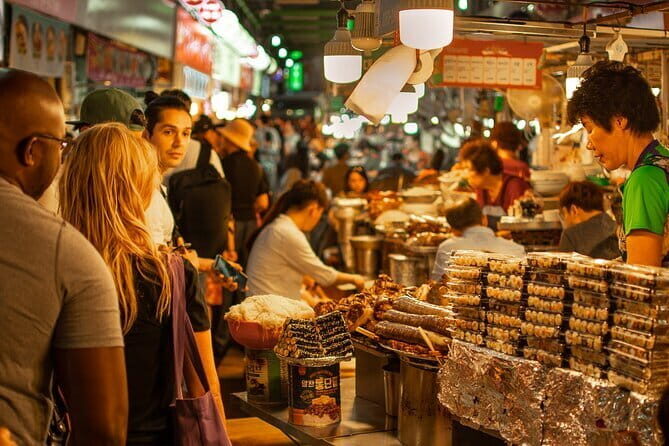
Then comes the big one: Kwangjang Market. This place is famous for a reason, but it can be intimidating the first time you see it. You’ll likely be staring at rows of stalls, menus, and steam like, okay… where do I start?
That’s exactly where guide Mike shines. He helps you avoid the most common mistake, which is ordering what looks good without understanding what that specific stall is best at. With Mike’s route and pick-by-pick explanations, you get the market’s variety without wasting time.
What I like about this setup is that you don’t just sample random food. You’re tasting Korean specialties with context, which makes each bite more memorable. The pacing also keeps you from getting food-logged too fast. You try enough to feel like you really experienced Kwangjang, but you’re not stuck later regretting a full stomach.
Also, based on what people have shared about this tour, the tastings can include a rice wine tasting at some point during the market portion. Even if you don’t make alcohol your main goal, this kind of side tasting is one of the things that turns a normal food walk into a Seoul story.
If you’re the type of traveler who likes structure—someone choosing for you while you steer with preferences—this market stop will feel like relief.
The middle stretch: old alleys meet modern Seoul
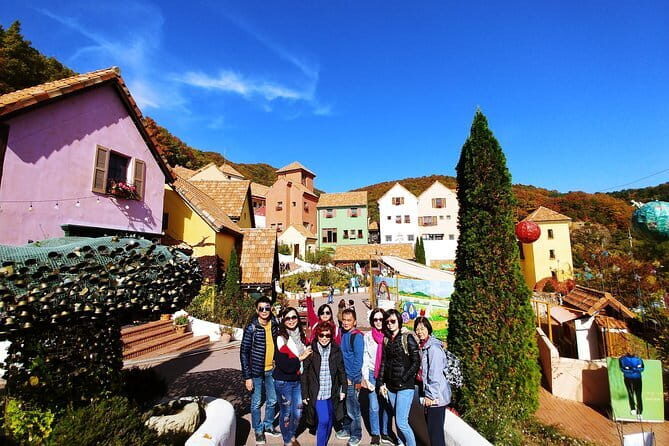
Between the two named food stops, you’ll walk through smaller lanes and pockets of Seoul that feel tucked behind the main roads. The tour describes moving through a modernized cultural area hidden in back alleys, then continuing into the historical feel of Insadong.
This “in-between” part is more than filler. It’s what helps you connect the food choices to the place itself. When you’re in a loud market, it’s easy to forget you’re in a neighborhood with texture and history. These alleys and side streets help you shift from just eating to actually reading the city.
Think of it like this: you’re tasting Korea’s flavors, and you’re also practicing how to move like a local for a short time. You’ll see small side spots that most first-time visitors would miss because they’re not on the main photo route.
It also helps your energy level. Markets and shopping areas can drain you fast if you’re only walking in a straight line. The alley sections slow things down just enough to let you digest, ask questions, and keep your pace comfortable.
The teahouse finish near Anguk: why the ending feels right
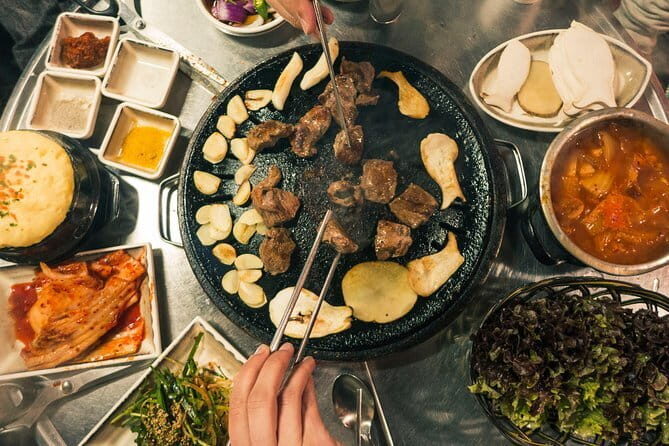
The tour ends near Anguk Station, finishing at Toto’s Nostalgia Museum, in the general area of 169-2 Gwanhun-dong. The vibe at the end is quieter and more traditional, centered around a traditional hidden teahouse.
This matters because teahouse time is not just about getting a drink. It’s a reset after the market intensity. You’ll have a chance to slow down, reflect on what you tasted, and get recommendations for what to do next in Seoul—especially if you want to keep eating after the tour.
It’s also a good place to ask practical questions while you’re in a calm setting. If you’re thinking about where to go for dinner later, or how to find similar dishes without a guide, this is when those answers actually stick.
And if you’re trying to photograph Seoul, this finish area typically gives you a more atmospheric contrast than a busy street. It’s the kind of ending that makes the whole day feel planned, not just consumed.
A few more Seoul tours and experiences worth a look
Price and value: what $94 gets you (and what it doesn’t)
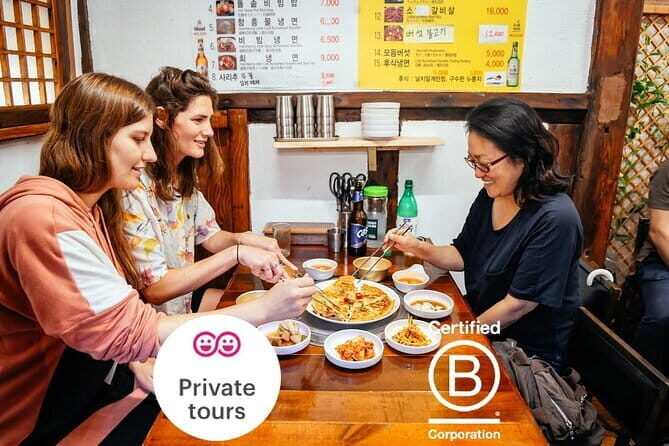
At $94 per person for about 3 hours, the value depends on one thing: how many tastings you’re getting. The tour is explicit that all food is included in the tour fee. That’s a big deal in Seoul, where snacks and meals can add up quickly if you’re shopping and eating constantly.
Compared with self-guided market wandering, you’re paying for:
- Someone to choose the stalls so you don’t waste time
- Explanations that make each dish more meaningful
- A smooth pacing plan so you don’t overdo it early
- A finish at a traditional teahouse, not just “walk away whenever”
What you should still expect is that optional spending is on you. The tour notes that you should bring extra cash if you want to purchase additional items. So if your plan is to buy drinks, desserts, or small goods, keep some flexibility in your budget.
One more value point: the tour is capped at 6 travelers, which keeps it from turning into a production line. In practice, that means you’re more likely to get direct answers instead of general commentary for the whole group.
Who this tour is perfect for (and who should think twice)
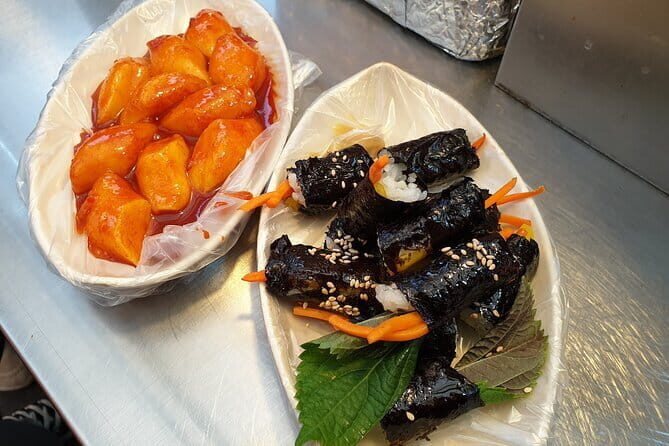
This food walk is a great fit if you:
- Want a short, high-impact Seoul food experience
- Feel uncertain about ordering in a big market like Kwangjang
- Prefer a small group where you can talk with the guide
- Enjoy learning what a dish is actually like beyond the surface name
It also fits travelers who like history and neighborhoods, not just eating. Insadong brings the cultural texture, and the teahouse finish anchors the experience in a calmer Seoul rhythm.
If you should think twice, it’s mostly about comfort level. The tour calls for moderate physical fitness and includes walking through busy areas. If you have mobility limits, you may want to consider whether the market segments and alley walking are manageable for you.
Good news: the tour states service animals are allowed, so that’s one reassuring detail if you travel with an animal.
A quick guide to how to enjoy it most
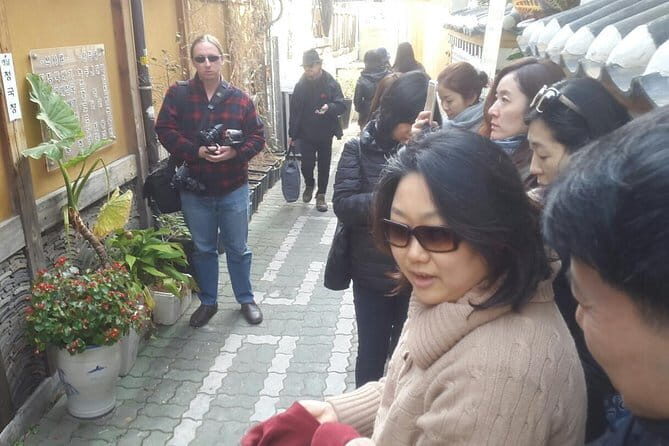
I’d go in with two expectations: you’re going to eat, and you’re going to walk. Past the easy part (food), the bigger win is letting Mike set the pace and recommendations.
Here are a few practical tips that make a difference:
- Wear shoes you can handle on market floors and during alley transitions
- Bring a bit of extra cash for anything you want after tastings
- Come hungry enough to enjoy multiple small bites, not starving and frantic
- Use the small group size to ask questions about what you actually like
Mike’s English is described as excellent, and he has real food chops; one review notes he even has a chef background. That’s the kind of guide who can answer both the what and the why. If you’re the type who asks, you’ll get solid, specific answers.
Should you book this tour?
Book it if you want a smart Seoul food route that mixes old streets, market specialties, and a calm teahouse ending—without the stress of figuring out what to order on your own. The small group size, included food, and the fact that Mike can explain choices (not just hand you food) make it feel like value, not a paid gamble.
Skip it only if you dislike market crowds or if walking through busy lanes will be a problem for you. Otherwise, this is an efficient way to get a strong sense of local Seoul through food first, then neighborhood context.
If you’re planning your trip and you want one “anchor” activity that covers a lot of ground taste-wise, this is one of the easiest bets in Seoul.
FAQ
What’s included in the tour price?
All food is included in the tour fee. The tour also suggests bringing extra cash if you want to purchase additional items at shops or during the walk.
How long is the tour?
The tour lasts about 3 hours.
Where does the tour start and where does it end?
It starts at 407 Dongho-ro, Jongno District, Seoul. It ends near Anguk Station, around Toto’s Nostalgia Museum at 169-2 Gwanhun-dong.
What’s the meeting time?
The start time is 10:30 am.
Is there walking during the tour?
Yes. The tour notes that the remaining time (after the tastings) is for walking, and you should have a moderate physical fitness level.
How big is the group?
The tour has a maximum of 6 travelers.
Does the guide speak English?
Based on traveler feedback, Mike speaks English very well.
Can I cancel for a full refund?
Yes. You can cancel up to 24 hours in advance for a full refund. If you cancel less than 24 hours before the start time, the amount paid is not refunded.
Is this tour good for first-time visitors to Seoul food markets?
It’s designed for people who might feel overwhelmed by Kwangjang Market, with guidance on where to try and what to look for, so first-timers usually find it reassuring.