REVIEW · SEOUL
Seoul UNESCO Heritage Palace, Shrine, and More Tour
Book on Viator →Operated by I Love Seoul Tour · Bookable on Viator
Four hours, three royal stops, real insight. This half-day Seoul tour packs UNESCO history into an efficient route, starting in Bukchon and ending in Myeongdong. I especially like the way the guide brings the sites to life, with past groups led by guides like Sam, Leo, Jung, Park, and Dragon, and the fact that transport and key admissions are included. One consideration: the schedule is tight, and the last stop can feel like it has a stronger sales vibe than the palaces do.
You’ll get a small-group feel (max 40), a comfortable air-conditioned minivan, and a clear plan that’s easy to fit into a busy Seoul itinerary. I also like that it’s not built around endless shopping—there’s no mall run—so you stay focused on culture instead of detours. Still, because it’s only about 4 hours, you may want to accept that there won’t be long, slow wandering everywhere.
Finally, there’s a smart built-in “if the calendar changes” element. Jongmyo Royal Shrine is closed on Tuesdays (so you’ll swap to Insadong Antique shop alley), and Changdeokgung Palace is closed on Mondays (so you’ll swap to Gyeongbokgung Palace on those days). If you’re flexible on the exact palace/shrine, this tour format keeps your UNESCO time protected.
In This Review
- Quick Key Points
- Price and Logistics: How $34 Really Plays Out
- Getting There: Meeting Point, Pickup Limits, and the Minivan Rhythm
- Bukchon Hanok Village: The Joseon-Era Street Museum Moment
- Jongmyo Shrine: Ancestral Tablets and the Day-Change Plan
- Changdeokgung Palace Complex: Courtyards, Royal Life, and the Rear Garden
- The Ginseng Museum Stop: Free Admission, Mixed Feelings
- Crowd Control and Comfort: Quiet Times, Renovations, and What to Expect
- What This Tour Is Best For (and Who Might Want Something Else)
- Final Verdict: Should You Book This UNESCO Palaces Tour?
- FAQ
- Which UNESCO World Heritage sites does this tour include?
- What are the main stops on the tour?
- How long is the tour?
- Are admission tickets included?
- Is pickup from my hotel available?
- Where does the tour start and end?
- Are meals included?
Quick Key Points
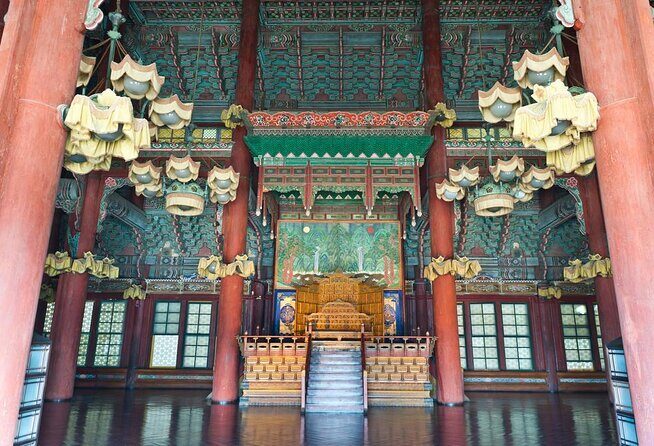
- A UNESCO-heavy route in half a day: Jongmyo Shrine plus either Changdeokgung or a Monday swap to Gyeongbokgung.
- Bukchon Hanok Village focus up front: you’ll see the Joseon-era neighborhood feel, with a Sunday swap to Namsangol Hanok Village instead.
- Guides who talk history like a story: multiple guide names have shown up in strong feedback (Sam, Leo, Jung, Park, Dragon).
- Admissions + minivan are built in: Bukchon, Jongmyo, and Changdeokgung tickets are included, and you ride by air-conditioned minivan.
- One “culture stop” that can feel salesy: the ginseng museum is free, but it may include a pushy pitch depending on how your guide handles the visit.
- Renovations and access can affect timing: some days may have restricted areas, and the guide may adjust on the fly.
Price and Logistics: How $34 Really Plays Out
At $34 per person for about 4 hours, the value comes from what’s included—not just the attractions. You’re paying for three things that add up fast on your own: local guided interpretation, air-conditioned minivan transport, and admission tickets for the main cultural stops (Bukchon Traditional Culture Center, Jongmyo Shrine, and Changdeokgung Palace).
You also get a simple meeting plan. The tour starts at 8:30 am at Myeongdong Station Exit 1061-7 (Chungmuro 2(i)-ga, Jung District), and it ends around Myeongdong. That drop-off matters because it puts you back in the part of Seoul where it’s easy to eat and keep exploring after the tour ends.
The flip side is pacing. This isn’t a “take your time in every courtyard” type of day. It’s more like a smart guided overview with enough time to see the core highlights and learn what you’re looking at. If you like slow museum-level time, you may feel the route is a sprint—especially if you’re hoping for extra photo stops.
You can also read our reviews of more historical tours in Seoul

Getting There: Meeting Point, Pickup Limits, and the Minivan Rhythm
The tour is built around a practical Seoul reality: hotels aren’t always easy to reach with a vehicle. Hotel pickup is only available for centrally-located hotels. If your place is tucked behind alleys, the guide meets you in front of a nearby central hotel or at the nearest subway station instead. This is a good policy because it avoids the classic problem of getting stuck in traffic or forcing a group through narrow streets.
You ride by air-conditioned minivan, which is a big comfort perk in Seoul’s seasons. It also helps the group stay on schedule for those timed entry points around palaces and shrines. The max group size is 40, which is large enough to be efficient but small enough that you’re not lost in a crowd of hundreds.
For you, the key is to show up right on time at the meeting spot near Myeongdong Station. The tour starts at 8:30 am, and the later stops depend on keeping that rhythm. If you’re prone to wandering a few extra blocks when you arrive early, set a reminder and give yourself a buffer.
Bukchon Hanok Village: The Joseon-Era Street Museum Moment
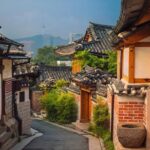
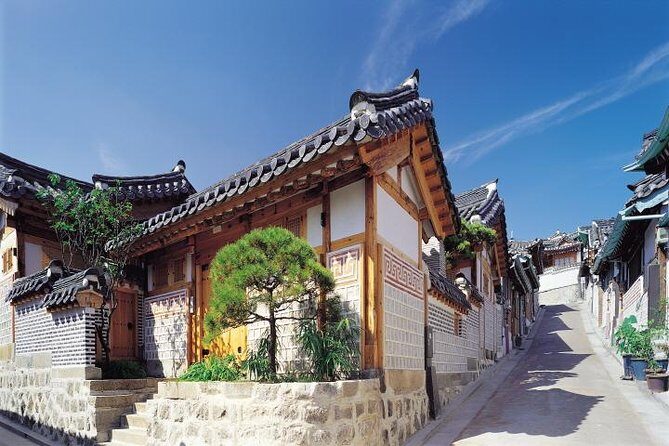
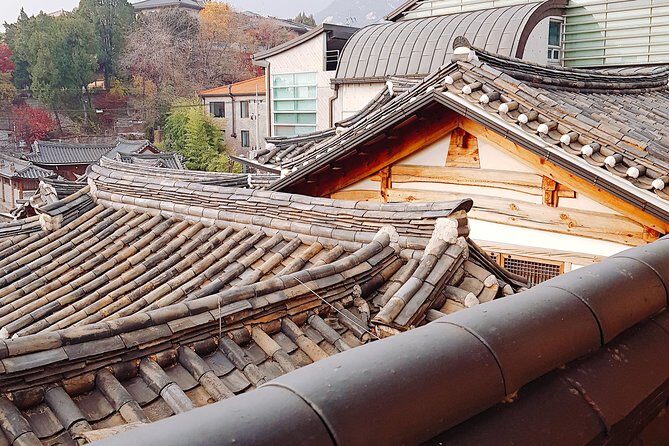
The tour starts with Bukchon Hanok Village, described as a street museum in the urban core. The idea is simple: you’re not just looking at a palace from far away. You’re seeing a whole neighborhood that reflects traditional Joseon-era homes dating back to the 14th century.
You spend about 40 minutes at Bukchon Traditional Culture Center, with an admission ticket included. That time is short, but it’s long enough to get bearings fast: what a hanok is, how the neighborhood layout works, and what makes this area different from modern Seoul streets.
Two useful details help set expectations:
- If your day is Sunday, the tour swaps to Namsangol Hanok Village instead of Bukchon.
- This is typically where you get your “how to read the city” introduction. Once you understand the basic pattern of traditional homes and courtyards, the later palace and shrine architecture makes more sense.
One more practical note: access can change. At least one past group had restricted access in Bukchon and the guide rearranged timing to manage it. So if you arrive at a quieter area than expected, don’t panic—ask your guide what’s possible that day and follow along. In many cases, you’ll still come away with the big picture.
Jongmyo Shrine: Ancestral Tablets and the Day-Change Plan
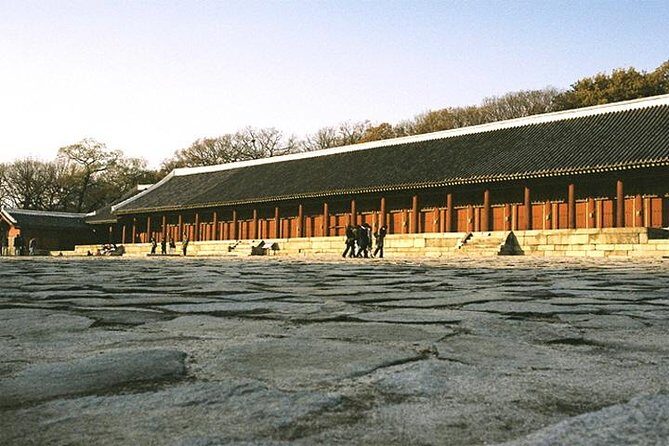
Jongmyo Shrine is one of the UNESCO hits on this route, and it’s special in a very specific way. You’re walking in a space where the ancestral tablets of the kings and queens of the Joseon Dynasty are enshrined. The Jongmyo Memorial Service has been held since the dynasty’s establishment, and the tour frames that long continuity as the heart of what you’re seeing.
You get about 40 minutes here, and admission is included. That’s enough time to understand the function of the shrine and the general layout, even if you can’t linger for dramatic “stare at every stone” moments.
Now for the built-in change you should know before you book. Jongmyo Royal Shrine is closed on Tuesdays, so on those days the tour visits Insadong Antique shop alley instead. Insadong is more street-and-shop culture than formal shrine architecture, so your experience will shift. You’re still learning something cultural, just with a different vibe.
Also, parts can be under renovation. One group ran into renovation areas, which limited parts of the experience. If your main goal is photos of specific angles, go in expecting that you might not see every exact view at its fullest.
Changdeokgung Palace Complex: Courtyards, Royal Life, and the Rear Garden
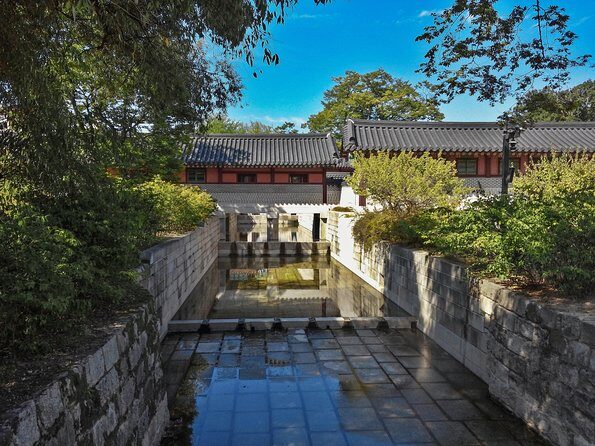
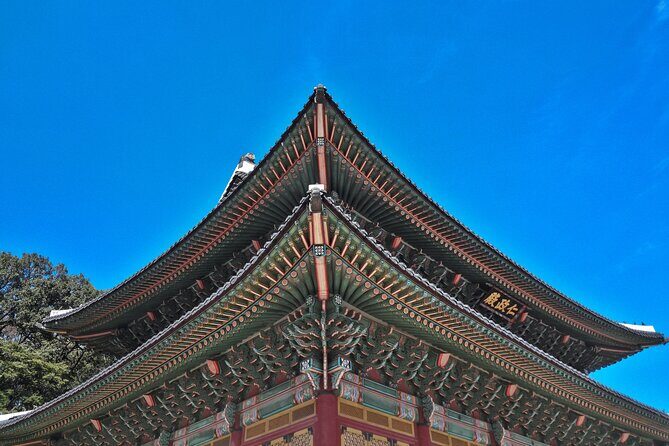
Changdeokgung Palace is the other major UNESCO stop, and it’s the one that tends to leave people thinking, because it’s tied to real daily royal life, not just ceremonial grandeur. The palace was built after Gyeongbukgung Palace and became the principal palace for many Joseon kings. Of the remaining five royal palaces, it’s noted as the most well-preserved.
On this tour, you spend about 1 hour at Changdeokgung, with admission included. That hour typically covers the main palace areas plus a taste of the “rest and retreat” atmosphere that Changdeokgung is known for.
Here’s what you’re really looking for inside the complex:
- A public palace area and royal family residence building that show how spaces were separated by function.
- The rear garden, described as a resting place for the kings, including a pond and a pavilion.
- A famous very old tree in the rear garden, listed as more than 300 years old.
That mix matters because palaces can feel repetitive if you only focus on gates and walls. The garden portion changes the mood and makes the palace feel lived-in, like the court had a quieter side too.
And again, the calendar matters. Changdeokgung Palace is closed on Mondays, so on Monday tours you visit Gyeongbokgung Palace instead. If you’re comparing palaces, don’t treat them as interchangeable. But if you just want UNESCO palace time with interpretation, the swap keeps you from losing the highlight entirely.

The Ginseng Museum Stop: Free Admission, Mixed Feelings
The schedule includes a stop at the Cheongha Korea Ginseng Museum (Cheongha Korea Ginseng) for about 30 minutes. Admission is free on this tour.
The content you’ll hear is rooted in how ginseng is presented historically and scientifically in Korean context. The museum references ginseng in Ji Jiu Zhang during the Han dynasty and describes it as a widely used herb. The tour also highlights studies suggesting Korean ginseng performs well in adaptogenic properties.
Here’s the honest part for your decision-making: multiple groups have flagged that the ginseng center can feel like a hard-sell room. Others have found it less distracting, depending on the guide and how the pitch is handled. So go in with the right mindset. This stop is educational, but it also has a commercial purpose.
If you’re sensitive to sales pressure, you can reduce the impact by keeping your questions practical and staying focused on the museum’s explanations rather than getting pulled into product talk. You’re there for the tour’s cultural route, and you’ll be back in Myeongdong soon after.
Crowd Control and Comfort: Quiet Times, Renovations, and What to Expect
A big selling point is that you’re not spending your day trapped in a theme park crush. One group specifically liked the UNESCO experience without crowds and called out a Sunday morning as a calmer way to see things. That’s not a guarantee, but it’s a decent strategy: if you can choose your day, morning timing usually helps.
Comfort is also built in. Transport is punctual and comfortable, and the minivan keeps you from spending that whole time walking between sites. The tour is designed for moderate physical fitness—you’ll be walking through palace/shrine grounds, but it’s not described as extreme trekking.
Renovation and access changes are a realistic factor. If you hear that parts of the shrine or palace are being restored, accept the compromise. Your guide should still connect the “why” of the site to what you can actually see that day.
What This Tour Is Best For (and Who Might Want Something Else)
This is a great fit if you want:
- A guided overview of two UNESCO sites plus an extra cultural neighborhood segment in one half day.
- Simple logistics starting at Myeongdong with minivan transport.
- A tour structure that avoids heavy shopping center hopping.
It may be less ideal if you:
- Want a slow, free-form pace where you can linger for 30 to 60 minutes in a single courtyard.
- Prefer no sales atmosphere at all, since the ginseng stop can include a strong pitch.
- Are traveling with someone who needs lots of downtime between stops, because the itinerary is timed.
For families, it can work if everyone is comfortable walking through palace grounds for the allotted time. For solo travelers and couples, it’s often a smart way to get interpretive context fast—especially if it’s your first time in Seoul palaces.
Final Verdict: Should You Book This UNESCO Palaces Tour?
I’d book this tour if you want UNESCO highlights without turning your day into logistics homework. The included admissions plus the minivan transport bring the real value closer to what you’d spend on your own, and the strongest praise centers on the guide quality—people explicitly named Sam, Leo, Jung, Park, and Dragon, and mentioned clear explanations and even helpful photo moments.
Skip it or consider alternatives if your priority is pure, unhurried palace wandering. The schedule can feel rushed, and the ginseng museum stop can tilt into a hard-sell experience for some people. If you’re the type who hates shopping pitches, go in mentally prepared—or choose a different tour format that doesn’t include that final commercial culture stop.
If you do book, come ready to move, bring water, and treat the morning like an interpretive guided walk. Do that, and you’ll get a clean hit of Korea’s royal story—Jongmyo’s ancestral tradition and Changdeokgung’s palace-and-garden life—then drop back into Myeongdong for the rest of your day.
FAQ
Which UNESCO World Heritage sites does this tour include?
The tour includes visits to Jongmyo Shrine and the Changdeokgung Palace Complex. On Mondays, Changdeokgung is closed and the tour goes to Gyeongbokgung Palace instead.
What are the main stops on the tour?
You visit Bukchon Traditional Culture Center (or Namsangol Hanok Village on Sunday), then Jongmyo Shrine (or Insadong Antique shop alley on Tuesday), then Changdeokgung Palace Complex (or Gyeongbokgung on Monday), plus a Cheongha Korea Ginseng Museum stop.
How long is the tour?
The tour runs for about 4 hours.
Are admission tickets included?
Yes. Admission tickets are included for Bukchon Traditional Culture Center, Jongmyo Shrine, and Changdeokgung Palace.
Is pickup from my hotel available?
Hotel pickup is available only for centrally-located Seoul hotels. If your hotel is behind alleys, the guide meets you at the nearest central hotel or nearest subway station instead.
Where does the tour start and end?
It starts at Myeongdong Station Exit 1061-7 (Chungmuro 2(i)-ga, Jung District) and ends with drop-off in the Myeongdong area.
Are meals included?
No. Meals or drinks are not included on the tour.