REVIEW · SEOUL
Seoul : Best of Seoul Private Walking Tour
Book on GetYourGuide →Operated by Guydeez Tours · Bookable on GetYourGuide
A private walk in Seoul is the easiest way to get your bearings fast. I like the private, customizable format and the fact you’re guided through real neighborhoods, not just one landmark parade, with hands-on local advice along the way. The main catch is simple: it’s a walking-heavy 3 hours, so comfy shoes matter, especially in hotter or wetter weather.
You’ll start near Sejongno at 172 Sejong-daero (the tour notes a meeting spot labeled 지하 172), then move through four classic stops: Jogyesa Temple, Gwangjang Market, Bukchon Hanok Village, and finally Gyeongbokgung Palace. I also appreciate that you’re not left to figure everything out alone—your guide can help with key logistics like ticket booking for the sites that cost extra and practical recommendations for what to do next in the city.
In This Review
- Key highlights I’d plan around
- Why a Seoul private walking tour beats DIY for first-timers
- Starting point at 172 Sejong-daero (지하 172): easy to reach, easy to find
- Jogyesa Temple: a calm start with photo-friendly focus
- Gwangjang Market: where your guide turns stalls into a plan
- Bukchon Hanok Village: traditional houses you can actually read
- Gyeongbokgung Palace: major sights with ticket planning built in
- Private guide quality: the small extras that make it worth it
- Walking tour logistics: what to expect between stops
- Price and value: does $82 make sense?
- Who this tour fits best
- Quick “should I book it?” checklist
- FAQ
- Is this a private tour?
- How long is the tour?
- What does the price include?
- Are Gyeongbokgung Palace tickets included?
- Where is the meeting point?
- What languages are available?
- What’s the cancellation policy?
- Is the tour wheelchair accessible?
Key highlights I’d plan around
- Private and exclusive: it’s just your group, so you can set the pace and priorities
- A tight 3-hour route: four major areas with photo stops and guided walking built in
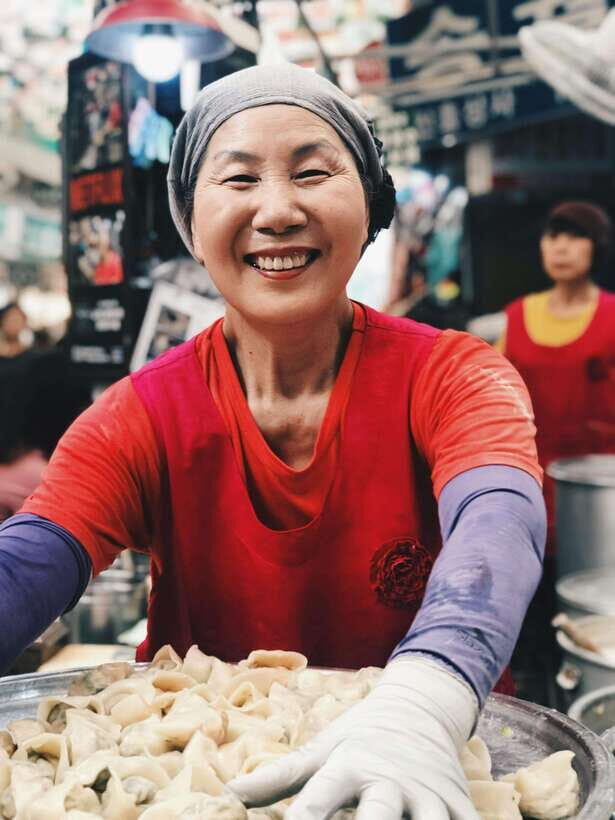
- Food and shopping at Gwangjang Market: your guide helps you navigate stalls and local favorites
- Bukchon Hanok Village context: you’ll learn what you’re looking at, not just pass it
- Gyeongbokgung timing with ticket support: smoother entry planning since the palace admission isn’t bundled
Why a Seoul private walking tour beats DIY for first-timers
Seoul is big, and the neighborhoods don’t feel interchangeable once you’re there. A private walking tour works because you get a local lens immediately: which streets to take, what’s worth your time, and what you can skip without guilt. In 3 hours, you don’t just see sights—you learn how to read the city.
I also like that this isn’t a rigid museum-style tour. It’s built around walking, photo moments, and guided time at each place, with room for customization. That matters if you’re the kind of traveler who wants history, but also wants practical tips like where to go next or how to handle day-to-day logistics.
The value question comes down to one thing: can you save time and frustration? If you’ve ever spent an afternoon “trying to figure it out,” this format usually pays off fast.
You can also read our reviews of more walking tours in Seoul
Starting point at 172 Sejong-daero (지하 172): easy to reach, easy to find
Your meeting point is listed as 172 Sejong-daero, Sejongno, Jongno-gu. The note “지하 172” suggests a specific subway/underpass meeting area tied to that address, so I’d plan to arrive a little early and do a quick lookaround on the street-level reference first.
If you’re staying in the city, the tour also offers hotel pickup (you meet at your accommodation if it’s located in Seoul). That’s a big quality-of-life boost when you’re juggling jet lag or trying to align multiple people’s schedules.
Either way, you’re launching from an area that’s well connected to major sights. That makes the walking route feel efficient rather than random.
Jogyesa Temple: a calm start with photo-friendly focus
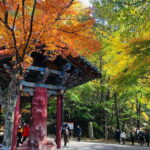
Jogyesa Temple is where the tour slows down and gives you a “Seoul has layers” moment right away. With about 45 minutes of guided time (including a photo stop, walk, and sightseeing), you’re not rushed through gates and then released back into traffic.
A temple stop is more than pretty architecture. It’s a reset. The guide’s job here is to point out what to notice—layout, atmosphere, and the story behind what you’re seeing—so you come away with understanding, not just photos.
One practical note: even when a temple feels quiet, you’ll still be moving on foot. Wear shoes you can walk in for the long haul, because the tour’s momentum stays consistent across all four stops.
Gwangjang Market: where your guide turns stalls into a plan
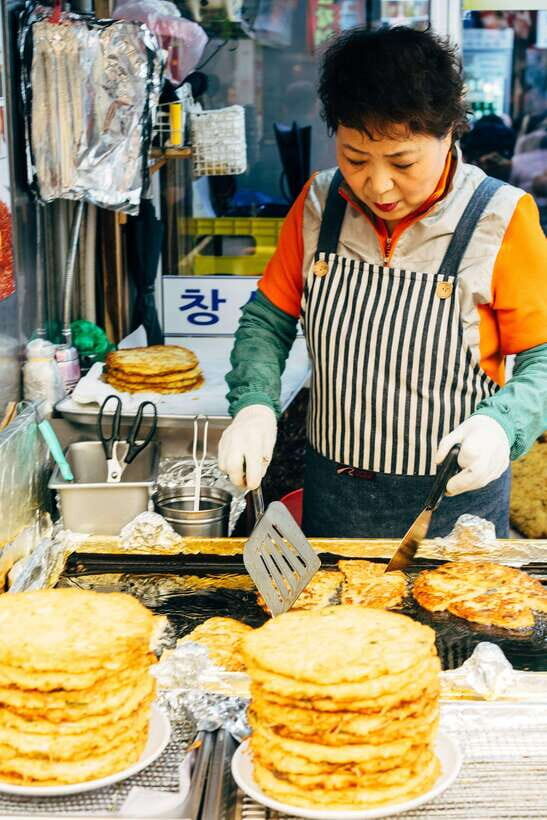
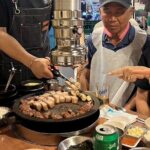
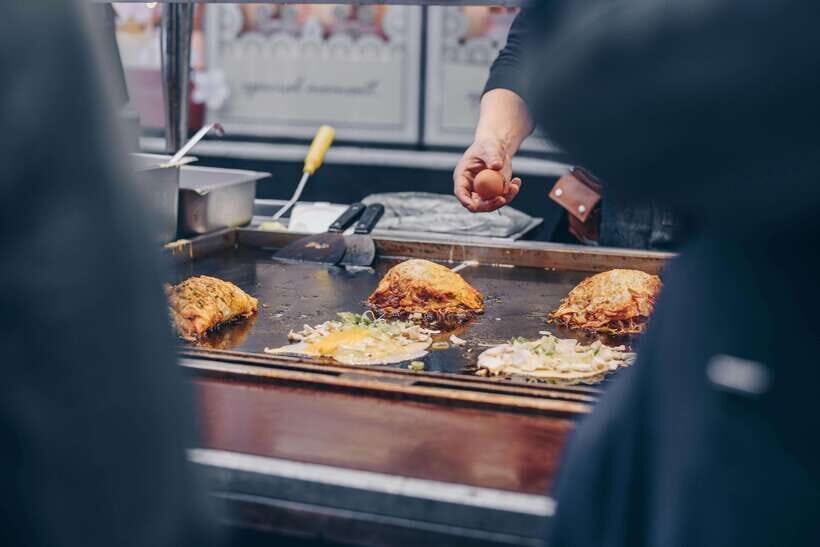
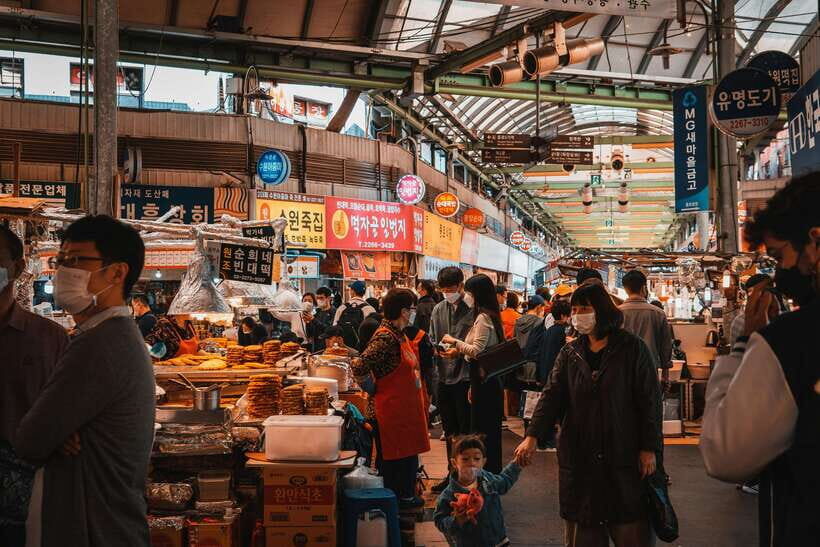
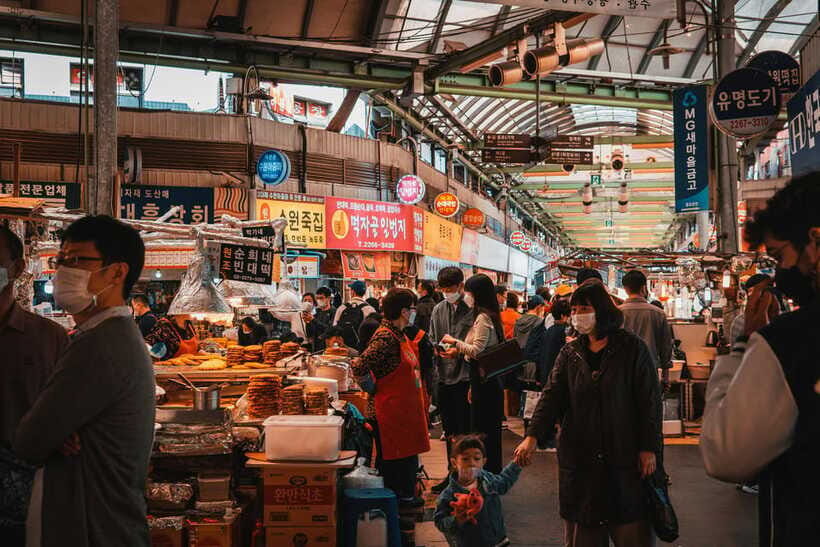
Next comes Gwangjang Market, with another 45-minute block that includes a guided walk and sightseeing plus a photo stop. This is where your guide’s local familiarity really shows, because markets can be overwhelming fast—bright signs, dense crowds, and too many choices.
What you gain from a guided route is simple: you don’t waste time wandering without a clue. Your guide helps you find local delicacies and unique items, and you’re more likely to try things you would not have picked by random guessing.
Two cost realities to keep in mind. Food and drinks aren’t included, and the tour won’t magically fix hunger budgets. The upside is that you’ll be shopping with context, so you’re less likely to spend on something that doesn’t match your tastes.
If you care about eating like a local, this stop is one of the best reasons to book a guided tour instead of going solo.
Bukchon Hanok Village: traditional houses you can actually read
Then you reach Bukchon Hanok Village, where the goal shifts from “see” to “understand.” The tour’s timing again is about 45 minutes with a guided visit and walking route, plus a photo stop.
Here’s what makes a guide useful: hanoks and the streets around them can look similar until someone explains what you’re seeing—why certain homes and lanes matter, and how the neighborhood’s living heritage connects to Seoul’s larger story. You’re not just taking pictures of wooden facades. You’re learning how this part of the city works.
A small caution: Bukchon is an area where walking feels more continuous and the route can include uneven patches. You don’t want stiff shoes that hurt by hour two. If you know you’re prone to sore feet, treat this as a warning label.
Also, because the tour is private and customizable, you can usually spend a bit more time on the exact streets that catch your eye, instead of feeling trapped in a fixed script.
You can also read our reviews of more private tours in Seoul
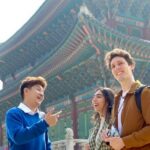
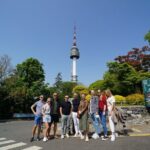

Gyeongbokgung Palace: major sights with ticket planning built in
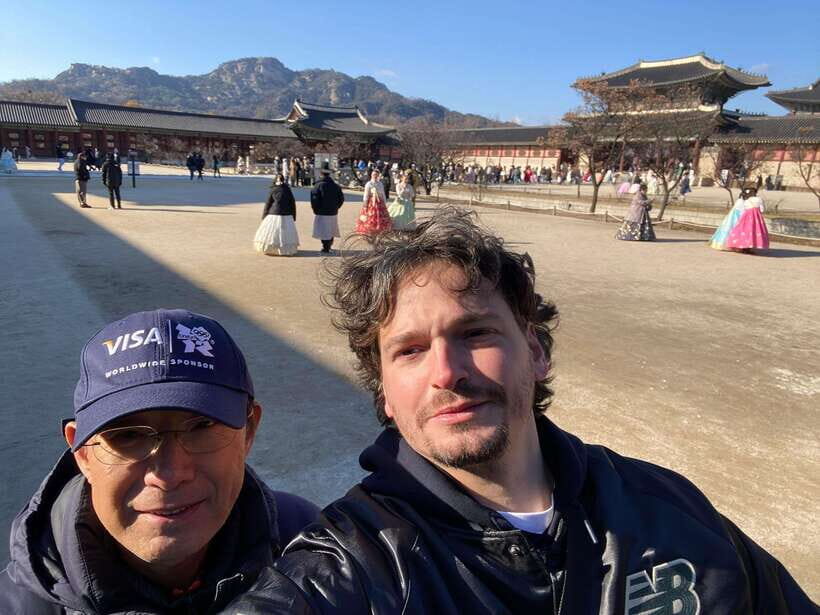
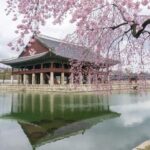
The final stop is Gyeongbokgung Palace, with another 45 minutes for photo stop, visit, guided sightseeing, and walking. It’s one of Seoul’s headline historical sites, and it’s also the kind of place where having context changes everything.
One important detail: palace admission tickets aren’t included. However, the tour includes help from the team to book tickets for the desired visits. That means less hassle on your end, and a smoother path once you arrive.
What I like about ending here is pacing. After Jogyesa, a market, and Bukchon, the palace feels like a satisfying conclusion rather than the first thing you tackle. By the time you arrive, you’ve already seen how Seoul blends the old with the everyday.
If you’re the type who wants to understand what you’re looking at, use the guided portion to ask questions. The palace is vast, and a good guide helps you focus on the highlights that matter most.
Private guide quality: the small extras that make it worth it
A private tour lives or dies on guide effort, not just the itinerary. One standout detail from a past booking was Alvaro, who stayed later than planned to help with practical stuff—ordering food and loading travel cards. That kind of extra hand doesn’t just save time. It reduces the stress you usually spend figuring out daily logistics.
It’s also where customization shows up in real life. When your guide can adapt, they can adjust pacing, recommend what to prioritize, and help you translate what you see into next-step plans.
This tour also runs with a live guide in Italian, French, English, and Spanish, and it’s listed as wheelchair accessible. Since it’s still a walking route, I’d suggest confirming the comfort level and pace with the provider if mobility is a concern.
Walking tour logistics: what to expect between stops
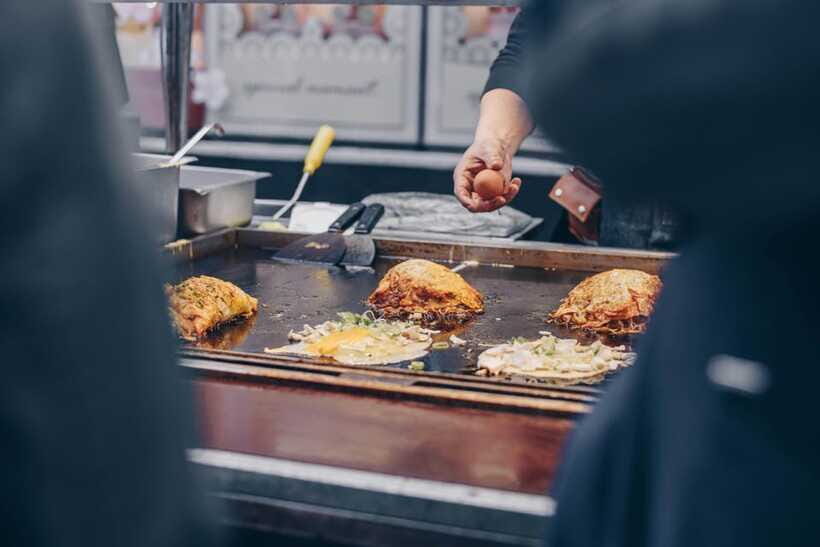
This is a walking-focused format. The included details say walking tour and public transport are part of the plan, except if you select one of the options. Car transportation isn’t included.
That matters for expectations. You’re not getting driven to every door, and Seoul’s sidewalks and crossings are part of the experience. If you love walking tours, it’ll feel natural. If you hate it, you’ll feel the strain.
Also, you’re looking at a total duration of about 3 hours, which is tight. Expect photo stops plus guided time inside each place to fill the window. In other words, it’s not a slow “hang out all afternoon” tour.
My practical advice: treat this as a starter orientation tour. Do it early in your trip if possible, then use your guide’s recommendations to plan the rest of your days.
Price and value: does $82 make sense?
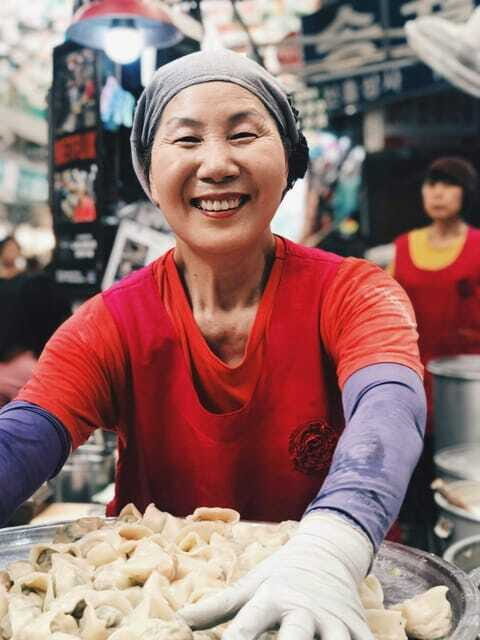
At $82 per person for a 3-hour private tour, the price sits in the “not cheap, but not outrageous” zone—especially because it’s exclusive to your group. In a city like Seoul, that’s often where private guidance pays off: less wasted time, better choices, and fewer moments of confusion.
Here’s the value math that matters:
- You get a local guide and guided time at four major areas
- You get customization and advice for other things to do
- You get help booking tickets for sites that cost extra
- You don’t split attention with strangers
What you’ll still pay for:
- Gyeongbokgung Palace tickets
- Food and drinks
- Any other attraction tickets not included
If you’re the kind of traveler who would otherwise spend hours researching routes, translation tips, and what’s worth your time, the guided value is easier to justify. If you’re already highly confident navigating Seoul alone and you’re comfortable spending time figuring things out, you might prefer self-guided routes. But if you want a fast, guided foundation, this price can feel fair.
Who this tour fits best
This Seoul private walking tour works especially well if you:
- want a focused orientation to Jongno and the central sights
- like history, but also want practical “how to do Seoul” advice
- prefer a personal pace over crowded group tours
- want market time without wandering aimlessly
It may not be ideal if you:
- dislike walking for the full 3 hours
- need a fully car-based itinerary (since it’s walking with public transport)
Quick “should I book it?” checklist
Book this tour if you want a clean, guided route that covers four big anchors in a short time and helps you make smarter choices. The private setup and the guide’s extra help—like the kind of late adjustment that can solve ordering and travel card hassles—are exactly the sort of thing that turns a sightseeing outing into a trip tool.
Skip it only if walking is a hard no for you or if you’re already set on self-guided planning with your own research fully handled.
FAQ
Is this a private tour?
Yes. It’s listed as a private and exclusive tour, so there won’t be anyone else in your group.
How long is the tour?
The duration is 3 hours.
What does the price include?
The tour includes a private guide experience, customization, hotel pickup if you’re located in the city, walking tour and public transport (unless you select an option), and help from the team to book tickets for the desired visits.
Are Gyeongbokgung Palace tickets included?
No. Palace tickets are not included.
Where is the meeting point?
The meeting point is listed at 172 Sejong-daero, Sejongno, Jongno-gu, Seoul (noted as 지하 172).
What languages are available?
The live tour guide is available in Italian, French, English, and Spanish.
What’s the cancellation policy?
Free cancellation is offered up to 24 hours in advance for a full refund.
Is the tour wheelchair accessible?
It’s listed as wheelchair accessible.
—
If you want, tell me your travel dates and what you care about most (temples, food, traditional neighborhoods, or palace history). I can help you decide whether the order of these stops fits your pace and priorities.