REVIEW · SEOUL
Private Seoul City Tour
Book on Viator →Operated by Top Korea Tour · Bookable on Viator
Seoul in one day feels like speed-running history, the good kind. You get a private, custom-friendly itinerary that moves efficiently from palace ceremonies to old neighborhoods and a real market, all while a guide helps you make sense of what you’re seeing. I especially liked the hotel pickup convenience and how the day spotlights major royal sites, including the changing guard at Gyeongbokgung Palace.
One thing to plan for: Tuesday matters. Gyeongbokgung Palace is closed on Tuesdays, so the tour shifts to Changdeokgung Palace instead.
In This Review
- Key highlights worth your attention
- A private Seoul day that actually fits in 8 hours
- Gyeongbokgung Palace and the changing guard ceremony you’ll want to time right
- The Tuesday rule (don’t let it surprise you)
- Changdeokgung Palace on Tuesdays: UNESCO time with a smoother storyline
- Bukchon Hanok Village: traditional homes and the kind of walking you can actually enjoy
- Jogyesa Temple in downtown Seoul: a calm pause with real religious context
- Gwangjang Market: where you learn how Seoul eats and shops
- Naksan Park and Seoul’s old city wall: views that close the loop
- Guides who turn a route into a story (Juno or Miae style)
- Price and what you actually get for $210
- What it feels like on the ground: pace, breaks, and comfort
- Who this private Seoul tour is best for
- Should you book this private Seoul city tour?
- FAQ
- What time does the tour start?
- How long is the private Seoul city tour?
- Is this tour private?
- What’s included in the tour price?
- Are palace and attraction tickets included?
- Is lunch included?
- Which palace do you visit on Tuesdays?
- How does cancellation work?
Key highlights worth your attention
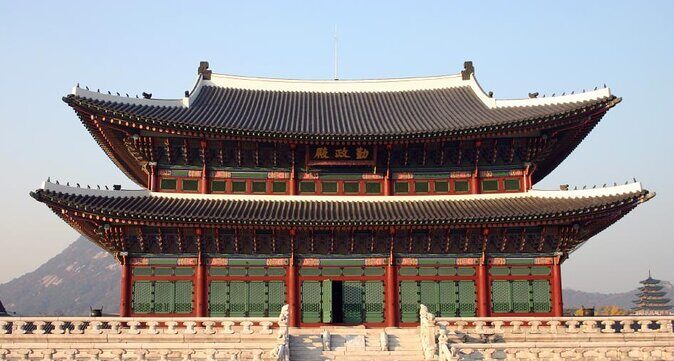
- Gyeongbokgung Palace changing guard experience (with a Tuesday swap to Changdeokgung)
- UNESCO-listed Changdeokgung when the main palace can’t be visited
- Bukchon Hanok Village and its traditional neighborhood feel (with free entry time)
- Jogyesa Temple in the middle of Seoul, tied to the Jogye order of Korean Buddhism
- Gwangjang Market for hands-on, local-style food and shopping time
- Naksan Park and Seoul’s old city wall views for a satisfying finish
A private Seoul day that actually fits in 8 hours
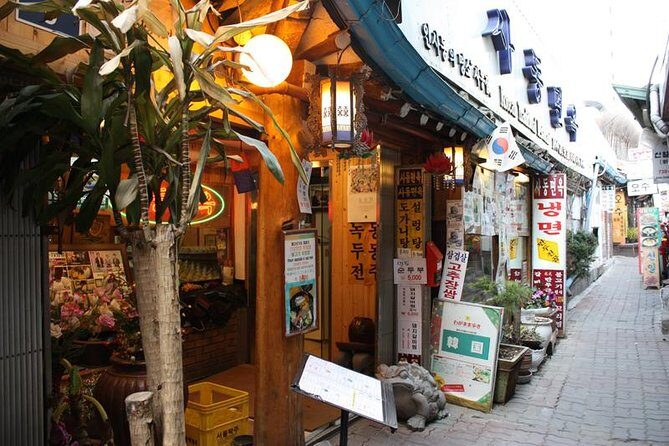
This tour is built for people who want more than checkboxes. You start at 9:30 AM, then spend about 8 hours moving through classic central Seoul areas with an air-conditioned minivan and hotel pickup/drop-off. The big win here is not just comfort. It’s time. You avoid the guesswork of transit between neighborhoods and you get to spend your energy looking, not navigating.
The private format also changes the feel. Only your group participates, so you can keep a relaxed rhythm without building your day around other people’s slowdowns. And the day is described as customizable, which matters because Seoul is a place where weather, walking stamina, and your specific interests can easily change what’s worth your time.
If you’re someone with only one full day (or close to it) in Seoul, this kind of structured loop is a smart use of a short trip. You’ll see a palace, a traditional village area, a downtown Buddhist temple, a major market, and an outdoor viewpoint/wall segment—without feeling like you’re sprinting across town all day.
You can also read our reviews of more city tours in Seoul
Gyeongbokgung Palace and the changing guard ceremony you’ll want to time right
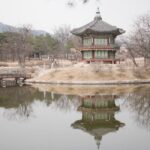
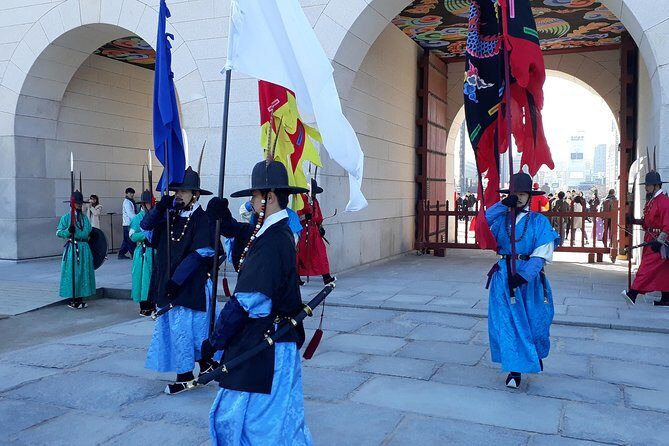
The tour’s first major stop is Gyeongbokgung Palace, described as the main palace in Seoul, with the changing of the guard ceremony. You’ll have about 1 hour 10 minutes, and admission is included.
Why this stop is a big deal for first-timers: it’s the most straightforward way to understand Korea’s royal visual language in one place. Even if you don’t know the details beforehand, you’ll be able to connect what you see—ceremony, guards, palace setting—to the wider story of Korean history and how the royal world shaped Seoul.
Practical tip: dress and plan for standing time. Palaces can mean long moments outdoors, even when you’re moving. Comfortable shoes help a lot here because you’ll likely be walking paths between viewpoints and waiting areas during the ceremony.
The Tuesday rule (don’t let it surprise you)
On Tuesdays, the tour won’t do Gyeongbokgung Palace. Instead, it visits Changdeokgung Palace. So if changing guard at Gyeongbokgung is your top priority, you’ll want to book on a different day.
Changdeokgung Palace on Tuesdays: UNESCO time with a smoother storyline
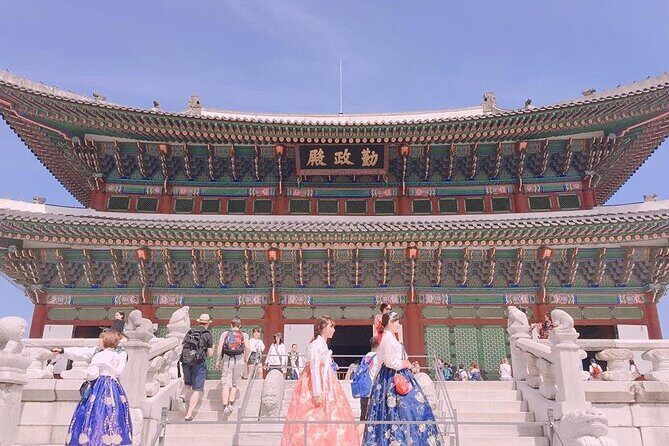
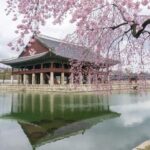
When the schedule flips, you go to Changdeokgung Palace, listed as a UNESCO World Heritage Site. Your time here is about 1 hour 10 minutes, and tickets are included.
This is still a royal-palace day. The point isn’t to treat it as a consolation prize. It’s a second chance to see how Korea presents its royal past through palatial space and cultural ceremony. And because your itinerary keeps the day moving into traditional neighborhoods and temples afterward, the switch usually doesn’t feel like a disruption—it’s just a different chapter of the same royal theme.
If you arrive on a Tuesday and you’re worried you’re missing the more famous palace, remember this: you’re still starting with a major royal site, and the rest of the day keeps building context around old Seoul life.
Bukchon Hanok Village: traditional homes and the kind of walking you can actually enjoy
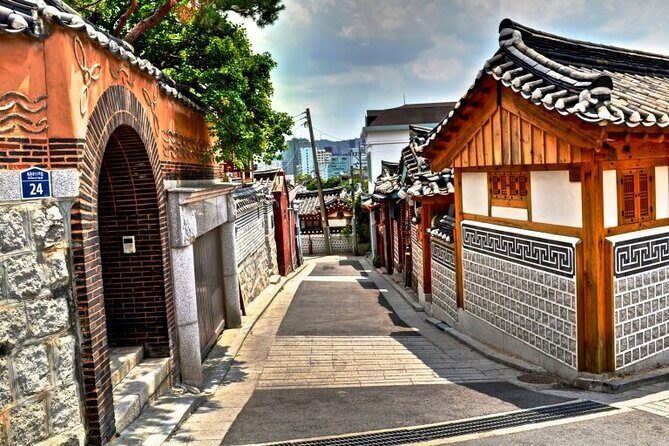
Next up is Bukchon Hanok Village, with about 40 minutes. Entry is listed as free. The description focuses on traditional city-style houses built in the 1930s, which gives you a useful lens. This isn’t just a themed set. It’s a neighborhood that tells you something about how older Seoul neighborhoods took shape over time.
What I like about placing Bukchon in the middle of the day is that it’s a palate cleanser after the formality of palace grounds. You shift from royal ceremony to everyday street scale—doors, lanes, and the feel of a lived-in historic area.
A small practical note: this part of the day works best if you’re okay with slow strolling. You’ll get more out of it if you pause for photos and just watch how the neighborhood layout feels underfoot.
You can also read our reviews of more private tours in Seoul

Jogyesa Temple in downtown Seoul: a calm pause with real religious context
After Bukchon, you stop at Jogyesa Temple for about 30 minutes. Admission is listed as free.
Jogyesa is described as a small Buddhist temple located in downtown Seoul, but it’s also the head temple for the Jogye order, which is described as the largest form of Buddhism in Korea. That combination is exactly why this stop works on a day like this. You’re not just ticking off a temple name—you’re getting a sense that religion here isn’t locked away on the outskirts. It’s part of the city’s center.
In a 1-day itinerary, temple time should feel like a reset, not another endurance test. Keep an eye on your pace, especially if you’ve already been walking in palaces and old neighborhoods. Thirty minutes is short enough that you can experience it without it turning into a chore.
Gwangjang Market: where you learn how Seoul eats and shops
Then comes one of the most useful stops on any Seoul city day: Gwangjang Market. You’ll have about 40 minutes, and it’s listed as free to enter.
The description is honest and helpful: it’s a traditional market where you can learn how Koreans eat and live. That’s exactly what you’re looking for if you want more than scenery. Markets show you what’s common, not just what’s famous.
A practical reality: this tour lists lunch as not included, and it also notes that snacks and drinks are available to purchase. So use this time in the way that fits you. If you want to sample street food, budget for what you choose. If you want to skip food and focus on browsing, the market still gives you that everyday texture—stalls, shopping rhythms, and the vibe of people actually doing their normal day shopping.
If you’re a photo person, markets can be great, but they’re also busy. Move with the flow and don’t block vendor work. You’ll get better photos and feel more welcome.
Naksan Park and Seoul’s old city wall: views that close the loop
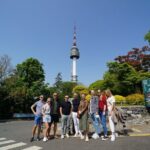
Your final scenic stop is Naksan Park, with about 30 minutes. Entry is listed as free.
This is where the day ties together nicely. The description focuses on two things: Seoul’s scenery and the Seoul wall, described as an old city wall built to protect the city. After palace, village, temple, and market, this outdoor finish gives you breathing room and a sense of Seoul’s shape—how old defenses and geography mattered.
Thirty minutes is enough for a viewpoint circuit if you keep it efficient. Don’t plan to do a full hike. Think of it as a short “see it, feel it, photograph it” ending.
Guides who turn a route into a story (Juno or Miae style)
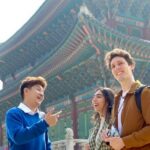
The reviews for this kind of tour usually live or die with the guide, and here the names that show up repeatedly are Juno and Miae. What you should care about is the behavior you can expect: guides who explain what you’re looking at, adjust pace, and help you move through busy spots without wasting time.
From the feedback style, two guide traits stand out:
- They focus on making the day feel tailored to your group, not like a factory route.
- They’re attentive—helping with practical needs like extra breaks, keeping seniors comfortable, and working around mobility concerns when possible.
One group experience also points to an important benefit of customization: the itinerary can gain extra scenic stops when your day needs it. For example, a viewpoint drive-up near city scenery (Bugak Skyway and Palgakjeong were mentioned in one account) can be added. That’s the kind of flexibility that makes a private tour feel worth paying for, because you’re not locked into only what’s written down.
So when you book, consider this: your tour value isn’t just the places. It’s how the guide connects them into a coherent day. That’s where the best moments come from.
Price and what you actually get for $210
At $210 per person, this is not a budget tour. But it is also not just a van ride with a tired audio guide.
Here’s what the price includes:
- Hotel pickup and drop-off
- Transport by air-conditioned minivan
- Driver and guide setup for larger groups (and private transportation overall)
- Bottled water
- Admission fees for the paid sites on your route (for example, Gyeongbokgung, and Changdeokgung when applicable)
What’s not included:
- Lunch
- Alcoholic drinks, snacks, non-alcoholic beverages, and coffee/tea (all available to purchase)
That mix is pretty common for private Seoul tours: you’re paying for access and transportation, not for every meal you might want. The good part is that the costly items—palace tickets—are handled, and you avoid the friction of trying to buy tickets and figure out timing alone.
If you’re comparing options, a useful way to judge value is to estimate what you’d spend on transport plus palace admissions plus a guide’s time to keep your day from turning into a transit marathon. Even before you talk about customization, this tour is designed so you don’t lose hours to logistics.
What it feels like on the ground: pace, breaks, and comfort
This is a full-day route across several distinct areas, so it naturally involves walking. The guidance says a moderate physical fitness level is recommended, which makes sense given palaces, neighborhood streets, and outdoor viewpoints.
The pacing is built around short to medium time blocks:
- Palace time with ceremony viewing
- Traditional village walking time
- A brief temple visit
- A market browse period
- A short park viewpoint
You also get to make use of a car for the transitions, which is a big deal in Seoul traffic. One reason private works well here is that it helps you avoid time loss that happens when you’re coordinating multiple subway transfers and long walks.
And if you’re traveling in colder months, it’s worth knowing that some guides have provided hand warmers in at least one winter experience. You can’t assume it will happen every day, but it shows the spirit of how guides tend to think about comfort.
Who this private Seoul tour is best for
You’ll likely love this if:
- You have limited time and want a classic Seoul sampling in one day
- You prefer a private, guided day where you can ask questions and keep your rhythm
- You want both royal palace context and everyday Seoul life (market + neighborhoods)
- You care about efficient transportation between major areas
You might want to rethink it if:
- You want a very slow, deep neighborhood explore with long pauses at every single place
- You don’t want to budget extra for food and drinks, since lunch is not listed as included
- You’re booking specifically for Gyeongbokgung changing guard and your dates land on Tuesday
Should you book this private Seoul city tour?
If you want a one-day plan that mixes palace ceremony, traditional Seoul neighborhoods, a downtown Buddhist temple, a real market, and an outdoor wall viewpoint, this tour is a solid choice. The strongest reason to book is the format: private pickup, included admissions, and a guide who can reshape the day to fit your group.
I’d book it if you’re a first-timer, you like structure, and you want your day to feel coherent instead of stitched together by transit maps. If you’re on a Tuesday, just remember the palace switch to Changdeokgung, and you’ll be fine.
FAQ
What time does the tour start?
It starts at 9:30 am.
How long is the private Seoul city tour?
It runs about 8 hours (approx.).
Is this tour private?
Yes. It’s listed as private, and only your group participates.
What’s included in the tour price?
Included items are bottled water, hotel pickup and drop-off, transport by air-conditioned minivan, and private transportation with a driver guide setup (as described).
Are palace and attraction tickets included?
Yes. Admission tickets are included for the palace stops listed as paid, such as Gyeongbokgung Palace and Changdeokgung Palace (when visiting instead).
Is lunch included?
No. Lunch is listed as not included.
Which palace do you visit on Tuesdays?
Gyeongbokgung Palace is closed on Tuesdays, so the tour visits Changdeokgung Palace instead.
How does cancellation work?
Free cancellation is available if you cancel up to 24 hours in advance of the experience start time for a full refund.