REVIEW · SEOUL
Seoul History Walking Tour
Book on Viator →Operated by CompassTour · Bookable on Viator
Bells, banners, and big names in one walk. This Seoul History Walking Tour strings together 630 years of change through the old center, with an Australian guide linking Joseon-era stories to modern Korea. You’ll move site to site and keep hearing the same theme: people, power, and ideas shaping daily life over centuries.
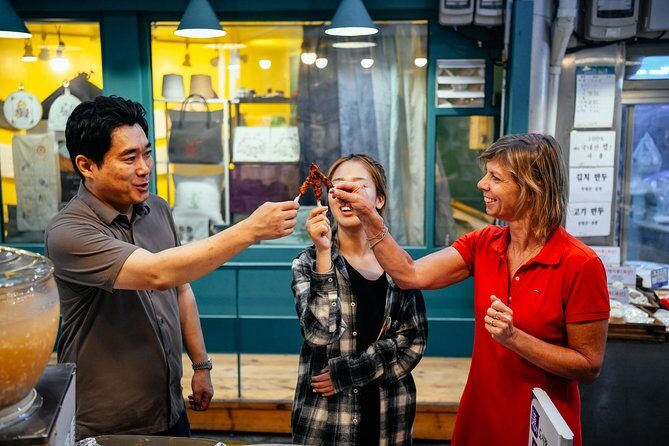
I love how compact it is. You get a serious hit of history in about 3 hours 30 minutes, without needing museum patience or a transit plan. I also like the human touch from the guide, especially Eric, who keeps the stories grounded and answers questions while you walk. And yes, the tour includes traditional Korean snacks, which help when you’re bouncing between stops.
One thing to consider: many stops are short, often around 5 to 20 minutes. That’s great for coverage, but if you want to linger, sketch, or take slow photos, you’ll need to add extra time on your own later. Pack comfy shoes and be ready to keep moving.
In This Review
- Key highlights worth your attention
- A 3.5-hour history walk built for concentration (not speed-walking)
- Starting at Bosingak Bell Pavilion (Jong-ro): why Seoul rings 28 and 33 times
- Cheonggyecheon Stream: water as a survivor through Joseon, war, and today
- Seoul City Hall and Seoul Plaza: architecture and public space as identity
- Jeongdong Observatory and Deoksugung Doldam-gil: views, stone walls, and a divorce superstition
- Jungmyeongjeon Hall and Imperial Japan: learning the pressures that forced surrender
- Ewha Museum: how early education shaped ideas about women
- Former Russian Legation: the monarch who fled and stayed a year
- Admiral Yi Sun-sin and Sejong the Great: why these statues matter
- Gwanghwamun Square and the democracy story: protests as a turning tool
- National Museum of Korean Contemporary History rooftop: seeing history from above
- Embassy of Japan and Jogyesa Temple bells: from protest memory to cosmic sound
- What makes the value work at $26.60 (and what to bring)
- Who should book this Seoul History Walking Tour
- Quick decision: should you book it
- FAQ
- How long is the Seoul History Walking Tour?
- How much does the tour cost?
- Where does the tour start and when?
- Where does the tour end?
- Is the tour admission-free at the stops?
- What’s included in the price?
- Do I need to bring bottled water?
- What’s the group size and ticket type?
Key highlights worth your attention
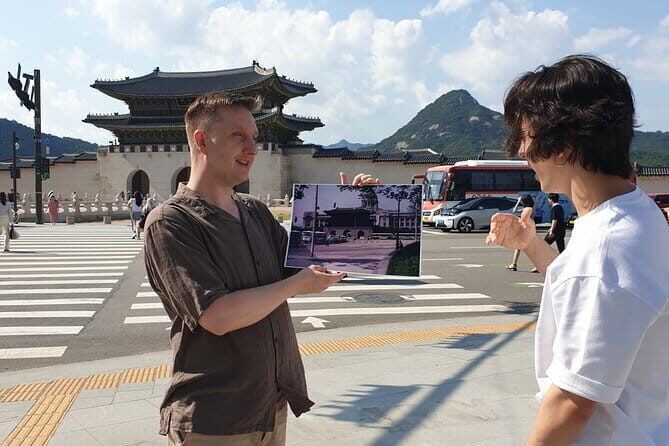
- A small group (up to 8) makes it easier to ask questions and stay on pace
- All the stops listed are admission-free, so you’re paying for guidance and time
- Bosingak’s bell story includes 28 rings at night and 33 in the morning
- Big names on foot: Yi Sun-sin and Sejong the Great via statues and explanations
- Modern democracy through real locations, including Gwanghwamun Square and a protest-linked embassy site
- Traditional snacks plus a memento are included, but bottled water is not
A 3.5-hour history walk built for concentration (not speed-walking)
This is the kind of tour you do when you want a clear story, fast. The route is designed around Seoul’s central historic core, and the timeline theme is strong: Joseon Dynasty life, turning points brought by invasion and occupation, then the long road toward modern democracy. At a price of $26.60 per person, you’re mostly buying context—how to connect what you see with why it matters.
The tour time is about 3 hours 30 minutes and it starts in the afternoon at 2:30 pm. That timing is smart because you’ll often get nicer light for photos and you can still enjoy the rest of your day afterward. It’s also booked fairly far in advance (about 81 days on average), so if you’re traveling in peak periods, plan ahead.
Another practical win: it runs with up to 8 travelers, so you’re not stuck in a huge herd. You’ll feel more like you’re walking with a guide and a few companions instead of fighting for hearing space. Expect lots of short segments, but with a consistent thread.
You can also read our reviews of more walking tours in Seoul

Starting at Bosingak Bell Pavilion (Jong-ro): why Seoul rings 28 and 33 times
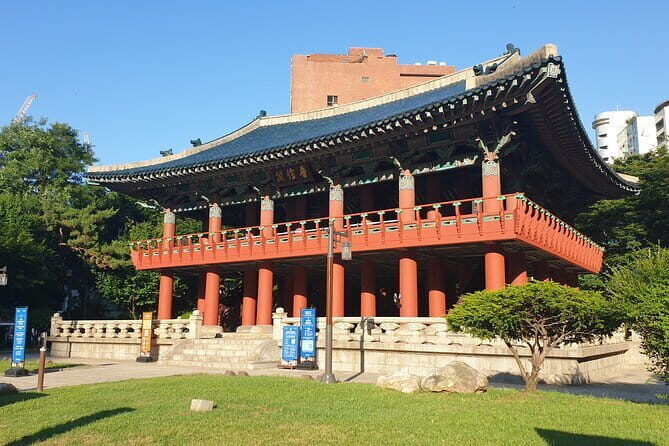
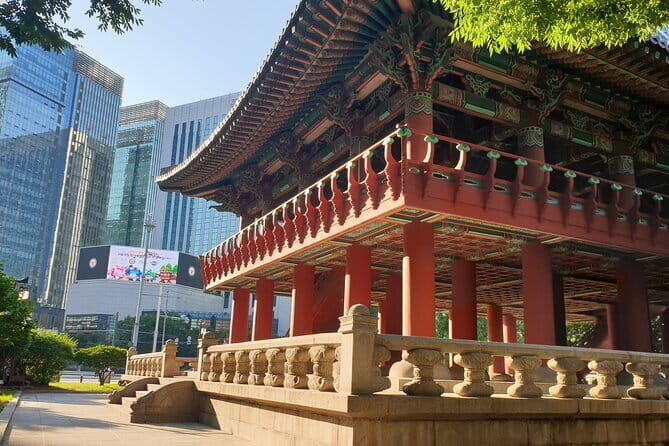
The tour begins at Bosingak Bell Pavilion, located at 54 Jong-ro in Jongno District. Even before you get deep into the route, you’re handed a hook: why the city bells ring 28 times at night and 33 times in the morning.
This is exactly how I like city history tours to work. Instead of dumping a textbook, it starts with a simple question tied to something you can see and picture. Once that pattern clicks, you’ll start hearing the tour’s bigger message: Seoul’s routines and symbols carry meaning, and the meaning changes across time.
The stop itself is about 15 minutes, and it’s described as free admission. So you can treat it as a “warm-up” moment: get your bearings, learn the bell story, then walk on with the guide’s explanations in your head. If you’re the type who likes understanding everyday details, this first stop sets the tone nicely.
Cheonggyecheon Stream: water as a survivor through Joseon, war, and today
Next you head to Cheonggyecheon Stream, a 40-minute stop with free admission. The key question here is what the stream provided Seoul across the Joseon Dynasty, through the Korean War, and into modern times.
What makes this one valuable is how it frames geography as history. Water isn’t just scenery; it affects daily movement, daily survival, and the way a city organizes itself. With this stop, you’re not only looking at a modern stream. You’re practicing how to “read” places—how one spot can keep taking on new roles as the city changes.
Since the time is longer than several later stops, I’d use it like this: pause, look, then listen. Ask the guide any question you have about how places evolve. Cheonggyecheon is the type of site where you’ll probably notice things on your own, but the guide’s job is to help you interpret what you’re seeing.
Seoul City Hall and Seoul Plaza: architecture and public space as identity
After the stream, you’ll reach Seoul City Hall (about 5 minutes, free admission). The focus is simple: how it’s an architectural gem inside and out. This stop is short on purpose, but it gives you a useful lens. City government buildings aren’t just functional. They communicate a message about priorities and values.
Then it’s on to Seoul Plaza for about 10 minutes, again free admission. The guiding idea is how the plaza reflects the hearts of modern citizens. That phrase is pointing you toward something practical: public spaces become places where people express identity, rest, and gather—especially in a city that’s always evolving.
This pair of stops works well if you’re traveling with the “I want to understand modern Seoul, too” mindset. You’re not only chasing old palaces. You’re learning how civic life got built into the city’s layout.
Jeongdong Observatory and Deoksugung Doldam-gil: views, stone walls, and a divorce superstition

Two stops that feel different in mood but connect by theme (how people turn places into stories) are Jeongdong Observatory and Deoksugung Doldam-gil.
At Jeongdong Observatory (about 10 minutes, free admission), the tour asks: how much of the palace and cityscape reveals itself from this perch. Even if you’re not a rooftop person, this is a good moment to use your brain differently. High points help you understand where you’ve been and where you’re going. It’s also a chance to spot patterns—how the city is layered.
Then you walk to Deoksugung Doldam-gil (about 10 minutes, free admission), where the guide explains a well-known local saying: that if you walk along a certain stone wall with your spouse, you’ll soon be divorced. I’m not telling you to test it. But the value is cultural: it shows how relationships, folklore, and city corners get braided together.
This stop is brief, but it’s memorable. It also breaks up the more heavy historical content with a lighter human thread.
You can also read our reviews of more historical tours in Seoul

Jungmyeongjeon Hall and Imperial Japan: learning the pressures that forced surrender
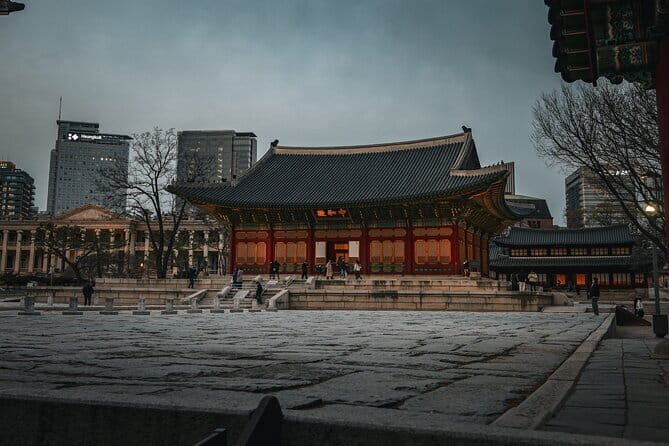
Next comes Jungmyeongjeon Hall for about 10 minutes, free admission. The question the guide frames is how Imperial Japan forced Korea to surrender its independence.
This is the kind of stop that can feel emotionally heavy, and that’s okay. The tour’s job here is to give you a clear location-based story: you’re standing where history happened, not just reading about it later. Keep your expectations realistic: with a short stop length, you won’t leave with every detail of the period. But you should leave understanding the basic pressure point—how foreign power and coercion changed Korea’s political reality.
If you’re sensitive to difficult topics, pace yourself. Use the guide’s questions as a checklist. For example: Who had power? What changed? What did surrender mean in real terms? If you want to go deeper after the tour, the next stops give you pathways into modern history.
Ewha Museum: how early education shaped ideas about women
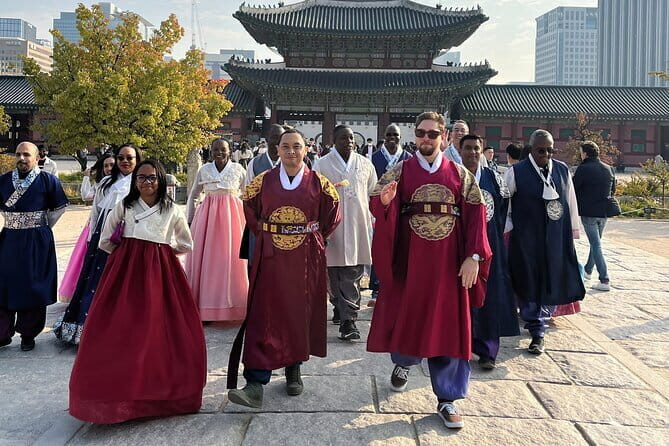
At the Ewha Museum stop (about 10 minutes, free admission), you’ll hear how Korea’s first school for girls changed societal views on women’s roles.
This is an excellent counterweight to the tour’s political history. It reminds you that societies don’t only change through treaties and wars. They change through education, access, and who gets to imagine different futures.
Because the stop is relatively short, I’d treat it as a conversation starter rather than a full lesson. Look for what the guide highlights: what the school represented at the time, why it mattered, and how that fed into broader social change.
If your trip goal is to understand Korea beyond k-pop and cafés, this stop will help you connect the dots between social reforms and later political movements.
Former Russian Legation: the monarch who fled and stayed a year
Then you’ll reach the Former Russian Legation for about 20 minutes, free admission. The story here is striking: why the penultimate monarch fled his palace in the middle of the night and stayed here for a year.
This stop is a good example of how “one building” can hold a whole emotional chapter. You’re not just looking at walls. You’re learning what decisions were made under fear and uncertainty, and how international involvement shaped local outcomes.
Because the time is longer than some earlier stops, you’ll have a better chance to absorb the narrative. I’d also recommend slowing your walk a bit here. Let the guide’s story land, then glance around and try to picture what life might have felt like in that period.
Admiral Yi Sun-sin and Sejong the Great: why these statues matter
Two later stops keep the tour’s “big names” idea very clear: statues paired with a reason for their lasting fame.
First is the Statue of Admiral Yi Sun-sin (about 10 minutes, free admission). The tour frames it as how the general saved Korea and changed the course of world history—no exaggeration. You don’t need to argue with the wording to see what the guide is doing. It’s telling you to pay attention to why Yi Sun-sin is remembered: leadership under pressure, and defense of what people valued.
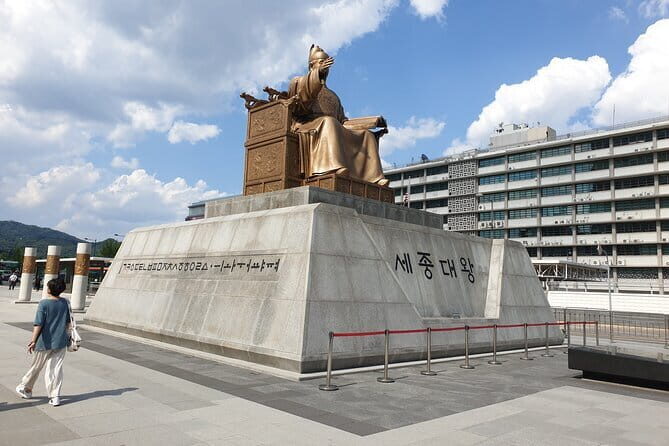
Then comes Statue of Sejong the Great (about 10 minutes, free admission). The key question is why Sejong is considered the greatest king of the Joseon Dynasty. The practical value here is mindset. Sejong isn’t presented only as a ruler. He’s presented as a maker of ideas that affected everyday life, so you’ll probably start looking at “history” as something that can be built into language, governance, and culture.
These are short stops, but if you’re the type who likes “who should I remember and why,” you’ll probably leave feeling like you understand Korea’s story actors, not just dates.
Gwanghwamun Square and the democracy story: protests as a turning tool
After the statues, you’ll spend about 25 minutes at Gwanghwamun Square for free admission. The question is how many protests it takes to change a democracy.
This is a clever framing for modern history on foot. It pushes you past the idea that democracy is a single event. Instead, it’s something shaped by repeated public action. Even if you don’t know the finer details beforehand, you’ll likely leave with a clearer understanding that civic change often works slowly and publicly.
This is also a good stop to ask your own questions. If you see people around you in the square, you can treat them as part of the lesson: democracy isn’t only in textbooks. It shows up in public space and public voices.
National Museum of Korean Contemporary History rooftop: seeing history from above
One of the more “physical experience” stops is the National Museum of Korean Contemporary History (about 15 minutes, free admission as listed). The focus is on how much history you can see from the rooftop.
Even without going deep into exhibits, a rooftop view changes how you process information. You might connect the city layout to the narrative you’ve been hearing. You also get a natural pause point in the route—something that helps the earlier political stories stick.
Use this moment to reset your attention. If you’ve been soaking in heavy topics, the change of viewpoint can help you feel oriented again for what’s next.
Embassy of Japan and Jogyesa Temple bells: from protest memory to cosmic sound
Two final stops close the loop between public action and spiritual sound.
First is the Embassy of Japan stop (about 10 minutes, free admission). The key story is why this is the site of the world’s longest running protest. That wording is meant to underline continuity—how a message can last, even when time moves on. The value for you is perspective: modern Korea’s story includes long arcs of grievance, negotiation, and public attention.
Then you end at Jogyesa Temple (the tour end point, free admission as listed) with a stop about 10 minutes. The theme here is how ringing bells connect us with the universe. It’s a gentle landing after protest and politics. Instead of asking what changed in laws and governments, you’re asked to notice how sound, rhythm, and belief mark meaning.
One more practical note: the tour ends by Jogyesa Temple and your guide helps with directions. Since the end is near where you can continue sightseeing, it’s an easy way to finish a history-heavy afternoon.
What makes the value work at $26.60 (and what to bring)
At $26.60 per person, this tour is good value if you like context. The big reason: you’re not paying for lots of paid entrances. Many stops are listed as admission ticket free, and the cost is mostly for the guide, the story structure, and time.
You also get traditional Korean snacks and an informative memento. That’s not just a nice add-on. It gives you something to review later when you’re trying to remember what you learned.
What you should bring is straightforward: bottled water isn’t included. If you’re walking in Seoul’s conditions, grab your own before you start.
Also plan for walking. Most segments are under 15 minutes, which keeps things moving, but you still spend the day on your feet. Comfortable shoes are not optional. And since the starting location is Bosingak Bell Pavilion, show up early enough to find it without stress.
Who should book this Seoul History Walking Tour
You’ll like this tour if you want:
- A structured story from Joseon to modern democracy
- A small group setup (maximum 8), making questions easier
- Guided context for major names like Sejong and Admiral Yi Sun-sin
- A route that includes both political change and social change, not just palaces
It’s especially suitable for first-time visitors who feel overwhelmed by Seoul’s size. It’s also a good “second day” tour if you already have your bearings and want to understand what you’re looking at.
Quick decision: should you book it
Yes—if your goal is to understand Seoul’s past and present in one afternoon, with Eric or another Australian guide leading the way, this is a strong deal. The route is designed to cover a lot without entrance fees eating your budget, and the combination of bell stories, protest-linked sites, and education-focused history keeps it balanced.
I’d pass or add more planning if you hate walking, dislike heavy political topics, or want long museum-style time at each stop. The tour is built for coverage and connection, not slow solo exploration.
FAQ
How long is the Seoul History Walking Tour?
It runs for about 3 hours 30 minutes.
How much does the tour cost?
The price is $26.60 per person.
Where does the tour start and when?
The tour starts at Bosingak Bell Pavilion, 54 Jong-ro, Jongno District, and the start time is 2:30 pm.
Where does the tour end?
The tour ends at Jogyesa Temple, and it finishes directly up the street from where it began, with the guide helping with directions.
Is the tour admission-free at the stops?
The stop descriptions list admission ticket free for the locations included in the walk.
What’s included in the price?
Traditional Korean snacks and an informative memento are included.
Do I need to bring bottled water?
Bottled water is not included, so you’ll want to bring or buy your own.
What’s the group size and ticket type?
The tour has a maximum of 8 travelers and uses a mobile ticket. Confirmation is received at booking, and free cancellation is available up to 24 hours before the start time.