REVIEW · SEOUL
Seoul: Bukchon Hanok Village Pedicab Tour
Book on GetYourGuide →Operated by Artee Pedicab · Bookable on GetYourGuide
A rickshaw gives Seoul a new angle. This Bukchon Hanok Village pedicab tour mixes classic alleys with major palace-area history, so you get context you’d miss wandering solo. I like the chance to chat with the pedicab rider and learn how daily life fits around the big landmarks. I also like the pacing: it’s built for comfort, including only a short walk (about 10 minutes) when you reach Hanok areas. One thing to consider: the route can change if sites are crowded or weather turns.
If you want a guide who can shift gears fast, this tour is designed for that. You get live interpretation in English, Chinese, or Japanese, plus professional explanations tied to each stop. I’ll be honest about the logistics: it’s a guided, structured loop, so if you’re the type who wants total freedom to linger everywhere, you may feel slightly boxed in.
In This Review
- Key highlights worth knowing
- Why a pedicab is the smart way to see Bukchon and Seochon
- Getting oriented: Anguk Station, the museum courtyard, and the MARIE start
- Route walkthrough: Gamgodang-gil and Geonchunmun Gate
- The palace passes: Gyeongbokgung and Changdeokgung-area walls
- Anguk-dong stop: President Yun Po-sun’s House context
- Bukchon Hanok Village time: the short walk that makes a big difference
- Constitutional Court of Korea and the ride-view payoff
- Guide style, conversation, and language support that actually helps
- Price and value: is $94 worth it?
- Who this suits best (and who should choose something else)
- Should you book Bukchon by pedicab? My practical take
- FAQ
- How long is the Bukchon Hanok Village pedicab tour?
- What does the tour cost?
- Where can I meet the pedicab?
- What languages are available for the guide?
- Is the tour wheelchair accessible?
- Do I need to walk during the tour?
- Is the itinerary fixed, or can stops change?
- Is insurance included?
Key highlights worth knowing
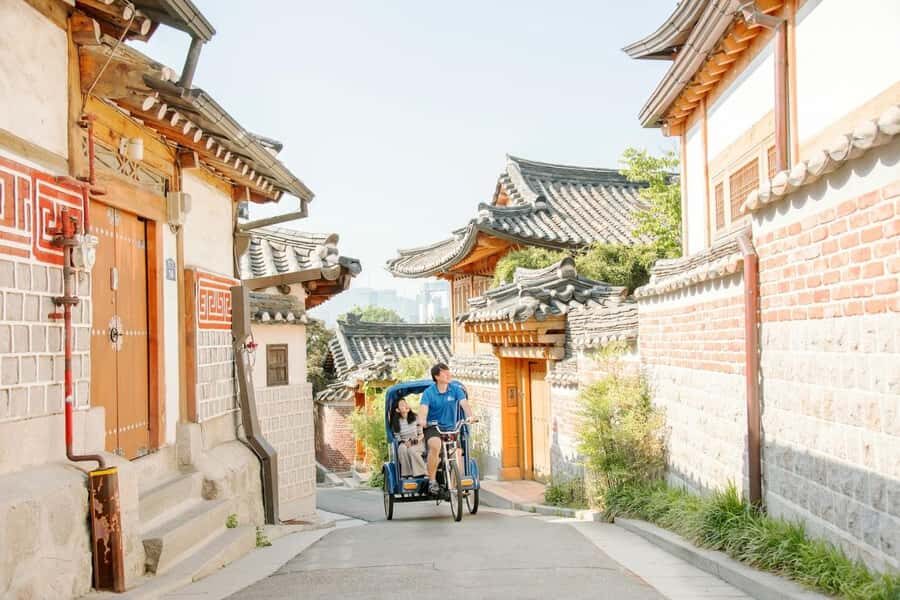
- Pedicab comfort for narrow corners: you can reach spots that are a pain on foot without giving up the views
- Conversation with the rider: the best moments often happen when you ask simple questions on the move
- Palace-area history without the full marathon: you pass key sites like Gyeongbokgung and Changdeokgung walls
- Mobility-friendly design: wheelchair accessible, and the course can be adjusted if you share your needs
- Private-group feel: a more personal experience than joining a large crowd
- Guide talks, not just drives: you get stories and explanations as you go
Why a pedicab is the smart way to see Bukchon and Seochon
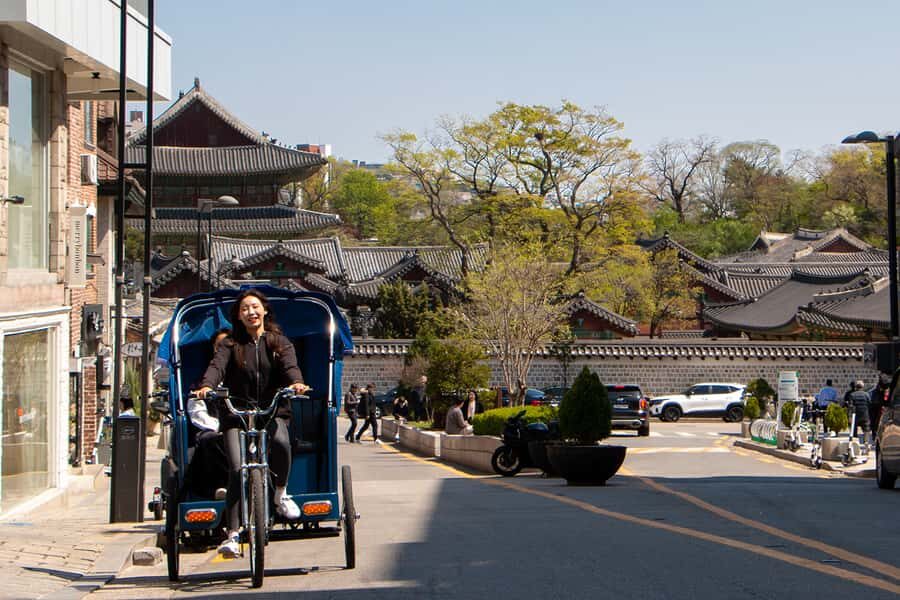
Bukchon Hanok Village is one of those places where the streets feel charming and tight at the same time. Walking works, but it can also turn into a slow grind—especially when you want to see the bigger palace surroundings and the neighboring Seochon area too. This pedicab format solves that problem. You ride up close through the hills and alley approaches, then you spend your feet only where it matters.
What I like most about this tour style is that it changes your pacing. Instead of you constantly stopping to figure out which lane to take, the guide sets up the route and tells you what you’re looking at—so your brain stays on “understand” mode, not “navigate” mode. And because you’re in a comfortable vehicle, you can actually enjoy the change in scenery: traditional housing textures give way to palace walls, then back into small neighborhood lanes where you can spot shops and galleries you might otherwise miss.
There’s also a very Seoul-specific perk: you’re moving through history and modern life at the same time. Bukchon brings you the hanok image, but Seochon adds the everyday edges—places to browse, pause for coffee, and notice how people live alongside heritage.
You can also read our reviews of more tours and experiences in Seoul.
Getting oriented: Anguk Station, the museum courtyard, and the MARIE start
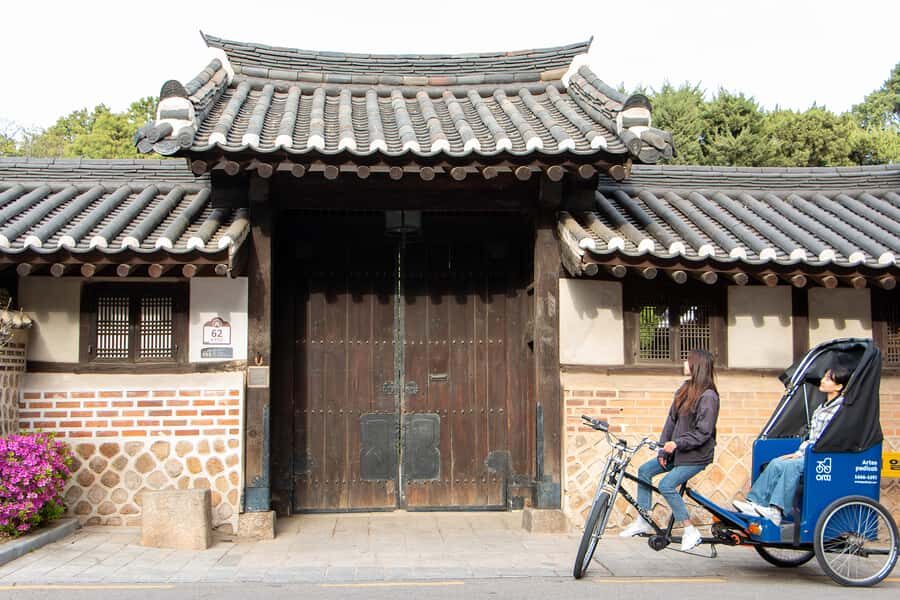
Meeting points matter more than you think on Bukchon-area tours. The start area needs to be easy to reach, and it needs to reduce your pre-tour stress. This tour gives you options, and they’re practical.
You’ll find three main default starting and drop-off possibilities:
- Anguk Station Exit 1: recommended if you’re using public transportation. The pedicab waits near Artist Bakery on the left side when you exit.
- National Museum of Modern and Contemporary Art courtyard: recommended if you’re coming by private vehicle. The pedicab is set in a spacious courtyard with a view toward the National Folk Museum of Korea entrance.
- A designated starting location listed as MARIE: the route you book may use this as the stated meeting point, depending on the confirmation details for your departure time.
If you want a different starting or ending point within a certain distance, you can request it. After booking, the rider makes a confirmation call about 15 minutes before departure, and that’s the moment to lock in the exact spot. I like that this is handled directly with the rider, because it cuts down on confusion.
Route walkthrough: Gamgodang-gil and Geonchunmun Gate
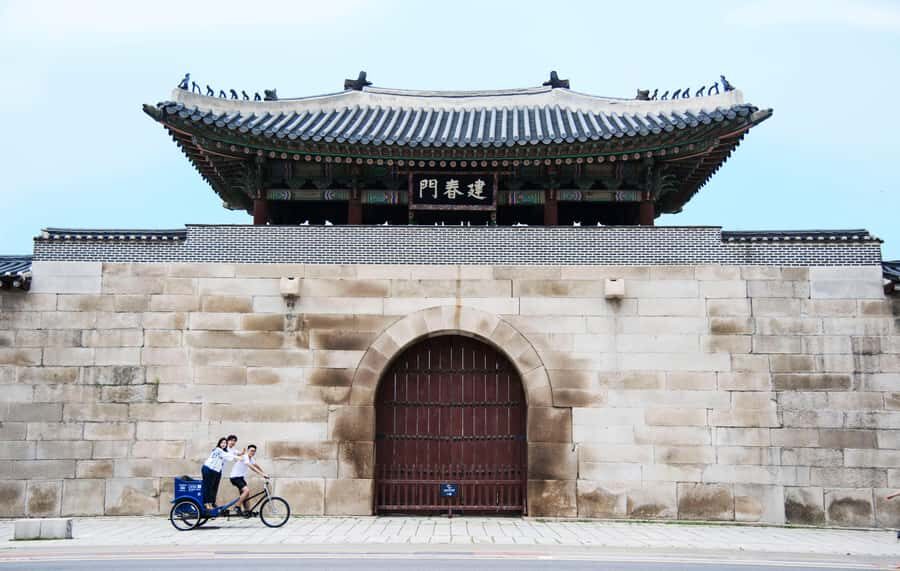
After you set off, the tour begins with street-level exploration that helps you understand Bukchon’s layout. One of the early stops is Gamgodang-gil. This is where the vibe shifts from “arrive at a landmark” to “feel how a neighborhood moves.” You get guided context, plus time to pass through and notice the small-scale patterns that make Bukchon and Seochon so distinctive.
Next comes Geonchunmun Gate, which you visit and also get sightseeing and guided narration around. Gate areas are useful on a short tour because they act like visual anchors. Even if you don’t go deep into every building, you start to grasp how Seoul’s old walls and entrances shaped movement. It’s the kind of explanation that makes the rest of the ride click—suddenly the streets aren’t random.
A small heads-up: some parts of the program can be skipped depending on capacity or weather. That doesn’t mean the tour falls apart. It usually just means the guide adjusts the order so you still get a coherent loop.
The palace passes: Gyeongbokgung and Changdeokgung-area walls
A lot of Seoul sightseeing forces you to choose: either palaces or neighborhoods. This tour keeps both in the same day.
You’ll have Gyeongbokgung included as a guided and pass-by moment. That matters because you’re not just driving by a famous name on a map. The guide explains the significance as you approach, and the time you spend is tailored to what’s practical within the tour length.
The same idea applies to the Changdeokgung and Gyeongbokgung Palace walls area. Even when you’re not inside every complex, seeing the stone walls and their placement gives you a better sense of how the palace zones connect to surrounding districts.
For me, the value here is that you learn “why it’s located there” instead of only “what it looks like.” If you’ve ever visited a palace and felt like the grounds were impressive but confusing, this approach helps you connect dots while you still have momentum.
Anguk-dong stop: President Yun Po-sun’s House context
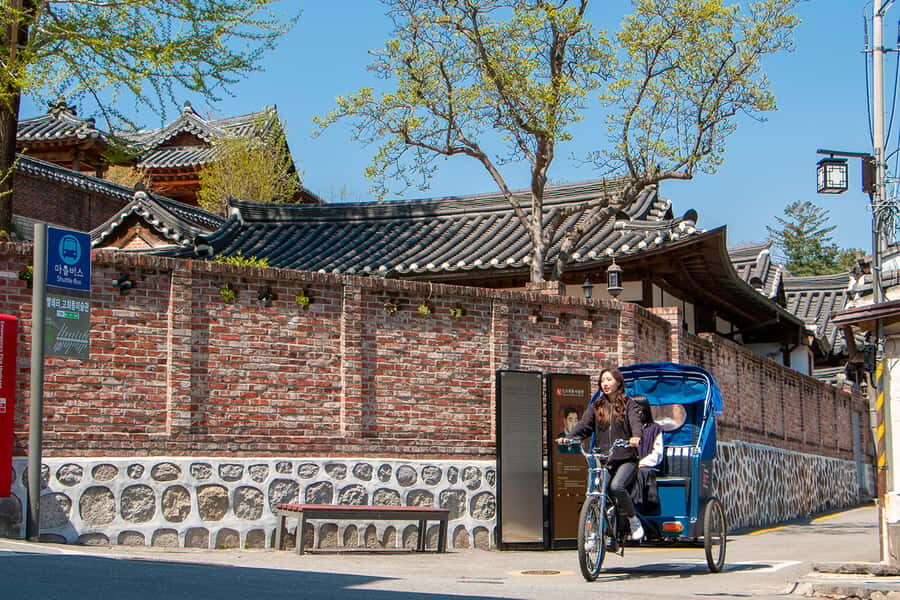
One of the more specific stops on the itinerary is President Yun Po-sun’s House in Anguk-dong. You’ll visit, with guided sightseeing and explanation.
This is where the tour broadens beyond pure palace storytelling and adds modern political history into the same neighborhood frame. Even if you’re not a history buff, this helps you understand that Bukchon isn’t frozen in time. It has lived layers—traditional housing, government-era presence, and today’s city life all stacked in one area.
Also, Anguk-dong is a nice breather from nonstop sightseeing. After the gate-and-wall visuals, this stop gives you a different type of “look closely” moment.




Bukchon Hanok Village time: the short walk that makes a big difference
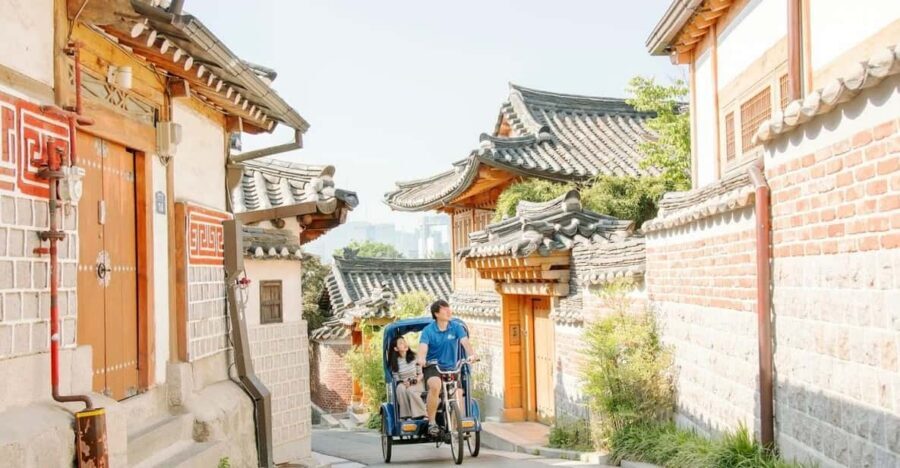
When the tour reaches Bukchon Hanok Village, you’ll get guided touring plus sightseeing, and then a period where you can walk on your own.
Here’s the practical strategy I’d suggest for you. Use the guided portion to learn what to look for: the feel of hanok architecture, the relationship between the houses and the lane layout, and how the village fits into the larger Seoul geography. Then use your self-guided time to do the fun stuff: pause at the shops, step into a cozy cafe if you feel like it, and take photos where the street angles look best.
Because the tour includes a walking portion of about 10 minutes to reach the Hanok area, it can be a good compromise. You get to experience the village feel without turning the day into a long hike. That’s also why the mobility-friendly setup matters. If you’re elderly or have difficulty with moving, you can ask to adjust the course.
If you care about photos, wear comfortable shoes anyway. Even short walking times add up when you’re climbing slightly uneven paths and weaving through narrow lanes.
Constitutional Court of Korea and the ride-view payoff
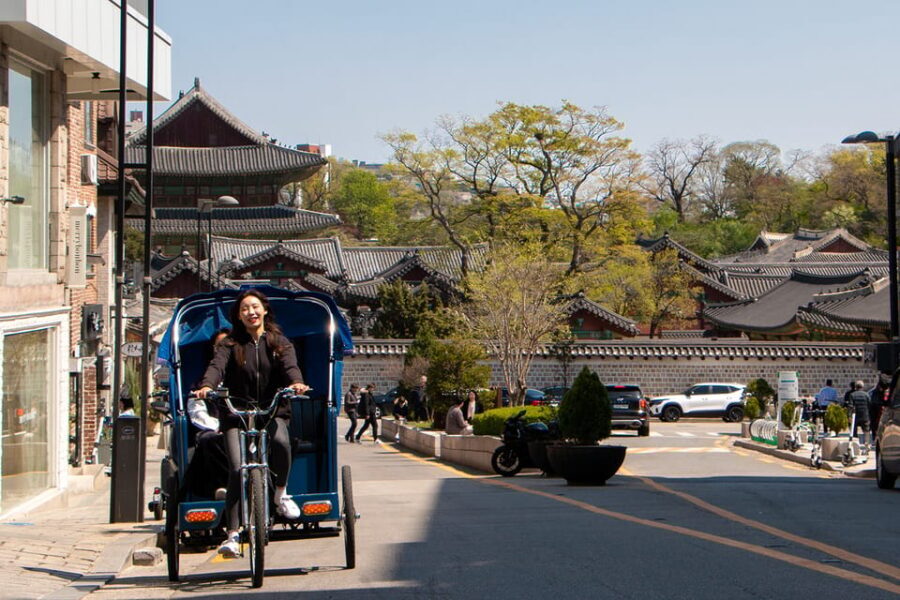
The tour includes a guided visit and sightseeing moment at the Constitutional Court of Korea, then wraps with scenic drive time and returns you to your meeting point.
This is a smart ending section for two reasons. First, it gives you a shift from the visual language of hanok alleys back to a more modern civic setting. Second, it gives your legs a chance to rest as the ride continues toward the finish.
The itinerary shows a very quick final pedicab segment—just a few minutes—before you return to where you started. That keeps the tour tidy, which is a big deal on a tight schedule. You won’t be standing around waiting for the end; you’ll be actively moving.
Guide style, conversation, and language support that actually helps
The best part of a guided street tour is how the guide connects details into a storyline you can remember. This tour is built around that. You’ll get a professional guide who shares stories about Seoul as you pass sites and while you’re stopped.
One review detail that’s especially reassuring: a guide named Ryan was praised for both knowledge and personality, with the tour adjusted so it ended closer to the next place a person planned to visit. That’s exactly the kind of flexibility that makes a first-day tour feel less like a fixed script.
You’ll also get friendly English, Chinese, or Japanese interpretation. That matters because Bukchon’s explanations can include architectural and historical terms that are hard to catch with a self-guided audio app. Having live language support means you can ask follow-up questions without feeling lost.
And don’t skip the small talk. The tour includes time for communication and conversation with the pedicab rider. Even if you just ask how long they’ve been driving these routes or what people usually miss, those answers add human texture to the history.
Price and value: is $94 worth it?
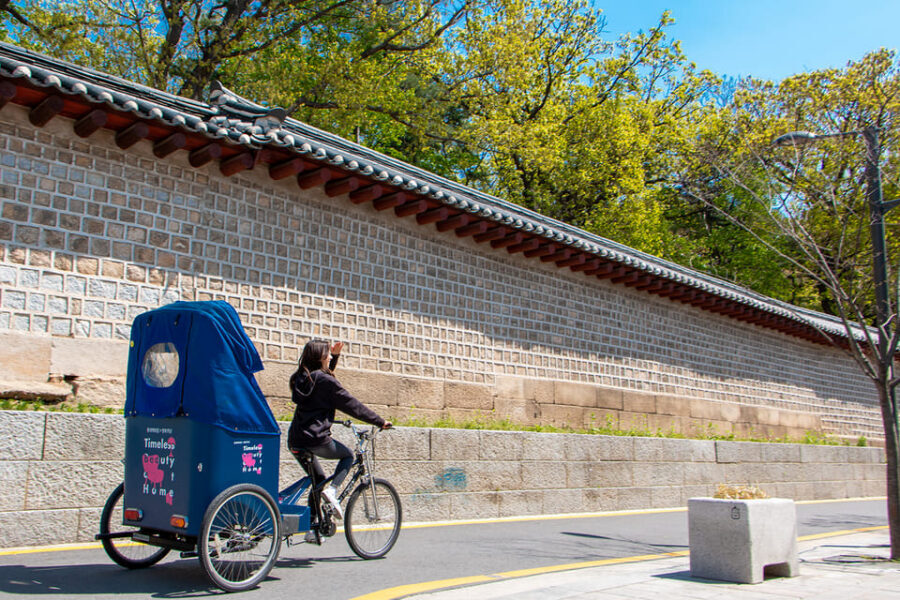
At $94 per person, this is not a cheap activity, but it is priced like a guided private experience plus transportation.
Here’s why that cost can make sense for the right traveler:
- You get a live expert guide who handles explanation and pacing.
- You get the pedicab ride itself, built for the narrow Bukchon-area environment.
- You get an insurance component provided by the operator.
- You’re traveling in a private group setup, which typically means less waiting and more flexibility than a big bus tour.
- You also cover multiple high-interest areas in one loop: Bukchon Hanok Village, Seochon alleyways, palace-area context, and the Constitutional Court area.
Where it might not be worth it is if you’re already confident navigating Bukchon and you’re happy to spend extra time walking between stops. This tour saves you time and energy, but it does come with a planned structure.
My advice: if it’s your first visit to Seoul or you only have a short window in the Bukchon area, this price becomes easier to justify.
Who this suits best (and who should choose something else)
This pedicab tour is a strong match for:
- First-day visitors who want history context without spending hours planning routes
- People who want palace-area context and neighborhood atmosphere in the same outing
- Travelers who value conversation and explanation, not just photos
- Anyone who needs a wheelchair-accessible option or may have mobility limits
- Groups who prefer a private group feel
Consider a different style of tour if you:
- Want total freedom to linger at every stop you find
- Prefer long walking days where you control every minute
- Don’t want any chance that capacity or weather could cause small itinerary changes
Should you book Bukchon by pedicab? My practical take
If you want the Bukchon look and the palace-area story without turning your legs into a limiting factor, I think this is a smart book. The biggest win is the combination of guided context plus a mobility-friendly ride through areas that are hard on foot.
Book it if you’re planning a first trip, want a guided structure, and appreciate the comfort of having transportation do the heavy lifting. Skip it only if your travel style is all about wandering freely with zero structure.
If you can, decide your starting point based on how you’re arriving. Using Anguk Station Exit 1 keeps public transit easy. If you’re driving, the modern art museum courtyard is a clean, spacious option. Either way, be ready for that confirmation call about 15 minutes ahead—then you’ll start the day without stress.
FAQ
How long is the Bukchon Hanok Village pedicab tour?
The tour duration is listed as 2 hours, including a 120-minute pedicab ride.
What does the tour cost?
The price is $94 per person.
Where can I meet the pedicab?
Default options include Anguk Station Exit 1 near Artist Bakery, or the courtyard of the National Museum of Modern and Contemporary Art. The itinerary also references a starting location labeled MARIE. You can often specify another start if the pedicab can travel to it.
What languages are available for the guide?
The guide offers live interpretation in English, Japanese, and Chinese.
Is the tour wheelchair accessible?
Yes, the activity is wheelchair accessible, and the course can be adjusted if you reach out about mobility needs.
Do I need to walk during the tour?
There is a walking component to the Hanok Village area of about 10 minutes. Some additional walking time may occur during sightseeing.
Is the itinerary fixed, or can stops change?
Some attractions might need to be skipped due to capacity or weather conditions.
Is insurance included?
Insurance is provided by the operator.
![[DMZ Adventure] DMZ and optional Boat Voyage in River - Imjingak Resort: the emotional kickoff before the gates](https://8.koreaadventures.com/wp-content/uploads/dmz-adventure-dmz-and-optional-boat-voyage-in-river.jpg)