REVIEW · SEOUL
Jinhae Cherry Blossom Festival Gyeonghwa Stn Day Tour from Seoul
Book on Viator →Operated by TOURSTORY · Bookable on Viator
Cherry blossoms need scheduling, not guesswork. This tour is built for an easy, one-day jump from Seoul into peak spring color, with round-trip transport and English/Chinese-speaking support. You’re not left figuring out trains, timings, or who’s where at pickup.
I especially like the focus on two top viewing areas: Yeojwacheon Stream and the Gyeonghwa Station Cherry Blossom Road. Both give you time to linger at your own pace, so you can slow down for photos and people-watching instead of rushing from spot to spot.
One thing to consider is the day length. Expect about 16 to 17 hours, so it’s a long commitment even though the views are the payoff.
In This Review
- Key highlights I’d circle before booking
- Why Jinhae Works So Well on a Day Trip From Seoul
- Pickup, Timing, and Group Size: The Practical Side of a 16–17 Hour Day
- Yeojwacheon Stream: Cherry Blossoms Plus the Romance Bridge Story
- Gyeonghwa Station Cherry Blossom Road: The Track-Walk Tunnel Effect
- Using Free Time Like a Local: How to Get Better Photos Without Rushing
- Jinhae Gunhangje Festival Context: Enjoying the Season’s Bigger Mood
- Transportation and Support: Why the Guide Matters More Than You Think
- Price and Value: What You’re Actually Paying For
- Who This Tour Suits Best (and Who Might Feel Cramped)
- Final Call: Should You Book This Jinhae Cherry Blossom Day Tour?
- FAQ
- How long is the Jinhae Cherry Blossom Festival day tour from Seoul?
- How much does the tour cost?
- What are the main stops on the tour?
- Are admission tickets included for the cherry blossom stops?
- Are meals included?
- Is there English support on the tour?
- What happens if the cherry blossoms are not in good condition?
- How many people are on the tour?
Key highlights I’d circle before booking
- Yeojwacheon Stream’s Romance Bridge connection: cherry blossoms plus a pop-culture story from Romance (2002)
- A track-walk under cherry blossom trees at Gyeonghwa Station: you walk for that tunnel effect
- Free time that’s actually free: you can slow down, snack, and take photos without a nonstop script
- Smallish group size (max 43): makes the whole day feel less like cattle herding
- Alternative route if blossoms aren’t in good shape: you’ll be notified at least one day ahead
Why Jinhae Works So Well on a Day Trip From Seoul
Jinhae is one of Korea’s best spring destinations when you want maximum blossom impact in a single outing. The big reason this works as a day tour is that it’s not just about seeing trees in general. The best areas are set up for walking and lingering along cherry-lined spots, so you get that classic spring experience without needing local knowledge.
From Seoul, you also avoid the stress of timing public transit. The tour uses an air-conditioned vehicle and handles the back-and-forth for you. When the day is long, that comfort matters more than you’d expect.
And the timing is seasonal. This tour runs during cherry blossom conditions, so when it’s on, you’re visiting the city when the atmosphere is at its peak.
You can also read our reviews of more tours and experiences in Seoul.
Pickup, Timing, and Group Size: The Practical Side of a 16–17 Hour Day
This is a full-day outing, roughly 16 to 17 hours door-to-door from central Seoul. That sounds extreme until you remember what cherry blossom season does to travel: limited daylight, heavy crowds, and traffic that can stretch schedules.
The tour caps groups at 43 travelers, which is a real difference. With a larger bus, your photo stops can turn into sprinting for position. Here, you should have a bit more breathing room to move at a human pace.
You’ll also use a mobile ticket. That’s one less paper thing to manage when you’re hopping between pickup points and walking areas.
One more smart point: the staff includes both English- and Chinese-speaking support. If you’re unsure about where to stand for photos or which way to walk, it’s helpful to know you can ask.
Yeojwacheon Stream: Cherry Blossoms Plus the Romance Bridge Story
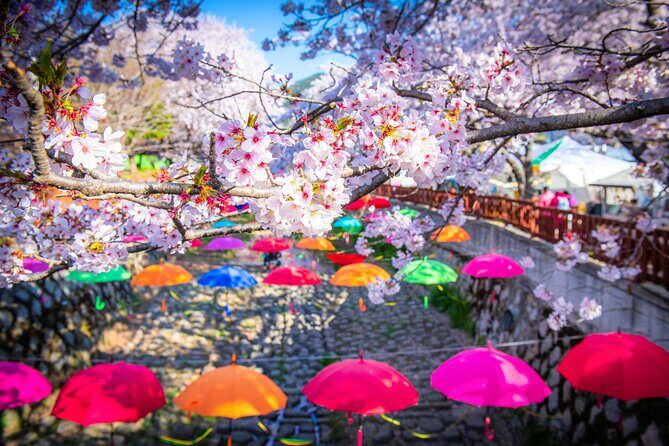
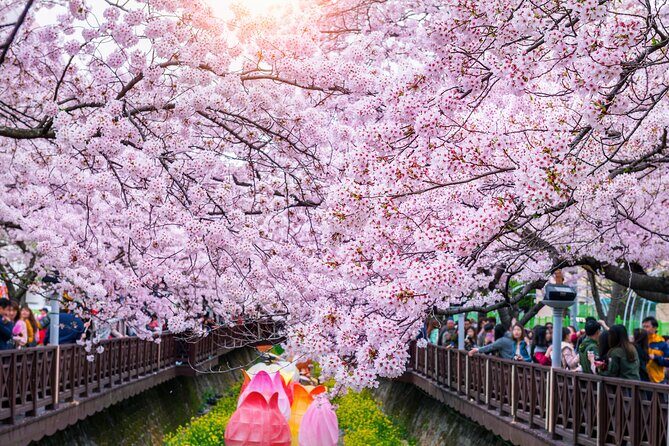
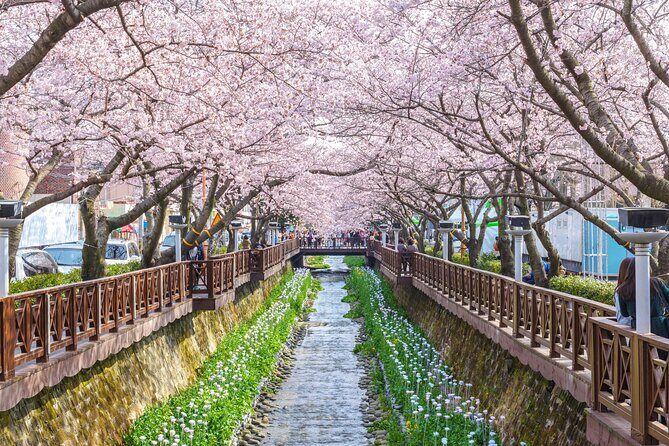
Yeojwacheon Stream is a favorite viewing area for a reason. It’s the kind of spot where the setting does half the work for you: water nearby, a walkway feel, and cherry blossoms that create that classic pink spring look.
Here’s the extra detail that makes this stop more interesting than just another pretty stream. Yeojwacheon Stream is tied to the Romance Bridge, made famous after the TV series Romance (2002). In the story, the characters Gwanu and Chaewon first meet as tourists visiting Jinhae during the Jinhae Gunhangje Festival. After the episode aired, the bridge became widely known, and it’s now a named attraction tied to the blossom season.
Practically, that means you’re not just looking at flowers. You’re visiting a place with a cultural breadcrumb trail. If you like connecting the dots between pop culture and real locations, you’ll enjoy this stop more than you expected.
The time at this area is 2 hours 10 minutes, and admission is free for the stop. That’s enough time to do two things well: enjoy the blossom views without rushing, and still make it to the next photo-heavy location without feeling frantic.
Gyeonghwa Station Cherry Blossom Road: The Track-Walk Tunnel Effect
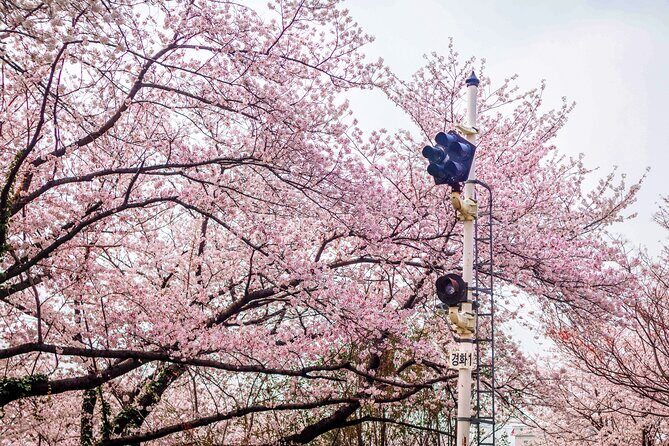
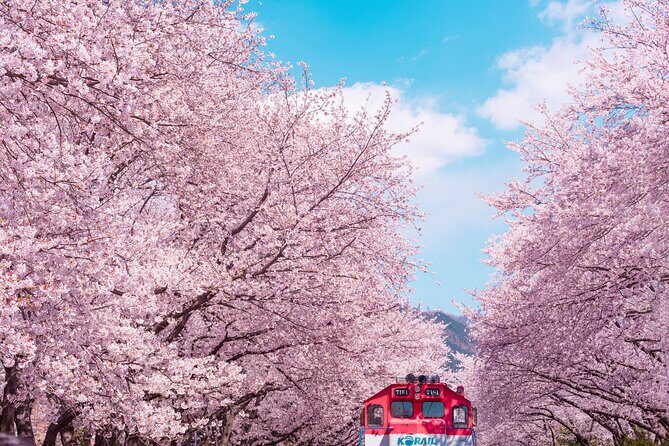
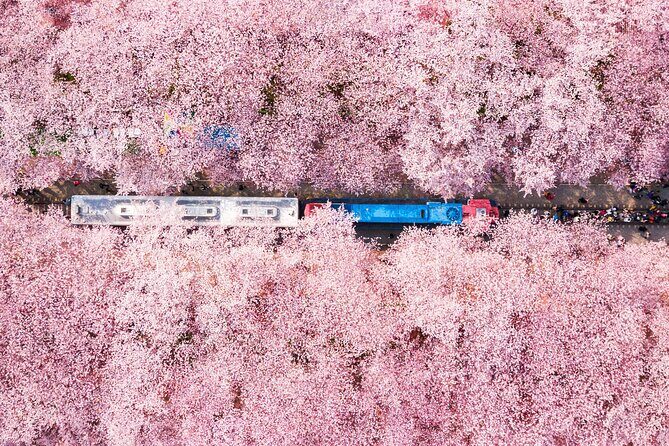
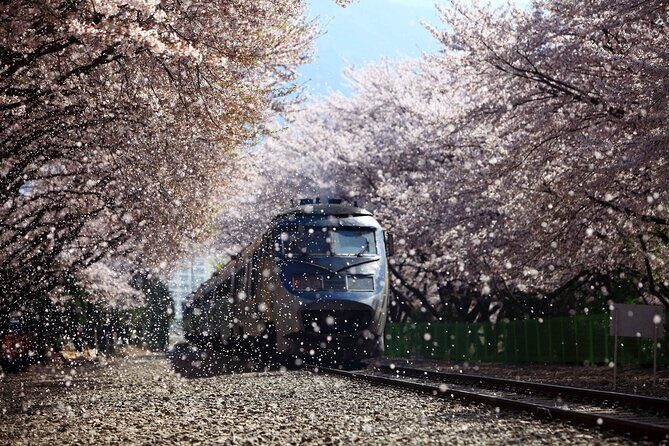
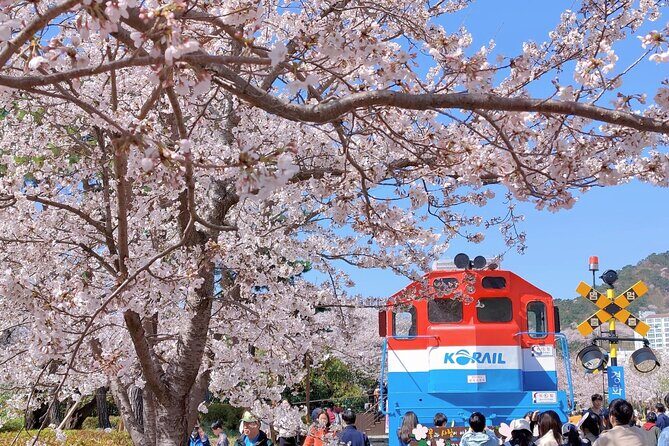
Gyeonghwa Station is famous in spring for a very specific kind of viewing: walking through rows of cherry trees that line the tracks, creating a tunnel effect. You get that layered “arch” feeling as you move forward, which tends to look great in photos because the perspective keeps pulling you deeper.
This station also has a history detail that adds texture. Train services in and out of Gyeonghwa Station were discontinued in 2006, so what you experience now is more about the space and the seasonal setting than routine rail traffic. In cherry blossom season, it becomes a walking corridor rather than a transportation hub.
The tour stop here is 1 hour 30 minutes, with admission listed as free. That time is tight enough to keep the day moving, but it still lets you walk the main stretch, stop for photos, and then regroup.
One caution: this area can feel crowded, especially around the best angles. Wear comfortable shoes and plan to take breaks off the main line so you don’t block other people’s shots.
Using Free Time Like a Local: How to Get Better Photos Without Rushing
The tour gives you free time at the viewing sites, which is exactly how you should use it. Don’t try to do everything at full speed. Instead, treat each stop like a loop:
- Walk to the most photogenic angle first
- Pause long enough that the crowd pattern changes
- Then do a second slower look from a different side
Because you’ll be on a long day schedule, the biggest win is to keep your stops flexible. If the first spot is packed, adjust. If the light looks flat, reposition. Cherry blossoms don’t care about your itinerary, but your camera and your feet do.
Bring a small water bottle and something light to snack on. Meals aren’t included, so you’ll want an easy option for when your energy dips halfway through the day.
Also, if you’re the type who likes to read signs and learn as you go, this tour rewards that habit. The Romance Bridge connection at Yeojwacheon Stream is the kind of detail that makes the whole stop feel more personal and less generic.


Jinhae Gunhangje Festival Context: Enjoying the Season’s Bigger Mood
Cherry blossom season in Jinhae isn’t only about trees. The city also hosts the Jinhae Gunhangje festival in the areas around Jungwon Rotary and downtown Jinhae. The festival includes varied programs, like cultural performances and even a military performance, plus pre-event activities.
This day tour is centered on the blossom viewing zones, but knowing the festival context helps you read what you’re seeing. If you notice performances or festival-style activity nearby, it makes sense: the city is tuned for visitors.
Even if you don’t plan to watch a full program, the festival atmosphere can add energy to your walk. It’s one of those seasons where the city feels like it’s hosting rather than just surviving spring.
Transportation and Support: Why the Guide Matters More Than You Think
Long day trips live or die by timing and communication. In groups like these, it’s not only about where you go—it’s about whether you get there without confusion and whether you get back on time.
This tour includes English and Chinese-speaking staff, and the tone matters. Guides like Tom and Jacob are known for being helpful and for giving clear pickup details and updated ETAs. That kind of communication is practical. It reduces stress when you’re juggling a full bus day, traffic, and the chaos that cherry blossom season brings.
A small but useful tip: before you head out, double-check your exact pickup point instructions and show up a few minutes early. That alone can save you from that sinking feeling when you’re wandering the wrong street while everyone else loads.
Price and Value: What You’re Actually Paying For
At $66.53 per person, this isn’t a low-cost throwaway tour. It can still be good value, though, because you’re buying the heavy lifting:
- Round-trip transport from central Seoul
- A structured day that hits two of the most famous blossom areas
- Free admission listed for the viewing stops
- English/Chinese-speaking staff for help during the day
The value comparison is simple. If you try to DIY this, you’ll spend time planning transit, working around schedules, and dealing with spring travel crowds. That adds up fast, especially on a long day.
What’s not included matters too. Meals are not provided, so you’ll pay out of pocket there. You’ll also cover other personal expenses and you’ll want to think about travel insurance separately.
If you want the comfort of a planned day and you’d rather spend your energy on the blossoms than figuring out transit, the price starts to look fair.
Who This Tour Suits Best (and Who Might Feel Cramped)
This tour fits you if:
- You want high-impact cherry blossom viewing without transport headaches from Seoul
- You’re okay with a long day in exchange for seeing two major stops
- You like having a plan but still want free time to wander
You might want to look at another option if:
- You’re sensitive to long travel days (16–17 hours is a lot)
- You hate tight schedules or hate regrouping when the group moves
- You need lots of meal breaks included in the cost (you’ll be buying food)
It’s also a good fit for couples and friends who want photos and scenery, plus older travelers who appreciate staff support and clear pickup coordination.
Final Call: Should You Book This Jinhae Cherry Blossom Day Tour?
If your goal is to see Jinhae cherry blossoms in a straightforward, low-stress way, I think this tour is a strong match. The main selling points are the choice of viewing zones—Yeojwacheon Stream and Gyeonghwa Station Cherry Blossom Road—and the fact that you get free time to actually enjoy them.
My biggest hesitation is only the length. It’s a long day, so go in rested and plan to be flexible.
Also, cherry blossoms can be unpredictable. The tour is designed for that reality: if blossoms aren’t in good condition, you’ll be notified at least one day in advance and the route may change. That’s the right kind of contingency for spring travel.
If you can handle a long day and want a smooth, guided day trip with real viewing time, book it. If you want a slow-paced weekend or you hate the idea of a full-day schedule, you might feel it more than you expect.
FAQ
How long is the Jinhae Cherry Blossom Festival day tour from Seoul?
The tour runs about 16 to 17 hours.
How much does the tour cost?
It costs $66.53 per person.
What are the main stops on the tour?
You’ll visit Yeojwacheon Stream and Gyeonghwa Station Cherry Blossom Road.
Are admission tickets included for the cherry blossom stops?
Yes. Admission tickets are listed as free for both stops.
Are meals included?
No, meals are not included.
Is there English support on the tour?
Yes. There are English and Chinese-speaking staff.
What happens if the cherry blossoms are not in good condition?
The provider will notify you at least one day in advance and may switch to an alternative route.
How many people are on the tour?
The tour has a maximum of 43 travelers.