REVIEW · SEOUL
Gyeongbokgung Palace & Bukchon Village Walking Tour
Book on Viator →Operated by MyProGuide_Korea · Bookable on Viator
Gyeongbokgung and Bukchon in one smooth loop.
This walking tour pairs Seoul’s grand royal core with the quiet hanok lanes of Bukchon Hanok Village, with a local guide explaining Joseon Dynasty life. I especially like the way Gyeongbokgung Palace is turned into a story you can follow, not just a lineup of buildings.
My favorite part is the photo-friendly flow: you get plenty of stopping points at the palace and then a more relaxed walk through the Bukchon alleyways. That combo makes it a smart first taste of Seoul’s old core, even if your Korea knowledge is basically zero.
One consideration: it’s about 2 hours 30 minutes of mostly walking in open areas, so if you hate crowds or weather shifts, plan accordingly and keep water handy.
In This Review
- Quick hits: what makes this tour work so well
- Why Gyeongbokgung + Bukchon is a smart way to spend 2.5 hours
- Entering Gyeongbokgung Palace: what to look for beyond the photos
- Geunjeongjeon and Gyeonghoeru: why these stops are worth the time
- From palace to hanok streets: how the walking route helps you understand Seoul
- Bukchon Hanok Village: the calm part of Seoul with real photo spots
- What you get for $62.89: value, time, and why tickets matter
- Group size, pace, and what that means for your comfort
- Mobile ticket and getting around: small logistics that save headaches
- Who should book this walking tour—and who might prefer something else
- Should you book this Gyeongbokgung Palace & Bukchon Village walking tour?
- FAQ
- How long is the tour?
- What’s included in the price?
- What is the total price per person?
- Does the tour use a mobile ticket?
- How big is the group?
- Is transportation included?
Quick hits: what makes this tour work so well
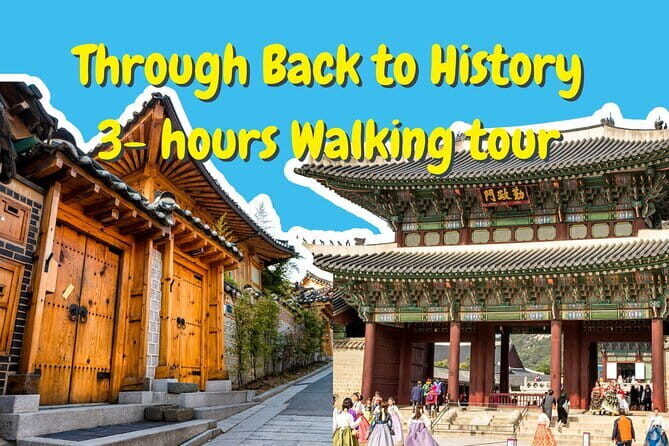
- Gyeongbokgung Palace ticket included plus a guide to translate what you’re seeing.
- Small group size (max 10) means questions and quicker course-corrections.
- A clear Joseon-era storyline connecting palace power to everyday life in hanok neighborhoods.
- Photo moments built into the route, not just at one stop.
- Bukchon Hanok Village is walkable and calm, with lots of narrow lanes for perspective.
- Mobile ticket keeps check-in simple.
Why Gyeongbokgung + Bukchon is a smart way to spend 2.5 hours
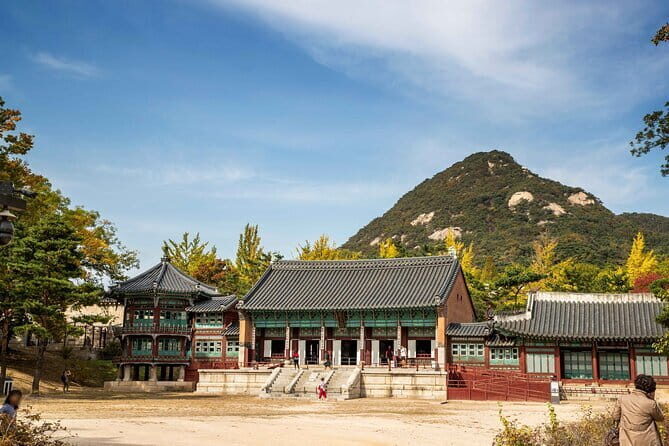
Seoul can feel intense on day one. This tour uses a neat shortcut: it focuses on two connected zones that together show royal authority and traditional neighborhood life. You’re not trying to cover half the city. You’re getting a tight, meaningful slice.
What I like is the balance. Gyeongbokgung gives you the big, formal architecture and the historical context. Then Bukchon Hanok Village slows things down with narrow streets and preserved hanok houses between major palace areas. The change in tempo helps the experience stick in your memory.
You also get a guide. That matters because both places can look “beautiful” but still feel confusing if you don’t know what to look for. A good guide helps you read the place fast—where to stand, what each space meant, and why certain halls and pavilions get referenced again and again.
You can also read our reviews of more walking tours in Seoul

Entering Gyeongbokgung Palace: what to look for beyond the photos
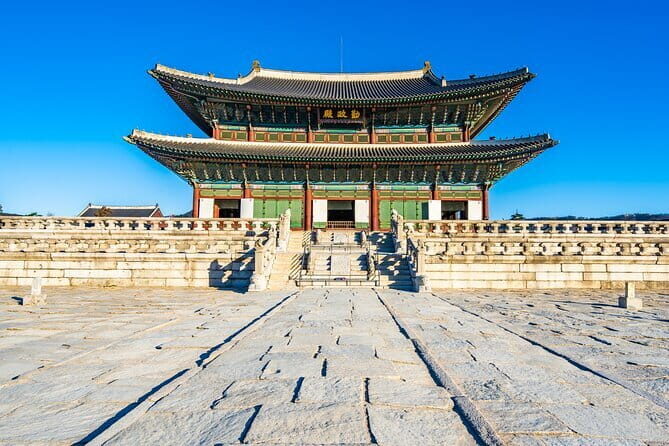
Gyeongbokgung Palace is Korea’s first and largest royal palace of the Joseon Dynasty, built in 1395. Even if you’ve never read Joseon-era books, the layout gives you a sense of power and order. Your guide’s job here is to connect the dots so the buildings don’t blur together.
The tour centers on major highlights such as Geunjeongjeon Hall and Gyeonghoeru Pavilion. These names may sound like trivia at first, but they’re worth learning because they help you understand the palace as a functioning royal space—not just an outdoor museum.
Here’s how I’d use the time while you’re there:
- Start by noticing the palace’s sense of hierarchy: formal halls and key pavilions tend to feel more “grand” because they were designed for state functions.
- When you stop for photos, take a second to look around the frame. The palace is about structure and symmetry, and that’s what your camera wants even when your eye is tempted to focus only on one doorway.
- Pay attention to the story of why it mattered. The palace name connects to hope for prosperity, and it gives the setting an emotional tone beyond architecture.
A big plus from the reviews is that this tour works as a cool intro for first-timers. If you’re new to Korea, the guide’s explanations can turn a confusing palace visit into something you actually understand. That also helps you enjoy the photos more, because you’re capturing context, not just scenery.
Geunjeongjeon and Gyeonghoeru: why these stops are worth the time
Not all stops in a palace are equal. Geunjeongjeon Hall is one of the most prominent spaces, and it’s the kind of place where history feels “official.” If you’re trying to grasp what the Joseon court did and how it projected authority, this kind of hall is a must-know point.
Then there’s Gyeonghoeru Pavilion, a standout associated with the palace’s water setting and visual spectacle. Even if you’re not an architecture expert, pavilions like this are designed for views, rituals, and controlled scenery. When the guide points out what you’re seeing, the place stops being static and becomes understandable.
If you like history but don’t want a lecture marathon, this pacing helps. You’re getting named highlights and the meaning behind them, without getting lost in endless details.
From palace to hanok streets: how the walking route helps you understand Seoul
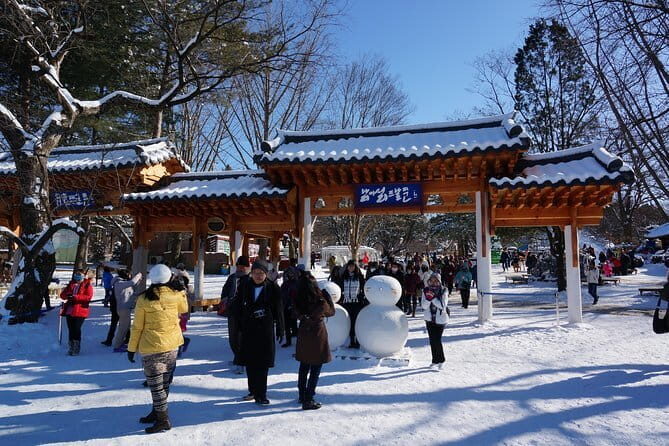
After the palace portion, the energy shifts. You move from royal formality to the texture of everyday traditional life. Bukchon Hanok Village sits between Gyeongbokgung Palace and Changdeokgung Palace, so the location itself does part of the storytelling.
Walking matters here because the village’s vibe is tied to scale: narrow lanes, preserved hanok houses, and the way buildings relate to each other. If you only glance from the edge, you miss the “how this neighborhood feels” part. With a guide and a planned route, you’re more likely to notice what makes Bukchon look the way it does.
This is also where a small group shines. With a maximum of 10 people, you’re not stuck behind a long line. You can slow down at the best alleys, and the guide can steer you toward spots that are actually worth your camera battery.
Bukchon Hanok Village: the calm part of Seoul with real photo spots
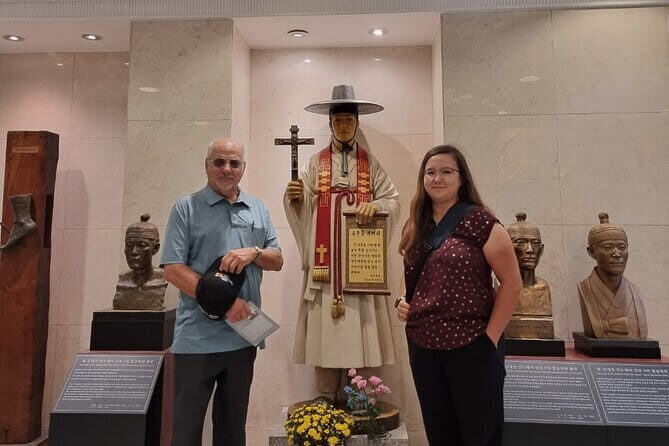
Bukchon Hanok Village is famous for its hanok—traditional Korean houses—and for the way the village preserves that sense of old Seoul in the middle of a modern city. In a relatively short walking tour, you get a meaningful taste of it: photo-friendly alleyways, compact streets, and a layout that rewards looking up as well as ahead.
I like that this stop is described as chill. That’s a useful word because it hints at the feel you’re aiming for: not frantic sprinting, not a checklist-only experience. Instead, you get time to wander along the lanes, pause for pictures, and let the neighborhood reveal itself piece by piece.
When you’re walking, try this quick mental trick:
- Don’t only photograph the buildings. Photograph the relationship between buildings and street angles.
- If you see a lane that looks like it could lead to a courtyard view, take one extra step. Bukchon rewards curiosity more than speed.
The reviews specifically highlight how much fun it is to walk the alleys and how many photo moments you can find. That matches the basic truth of Bukchon: the best views often come from being at the right corner, not from standing in the wrong place with a wide lens.




What you get for $62.89: value, time, and why tickets matter
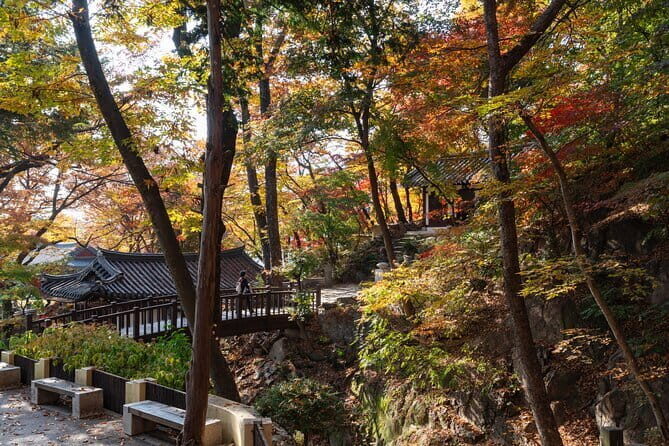
At $62.89 per person, you’re paying for a guide and a Gyeongbokgung entrance ticket. You’re also buying back your time. Palace visits without guidance can turn into a “pretty, but what does it all mean?” experience. Here, the guide’s context helps you squeeze more value out of the 2 hours 30 minutes.
Let’s break down the value logic:
- Ticket included: That’s one cost you don’t need to manage on the day.
- Guide included: This is the real differentiator. You’re not just moving through space. You’re learning how to read it.
- Short duration: Two and a half hours isn’t all day. That can be a pro if you want to keep your Seoul itinerary flexible afterward.
It also feels like a good deal if you want a first step into Korean history without committing to a long tour format. For me, the ideal price is the one that reduces decision-making stress. This one does that.
Group size, pace, and what that means for your comfort
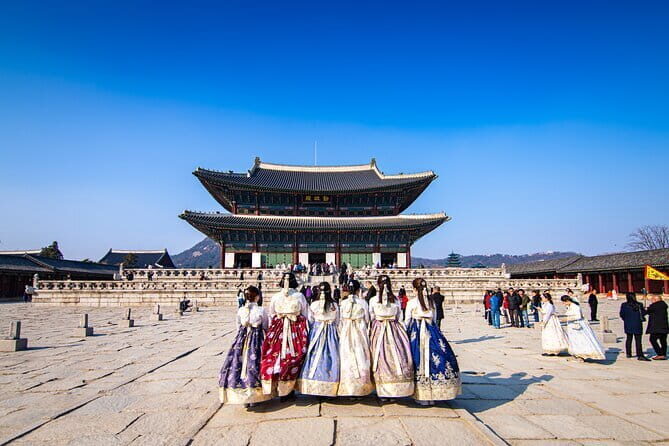
The tour caps at 10 travelers, which is a sweet spot for a walking day. You get attention without feeling like you’re herding cats. It’s also easier to pause and regroup, especially when you’re moving between palace sections and then into a neighborhood of lanes where crowds can build quickly.
The pace is designed for sightseeing plus explanation. Expect plenty of walking, but not a punishment march. Most people can join, and the structure supports first-timers—especially if you want a guided way to understand what you’re seeing.
The one practical thing you should keep in mind: since it’s outdoors walking, you’ll want to check conditions ahead of time. If the day is hot or rainy, plan to dress and carry accordingly. The tour itself doesn’t list weather accommodations, so it’s smart to be ready.
Mobile ticket and getting around: small logistics that save headaches
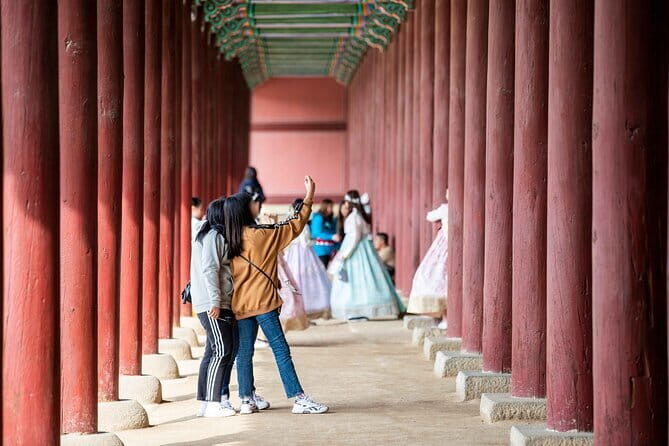
You’ll use a mobile ticket, which is convenient on a day when you’ll probably be checking maps, hopping between sites, and taking photos. Less paper handling is one of those tiny wins that makes the whole morning feel easier.
Also, the tour is near public transportation, so you can usually plan your arrival without complicated transfers. Transportation isn’t included, but the location setup helps. If you’re already staying in central Seoul, you’ll likely find it straightforward to reach the palace area.
Who should book this walking tour—and who might prefer something else
This tour is a great fit if:
- You’re in Seoul for a limited time and want a structured, two-stop day.
- You want a first-time-friendly introduction to both royal palace space and traditional neighborhood streets.
- You care about photos but also want the story behind what you’re photographing.
You might choose another option if:
- You want a more extended, slow museum-style exploration of palace buildings.
- You don’t like crowds at major attractions and prefer off-peak visiting, which this format can’t change.
Should you book this Gyeongbokgung Palace & Bukchon Village walking tour?
If you’re deciding between wandering on your own and taking a guided approach, I’d lean guided—especially for this pairing. Gyeongbokgung becomes much more satisfying when you can understand why the palace matters and what key halls and pavilions represent. Then Bukchon gives you the relaxed walking contrast, with lots of alley photo opportunities.
Book it if you want an efficient, small-group way to see the classic Seoul old-and-new story in one go. Skip it only if you’re hunting for a slower, deeper palace-only experience or you prefer to travel completely on your own pace with zero structure.
FAQ
How long is the tour?
It runs about 2 hours 30 minutes.
What’s included in the price?
The tour includes a tour guide and the Gyeongbokgung Palace entrance ticket.
What is the total price per person?
The price is $62.89 per person.
Does the tour use a mobile ticket?
Yes, the tour uses a mobile ticket.
How big is the group?
The tour has a maximum of 10 travelers.
Is transportation included?
No, transportation isn’t included.