REVIEW · SEOUL
Discover Western Korea in 4days: All-Inclusive Experience
Book on Viator →Operated by Hanatour ITC (하나투어 아이티씨) · Bookable on Viator
This route is short enough to feel easy. You’ll cover UNESCO fortress walls, royal tombs, hanok streets, big tea views, and a major coastal wetland, all with a guide and included meals. I like that it’s built around an all-inclusive plan with no shopping stops, so you spend your time moving between real places instead of calendar detours.
Two things I especially like are the included entrance fees (less money and hassle) and the meals and restaurant choices being planned as part of the program, not an afterthought. And yes, there’s a wellness facility stop tied to the Korea Tourism Organization, which keeps the day from being only temples and museums.
One possible drawback: the schedule is active. You’ll want moderate fitness for walking in fortress and temple areas, and you should expect a full day of sightseeing with limited downtime.
In This Review
- Key highlights you’ll feel immediately
- A 4-day plan that favors your time over paperwork
- Getting set: start point in Seoul, then a week’s worth of change in four days
- Day 1 in Gongju: UNESCO fortress views and royal tomb craftsmanship
- Gongsanseong Fortress: hillside walls and a sense of scale
- Songsan-ri Tombs and the Royal Tomb of King Muryeong: brick burial engineering
- Gongju National Museum: artifacts that tie the day together
- Day 2 in Jeonju: hanok streets, hanbok time, and a monk tea conversation
- Jeonju Hanok Village: 800+ traditional homes and slow wandering
- Hanbok experience: dressing up as part of the village visit
- Gyeonggijeon Shrine: Joseon origins and a portrait tied to the dynasty
- Baekyangsa Temple: a different kind of beauty each season
- Day 3 in Boseong and Suncheon: terraced tea views and one of Korea’s top wetlands
- Boseong green tea field (Daehan Dawon): terraced rows that change with the light
- Suncheon Bay Wetland Reserve: coastal marsh scale and wildlife habitat
- Day 4 in Busan: UN Memorial Cemetery, then back to Seoul
- Timing back to Seoul: KTX departure in the afternoon
- What’s actually included, and why it affects the value
- Who this tour fits best (and who might want something looser)
- Small-group feel: max 35, English support, and a caring guide touch
- Should you book this Western Korea 4-day experience?
- FAQ
- How long is the tour?
- Where does the tour start and end?
- Is this tour really all-inclusive, or will I be asked to pay for things?
- What’s included with meals?
- Are entrance fees included?
- Is KTX included?
- What cities and areas are covered?
- What physical activity level is required?
- Is shopping part of the program?
- Is good weather required?
Key highlights you’ll feel immediately
- No shopping stops: the itinerary is designed as an all-in program, so you’re not hunting for where to go next.
- Guide quality matters: English-speaking support, and a guide named Jay was specifically noted as caring.
- Meals are included (and planned well): multiple lunches and dinners are part of the package, which helps the days run smoothly.
- Big sights, short time: UNESCO-era Gongju sites, Jeonju hanok atmosphere, and large-scale nature stops.
- Real culture time: shrine visit, hanbok/historical setting in Jeonju, and a tea conversation experience at Baekyangsa.
- Wetlands plus memorial: Suncheon Bay wetland reserve and then Busan’s UN Memorial Cemetery to close the loop.
A 4-day plan that favors your time over paperwork
For Western Korea in only four days, this trip is the definition of “time well used.” You’re not driving yourself from city to city or figuring out ticket transfers all day. Instead, you’re assigned a clear flow: historic Gongju on Day 1, traditional Jeonju on Day 2, nature-heavy stops on Day 3, and a reflective Busan morning on Day 4.
The big practical win is how the package is structured. Admission fees, meals, and hotel stays are included, which means you’re not constantly doing cost math or splitting your attention between sightseeing and logistics. You’ll also have a professional English-speaking guide (or driver-guide), plus an air-conditioned vehicle with the group. Even the tickets are handled with a mobile option.
And because the group is capped at 35 travelers, you won’t feel like you’re stuck in a huge crowd the entire time. It’s still group travel, so there’s a rhythm, but it’s not the kind of overcrowded tour day that ruins your pace.
A few more Seoul tours and experiences worth a look

Getting set: start point in Seoul, then a week’s worth of change in four days
This tour starts in Seoul, in the Insadong area, with the meeting point listed at AMID Hotel Seoul (Insadong 5-gil, Jongno District). The end point is Seoul Station on the last day.
You’ll be dealing with city-to-city movement fast. The route is built to cover multiple regions, so you’ll likely spend more time sightseeing than planning, but you should still be mentally ready for travel days that are more “tour mode” than “wander mode.”
If your group is 9 people or fewer, KTX tickets are provided. For larger groups, KTX inclusion isn’t stated the same way, so it’s worth confirming what your exact group size means for rail.
Day 1 in Gongju: UNESCO fortress views and royal tomb craftsmanship
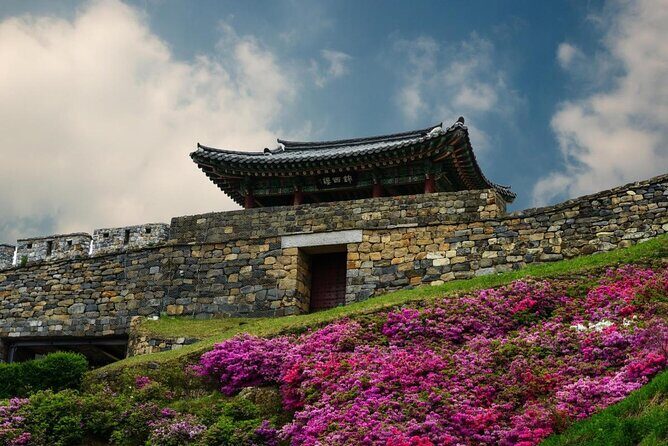
Day 1 is an excellent “starter” day because Gongju gives you both dramatic scenery and serious history. It starts with Gongsanseong Fortress, a UNESCO World Heritage Site designated in 2015.
Gongsanseong Fortress: hillside walls and a sense of scale
Fortresses feel different when you look at them from the slopes rather than as flat museum photos. Here, you’re dealing with the geography as part of the story—walls, elevation, and the way the site dominates the surrounding area. Expect walking and stair-like routes typical of hillside fortress visits.
Practical note: bring sunscreen and comfortable shoes. Even on cool days, the fortress climb can add up.
Songsan-ri Tombs and the Royal Tomb of King Muryeong: brick burial engineering
Next comes the Royal Tomb of King Muryeong, known for its brick-built burial style. This is one of those places where craftsmanship becomes the main character. Instead of only reading about royalty, you get to see how burial design reflects skill, labor, and royal status.
This part of the day is also a nice contrast to the fortress—both are monumental, but one is defensive and scenic, and the other is architectural and symbolic.


Gongju National Museum: artifacts that tie the day together
Finally, you finish Day 1 at Gongju National Museum, which houses around 10,000 cultural artifacts. That museum stop matters because it turns the morning’s sites into something you can interpret instead of just “see and move on.”
If you like history that’s grounded in objects—metalwork, relics, ornaments—this is where your mental map clicks. It’s also a good pacing tool. A museum hour can feel like a reset after outdoor walking.
Day 2 in Jeonju: hanok streets, hanbok time, and a monk tea conversation
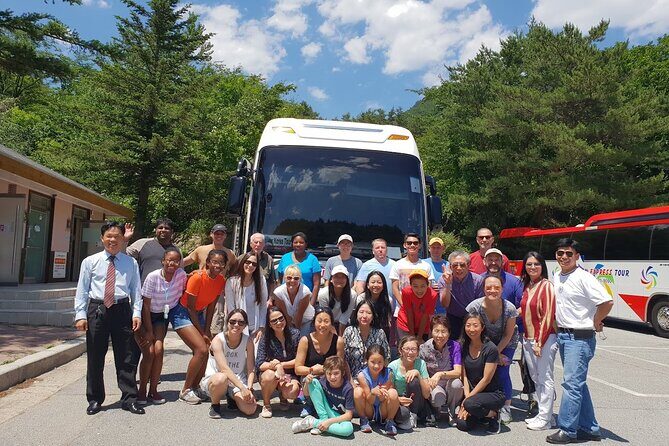
Jeonju is the emotional center of many Western Korea trips, and Day 2 leans hard into that. The route mixes atmosphere (hanok village), cultural practice (hanbok experience), and religious calm (shrines and temple time).
Jeonju Hanok Village: 800+ traditional homes and slow wandering
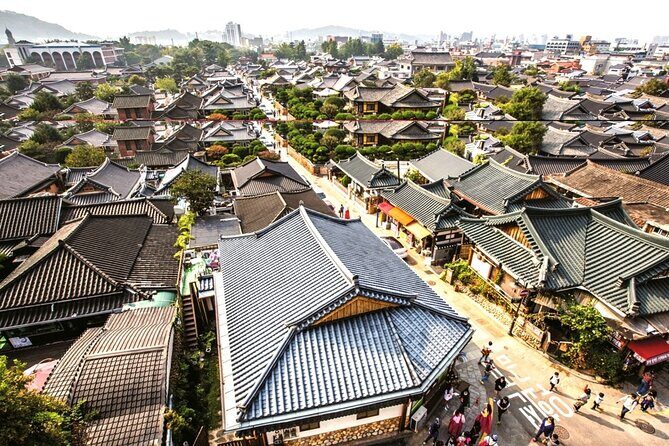
You start in Jeonju Hanok Village, with a morning visit near Gyeonggijeon Shrine in the middle of the village area. The listing points to more than 800 traditional hanok houses, so you can expect an actual neighborhood feel, not just a staged courtyard.
This is one of the days where you’ll benefit from slowing down. The best moments here are often small: the way alleys open up, the way rooflines repeat, and the feeling of stepping into a slower pace than Seoul.
Hanbok experience: dressing up as part of the village visit
Next comes the hanbok experience. You’ll wander the alleys in traditional clothing, which is a simple activity but a very effective one for making your photos and memories feel cohesive. It also helps you “enter” the space without needing a scripted performance.
Even if you’ve done hanbok before, the Jeonju setting makes this feel more integrated than a quick photo stop.
Gyeonggijeon Shrine: Joseon origins and a portrait tied to the dynasty
After that, you explore Gyeonggijeon Shrine, erected in 1410, and associated with the portrait of King Tae-jo, the founder of the Joseon Dynasty. This gives the village context. It’s one thing to admire architecture, and another to understand why a specific shrine anchors the story.
Baekyangsa Temple: a different kind of beauty each season
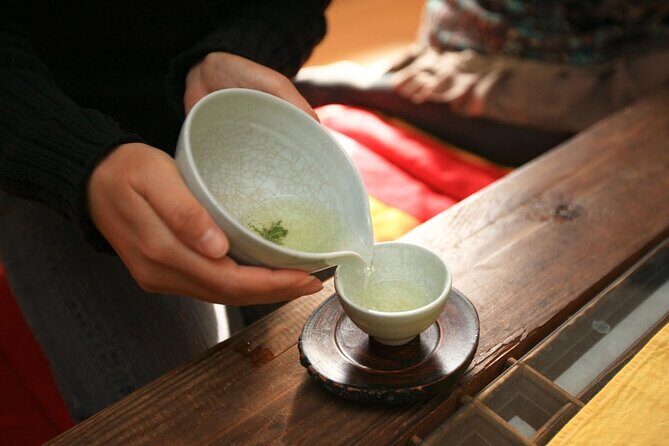
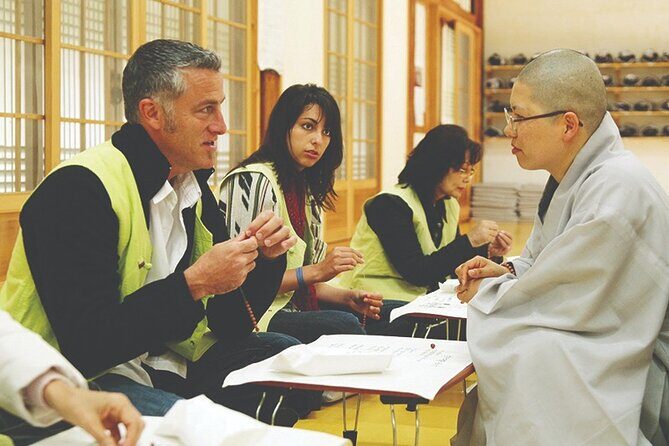
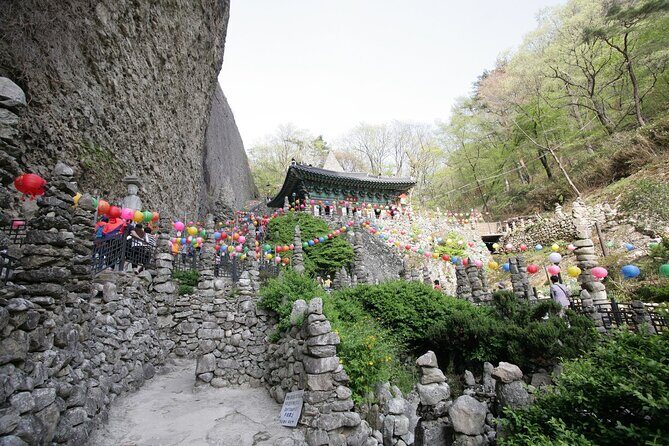
Then you head to Baekyangsa Temple, which is described as changing beauty by season. The standout included experience here is a tea conversation with a Buddhist monk.
This is the kind of stop that can make the day feel human. It’s not only about walking through a temple complex; it’s about a quiet interaction framed by tea. You’ll want to treat it respectfully and keep your expectations flexible, since conversation style depends on the monk and the group.
Walking around temples still requires decent footwear, but the tone of this part of the schedule is usually calmer than a fortress.
Day 3 in Boseong and Suncheon: terraced tea views and one of Korea’s top wetlands
Day 3 is your nature-heavy day, and it’s a good balance after Jeonju’s cultural pace.
Boseong green tea field (Daehan Dawon): terraced rows that change with the light
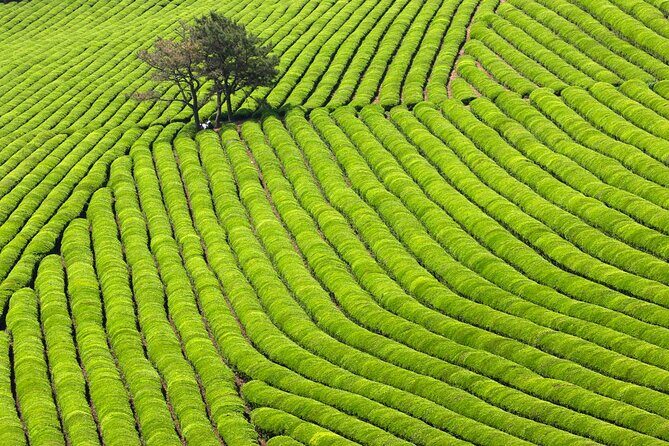
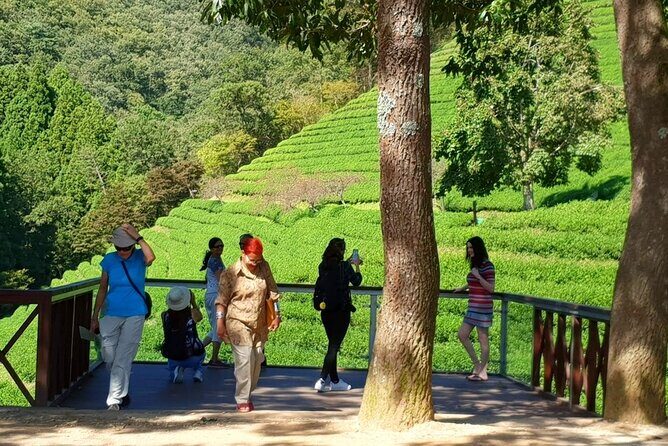
You’ll visit Daehan Dawon, described as the largest green tea field in Korea. The route here is about walking between terraced rows of tea bushes. That terracing matters because it creates depth—especially when light hits the slopes and the view keeps stretching out.
Bring a light layer if it’s windy, and expect you’ll want to pause for photos more often than on the city days.
Suncheon Bay Wetland Reserve: coastal marsh scale and wildlife habitat
After lunch, you head to Suncheon Bay Wetland Reserve, a coastal marshland where river meets sea. The listing notes it as one of the world’s top five wetlands and a sanctuary for more than 250 species.
This stop is less about single monuments and more about feeling the scale of the place. You’re in a system: water, vegetation, and habitat all working together. Even if you aren’t a birder, wetlands are one of those environments that make you slow down because the scenery is layered, not point-based.
Practical tip: the wetland environment can be cooler and damp. Comfortable shoes with grip are worth it.
Day 4 in Busan: UN Memorial Cemetery, then back to Seoul
Day 4 begins with UN Memorial Cemetery in Busan, a solemn site honoring UN soldiers who lost their lives during the Korean War. The graves are arranged by nation, with approximately 2,300 graves.
This is a powerful way to end (and to reset) your trip. After days of forts, tombs, villages, tea fields, and wetlands, this stop puts the trip’s setting into emotional context. You’ll likely find the pacing naturally slower here, because the place asks you to slow down.
Timing back to Seoul: KTX departure in the afternoon
The schedule includes an estimated departure from Busan Station 14:31 → 17:14 Seoul Station. Your guide drops you off at Busan Station, and you end the tour at Seoul Station. That means you should treat the last day as part sightseeing and part travel.
If you want to keep the day smooth, avoid planning a long evening right after you arrive in Seoul. You’ll be tired in a good way, but still tired.
What’s actually included, and why it affects the value
At $1,200 per person for four days, the key question is what you get for that money. This package is built around included necessities:
- 3 nights of accommodation
- Lunch (4) and dinner (3) plus breakfast (3)
- All entrance fees
- Air-conditioned vehicle (varies by group size)
- Professional English-speaking guide (or driver-guide)
- All fees and taxes
- Mobile ticket
- Korea Tourism Organization wellness facility stop (included)
The value isn’t just “stuff is included.” It’s that your days run on rails. You’re not negotiating buses, tickets, and meal timing every step of the way. Also, the restaurant plan matters: the tour description says meals are included, and the experience’s feedback highlights that the food choices are well thought out and the food is amazing. In other words, you aren’t just getting pre-packed convenience meals.
That’s one of those details that can make or break a short tour. If you spend your “one chance” at Jeonju and Boseong eating randomly, you lose the point. Here, the package is designed to keep meals from becoming the weak link.
Who this tour fits best (and who might want something looser)
This is a strong match if you want an organized sampler of Western Korea that still includes real culture and real outdoor space.
You’ll likely enjoy it if:
- You want history plus nature in a tight timeline
- You prefer no shopping pressure and a clear route
- You like structure that reduces decision fatigue
- You’re okay with moderate walking and a full schedule
You might think twice if:
- You want long free time to roam every neighborhood without a clock
- You’re hoping for a slow, leisurely pace with lots of “choose your own adventure” space
The tour also notes suitability from ages 1 to 80+, with moderate physical fitness required. That doesn’t mean it’s effortless, but it suggests the day-to-day route is planned to be manageable for a wide range of travelers.
Small-group feel: max 35, English support, and a caring guide touch
Group tours can feel generic. This one tries to avoid that by focusing on guided experiences and a manageable group size (up to 35).
The tour uses a professional English-speaking guide or driver-guide, and in the experience feedback a guide named Jay was described as very caring. That kind of person-to-group attention matters when you’re moving through multiple cultural settings where the details are half the fun.
Also, the hotels being described as clean and nice is practical. After long sightseeing days, you’ll want a room that feels like a reset button.
Should you book this Western Korea 4-day experience?
I’d book it if you want a short, well-organized route that still feels authentic: UNESCO fortress history in Gongju, hanok culture in Jeonju with hanbok time, tea and temple calm, big scenic tea fields, a major wetland reserve, and then Busan’s UN cemetery to end thoughtfully.
Before you commit, check one thing: your tolerance for a packed day. This isn’t a “sit on a bench and snack” tour. It’s a moving tour with walking, early starts, and scheduled meals.
If you’re the kind of traveler who likes having meals, tickets, and entry fees handled so you can focus on seeing and learning, this is a strong value choice. If you want maximum freedom and long unguided wandering, you may prefer a more independent itinerary.
FAQ
How long is the tour?
It runs for about 4 days.
Where does the tour start and end?
It starts at AMID Hotel Seoul in Insadong, Seoul, and ends at Seoul Station.
Is this tour really all-inclusive, or will I be asked to pay for things?
Entrance fees, meals (breakfast, lunch, dinner as listed), accommodation for 3 nights, and guided services are included. The tour also states there is no shopping and no options.
What’s included with meals?
The package includes 4 lunches, 3 dinners, and 3 breakfasts.
Are entrance fees included?
Yes. Entrance fees are included for the tour.
Is KTX included?
If the group size is 9 or fewer people, KTX tickets are provided. The tour information also indicates you arrange your own transportation to Seoul Station.
What cities and areas are covered?
You’ll visit Gongju and its UNESCO sites, Jeonju and its hanok area, Boseong and its green tea field, Suncheon Bay Wetland Reserve, and Busan’s UN Memorial Cemetery.
What physical activity level is required?
The tour says travelers should have a moderate physical fitness level.
Is shopping part of the program?
No. The program includes no shopping stops.
Is good weather required?
The tour requires good weather, and if it’s canceled due to poor weather you’ll be offered a different date or a full refund.