REVIEW · SEOUL
War Memorial, Jogyesa Temple & Tapgol Park Tour in Seoul
Book on Viator →Operated by I Love Seoul Tour · Bookable on Viator
War in the rearview, but lessons up front. This tour threads together big themes without turning them into a lecture—starting at the War Memorial of Korea and ending in central Seoul history at Tapgol Park. I like how it’s built around stops with free admission and quick, usable time for photos, not a half-day slog.
Two things I really like: you get free museum access at every major stop (including a rooftop photo window with Gyeongbokgung views), and you also pause at places that feel lived-in, like Jogyesa Temple—right in the middle of modern Seoul. You’ll also be close to major landmarks, since the tour centers on Myeongdong Cathedral for the start and finish.
One consideration: the route is tight, so if you want to linger for long stretches—especially inside the War Memorial—this is more “see and absorb” than “slow travel.”
In This Review
- Key points to know before you go
- War Memorial of Korea and the UN Memorial Cemetery: What you’ll actually learn
- National Museum of Korean Contemporary History: Rooftop photos with real palace views
- Jogyesa Temple: Calm Buddhism in the center of modern Seoul
- Tapgol Park: Independence movement history right in the city core
- How the timing and vehicle ride shape the experience
- Meeting point near Myeongdong Cathedral: Easy to find, easy to end
- Price and value: Why $42 can be a good deal
- Who this tour is best for (and who might want something else)
- A note on the guide experience and pacing
- Should you book this War Memorial, Jogyesa Temple & Tapgol Park tour?
- FAQ
- How much time does the tour take?
- What’s included in the price?
- Is lunch included?
- Where does the tour start and end?
- Do I need to buy tickets for the attractions?
- Is there bottled water provided?
- Do I need a certain fitness level?
- What if the weather is bad?
Key points to know before you go
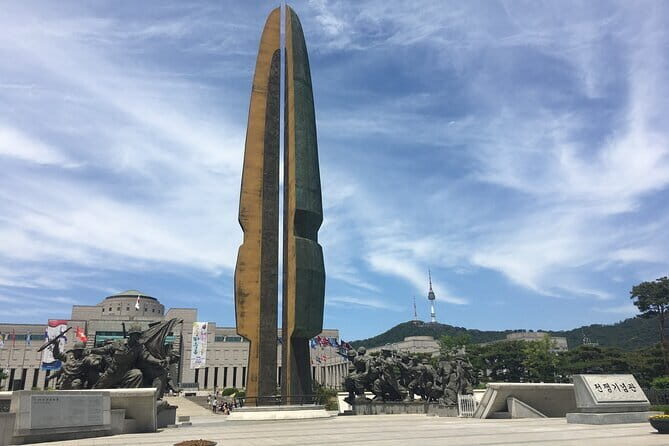
- War Memorial’s UN Memorial Cemetery focus helps you understand the human cost of war and why peace matters.
- Contemporary History Museum rooftop photo time pairs South Korea’s modern story with a real Gyeongbokgung Palace view.
- Jogyesa Temple on the Jogye order route gives you a window into Korean Buddhism in a historically turbulent setting.
- Tapgol Park and the 1919 March 1st Movement is a direct line from independence history to today’s Seoul streets.
- Lottery offered adds a fun, pop-culture twist tied to Tapgol Park.
- Group size capped at 100 keeps things social but not chaotic.
War Memorial of Korea and the UN Memorial Cemetery: What you’ll actually learn
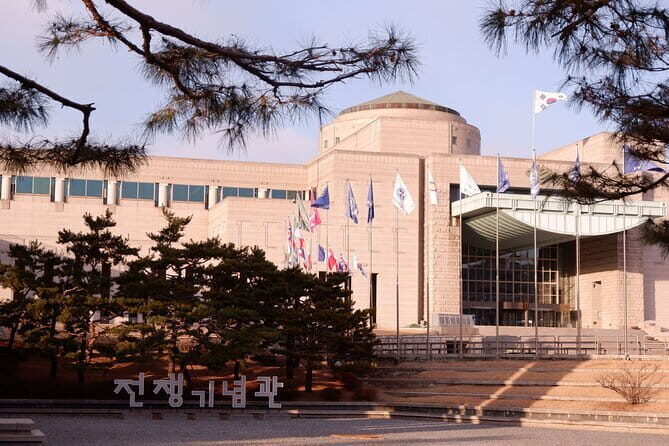
Your tour starts at the War Memorial of Korea, with most of the time centered on the 3rd floor United Nations Memorial Cemetery. This isn’t just displays and facts. The whole vibe is about remembering what happened and asking what it should change next—especially around the Korean War and the hope for reunification.
You’ll likely get about one hour here, and with a group format that’s a good amount of time. The sweet spot is to focus on the UN Memorial Cemetery portion first, since that’s where the tour’s “main lesson” lands. If you try to see everything, you’ll rush. If you treat it like a themed visit, it clicks.
Practical tip: wear comfortable shoes. Even if the pacing is guided, museum space still involves walking and looking up. This is also where your photos can help you later—snap a few key views, not dozens of random angles.
You can also read our reviews of more tours and experiences in Seoul.
National Museum of Korean Contemporary History: Rooftop photos with real palace views
Next you’ll head to the National Museum of Korean Contemporary History, a museum that opened on December 26, 2012. The museum is set up with four permanent exhibition halls covering South Korea from the late 19th century to the present, so it’s built to give you a timeline rather than isolated stories.
You’ll have about 30 minutes at this stop. That’s not enough to read every label, but it is enough to get your bearings: what changed, when it changed, and how the country’s modern identity formed. The biggest payoff is the photo time on the rooftop with a Gyeongbokgung Palace view. It’s one of those moments where the city’s layers make sense—history in the building and history outside the window.
If you like visual learning, this stop rewards you. If you only care about reading, the time limit may feel short. I’d still go for it because the rooftop view gives you a “connect-the-dots” shot you can’t easily recreate later.
Jogyesa Temple: Calm Buddhism in the center of modern Seoul
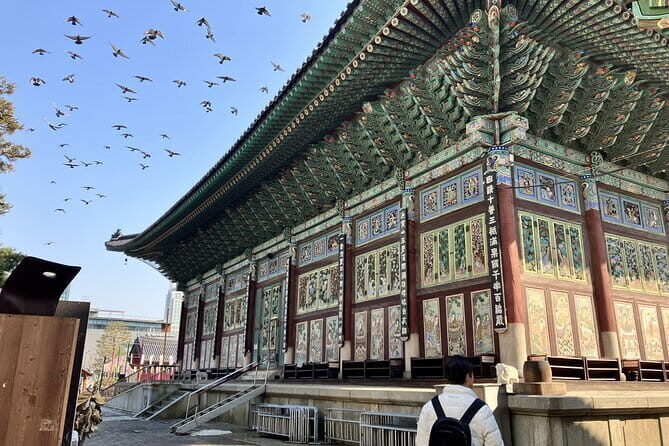
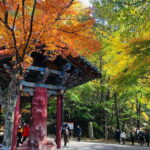
Then you’re off to Jogyesa Temple, described as the chief temple of the Jogye order, which represents Korean Buddhism. The tour frames it around the idea of living together and the spirit of the bodhisattva—so you’re not just looking at buildings, you’re being guided toward what the site stands for.
You’ll spend about 25 minutes, which is right for a first-time temple visit. You get time to slow down, look at key spaces, and understand why this temple also matters in Korean modern history. The tour notes it has lived through turbulent eras, and that shows in the way the site feels both spiritual and anchored.
One small reality check: temples can be quiet, but groups aren’t. Expect a respectful pace—bring a calm tone. If you’re photographing, keep an eye on where you can stand and where you should wait.
Tapgol Park: Independence movement history right in the city core
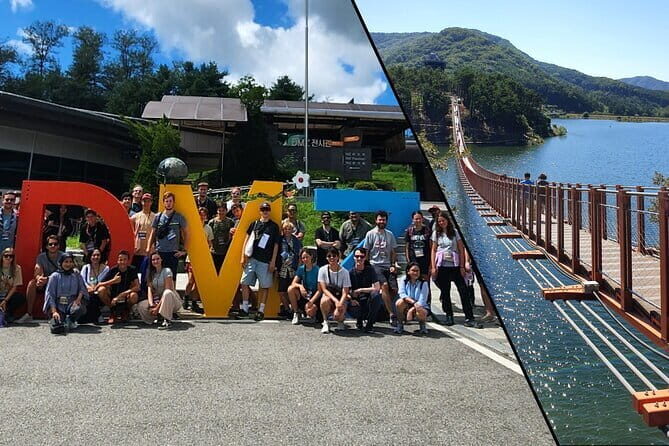
Your final sightseeing stop is Tapgol Park, near Insadong in central Seoul. This park matters because it’s tied to the March 1st Korean Independence Movement in 1919, a major push for independence from Japanese rule.
The tour gives you around 30 minutes here, and that’s enough time to walk the park area, understand the historical context, and then step back and watch the city move around you. Tapgol Park also shows up in pop culture. It’s briefly featured in Squid Game Season 2, episode 1, in a scene involving lottery tickets and bread. The connection is short, but it makes the park easier to remember.
There’s also a light, hands-on moment: lottery will be offered as part of the experience. The important word here is offered—think of it as a fun add-on that helps you connect the scene you might recognize to the real place you’re standing in.
If you want photos, this is a good spot because the park sits in a central neighborhood. You get less “museum lighting” and more street-level Seoul.
How the timing and vehicle ride shape the experience
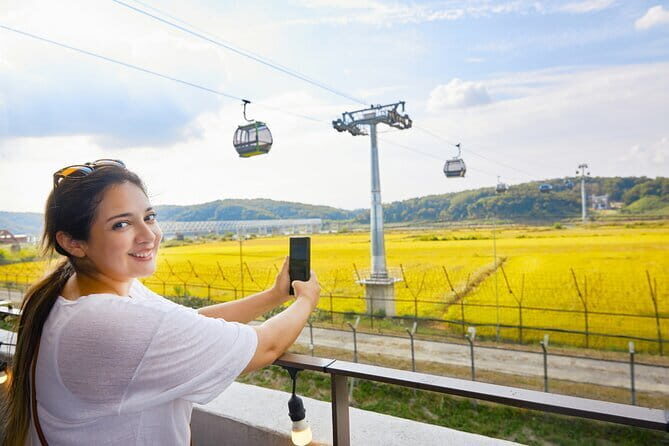
This tour runs about 4 hours, and it uses an air-conditioned vehicle with parking fees included. For Seoul, that matters. Distances can be deceiving, and a shared ride helps you conserve energy for the walking inside each stop.
Also, it’s built like a steady rhythm:
- War Memorial first (big theme, focused time)
- Contemporary History Museum next (quick timeline + rooftop photo)
- Jogyesa Temple (short, reflective stop)
- Tapgol Park (central-city independence story + fun lottery add-on)
The tightness is the trade-off. You won’t have hours in any one place. But you will see the story chain in one go. If you’re planning a packed Seoul schedule, this format is efficient.



Meeting point near Myeongdong Cathedral: Easy to find, easy to end

You start and end at Myeongdong Cathedral (74 Myeongdong-gil, Jung District). That’s a helpful anchor for your day because it’s a well-known area with good transit options. It also means you can likely pair this tour with nearby meals or sightseeing before or after.
The tour is set up with a mobile ticket, and you’ll get confirmation at booking. There’s also a note that the tour is near public transportation, which is a practical win if your plans change.
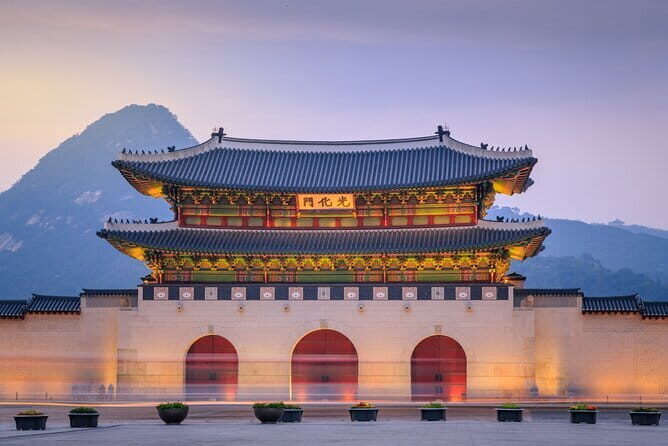
One more “small but smart” detail: the experience is framed as a way to record a South Korea photo trail. You’re encouraged to take pictures connected to Gyeongbokgung Palace, the temple, Tapgol Park, and the cathedral. That ties in nicely because you actually get rooftop photo time referencing Gyeongbokgung during the museum stop.
Price and value: Why $42 can be a good deal
At $42 per person for about 4 hours, you’re paying for guided timing, transport, and the included extras—not just admissions. The headline value here is that admission at these major stops is free in the tour context, so your cost doesn’t get eaten up by ticket lines or entrance fees.
What you’re also getting:
- Air-conditioned vehicle
- Parking fees
- Lottery offered
- Group discount options (when available)
- A structured route that hits history, religion, and independence in one loop
What you’re not getting is also important:
- Lunch
- Bottled water
- Hotel pickup and drop-off
So the value depends on your style. If you’re the type who likes “one coordinated morning/afternoon” and wants to avoid figuring out transit between four different stops, this price is reasonable. If you love independent wandering and already know how you’ll get around, you might find cheaper options on your own—but you’d lose the guided flow and the rooftop photo time.
Who this tour is best for (and who might want something else)
This fits best if you want a focused history-and-culture overview without spending a full day moving slowly. It’s also a good match if you like photo moments that connect landmarks to stories.
It also lists moderate physical fitness as the requirement. That usually means you should be fine with walking inside museums and around park areas, but you don’t need to be an athlete.
Consider something else if:
- You hate group pacing
- You want long, deep stays inside just one museum or one site
- You’re traveling with someone who needs frequent long breaks
A note on the guide experience and pacing
A big part of this kind of tour is how the guide turns facts into something you can remember. Feedback connected to the guide experience highlights a strong focus on explanation and keeping everyone on track. If your guide happens to be Stella, you’ll likely enjoy the structured approach and clear attention to the group.
Even if your guide isn’t named Stella, use this as your yardstick: you should come away understanding why these places connect. If it feels like disconnected stops, that’s a miss. A good guide makes each location feel like a chapter.
Should you book this War Memorial, Jogyesa Temple & Tapgol Park tour?
I’d book it if you want a compact Seoul day that touches real Korean history—from war remembrance to independence—and pairs it with visible, practical photo moments. The free-admission structure plus transport and organization makes it easy to pull off without stress.
Skip it if you’re looking for a slow, immersive visit where you can spend lots of time inside exhibits or want lunch and water handled for you. Since lunch and bottled water aren’t included, you’ll want a plan.
If you can handle a tight schedule and you enjoy story-based sightseeing, this is a solid value at $42.
FAQ
How much time does the tour take?
It runs about 4 hours.
What’s included in the price?
The tour includes an air-conditioned vehicle, parking fees, and a lottery. Admission for the main stops is free as part of the experience.
Is lunch included?
No. Lunch isn’t included.
Where does the tour start and end?
Both the start and end point are at Myeongdong Cathedral, 74 Myeongdong-gil, Jung District, Seoul.
Do I need to buy tickets for the attractions?
No. The tour lists free admission tickets for the stops mentioned, including the War Memorial of Korea, the Contemporary History Museum, Jogyesa Temple, and Tapgol Park.
Is there bottled water provided?
No. Bottled water is not included.
Do I need a certain fitness level?
The tour notes that travelers should have a moderate physical fitness level.
What if the weather is bad?
The experience requires good weather. If it’s canceled due to poor weather, you’ll be offered a different date or a full refund.