REVIEW · SEOUL
Seoul: Deoksugung Palace Night Tour
Book on Viator →Operated by koreaguidetour · Bookable on Viator
Deoksugung looks totally different after dark. This night tour puts you inside Seoul’s Deoksugung Palace when the buildings glow and the pace slows, with explanations that connect the Korean Empire era to the palace’s unusual mix of traditional and western-style architecture. I like that it stays close to major stops like City Hall and Gwanghwamun, so you’re not racing across town, and I also like the way the guide ties each hall to the people who used it. The one drawback to plan around is simple: Deoksugung is closed on Mondays, so you’ll need a different day or a different palace.
What makes this experience feel worth it is the structure. You’ll get guided context for specific buildings like Junghwajeon, Seokjojeon, and Hamnyeongjeon, so you’re not just walking through pretty lights. I also like that the guide explains in English and Chinese, and you can ask questions during the walk instead of saving everything for later.
Here’s the consideration: the tour depends on good weather, and recording or filming isn’t allowed. If you’re traveling with rain gear or you’re the type who films every corner, you’ll want to adjust your expectations.
In This Review
- Key things to know before you go
- Why Deoksugung Palace at night hits differently than daytime
- The easy start near City Hall station (and why that matters)
- Junghwajeon: the throne hall stop that anchors the whole visit
- Seokjojeon and the western-style contrast you came for
- Seokeodang: King Gojong’s beloved building
- Hamnyeongjeon: the king’s bed-chamber and the quieter side of power
- Jungkwanhun: the cafeteria stop that helps you catch your breath
- The stone wall next to Deoksugung you should budget time for
- English and Chinese guide talk: why it matters more than you think
- Price and timing: is $35 worth a 2-hour night tour?
- Who this Deoksugung night tour fits best (and who should think twice)
- Simple planning tips so your night goes smoothly
- Should you book the Deoksugung Palace Night Tour?
- FAQ
- How long is the Deoksugung Palace night tour?
- What is the price per person?
- Do I need a printed ticket?
- Where do I meet the group?
- What will the tour include at Deoksugung Palace?
- Is the guide available in multiple languages?
- Are there any restrictions on recording or filming?
- Is Deoksugung Palace open every day for this tour?
Key things to know before you go
- Night lighting changes the palace mood: The experience is designed for dusk and evening, when Deoksugung’s buildings look calmer and clearer.
- You’ll learn building-by-building meaning: Expect focused stops like throne hall, western-style hall, and the king’s bed-chamber.
- Korean Empire context, not just palace sightseeing: The stories connect architecture to the period around modernizing and the Japanese invasion era.
- English + Chinese guide explanations: You can follow along and still ask questions.
- Easy meeting area near City Hall: Setup is close to public transit, so you can arrive without stress.
- Small group size: Max 20 travelers helps keep it conversational.
Why Deoksugung Palace at night hits differently than daytime
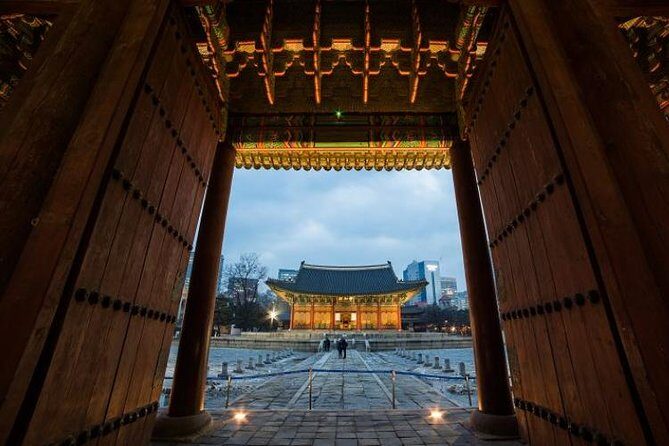
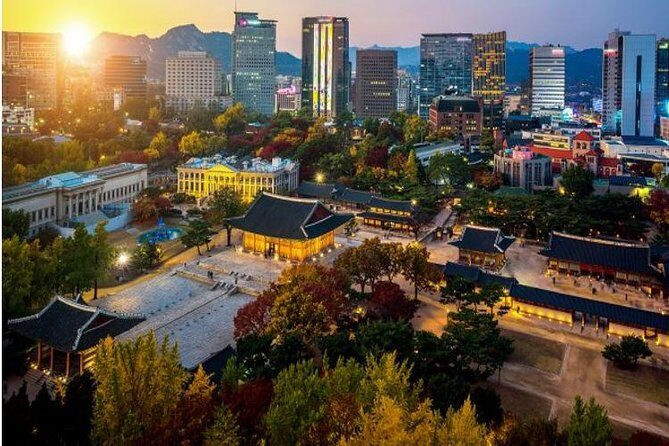
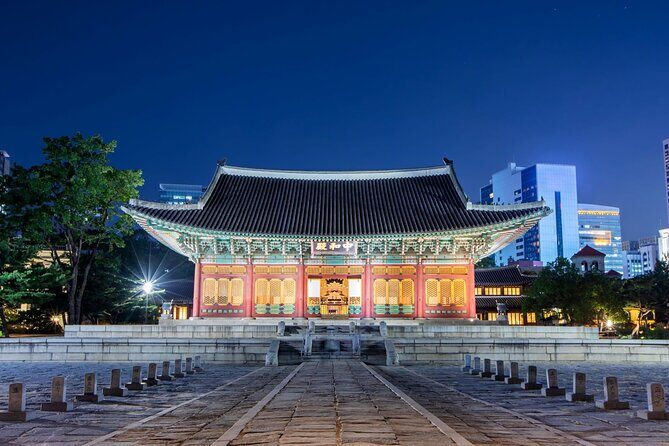
Deoksugung is the palace that many first-time visitors miss—until they see it after dark. The whole point of this tour is the timing. You get the palace in the evening when the light softens and the area feels less crowded, so the architecture has room to “make sense” instead of fighting for attention.
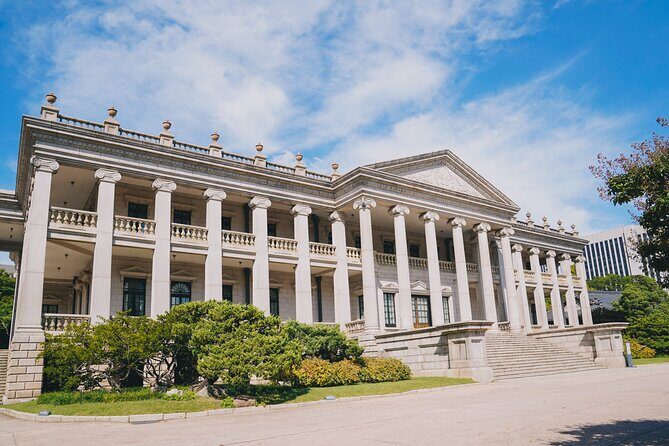
I also like that Deoksugung has a special identity among Seoul’s palaces. It served as the main palace instead of Gyeongbokgung, and it’s known for bringing traditional and western-style buildings together in one palace complex. That mix matters because it’s not just visual variety—it connects to a period when Korea was trying to modernize after centuries of older court patterns.
This is also where the history tone gets serious. The palace preserves layers from the Korean Empire era and the era surrounding Japanese invasion. The guide’s job is to help you hold both ideas at once: the beauty of the buildings and the weight of what happened around them.
You can also read our reviews of more evening experiences in Seoul
The easy start near City Hall station (and why that matters)
You meet at 6:30 pm for this night outing, with the group gathering at Exit 1 of City Hall Station (Line 1 and 2). That’s a big deal in Seoul, where travel time can turn into a guessing game if you’re far from the subway.
The tour company gives a specific meeting location and updates it by email or WhatsApp, so I’d treat communication time as part of your prep. Bring the mobile ticket (this tour uses a mobile ticket), and keep your phone ready for any last-minute message.
Also, the tour ends at Jeonggwanheon on Sejong-daero. Ending near major roads means it’s easier to continue your night—grab food, hop on another line, or just stroll toward Gwanghwamun.
Junghwajeon: the throne hall stop that anchors the whole visit
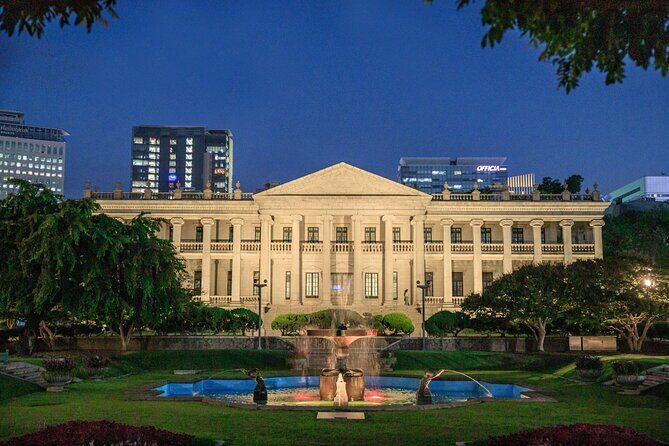
The tour begins where the symbolism is strongest: Junghwajeon, the main throne hall. This is the place where you’ll understand how Deoksugung functioned as a seat of power, not just a museum site.
What I like here is the guided explanation. Without context, a throne hall can feel like a big building with impressive doors. With a guide, it becomes a story of court structure—who used the space, why the space mattered, and how the architecture communicated authority.
Junghwajeon also works as a timing anchor for night tours. You’re arriving as light fades, so you’ll be able to notice details that can disappear in midday glare. It’s a good first stop because it sets the mental map for what comes next.
Seokjojeon and the western-style contrast you came for
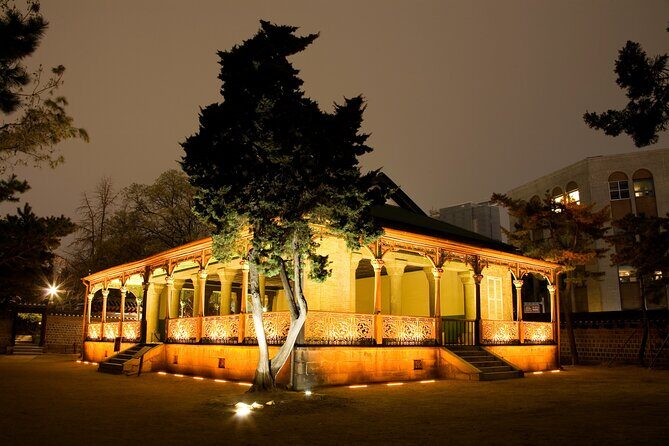
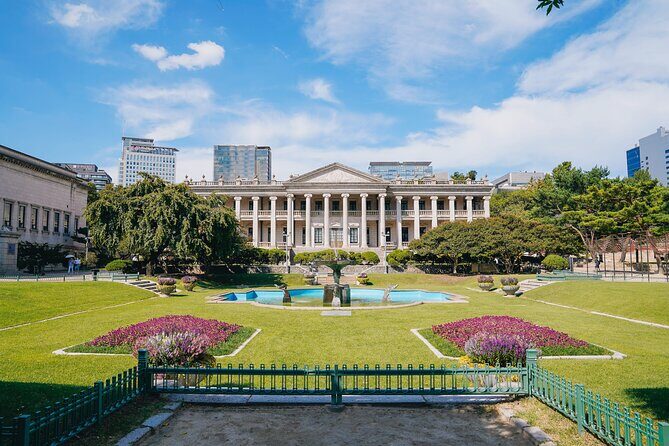
Then you move to Seokjojeon, the western-style building. This is one of the main reasons I’d choose this palace over the more famous alternatives. You’ll see the contrast inside the same palace grounds, which is exactly what makes Deoksugung memorable.
Your guide explains the architecture in a way that’s meant to be practical, not academic. You’ll learn what you’re looking at and why the design feels different from older palace forms. Even if you’re not a “buildings person,” the western-style stop helps you connect the palace to the modernization story that’s tied to this era.
A helpful way to approach Seokjojeon at night: don’t rush it for photos. Watch the building shape first, then notice how lighting changes the edges. The night timing makes the contrast easier to see.
Seokeodang: King Gojong’s beloved building
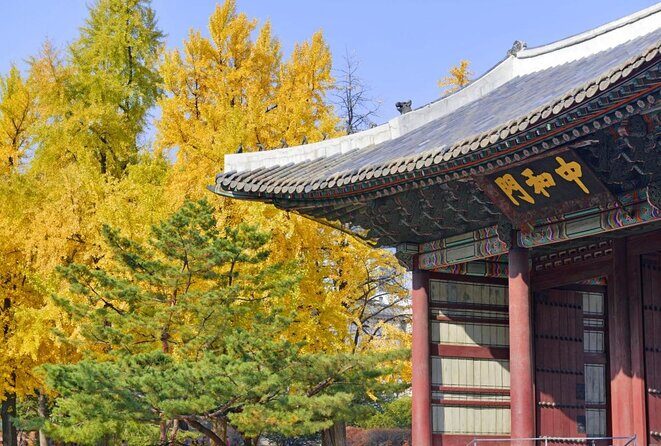
Next comes Seokeodang, described as the building King Gojong favored. That’s a small detail, but it changes how you interpret the space. You’re not only learning about formal power; you’re also learning about preference and daily court life.
When a guide connects a building to a specific person, it turns the architecture from static to personal. You start asking: What kind of life happened here? What did the king value? Why would this space be loved enough to be singled out?
If you enjoy these human links—court figures, routines, and personal stories—this is one of the stops that tends to land well.

Hamnyeongjeon: the king’s bed-chamber and the quieter side of power
After the throne hall and the western-style contrast, the tour moves to Hamnyeongjeon, the king’s bed-chamber. This is a shift in tone, and I like that the tour doesn’t keep you stuck in the loud symbolism of big ceremonial buildings.
A bed-chamber stop can be hard to appreciate without guidance because it’s less visually dramatic than a throne hall. With a guide, though, you get the point: it shows the private side of rule, the daily reality behind the formal image.
Night helps here too. In evening light, you’ll likely notice how the setting feels more intimate. Even though you’re still in a public area, the mood supports the idea of quieter court spaces.
Jungkwanhun: the cafeteria stop that helps you catch your breath
You’ll also visit Jungkwanhun, noted as a cafeteria. Think of this stop as a breather in the schedule. After walking and listening through multiple key buildings, it’s a good moment to reset your attention.
Even if you’re not buying snacks, the stop matters because it turns the tour into a manageable 2-hour block. You’re not stuck sprinting between landmarks; you’re guided through an evening route with a natural pacing point.
The stone wall next to Deoksugung you should budget time for
There’s one extra location many people overlook: the stone wall next to Deoksugung Palace. It’s called out as famous for its beauty, and I agree it deserves at least a few minutes.
Walls sound boring on paper until you’re at the site. At night, the wall’s textures and lines can look different than you’d expect, especially with palace lighting reflecting around the area. If your schedule is tight, at least pause and take in the wall from a couple angles before you move on.
English and Chinese guide talk: why it matters more than you think
A big part of the value here is the guide format. Explanations are offered in English and Chinese, and the guide is set up for questions. That’s not always true on tours. Here, the point is that you can stop and ask what you’re wondering as you walk.
The subject matter is also a reason this works. You’ll hear stories tied to the Korean Empire era that existed about 100 years ago, plus context around the end of the Joseon dynasty. You also get the architecture connected to those eras, including the pain of Japanese invasion. That’s heavy history, so the guide’s framing matters.
I’ve found that “night palace tours” can sometimes feel like someone pointing at buildings. This one is built more like a guided story of change—court life shifting, architecture reflecting that shift, and the palace preserving what came next.
In the reviews associated with this tour, guides named Alan Han and Sr. Lee are specifically mentioned as being punctual and strong at history storytelling. Even if you don’t get the same guide, the focus is clear: clear talk, history you can follow, and a narrative that links the spaces together.
Price and timing: is $35 worth a 2-hour night tour?
At $35 per person for about 2 hours, this tour sits in a reasonable middle zone for Seoul. The real question isn’t just price. It’s what you’re buying: guided explanations, admission ticket listed as free, and a structured night route that concentrates on the palace’s most meaningful buildings.
If you’re the type who likes to understand what you’re looking at—especially with Korea’s shift from older court patterns into a modernizing era—this is good value. You’re paying for interpretation, not just access.
If you only want a few quick photos and you don’t care about history context, the guide may feel like extra cost. But if you’re the kind of person who reads signs for 10 seconds and then wants more detail, you’ll likely appreciate paying for someone to translate the palace into a story.
Who this Deoksugung night tour fits best (and who should think twice)
This tour is a strong fit if you want:
- Architecture + history in one walking route
- A night option that feels calmer than daytime crowds
- Guided explanations in English and Chinese
- A tour paced for around 2 hours rather than a long all-day palace marathon
It might not fit as well if:
- You’re traveling on a Monday (Deoksugung is closed on Mondays, and the option is redirected to a Gyeongbok Palace tour)
- You’re planning to record or film (it isn’t allowed)
- You expect a rainy-day plan that ignores weather (the experience requires good weather)
Also, the group cap is 20 travelers, and there’s a minimum of 4. If you’re booking very last minute or traveling in a small group, that minimum matters.
Simple planning tips so your night goes smoothly
Keep your expectations realistic: it’s an evening tour with walking and listening, not a long wandering photo session. Wear shoes that handle uneven palace surfaces and nighttime footing.
Because the tour uses a mobile ticket, I’d make sure your ticket is easy to pull up quickly. And since updates come through email or WhatsApp, keep your messaging app ready.
Finally, give yourself a little time buffer before City Hall Station Exit 1. On a night tour, being early is a comfort, not an inconvenience.
Should you book the Deoksugung Palace Night Tour?
If you want a guided Deoksugung experience that connects the palace’s traditional and western-style buildings to the Korean Empire era stories, this is an easy yes. The night setting makes the lighting and mood better, and the guide-led explanation helps the architecture feel meaningful instead of random.
I’d skip it only if you’re traveling on a Monday, you need to film constantly, or you prefer self-guided sightseeing with minimal talking. Otherwise, this is a solid way to see Deoksugung with the kind of context that makes a palace visit stick.
FAQ
How long is the Deoksugung Palace night tour?
The tour runs for about 2 hours.
What is the price per person?
The price is $35.00 per person.
Do I need a printed ticket?
No. This tour uses a mobile ticket.
Where do I meet the group?
You meet in front of Exit 1 of City Hall Station (Line 1, 2) around 6:20 pm, with the tour starting at 6:30 pm.
What will the tour include at Deoksugung Palace?
The tour focuses on major palace buildings such as Junghwajeon, Seokjojeon, Seokeodang, Hamnyeongjeon, and Jungkwanhun.
Is the guide available in multiple languages?
Yes. Explanations are provided in English and Chinese.
Are there any restrictions on recording or filming?
Yes. Recording or filming is not allowed during the tour.
Is Deoksugung Palace open every day for this tour?
No. On Mondays, Deoksugung Palace is closed, and you can book the Gyeongbok Palace tour instead.