REVIEW · SEOUL
K-food cooking Japchae Mandu Tteokbokki & Fishcake
Book on Viator →Operated by sunnysdiningbz · Bookable on Viator
A first bite is always a good plan. This Seoul K-food cooking experience is built around making four classic dishes in one sitting, then eating what you cook with seasonal Korean sweets. I especially like how the format is hands-on and how the market time afterward is practical for learning what ingredients to buy.
One thing to consider: the indoor market tour can be closed on the 2nd and 4th Sundays, so you’ll want to check the day before you lock it in.
You start in the late afternoon (5:30pm) and the whole flow is designed to keep moving without rushing—cook, set up your table, take photos, eat, then walk across to the indoor supermarket for a short guided browse.
In This Review
- Quick highlights
- A small-group Seoul class that turns dinner into a mini show
- Your four dishes: Japchae, Tteokbokki, Fishcake, and Mandu
- Japchae: stir-fry skills you can reuse
- Tteokbokki: sauce, heat, and chew
- Fishcake: the quick way to understand street-food flavor
- Mandu: dumpling technique without intimidation
- Desserts you can name and taste: yakgwa and seasonal sweets
- Filming and plating time: why the photo moment isn’t fluff
- The indoor supermarket tour across the street: what you’re really learning
- Tax refund during the tour (with passport)
- Price and value: what $81 gets you in real terms
- Timing: 5:30pm works best if you plan your night
- What kind of traveler should book this?
- Should you book K-food cooking Japchae Mandu Tteokbokki & Fishcake?
- FAQ
- What dishes are included in this cooking class?
- How long is the experience?
- Are desserts included?
- Is alcohol included?
- Is the indoor market tour included?
- Can I get a tax refund during the supermarket visit?
- Where is the meeting point?
- Who is the class for?
- Are there days when the market tour is not held?
- How does cancellation work?
Quick highlights
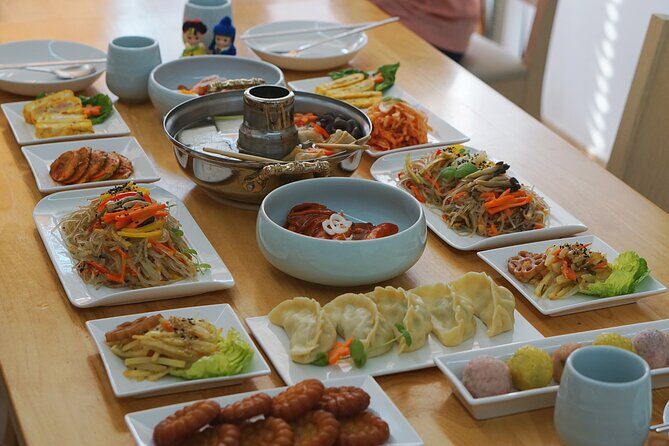
- Four K-foods in one class: Japchae, Tteokbokki, Fishcake, and Mandu
- Dessert included: seasonal sweets like yakgwa, wind rice cake, and sesame rice cake
- Photo-friendly cooking time: you can film and stage your finished table for social media
- Indoor supermarket tour (30 minutes): groceries, snacks, and big kimchi fridge displays
- TAX refund support: for qualifying purchases, using your passport
- Small group cap (max 6): easier questions, calmer pace
A small-group Seoul class that turns dinner into a mini show
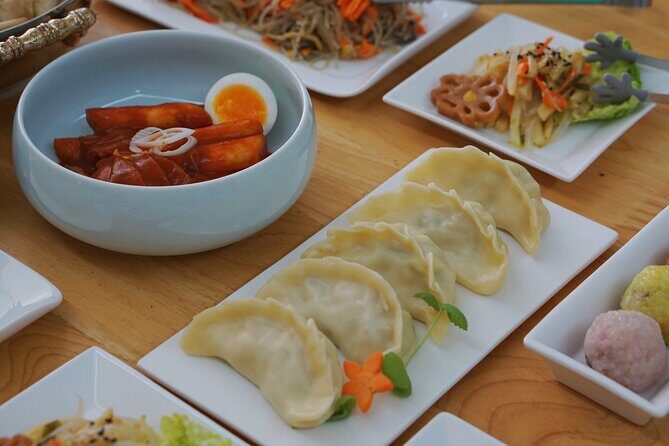
If you’re learning Korean food, you don’t want a lecture. You want a meal you can repeat at home—without needing ten different specialty gadgets. This class gives you that by focusing on four representative dishes and then feeding you as part of the session, not after the fact.
I like that everything is set up for you: tools, materials, and even packaging are included. That matters because cooking classes often fail at the basics—half the time you waste it hunting down ingredients or figuring out what belongs where. Here, you can focus on the cooking rhythm and get confident faster.
I also like the teacher-centered tone. The best thing about the experience is how calm it feels while you’re working. When you get an instructor who keeps steps clear (and keeps things moving), you can learn technique instead of just following motions.
Possible drawback: because it’s a late-day class, you’ll want a light meal before you go. You’ll be cooking and then eating, and the desserts are not a small side.
You can also read our reviews of more food & drink experiences in Seoul
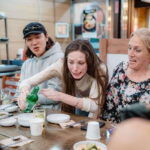
Your four dishes: Japchae, Tteokbokki, Fishcake, and Mandu
This is the core value—four dishes at once. For you, that means you’re not leaving Seoul with just one recipe. You’re leaving with a whole lineup of flavors and textures that represent Korean comfort food in a very practical way.
Japchae: stir-fry skills you can reuse
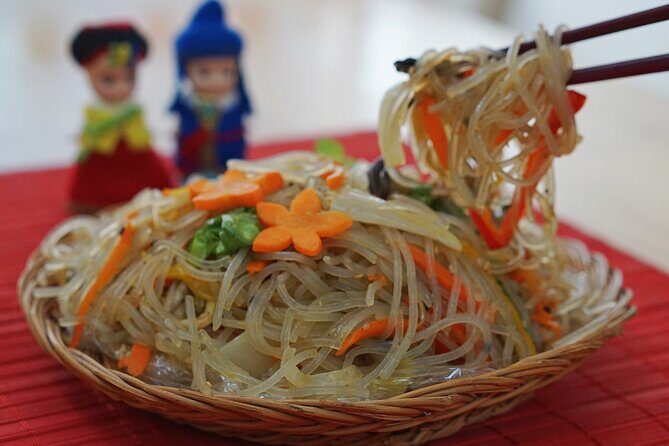
Japchae (often written as Japchae or Japtae in class materials) is the dish that teaches you control. You’re working with stir-fry timing and getting ingredients coated and glossy instead of greasy. It’s also forgiving: even if your home kitchen is smaller or your pan is different, the structure of Japchae is adaptable.
What to watch for as you cook:
- how you balance seasoning so noodles taste complete, not bland
- how you keep ingredients from turning soggy
- how the finished mix looks when plated—because you’ll be taking photos later
Tteokbokki: sauce, heat, and chew
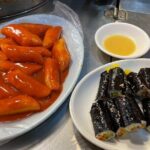
Tteokbokki is where the class feels like a real Korean food moment. The goal isn’t just spicy. It’s sticky, savory, and comforting—built around the right sauce feel and how the rice cakes soften.
In a class like this, you’re learning more than a recipe:
- how to think about sauce thickness
- how to judge when rice cakes are tender enough
- how sweetness, saltiness, and spice land together
Fishcake: the quick way to understand street-food flavor
Fishcake in tteokbokki-style setups is a shortcut to learning Korean street-food taste. It’s also a good texture lesson. Fishcake takes on sauce character, so you learn how different ingredients absorb flavor differently.
This component can be especially useful if you’ve only had fishcake before as a packaged product. Cooking it here helps you understand what it’s doing in the dish—and that makes it easier to recreate later.
A few more Seoul tours and experiences worth a look


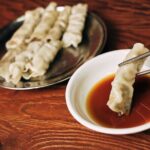
Mandu: dumpling technique without intimidation
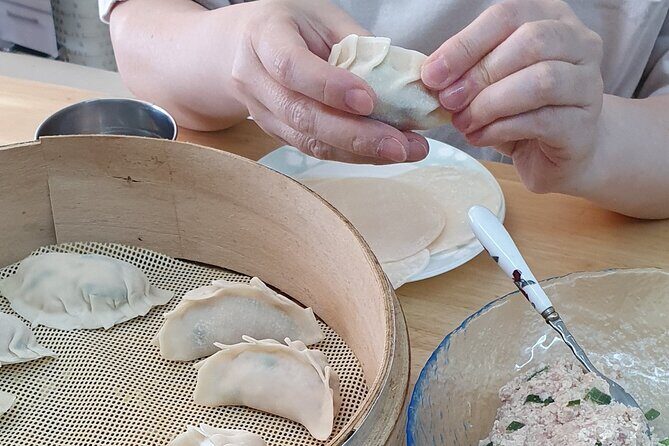
Mandu is the dish that can feel intimidating if you’re doing it from scratch at home. In a class format like this, you get the advantage of guided steps and a clear end goal.
For your at-home cooking, Mandu teaches two big things:
- how dumpling filling and seasoning should taste together
- what to aim for visually and by texture
And since you’re making it in the same session as noodles and rice cakes, you start seeing Korean meals as a system: different textures, different sauce styles, but all balanced.
Desserts you can name and taste: yakgwa and seasonal sweets
After the savory cooking and eating together, the class includes seasonal Korean desserts. The exact sweets can vary by season, but common options mentioned include yakgwa (honeyed fried pastry), wind rice cake, and sesame rice cake.
Why I like this part for you: desserts in Korean food aren’t just a sugar finish. Many are tied to seasonal ingredients and events, and tasting them with the class explanation helps you place them culturally.
If you’re trying to order Korean sweets later, this is a confidence builder. You’ll learn the names, what they taste like, and what they’re typically made from—so you don’t just point at a display and hope.
Filming and plating time: why the photo moment isn’t fluff
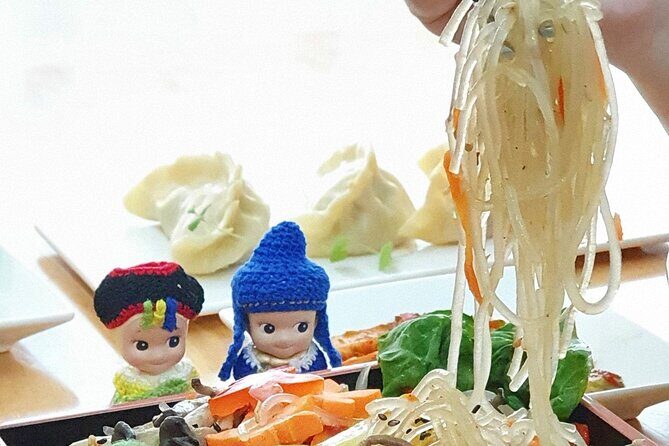
A lot of cooking classes say you can take photos, but this one makes it part of the flow. After making your Korean table, you have time to film carefully and then post your results.
Here’s the practical upside: when you plate intentionally, you end up noticing details you’d otherwise ignore. You remember how the dishes look on a plate, how colors contrast, and what order items are usually served in.
My tip for getting better photos without slowing down: focus on one clear angle and one close-up. A wide shot shows the whole table. A close-up shows texture—especially helpful for tteokbokki sauce and glossy japchae.
The indoor supermarket tour across the street: what you’re really learning
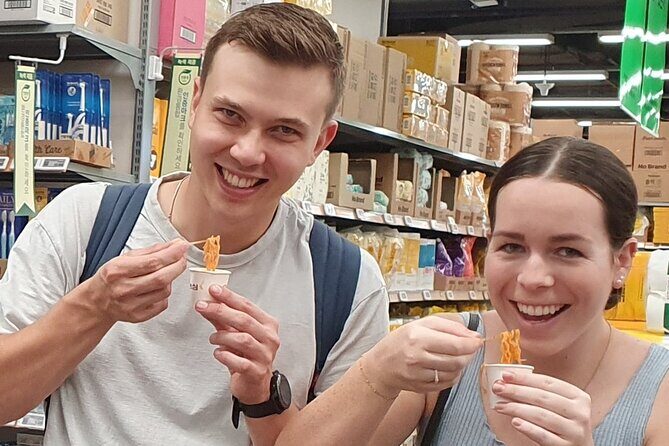
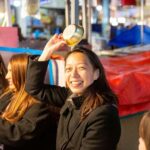
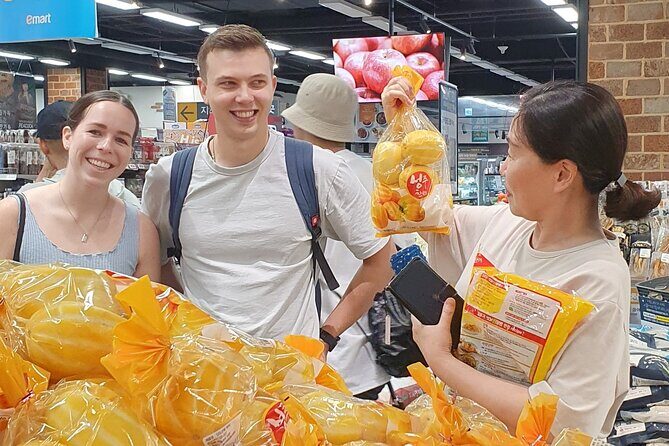
After cooking and eating, you get a guided supermarket tour for about 30 minutes at the indoor market located right across the street from the studio building.
This part is where the class turns into real shopping skills.
What you’ll see and why it matters:
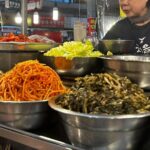
- grocery aisles and snack displays you can’t easily map from home
- kimchi refrigerators used by Koreans, which gives you a real sense of how fermentation fits into everyday life
- a huge range of seasonings, so you can identify what flavors you used in your dishes
Your shopping advantage: the guide helps you choose items if you want to recreate what you cooked. That’s huge. Seasonings are where home cooking often goes wrong. You buy something, use too much or too little, and end up with a dish that tastes off. Here, you can connect the jar or package to the flavor you made.
Tax refund during the tour (with passport)
If you plan to buy ingredients or snacks, this is one of the best add-ons. The experience says you can get a TAX refund immediately for purchases over 30,000 won (including VAT) when you bring your passport—after seeing the purchase process of the used materials.
What this means for you in plain terms: it reduces guesswork. You’re not wandering around trying to figure out what’s refund-eligible. You’re seeing the process tied to your purchases.
Price and value: what $81 gets you in real terms
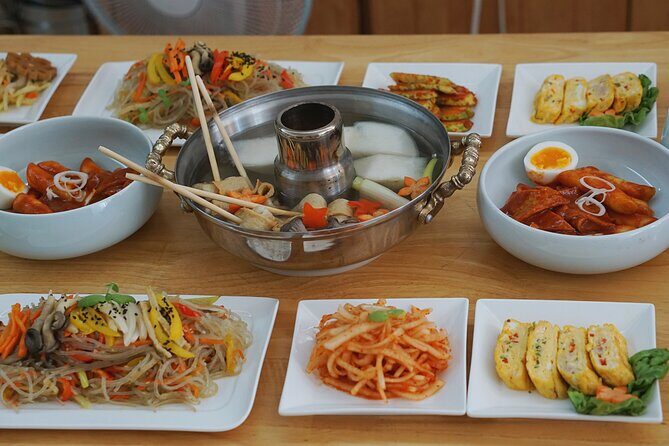
$81 per person for a two-hour cooking + dessert + market experience is a fair trade when you compare it to the actual costs you’d face alone.
You’re getting:
- all materials, tools, and packaging
- four full dishes plus dessert
- a guided indoor supermarket tour (short, but targeted)
- help choosing ingredients and seasonings
- a path to tax refund for qualifying purchases
The value isn’t just the price. It’s the structure. You’re not trying to learn four recipes from scratch with no guidance. You’re learning technique, taste, and ingredient choices in one session.
Also, the small group size (maximum 6) helps. Even if you don’t get lots of personal attention, the classroom stays calmer. And calm matters when you’re learning dinner.
Timing: 5:30pm works best if you plan your night
The class starts at 5:30pm and runs about two hours. That timing is built for people who want to eat well during the evening without spending the whole day in a kitchen.
How to make it smoother:
- eat a light lunch or snack earlier so you’re hungry but not stuffed
- save room for desserts, because the class includes them
- plan for shopping afterward at the indoor market rather than trying to cram it before the class
The ending is back at the meeting point, so you’re not left figuring out logistics across Seoul after dinner.
What kind of traveler should book this?
This class is ideal if you want Korean food you can cook again. It’s also great if you like a guided experience that still feels hands-on and relaxed.
You’ll likely enjoy it most if:
- you want to learn multiple K-food recipes, not just one
- you enjoy food markets and want help choosing seasonings
- you want an evening plan that’s structured but not stiff
- you’re traveling with kids 10+ (kids under 10 are allowed when accompanied by a guardian)
It may not be the best fit if you’re extremely sensitive to late-day schedules or if you’re only interested in one specific dish. The whole point here is the full four-dish set.
Should you book K-food cooking Japchae Mandu Tteokbokki & Fishcake?
If your goal is to come home with a real Korean cooking lineup, I’d book it. The combo of four dishes, included desserts, and a targeted indoor market stop makes the class feel like more than a one-off meal.
Book it especially if:
- you want ingredient help for the seasonings you’ll actually need
- you like the idea of a calm class pace and a small group
- you’re planning to shop for ingredients anyway, since the tour includes tax refund guidance
Skip it or double-check the date if you’re set on the market tour. The experience notes that the indoor market tour isn’t held on the 2nd and 4th Sundays, so pick your day with that in mind.
FAQ
What dishes are included in this cooking class?
You’ll make four Korean foods: Japchae, Tteokbokki, Fishcake, and Mandu.
How long is the experience?
It’s approximately 2 hours.
Are desserts included?
Yes. Seasonal Korean desserts are provided after the main cooking and meal. Examples given include yakgwa, wind rice cake, and sesame rice cake.
Is alcohol included?
No. Alcoholic beverages are not included.
Is the indoor market tour included?
Yes. After cooking and eating, you get about a 30-minute indoor supermarket tour across the street.
Can I get a tax refund during the supermarket visit?
The experience says you can get a TAX refund immediately for qualifying purchases over 30,000 won (including VAT) when you bring your passport, after seeing the purchase process.
Where is the meeting point?
The meeting point is 199 Baekbeom-ro, Mapo-gu, Seoul, South Korea.
Who is the class for?
It is for children age 10 and above. Children under 10 may participate when accompanied by a guardian.
Are there days when the market tour is not held?
Yes. The experience notes that the 2nd and 4th Sundays of each month are supermarket holidays, so there is no market tour.
How does cancellation work?
Free cancellation is available. You can cancel up to 24 hours in advance for a full refund. If you cancel less than 24 hours before the start time, the amount paid is not refunded.