REVIEW · SEOUL
Full-day UNESCO Heritage Tour with Suwon Hwaseong from Seoul
Book on Viator →Operated by I Love Seoul Tour · Bookable on Viator
Seoul can feel big and busy, but this day trip slows it down. You’ll hit UNESCO-listed palaces and shrines, then keep going into Suwon for Hwaseong Fortress, with stories that match what you’ll see in front of you. I especially liked the way the guide turns place names into scenes you can picture (I went with guides like Leo and Chloe), and I loved the pacing that gives you time to look, not just pose. One thing to consider: it’s a full 8.5-hour day with outdoor walking, so plan for weather and a moderate fitness level.
If you like your sightseeing with context, this tour does the heavy lifting. Changdeokgung Palace Complex and Jongmyo Shrine are major UNESCO sites, and Suwon Hwaseong Fortress adds the Joseon Dynasty “how power worked in real life” layer. The schedule also includes Bukchon Hanok Village in the morning and a bonus stop at a ginseng museum, plus time around Insadong for antiques (depending on the day). My main heads-up is simple: lunch isn’t included, and you’ll meet at Myeong-dong Station, then the tour ends around Myeong-dong—so you’ll want to already know how you’ll get there and back.
In This Review
- Key points
- Starting at Myeong-dong: The day’s “easy mode” plan
- Bukchon Hanok Village: Joseon-era streets with room to breathe
- Changdeokgung Palace Complex: UNESCO grounds that reward slow looking
- Jongmyo Shrine: Royal ancestor rites in a UNESCO setting
- The ginseng break, Insadong antiques, and the lunch reality
- Hwaseong Haenggung Palace: Jeongjo’s temporary royal base
- Suwon Hwaseong Fortress: the wall walk that earns the whole trip
- Price and tickets: does $76 feel fair?
- Who this tour fits best (and who should skip)
- What to bring so the day stays comfortable
- Should you book this UNESCO day tour of Seoul and Suwon?
- FAQ
- What time does the tour start, and where do I meet?
- Where does the tour end?
- Is hotel pickup included?
- Which UNESCO sites are visited?
- How long is the tour?
- Is lunch included?
- Are tickets included for the main sites?
- How big is the group?
- Do they stop at shopping centers?
- What is the cancellation policy?
Key points
- Small group cap (max 15): easier questions, calmer photo stops, and less waiting around.
- Big UNESCO hit list: Changdeokgung Palace Complex, Jongmyo Shrine, and Suwon Hwaseong Fortress.
- Fortress wall views: the walk gives you city panoramas without turning it into a nonstop marathon.
- Guide-led storytelling: names like Leo, Chloe, Heidi, and Melvin show up again and again in a good way.
- No shopping-center detours: the day stays focused on heritage stops.
- Minivan transport: air-conditioned comfort between Seoul and Suwon.
Starting at Myeong-dong: The day’s “easy mode” plan
Most of your stress should start at 8:30 a.m. and end there too. This tour begins at Myeongdong Station Exit 1061-7 near Chungmuro 2(i)-ga, and it returns you to Myeong-dong at the end. If you’re staying in central Seoul, pickup is often available via air-conditioned minivan. If your hotel is tucked behind alleys, the guide meets you at a nearby central hotel or the nearest subway station instead.
Why this matters: you’re not spending your morning figuring out cross-city logistics or squeezing into public transit with a daypack. You also avoid that awkward “where is everyone” moment that can happen on larger tours, because the group size tops out at 15.
One more practical note: the tour is built for a moderate fitness level. That doesn’t mean it’s extreme, but it does mean you’re out and about for long stretches, including outdoor areas at Suwon. If your legs are usually fine on city walking days, you’ll be okay. If you’re not, consider bringing a light layer and taking the breaks the guide offers.
You can also read our reviews of more historical tours in Seoul

Bukchon Hanok Village: Joseon-era streets with room to breathe
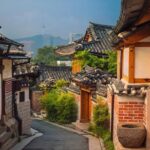
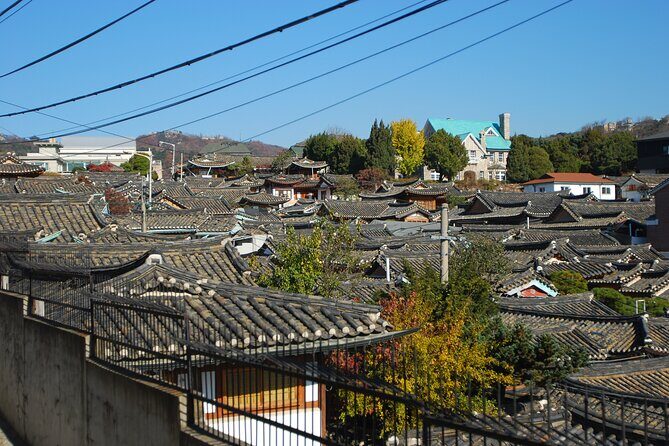
The morning starts with Bukchon Hanok Village, a neighborhood known for hundreds of traditional houses called hanok. This area sits in the older part of Seoul, north of Cheonggyecheon and near two major landmarks—so you get the atmosphere of historical Seoul without needing to drive far.
Here’s what I like about this stop: it’s free to enter, but it’s not just a quick photo punt. With a guide, you’re more likely to notice details you might otherwise miss—how the buildings relate to each other, how the layout feels lived-in, and why this area became such a symbol of Joseon design.
Time-wise, plan on about 40 minutes. That’s enough for a short wandering circuit and a few angles of those curved-roof silhouettes. If you’re the kind of person who wants 90 minutes to “fully explore,” you might wish for more. But in a day that also includes three major UNESCO stops plus Suwon, this brief hit keeps the rest of your day from turning into a blur.
Changdeokgung Palace Complex: UNESCO grounds that reward slow looking
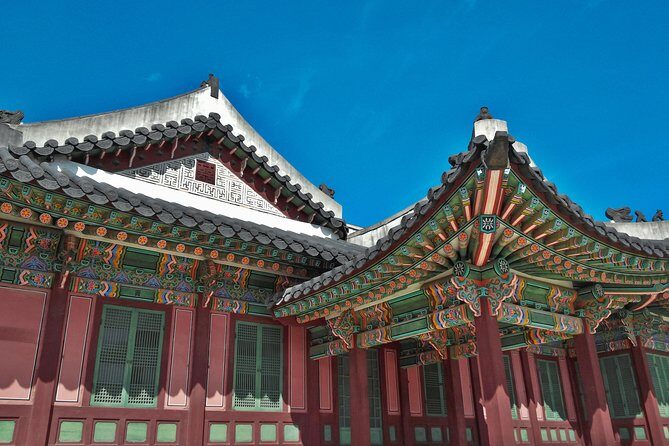
After Bukchon, you head to Changdeokgung Palace Complex—the palace often described as Korea’s most successfully preserved, and a UNESCO World Cultural Heritage site (designated in February 1997). The name itself, meaning something like to brighten virtue, feels poetic, but the real reason it works is visual: you can see how power, court life, and design priorities blended into one place.
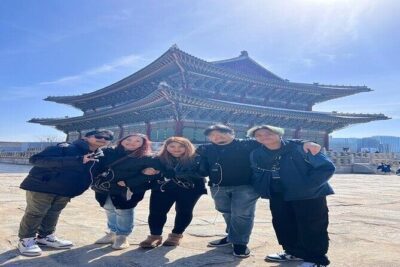
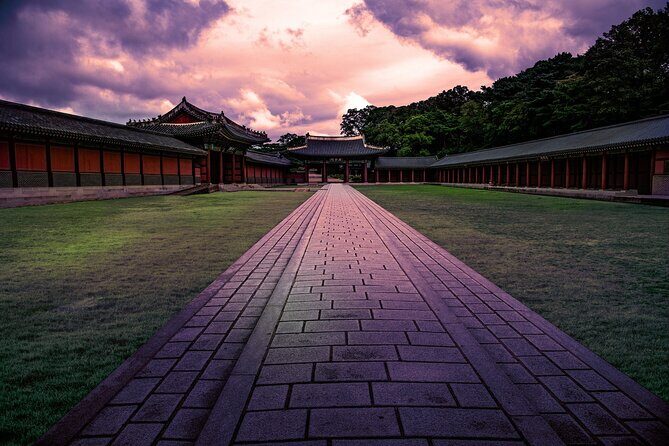
This stop comes with included admission and takes about one hour. That hour is well matched to how palace visits work. You don’t just stare at buildings; you move through courtyards and halls where the scale and symmetry make sense. If you’ve ever watched Korean period dramas, you’ll recognize the vibe immediately—but even without that connection, the architecture is the main character here.
Also note the schedule variation: on Mondays, you’ll visit Gyeongbokgung Palace instead of the usual palace in this slot. So if Changdeokgung is your must-see, check the day you’re booking.
Practical tip: bring water, even if beverages aren’t included. Palaces are open-air in spots, and your “one-hour” tour can still feel longer if the weather is hot.
Jongmyo Shrine: Royal ancestor rites in a UNESCO setting
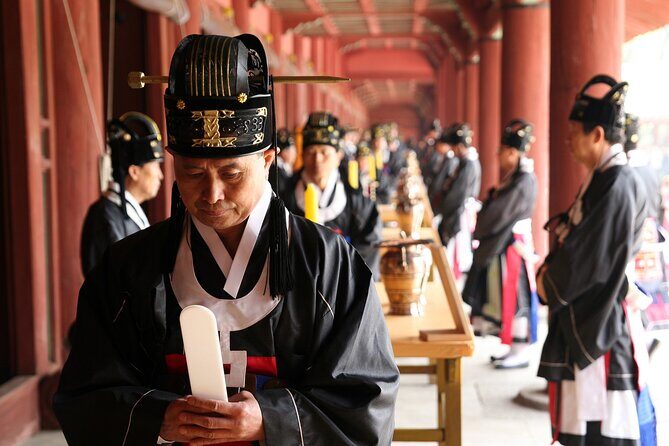
Next up is Jongmyo Shrine, another UNESCO World Heritage site tied to the Joseon Dynasty’s royal ancestral worship. The shrine was built by Lee Seong Gye (1335–1408) and served as a key place of ritual across the dynasty’s reign.
You’ll have about 40 minutes, and admission is included. This is a different kind of experience than a palace. Palaces are about what rulers displayed; shrines are about continuity—how the system remembered the people at its center.
What you’ll likely appreciate most here is how the guide connects what you see to why it mattered. A good guide will explain the logic of the rituals and layout in plain language so you’re not just translating signs. This is where you’ll get that “oh, I get it” feeling—especially if you want Korean history that isn’t trapped in textbooks.
One consideration: depending on the flow of the day and any ritual schedules, you may spend more time waiting in small pockets than you expect. The upside is that the shrine itself is calm. It’s one of the better stops for slowing your pace.
The ginseng break, Insadong antiques, and the lunch reality
This tour adds a stop at Cheongha Korea Ginseng Museum. It’s quick—about 30 minutes—and admission is free. If you’re into traditional medicine, you’ll likely find it interesting just because Korean ginseng is explained as an adaptogen-style herb with a long history of use.
Now the lunch situation needs a clear read: lunch is not included, and beverages are also not included. That means you’ll want either a snack strategy or a budget for a sit-down meal. The good news is that the day has built-in time for lunch, and the overall route stays in areas where you can usually find straightforward Korean options.
Insadong is another practical element. The tour highlights say there’s time to browse for antiques around Insadong, and the schedule notes mention visiting Insa-dong Street on Tuesdays. If you’re booking on another day, you might still get time in that neighborhood, but don’t count on the exact same amount of browsing every day.
My simple advice: if you’re picky about meals, eat breakfast before you go and treat lunch as your chance to choose. If you’re not picky, just follow the guide’s timing and grab something nearby.
A few more Seoul tours and experiences worth a look



Hwaseong Haenggung Palace: Jeongjo’s temporary royal base
After lunch time (or whatever you do for lunch), you head to Hwaseong Haenggung Palace. This is the temporary palace used by kings during the Jeongjo King period. It served as a “big shelter,” especially during Wonhaeng—a long royal journey.
Admission is included, and you’ll get about 40 minutes. This stop works well because it’s not as “museum-y” as some palace complexes. The idea here is to understand what a royal travel base meant in the Joseon world: a place to host, observe rules, and keep court routines alive while the king moved.
If you like details, watch for how the guide explains the function of this palace rather than treating it like another backdrop. The best guides turn it into a story about logistics, power, and celebration. And yes, this is also where the day begins to “feel like Suwon,” because it sets you up for the fortress wall walk later.
Suwon Hwaseong Fortress: the wall walk that earns the whole trip
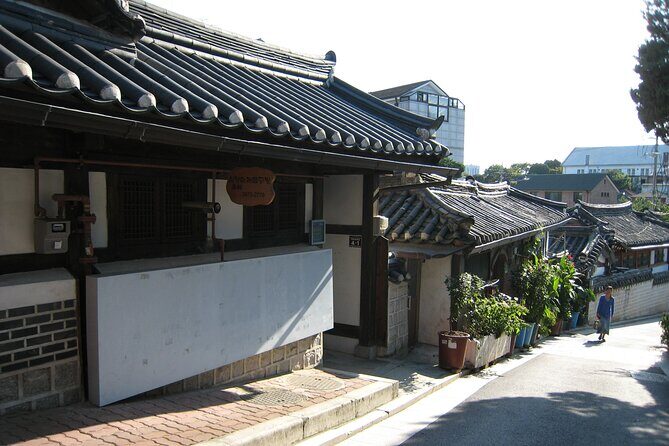
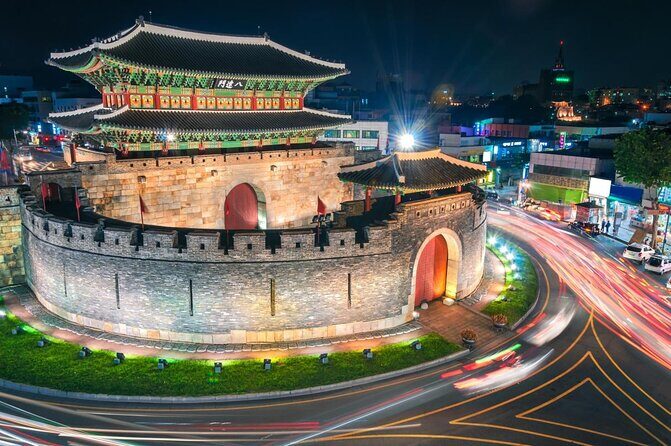
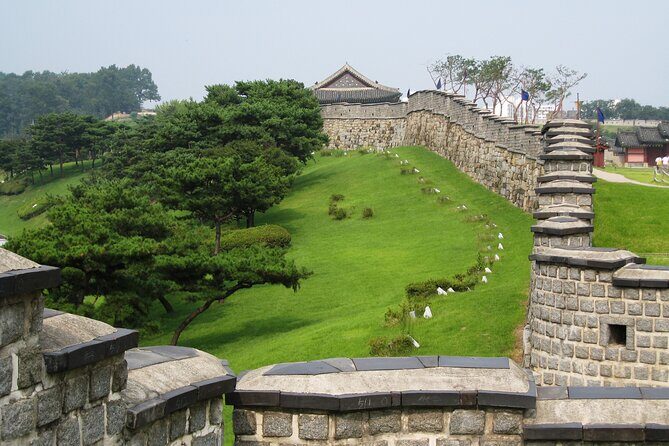
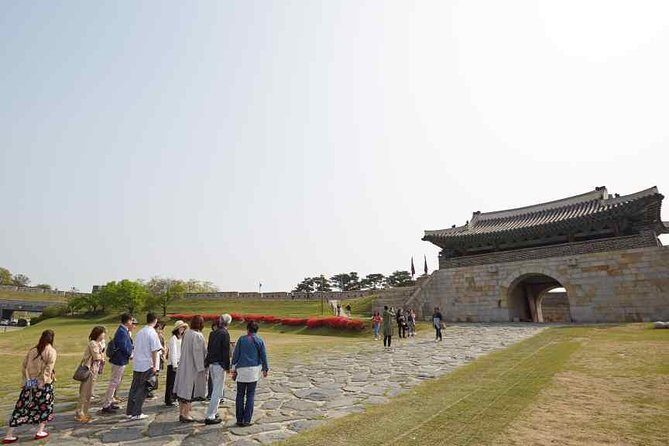
The day culminates at Suwon Hwaseong Fortress, a Joseon-era fortress built between 1794 and 1796. It was designated as Historical Monument No. 3 in January 1963 and became a UNESCO World Heritage Site in December 1997.
This is the stop most people remember, and for good reason. You’re in the right place for panoramic city views, and the walking parts feel meaningful instead of random. Admission is included, and you’ll have about 40 minutes here.
How to think about the fortress time:
- You’ll likely do a mix of walking and viewpoints, not just one long grind.
- The best photography angles happen when you slow down for the wall lines and gaps in the structure.
- Even on hot or rainy days, the guide and group pace usually keep it from feeling chaotic. One thing I valued is how guides often build in little pauses for photos and rest.
If you’re traveling with an older parent or someone who tires quickly, this is still manageable in most cases because the group size is small and the guide can adjust. One person in a similar group described it as a good outdoor walking day even for an older mother, with rest stops and a route that didn’t feel punishing.
Just don’t plan on standing still. Fortress time means movement, even if you keep it gentle.
Price and tickets: does $76 feel fair?
At $76 per person, this is a solid value for a full day that crosses Seoul and Suwon. The tour includes a professional guide and air-conditioned minivan transport, plus admission for several key sites:
- Changdeokgung Palace Complex (included)
- Jongmyo Shrine (included)
- Hwaseong Haenggung Palace (included)
- Hwaseong Fortress (included)
Two items that can add value: Bukchon Hanok Village admission is free, and Cheongha Korea Ginseng Museum admission is free. That means your money focuses on the major UNESCO ticketed components and the travel between them.
What’s not included is where you’ll want to plan ahead:
- Lunch
- Beverages
So the real cost equation is simple. If you’d otherwise pay for guided transport across these sites plus individual UNESCO entries, $76 usually pencils out well. If you prefer total independence and would spend the whole day at just one or two places, you might find a self-guided route cheaper—but you’d trade away the guide-led context and the smooth movement between locations.
Who this tour fits best (and who should skip)
This tour is ideal if you:
- Want three UNESCO stops in one day without building a schedule yourself
- Like guided explanations that connect buildings to how Korean royals and rituals worked
- Prefer small-group travel (max 15) and a pace that doesn’t feel rushed
It might be less ideal if you:
- Hate long outdoor days in heat, cold, rain, or wind
- Need long, unstructured time at only one site
- Want hotel pickup no matter where you’re staying in the city (pickup is for centrally located hotels)
In real terms, this is a good “first Korea heritage day” for many people. You’ll see the big names of Seoul and Suwon, and you’ll learn enough to recognize patterns across palaces, shrines, and fortress design.
What to bring so the day stays comfortable
This is an 8.5-hour day, with walking and outdoor segments, so pack for weather first and style second.
I’d bring:
- Water (since beverages aren’t included)
- A light layer you can adjust quickly
- Comfortable walking shoes for palace grounds and the fortress wall area
- A small umbrella or rain layer if the forecast looks iffy
Also, have your plan for lunch ready. Since lunch isn’t included, decide if you’ll grab something fast near the route or budget for a seated Korean meal.
Should you book this UNESCO day tour of Seoul and Suwon?
I’d book it if you want a structured, high-value day that hits the main UNESCO sites—Changdeokgung Palace Complex, Jongmyo Shrine, and Suwon Hwaseong Fortress—with a guide who can connect the story to the actual places. The small group size and the guided pacing are a big deal, especially when the day includes palace courtyards and fortress walls.
I’d pause before booking if you’re sensitive to walking outdoors or you don’t want to deal with lunch not being included. Also, if you’re staying outside central Seoul, pickup may not work the way you expect, and you’ll need to meet at the nearest central point.
If your goal is to understand Korea’s royal world in one day—palaces, rituals, and the fortress that protected the kingdom—this tour makes it easy and efficient.
FAQ
What time does the tour start, and where do I meet?
The tour starts at 8:30 a.m. You meet at Myeong-dong Station Exit 1061-7 Chungmuro 2(i)-ga, Jung District, Seoul.
Where does the tour end?
The tour ends in the Myeong-dong area (dismissal is in Myeong-dong, Jung District).
Is hotel pickup included?
Hotel pickup is available only for centrally located hotels. If your hotel is behind alleys, the guide meets you at the nearest central hotel or nearest subway station.
Which UNESCO sites are visited?
You visit the UNESCO World Heritage sites of Changdeokgung Palace Complex and Jongmyo Shrine. You also visit Suwon Hwaseong Fortress, which is a UNESCO World Heritage Site.
How long is the tour?
The duration is about 8 hours 30 minutes.
Is lunch included?
No. Lunch is not included, and beverages are also not included.
Are tickets included for the main sites?
Admission tickets are included for Changdeokgung Palace Complex, Jongmyo Shrine, Hwaseong Haenggung Palace, and Hwaseong Fortress.
How big is the group?
The maximum group size is 15 travelers.
Do they stop at shopping centers?
No. This tour does not stop at any shopping centers.
What is the cancellation policy?
You can cancel for a full refund up to 24 hours before the experience starts. If you cancel less than 24 hours before, the amount paid is not refunded.