REVIEW · SEOUL
Seoul City Walking Private Tour (3hours)
Book on Viator →Operated by Leadyourtrip Co..Ltd · Bookable on Viator
Four stops, zero rushing, and real Seoul texture. This 3-hour morning tour strings together Buddhism at Jogyesa Temple, royal big-energy at Gyeongbokgung Palace, photo streets in Bukchon, then it lands you in Insadong for tea houses and art galleries. I like the small max 15 group size and the way the guide’s city tips help you enjoy the sights instead of just surviving them.
I also love that you get hanbok for the palace visit and see the palace’s main gate as the Joseon-era centerpiece. One trade-off: there’s no lunch included, so you’ll want a food plan for after the tour finishes in Insa-dong.
In This Review
- Key Highlights Worth Knowing
- A 3-Hour Seoul Route That Hits Royal, Religious, and Old-Street Seoul
- Jogyesa Temple: Buddhism at Seoul’s Spiritual Core (30 Minutes)
- Gyeongbokgung Palace’s Main Gate and Hanbok Moment
- Bukchon Hanok Village Walk-Through for 900-House Photo Streets
- Insadong Finish: Galleries, Tea Houses, and Hanji Shops
- Price and What You Actually Get for $49
- Guide Style Matters: Friendly Support and Seoul Tips
- Who This Tour Fits Best (and Who Might Want More Time)
- Should You Book This Seoul City Walking Private Tour?
- FAQ
- How long is the Seoul City Walking Private Tour?
- Where does the tour start and where does it end?
- What is included in the tour price?
- Is lunch included?
- Do I get a hanbok?
- How big is the group?
- Is Gyeongbokgung Palace always included?
- Is it refundable if I cancel?
Key Highlights Worth Knowing
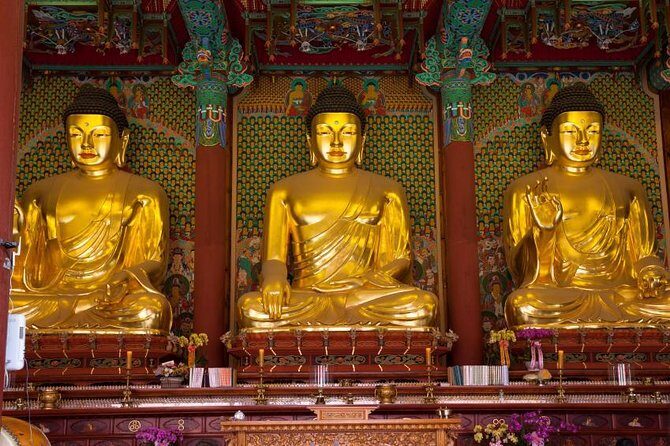
- Jogyesa Temple with free admission for a focused taste of Seoul’s Buddhism scene in just 30 minutes
- Hanbok included for the Gyeongbokgung Palace visit so you feel part of the setting, not just outside the fence
- Bukchon Hanok Village pass-through featuring about 900 traditional houses between Gyeongbokgung Palace and Changdeokgung Palace
- Insadong as the finish zone with galleries, tea houses, and hanji shops for an easy next step
- Small group size (up to 15) which keeps the walk calm and makes questions feel possible
- Guide personalities that actually help with extra travel tips called out in past experiences—friendly Park energy and Frank’s passion for Seoul
A 3-Hour Seoul Route That Hits Royal, Religious, and Old-Street Seoul
This is a morning highlights walk designed for people who want the big symbols of Seoul without packing the day. You start at Jogyesa Temple and end in Insa-dong (Jongno District). In between, you’ll cover four iconic areas that represent very different sides of Korean culture: Buddhism, Joseon royal power, traditional neighborhoods, and the arts-and-tea streets.
The pacing matters here. This isn’t a “bus-and-photos” shuffle. You get a set amount of time at each stop—about 30 minutes at Jogyesa, 1 hour at Gyeongbokgung Palace, 1 hour through Bukchon streets, and 30 minutes in Insadong. That makes it realistic for a half-day plan, especially if you’re also doing markets, K-pop areas, or a museum later.
One more thing I like: it’s explicitly a no-shopping style of tour. You’ll still have plenty to look at, but you’re not being pulled into purchase traps. And because the itinerary stays focused on culture and sights, the guide can spend more time explaining what you’re looking at and less time trying to sell something.
You can also read our reviews of more walking tours in Seoul
Jogyesa Temple: Buddhism at Seoul’s Spiritual Core (30 Minutes)
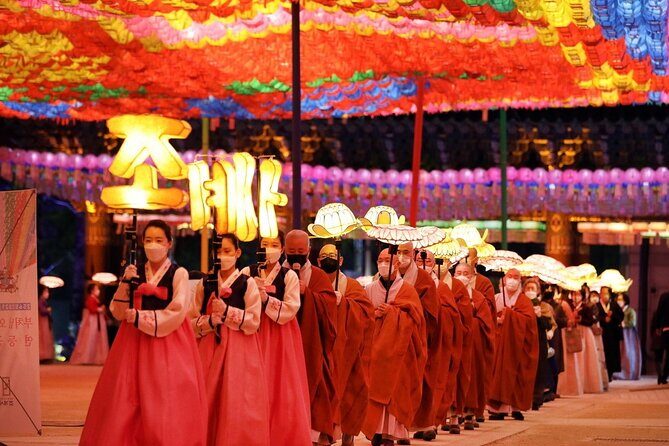
Jogyesa Temple is the tour’s first stop, and it’s a strong one. It’s described as the center of Buddhism in Seoul, and you’ll get a straightforward introduction here in about 30 minutes.
Admission is free for this stop, so you start the morning without feeling like you have to squeeze extra time just to justify a ticket. In a short visit, the goal isn’t to “master” temple history. It’s more like: slow down, notice the mood, and understand what role this kind of place plays in everyday cultural life.
Practical move: dress and act like you’re stepping into an active spiritual site. Even when a visit is brief, you’ll get more from it if you keep your pace gentle and your attention on what’s in front of you. If you’re the type who likes asking questions, this is a good time. A good guide can explain the symbolism behind what you’re seeing without turning it into a lecture.
If you’re visiting Seoul for the first time, I think Jogyesa is a smart early anchor. The rest of the tour shifts into royal culture and old-town streets, and starting with Buddhism helps you understand why Seoul’s past isn’t just about palaces and kings.
Gyeongbokgung Palace’s Main Gate and Hanbok Moment
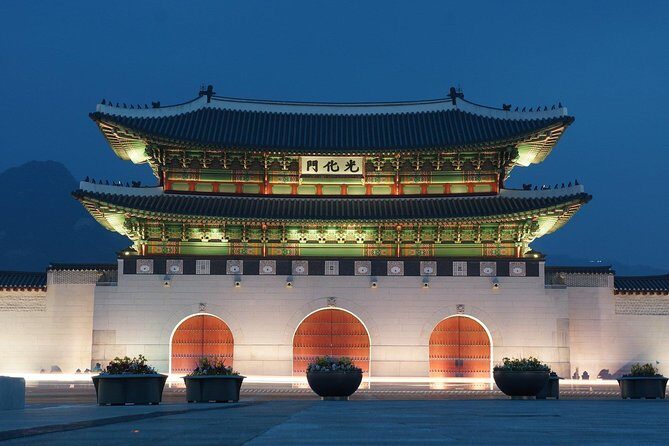
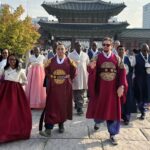
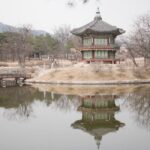
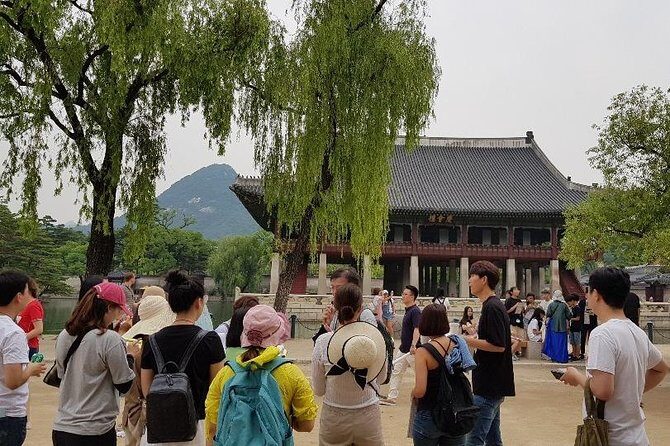
Gyeongbokgung Palace is the heart of this route. You’ll see the main and largest gate of the palace—an obvious landmark and a big symbol of Seoul’s Joseon Dynasty capital era. Then you get the standout experience: you’ll wear hanbok and enter the palace area for about 1 hour.
Admission is included for this stop, which is important for value. It also helps the tour feel smooth. You’re not spending the best part of your 3-hour window hunting for entry steps, tickets, or payment machines.
A heads-up for planning: Gyeongbokgung Palace is closed on Tuesdays. If your schedule lands on a Tuesday, the tour adjusts by replacing that stop with Chancellor’s Palace due to the shutdown.
How to get the most from the palace hour:
- Take your time with photos, but don’t only treat it like a background.
- Listen to the guide’s context on what the palace architecture and layout represent.
- Wear shoes you’re comfortable walking in. You’ll be moving enough that “pretty but painful” footwear can ruin your mood.
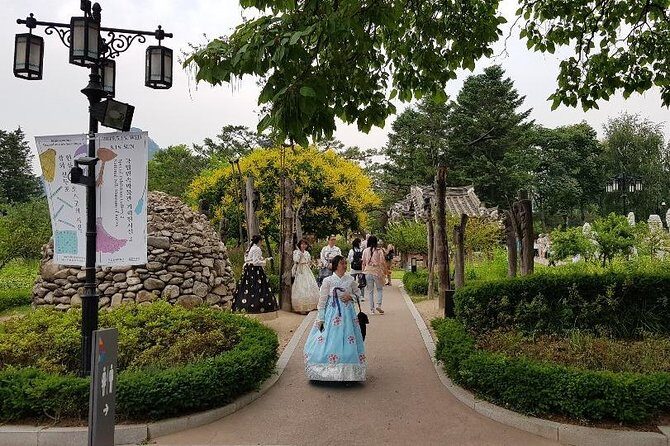
Also, the hanbok piece is more than costumes for pictures. When you step into the palace dressed for the era, your brain shifts gears. You start seeing details you’d otherwise rush past—curves in the design, the scale of gates, and the contrast between modern Seoul energy outside and the formal world inside.
Bukchon Hanok Village Walk-Through for 900-House Photo Streets
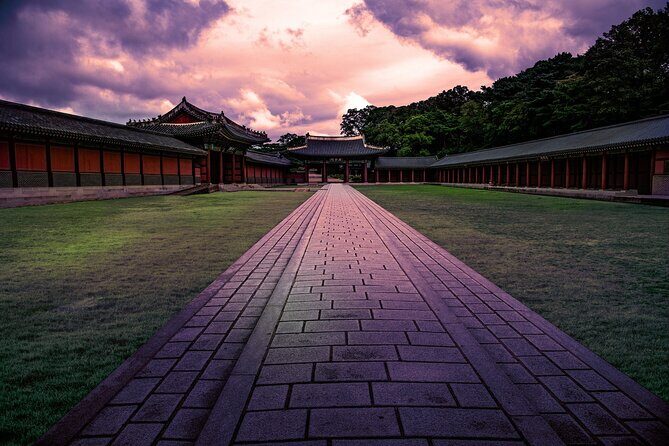
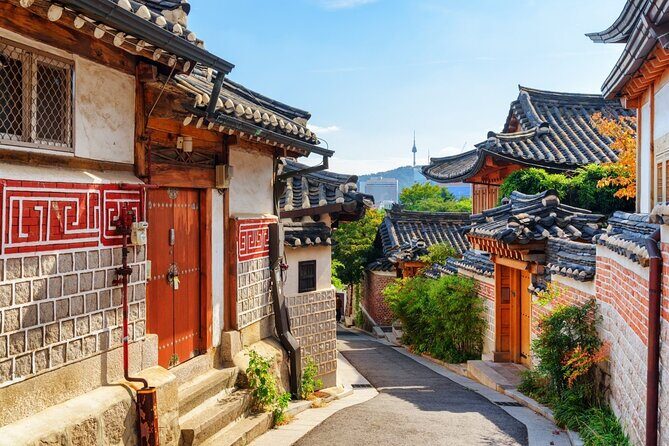
After the palace, the tour heads into Bukchon Hanok Village, with time set aside for a street pass-through rather than a long, museum-style program. You’ll pass through a lovely stretch of traditional houses—about 900 traditional Korean houses—located between Gyeongbokgung Palace and Changdeokgung Palace.
This part is great if you like visuals. The neighborhood vibe is the point: close-packed hanok architecture, narrow lanes, and the sense of stepping into an older Seoul layout. The tour gives you about 1 hour here, and admission is free.
What to expect in practice: you’ll likely do a slow walk and stop when it’s useful for photos and explanations. The guide can help you understand what you’re seeing from a cultural and historical angle, but the biggest “value per minute” is that you get to experience the look and feel of the area without having to build your own route from scratch.
One consideration: because it’s a walk-through, you won’t necessarily get the same level of deep entry access you might find when you plan a longer, more detailed neighborhood day. If your dream is to go inside specific hanok homes, you might want to add that separately. But for most people, this is an efficient and photogenic way to capture Bukchon’s identity.
Insadong Finish: Galleries, Tea Houses, and Hanji Shops
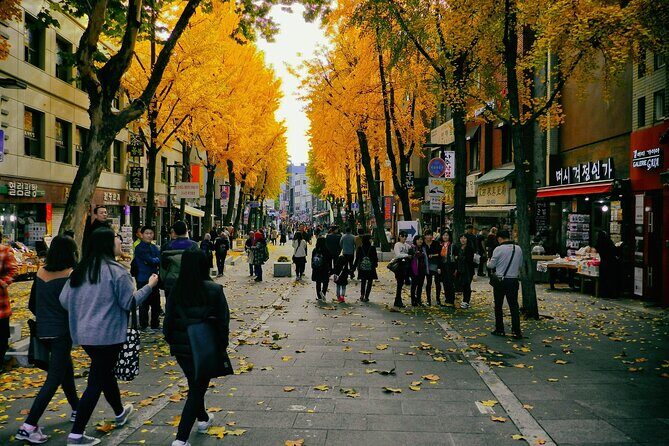
The final stop is Insadong, and it’s an excellent place to end a walking tour. You’ll spend about 30 minutes here, and it’s free entry.
Insadong is described as a traditional street known for art galleries, tea houses, and hanji shops—and there are many food options too. That’s a big deal because your tour doesn’t include lunch. By landing in Insadong, you naturally have places to grab a snack, tea, or a full meal without getting stuck in planning mode.
I also like that Insadong works as a mental reset. You’ve just done temples and palace symbolism. Now you can shift into a more relaxed browse-and-sip rhythm: paper crafts, small cultural shops, and places where you can slow down and choose what you want to explore next.
If you want to keep the day going, Insadong is the type of area where a little wandering pays off. Even staying within the main lanes, you can often find small workshops, galleries, and cozy tea spaces that feel more local than touristy.
You can also read our reviews of more city tours in Seoul
Price and What You Actually Get for $49
At $49 per person for about 3 hours, this tour sits in the “highly practical” category. The reason isn’t just the price tag. It’s what’s included.
Admission fees are included. Jogyesa Temple is free anyway, and Gyeongbokgung Palace’s admission is explicitly covered. That means you’re not stacking extra costs on top of the tour price right when you’re already committing time to the day.
You also get a mobile ticket and group discounts, plus a capped group size (maximum 15 travelers). That combination often translates to a better flow on foot: fewer people to manage, easier conversation, and less waiting than you’d see in a massive crowd.
What’s not included: lunch and travel insurance. Lunch being excluded is common, but it matters because this tour ends in an area where food is easy to find. The smart move is to treat Insadong as your meal location rather than trying to cram lunch into a tight schedule.
Another small value signal: this tour is often booked about 16 days in advance on average. That doesn’t mean you must book instantly, but it does suggest it’s a popular way to see multiple Seoul classics in one morning.
Guide Style Matters: Friendly Support and Seoul Tips
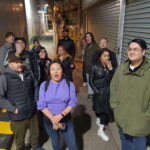
This kind of tour lives or dies on the guide. Here, the positive energy stands out. One guide, Park, has been singled out for being friendly and gentle, with explanations that feel like talking to a close friend. Another guide, Frank, is praised for being passionate about Seoul and knowing plenty about what you’re seeing.
You don’t need a guide to recite facts. You need someone who can connect the dots fast. In a 3-hour format, that skill matters. The best guides help you understand not only where to look, but why it looks the way it does—temple culture, royal symbolism, and the logic behind the traditional neighborhood layout.
How to get more value from your guide on this route:
- Ask one question at each stop about what to notice next.
- Pay attention when they give practical tips for moving around Seoul after the tour.
- If you’re thinking about where to eat, ask early. Then you can relax during Insadong.
Who This Tour Fits Best (and Who Might Want More Time)
This route is built for people who want a clean slice of Seoul culture: Buddhism, a major Joseon-era palace, traditional neighborhood streets, and an arts-and-tea finish area. It also fits travelers who prefer a plan that doesn’t turn into a shopping day.
Most travelers can participate, and the pacing is generally friendly to a half-day schedule. The walking time is spread across four stops, with structured time blocks that prevent the day from dragging.
Who might not love it:
- If you want to spend a lot of time inside one place, the 30-minute to 1-hour time blocks might feel brief.
- If you’re hoping for a meal included or a full day of activities, you’ll need to add that elsewhere.
If you’re in Seoul for a first visit, or you’re balancing multiple neighborhoods (Hongdae, Myeongdong, Itaewon, markets), this tour is a strong “foundation” morning. It gives you Seoul’s main cultural landmarks in a format that doesn’t steal the entire day.
Should You Book This Seoul City Walking Private Tour?
I’d book this if you want an efficient, culture-focused morning with real Seoul landmarks and an ending point (Insadong) that makes it easy to plan your next hour. The inclusion of admission fees and the hanbok experience at Gyeongbokgung Palace are the biggest reasons this feels like good value, not just a sightseeing list.
I’d also book it if you care about guide quality. When a guide is warm and tip-forward, you stop treating the tour like a route map and start treating it like a story you can walk through.
Before you decide, check your day: if you’re traveling on a Tuesday, Gyeongbokgung Palace won’t be the stop. The tour adjusts with Chancellor’s Palace instead. And plan your meal: lunch isn’t included, so decide in advance whether you’ll eat in or near Insadong after the tour.
If that sounds like your style—short, focused, and heavy on the classics—this is a smart pick.
FAQ
How long is the Seoul City Walking Private Tour?
The tour lasts about 3 hours.
Where does the tour start and where does it end?
It starts at Jogyesa Temple in Seoul and ends in Insa-dong, Jongno District, Seoul.
What is included in the tour price?
Admission fees are included. The tour also uses a mobile ticket.
Is lunch included?
No. Lunch is not included.
Do I get a hanbok?
Yes. You will wear hanbok to enter Gyeongbokgung Palace.
How big is the group?
The tour has a maximum of 15 travelers.
Is Gyeongbokgung Palace always included?
Gyeongbokgung Palace is closed on Tuesdays, and on Tuesdays it’s replaced by the Chancellor’s Palace due to the shutdown.
Is it refundable if I cancel?
No. It is non-refundable and cannot be changed for any reason. If it’s canceled due to poor weather, you’ll be offered a different date or a full refund. If the minimum number of travelers isn’t met, you’ll be offered a different date/experience or a full refund.