REVIEW · SEOUL
From Seoul: Korea Spring Cherry Blossom Day Tour
Book on GetYourGuide →Operated by Korea Time Tour · Bookable on GetYourGuide
Cherry blossoms, plum flowers, and hanoks in one day. I love the combo of Gwangyang Maehwa Village (white, snow-like plum blooms by the Seomjin River) plus the cultural payoff of Jeonju Hanok Village with its old-style streets, hanbok moments, and snack stops. It’s the kind of spring trip where your camera battery gets a real workout, but your day still has a clear rhythm.
One thing to consider: it’s a long haul at 750 minutes (up to 16 hours) and there’s about 1 to 2 hours of walking. Also, cherry blossom timing can vary, and the exact stops can change by option—so double-check what you’re booking before you go.
In This Review
- Key Things That Make This Tour Worth Your Time
- From Seoul To Gangwon: A Long Day With Smart Transfers
- Gwangyang Maehwa Village: Plum Flowers Like Snow Over Seomjin River
- Donghaksa Temple Cherry Blossoms: Where Ancient Stone Gets a Pink Frame
- Maisan Mountain Cherry Blossoms and Yeongrangho Lake: Two Scenic Styles
- Jeonju Hanok Village: Over 800 Houses, Hanbok Moments, and Food Time
- Seoraksan National Park: Hiking Time That Matches Your Fitness
- Price and Logistics: Is $66 Good Value?
- Who This Tour Fits Best (and Who Might Prefer Something Else)
- Should You Book This Cherry Blossom And Hanok Tour?
- FAQ
- How long is the Seoul to Gangwon Cherry Blossom Day Tour?
- What’s included in the price?
- Are meals and drinks included?
- How much walking should I expect?
- Do all bookings visit the same places?
- What’s the cancellation policy?
Key Things That Make This Tour Worth Your Time
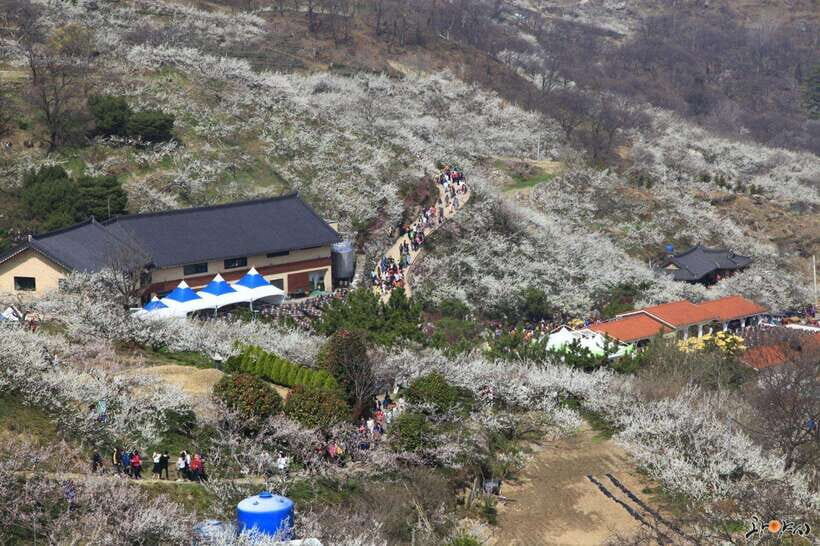
- Plum blooms first, not last: Gwangyang Maehwa Village aims for that early spring full-bloom feel by the Seomjin River.
- Donghaksa Temple with blossoms in the frame: You’ll see ancient stone and blossoms paired for that classic Korea spring look.
- Two different cherry scenery styles: Maisan’s twin peaks give mountain views, while Yeongrangho brings lake-shore strolling.
- Jeonju’s hanok zone is built for wandering: Over 800 traditional houses plus hanbok and snacks make this more than a quick photo stop.
- Seoraksan National Park adds real outdoors time: You get hiking trails suitable for different fitness levels.
- Guides can be a big deal on long days: Andrew and Leo were both mentioned by name and praised for help with food ideas and even photos.
From Seoul To Gangwon: A Long Day With Smart Transfers
This is a full-day format. The tour runs 750 minutes to 16 hours, and it’s designed to work well if you’d rather not figure out buses and connections in spring traffic. Roundtrip transportation is included, so you can spend the morning settling in, not mapping out how to get from Seoul to Gangwon Province.
The day is planned around multiple seasonal stops, which is a double-edged sword. The upside is variety. You get plum, temple cherry, mountain cherry, lake cherry, and a major cultural detour. The tradeoff is you’re on the move all day, and the walking time (about 1 to 2 hours) is spread across different sites rather than concentrated in one relaxed stroll.
One more practical point: meeting point can vary by option, and the main destinations vary by which option you choose. That means you should check twice before booking, because the tour name can sound fixed while the exact stops can shift.
You can also read our reviews of more tours and experiences in Seoul.
Gwangyang Maehwa Village: Plum Flowers Like Snow Over Seomjin River
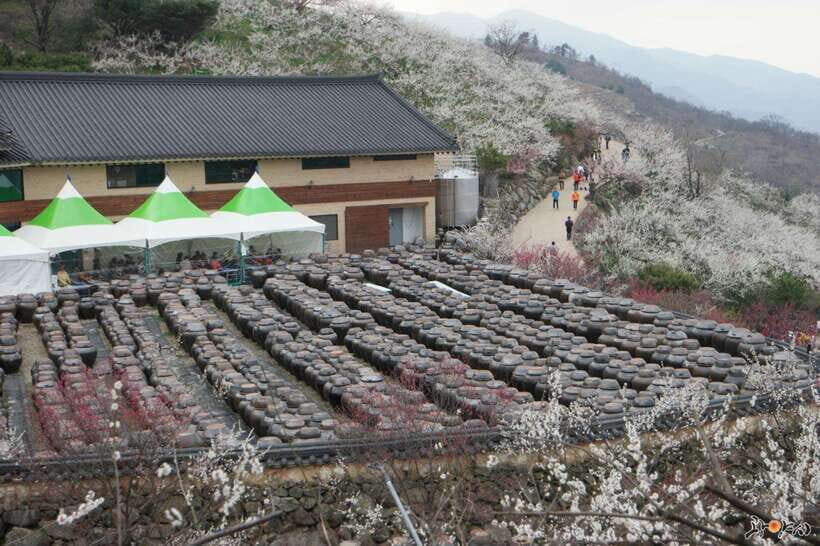
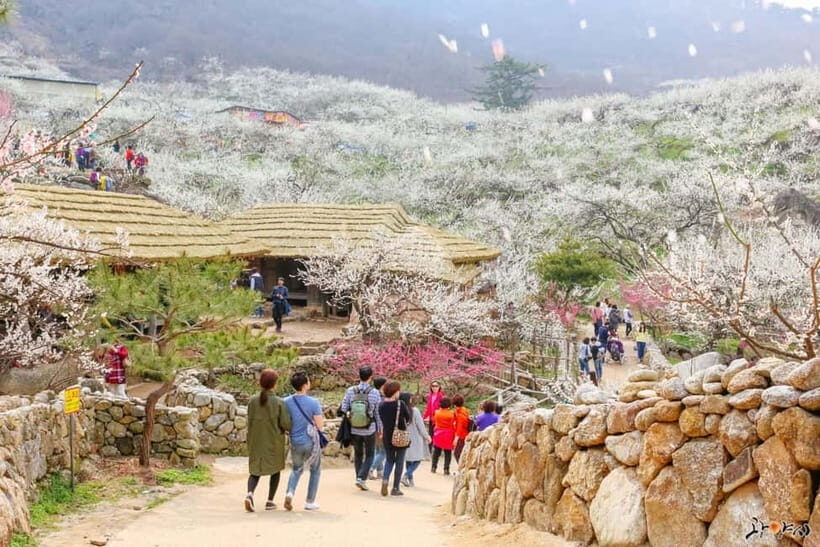
Gwangyang Maehwa Village is the opener that sets the tone. The idea here is early spring color, not late-season petals. When conditions line up, the village is covered in white, snow-like maehwa (plum) flowers, with the Seomjin River adding a calm, reflective backdrop.
I like this stop because it changes the usual cherry-blossom expectation. You’re not just chasing pink clouds. You’re getting a different spring “white bloom” look that feels slightly quieter and more unique. It also makes the rest of the day easier mentally, because you start strong with something visually dramatic right away.
What to do when you get there: plan for short walks between photo spots rather than one long hike. The area is meant for strolling. If you’re bringing a phone, you’ll likely want to use burst mode or quick bursts, because early spring light can swing fast depending on cloud cover. Also, wear shoes you don’t mind getting a bit dirty—spring weather can be unpredictable.
Possible drawback: if you’re expecting cherry blossoms specifically, plum-focused timing can feel different. The good news is the scenery is still the star.
Donghaksa Temple Cherry Blossoms: Where Ancient Stone Gets a Pink Frame
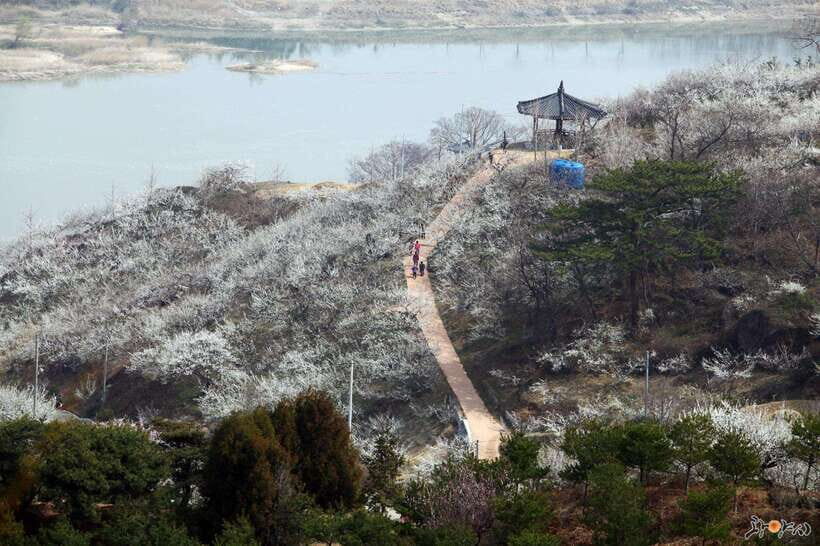
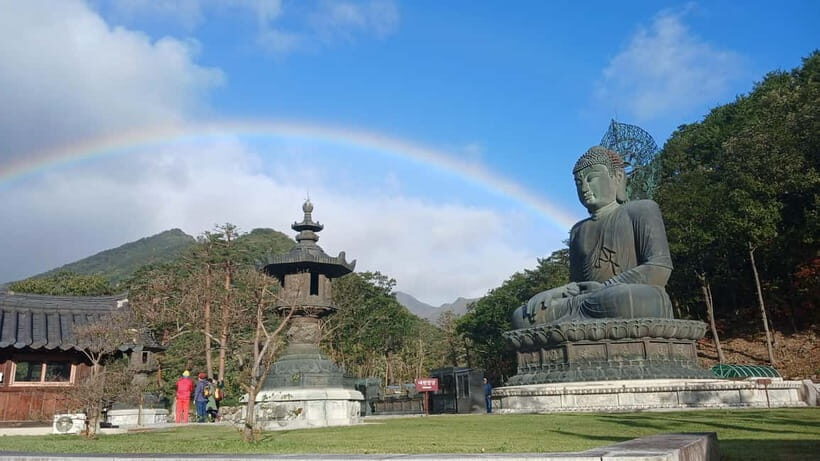
Next comes Donghaksa Temple, and the concept is simple: cherry blossoms as a living frame around old architecture. This is one of those places where the setting does the work. You’re not walking endless trails hoping something shows up. The temple environment is the attraction, and blossoms help complete the picture.
In practical terms, this stop is valuable for two reasons. First, temple grounds are usually built for slower movement. Even with a tight schedule, you can pause, look up, and take photos without feeling like you’re rushing across a “checklist.” Second, it’s a different vibe than the river and village scenes. You get atmosphere—quiet corners, layered sightlines, and that classic Korea spring look where manmade and nature share the same space.
What to watch for: timing and wind. Even in good blossom seasons, petals move fast. If there’s a breeze, don’t wait for the perfect still moment—take a few shots, then shift your angle. The best photos often come from repositioning rather than waiting.
Maisan Mountain Cherry Blossoms and Yeongrangho Lake: Two Scenic Styles
This tour doesn’t just repeat the same flower-and-forest pattern. You get two distinct visual backdrops.
At Maisan Mountain, you’re chasing cherry blossoms with the backdrop of Maisan’s unique twin peaks. That mountain setting gives you a sense of scale. Even if you only do a light walking portion, the views tend to feel bigger than flat city scenes. It’s the kind of stop where you’ll want to look both near and far: blossoms up close and peaks in the distance.
Then comes Yeongrangho, where the theme shifts from mountain drama to calm shoreline strolling. You’ll walk along the lake shores lined with cherry trees in full bloom. This is where the day turns more “slow romance walk” than “photo sprint.” It’s also a good break after temple and mountain energy, because the lake setting tends to feel open and breathable.
How to get the most out of both: treat them like two different workouts. For Maisan, expect more elevation or uneven ground depending on the specific route that’s used that day. For Yeongrangho, focus on pacing. You can slow down, enjoy the spacing, and take photos that show longer stretches of trees along the water.
Jeonju Hanok Village: Over 800 Houses, Hanbok Moments, and Food Time
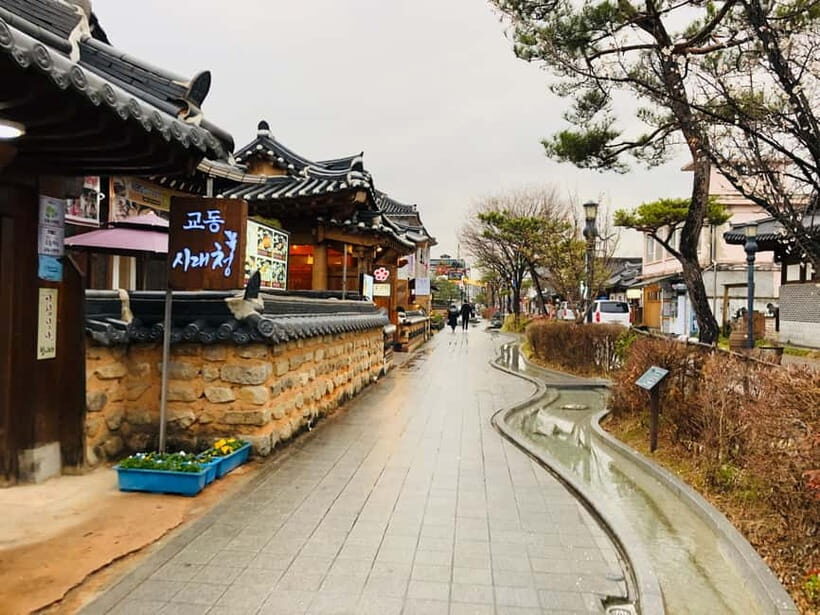
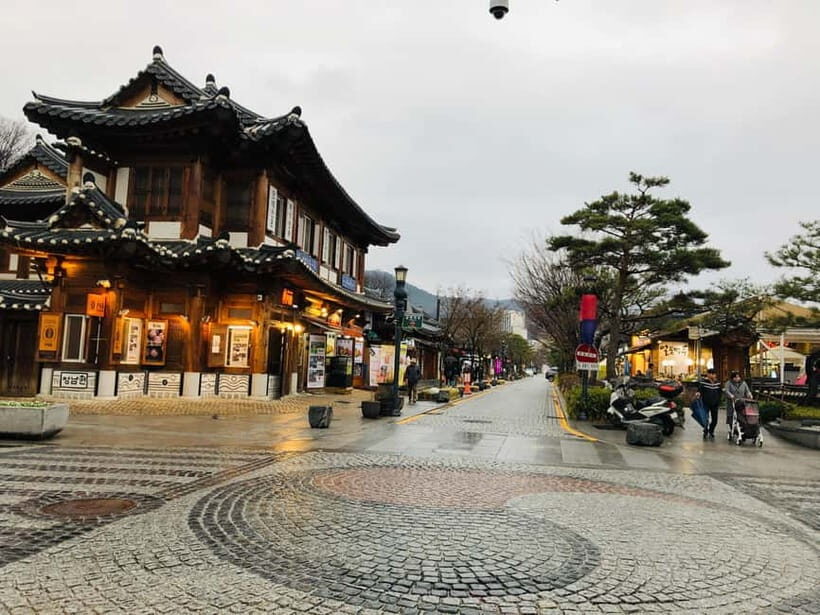
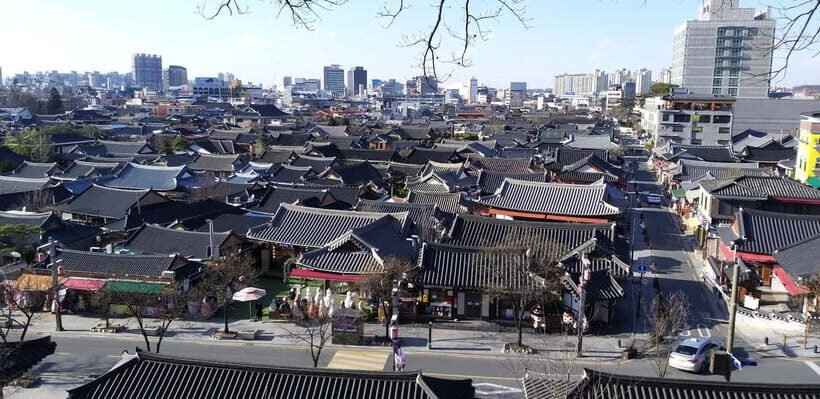
Jeonju Hanok Village is the cultural anchor on the way back toward Seoul. This stop matters because it isn’t only about scenery. You’re stepping into a living pocket of traditional Korea with over 800 hanok (traditional houses). That scale makes a difference. It’s not a single street you blink at and move on from—it’s an area built for wandering.
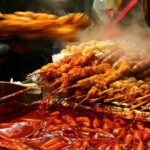
You also get a chance to try the fun, interactive parts. The tour info highlights hanbok and various snacks, and that’s exactly the kind of soft activity that turns a long day into something you’ll remember. Taking photos is nice. Trying on hanbok, walking the old-style lanes, and grabbing snack bites is where the experience becomes personal.
A recent review included guidance from a named guide, Andrew, who helped with recommendations for what to do and where to eat, plus help with pictures. Another named guide, Leo, was praised for being a strong guide. That matters because Jeonju can be easy to do wrong on a tight schedule. A helpful guide helps you prioritize what’s worth your time rather than aimlessly following the loudest crowd.
My practical advice for Jeonju: before you start walking, pick one area you want to photograph, one food item you want to try, and one cultural moment you want to experience. Then let the rest be extra. Long tours feel shorter when you decide what “success” looks like.
Possible drawback: in busy blossom weekends, the “free time” moments can still feel rushed if your group is spread out or if you wait too long for photos. Build in a small buffer so you don’t get stuck backtracking.


Seoraksan National Park: Hiking Time That Matches Your Fitness
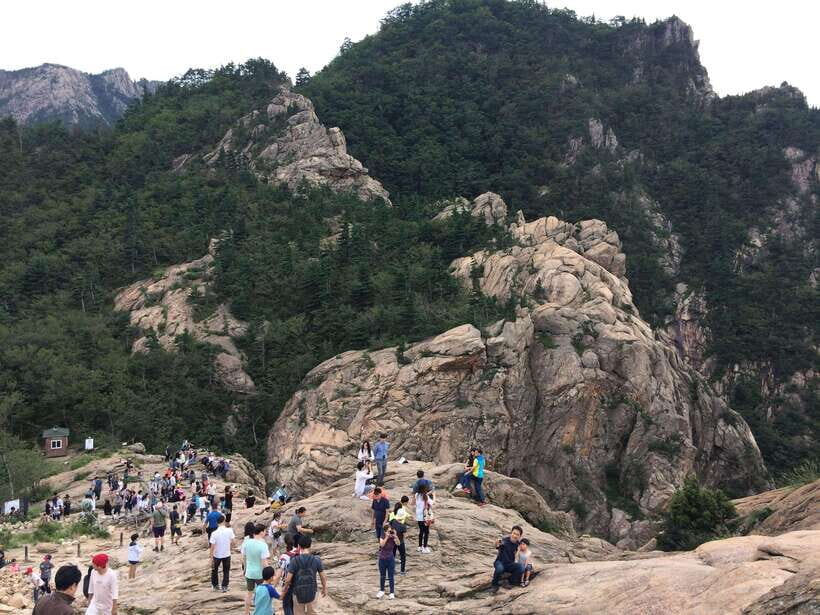
After the more urban/cultural stops, the tour adds nature with Seoraksan National Park. The tour info says you’ll explore stunning landscapes and enjoy hiking trails suitable for various fitness levels. That wording is important. It usually means you’ll have options—routes that are not all the same difficulty.
I like Seoraksan on a day tour because it gives a real “lungs and legs” segment. Even if you’re only doing a shorter trail portion, the park’s environment changes your mood. It’s a good counterbalance to temple photos and hanok strolling. It also turns the day from purely seasonal sightseeing into something more active.
What to bring in your head before you go: trails can be uneven. Even when the hike is moderate, you’ll want stable shoes. If you’re someone who gets tired easily, don’t wait until you’re already exhausted. Match your pace early.
Also, remember the tour already includes about 1 to 2 hours of walking total across stops, so Seoraksan may be one of the main contributors to that walking time. Plan for it.
Price and Logistics: Is $66 Good Value?
At $66 per person, the big question is what you’re buying with your money. Here’s what’s included: roundtrip transportation, a driver/guide, and entrance ticket support for Gwangyang + Jeonju.
The value is strongest if you’d otherwise spend time and effort arranging transit between multiple locations. That’s the real cost people underestimate with spring tours: time, stress, and schedule friction. For many visitors, a day that covers multiple blossom sites plus Jeonju would be annoying to piece together alone without losing most of the day to transfers.
Where the value becomes more questionable is if you’re mainly chasing one thing. If you only care about one blossom spot, a multi-stop route might feel like too much moving around. But if you want variety—plum, temple cherry, mountain views, lake strolls, and hanok culture—this price starts to look pretty reasonable.
Two cost notes to plan around: food and drinks aren’t included, and you’ll have to manage your spending during free time. The good part is Jeonju is famous for snacks and traditional food, so you can keep it flexible and choose what you actually want to eat.
Who This Tour Fits Best (and Who Might Prefer Something Else)
This tour fits best if you:
- Want a one-day spring sampler that combines nature and culture
- Prefer guided pacing and roundtrip transport from Seoul
- Like the idea of multiple blossom backdrops—temple, mountain, and lake—without booking separate day trips
- Appreciate guides who help with on-the-ground decisions; named reviews included Andrew and Leo, both praised for helpfulness and even photo support
It may be less ideal if you:
- Get grumpy about long days. Up to 16 hours plus transfer time isn’t light.
- Want a slow, fully unhurried outing. The walking is manageable, but the overall schedule is packed.
- Book too fast without checking the specific option. Since destinations can vary, you need to verify exactly what’s on your day.
Should You Book This Cherry Blossom And Hanok Tour?
If you’re choosing between a solo plan and a guided day, I’d lean toward booking this one—especially for first-timers. The combination of plum blooms at Gwangyang, Donghaksa Temple, Maisan and Yeongrangho, and Jeonju Hanok Village hits a strong range of spring sights in one trip. Add Seoraksan National Park, and you get a nature break that keeps the day from feeling like only photos.
But do book with intention. Double-check your option’s exact destinations, because the tour’s main sites can shift. Also, be realistic about blossom timing. You can’t control the calendar, but you can control your expectations: arrive ready to enjoy the day even if the peak bloom window isn’t perfect everywhere.
If you want one practical rule: if you’re willing to spend a long day out of Seoul and you pack comfortable shoes plus a flexible attitude, this tour is a solid value way to experience Gangwon Province spring and Jeonju culture without the planning headache.
FAQ
How long is the Seoul to Gangwon Cherry Blossom Day Tour?
The duration is listed as 750 minutes to 16 hours.
What’s included in the price?
Included are roundtrip transportation, a driver/guide, and entrance ticket support for Gwangyang and Jeonju.
Are meals and drinks included?
No. Food and drinks are not included, so you’ll want to budget for snacks or meals during free time.
How much walking should I expect?
There is walking for about 1 to 2 hours.
Do all bookings visit the same places?
The main destinations can vary depending on which option you choose, so it’s important to check your specific itinerary before booking.
What’s the cancellation policy?
You can cancel up to 24 hours in advance for a full refund.