REVIEW · SEOUL
Traditional Korean Bookbinding Experience in Seoul, Hongdae
Book on Viator →Operated by Danchoodan · Bookable on Viator
A notebook class is usually just crafts. This one is Korean bookbinding with hanji paper and a silk cover, tied off with a traditional norigae knot. Two things I like right away: you choose from multiple silk patterns and threads, and you leave with a finished journal that’s meant to be kept.
You’ll also get context on why hanji mattered in Joseon-era writing, plus a step-by-step binding process that feels hands-on rather than show-and-tell. One possible drawback to plan for: it’s a small studio session, so you’ll want to arrive on time and expect to focus during the full 2 hours.
In This Review
- Key highlights you’ll actually notice
- A Real Hanji and Silk Notebook: Why This Class Feels Different
- Silk Choice in Hongdae: Where You Start and How It Changes the Result
- Hanji Paper 101: Joseon-Era Material With UNESCO Weight
- The Two-Hour Flow: What Happens Step by Step
- What You Take Home: A Notebook That Looks Handmade and Feels Finished
- Price and Value: Is $49 Worth It in Seoul?
- Seoul Logistics for Hongdae Days: Where danchoodan Fits Into Your Day
- Who Should Book This Korean Bookbinding Workshop
- Should You Book It? My Practical Take
- FAQ
- Where does the bookbinding class meet?
- What time does the class start?
- How long is the experience?
- How much does it cost?
- What materials and tools are included?
- What do I make in the class?
- Is transportation included?
- What are the age and group limits?
Key highlights you’ll actually notice
- 22 silk cover options so you can pick a look that feels like you, not like a preset souvenir
- Norigae + thread selection adds Korean ornament style to the finished notebook
- UNESCO-listed hanji context helps you understand what you’re holding and why it’s special
- Traditional binding method in a tight timeline (about 2 hours) with materials included
- Small group size (up to 12) so you’re not just watching
A Real Hanji and Silk Notebook: Why This Class Feels Different
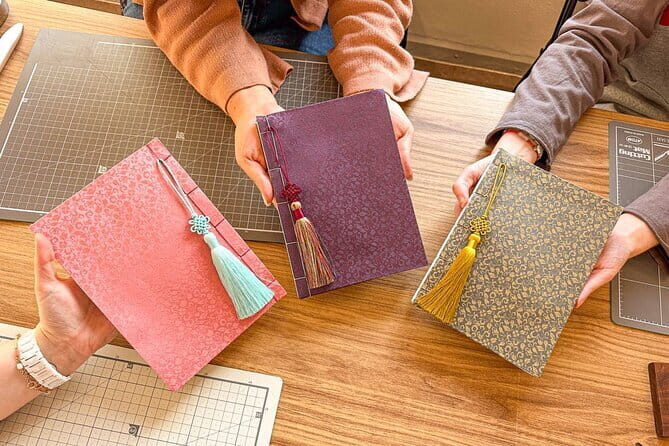
If you’ve done Korean cooking classes or K-pop photo stops, this is a nice switch. Bookbinding is quiet, tactile, and surprisingly personal. In this workshop, you’re not just decorating a pre-made notebook. You’re making a small object using Korean materials and techniques that were used for writing and keeping notes long ago.
What makes it stand out is the pairing: hanji for the paper and silk for the cover and final presentation details. The class also ends with a traditional knot (norigae), which turns a craft project into something that looks and feels culturally intentional.
I also like the pacing. It’s structured like a real lesson: you choose materials first, then you learn the paper, then you bind, then you finish with the ornament. That flow helps if you don’t speak Korean, because the steps are visible and physical.
The teacher and staff are described as kind and patient, with a lot of culture and hanjik info shared along the way. That matters because hanji isn’t just “pretty paper.” It’s tied to a long writing tradition, including diaries and scholarly notes associated with the Joseon era.
You can also read our reviews of more tours and experiences in Seoul.


Silk Choice in Hongdae: Where You Start and How It Changes the Result
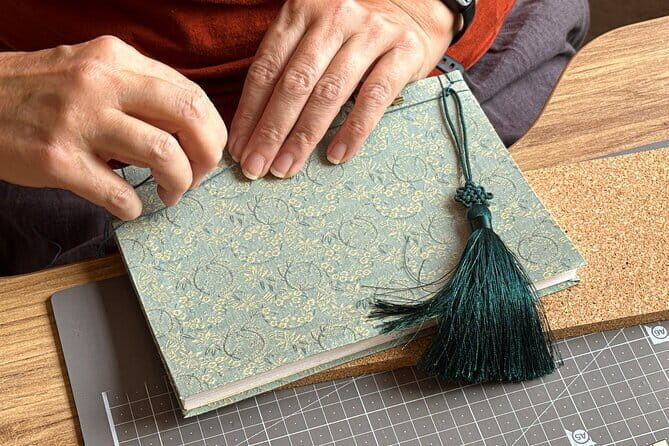
This workshop lets you begin with a visual decision, not a waiting line. You’ll choose your silk cover from 22 pattern options. You’re selecting a style you want to live with, which is a big deal when you’re spending time making the notebook itself. The cover design is also part of what makes the notebook gift-ready; it looks intentional rather than generic.
Then you get to the smaller details: you pick your norigae ornament and the thread color. That’s the kind of choice that changes the final look dramatically, because the knot and hanging charm create a focal point. Even if two people both choose hanji paper, their notebooks can still feel very different once the silk pattern, thread color, and knot style come together.
One practical thing to know: since you’re making choices up front, take a minute before you decide. Look at how the silk patterns will pair with the norigae and thread you want. If you like a clean look, you might choose calmer colors. If you want something playful, you can pick a more vivid thread and ornament pairing.
Hanji Paper 101: Joseon-Era Material With UNESCO Weight
Hanji is the traditional Korean paper used for writing in important historical contexts. In this class, you’ll learn why it’s special and how it was used. The workshop specifically ties hanji to writing used in the Joseon Dynasty, including records like the Annals of the Joseon Dynasty, and notes that hanji is recognized by UNESCO under Memory of the World.
That UNESCO mention isn’t just trivia. It’s the reason the paper feels worth understanding, not just worth using. When someone explains that hanji was used for long-lasting documentation and notes, it reframes your craft project. You’re not making a cute journal for Instagram. You’re working with a material that was selected historically for durability and practical writing use.
The class also gives you the “why it lasts” idea through the classic comparison: silk lasts about 500 years, while hanji lasts about 1,000 years. Even if those timeframes are more symbolic than scientific, it signals the design philosophy behind the materials: they were meant to endure.
If you care about quality souvenirs, this matters. A lot of travel crafts use cheap materials. This one starts with a paper type that has a real reputation for longevity and cultural importance.
The Two-Hour Flow: What Happens Step by Step
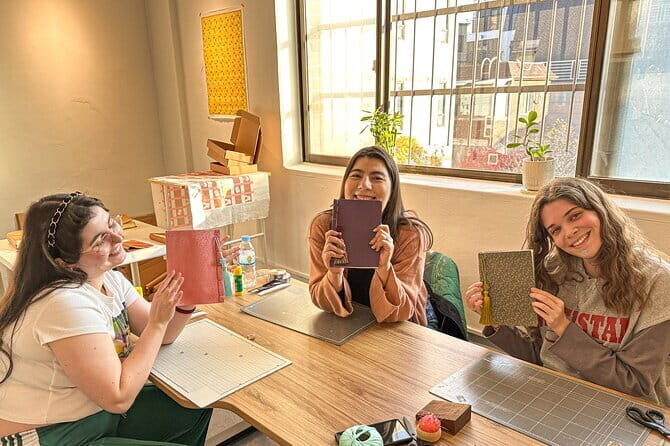
The session is about 2 hours and is designed to feel complete by the end. I like the fact that it’s not stretched into a multi-day project. You get a satisfying “from start to finish” outcome.
Here’s the practical breakdown of how the workshop runs:
First, you choose your silk cover. This sets the visual identity of your notebook early. Then you select your norigae ornament and thread color, so you already know how you want the finishing touch to look.
Next comes the hanji lesson. You learn about the paper itself and why handmade Korean paper has value beyond looks. This is the part that gives meaning to the rest of the work. Without it, the binding steps can feel like a normal craft. With it, you understand what you’re building.
Then you move into the main making phase: the binding. You’ll bind silk and hanji using a traditional Korean binding approach. This is where the class becomes muscle-memory friendly. Even if you’re not experienced with crafts, you can follow steps that are physical and shown clearly.
Finally, you decorate with the norigae knot tied onto your notebook, which becomes the signature of Korean style. The last step is packaging, so you take home a notebook that’s ready to gift or store without extra hassle.
One consideration: because this is a hands-on process, you’ll want to keep distractions low. If you’re juggling a lot of other activities that day, plan for it to be your main focus slot.
What You Take Home: A Notebook That Looks Handmade and Feels Finished

You leave with the notebook you created, and the workshop builds in the idea of a real keepsake. The materials and tools are included, and you get a gift-ready package. That means you don’t have to scramble to find wrapping later.
Also, the final norigae knot is more than decoration. It adds a small architectural detail that makes the journal feel “done,” like it belongs in a Korean home or study rather than a typical tourist craft corner.
If you like practical souvenirs, this one scores well. You can use it as a journal, a scrapbook for your Korean trip, or a note book for future travel planning. One of the strongest sentiments in the feedback is that the finished notebook became a meaningful memory-object, not just a product.
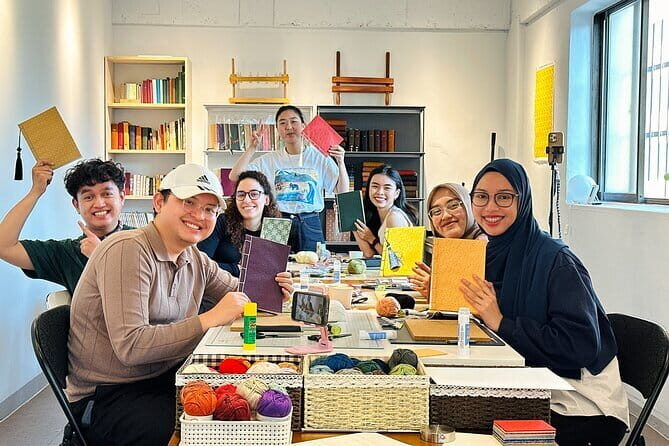
Another nice detail: the class is capped at 12 travelers, so you’re more likely to get real attention during tricky steps. That matters for quality, because with bookbinding, one small misalignment can affect how the notebook feels.






Price and Value: Is $49 Worth It in Seoul?
At $49 per person, you’re paying for several things at once:
- real traditional materials (hanji and silk)
- binding tools and materials included
- a licensed guide
- a finished product with decorative finishing (norigae knot)
- packaging that’s ready to take home
Craft classes can vary wildly in value. Some are mostly a template with minimal material quality. Here, you’re choosing from multiple silk covers and customizing the norigae and thread. That means your money goes toward control and customization, not only labor.
You also get the “experience layer” that many souvenir crafts don’t offer: learning about hanji’s role in the Joseon writing tradition. If you care about cultural context, that’s a big part of the value.
The duration also matters. Two hours is long enough to feel like you made something real, but short enough that it doesn’t wreck your itinerary. It’s also easier to fit in a day than longer workshops.
Seoul Logistics for Hongdae Days: Where danchoodan Fits Into Your Day

This workshop starts at 10:30 am at danchoodan in Mapo-gu, Daeheung-dong, Daeheung-ro 100, 3F. It ends back at the same meeting point, so you can plan a nearby lunch afterward without a big routing headache.
The location is described as near public transportation, and it’s in the Hongdae area, which is handy if you’re already spending time around that part of Seoul. It also uses a mobile ticket, which is simple if you’re already traveling light.
Two planning tips:
- Arrive a bit early. Only the number of people who made a reservation can enter the studio, so don’t be the person slowing down the check-in moment.
- Wear something you won’t mind getting slightly messy during hands-on crafting, because binding involves close work with paper and tools.
Also note: an air-conditioned vehicle is not included. Since the workshop itself is in a studio, that mainly affects what you might do before or after (like if you’re doing other transfers by van).
Who Should Book This Korean Bookbinding Workshop
This is a great fit if you love books, paper crafts, and meaningful souvenirs. It’s also a strong choice if you want something calmer than the typical Hongdae chaos.
You’ll likely enjoy it if:
- you like hands-on cultural activities
- you want a keepsake you can actually use later
- you care about materials (hanji and silk) and not just the final photo
You might want to think twice if:
- you’re short on time and need a fast activity (this is still a full 2 hours)
- you prefer purely visual sightseeing over focused craft work
- you struggle with seated, detail-oriented tasks for an extended stretch
That said, the class notes that most travelers can participate, and service animals are allowed. There’s also an age requirement: reservations require participants to be 17 years old or older.
Should You Book It? My Practical Take
Book it if you want a Seoul experience with real craft, real cultural materials, and a finished object you’ll keep. The strongest reasons to choose this workshop are the customization (silk pattern choice, norigae ornament, thread color), the material story behind hanji (including the UNESCO Memory of the World note), and the fact that you end with a journal that’s ready to gift and use.
If you’re on the fence, decide based on your motivation:
- If you want a souvenir with substance, this is one of the more satisfying options in the Hongdae area.
- If you only want a quick photo moment, you may prefer something more walk-in and passive.
Either way, it’s a clean, well-paced activity built around a tradition you can hold in your hands.
FAQ
Where does the bookbinding class meet?
It meets at danchoodan in Mapo-gu, Daeheung-dong, Daeheung-ro 100, 3F in Seoul. The activity also ends back at the meeting point.
What time does the class start?
The start time is 10:30 am.
How long is the experience?
The duration is about 2 hours.
How much does it cost?
The price is $49.00 per person.
What materials and tools are included?
Binding tools and materials are included, along with a licensed guide.
What do I make in the class?
You create a traditional Korean notebook using hanji paper, a silk cover, and a norigae knot tied as the finishing touch. You take the notebook home.
Is transportation included?
An air-conditioned vehicle is not included.
What are the age and group limits?
You must be 17 years old or older to make a reservation. The class has a maximum of 12 travelers. Only the number of people who reserved can enter the studio.