REVIEW · SEOUL
[Small Group] Aegibong and DMZ Closest Views of North Korea
Book on Viator →Operated by Sunny Seoul Korea Tour · Bookable on Viator
One day can feel both political and deeply human, fast. This small-group DMZ and Aegibong tour takes you from Seoul to the most talked-about viewing points and Cold War relics, with an English guide and convenient pickup.
I like the small-group pacing (max 40) and how the guides keep the day organized—so you spend more time seeing and less time waiting. I also love the mix: monuments at Imjingak, the hands-on feel of the 3rd Tunnel, and then those rare, clear North Korea views from Dora and Aegibong.
One consideration: you’ll be working around security rules and time limits, and the experience depends on good weather for the best visibility and smooth scheduling. Bring your passport and expect a long, structured day.
In This Review
- Quick hits: what makes this DMZ-and-Aegibong tour different
- How the DMZ day works from Seoul pickup to Myeongdong drop-off
- Imjingak Pyeonghwa-Nuri Park: where the DMZ story starts in Seoul’s backyard
- The ID check: why your passport is part of the experience
- The Third Infiltration Tunnel: Cold War engineering you can feel
- Dora Observatory: rare sightlines toward Panmunjeom and Daeseong-dong
- Aegibong Peace Eco Park: closest-point views and a softer tone
- Jogang Observatory and the Starbucks stop: take a break without losing focus
- Guide quality and small-group pacing (and why names matter)
- Price and value: what you get for $120
- What to bring and how to prepare for this DMZ route
- Who should book this DMZ and Aegibong closest-views tour?
- Should you book? My practical call
- FAQ
- Do I need a passport for this DMZ tour?
- How long is the tour?
- Is pickup in Seoul included?
- What are the main stops during the day?
- Is lunch included?
- What’s included in the ticket price?
- Is there a group size limit?
- Does the tour depend on weather?
Quick hits: what makes this DMZ-and-Aegibong tour different
![[Small Group] Aegibong and DMZ Closest Views of North Korea - Quick hits: what makes this DMZ-and-Aegibong tour different](https://8.koreaadventures.com/wp-content/uploads/small-group-aegibong-and-dmz-closest-views-of-north-korea-1.jpg)
- Imjingak Park first: monuments and memorials that set the tone before you enter the restricted DMZ area
- 3rd Infiltration Tunnel (about 52 km from Seoul): an eerie, concrete look at how the Cold War planned an invasion
- Dora Observatory viewpoint: framed views toward Panmunjeom and Daeseong-dong inside the DMZ
- Aegibong Peace Eco Park: often the closest point for clear, unobstructed North Korea village-and-farmland views
- Jogang Observatory plus the Starbucks stop: a practical break that also keeps you oriented toward what you came to see
- English guide + smooth timing: praised for clear explanations and keeping groups ahead of big buses
How the DMZ day works from Seoul pickup to Myeongdong drop-off
![[Small Group] Aegibong and DMZ Closest Views of North Korea - How the DMZ day works from Seoul pickup to Myeongdong drop-off](https://8.koreaadventures.com/wp-content/uploads/small-group-aegibong-and-dmz-closest-views-of-north-korea-2.jpg)
This is built like a full, long-day outing rather than a casual stroll. You start in the Munsan/Paju area and follow a route that takes you through the main DMZ storytelling stops, then finishes with Aegibong views and a drop-off in Myeong-dong.
Key timing details that help you plan:
- Duration is about 8–9 hours
- You’ll end around 15:00 at Aegibong and likely reach Myeong-dong around 16:00
- Pickup is offered, and the day runs in an air-conditioned vehicle (worth it if you catch a hot or humid Seoul afternoon)
Also, you get a mobile ticket, which simplifies the start of the day. The tour caps at 40 travelers, which matters because the DMZ process can feel bottlenecked when you’re stuck behind large groups.
You can also read our reviews of more tours and experiences in Seoul.
Imjingak Pyeonghwa-Nuri Park: where the DMZ story starts in Seoul’s backyard
![[Small Group] Aegibong and DMZ Closest Views of North Korea - Imjingak Pyeonghwa-Nuri Park: where the DMZ story starts in Seoul’s backyard](https://8.koreaadventures.com/wp-content/uploads/small-group-aegibong-and-dmz-closest-views-of-north-korea.jpg)
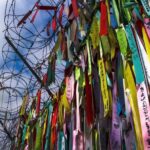
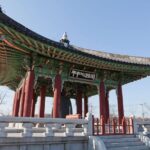
Your day kicks off at Imjingak Pyeonghwa-Nuri Park, a unification-and-security complex. Think of it as your briefing room, but outdoors, with monuments, pavilions, and memorial sites that give you emotional context before you reach the actual restricted zone.
What makes this stop useful:
- It’s not only “seeing stuff.” You’re learning the background of the Korean War and the armistice reality that still shapes the peninsula.
- The setting is designed for unification themes. When you later stand in view corridors toward North Korea, you’re not starting from scratch.
You spend about 2 hours here, with admission included. That time is intentional: you want enough space to read, walk, and absorb before the day shifts from historical framing to physical access and restricted areas.
A practical note: this part works best when you go in with slow expectations. You’re not rushing for photos—you’re setting your understanding.
The ID check: why your passport is part of the experience
![[Small Group] Aegibong and DMZ Closest Views of North Korea - The ID check: why your passport is part of the experience](https://8.koreaadventures.com/wp-content/uploads/small-group-aegibong-and-dmz-closest-views-of-north-korea-4.jpg)
Right after Imjingak, you reach an ID check step. You’ll need to bring your passport, and the tour requires it for entry into a restricted area.
This matters because the DMZ experience isn’t casual sightseeing. Even if you’re excited for the views, the day is structured around security procedures. That means:
- Wear your “I’m ready” mindset: passport in hand, no scrambling
- Understand that the tour is organized around rules, not flexibility
If you’re the type who hates being rushed, this is the one place to stay calm. The best results come when you treat the check like a checkpoint, not a speed bump.
The Third Infiltration Tunnel: Cold War engineering you can feel
![[Small Group] Aegibong and DMZ Closest Views of North Korea - The Third Infiltration Tunnel: Cold War engineering you can feel](https://8.koreaadventures.com/wp-content/uploads/small-group-aegibong-and-dmz-closest-views-of-north-korea-5.jpg)
Next comes one of the most striking stops: the 3rd Infiltration Tunnel. This tunnel was built by North Korea with the purpose of invading South Korea and was discovered in 1978. It’s also described as the closest of the four known tunnels located so far—about 52 km from Seoul.
Why this stop hits harder than you’d expect:
- It’s physical. You’re not just looking at history—you’re moving through a human-made pathway designed for a military purpose.
- It’s a reminder that the DMZ isn’t only about today’s tension. It’s also about how planning and engineering shaped the past.
You’ll spend around 1.5 hours, with admission included. The tunnel experience tends to be one of those “this is real” moments. If you’re claustrophobic, keep that in mind—tunnel environments can feel tight and echo-y, and the day’s focus is on the underground setting.
Dora Observatory: rare sightlines toward Panmunjeom and Daeseong-dong
![[Small Group] Aegibong and DMZ Closest Views of North Korea - Dora Observatory: rare sightlines toward Panmunjeom and Daeseong-dong](https://8.koreaadventures.com/wp-content/uploads/small-group-aegibong-and-dmz-closest-views-of-north-korea-6.jpg)
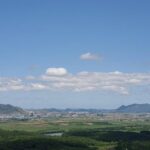
After the tunnel, you head to Dora Observatory, described as the closest DMZ observatory to Panmunjeom. From here, you can see not only Panmunjeom but also the village of Daeseong-dong within the DMZ, plus surrounding mountains and farmlands.
This stop is all about viewpoint.
- You’re standing in a place built for watching across a border that’s hard to see in normal travel life.
- You’ll get an organized view that helps you understand where key areas sit relative to each other.
You spend about 1 hour here, with admission included. One practical mindset: don’t chase the fantasy of “seeing clearly like a city street.” These observatories are about direction, scale, and what’s possible under the conditions of visibility.
If the weather is cooperating, the views can be especially satisfying because they connect what you learned at Imjingak and what you experienced underground in the tunnel.



Aegibong Peace Eco Park: closest-point views and a softer tone
![[Small Group] Aegibong and DMZ Closest Views of North Korea - Aegibong Peace Eco Park: closest-point views and a softer tone](https://8.koreaadventures.com/wp-content/uploads/small-group-aegibong-and-dmz-closest-views-of-north-korea-7.jpg)
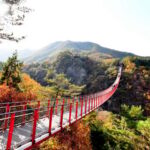
Once you shift away from the tunnel-and-bunker mood, Aegibong Peace Eco Park is where the day relaxes a bit. This park is in Gimpo and is highlighted as offering the closest point to North Korea with unobstructed views.
The key idea here is what you can actually look at:
- North Korean villages and farmland
- Daily-life patterns implied by the agricultural landscape you can view from the border area
- A more “peace park” atmosphere, symbolizing hope for a calmer peninsula
You get about 1 hour at Aegibong with admission included. Compared to the tunnel, the vibe is calmer. You’re still in a politically loaded area, but your eyes are mostly on the horizon rather than on historical structures.
If your goal is to see North Korea rather than just learn about it, this is the stop that usually satisfies that bucket-list craving—because it’s framed as the closest, clear-view area.
Jogang Observatory and the Starbucks stop: take a break without losing focus
![[Small Group] Aegibong and DMZ Closest Views of North Korea - Jogang Observatory and the Starbucks stop: take a break without losing focus](https://8.koreaadventures.com/wp-content/uploads/small-group-aegibong-and-dmz-closest-views-of-north-korea-8.jpg)
The itinerary also includes a stop at Starbucks in Aegibong Peace Eco Park, paired with viewing time at the Jogang Observatory.
Here’s what that means in real life: you get a chance to reset—water, snack, bathroom break—while staying near the viewing point where you’ll watch toward North Korea again.
The Jogang Observatory is described as allowing visitors to observe North Korean villages and farmlands, in a setting that stays relatively peaceful. You spend about 1 hour at this final viewing phase, and admission is included.
A small practical tip: treat this as your “mental exhale” so you can pay attention at the observatory without the end-of-day fatigue takeover.
Guide quality and small-group pacing (and why names matter)
![[Small Group] Aegibong and DMZ Closest Views of North Korea - Guide quality and small-group pacing (and why names matter)](https://8.koreaadventures.com/wp-content/uploads/small-group-aegibong-and-dmz-closest-views-of-north-korea-9.jpg)
The experience lives or dies with the guide, and this one has a clear pattern in the feedback: the English guides are consistently praised for clarity, organization, and historical context.
You’ll see names like:
- Jung, praised for insight and a better grasp of Korean War and DMZ context
- Sophia, noted for strong organization and timing—keeping the small group positioned just before larger tour buses
- Eunice, praised for explaining both sides of Korea and making the day feel meaningful
- Mimi, praised for being warm and for keeping the experience engaging while you learn
Even if you don’t get the same guide, the important point for you is the style: this tour is designed so you’re not just transported from stop to stop. The pacing helps you avoid the worst crowd chaos, which is a big deal on DMZ days.
If you care about understanding what you’re seeing—especially at places like the tunnel and observatories—this kind of guide-driven structure is a real value.
Price and value: what you get for $120
At $120 per person, this isn’t a bargain tour. But it also isn’t “paying just for a bus.”
For your money, you get:
- Air-conditioned vehicle transportation
- Private transportation
- An English guide
- Admission fees for the listed stops
And you’re spared a lot of the hassle that typically comes with DMZ logistics in Seoul: pickup, a planned route, and timed access points.
What’s not included is also clear:
- Lunch
- Coffee/tea
- Personal expenses
So the value calculation is simple. If you’d otherwise spend your day juggling separate tickets, transit, and timing risk, this package makes sense. If you’re the kind of traveler who wants complete freedom and flexible stop lengths, you might find the structure limiting.
For most people who want one well-run DMZ outing without stress, this price looks fair—especially with the small-group cap.
What to bring and how to prepare for this DMZ route
This tour lists a moderate physical fitness level. That usually means you should be comfortable with walking and standing at multiple stops across the day. It also means you should plan for the reality of outdoor time, even when there’s no “hike” involved.
Pack like you’re doing a border-day:
- Your passport for the ID check
- Comfortable shoes for park walking and viewpoint time
- A layer if mornings or evenings feel cool (seasonal changes around Seoul can surprise you)
- Something for a water/meal plan since lunch isn’t included
And match your expectations to the setting:
- The observatory views are spectacular when visibility is good, but you’re looking across a restricted area, not into a nearby city block.
- The tunnel is a controlled, structured visit—so go in ready to follow instructions and move with the group.
Also, the experience is noted as requiring good weather. If conditions are bad, the day may be adjusted or you’ll be offered a different date or a refund.
Who should book this DMZ and Aegibong closest-views tour?
This is a strong fit if you:
- Want a one-day DMZ experience that combines history plus real viewing
- Prefer a small group instead of a massive bus scene
- Care about the explanations behind what you’re seeing, not just the headlines
- Are especially interested in getting to the North Korea view points, including the Aegibong closest-view area
It may be less ideal if you:
- Strongly dislike structured tours and fixed timing
- Need lots of open, unscheduled time for wandering
- Feel uneasy in enclosed spaces like tunnels
Should you book? My practical call
Book it if you want the best chance at a clear, complete DMZ day without DIY stress. The mix of Imjingak setup + 3rd Tunnel + Dora Observatory + Aegibong closest views gives you a full arc: context, a physical Cold War moment, then horizon-level watching.
Skip it or rethink it if you’re only chasing photos and want maximum freedom. This is a guided, rule-based route, and the tunnel/observatory stops reward patience and attention.
If you’re planning ahead, booking roughly a week or so in advance is smart, since this kind of tour is commonly reserved about 8 days ahead.
FAQ
Do I need a passport for this DMZ tour?
Yes. You’ll go through an ID check and need to bring your passport.
How long is the tour?
It runs about 8 to 9 hours total.
Is pickup in Seoul included?
Pickup is offered. The tour ends with a drop-off in Myeong-dong.
What are the main stops during the day?
You’ll visit Imjingak Pyeonghwa-Nuri Park, the 3rd Infiltration Tunnel, Dora Observatory, Aegibong Peace Eco Park, and a stop connected with the Jogang Observatory in the Aegibong area.
Is lunch included?
No. Lunch isn’t included.
What’s included in the ticket price?
Admission fees for the itinerary stops, an air-conditioned vehicle, private transportation, and an English guide are included.
Is there a group size limit?
Yes. The tour has a maximum of 40 travelers.
Does the tour depend on weather?
Yes. It requires good weather, and if it’s canceled due to poor weather you’ll be offered another date or a full refund.