REVIEW · SEOUL
Seoul to Jinhae Cherry Blossom Festival (With Busan Drop-off)
Book on Viator →Operated by Lecirt · Bookable on Viator
Jinhae turns a normal bus ride into pink magic. What makes this outing work so well is the mix of an easy cherry walk at Gyeonghwa Station plus the big-city scale of Jinhae Gunhangje Festival. It’s built for people who want great scenery without fighting logistics all day.
Two things I really like: you get free admissions to the main stops, and the day is guided end-to-end by a professional tour guide so you know where to go and when to slow down for photos. One drawback to plan for: it’s a long day (about 12–16 hours) and it’s not ideal if you’re sensitive to motion or hate big travel stretches.
In This Review
- Key things to know before you go
- Why Jinhae’s cherry blossoms feel like more than a photo stop
- Seoul pick-up and the long-day rhythm (12 to 16 hours)
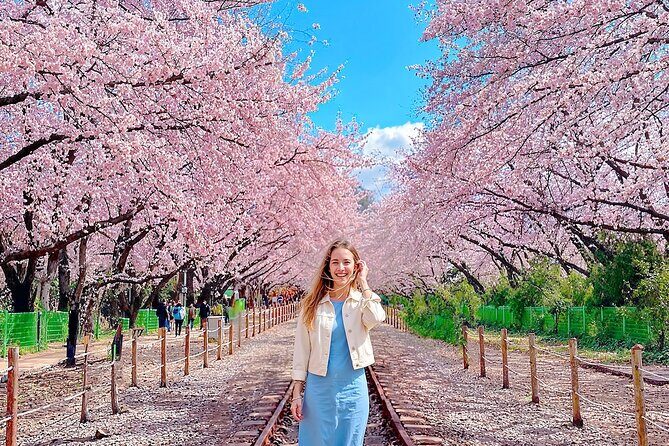
- Gyeonghwa Station’s 800m Cherry Blossom Road: your easiest win
- Jinhae Gunhangje Festival: the biggest cherry-bloom moment
- Busan drop-off option: how it saves money and sanity
- Luggage reality check for the Busan option
- Seoul round trip option: best if you want a clean return to the city
- What you’re really paying for at $52.56
- Guide tips that matter on cherry-bloom days
- Who this trip suits (and who should skip it)
- Should you book the Seoul-to-Jinhae cherry day trip with Busan drop-off?
- FAQ
- How long is the trip from Seoul to Jinhae?
- Where are the pick-up locations in Seoul?
- What is the cherry blossom walk at Jinhae called, and how long is it?
- What is Jinhae Gunhangje Festival?
- Is admission included for the attractions?
- Do I get to go to Busan?
- When is the Busan transfer option available?
- Where will I be dropped off in Busan?
- What luggage is allowed for the Busan transfer?
- Is the Seoul round trip option good for storing luggage?
- Is it refunded if weather is bad?
Key things to know before you go
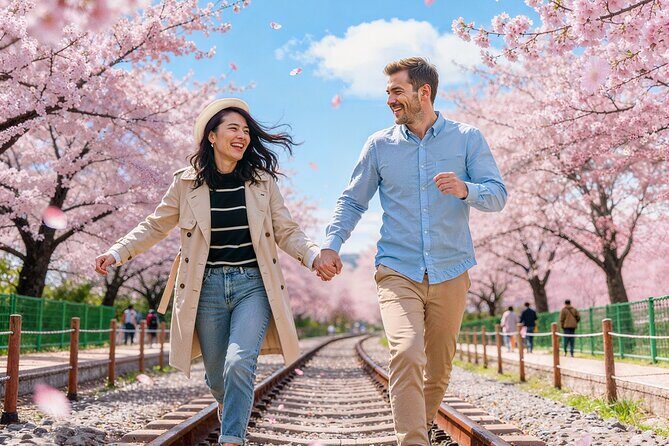
- Gyeonghwa Station cherry road is 800m long with blossoms along a rail-lined walkway
- Jinhae Gunhangje Festival is Korea’s largest spring festival, with over 2 million visitors each year
- Choose your ending: Seoul round trip or Busan drop-off (Busan option is limited to Mar 26–Apr 08)
- Busan drop-off order is set: Haeundae, then Seomyeon, then Busan Subway Station
- Luggage rules differ by option: Busan transfer allows one suitcase up to 30 inches; Seoul round trip has no luggage storage
- Max group size is 40 and you use a mobile ticket, which keeps things simple
Why Jinhae’s cherry blossoms feel like more than a photo stop
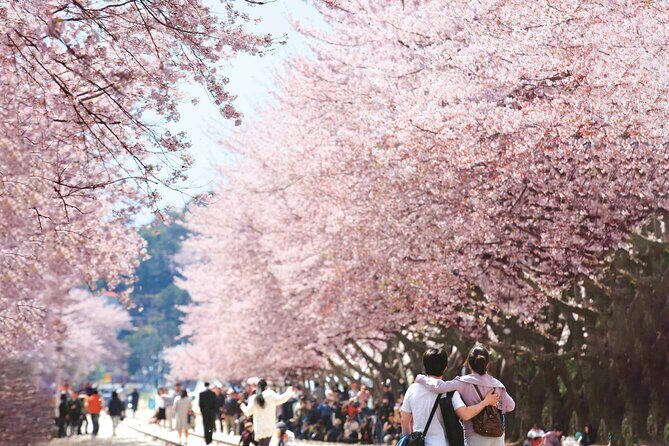
Jinhae Gunhangje Festival is the kind of event that pulls in huge crowds, and that’s exactly why the cherry viewing feels special. You’re not just hunting a few pretty trees. You’re walking through areas where thousands of cherry trees bloom around town, with the festival drawing over 2 million visitors each year.
The blossoms themselves show up as soft pale pink flowers, and because there are so many trees spaced across the city, the look is consistently dreamy rather than hit-or-miss. The festival also has that “everyone is here” energy, which can be fun if you don’t mind busy pockets. If you do mind crowds, you’ll still get good value here because the day isn’t only the festival core. You also get a calmer, structured cherry stretch at Gyeonghwa Station before the big event.
You can also read our reviews of more tours and experiences in Seoul.
Seoul pick-up and the long-day rhythm (12 to 16 hours)
This is an early start trip. Pick-ups are in the order of Hongik University Station, Myeongdong Station, and Dongdaemun History and Culture Park Station, and then you head out toward Jinhae. Plan for the full day: the total time runs about 12 to 16 hours, and the pacing is designed to fit multiple locations with time to actually walk.
A practical tip: treat the day like a mini road trip, not a quick excursion. Bring a phone battery plan, wear comfortable shoes, and be ready for long seated time on the bus. The tour notes it’s not recommended for people sensitive to long hours of travel or severe motion sickness, so if you know you’re one of those people, it may be worth skipping.
The good news is that the structure is clear. You’ll have planned time blocks at each stop, with the guide coordinating movement so you’re not stuck trying to figure out transit while you’re eager to see blossoms.
Gyeonghwa Station’s 800m Cherry Blossom Road: your easiest win
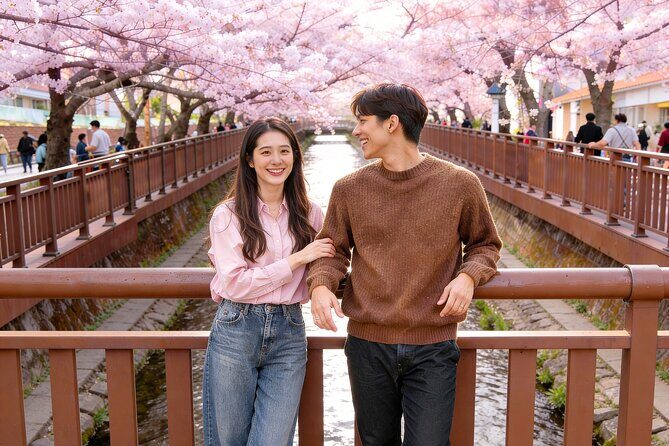
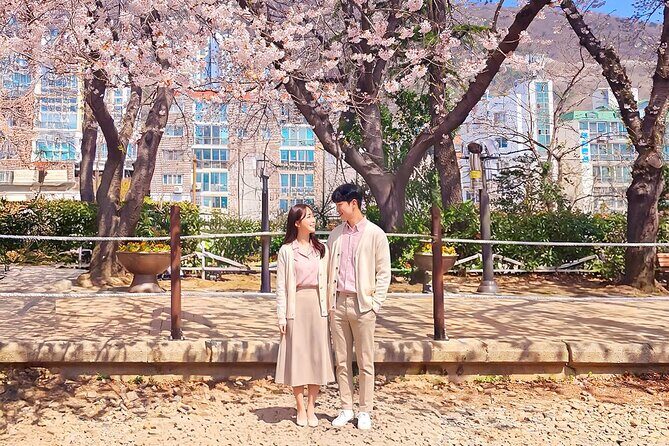
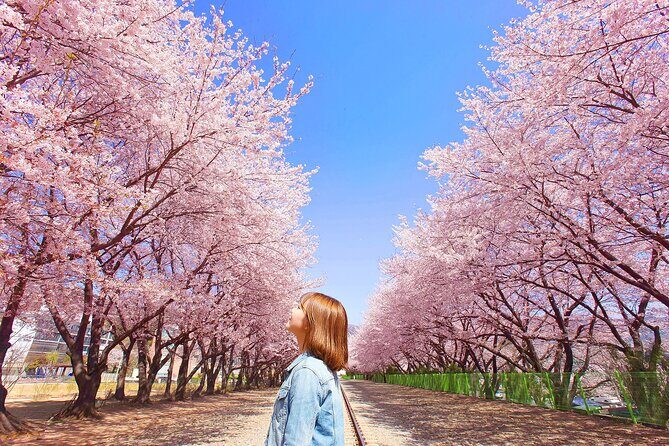
Your first real cherry walk is at Gyeonghwa Station’s 800m-long railroad-lined cherry road. This is one of those places where the setting does the work for you. Trees line the rail walkway for a long stretch, so you’re not doing the awkward thing where you find one cherry tree and then immediately run out of scenery.
Because it’s 800 meters, you can keep a steady pace: slow enough to enjoy the view and grab photos, fast enough to avoid turning your first stop into an exhausting sprint. The walkway is described as being lined with cherry trees in endless bloom, and falling petals add to that romantic, soft-pink atmosphere.
Potential drawback: it can be busy, especially around peak bloom days. That’s not unique to this tour, but it matters here because this is your first stop. If you want calmer photos, you’ll have the best chance by being ready to move quickly when you arrive and not waiting until the busiest time to start walking.
Jinhae Gunhangje Festival: the biggest cherry-bloom moment
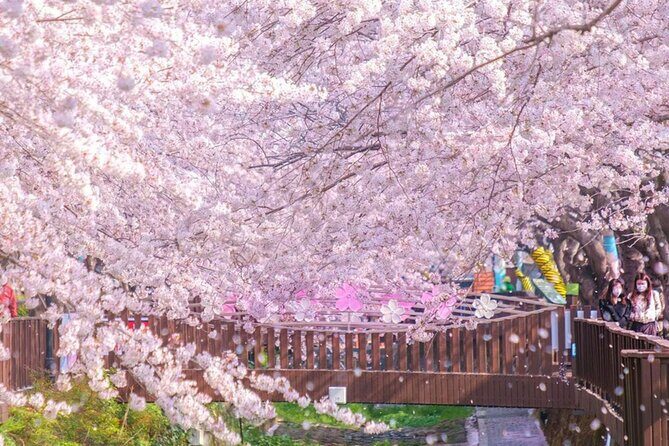
The heart of the day is Jinhae Gunhangje Festival, and this is where the scale really shows. It’s Korea’s largest spring festival, and with over 2 million visitors each year, you should expect a major festival atmosphere rather than a quiet nature stroll.
You’ll be surrounded by thousands of cherry trees with pale pink blossoms across Jinhae. The tour gives you time to experience the festival itself, not just pass through. That matters because a lot of cherry spots are scenic but fast. Here, the day gives you enough breathing room to linger, take photos, and soak up the festival vibe.
One useful piece of wisdom from guide behavior: a guide named Mary is specifically praised for helping people time their cherry viewing better, including suggesting a later date for fuller bloom. Even if you’re on a fixed schedule, that tells you the guide’s job isn’t just transportation. It’s also helping you make the most of the day you have—especially when bloom timing is everything.
What to keep in mind: peak cherry days can mean crowds, and with crowds come longer pauses between good photo angles. If you go in with patience and a flexible plan—walk, stop, scan for open sightlines—you’ll get more out of your time.
Busan drop-off option: how it saves money and sanity
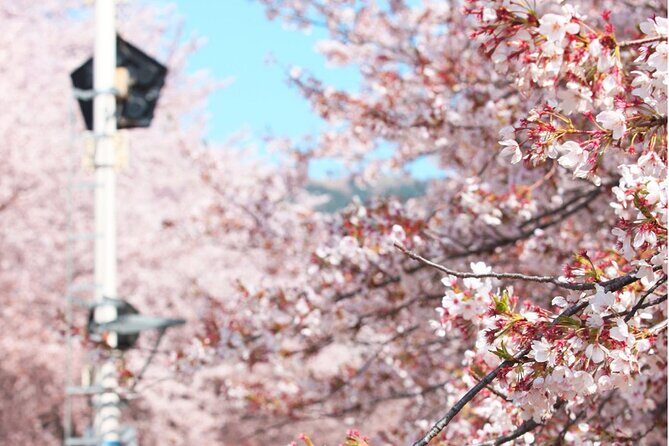
If you’re continuing your trip south, the Busan transfer option is a smart way to reduce the Seoul–Busan transportation cost. Instead of doing a separate travel day later, you get a smooth handoff from Jinhae into Busan with sightseeing time.
This option is available only for a limited period: Mar 26 – Apr 08. If your travel dates fall within that window, it’s worth considering because it changes the whole trip from a simple day-return to a more efficient route through spring Korea.
You’ll be moved to Busan and dropped off in a set order at:
- Haeundae Subway Station
- Seomyeon Subway Station
- Busan Subway Station
That order matters because it can affect where you’ll start your evening. If your hotel is closer to Haeundae or you plan activities near there, choose your lodging accordingly.



Luggage reality check for the Busan option
Busan transfers also come with a luggage rule: each guest may bring one suitcase up to 30 inches. The overview notes that you may be able to store luggage on the bus. If you pack larger bags or multiple pieces, this is one of those times where you’ll want to adjust your plans early—otherwise you risk extra fees under the tour’s baggage rules.
Seoul round trip option: best if you want a clean return to the city
If you choose the Seoul round trip option, you’re returning to Seoul at the end of the day. The return drop-offs are in this order:
Dongdaemun History and Culture Park Station, then Myeongdong Station, then Hongik University Station.
This option is ideal if you want to keep things simple: you get the Jinhae blossoms, and then you’re back in Seoul without having to coordinate onward transit. It also fits well if you’re staying central and don’t want to relocate hotels mid-trip.
The main thing to know is luggage. The tour says no suitcase storage or delivery is available for the round-trip option, and additional fees may apply for baggage that doesn’t meet the rules. In plain terms: you’ll be handling your bags with you, so keep your load light.
What you’re really paying for at $52.56
At $52.56 per person, the price is mostly paying for two big services you’d otherwise piece together yourself: transportation (Seoul ↔ Jinhae, plus the optional extension to Busan) and a professional guide who keeps the day moving.
Since admissions to the listed attractions are included, you’re not paying extra ticket costs on top of the tour price. That’s a big deal at festival time, when the main value is time and access, not museum entry fees.
You’re also getting a small-group feel. The tour caps the group at 40 travelers, which is not tiny, but it’s enough to keep the logistics controlled. And the mobile ticket helps reduce paper chaos when you’re dealing with crowds and early morning pick-ups.
Is it expensive? It depends on how you compare. But if you’d otherwise spend time booking separate transport and then trying to manage festival timing on your own, the price starts to look like a bargain for the amount of structure you get.
Guide tips that matter on cherry-bloom days
A cherry festival is never totally predictable. Bloom timing shifts, crowds thicken, and photo spots get taken fast. That’s why the guide component can be more valuable than it looks.
A guide name that pops up is Mary, praised for arranging the day well and recommending a later date for fuller bloom when possible. Even if you’re locked into your travel dates, this kind of guidance shows you the guide is watching the same problem you are: when the trees are most photogenic and how to steer your time so you get the best chance for that soft-pink look.
So use the guide as your timing tool:
- Start walking early at the first cherry area
- Use the festival time to explore rather than forcing one single photo angle
- Ask where to stand if you want a clearer view of blossoms and not just the tops of heads in a crowd
Who this trip suits (and who should skip it)
This experience is marked as suitable for most people, and it’s described as being near public transportation. It also allows service animals.
But I’d be cautious if any of these sound like you:
- You’re sensitive to long hours of travel
- You have severe motion sickness
- You hate crowded festival settings and want something quiet
If you’re the type who likes a full-sight day with clear stops and a guide handling the schedule, you’ll probably enjoy it a lot. If you prefer slow travel, you might find the long day tiring.
Should you book the Seoul-to-Jinhae cherry day trip with Busan drop-off?
Book it if:
- You want Korea’s biggest spring cherry festival experience without planning chaos
- You like structured sightseeing with a guide and included admissions
- Your dates fit the Busan transfer window (Mar 26 – Apr 08) and you’re continuing your trip anyway
Skip or rethink it if:
- You’re traveling with limited tolerance for long bus days
- You have severe motion sickness
- You want a calm, low-crowd cherry day only
My take: this is a strong value trip because it bundles the hard parts—Seoul-Jinhae transport, festival access, and guided timing—into one predictable schedule. The Busan transfer adds extra usefulness if you’re heading down that way and can manage the suitcase size rule.
FAQ
How long is the trip from Seoul to Jinhae?
It runs about 12 to 16 hours.
Where are the pick-up locations in Seoul?
Pick-ups are in the order of Hongik University Station, Myeongdong Station, and Dongdaemun History and Culture Park Station.
What is the cherry blossom walk at Jinhae called, and how long is it?
It’s the Gyeonghwa Station Cherry Blossom Road, described as an 800m-long railroad lined with cherry trees.
What is Jinhae Gunhangje Festival?
It’s Korea’s largest spring festival, with thousands of cherry trees blooming around Jinhae and over 2 million visitors each year.
Is admission included for the attractions?
Yes. Admission to the attractions listed is included, and the stops are marked as free.
Do I get to go to Busan?
Only if you choose the Busan transfer option. You’ll be moved to Busan and dropped off for sightseeing before finishing the trip.
When is the Busan transfer option available?
It’s available for a limited period: Mar 26 to Apr 08.
Where will I be dropped off in Busan?
Drop-offs happen in this order: Haeundae Subway Station, then Seomyeon Subway Station, then Busan Subway Station.
What luggage is allowed for the Busan transfer?
Each guest may bring one suitcase up to 30 inches. The tour also notes you may be able to store luggage on the bus.
Is the Seoul round trip option good for storing luggage?
No. The Seoul round trip option does not offer suitcase storage or delivery, and additional fees may apply for baggage that doesn’t meet rules.
Is it refunded if weather is bad?
The experience requires good weather. If it’s canceled due to poor weather, you’ll be offered a different date or a full refund.