REVIEW · SEOUL
Seoul: Gyeongbokgung Palace Half day Tour
Book on Viator →Operated by koreaguidetour · Bookable on Viator
Gyeongbokgung makes history walkable. This half-day tour turns Korea’s best-known palace into a clear, English-guided story of the Joseon Dynasty—without you needing to study for weeks first. I especially like the way the guide connects what you see (the ceremonial layout and building purpose) to what it meant back then, not just what it looks like now.
Two hours also gives you practical focus: you hit the big named spots in the right order, from Gwanghwamun Gate to the main halls, so your photos and your understanding line up. The tour’s small scale (up to 20 people) helps too, since you can actually ask questions instead of waving your hand in the air and hoping.
One thing to consider: the tour is short. You’ll get major highlights, but not every nook. Also, Gyeongbokgung Palace is closed on Tuesdays, so you’ll want to plan around that—unless you switch to the Deoksugung night tour the operator suggests.
In This Review
- Key things I’d plan around
- Gyeongbokgung’s role in Joseon: why this palace matters
- Starting at the National Palace Museum area: getting oriented fast
- Gwanghwamun Gate: the ceremonial south gate story
- Geunjungjeon: the main throne hall and what to watch for
- Sajeongjeon: the king’s office space in plain terms
- From the king’s bed-chamber to the queen’s room
- Gyeonghoiru pavilion: closing the tour with a human-scale focus
- Why the English-guided format is the best value here
- A real-world guide moment: paying attention to people
- Price, timing, and fitting this into your Seoul day
- Small rules that affect your experience
- Who should book this tour (and who might not)
- Should you book this Gyeongbokgung Palace Half-Day Tour?
- FAQ
- How long is the Gyeongbokgung Palace half-day tour?
- What is included in the $35 price?
- Where do I meet the tour, and where does it end?
- Do I need a printed ticket?
- Is this tour available on Tuesdays?
- Can I record or film during the tour?
- What happens if the weather is bad?
- What if fewer than 4 people book the tour?
- What is the cancellation policy?
Key things I’d plan around
- English explanations in detail that connect architecture to Joseon life
- A timed highlights route through the main halls and royal spaces
- Animal statues and recurring palace details that you’ll notice more after the guide points them out
- Max 20 people, so Q&A stays real
- No recording/filming, which keeps the focus on what the guide is teaching
- Tuesdays are a no-go for Gyeongbokgung, with an alternative offered
Gyeongbokgung’s role in Joseon: why this palace matters
Gyeongbokgung Palace is the one most people picture when they hear South Korea and “royal court.” Built in 1394, it’s the oldest and most important of the five main palaces in Seoul. That age alone makes it a big deal—but the guide’s framing makes it feel less like a museum label and more like a working world.
You’ll hear how Gyeongbokgung took a serious hit during the Japanese Colonial Period, yet kept its value thanks to ongoing restoration work. That matters for what you’ll see today. Some areas can feel like they’re in conversation with each other: surviving foundations, restored structures, and the careful work that makes the palace readable again.
And then there’s the detail level. The tour specifically calls out the animal statues placed throughout the palace. That’s not just decorative “look, art.” It’s part of the palace language, and with the guide’s pointers you’ll notice patterns you’d easily miss on your own.
You can also read our reviews of more tours and experiences in Seoul.

Starting at the National Palace Museum area: getting oriented fast
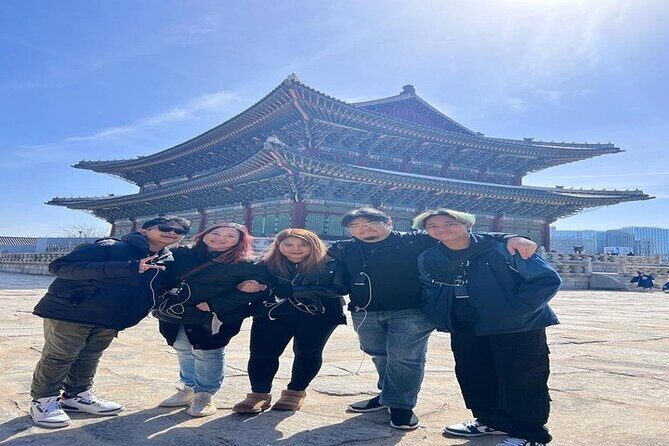
The tour meets at the National Palace Museum of Korea, 12 Hyoja-ro, Jongno District, and ends in Tongui-dong near 7-25 Tongui-dong. That “near transit + clear start” setup is useful, especially if you’re pairing this with other sights in Jongno.
Also, the tour uses a mobile ticket, so you won’t waste time hunting for printed papers. After booking, you’ll get an email or WhatsApp message with the meetup place and time—so check that message before you head out. If you wander in late or show up at the wrong point, the operator notes that joining after the tour begins isn’t allowed for other participants.
My advice is simple: arrive with a little buffer and use the exact meetup info sent to you.
Gwanghwamun Gate: the ceremonial south gate story
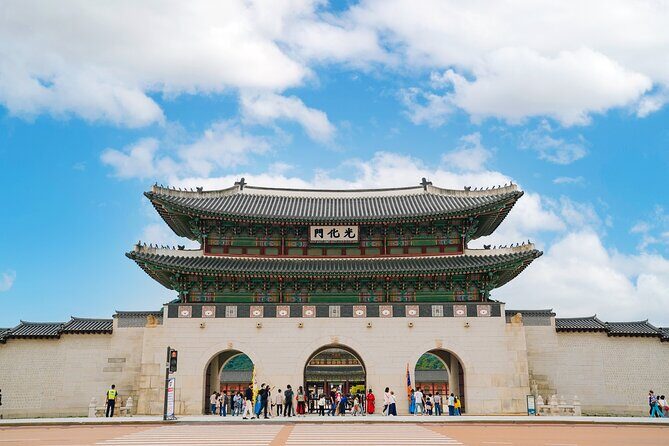
Your first named stop is Gwanghwamun Gate, described as the south gate of Gyeongbokgung. Even before you reach the inner buildings, this is where the mood sets in. Gates like this aren’t just entrances. They’re part of the hierarchy, the way authority moves through space.
With the guide’s English explanations, you’re not just walking past a landmark. You’re getting the logic of the palace layout—where power is meant to be seen, and how visitors and officials would have experienced movement through different zones.
What I liked here is that it helps your brain “map” the rest of the palace quickly. After Gwanghwamun, the halls don’t feel like separate photos waiting to happen. They start feeling connected.
Geunjungjeon: the main throne hall and what to watch for
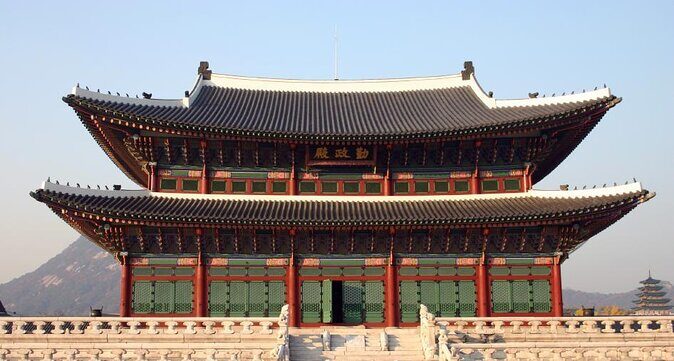
Next comes Geunjungjeon, the main throne hall. This is one of those spaces where the architecture is the message. The guide’s job here is to translate function into meaning: what the room was for, how it fit into the Joseon court system, and why the layout mattered.
A good throne hall story does two things:
- It makes you look at details you’d skip
- It prevents you from misunderstanding the space as just “big room = important”
Here, you get that second part—so you can connect the grandeur to the court’s structure. I also found it easier to appreciate why restoration has such weight for this palace. The hall isn’t just preserved for looks. It’s preserved so the story still makes sense when you stand in front of it.
Sajeongjeon: the king’s office space in plain terms
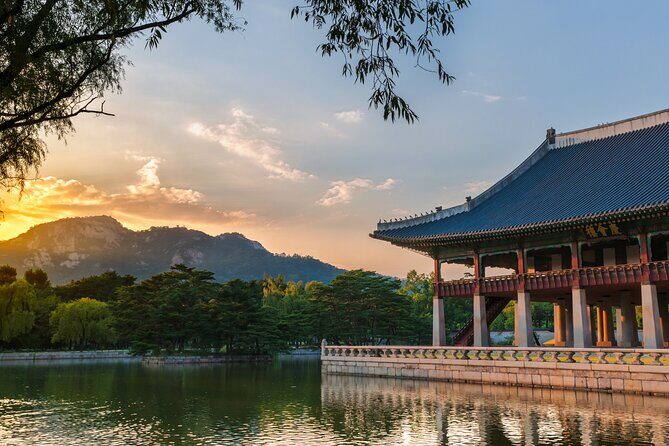
Then you move to Sajeongjeon, described as the king’s office space. This is the kind of stop that can be overlooked if you’re only chasing the most famous throne visuals.
But “office” is a huge concept. It shifts the focus from ceremony to administration—day-to-day governance, meetings, and decisions. With the guide explaining what happened there, Sajeongjeon becomes more than an impressive room. It becomes the middle link between royal presence and royal work.
If you’re the type of person who loves history that explains systems (not just dates), you’ll probably enjoy this section a lot.



From the king’s bed-chamber to the queen’s room
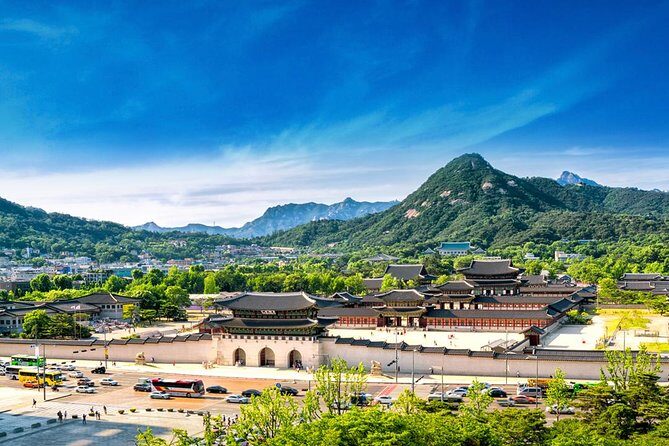
The route continues to Gangnyeongjeon, the king’s bed-chamber, and Gyotaejeon, the queen’s bed-chamber. These stops are useful because they widen your view beyond public authority.
You learn how space reflected roles—private life shaped by court rules, and family life held inside a palace that still worked as a political center. Even if you don’t remember every Korean name after the tour ends, the idea usually sticks: Joseon royalty lived in a system of boundaries and meanings.
A practical note: these interior-focus sections can be visually dense. Don’t worry if you can’t absorb everything at once. The value of doing it with a guide is that you can ask questions and reset your understanding on the spot.
Gyeonghoiru pavilion: closing the tour with a human-scale focus
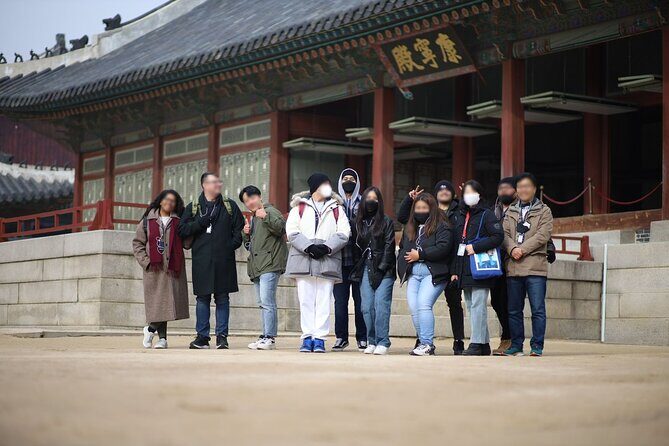
The final stop is Gyeonghoiru pavilion, described as an event hall. This is a nice capstone because it shifts the tone again—still within the court world, but oriented toward events and gatherings.
You’ll likely notice how the guide ties earlier themes together: how different spaces support different parts of royal life. With a short 2-hour schedule, ending on an event space helps you feel like the palace is a living place, not only a collection of rooms.
And remember the tour’s recurring theme: animals and symbolic details show up throughout the palace. The guide’s explanations can make those little figures and statues feel purposeful instead of random.
Why the English-guided format is the best value here
At $35 per person for a roughly 2-hour tour with admission ticket included, the value comes down to one thing: interpretation. You’re not paying for access to restricted areas (the details here are more about walking the major palace route). You’re paying for an English explanation in detail that helps you read what you’re seeing.
If you’ve ever wandered a palace courtyard while trying to guess what a room is used for, you already know the frustration. This tour avoids that by giving you a guided storyline built around named halls: Geunjungjeon, Sajeongjeon, Gangnyeongjeon, Gyotaejeon, and Gyeonghoiru.
It’s also built for questions. The operator notes you can ask all questions to the professional guide, which is a big deal when you’re trying to understand Joseon court culture without prior context.
A real-world guide moment: paying attention to people
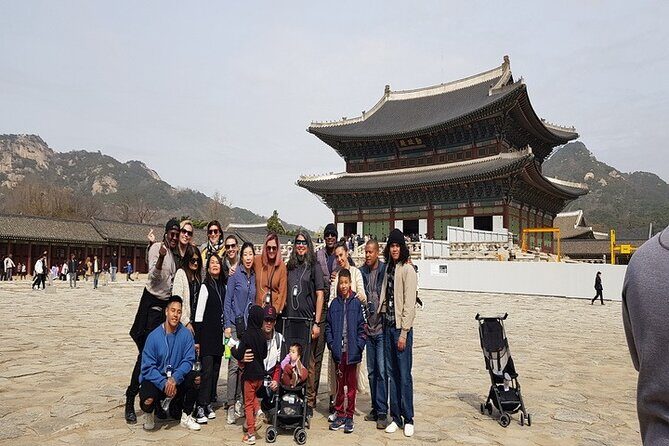
One review highlights a guide named Gabriela as kind and attentive. In that story, the participant walked to the wrong meeting spot, and Gabriela went out of her way to find them. That’s not the kind of detail you can reliably forecast in every tour—but it does match what you want to feel from a guide: calm, responsive, and focused on getting you into the experience smoothly.
Price, timing, and fitting this into your Seoul day
This tour is priced at $35.00 per person and typically booked about 18 days in advance. It’s scheduled for around 2 hours, and it’s capped at a maximum of 20 people.
That timing is ideal if you’re already planning other Seoul classics in the same area. Gyeongbokgung sits in Jongno District, where you can easily pair it with nearby neighborhoods or museums before or after your palace time.
It also works if you want a high-impact first taste of Joseon architecture and court layout without committing to a full-day deep itinerary.
Small rules that affect your experience
A few house rules can shape how smoothly the tour goes:
- Recording or filming isn’t allowed during the tour, so keep your phone for photos only when you’re allowed to take them.
- Pets aren’t allowed.
- If the group has fewer than 4 participants, the tour can be canceled. If that happens, you’ll get a cancellation notice sent by WhatsApp.
- If weather is poor, the operator says the tour requires good weather; if canceled for weather, you’ll get an alternative date or a full refund.
Those aren’t deal-breakers, but they matter for planning. Build a little slack into your day and keep an eye on communications.
Who should book this tour (and who might not)
This is a great fit if you:
- want English explanations tied to real court spaces
- enjoy named highlights (gate, throne hall, office, bed-chambers, event pavilion)
- like architecture but want meaning, not just visuals
- want the chance to ask questions instead of reading on your own
You might look for something else if you:
- want to see every single building detail without a set 2-hour structure
- prefer fully self-paced wandering with no filming limits and no group schedule
- are traveling specifically on a Tuesday (since Gyeongbokgung is closed that day)
Should you book this Gyeongbokgung Palace Half-Day Tour?
Yes—if you want fast clarity and strong context in a short time. The tour’s best advantage is the guided structure through the most important named spaces, paired with English explanations in detail. For $35 with admission included, that’s practical value if you’d otherwise feel lost about what each hall actually represents.
I’d book it especially if it’s your first visit to Gyeongbokgung or your first real attempt to understand Joseon court culture. Just plan around the Tuesday closure, and show up at the exact meetup spot listed for you.
If you’d like, tell me your travel dates and whether it’s a first trip to Seoul. I can suggest a simple order for pairing this with nearby sights in a way that keeps walking under control.
FAQ
How long is the Gyeongbokgung Palace half-day tour?
The tour lasts about 2 hours.
What is included in the $35 price?
An admission ticket is included, and you also get an English explanatory tour.
Where do I meet the tour, and where does it end?
You start at the National Palace Museum of Korea, 12 Hyoja-ro, Jongno District, Seoul, and the tour ends at 7-25 Tongui-dong, Jongno District, Seoul.
Do I need a printed ticket?
No. You’ll use a mobile ticket.
Is this tour available on Tuesdays?
Gyeongbok Palace is closed on Tuesdays, and you can book the Deoksugung night tour instead.
Can I record or film during the tour?
Recording or filming the tour is not allowed.
What happens if the weather is bad?
The tour requires good weather. If it’s canceled due to poor weather, you’ll be offered a different date or a full refund.
What if fewer than 4 people book the tour?
If the number of participants is under 4, the tour will be canceled and you’ll receive a cancellation notice by WhatsApp.
What is the cancellation policy?
You can cancel for a full refund up to 24 hours in advance of the experience start time. If you cancel less than 24 hours before, the amount paid is not refunded.