REVIEW · SEOUL
Korean Cooking at Seoul Cooking Club
Book on Viator →Operated by Premium Cooking Class @ Seoul Cooking Club · Bookable on Viator
Korean food is a hands-on story. Seoul Cooking Club turns common Korean staples like bulgogi and bibimbap into a small-group cooking class where you make, learn, and eat. I like that you get 10 Korean flavours across appetizers, mains, and dessert, not just one repeat dish. A possible downside: the class style can feel more guided assembly than frantic knife skills, especially if you expect everything to be from scratch.
Here’s the other big win: the teaching team is friendly and clear, and you can end up learning enough technique to order more confidently in Seoul restaurants. The main consideration is pace: with multiple dishes and lots of tasting, you should come hungry and plan to stay fully engaged for the full 2.5 hours.
In This Review
- Key points to know before you book
- Cooking in Jongno: What Your 2.5-Hour Class Feels Like
- The Menu Mix: Bulgogi to Bibimbap (and the Stuff You’ll Actually Remember)
- The Real Value: Tasting 10 Korean Flavours, Not Just One Final Plate
- Small-Group Setup: Why Max 12 Makes Questions Possible
- Instructors Matter: Olivia, Elly, Sally, and Grace
- Dietary Options That Don’t Feel Like an Afterthought
- Food Comes With the Class: Leftovers, Cookbook, and Tote Bag
- Price and Value: Is $109 Worth It?
- Logistics That Make the Class Easier (Without Making It Stressful)
- Who Should Book This Cooking Class in Seoul?
- Should You Book Korean Cooking at Seoul Cooking Club?
- FAQ
- How long is Korean Cooking at Seoul Cooking Club?
- How many dishes or flavors are included?
- What is the group size?
- Can the class accommodate vegan or halal diets?
- What dishes might I cook?
- Is there a cookbook or souvenir included?
- What are the cancellation rules?
Key points to know before you book
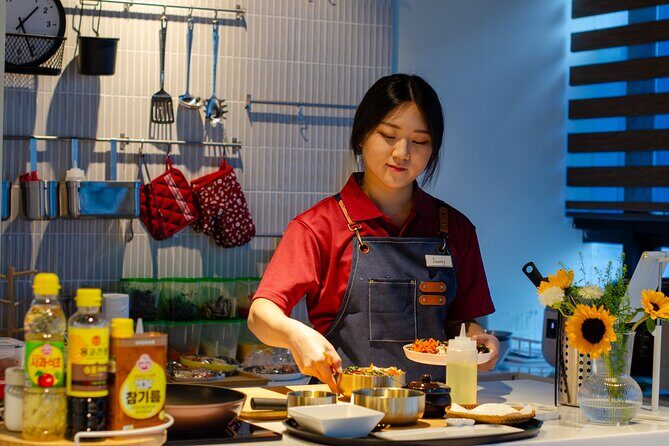
- Max 12 people keeps it interactive and easy to ask questions
- 10 Korean flavours means savory and sweet are both on your plate
- Dietary options include vegan, vegetarian, pescatarian, gluten-free, and halal
- Hands-on cooking plus tasting so you actually eat what you make
- Cookbook and tote bag make it easier to repeat at home
Cooking in Jongno: What Your 2.5-Hour Class Feels Like
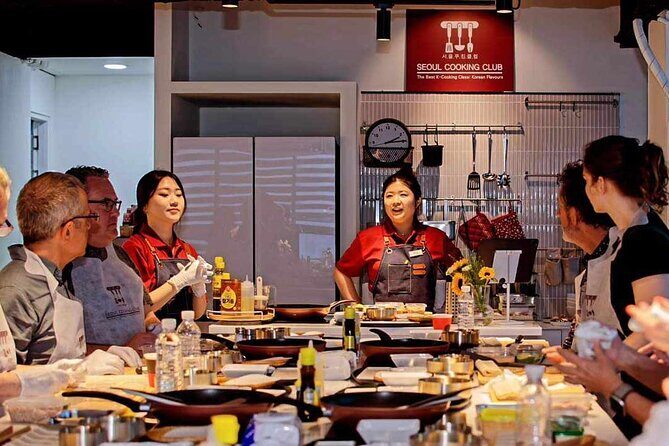
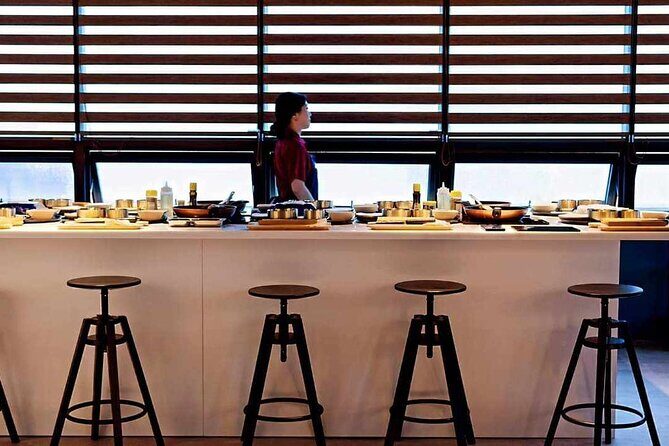
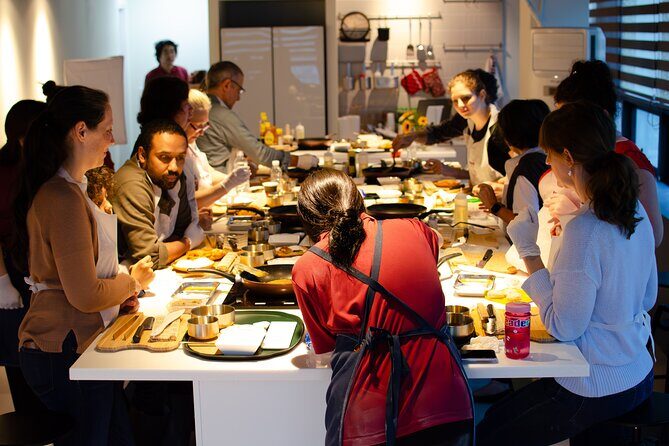
Most cooking classes in Seoul try to teach through watching. This one is built around doing. You’ll meet at 71-6 Jongno 2(i)-ga in Jongno District, and the session quickly shifts into a kitchen rhythm: stations, ingredients, and step-by-step guidance. With a duration of about 2.5 hours, you get enough time to progress beyond “I helped a little” and into “I made dinner.”
The experience is set up for a three-course Korean meal, which matters because Korean home cooking isn’t one dish. It’s the balance of warm and cold, crisp and saucy, and salty and slightly sweet. The format also helps beginners: you’re not thrown into one giant recipe. You move through appetizers, a main course sequence, and dessert, with tasting at each stage.
One practical note: the class is described as hands-on, but reviews also suggest some ingredients may be prepped in advance. That’s not a deal-breaker—it usually keeps you focused on sauces, seasoning, and the parts that determine flavor—but if you want full “from zero to finished” prep for every item, check your expectations.
You can also read our reviews of more tours and experiences in Seoul.


The Menu Mix: Bulgogi to Bibimbap (and the Stuff You’ll Actually Remember)
The headline promise is simple: learn Korean cooking tips that don’t stick from a cookbook alone. The class often centers on familiar classics, with examples showing up again and again—bulgogi and bibimbap are common anchors. You may also make gimbap, japchae, and different kinds of jeon or pancake-style dishes such as kimchi pancakes.
What I like about the way the menu is built is how it trains your palate. Korean cooking has a few repeated flavor themes—garlic, sesame, sweet-salty balance, and fermented notes—but they show up differently depending on the dish. Jeon and pancake-style foods teach you texture control. Gimbap teaches seasoning and rolling assembly. Bulgogi teaches how the marinade and heat cooperate. Bibimbap brings it all together as a bowl of components you learn to combine.
Reviews also mention that the class includes multiple pancakes or jeon variations, not just one. That’s useful for you at home because you’ll learn the pattern: make the batter or filling, get the pan temperature right, then adjust seasoning to match your taste.
Dessert is part of the schedule too, and you’ll finish the meal rather than sending people home right after cooking. That keeps the whole experience from feeling like a demo you survive.
The Real Value: Tasting 10 Korean Flavours, Not Just One Final Plate
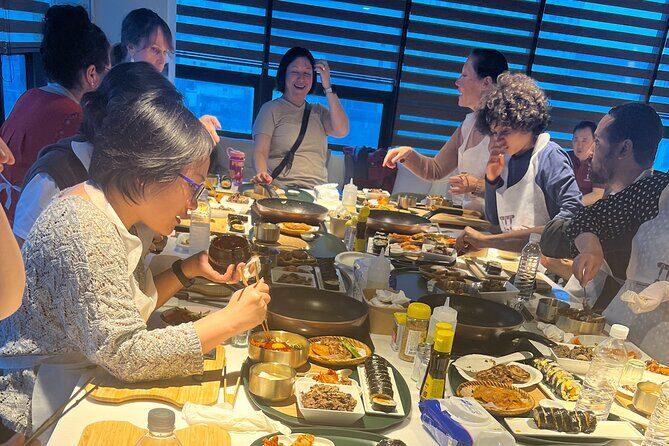
A lot of classes claim you’ll eat what you cook. The bigger win here is the breadth of tasting. The experience states you’ll taste 10 Korean flavours, spanning appetizers, main courses, and dessert. Some listings also describe over ten dishes included in the experience, and reviews reinforce that you get a lot of food.
For you, that means two things:
- You can compare flavors while the ingredients are still fresh in your mind.
- You’ll learn what to order next time in Seoul—because you’ve experienced the range, not just one favorite.
Expect your table to include both savory and sweet elements. You may also be offered drinks during the session. Reviews mention water, tea, and sujeonggwa, a Korean cinnamon punch that’s refreshing and easy to sip while you cook.
This tasting-heavy approach is great for travelers who don’t cook much. You’re not just practicing technique; you’re building a mental map of Korean cuisine. Even if you only cook one dish again after the class, you’ll still leave with a better sense of how the meal should taste when it’s right.
Small-Group Setup: Why Max 12 Makes Questions Possible
The class caps at 12 travelers, and that size changes everything. In a larger group, your questions get rushed. Here, it’s realistic to ask about seasoning, substitutions, or what to do if your pan runs too hot.
It also helps social comfort. Reviews frequently describe the class as a way to meet other travelers, and with a small kitchen setup, conversation comes naturally while you wait for the next cooking step. You’re standing close, working side-by-side, and tasting in the middle—so it’s less awkward than a long lecture.
If you’re traveling solo, this format is especially good. You can keep your own pace but still have people to talk with while you cook. If you’re with a partner or family, small groups also reduce the “who’s watching the instructor” problem. Everyone gets a chance at the main steps.
Instructors Matter: Olivia, Elly, Sally, and Grace
The instructors are a big reason the rating stays so strong. Reviews mention teachers like Olivia and Elly, and also instructors such as Sally and Grace. Across those names, the common theme is clear instruction and patience—people describe the teaching as friendly, step-by-step, and supportive enough for non-experienced cooks.
What you should listen for during the lesson is the flavor logic. Reviews describe instructors explaining the foundation of Korean flavor, how to adjust to taste, and why certain ingredients matter. That’s the difference between copying a recipe and actually learning how to cook in the Korean style.
Also pay attention to how the helper support works. Reviews mention a teaching team plus helpers who keep things moving and encourage tasting and adjustment. In practice, that means you don’t feel abandoned if you mess up a step. You can fix it, taste it, and move on.





Dietary Options That Don’t Feel Like an Afterthought
Korean food can include beef, pork, seafood, and gluten-containing ingredients, so substitutions matter. This class explicitly states that it can cater to dietary preferences, including vegan and halal, plus options such as vegetarian, pescatarian, gluten-free, and halal. That’s a strong sign that your dietary needs won’t be treated as a last-minute concern.
Some reviews also mention specific accommodations like peanut allergy and avoiding beef and pork. While you shouldn’t assume every dietary restriction can be handled the same way on every date, the pattern here is encouraging: you’re not just allowed to exist in the room. You can actually cook and eat.
Here’s how to make this smooth for yourself:
- Mention your dietary needs at booking so they can plan ingredients and menus.
- Let the instructor know early if you want extra adjustment for seasoning or ingredient swaps.
If you’re halal, vegan, gluten-free, or avoiding certain proteins, this class is a good match because it’s built around flexibility.
Food Comes With the Class: Leftovers, Cookbook, and Tote Bag
One of the most practical parts of the experience is that you don’t just taste a bite and leave. Reviews describe large portions and the idea of packing leftovers for later. That’s helpful in a city where meals can be expensive and schedules can be chaotic.
The class also includes a cookbook as a souvenir. That matters for value because you can take what you learn and use it at home without hunting online for exact combinations. Reviews also mention receiving a tote bag, which is a nice extra for bringing ingredients or groceries after the class.
Think of the class as buying a skill plus a meal outcome. The skill is the method—how to season, how to manage heat, how to assemble. The meal outcome is that you’ll leave with full satisfaction, and often enough leftovers to stretch your Seoul food budget.
Price and Value: Is $109 Worth It?
At $109 per person for about 2.5 hours, this isn’t a bargain-basement activity. But the value story stacks up when you look at what you receive.
You’re paying for:
- A small group (max 12), which typically means more attention per person
- Hands-on cooking across multiple dishes, plus tasting of 10 Korean flavours
- A full three-course experience that ends with dessert
- Dietary flexibility, including vegan and halal options
- Take-home items like a cookbook and a tote bag
- Enough portion size that leftovers are often possible
If you compare this to paying for multiple restaurant meals plus a food-focused workshop, the math gets easier. You’re also buying time: you learn the structure of the cuisine in one sitting, instead of spending days ordering, guessing, and writing down what you liked.
So for me, the question isn’t whether the price is low. It’s whether the experience gives you skills and food you can repeat. In this case, it does.
Logistics That Make the Class Easier (Without Making It Stressful)
You’ll get a mobile ticket, and the location is near public transportation. That’s exactly what you want for a class: simple arrival, no complicated transfers, and a clear meeting spot in Jongno.
My advice is to show up a bit early with comfortable shoes. You’ll be standing and moving around a cooking station. Come hungry—many reviews emphasize that the class provides a lot of food. If you eat a big meal right before, you’ll miss the point of the tasting.
If you have service animals, the experience allows them. And since the class involves tasting, if you have allergies, confirm details at booking so the team can plan ingredients responsibly.
Who Should Book This Cooking Class in Seoul?
This is a great fit if you want:
- A practical introduction to Korean cooking, not just eating
- A class format that works even if you’re not a confident cook
- Lots of dishes and flavors in one session
- Dietary options that include vegan and halal
- A fun way to meet people in Seoul without long tours
It’s also a good choice early in your trip. Learning how dishes work makes it easier to navigate menus later. You’ll recognize flavors and textures, and you can order with more confidence.
If you’re an advanced cook looking for a highly technical, from-scratch culinary boot camp, you might find it more beginner-friendly and partially prepped. That’s the main reason this class may not satisfy every cooking purist. But for most people, the friendly teaching, variety, and full meal experience are the point.
Should You Book Korean Cooking at Seoul Cooking Club?
Yes—if you want a high-success, flavor-forward Korean cooking experience with real food at the end. The combination of small group size, a three-course meal, and tasting 10 Korean flavours makes it efficient and memorable. Add in dietary options like vegan and halal, plus take-home support like a cookbook, and it becomes a practical Seoul activity you can use after your trip.
If you strongly prefer everything to be 100 percent scratch-made with advanced technique, you might want to ask what components are prepped before class. For everyone else, this is a solid, friendly way to learn Korean cooking in a single afternoon or evening window.
FAQ
How long is Korean Cooking at Seoul Cooking Club?
The class runs for about 2 hours 30 minutes.
How many dishes or flavors are included?
You’ll craft a three-course Korean meal and taste 10 Korean flavours, including appetizers, main courses, and dessert.
What is the group size?
The class has a maximum of 12 travelers.
Can the class accommodate vegan or halal diets?
Yes. The experience can cater to dietary preferences, including vegan and halal, and also offers vegetarian, pescatarian, gluten-free options.
What dishes might I cook?
The experience commonly includes classics such as bulgogi and bibimbap, and you may also make items like gimbap, japchae, and different kinds of jeon or pancake-style dishes (for example, kimchi pancakes).
Is there a cookbook or souvenir included?
Yes. You receive a cookbook as a souvenir, and reviews also mention a tote bag.
What are the cancellation rules?
Free cancellation is available up to 24 hours in advance for a full refund. If you cancel less than 24 hours before the experience starts, the amount paid is not refunded.