REVIEW · SEOUL
Gyeongju UNESCO Sites Tour by KTX train; The Museum Without walls
Book on Viator →Operated by Tagytravelkorea · Bookable on Viator
Silla in one packed day is exactly why this tour works. You get KTX speed from Seoul plus an English-speaking guide to connect the dots across tombs, palaces, temples, and museum rooms. I especially like the way the day is structured so you’re not just sightseeing, you’re seeing how one ancient kingdom left clues in very different places. One possible drawback: it’s a long day with a lot of outdoor time, so start smart and pack for weather.
The other thing I like is the low-stress handholding built around train travel. In real-world terms, that means getting met in Seoul, being helped with station logistics, and having someone show you where to be next—down to getting you onto your seats on the KTX. That kind of support matters when you’re juggling an early start and a tight schedule.
In This Review
- Key moments that make this tour worth it
- Entering the KTX day-trip rhythm from Seoul
- Price and logistics: what $470 really includes
- Cheonmachong Tomb: Silla burial mounds without the tourist fluff
- Gyeongju National Museum: where the city makes sense fast
- Cheomseongdae Observatory: star gazing tower math
- Donggung Palace and Wolji Pond: palace walls meet living nature
- Bulguksa Temple: Buddhist heritage with serious stonework
- Seokguram: the hermitage viewpoint you don’t forget
- Guide quality: why real names matter on a tight schedule
- Timing, pacing, and meals: the part you control
- Who should book this Gyeongju UNESCO KTX day trip
- Should you book it? My honest take
- FAQ
- What time does the Gyeongju tour start?
- Is hotel pickup included from Seoul?
- How long is the tour?
- Are meals included in the $470 price?
- What transportation is included for the day trip?
- Is an English-speaking guide provided?
- Are admission fees included?
- Is this a private tour?
- What’s the cancellation policy?
Key moments that make this tour worth it
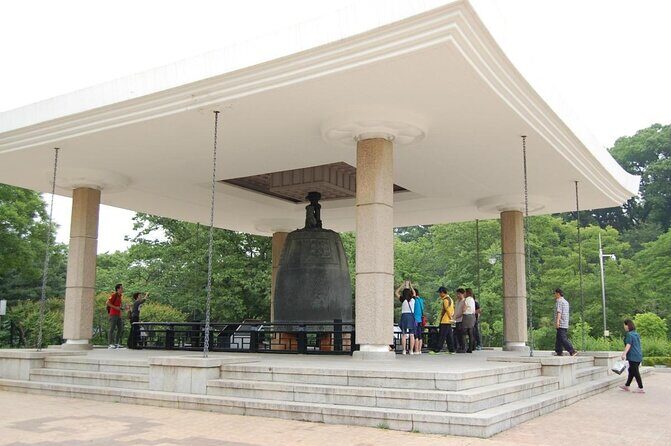
- KTX round-trip included (economic class) so you can focus on sites, not timetables
- Hotel pickup in Seoul areas plus private-vehicle transfers between stops
- Cheonmachong Tomb + museum + observatory in one coherent Silla story
- Bulguksa and Seokguram for classic Buddhist-heritage views and sculptures
- Admissions covered, including temple and archaeological stops
Entering the KTX day-trip rhythm from Seoul
This is designed as a true day excursion: start at 7:00 am, ride the high-speed train to Gyeongju, then return the same day. The tour’s “private” label is practical here. You’re not waiting around for a big bus full of strangers with different walking speeds. Your group moves together, guided by your schedule and your guide’s pacing.
The logistics are also part of the value. Your package includes the train fare, roundtrip transfer service by private vehicle, and hotel pickup in Seoul areas. That means you’re not paying extra for every tiny connection. One review mentioned a guide escorting a group to subway connections and helping them get seated on the KTX. Even if your exact helper is different, the intent is the same: reduce confusion, especially with an early departure.
Plan for a full day. The tour runs about 8 to 9 hours, and that usually means fewer meal breaks and more efficient transitions. If you love wandering at your own pace, this will feel structured. If you like seeing a lot without spending your day figuring out where to go next, it’s a good match.
You can also read our reviews of more museum experiences in Seoul

Price and logistics: what $470 really includes
At $470 per person, the headline cost can look steep until you price it line by line. You’re not only buying train tickets. Your total includes:
- Roundtrip KTX fare (economic class)
- Hotel pickup in Seoul areas
- Private vehicle transfers
- Local English-speaking guide
- All admission fees to the tourist sites
What’s not included is also clearly stated: meals, and hotel drop-off in Seoul. That last part matters. You might end your day at a point that works for getting home by your own transport plan, so don’t assume you’ll be deposited at your exact door.
So is it worth it? If you’re traveling with someone who wants clear direction and someone who prefers not to wrestle public transport while reading history labels, the included guide and admissions can make the day feel like a deal. If you’re a solo backpacker who loves DIY schedules, you could do Gyeongju cheaper on your own—but you’ll give up the time saved and the context.
Cheonmachong Tomb: Silla burial mounds without the tourist fluff
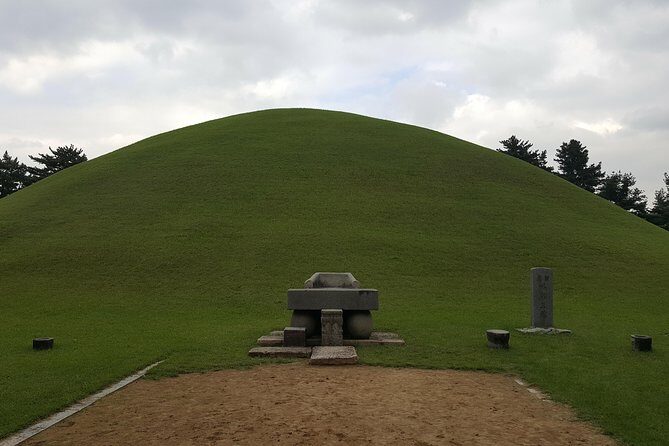
The day begins with Cheonmachong Tomb, a site built around the idea of Silla power and status. This area contains more than 20 large and small tombs from the Silla period—mound-shaped, often earthen, and believed to relate to kings and court officials.
This is the kind of stop where your guide’s stories change the experience. Instead of looking at grassy mounds and wondering what you’re supposed to notice, you start seeing the layout and the logic behind it—how these places served as markers of authority, not just ancient earth.
A nice detail from the tour feedback: one person noted being able to walk in an excavated area. That’s the kind of moment that makes archaeology feel real. If you enjoy when history becomes physical—textures, layers, shapes—this start will land well.
If you don’t like uneven ground or don’t enjoy outdoor walking early in the day, arrive ready for the mix. The upside is you’ll be outside, not stuck inside a lecture room.
Gyeongju National Museum: where the city makes sense fast
Next comes the Gyeongju National Museum, and this is a key part of the tour’s value. The museum is where you can understand why Gyeongju mattered in the first place, then carry that understanding to the sites outside.
The tour lists the museum admission as free, and the experience is built for a concentrated hit: around one hour in the main archaeology hall. This stop is most helpful if you want the “one fell swoop” effect—learning the big picture before you go temple-hopping.
In practical terms, I treat a museum stop like a briefing. It helps you stop reading history as random facts. Instead, you start noticing recurring symbols, artistic styles, and cultural choices you’ll see again later.
If your museum patience is short, don’t panic. One hour is enough to get oriented, especially when paired with a guide who can point you to the pieces that matter most.
Cheomseongdae Observatory: star gazing tower math
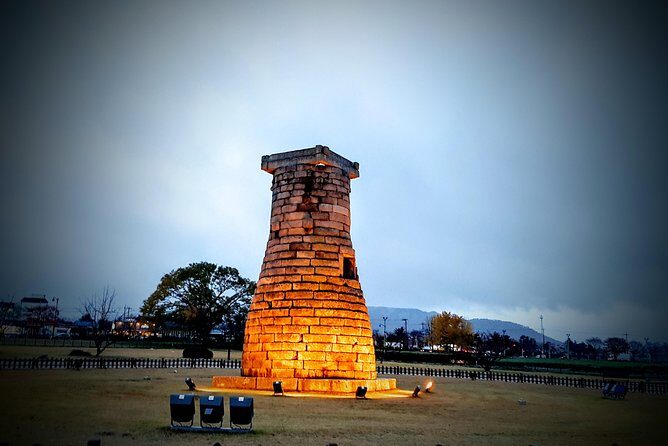
Cheomseongdae means Star Gazing Tower, and it’s one of those places that makes you do a little mental rewiring. Built in 634 during the reign of Queen Seondeok, it’s described as the oldest existing observatory in the Far East. The structure uses 27 levels of stones, which gives it a built-in sense of order.
Even if you’re not a science person, the attraction here is the human ambition. A society that could organize a tower like this wasn’t only worshipping the sky—it was measuring, forecasting, and using knowledge in daily life.
This stop is also a good pacing break. It’s not as physically demanding as some sites, and it gives you a chance to reset before moving into palaces, ponds, and then major temple complexes.




Donggung Palace and Wolji Pond: palace walls meet living nature
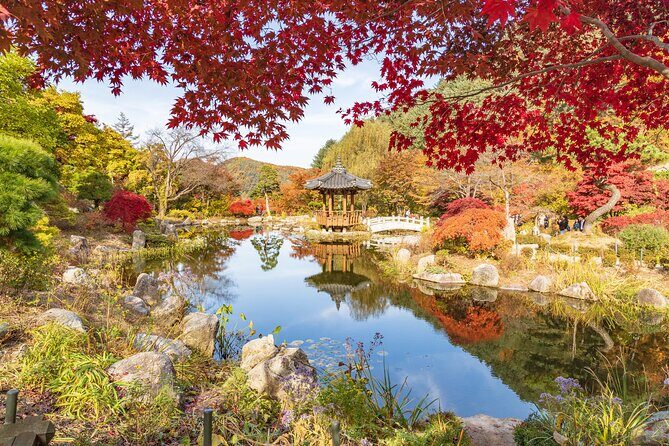
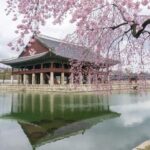
Then you move to Donggung Palace and Wolji Pond—also known as Anapji Pond in some contexts. The tour focuses on how the pond and palace setting were developed after the unification of the Korean Peninsula, specifically noting 674 as the construction period.
What I like about this stop is that it gives you a different angle on history. You’re not just looking at stone artifacts. You’re seeing how Silla design shaped everyday aesthetic experience—pond, water, plantings, and garden features created inside palace walls.
The itinerary suggests the palace walls included manmade nature elements, and the grounds were intended as a carefully designed environment. If you enjoy walking through restored or re-created spaces, this stop will feel pleasant rather than purely academic.
And yes, it’s often a photo-friendly setting. More importantly, it connects to the idea that power and culture weren’t only about battles or rituals—they were also about space, leisure, and symbols.
Bulguksa Temple: Buddhist heritage with serious stonework
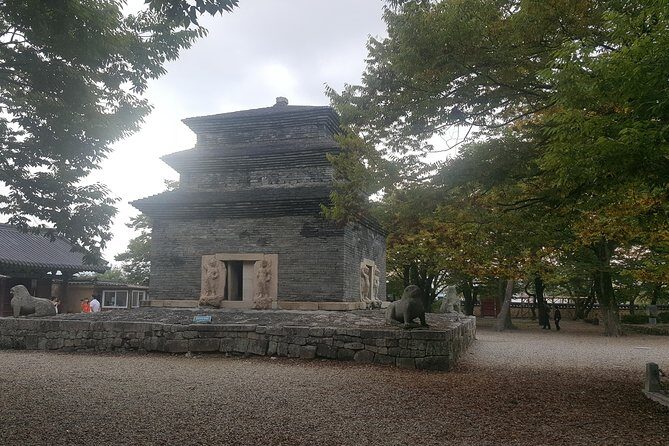
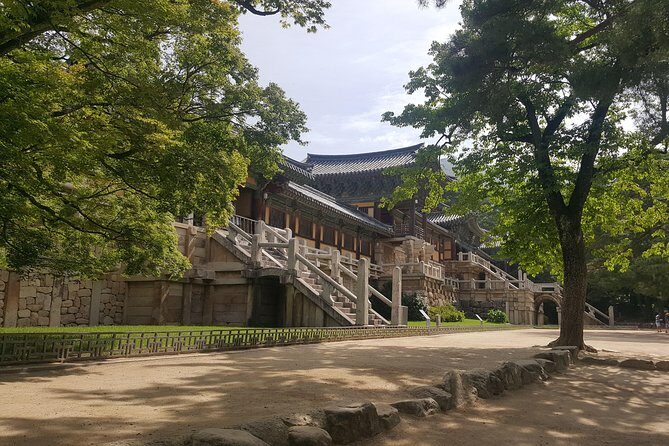
From pond-side beauty to heavyweight religious heritage: Bulguksa Temple. The tour frames it as the most famous Buddhist temple in Korea and highlights important relics from the Silla period, including the two stone pagodas: Dabotap and Seokgatap.
This is one of those stops where your guide matters most. Temples can feel overwhelming: there’s architecture, inscriptions, sculpture, and lots of surfaces. A guide can help you notice why the pagodas look different, and why the details matter.
If you’re short on time, I recommend treating Bulguksa as a “spot the patterns” exercise. Don’t try to memorize every name. Just learn what kind of symbolism and craft you’re looking at, and let the scale and materials do the rest.
The practical side: this is another outdoor-heavy area. Wear shoes that handle stone surfaces and uneven areas. Nothing kills temple momentum like sore feet on a packed schedule.
Seokguram: the hermitage viewpoint you don’t forget
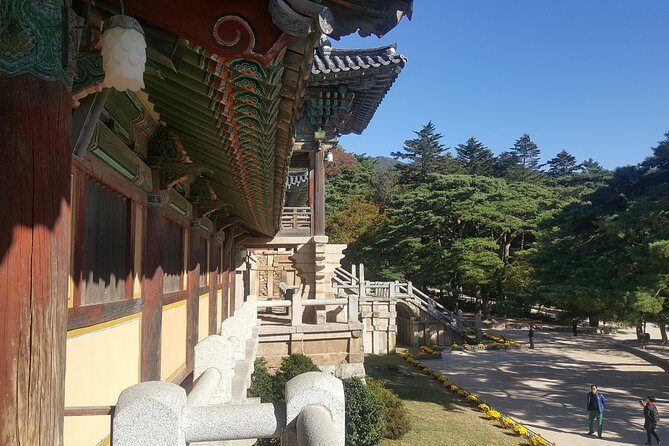
Then comes Seokguram, a hermitage part of the Bulguksa complex. The setting is dramatic: the grotto overlooks the East Sea and sits about 750 meters above sea level.
The tour’s description emphasizes that Seokguram holds some of the best Buddhist sculptures in the world. Even if you don’t know every piece’s name, you’ll feel why the site is famous. The key is the combination of setting and art. It’s not just sculptures behind glass. It’s the sense of place—up high, with views and a quiet atmosphere built into the experience.
The time on-site is about one hour, which is enough to appreciate the main features without turning it into a rushed checklist. If you’re someone who loves sculptural detail—faces, postures, composition—this stop will likely be a highlight of your whole Seoul-to-Gyeongju day.
Guide quality: why real names matter on a tight schedule
This tour’s success depends heavily on the guide, and the evidence from the tour feedback is consistent: guides like Jay, John, Andrew, and Dylan were specifically mentioned for making the day feel organized and safe.
What people valued wasn’t just facts. It was the way guides handled logistics—waiting for the group at the station, walking you onto the train, and making sure you knew what came next. That matters because your day starts early and moves fast.
One caution I’d keep in mind: language clarity can vary. One person mentioned difficulty with a guide’s accent. If you rely on very precise English to understand history, choose this tour with the mindset that you’ll need a little patience and repetition. Still, the tour is set up with an English-speaking guide, so you’ll be in the right lane.
Timing, pacing, and meals: the part you control
Your biggest controllable factor on this tour is food planning. Meals are not included, and the schedule is packed. That means you should bring a light strategy for breakfast and plan your lunch window based on what the guide allows.
Also, because several key stops are outdoors or in outdoor-adjacent areas, weather can change the tone of the day. One person explicitly said heavy rain affected their enjoyment because so much is outdoors. I wouldn’t cancel your plans over a forecast, but I would pack a compact umbrella or rain layer and accept that the day may feel wetter and slower than a sunny itinerary.
The upside of good planning: you’ll still get the core experience—tombs, museum context, and the big temple-and-grotto sites.
Who should book this Gyeongju UNESCO KTX day trip
Book this tour if you fit one of these profiles:
- You want a guided Silla overview without spending your day researching transit
- You like mixing archaeology (Cheonmachong Tomb), museums (Gyeongju National Museum), and monumental religious sites (Bulguksa and Seokguram)
- You’re okay with an early start and a structured day
It may not be ideal if:
- You want long, freeform hours at each site
- You strongly prefer a meal included in the price (this one doesn’t include meals)
- You dislike outdoor walking and stairs, especially if the weather turns
Because it’s a private tour for your group only, it can also work well for couples or small travel parties who want everyone to move together.
Should you book it? My honest take
I think this tour is a solid booking when your goal is simple: see major Gyeongju heritage fast and smart from Seoul, with admissions handled and an English guide keeping you oriented. The included KTX fare, private transfers, and museum/temple access do a lot of the heavy lifting, so you don’t spend your energy on logistics.
If you’re the type who enjoys walking through history—from stone pagodas to star-gazing towers—this day will feel focused rather than rushed. If you’re less into archaeology or you need lots of flexible downtime, you may wish you had a slower multi-day plan.
If you’re on the fence, here’s the quick decision rule I’d use: if the idea of a full Silla sweep in one day sounds exciting, book. If you’d rather linger slowly in one or two sites, go DIY or split your time.
FAQ
What time does the Gyeongju tour start?
The start time is 7:00 am, with the day structured around train travel and a full set of site stops.
Is hotel pickup included from Seoul?
Yes. Hotel pick-up (Seoul areas) is included. Hotel drop-off service is not included.
How long is the tour?
The duration is listed as 8 to 9 hours (approx.).
Are meals included in the $470 price?
No. Every meal is not included.
What transportation is included for the day trip?
You get round-trip KTX train fare (economic class) plus roundtrip transfer service with private vehicle.
Is an English-speaking guide provided?
Yes. The tour includes a local English-speaking guide.
Are admission fees included?
Yes. All admission fees to tourist sites are included. The itinerary also lists the Gyeongju National Museum as free.
Is this a private tour?
Yes. It’s described as a private tour/activity, so only your group participates.
What’s the cancellation policy?
There is free cancellation if you cancel up to 24 hours in advance for a full refund.