North Korea is a few steps from your phone screen.
This DMZ-edge day trip to Aegibong aims for the best views from South Korea, along the Jogang River, with a stop at the Starbucks that sits unusually close to the border line.
I like two things most: first, the combination of serious border sights and small, human-scale stops (bells, memorials, parks). Second, the tour is built for limited time, so you get a structured day without the stress of arranging transport and checkpoints.
The main drawback to factor in: this does not mean you enter the DMZ. You stay in the sensitive border-area viewing zone, and the day can feel heavy on viewpoints and photo moments (including Starbucks time) if that is not what you want.
Aegibong is the view focus: you’ll be close to the Jogang River, with a dedicated observatory stop.
Passport required at a real checkpoint: the Aegibong ticket office is a security point, not a casual photo stop.
Four-photo stop rhythm: memorial, eco-parks, the bell/altar ritual spots, then Starbucks, then the final 전망대 (observatory).
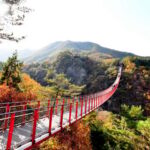
The 150m swing bridge adds a thrill factor: if it’s open, you get classic border shots from the crossing.
Guide quality seems to be the secret sauce: multiple guides get praise for clear explanations and humor on the ride.
In This Review
- How the DMZ-Edge Day Runs From Seoul: Pickup Points and a Clear Timeline
- Aegibong Ticket Office Checkpoint: The Moment You Feel the Border Matters
- Marine Corps Memorial: A Short Stop With a Heavy Emotional Weight
- Aegibong Peace Eco Park and the Sky Forest Canopy: Nature, Relics, and Border Views
- Crossing the 150m Swing Bridge: The Thrill Stop for Classic Border Photos
- Peace Bell and Peace Altar Stops: Where Symbolism Meets the View
- The Closest Starbucks to North Korea: What You’re Actually Getting
- 조강전망대 Observatory: Binocular-Ready Views and a 1.4 km Detail
- Price and Value: Why $49 Can Make Sense for a Border-View Day
- Who Should Book This Tour (and Who Should Skip It)
- Should You Book This Best North Korea View and Closest Starbucks to DMZ Tour?
- FAQ
- How long is the tour?
- How much does it cost?
- What time does the tour start?
- Where do you get picked up in Seoul?
- Does the tour enter the DMZ?
- Is a passport required?
- What’s included in the price?
- Is coffee included since there is a Starbucks stop?
- What is the closest observatory stop?
- Can I cancel for a full refund?
How the DMZ-Edge Day Runs From Seoul: Pickup Points and a Clear Timeline
This is a compact, single-day format. It starts with morning pickup around Seoul, then you head out to Aegibong for the border-facing sights. The tour runs about 5 hours and uses a mobile ticket, so you can keep things simple on the phone.
You’ll be collected from major rail hubs (easy if you’re staying in central areas): Myeongdong Subway Station (Exit 9), Seoul City Hall Subway Station (Exit 6), and Hongdae Subway Station (Exit 3). The tour finishes back in the Hongdae area, which is handy if you want to keep exploring after the adrenaline of border views fades.
The pacing matters here. You’re not “wandering the frontier” all day. You’ll hit a series of short, timed stops, with the longest chunk devoted to the final view-and-photo sequence, plus a solid window at Starbucks. If you prefer slow travel and long walks, you might find yourself moving faster than you’d like. If you prefer efficiency, this format works well.
Aegibong Ticket Office Checkpoint: The Moment You Feel the Border Matters
Right at the start of the border-area part of the tour, you stop at the Aegibong ticket office. This isn’t just “buy your ticket.” It’s also a checkpoint where you must show your passport to pass through the security area. The tour explicitly notes you cannot enter without it, so pack it the night before.
Why this matters for you: it sets the tone. DMZ-style experiences can range from educational to theatrical. Here, the process is real enough that it reminds you you’re in a sensitive, monitored zone. Expect a brief but serious moment before the sightseeing begins.
This stop is also where you get your bearings for the day. Once you pass through, the rest of the visit becomes a sequence of viewpoints aimed at giving you the closest visual access from South Korea—without crossing into the DMZ itself.
You can also read our reviews of more tours and experiences in Seoul.
Marine Corps Memorial: A Short Stop With a Heavy Emotional Weight
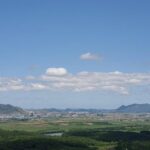
Next up is the Marine Corps Memorial, with time set aside for a quiet pause. The tour frames it around the Korean War, specifically noting 15,000 Marines battled during the conflict.
This is the kind of stop that can feel quick on the schedule but hits hard in practice. You’re standing in a place tied to how the peninsula got split, and your next steps are literally about looking across a river that functions as part of the DMZ near Aegibong. That cause-and-effect connection makes the memorial more than decor.
If you like context on what you’re seeing, your guide will likely connect this to the border views you’re about to get. In past tours, guides such as Alex and Gogo have been praised for explaining how the two Koreas ended up where they are, with enough humor to keep the day from becoming one long lecture.
Aegibong Peace Eco Park and the Sky Forest Canopy: Nature, Relics, and Border Views
Then comes the park area: the tour includes time at Aegibong Peace Eco Park and another section of the peace ecological park connected with the Sky Forest canopy.
You’ll get about an hour at the first eco-park stop and another block at the second, with themed gardens and pathways. The tour notes things like trails plus war relics, and it also highlights 80+ rare bird species in the canopy area. That combination is useful because it changes the visual “texture” of the day: you’re not staring at one flat horizon the entire time.
For you, here’s the practical benefit: parks like this give you a chance to walk, catch your breath, and move between viewpoints while still staying inside a structured timeframe. It’s easier on the body than doing only transport and stand-still viewing.
Possible downside: if you’re traveling in hot weather or rain, park time can feel long, since much of it is outdoors. Bring sunscreen or a light layer, and treat footwear as a real decision, not an afterthought.
Crossing the 150m Swing Bridge: The Thrill Stop for Classic Border Photos
A highlight for many people is the 150m swing bridge at 애기봉 평화생태공원 흔들다리. The tour gives you a dedicated viewing window here, designed for both the thrill and the photo angles aimed toward North Korea.
The bridge is about the “I can’t believe this is real” factor. You’re crossing in a border-facing park while looking toward the no-man’s-zone side of the peninsula from South Korea.
One practical consideration: there’s a weather dependency. One guide experience notes that if the bridge is closed due to conditions, you may face a hike up the hill instead. That matters because it turns a neat shortcut into more walking. If you get even mildly annoyed by weather-driven changes, keep that in mind and wear shoes you can trust.
If it is open, don’t rush across. Give yourself a moment on the crossing for photos, then continue so you don’t miss the rest of the ritual stops.
Peace Bell and Peace Altar Stops: Where Symbolism Meets the View
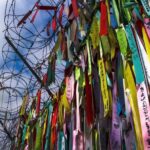
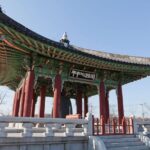
After the bridge, the tour shifts into ritual and reflection: an outdoor performance stage area (timing permitting), then 애기봉 평화의종, the peace bell, and later an altar moment connected to hopes for unity.
The bell stop is specific: it’s described as iconic, cast in 2000, and tied to peace and reunification. You’ll have time to ring the bell, which turns a viewpoint trip into a human action, not just visual sightseeing.
The altar stop is also time-boxed and described as built in 2018, set up for reflection with North Korea in sight.
Why these symbolic stops are worth your time: they give the day emotional shape. Without them, Aegibong could feel like an “observation deck tour.” With them, it reads more like a field visit—something you’ll remember not only for what you saw, but how the place made you feel.




The Closest Starbucks to North Korea: What You’re Actually Getting
Here’s the part people either love or side-eye: the tour includes Starbucks for about 1 hour, positioned as the world’s closest Starbucks to North Korea.
Two things stand out from the description of this branch:
- The Associated Press called it a symbol of security.
- CNN noted that you can even see North Koreans walking around, describing it as one of the few ways to look inside North Korea without crossing the border.
Let’s be clear about value for you. Your tour ticket includes admission and guide service, but coffee or tea is not included. So you’ll be paying for your latte separately if you choose to order.
Still, this stop can be worth it because it anchors the border views in something familiar. It gives you a real-world, modern contrast: global branding steps beside a geopolitical line. Even if you don’t care about coffee, the point is the context—being able to say you watched the horizon from this specific location.
If you hate “theme stops,” you might wish Starbucks time were shorter. One critical review complained the day felt too focused on Starbucks and border watching. My take: if your goal is only the DMZ itself, this is the wrong tour. If your goal is the closest dramatic views plus a memorable modern moment, you’ll likely enjoy the experience.
조강전망대 Observatory: Binocular-Ready Views and a 1.4 km Detail
The final major viewing stop is 조강전망대 (Jogang observatory). This is where the tour aims for the best, most unobstructed look.
The tour notes that binoculars can help you see villages about 1.4 km away. That detail matters because it tells you this isn’t just “vague horizon spotting.” The observatory setup is meant for close observation.
You also get a short time window here (about 30 minutes). That means you should arrive ready to focus. If you’re the type who takes 40 photos before looking up, try a different plan: pick your spots first, scan with your eyes, then use binoculars, then photograph what you can actually identify.
This is also the moment where your guide’s pacing and explanations pay off. In previous experiences, guides like Juno and Crystal have been praised for staying available for questions and making the history understandable without turning it into a classroom. Ask what to look for, and use the short time wisely.
Price and Value: Why $49 Can Make Sense for a Border-View Day
At $49 per person, this is priced for budget-minded travelers who still want “big moment” sightseeing.
Here’s how I’d evaluate value:
- You’re getting round-trip transportation from central Seoul.
- You’re getting a guide (English or Chinese).
- You’re getting entrance fees for the included stops.
- The experience includes passport checkpoint access plus an observatory time slot.
Is it pricey if you only wanted one viewpoint? Yes, because you still pay for transport and structured stops. But if you want multiple border-related moments in one day—memorial, eco-park, symbolic stops, observatory, plus Starbucks—it’s easier to see the math.
Also, group size cap is listed as maximum 100 travelers. A larger group can mean you’re moving efficiently, not spending half the day stuck waiting. It won’t feel like a private tour, but it also won’t feel like a tiny group with limited access.
Who Should Book This Tour (and Who Should Skip It)
This tour is a good fit if:
- You want the best North Korea views possible from South Korea without the hassle of DIY transport.
- You’re on a schedule and want a single-day DMZ-edge experience.
- You’d enjoy symbolic and memorial stops alongside the views.
- You like guides who explain the story behind the border. In particular, guides such as Hana (noted for making a first DMZ trip feel smooth), plus Judy and Alice in past tours, have been praised for making history and answers feel approachable.
Skip it if:
- Your top goal is to actually enter the DMZ. This tour does not do that.
- You dislike the idea of a Starbucks-themed stop taking up about an hour.
- You’re extremely sensitive to weather changes, especially regarding the swing bridge.
If you fall in the middle—curious about the border, but realistic about limits—this is the sort of day trip that delivers.
Should You Book This Best North Korea View and Closest Starbucks to DMZ Tour?
If you want the closest practical border views from Seoul and you’re okay with a structured day, I’d say book it. The combo of Aegibong viewpoints, memorial context, symbolic reflection stops, and the final observatory window is the reason this works.
Just be honest with yourself about what you’re buying: you’re not crossing into North Korea or the DMZ. You’re standing near the edge and looking across with help from observatory access and binocular-friendly planning. If that’s your goal, the price feels fair and the experience feels built for maximum impact in limited time.
FAQ
How long is the tour?
The tour is about 5 hours (approx.).
How much does it cost?
It costs $49.00 per person.
What time does the tour start?
The start time is 9:00 am.
Where do you get picked up in Seoul?
Pickups include Myeongdong Subway Station (Exit 9), Seoul City Hall Subway Station (Exit 6), and Hongdae Subway Station (Exit 3).
Does the tour enter the DMZ?
No. It does not technically enter the DMZ, but it goes right up to the border edge area near Aegibong along the Jogang River.
Is a passport required?
Yes. A passport is required during the tour, and you cannot enter without it.
What’s included in the price?
The tour includes a tour guide (English or Chinese), round trip transportation, and entrance fees.
Is coffee included since there is a Starbucks stop?
No. Coffee and/or tea is not included.
What is the closest observatory stop?
The tour includes a stop at 조강전망대 (Jogang observatory).
Can I cancel for a full refund?
Yes. Free cancellation is available if you cancel at least 24 hours in advance for a full refund.